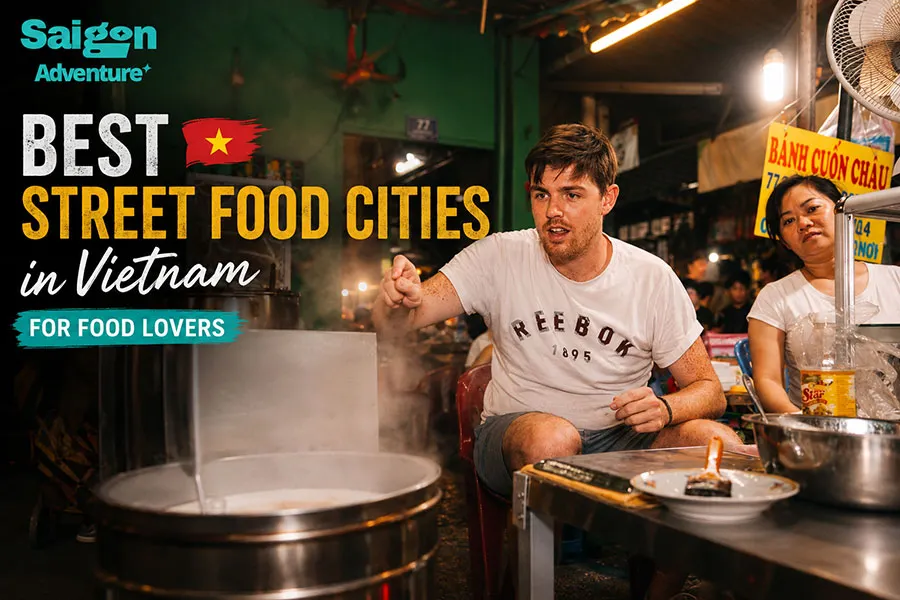
Vietnam rewards travelers who arrive hungry. Across the country, some of the most memorable meals are served from compact carts, open-fronted family kitchens and busy market stalls rather than polished dining rooms.
Each city tells a different culinary story. Hanoi favors subtle broths and time-honored recipes, Hue brings royal influences and unapologetic spice, while Ho Chi Minh City turns regional flavors into an energetic, constantly evolving street food scene.
This guide explores the best street food cities in Vietnam, the dishes that define them and practical ways to eat confidently. Bring an open mind, follow the busiest local tables and leave space for one more snack than you think you need.
Why Vietnam Is a Dream Destination for Food Lovers
Vietnamese cooking balances freshness, texture and contrast. A single dish may combine soft rice noodles, grilled meat, crisp herbs, pickled vegetables, roasted peanuts and a dipping sauce adjusted with lime, chili or fish sauce.
The cuisine also changes dramatically from north to south. Northern food is often clean and restrained, central Vietnam is known for deeper seasoning and chili, while southern dishes tend to be sweeter and more generous with herbs.
Street food remains part of everyday life rather than an experience created only for visitors. Workers eat breakfast beside steaming stockpots, families gather around sidewalk grills, and students meet over inexpensive snacks after sunset.
1. Ho Chi Minh City – Vietnam’s Most Diverse Street Food Scene
Ho Chi Minh City is one of the best food cities in Vietnam for travelers who want variety. Generations of migration have brought recipes from the Mekong Delta, central coast, northern provinces and Chinese-Vietnamese communities into one sprawling culinary landscape.
Start with cơm tấm, broken rice served with grilled pork, pickles, scallion oil and fish sauce. Other local favorites include bánh mì, bò lá lốt, hủ tiếu Nam Vang, bánh xèo, phá lấu and charcoal-grilled seafood.
Districts 3, 4, 5 and 10 are especially rewarding after dark. Instead of searching only around Ben Thanh Market or Bui Vien Street, explore residential neighborhoods where small eateries serve regular customers every evening.
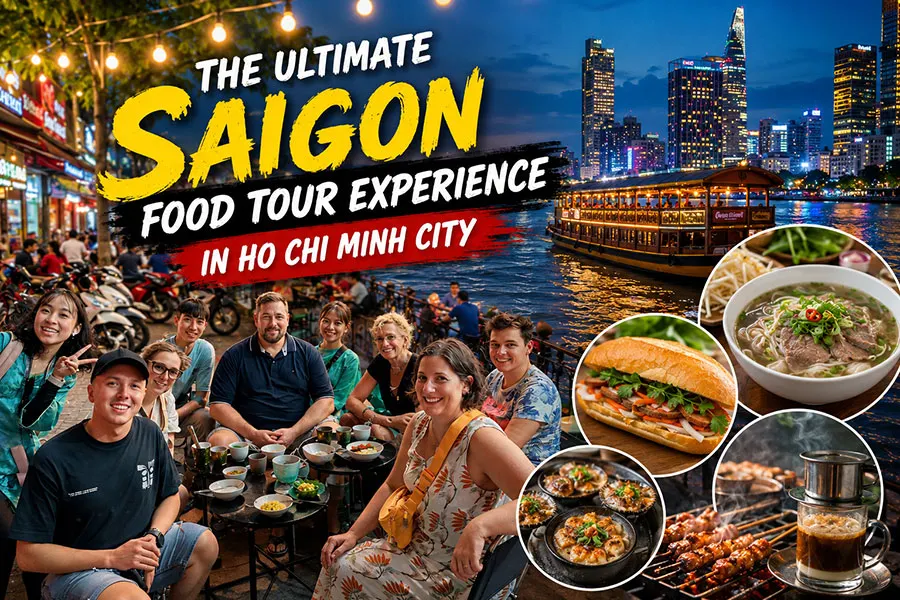
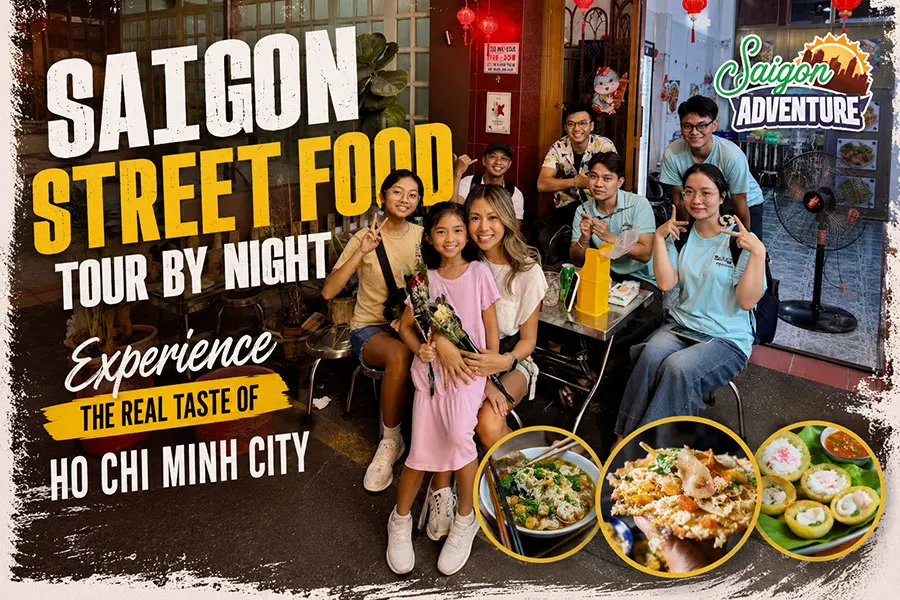
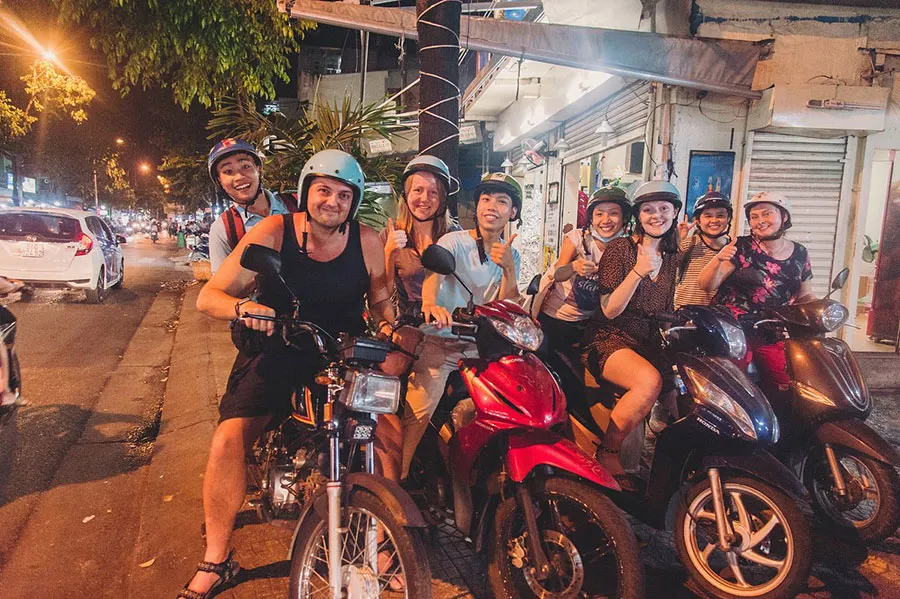
A guided Saigon street food tour by motorbike is a practical introduction for first-time visitors. It allows you to reach several districts, understand unfamiliar dishes and discover family-run places that can be difficult to identify independently.

Local Tip
Do not try to cross the entire city for one famous restaurant during rush hour. Choose one neighborhood and sample several dishes nearby, or join a planned route that reduces time spent in traffic.
2. Hanoi – Traditional Flavors in the Old Quarter
Hanoi’s food is closely tied to season, routine and place. Many stalls specialize in only one recipe, refining it over decades and closing as soon as the day’s ingredients sell out.
Phở bò may be the capital’s best-known dish, but it is only the beginning. Try smoky bún chả, delicate bánh cuốn, turmeric-tinted chả cá, sticky rice, crispy fried snacks and bowls of bún riêu with tomato and crab.
The Old Quarter offers extraordinary density, with food vendors tucked between shops, courtyards and narrow lanes. Yet some of the most satisfying meals appear outside the busiest tourist streets, particularly during breakfast and lunchtime.
Finish with egg coffee, a rich Hanoi creation made with whipped egg yolk, sugar and condensed milk. Travelers who prefer local guidance can combine regional tastings with neighborhood stories on a Hanoi food tour through the Old Quarter.
Local Tip
Hanoi vendors often follow precise opening hours. If a stall is known for breakfast, arrive in the morning rather than expecting it to serve the same dish throughout the day.
3. Hoi An – Small City, Remarkable Culinary Identity
Hoi An proves that a food destination does not need to be large. Its cooking reflects centuries of cultural exchange, nearby farming villages and a trading-port history that shaped several dishes found almost nowhere else.
The essential experience is cao lầu, made with thick noodles, sliced pork, fresh herbs, crunchy crackers and a small amount of savory broth. Recipes vary, but the combination of chewy, crisp and tender textures gives the dish its character.
Other Hoi An specialties include cơm gà, white rose dumplings, mì Quảng, grilled pork skewers and crispy wontons. The central market is lively in the morning, while riverside streets and quieter lanes fill with food vendors toward evening.
Balance your tastings with an excursion to the countryside. Saigon Adventure’s Cam Thanh Coconut Village experience introduces another side of local life through waterways, basket boats and regional dishes.
Local Tip
Restaurants near the river can be atmospheric, but do not overlook humble shops several streets away. A short walk beyond the busiest section of the Ancient Town often leads to quieter tables and more local customers.
4. Hue – Bold Street Food with Imperial Roots
Hue may be Vietnam’s most fascinating city for diners who enjoy small portions and strong flavors. Its cuisine combines refined presentation associated with the former imperial capital and deeply satisfying everyday food.
Begin with bún bò Huế, a fragrant noodle soup traditionally known for lemongrass, chili and a full-bodied broth. It is now served throughout Vietnam, but tasting it in Hue gives travelers a clearer sense of its original balance.
The city is also famous for steamed rice cakes such as bánh bèo, bánh nậm and bánh lọc. Because these dishes are small, it is easy to order a mixed selection and compare their fillings, textures and sauces.
For something crispier, look for bánh khoái, a thick rice-flour pancake typically served with herbs and a rich dipping sauce. Evening markets and modest neighborhood eateries are ideal places to build a progressive dinner from several stops.
Local Tip
Hue food can be noticeably spicy. Ask for chili on the side by saying “không cay” if you prefer mild food, although some broths and sauces may already contain chili.
5. Da Nang – Central Vietnamese Comfort Food and Seafood
Da Nang combines a modern coastal city with accessible, deeply local food. Meals are generally unfussy, generously portioned and easy to find from early morning until late evening.
The city is an excellent place to try mì Quảng, a noodle dish served with herbs, peanuts, rice crackers and just enough concentrated broth to coat the ingredients. Chicken, pork, shrimp and frog versions are common.
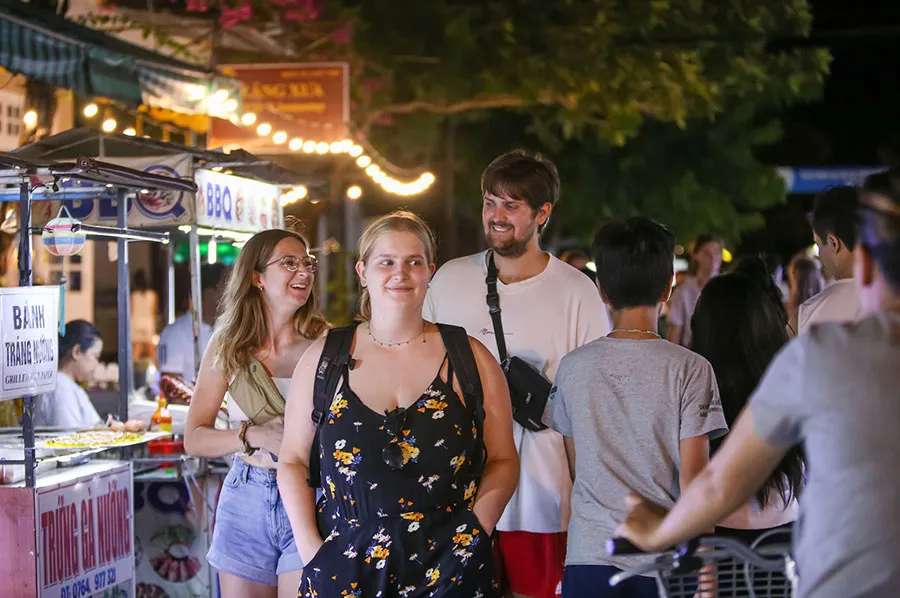
Another favorite is bánh tráng cuốn thịt heo, in which diners wrap sliced pork, vegetables and herbs in rice paper before dipping the roll into fermented anchovy sauce. The sauce is intense, aromatic and central to the experience.
Da Nang’s coastline also supports a lively seafood culture. Restaurants often display the day’s catch, allowing guests to choose fish, squid, prawns, clams or snails and request grilling, steaming or stir-frying.
Local Tip
Confirm seafood prices by weight before ordering and ask whether the quoted price is per portion or per kilogram. Reputable restaurants will explain the total clearly.
6. Nha Trang – Coastal Snacks and Fresh Seafood
Nha Trang is known for beaches, but its local dishes deserve time away from the waterfront. The city’s food blends fresh seafood, fish-based broths and relaxed late-afternoon snacking.
Try bún cá sứa, a light noodle soup with fish cake and jellyfish, or a bowl of bánh canh chả cá with thick noodles and springy fish cakes. Both offer a distinctly coastal alternative to heavier meat-based soups.
Nem nướng Nha Trang is another essential dish. Grilled pork, herbs, green banana, cucumber and crunchy fillings are wrapped in rice paper and served with a thick house-made dipping sauce.
In the evening, look for bánh căn, small rice cakes cooked in round clay molds and topped with egg, shrimp or squid. They are usually accompanied by herbs, shredded green mango and a warm savory sauce.
Local Tip
Seafood stalls are busiest after sunset, but noodle shops may close earlier. Plan soup for breakfast or lunch and save grilled dishes for the evening.
7. Can Tho – The Flavors of the Mekong Delta
Can Tho represents the generous cooking of southern Vietnam’s river region. Fresh produce, freshwater fish, coconut, aromatic herbs and rice products appear throughout its everyday cuisine.
A morning visit to Cai Rang Floating Market can include coffee, fruit or noodles served from boats. The market begins early, so staying overnight in Can Tho is more comfortable than attempting a rushed day trip from Ho Chi Minh City.
Must-try dishes include bánh xèo miền Tây, grilled snakehead fish, bánh cống, duck porridge and lẩu mắm, a robust fermented-fish hotpot filled with vegetables, seafood and meat. Portions are often designed for sharing.
Can Tho also offers a slower food experience than Hanoi or Ho Chi Minh City. Meals can be paired with orchard visits, river journeys and countryside stops where ingredients are grown close to the kitchen.
Local Tip
Visit the floating market for its trading culture rather than expecting a staged tourist attraction. Choose an authorized boat, arrive early and keep cameras respectful when vendors are working.
How to Eat Street Food Safely in Vietnam
Choose stalls with steady local turnover, ingredients protected from traffic and food cooked fresh in front of you. Busy vendors generally replenish ingredients frequently, which is often more reassuring than an empty restaurant with a large menu.
Drink sealed bottled water and be cautious with ice in very informal settings. Travelers with sensitive stomachs should begin with cooked dishes before moving on to raw herbs, shellfish or stronger fermented flavors.
Inform guides and restaurant staff clearly about allergies. “Vegetarian” can be interpreted differently in Vietnam, so specify whether you avoid fish sauce, meat broth, eggs or dairy.
For travelers who feel uncertain about menus, traffic or ordering, a guided experience can make the first evening much easier. A Ho Chi Minh City walking food tour is a comfortable alternative for anyone who prefers exploring on foot.

Which Vietnamese Food City Should You Choose?
Choose Hanoi for traditional northern recipes, Hue for spice and culinary history, and Hoi An for distinctive regional dishes in a compact setting. Da Nang and Nha Trang are ideal for travelers who want to combine beaches with seafood and central Vietnamese favorites.
Can Tho suits slower journeys through the Mekong Delta. For sheer variety, energetic nightlife and access to food from across the country, Ho Chi Minh City is difficult to beat.
The most rewarding Vietnam food itinerary includes more than one region. Even familiar dishes change as you travel, revealing differences in herbs, broth, seasoning and dining customs.
Taste Vietnam Beyond the Tourist Streets
Vietnamese street food is not simply a collection of famous dishes. It is a living part of each city, shaped by local ingredients, family recipes and the rhythms of everyday life.
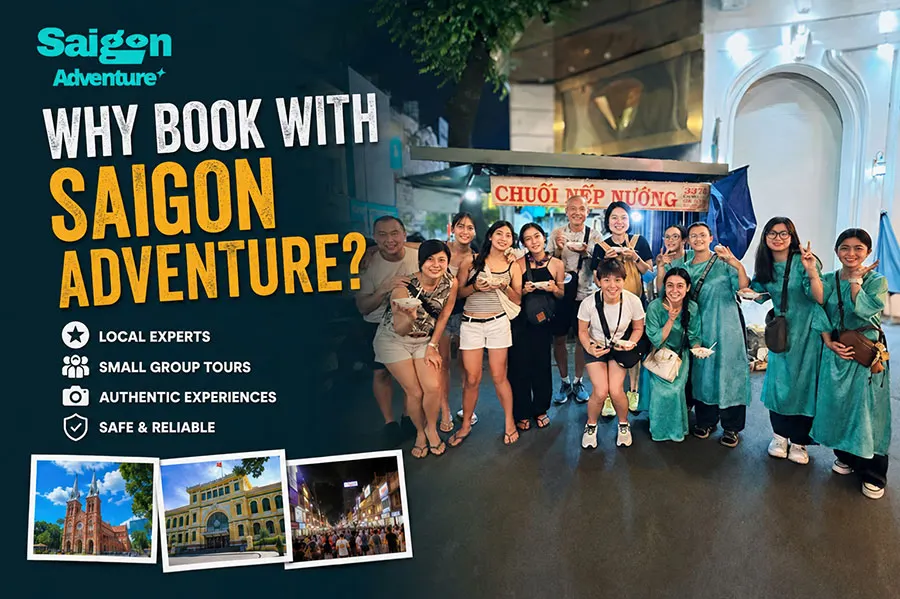
Taste slowly, ask questions and follow the places where residents gather. If your journey includes Ho Chi Minh City, explore hidden neighborhoods with Saigon Adventure on an authentic street food and sightseeing tour by scooter, where local flavors become the starting point for understanding the city.
Frequently Asked Questions
Which city has the best street food in Vietnam?
Ho Chi Minh City offers the greatest variety, while Hanoi is particularly strong for traditional northern dishes. The best choice depends on whether you prefer diversity, regional heritage, seafood or spicy central Vietnamese food.
Is street food in Vietnam safe for tourists?
It is generally safe when you choose busy vendors, freshly cooked dishes and clean-looking preparation areas. Travelers should also communicate allergies clearly and introduce unfamiliar food gradually.
How much does Vietnamese street food cost?
Prices vary by city, neighborhood and ingredients. Simple snacks and noodle dishes are usually affordable, while seafood, specialty restaurants and tourist areas cost more.
What is the most famous Vietnamese street food?
Phở and bánh mì are internationally recognized, but regional dishes such as bún chả, cao lầu, bún bò Huế, mì Quảng and cơm tấm offer a broader picture of Vietnamese cuisine.
Can vegetarians enjoy street food in Vietnam?
Yes, particularly in major cities, but some apparently meat-free dishes contain fish sauce, shrimp paste or meat broth. Confirm individual ingredients or consider a dedicated vegan food tour in Ho Chi Minh City.
Should I take a food tour in Vietnam?
A tour is especially valuable at the beginning of a trip. A knowledgeable local guide can explain ingredients, assist with dietary needs and introduce eateries that international visitors might otherwise miss.