In Saigon, the sound of food being cooked can be as tempting as the smell. Pork sizzles over glowing charcoal, steam escapes from a covered pot, and a cook turns a golden pancake in a hot pan. Each technique creates a different side of the city’s street food culture.
Understanding Saigon street food cooking methods makes exploring local food more interesting. Instead of choosing a dish simply because it looks familiar, you begin to recognize how it is prepared, what textures to expect, and why Vietnamese cooks favor certain techniques.
This guide explores three everyday methods—grilling, steaming, and frying—with recognizable dishes, useful Vietnamese vocabulary, and practical tips for curious travelers.
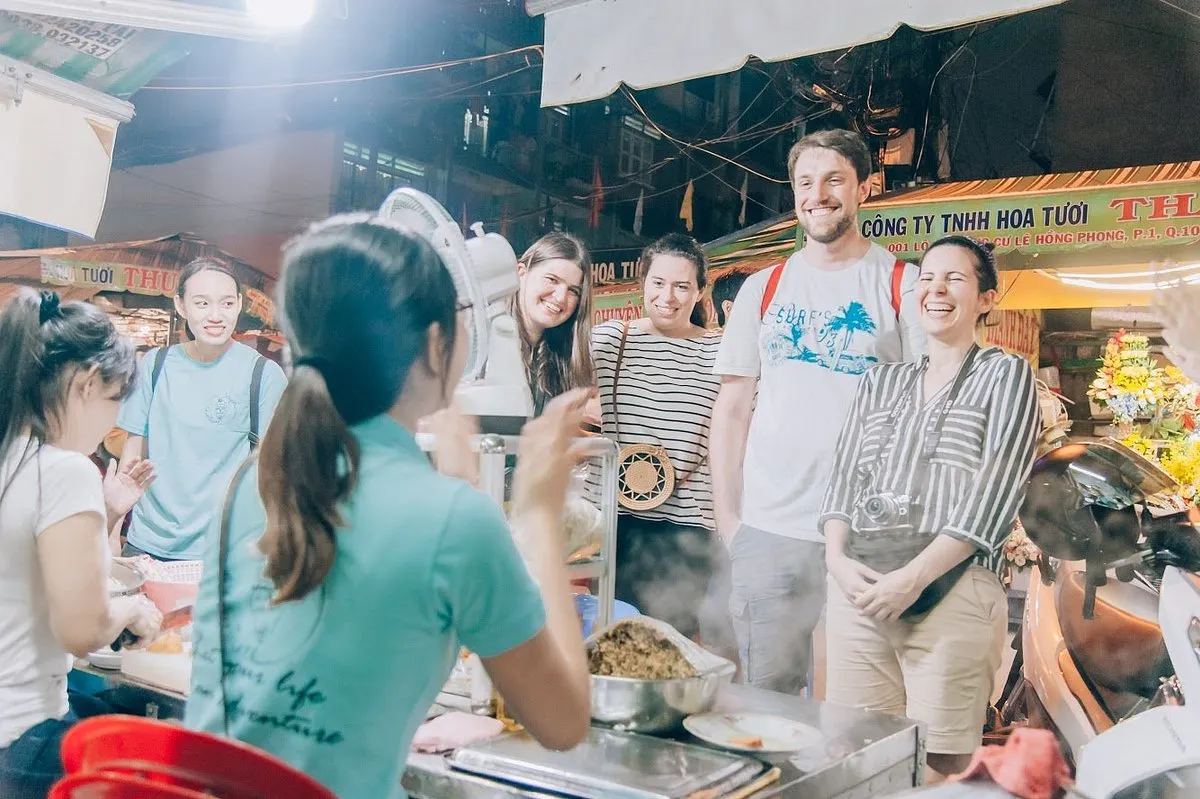
Why cooking methods matter in Saigon street food
Vietnamese street food is often described through ingredients: rice noodles, fresh herbs, pork, seafood, and dipping sauces. Yet the cooking technique is just as important in shaping the finished dish.
Grilling develops smoky aromas and browned edges. Steaming preserves moisture and delicate textures. Frying creates crisp surfaces that contrast with soft fillings, vegetables, or noodles.
These differences help explain why two dishes made from rice flour can taste and feel completely different.
For visitors, learning a few cooking terms also makes ordering easier. You can recognize what is happening at a stall even before reading the menu.

Grilled street food in Saigon: Smoke, charcoal and caramelized flavors
Many vendors use charcoal grills, allowing direct heat to brown meat while smoke adds aroma. Marinades containing ingredients such as fish sauce, garlic, sugar, and lemongrass contribute to the savory-sweet flavors associated with southern Vietnamese cooking.
Com tam: Grilled pork with broken rice
Com tam suon nuong combines broken rice with a grilled pork chop, typically accompanied by cucumber, pickled vegetables, and fish sauce dressing.
The pork is often marinated before grilling, producing browned edges and a juicy center when cooked well. Some versions include shredded pork skin, egg meatloaf, or a fried egg.
The distinctive feature is the contrast between smoky meat and relatively mild rice.
Bo la lot: Fragrant grilled beef rolls
Bo la lot consists of seasoned beef wrapped in lá lốt leaves and grilled until aromatic.
The leaves contribute an earthy, peppery fragrance that makes the dish different from ordinary grilled meat. Depending on the stall, it may be served with rice vermicelli, vegetables, herbs, and dipping sauce.
It’s an appealing choice for travelers who enjoy aromatic food without necessarily wanting intense chili heat.
Banh trang nuong: Crispy grilled rice paper
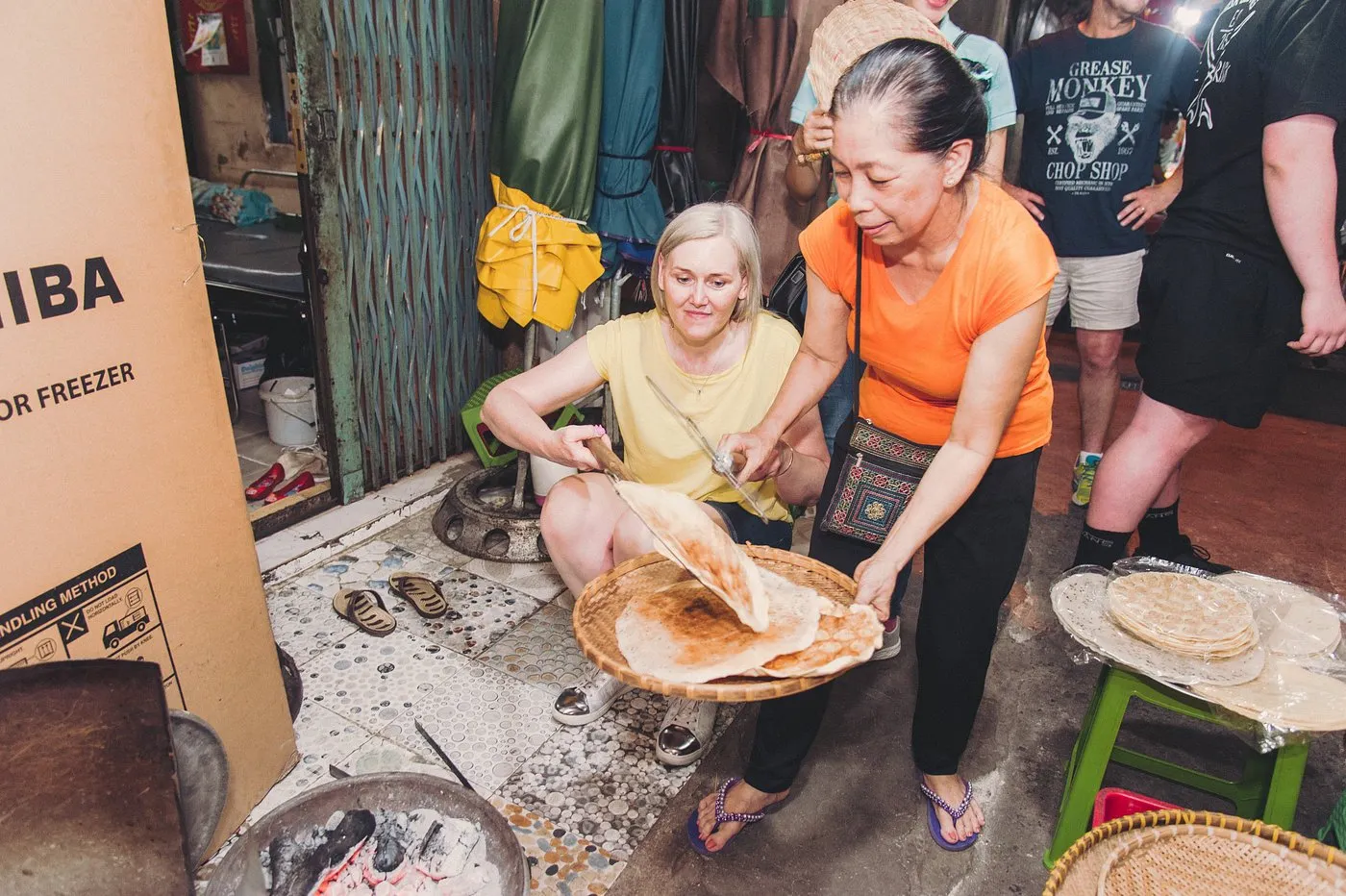
Often called Vietnamese pizza, banh trang nuong begins with a thin sheet of rice paper placed over heat.
Vendors add toppings that may include egg, scallions, dried shrimp, sausage, or sauces. The rice paper becomes crisp while the toppings cook.
Unlike grilled pork, its appeal comes primarily from its light, crunchy base.
Local tip: When ordering grilled food, look for stalls cooking items in small batches rather than relying entirely on meat left sitting beside the grill. A busy stall can be a useful sign of turnover, although it does not guarantee food safety.
Steamed Vietnamese street food: Soft textures and delicate flavors
Steaming, known as hấp, uses hot vapor to cook food without directly immersing it in water or frying it in oil.
It is especially useful for rice-flour batters, buns, and delicate fillings. The results are often tender, moist, and pleasantly light in texture.
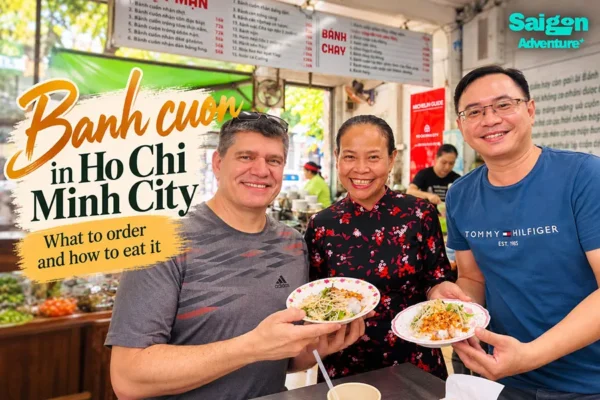
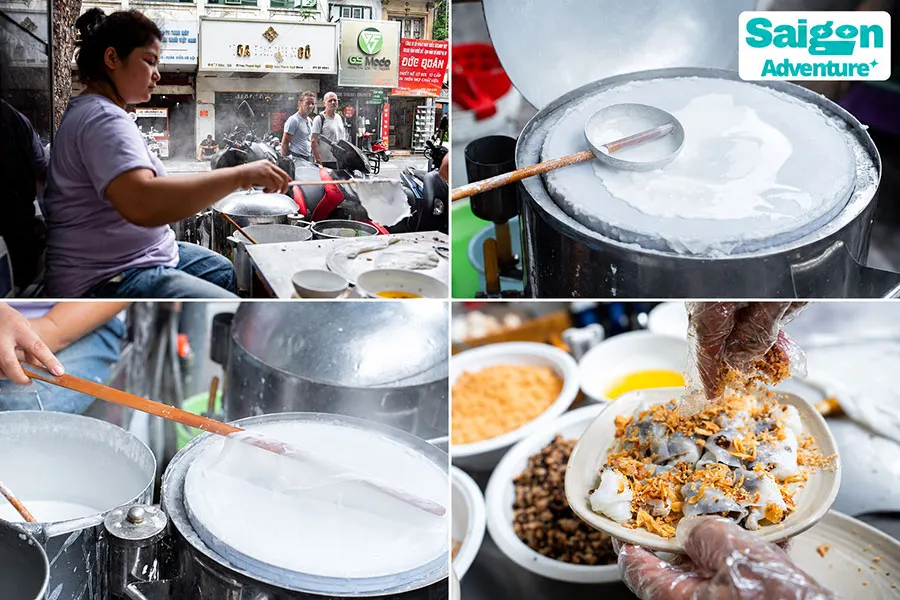
Banh cuon: Delicate steamed rice rolls
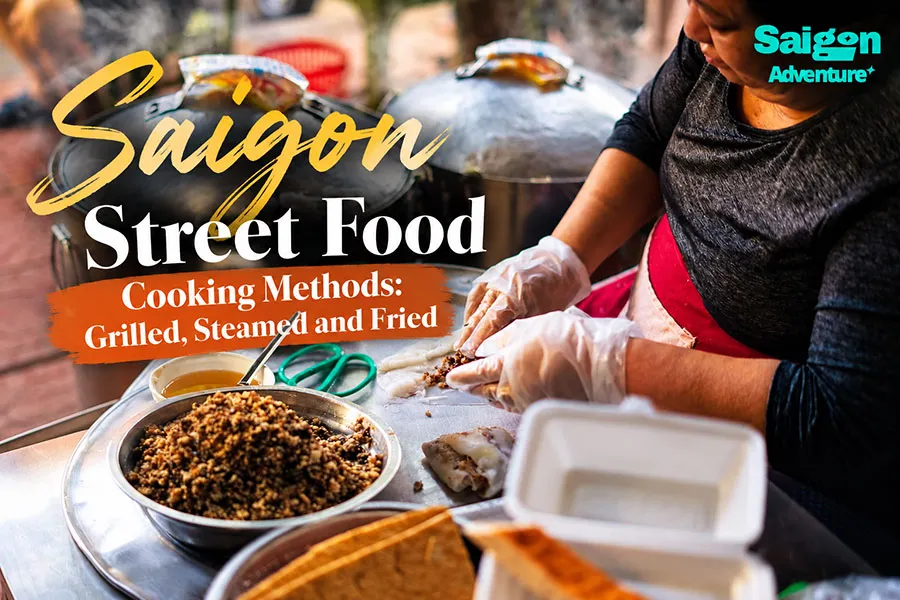
Banh cuon is made by spreading a thin rice batter over a cloth stretched above boiling water.
Once steamed, the delicate sheet is lifted and rolled, commonly around a filling of minced pork and wood ear mushrooms.
It is often served with fried shallots, herbs, Vietnamese pork sausage, and dipping sauce.
The rice sheet itself is exceptionally soft. Crispy shallots provide contrast, showing how Vietnamese dishes frequently combine several textures.
Banh bao: Fluffy steamed buns
Banh bao is a familiar takeaway snack sold at bakeries, carts, and small food shops.
Its soft wheat-flour dough surrounds fillings that may include seasoned pork, egg, mushrooms, or other ingredients.
Unlike a crisp pastry, the bun should feel fluffy and moist. It is particularly convenient when you want something portable without a complicated serving arrangement.
Banh beo: Small steamed rice cakes
Originally associated with central Vietnam, banh beo is also available in Saigon.
These small steamed rice cakes are commonly topped with ingredients such as dried shrimp, scallion oil, and crispy pork skin or other crunchy garnishes.
They offer an interesting lesson in Vietnamese cooking: a steamed base does not necessarily mean the entire dish is soft or oil-free.
Local tip: Steamed dishes are best enjoyed when freshly prepared or properly held hot. If you prefer mild flavors, taste the rice cake or roll before adding chili or a generous amount of dipping sauce.
Fried street food in Saigon: Golden crusts and satisfying crunch
Different techniques use different amounts of oil. Some dishes are deep-fried until crisp, while others are pan-fried on a hot griddle.
Fresh herbs, vegetables, and dipping sauces frequently balance the richness.
Banh xeo: The sizzling Vietnamese pancake
Banh xeo gets its name from the sizzling sound made when batter hits a hot pan.
The savory batter commonly contains rice flour and turmeric, with fillings that may include pork, shrimp, and bean sprouts.
A well-prepared pancake has a crisp exterior, particularly around its edges.
Rather than eating it like a Western pancake, diners typically wrap pieces in lettuce or other greens and dip them in sauce.
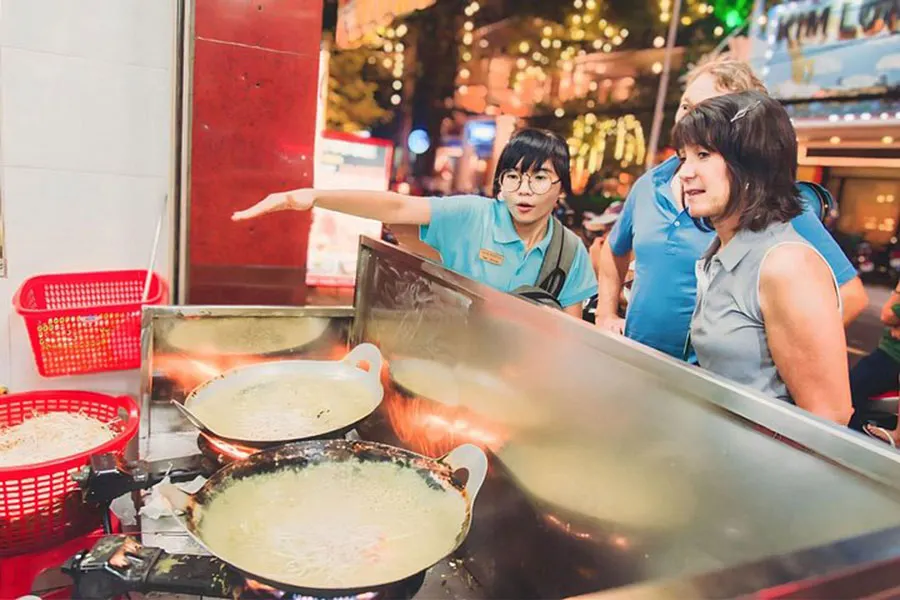
Bot chien: Crispy rice flour cakes
Bot chien is particularly associated with southern Vietnamese street food.
Vendors fry pieces of rice-flour cake on a flat griddle, often adding eggs and scallions.
The outside becomes lightly crisp while the interior stays pleasantly chewy. Pickled vegetables and a savory sauce provide contrast.
It is a good example of how frying transforms a relatively simple rice-based ingredient.
Cha gio: Vietnamese fried spring rolls
Cha gio are fried spring rolls typically filled with a combination of ingredients such as pork, mushrooms, noodles, or vegetables.
The wrappers become crisp during frying, enclosing a savory filling.
They may be eaten with rice vermicelli, fresh herbs, lettuce, and dipping sauce, depending on the meal.
Local tip: If crispness is the main attraction, choose food fried shortly before serving. A freshly cooked item should not be confused with guaranteed safety, so also pay attention to cleanliness and handling.
Grilled vs steamed vs fried: Which should you try?
Each method delivers a different experience, and none is automatically better than the others.
| Cooking method | Main characteristics | Good first choice |
|---|---|---|
| Grilled (nướng) | Smoky, browned, aromatic | Com tam suon nuong |
| Steamed (hấp) | Soft, moist, delicate | Banh cuon |
| Fried (chiên) | Crispy, rich, contrasting textures | Banh xeo |
If you enjoy barbecue, begin with grilled pork or beef rolls. If you prefer delicate rice-based dishes, try steamed rice rolls.
For travelers who enjoy crunch, banh xeo and bot chien offer two noticeably different fried textures.
There is no need to try everything in one meal. Sampling different techniques across several stops makes the contrasts easier to appreciate.
Vietnamese cooking terms worth knowing
Learning a few words can make street food menus much easier to navigate.
| Vietnamese | English meaning |
|---|---|
| Nướng | Grilled |
| Hấp | Steamed |
| Chiên | Fried |
| Xào | Stir-fried |
| Luộc | Boiled |
| Kho | Braised or simmered in a seasoned sauce |
| Nóng | Hot |
| Giòn | Crispy |
| Không cay | Not spicy |
| Ít dầu | Less oil |
For example, thịt nướng means grilled meat, while bánh bao hấp refers to a steamed bun.
One useful distinction is between chiên and xào. Both involve oil, but xào generally describes stir-frying ingredients with frequent movement, rather than producing a deep golden crust.
These terms help you identify cooking styles without needing to memorize dozens of dish names.
How to choose a street food stall in Saigon
Watching food preparation is part of the pleasure of eating on the street, but it also provides useful practical clues.
Choose vendors who handle raw and cooked ingredients separately, use clean utensils, and prepare food in reasonably hygienic surroundings.
Look for food served thoroughly cooked and hot, particularly when ordering meat, seafood, or egg dishes.
Be aware that cooking methods do not reliably indicate allergens. Steamed dishes may contain wheat, shrimp, or pork, while fried foods may share oil with other ingredients.
For travelers with allergies, our guide to Saigon street food with food allergies explains additional precautions and useful questions to ask.
Experience different cooking styles on a Saigon food tour
The most interesting way to compare Vietnamese cooking methods is to taste them in their everyday setting.
A grilled dish from a charcoal stall, a freshly steamed rice roll, and a crisp snack from a neighborhood vendor can reveal more about local cooking than ordering several similar dishes at one restaurant.
A knowledgeable local guide can explain ingredients, demonstrate how dishes are eaten, and help you understand unfamiliar menu terms.
For travelers who prefer an organized introduction, explore Saigon Adventure and its guided food experiences. Individual routes and menus vary, so check the tour description rather than assuming every cooking style is included.
The real reward is not simply tasting more food. It is recognizing the techniques and traditions behind what arrives on your plate.
Frequently asked questions
What are the most common Saigon street food cooking methods?
Grilling, steaming, and frying are three widely encountered methods. Boiling, stir-frying, braising, and simmering are also important in Vietnamese street cooking.
Is grilled street food in Saigon spicy?
Not necessarily. Many grilled dishes are savory, sweet, and aromatic rather than particularly hot. Chili may be included in marinades or served separately.
Is steamed Vietnamese street food healthier than fried food?
Steaming generally requires little or no added cooking oil, but nutritional value depends on ingredients, fillings, sauces, and portions. A steamed dish is not automatically healthier in every respect.
What is the difference between banh xeo and banh cuon?
Banh xeo is a savory pancake fried until crisp, while banh cuon consists of delicate steamed rice sheets, often wrapped around a savory filling.
Can vegetarians enjoy these cooking methods?
Yes. Vegetarian grilled, steamed, and fried dishes exist, although traditional versions often contain meat, seafood, fish sauce, or animal-based toppings. Confirm ingredients before ordering.
Which cooking method is best for first-time visitors?
Start with whichever texture you enjoy most. Grilled pork with rice, steamed rice rolls, and crispy banh xeo are approachable examples that illustrate three distinct cooking styles.