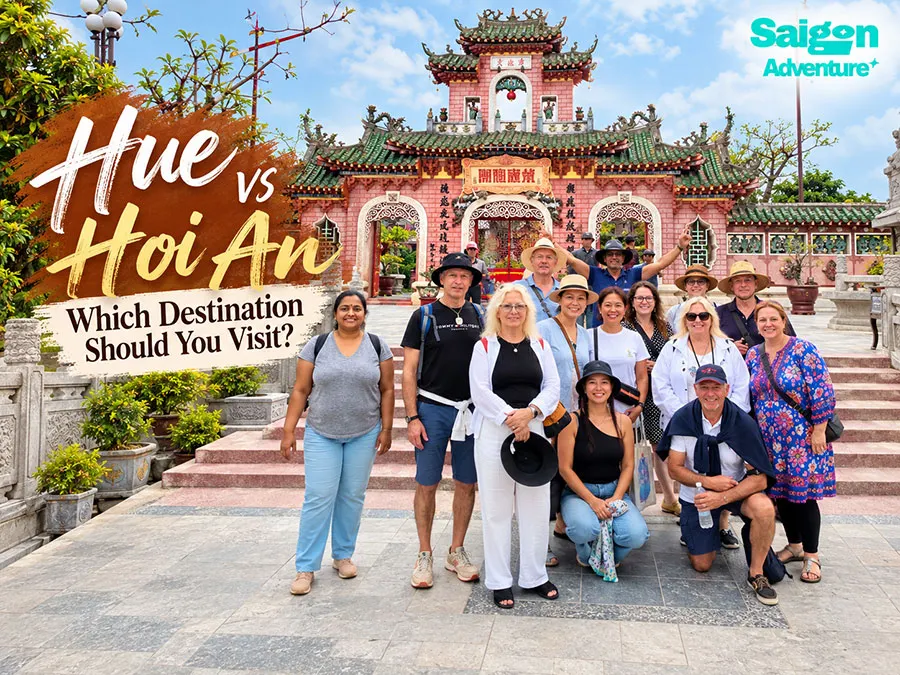
Choosing between Hue and Hoi An is not simply about deciding which city is more beautiful. Both offer remarkable experiences in Central Vietnam, but their personalities are surprisingly different.
In the Hue vs Hoi An debate, Hue is the stronger choice for imperial history, royal architecture and distinctive regional cuisine. Hoi An appeals to travelers who prefer atmospheric streets, riverside evenings, beaches and relaxed exploration.
If your schedule allows, visiting both creates a richer journey. If you must choose one, the best destination depends on your interests, travel style and available time.

Hue vs Hoi An: Key differences at a glance
| Feature | Hue | Hoi An |
|---|---|---|
| Best known for | Imperial heritage | Ancient trading town |
| Main attractions | Imperial City, royal tombs, Thien Mu Pagoda | Ancient Town, Japanese Covered Bridge, traditional houses |
| Atmosphere | Historic, spacious, local | Charming, walkable, tourist-oriented |
| Food highlights | Bun bo Hue, banh beo, banh khoai | Cao lau, white rose dumplings, com ga |
| Beaches | Thuan An Beach | An Bang Beach |
| Best for | History and culture enthusiasts | Couples, families and relaxed travelers |
| Suggested stay | 1–2 days | 2–3 days |
| Budget | Often better value for everyday dining | Affordable, but central tourist areas can cost more |
Quick answer: Choose Hue if you enjoy exploring historical landmarks, understanding Vietnam’s imperial past and discovering regional dishes. Choose Hoi An if you prefer leisurely walks, traditional architecture, cooking classes and beach time. Neither is universally better, and combining both is worthwhile when your itinerary allows.
Hue vs Hoi An for history and cultural experiences
Both destinations are UNESCO-recognized heritage sites, although their histories tell different stories.
Hue: Vietnam’s imperial legacy
Hue served as Vietnam’s imperial capital under the Nguyen Dynasty from 1802 to 1945. Its surviving monuments reveal the political, religious and architectural traditions of that era.
The Imperial City is the main attraction, with imposing gates, ceremonial courtyards and restored palace buildings. Beyond the citadel, the royal tombs offer different architectural styles surrounded by gardens, hills and lakes.
The elaborate Khai Dinh Tomb contrasts beautifully with the more peaceful landscape of Minh Mang Tomb.
Travelers interested in the city’s historical significance can explore these landmarks on a Hue City Tour, where a local guide helps bring Vietnam’s imperial history to life.
Local tip: Visit the Imperial City early in the morning. The grounds are extensive, and walking becomes less comfortable during hot afternoons.
Hoi An: A living trading-port heritage
Hoi An developed as an important international trading port, particularly between the 15th and 19th centuries.
Its preserved merchant houses, assembly halls and narrow streets reflect Vietnamese, Chinese, Japanese and European influences.
Unlike Hue’s monumental royal architecture, Hoi An’s heritage feels intimate. You can walk between historic buildings, browse small shops and watch everyday activities unfold beside the Thu Bon River.
For travelers looking to experience more than the Ancient Town, explore our Hoi An tours to discover local culture, traditional villages and authentic activities beyond the main tourist streets.
Verdict: Hue offers deeper imperial history, while Hoi An makes historical exploration easier to combine with leisurely sightseeing.
Which destination has better food: Hue or Hoi An?
Food is one of the strongest reasons to visit either city, but the flavors and dining traditions differ.
What to eat in Hue
Hue is celebrated for its refined culinary traditions and impressive variety of small dishes.
Start with bun bo Hue, a fragrant noodle soup featuring lemongrass, beef and a rich broth. Then try banh beo, delicate steamed rice cakes topped with shrimp, or banh khoai, a crispy savory pancake.
Small family-run eateries are particularly rewarding for travelers interested in authentic regional cooking.

What to eat in Hoi An
Hoi An’s cuisine reflects its trading history and local ingredients.
Cao lau combines chewy noodles, pork, herbs and crispy toppings. White rose dumplings are another specialty, while com ga Hoi An offers a satisfying combination of seasoned rice, chicken and fresh vegetables.
Cooking classes are popular here, particularly those combining market visits with hands-on preparation.
Verdict: Hue has the edge for adventurous food lovers seeking distinctive regional specialties. Hoi An is especially appealing for travelers who want to learn Vietnamese cooking.

Hue or Hoi An for scenery, beaches and atmosphere?
The difference becomes particularly noticeable when you slow down.
Hue has broad streets, the Perfume River and relatively peaceful neighborhoods away from major monuments. A riverside walk or visit to Thien Mu Pagoda offers a welcome break from historical sightseeing.
Hoi An feels more compact and picturesque, especially around the Ancient Town. Colorful lanterns, traditional shopfronts and riverside cafés create a memorable evening atmosphere.
Which is better for beach lovers?
Hoi An generally wins for convenient beach holidays. An Bang Beach is roughly 4–5 kilometers from the Ancient Town, making it practical to combine sightseeing with an afternoon by the sea.
Hue also has beaches, including Thuan An, but they are less central to the typical visitor experience.
Local tip: Explore Hoi An’s Ancient Town in the early morning when streets are generally quieter. Return after sunset for lanterns, accepting that the riverside can become crowded.
Hue vs Hoi An travel costs: Which is cheaper?
Both cities can suit budget travelers, although accommodation location and travel season influence spending.
The following figures are approximate daily planning budgets per person, excluding intercity transport, shopping and major paid tours.
| Travel style | Hue | Hoi An |
|---|---|---|
| Budget | $20–35 | $25–40 |
| Mid-range | $40–75 | $45–90 |
| Comfortable | $90+ | $100+ |
These are illustrative estimates rather than fixed local prices.
Hue often provides better value for everyday meals and accommodation. Hoi An has a wider concentration of boutique properties, tourist restaurants and paid activities around its historic center.
To control costs, compare accommodation outside the busiest streets and check whether breakfast, bicycles or transfers are included.
How many days should you spend in Hue and Hoi An?
Is one day enough for Hue?
One full day can cover the Imperial City and one or two additional attractions, depending on travel times.
However, two days allow a more relaxed pace, particularly if you want to explore royal tombs, local markets and traditional restaurants.
How long should you stay in Hoi An?
Two days are comfortable for exploring the Ancient Town, enjoying local food and experiencing the evening atmosphere.
Three days are better if you want beach time, a cooking class or nearby countryside experiences such as Cam Thanh Coconut Village.
You can also explore traditional crafts at Thanh Ha Pottery Village, a worthwhile addition for travelers interested in local craftsmanship.
For a memorable countryside experience, visit Cam Thanh Eco Village, where you can explore peaceful coconut waterways and enjoy a traditional Vietnamese basket boat ride.
Can you visit Hue and Hoi An on the same trip?
Yes. Hue and Hoi An are approximately 120–140 kilometers apart by road, depending on the route.
Travel generally takes around 3–4 hours by private vehicle, sometimes longer with sightseeing stops.
The journey can pass through the spectacular Hai Van Pass, where mountain roads overlook the coastline.
For a comfortable itinerary, spend two days in Hue and two or three in Hoi An. Da Nang provides another convenient transportation hub between the destinations.
Travel tip: Confirm whether your transfer follows the scenic pass or uses the Hai Van Tunnel. The tunnel is faster, but it bypasses the mountain viewpoints.
Hue or Hoi An: Which is better for your travel style?
Choosing according to your interests is more useful than comparing popularity.
-
History enthusiasts: Hue, for imperial monuments and royal heritage.
-
Couples: Hoi An, for romantic riverside evenings and boutique accommodation.
-
Families: Hoi An, for accessible activities, beaches and flexible schedules.
-
Food-focused travelers: Hue for regional specialties; Hoi An for cooking experiences.
-
Photographers: Both, with Hue offering monumental architecture and Hoi An colorful streets.
-
Travelers avoiding crowds: Hue may feel calmer, especially outside major attractions.
-
First-time visitors: Hoi An is often easier for a relaxed introduction to Central Vietnam.
Neither destination requires an expensive itinerary. Choosing a few meaningful experiences usually creates a more satisfying trip than rushing through every attraction.
Best time to visit Hue and Hoi An
Both destinations experience seasonal rainfall, but their weather patterns are not identical.
Hue often receives substantial rain during autumn, with flooding possible during severe weather. Hoi An can also experience heavy rain and flooding, particularly around October and November.
February through April is generally a favorable period for combining both cities, although conditions vary each year.
During the hottest months, schedule outdoor sightseeing early and reserve afternoons for indoor attractions or rest.
Local tip: Check current weather and flood advisories before traveling during the rainy season, especially if your itinerary includes mountain roads or riverside accommodation.
Final verdict: Should you choose Hue or Hoi An?
If you want to understand Vietnam’s royal history, admire monumental architecture and discover distinctive culinary traditions, choose Hue.
If you prefer atmospheric streets, hands-on cultural activities, riverside dining and nearby beaches, choose Hoi An.
For travelers with four or five days in Central Vietnam, visiting both offers the strongest combination of experiences.
Rather than treating them as competing destinations, consider how their different histories and lifestyles complement each other.
For a more rewarding journey, explore Central Vietnam with Saigon Adventure and choose guided experiences that match your interests, available time and preferred pace.
Frequently asked questions about Hue vs Hoi An
1. Is Hue better than Hoi An for first-time visitors?
Hue is better for travelers particularly interested in imperial history and traditional culture. Hoi An may be more convenient for first-time visitors seeking a relaxed atmosphere, walkable attractions and varied activities.
2. Is Hoi An more expensive than Hue?
Hoi An can be slightly more expensive in its tourist center, especially for boutique hotels and organized activities. Hue often offers better value for local dining and everyday accommodation.
3. Can you visit Hue from Hoi An in one day?
Yes, but expect a long day involving approximately six to eight hours of return driving, potentially more with traffic or stops. An overnight stay in Hue is preferable for a relaxed visit.
4. Which city has better nightlife, Hue or Hoi An?
Hoi An is better known for lantern-lit evenings, riverside restaurants and lively visitor areas. Hue has cafés, restaurants and bars, but its evening atmosphere is generally more understated.
5. Is Hue or Hoi An better for families with children?
Hoi An is often easier for families because of its beaches, short-distance activities and cooking experiences. Hue suits families with older children interested in history and cultural exploration.
6. Is it worth visiting both Hue and Hoi An?
Yes. The two destinations offer complementary experiences rather than duplicates. Allowing at least four days between them makes it easier to enjoy both without excessive rushing.