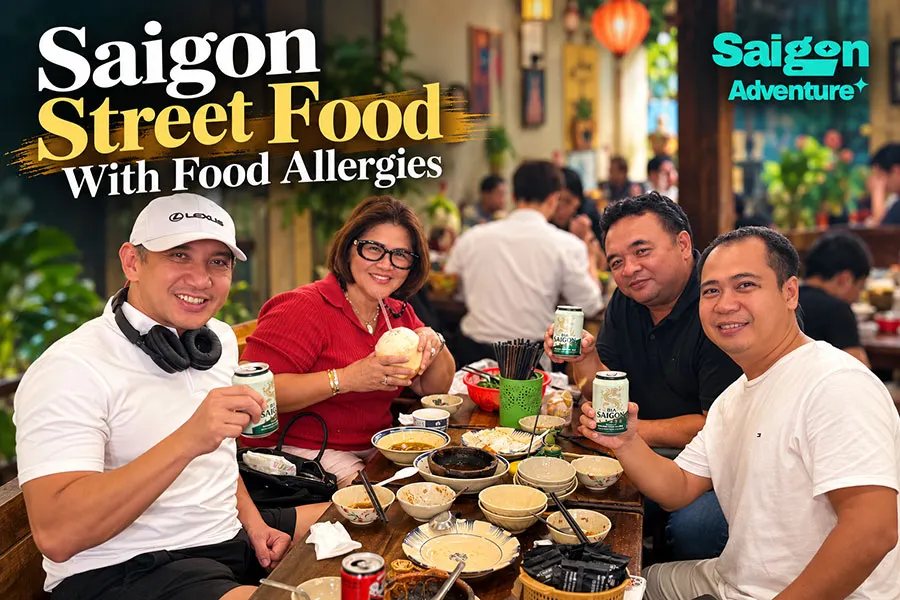
The smell of bánh xèo sizzling in a pan can make you stop mid-walk. If you have a food allergy, though, the first question is not whether it looks delicious. It is whether you can confirm exactly what went into it and how it was prepared.
Enjoying Saigon street food with food allergies is possible for some travelers, but no dish or stall is automatically safe. The practical approach is to name your allergen clearly, ask about sauces and shared equipment, and walk away when an answer is uncertain. This guide helps you make those decisions without missing the pleasure of exploring Ho Chi Minh City’s food culture.
Can You Eat Saigon Street Food With a Food Allergy?
Yes, depending on your allergy and what a vendor can reliably tell you. A stall that makes one dish in front of you may make its ingredients easier to inspect; a restaurant with a manager and a kitchen may be better equipped to discuss preparation. Neither setting guarantees that food is free from an allergen.
The key distinction is between an ingredient in the recipe and cross-contact during preparation. Removing peanuts from the top of a dish does not help if peanut pieces are already mixed into the sauce. Cooking a fresh portion may still be unsuitable if the same oil, grill, pan or utensils touched the allergen.
If your allergy is severe, plan meals around places that can explain both ingredients and preparation. A food tour can help with communication, but a guide cannot certify an unfamiliar kitchen as allergen-free.
Check These Ingredients Before Ordering
Peanuts and tree nuts: Look beyond the garnish
Crushed peanuts may arrive on noodle dishes, salads or desserts after the main cooking is finished. Ask whether nuts also appear in the dressing, filling or topping, and whether the vendor uses the same utensils for other orders. “No peanuts on top” answers only one part of the question.
Shellfish and fish: Ask about sauces, pastes and stock
A dish without visible seafood may still contain dried shrimp, shrimp paste, fish sauce or a seafood-based stock. This matters particularly with dipping sauces, stir-fried snacks and broths prepared earlier in the day. Ask about the complete dish, including anything served alongside it.
Wheat, soy, milk and egg: Check each component
Rice noodles are common in Vietnam, but a rice-noodle dish can come with a sauce or seasoning that does not meet your needs. Bánh mì contains bread; other dishes may include soy sauce, tofu, egg or dairy-based additions. Check the noodles or bread, filling, marinade, sauce and cooking method separately.
These are examples to investigate, not a list of “safe” or “unsafe” dishes. Recipes differ between vendors, and a familiar dish can change with its toppings or dipping sauce.
How to Explain a Food Allergy at a Street Stall
Show a precise Vietnamese allergy card
Before your trip, prepare a short card in Vietnamese stating the exact ingredient you must avoid, that it can cause a serious allergic reaction, and whether food prepared with shared oil or utensils is unsuitable. Have the translation checked by a fluent speaker, especially if your allergen has several common names.
Show the card before ordering and give the vendor time to read it. Food Allergy Research & Education offers food allergy chef card templates that can help you plan what information to include. Keep a copy on your phone as well as a printed version.
Ask about the recipe and the equipment
A useful conversation has two parts: “Does the dish, sauce or stock contain this ingredient?” and “Is it prepared with the same oil, pan, grill or utensils as food containing it?” If the vendor cannot check, do not treat a friendly nod as confirmation.
Pointing at a visible ingredient can help start the conversation, but it cannot reveal what is already in a broth or marinade. For travelers with a serious allergy, confirmation needs to come from someone who knows how the dish is made.
Know when to skip a tasting
Walk away if the answer changes, communication breaks down, or ingredients were prepared elsewhere and cannot be checked. The same applies when a stall is too busy to discuss your needs carefully. You can enjoy the market atmosphere and choose to eat later at a place that can answer your questions.
Street Stall, Restaurant or Food Tour: Which Fits Your Needs?
| Option | What may help | What to check |
|---|---|---|
| Single-dish street stall | Fewer menu items to discuss; some cooking is visible | Premade sauces, stock and shared equipment |
| Sit-down restaurant | More time to speak with staff about the kitchen | Whether the person answering knows the recipe |
| Guided food tour | Help communicating and planning stops in advance | Whether each vendor can actually accommodate your allergy |
A guided tour is most useful when you tell the operator your specific allergen and cross-contact requirements before booking. Ask which stops could accommodate you and what would happen if a vendor could not confirm an ingredient on the day.
Saigon Adventure says guests can disclose allergies when booking its Saigon motorbike food tours. Treat that as the start of a conversation about your needs, rather than a guarantee that every listed tasting will be suitable.
Local tip: Build flexibility into your food route. If one stop cannot answer your questions, you should be comfortable missing that dish instead of feeling obliged to keep up with a group.
A Practical Plan for Eating Around Ho Chi Minh City
Before you leave your hotel
Write down your allergens, save your translated card offline and keep your prescribed medication accessible. If you have been prescribed an adrenaline auto-injector, follow your clinician’s travel and emergency instructions; do not leave it in the hotel while you explore.
Choose a few potential eating places rather than relying on one spontaneous stop. Research can help you decide where to ask, but an online menu or review cannot confirm the ingredients in today’s batch.
When you reach the counter
Start with your allergy card, then ask about the dish before paying or requesting changes. Check sauces and condiments even if the main item sounds suitable. Watch for toppings added at the end, including nuts, fried garnishes and a sauce poured over the finished plate.
Ordering at a quieter moment may give staff more time to check. If a vendor needs to guess, thank them and choose somewhere else.
If you are traveling with friends
Tell your companions that you may need to pass on a stop. A shared-food outing works better when everyone understands that you cannot simply remove an ingredient from a completed dish. Arrange a meeting point if you decide to eat at a different restaurant nearby.
For broader advice about choosing vendors and handling drinks and food hygiene, see our guide to eating street food safely in Ho Chi Minh City. Food hygiene precautions are useful, but they do not replace allergy checks.
What About Vegetarian, Vegan or Gluten-Free Travelers?
Dietary preferences and medically significant allergies call for different questions. A traveler avoiding meat may need to check fish sauce, broth and shrimp-based seasoning; someone allergic to shellfish also needs to ask about shared preparation. Saying “vegetarian” alone does not communicate an allergy.
If your main goal is finding plant-based dishes, start with our vegetarian street food guide. Travelers who want a guided plant-based menu can also explore the Saigon vegan food tour, while still disclosing any separate allergies before booking.
Similarly, “made with rice” does not establish that an entire meal is gluten-free. Ask about seasonings, sauces, marinades and equipment according to your own requirements. The right question is always about the whole serving and how it was made.

Is a Saigon Food Experience Worth It If You Have Restrictions?
It can be. Street food is as much about watching a cook work, noticing how neighbors order and seeing a district come alive over dinner as it is about tasting every dish. You can take part in that experience while setting firm limits on what you eat.
The trade-off is spontaneity. Travelers without allergies can often order first and ask questions later; you need time to check and the freedom to decline. A well-planned route with fewer, better-understood tastings is more enjoyable than rushing through a long menu you cannot verify.
For ideas about the wider range of dishes and neighborhoods, browse our Ho Chi Minh City street food guide. Use it to discover what interests you, then confirm each dish independently before eating.
Frequently Asked Questions
Is Saigon street food safe for people with peanut allergies?
No stall can be assumed safe from its menu or appearance. Peanuts may be used as a topping or inside a sauce, and shared utensils can create cross-contact. Ask the vendor about the full recipe and preparation; skip the dish if they cannot confirm what you need to know.
Does Vietnamese food contain a lot of fish sauce?
Fish sauce appears in many Vietnamese recipes and dipping sauces, but not every dish contains it. Ask about the sauce, marinade and broth rather than judging from the visible ingredients. If you have a fish allergy, explain that clearly instead of asking only for “no fish sauce.”
Can I request food without an allergen at a street stall?
You can ask, but a modified order is suitable only if the allergen was not already added and preparation meets your needs. Removing a garnish cannot reverse an ingredient mixed into a sauce or contact with shared equipment.
Should I carry an allergy card in Vietnamese?
Yes. A written card helps explain your exact allergen and cross-contact requirements more consistently than gestures or a quick conversation in a noisy market. Have the wording checked before travel and use it alongside direct questions, not as a substitute for answers.
Can a Saigon food tour accommodate severe allergies?
Ask the operator before booking and describe the severity, exact ingredients and cross-contact limits. A guide may help communicate with vendors, but suitability depends on what each kitchen can verify. If a stop cannot provide a reliable answer, you should be able to skip its tasting.
What should I do if I have an allergic reaction while traveling?
Follow your personal emergency plan and seek urgent medical help. If you have been prescribed an adrenaline auto-injector for anaphylaxis, use it according to your medical instructions. Do not wait to see whether a potentially severe reaction settles on its own.
Explore Saigon at Your Own Pace
A food allergy may change which stops you choose, but it need not take the city’s food culture out of your trip. Prepare your questions, keep room to change plans and enjoy the dishes whose ingredients and preparation you can understand.
If you would like help planning a food experience, tell Saigon Adventure’s food tour team about your exact dietary needs before booking. They can discuss possible options with you so you can decide what feels appropriate.