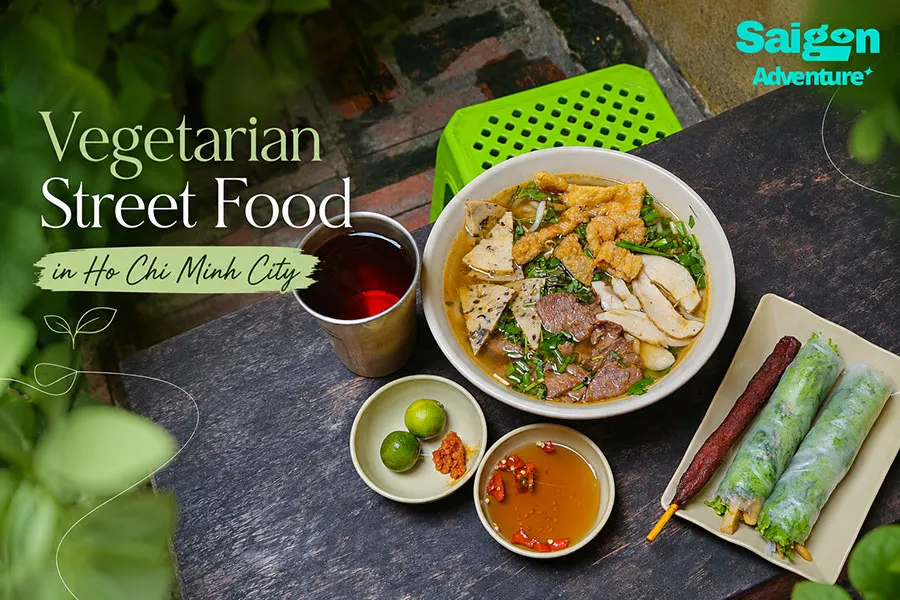
Vegetarian street food in Ho Chi Minh City is abundant, affordable and far more varied than a simple plate of rice and vegetables. Across Saigon, travelers can enjoy mushroom-filled bánh mì, fragrant noodle soups, crisp bánh xèo, fresh spring rolls and colorful rice plates prepared without meat.
The key is knowing where to search and what to ask before ordering. This guide introduces the best Vietnamese vegetarian dishes, useful ordering phrases, realistic prices and the neighborhoods where local plant-based food is easiest to find.
Is Ho Chi Minh City Good for Vegetarian Travelers?
Ho Chi Minh City is one of Vietnam’s easiest destinations for vegetarian travelers. Buddhist food traditions have helped create a widespread culture of “ăn chay,” while growing interest in plant-based dining has added modern vegan cafés and restaurants to the city’s long-established local eateries.
However, “vegetarian” can mean different things from one kitchen to another. Some dishes contain no visible meat but may still use fish sauce, meat broth, egg, dairy or animal-based seasoning. Travelers following a strict vegan diet should confirm the ingredients instead of relying only on appearance.
Local vegetarian eateries are usually marked with signs such as “quán chay,” “cơm chay” or simply “chay.” These places are generally more reliable than asking a conventional street stall to remove the meat from a dish whose broth or sauce has already been prepared.
What Vegetarian Street Food Should You Eat in Ho Chi Minh City?
The best vegetarian food in Saigon does more than imitate meat. Tofu, mushrooms, jackfruit, herbs, vegetables and soy-based sauces create layers of texture and flavor that remain distinctly Vietnamese.
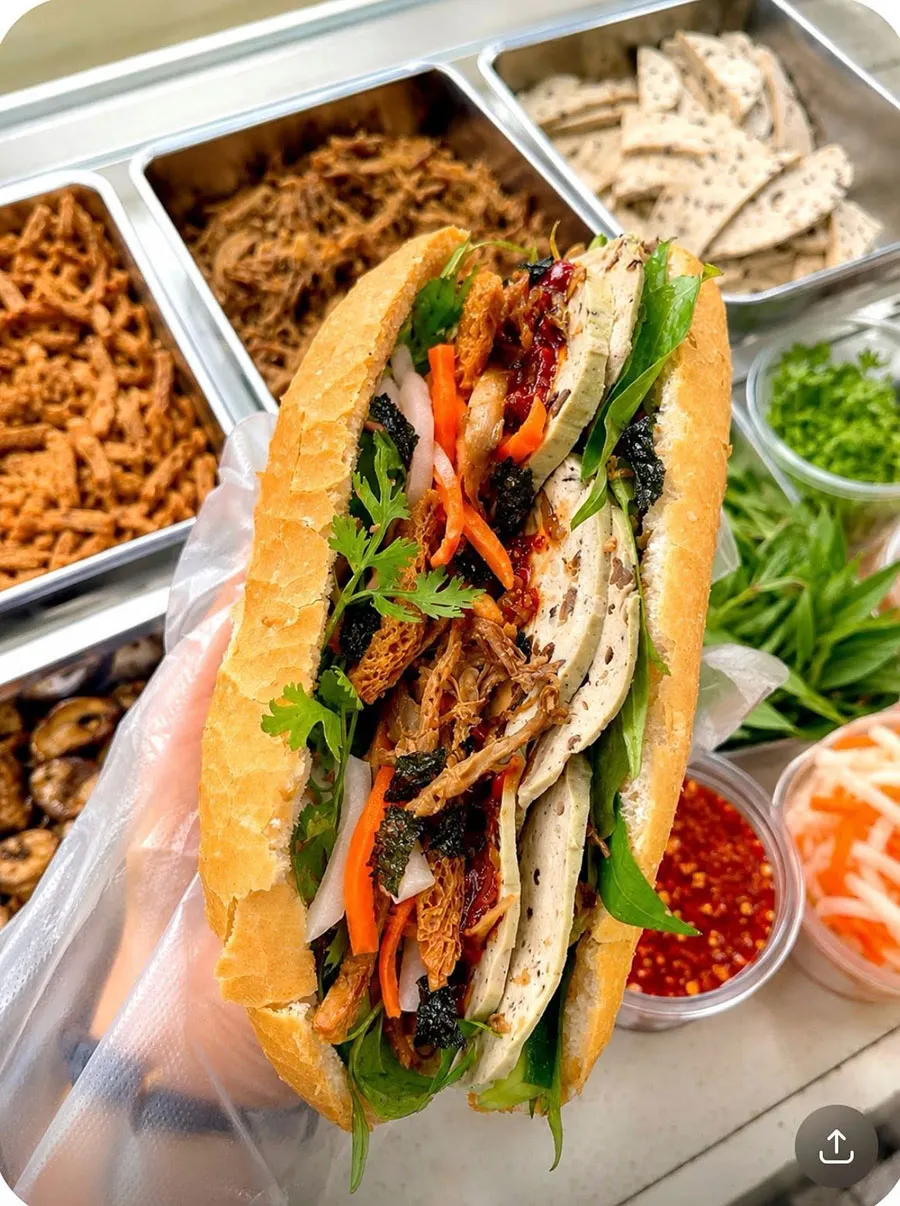
Bánh Mì Chay
Bánh mì chay is one of the easiest plant-based meals to find while sightseeing. A crisp baguette may be filled with tofu, mushrooms, vegetarian pâté, cucumber, pickled carrot, coriander and chili sauce.
Ask whether the pâté, mayonnaise and seasoning are vegan if you avoid eggs or dairy. For a lighter version, request extra vegetables and fresh herbs instead of processed mock meat.
Cơm Chay
Cơm chay is steamed rice served with a selection of prepared vegetarian dishes. A typical counter may display braised tofu, stir-fried morning glory, eggplant, mushrooms, jackfruit, pickled vegetables and a small bowl of soup.
This is an excellent lunch for travelers who want to sample several flavors without ordering a large meal. Point to the dishes you like, but ask whether the price covers a fixed number of toppings or is calculated separately.
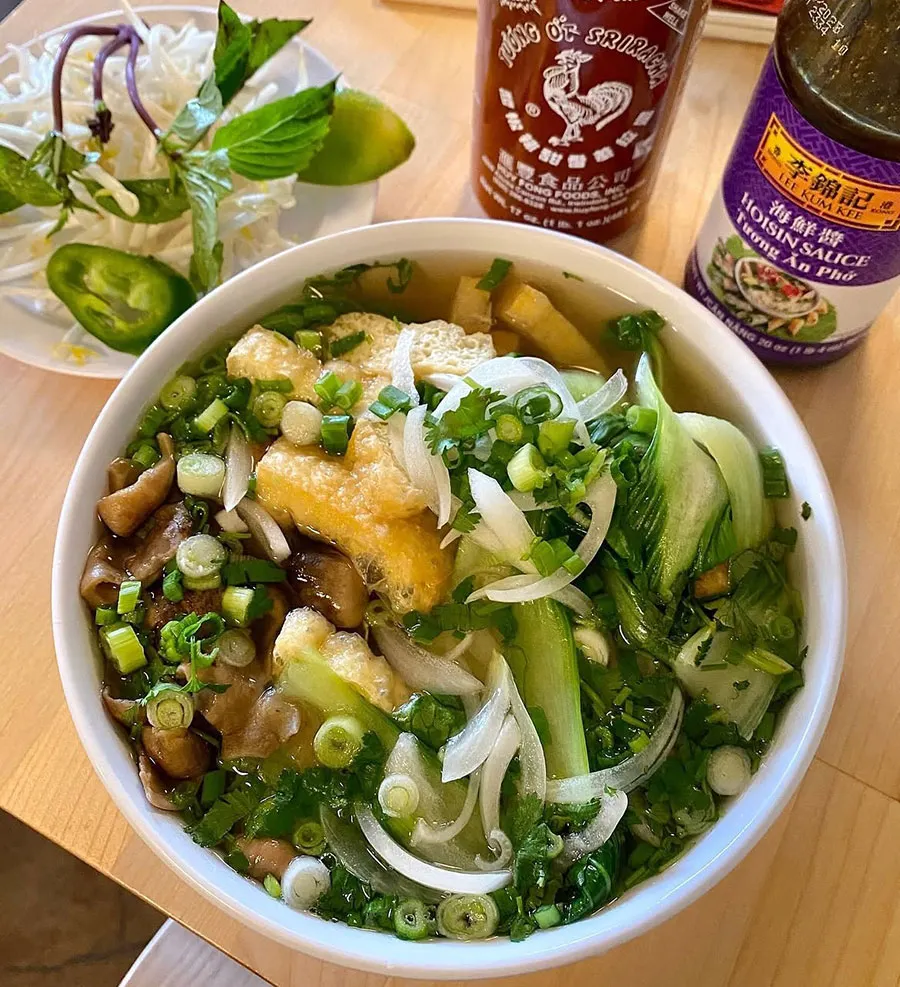
Phở Chay and Hủ Tiếu Chay
A satisfying vegetarian noodle soup depends on the broth. Good versions use mushrooms, daikon, carrots, cabbage and roasted aromatics to create depth without meat bones.
Phở chay usually combines flat rice noodles with tofu, mushrooms and herbs. Hủ tiếu chay may have a slightly sweeter southern profile and can be served with clear broth or as a dry noodle dish with sauce on the side.
Bún Huế Chay
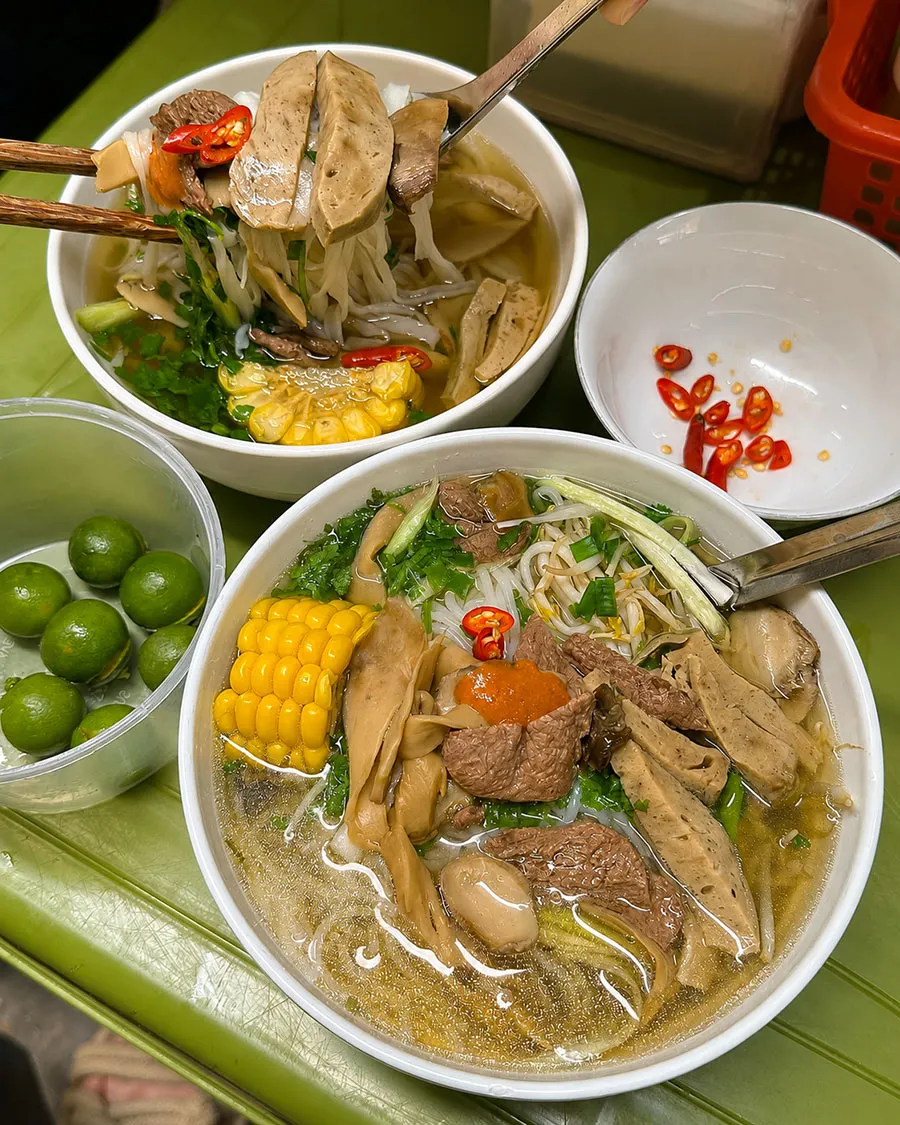
Bún Huế chay is a meat-free interpretation of the famous central Vietnamese noodle soup. Its broth is typically aromatic with lemongrass and chili, accompanied by thick rice noodles, tofu, mushrooms and vegetables.
It is a good choice for travelers who prefer stronger flavors. Ask for “ít cay” if you want it less spicy, because the chili oil served with the soup can be powerful.
Bánh Xèo Chay
Bánh xèo chay is a crisp rice-flour pancake commonly filled with mushrooms, bean sprouts and mung beans. It is eaten by wrapping pieces of pancake in lettuce and herbs before dipping them into a sweet, salty and sour sauce.
The pancake itself may be vegetarian, but the dipping sauce is the detail that requires attention. Confirm that the kitchen provides “nước chấm chay” rather than traditional fish-sauce-based nước chấm.
Gỏi Cuốn Chay
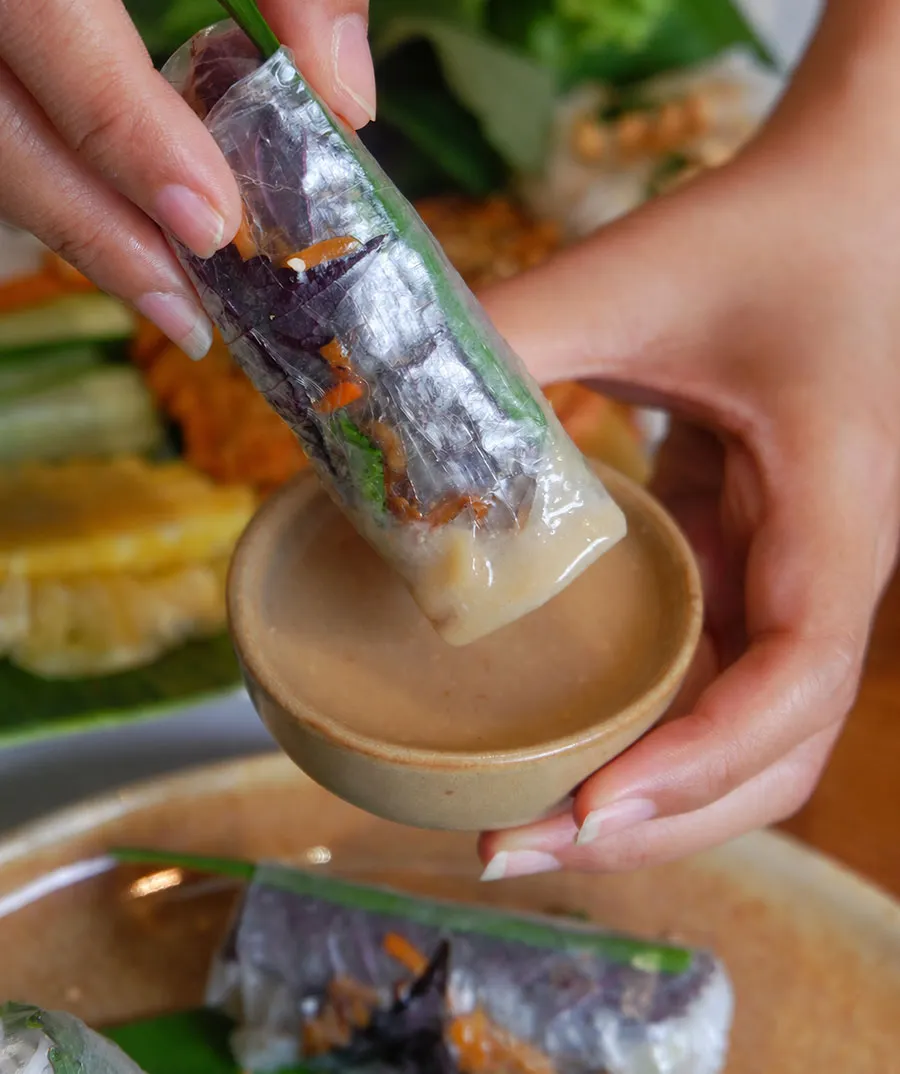
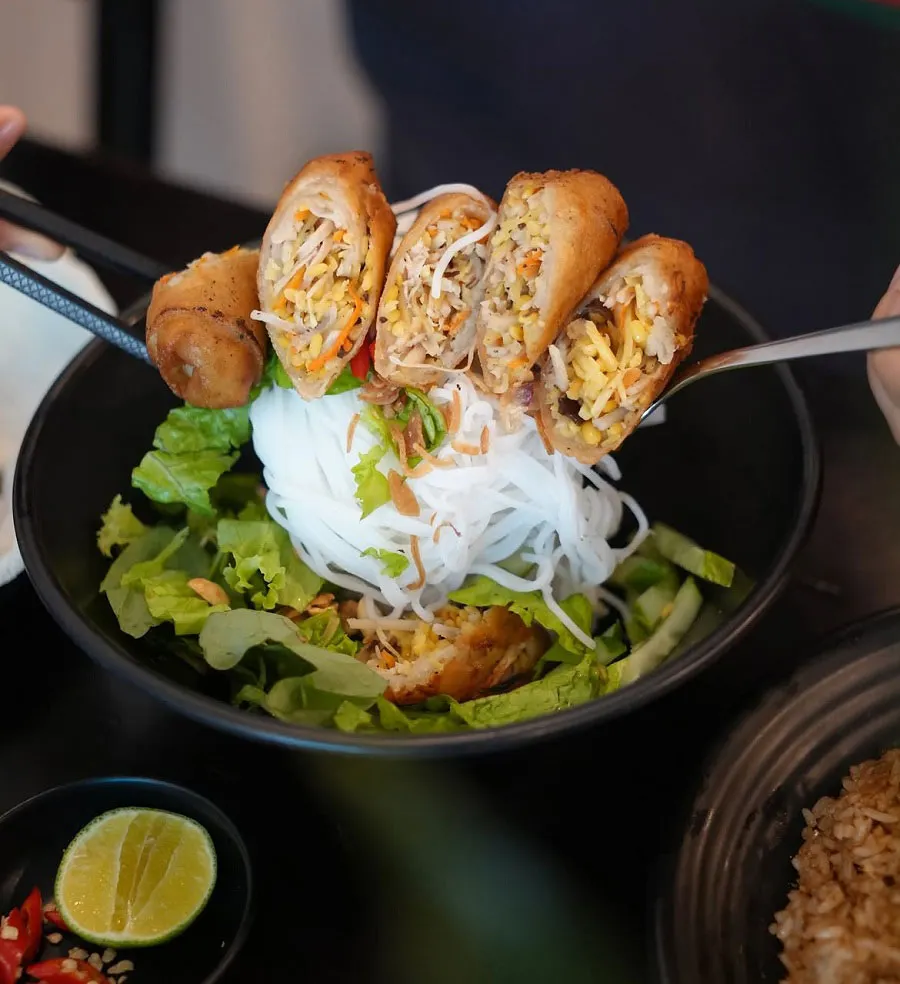
Vegetarian fresh spring rolls are ideal during Saigon’s hottest hours. Soft rice paper surrounds rice noodles, tofu, lettuce, herbs and crunchy vegetables, usually accompanied by peanut or soy-based dipping sauce.
They are refreshing and convenient but best ordered from a busy stall where ingredients are prepared frequently. Choose rolls that look freshly wrapped rather than ones that have been sitting uncovered for a long time.
Bún Thịt Nướng Chay
The vegetarian version of bún thịt nướng replaces grilled pork with tofu, mushrooms or seasoned soy protein. Rice vermicelli is layered with cucumber, herbs, pickled vegetables and crushed peanuts.
Its appeal comes from contrasting textures rather than a heavy sauce. Before eating, check that the dressing is vegetarian, as the standard version normally contains fish sauce.
Vegetarian Snacks and Desserts
Street snacks can include fried tofu, grilled corn, boiled peanuts, sweet potatoes and rice cakes, but recipes vary between vendors. Even apparently simple snacks may contain dried shrimp, pork fat or meat seasoning, so ask before ordering.
For dessert, chè is a colorful category of sweet soups and puddings made with beans, fruit, jelly, coconut milk or sticky rice. Most varieties are meat-free, although strict vegans should check whether condensed milk or dairy is added.
Where to Find Vegetarian Food in Ho Chi Minh City
Saigon does not have one single vegetarian quarter. The most rewarding strategy is to explore neighborhoods with local markets, Buddhist pagodas and streets where small family-run eateries serve nearby residents.
Districts 1 and 3 for First-Time Visitors
District 1 offers the greatest convenience for travelers staying near major attractions. You will find casual vegetarian restaurants, vegan cafés and bánh mì counters, although prices can be higher around the central tourist streets.
Neighboring District 3 often feels more residential. Its side streets and alleys are good places to search for inexpensive noodle shops and cơm chay counters while remaining close to downtown.
Districts 5 and 10 for Local Variety
District 5, including the Chợ Lớn area, has a strong Chinese-Vietnamese culinary identity and many temples and pagodas. Vegetarian travelers may encounter meat-free noodle soups, dumplings, rice dishes and tofu preparations influenced by both traditions.
District 10 is another promising area for affordable local food. Exploring these neighborhoods independently is possible, but a Ho Chi Minh City walking tour or local guide can help with ordering and locating small eateries hidden beyond the main roads.
Pagodas, Markets and Residential Alleys
Vegetarian eateries are often found near pagodas because they serve worshippers and local Buddhist communities. Be respectful around religious sites and remember that nearby food stalls are independent businesses, not necessarily part of the pagoda.
Morning markets may offer vegetarian rice, noodles and takeaway snacks, particularly on important lunar observance days. Residential alleys are equally rewarding, but opening hours can be short and popular dishes may sell out after the main breakfast or lunch period.
Local Tip: Search digital maps using Vietnamese phrases such as “quán chay gần đây,” meaning “vegetarian restaurant nearby,” rather than searching only in English. Check recent reviews and opening hours before traveling across the city.
Three Local Places to Try Vegetarian Food in Ho Chi Minh City
For a more specific starting point, these casual vegetarian spots offer familiar Vietnamese dishes, from takeaway bánh mì to noodle soups and rice meals.
| Place | Address in Ho Chi Minh City | What to try |
|---|---|---|
| Bánh Mì Xanh | 38 Lê Thị Riêng Street | Vegan bánh mì for a quick takeaway meal |
| Phở Chay Như | 54 Trương Quyền Street | Phở chay for a meat-free noodle soup |
| Quán Chay Bình An | 49 Ngô Quyền Street | Cơm chay for a vegetarian rice meal |
Check current opening hours before heading out, and confirm which dishes are available when you arrive. If you follow a strict vegan diet, explain that you also avoid eggs and dairy before ordering.
When Is the Best Time to Find Vegetarian Street Food?
Breakfast is usually available from early morning, while cơm chay counters become busiest around lunch. Evening service varies: some shops reopen after an afternoon break, whereas small family businesses may close once their prepared food is sold.
Vegetarian choices often increase on the first and fifteenth days of the lunar month, when many Vietnamese Buddhists eat meat-free meals. These days can bring more variety but also larger crowds, so arrive earlier than usual.
If you want to sample several dishes in one evening, a planned vegetarian street food tour in Ho Chi Minh City removes much of the uncertainty. It can also reveal neighborhood eateries that travelers are unlikely to notice from the main street.
How Much Does Vegetarian Street Food Cost in Saigon?
A simple local vegetarian meal commonly costs about 25,000–70,000 VND, depending on the dish, portion and neighborhood. Central cafés, air-conditioned restaurants and modern plant-based venues may charge considerably more.
| Vegetarian dish | Typical local price |
|---|---|
| Bánh mì chay | 20,000–45,000 VND |
| Cơm chay | 30,000–60,000 VND |
| Vegetarian noodle soup | 35,000–70,000 VND |
| Fresh spring rolls | 10,000–25,000 VND each |
| Chè | 15,000–35,000 VND |
Treat these figures as planning ranges rather than fixed prices. Confirm the price before ordering at stalls without a visible menu, especially when toppings or side dishes are charged individually.
How to Order Vegetarian or Vegan Food in Vietnamese
Learning a few short phrases makes eating in Ho Chi Minh City much easier:
- “Tôi ăn chay” – I eat vegetarian food.
- “Món này có phải món chay không?” – Is this dish vegetarian?
- “Không thịt, không cá” – No meat and no fish.
- “Không nước mắm” – No fish sauce.
- “Không trứng, không sữa” – No egg and no milk.
- “Tôi ăn thuần chay” – I am vegan.
- “Ít cay” – Less spicy.
Simply saying “no meat” is not enough for strict vegetarians or vegans. Ask about broth, dipping sauce and pâté, because these ingredients may contain animal products even when the main topping is tofu or vegetables.
Street Stall, Vegetarian Restaurant or Food Tour?
Street stalls offer low prices and an everyday local atmosphere, but communication and ingredient verification can be difficult. Dedicated vegetarian restaurants provide greater choice and are usually safer for strict dietary requirements.
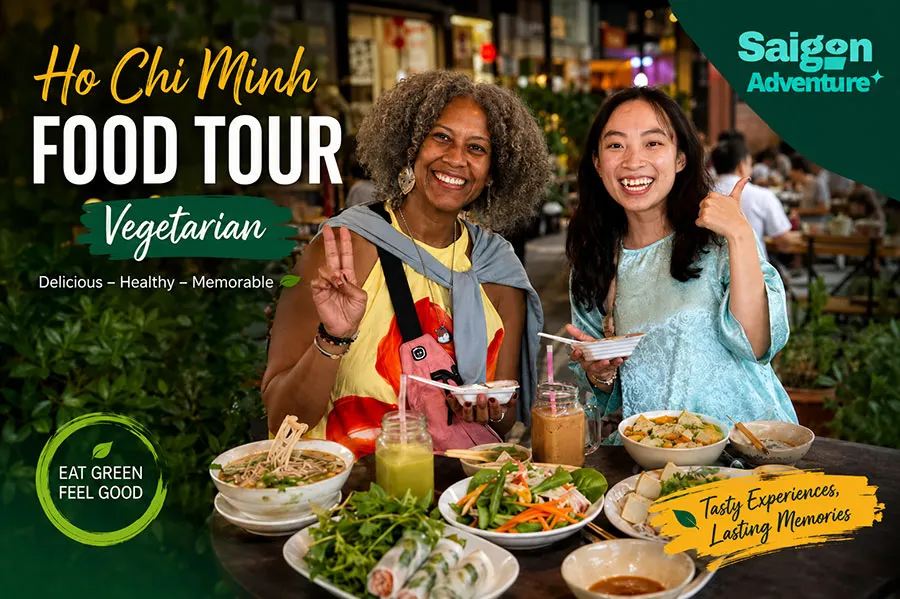
A guided experience costs more but combines food with cultural context and transport between neighborhoods. Saigon Adventure’s vegan food tour is the most relevant option for travelers who need an entirely plant-based itinerary, while the broader Saigon motorbike food tour can be considered when dietary requirements are confirmed in advance.
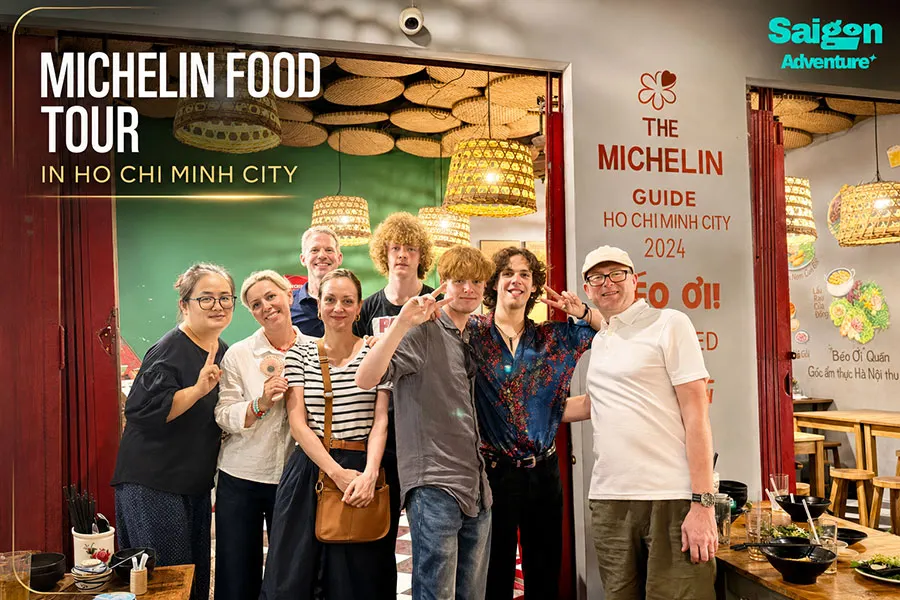
Travelers without strict restrictions may also enjoy the award-winning street food tour by motorbike, where vegetarian alternatives can be arranged with prior notice. Always explain allergies separately, since “vegetarian” does not automatically mean free from peanuts, soy, gluten or other allergens.

Practical Safety Tips for Eating Vegetarian Street Food
Choose busy stalls with regular customer turnover and food cooked or reheated thoroughly. Fresh herbs should look crisp, sauces should be covered, and the preparation area should appear organized.
Drink bottled or properly filtered water, wash or sanitize your hands before eating and avoid raw garnishes if you have a sensitive stomach. Anyone with a serious allergy should carry a translated allergy card and avoid kitchens where cross-contact cannot be clearly controlled.
Carry small Vietnamese notes because neighborhood stalls may not accept cards. Check opening times on the same day, but do not rely completely on map listings; local vendors sometimes close unexpectedly or sell out early.
A Flavorful Side of Saigon Worth Discovering
Vegetarian street food in Ho Chi Minh City is not a compromise. From crisp bánh xèo and aromatic noodle soups to humble rice counters filled with tofu, mushrooms and seasonal vegetables, it offers a delicious window into local habits and Buddhist culinary traditions.
Independent exploration suits confident travelers who enjoy searching and ordering in Vietnamese. If you prefer a smoother experience, a knowledgeable local guide can build a vegetarian route around your dietary needs while introducing the alleys, stories and family-run kitchens that make eating in Saigon memorable.

Frequently Asked Questions
Is street food in Ho Chi Minh City suitable for vegetarians?
Yes, but choose dedicated vegetarian vendors whenever possible. A dish without visible meat may still contain fish sauce, meat broth or animal-based seasoning, so ask whether the entire dish is “chay.”
What is the best Vietnamese vegetarian street food to try?
Bánh mì chay, cơm chay, phở chay, hủ tiếu chay, bánh xèo chay and gỏi cuốn chay are excellent starting points. Together, they provide a good range of bread, rice, noodles, herbs and tofu-based flavors.
Is vegetarian food in Vietnam always vegan?
No. Vietnamese “chay” food is often vegan, but definitions and recipes vary. Confirm whether a dish contains egg, milk, butter, condensed milk or honey if you follow a strict vegan diet.
Where can I find cheap vegetarian food in Saigon?
Look for small “quán chay” and “cơm chay” shops in residential parts of Districts 3, 5 and 10 or near pagodas. Local rice and noodle meals are generally less expensive than those in central cafés.
What should vegetarians avoid in Vietnamese street food?
Watch for fish sauce, shrimp paste, meat-based broth, pork fat and pâté. Ask about dipping sauces and seasonings even when the visible ingredients appear completely plant-based.
Can a food tour accommodate vegan travelers?
Many tours can accommodate vegan guests when notified before departure, but menus and kitchens differ. Explain all dietary rules and allergies during booking rather than waiting until the first food stop.
What are the best times to eat vegetarian street food?
Early morning is good for bánh mì and noodles, while 11:00 a.m.–1:00 p.m. is ideal for cơm chay. More vegetarian options may appear on the first and fifteenth days of the lunar month.
Explore our best-selling tours
 Bestseller
Street Food Tour In Ho Chi Minh City By Motorbike
Saigon Street Food Tours: An Authentic Culinary Odyssey To experience Ho Chi Minh City, you need to do two things:...
 Bestseller
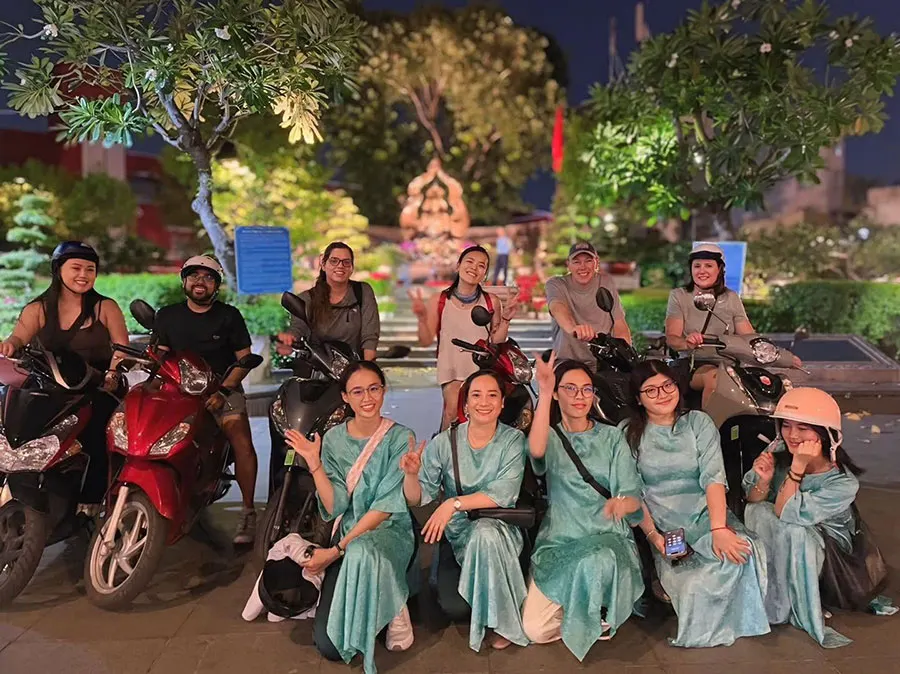
Saigon: Premium Award-Winning Food Tour with Ao Dai Female Riders
A Michelin food tour by scooter in Vietnam elevates the standard street food experience by combining world-class culinary recognition with...
 Bestseller
Saigon Foodie Tour By Scooter With Female Rider (With Beer & Seafood)
Beautiful female tour guides at Saigon Adventure ABOUT THIS TOUR Let us be your guide to experiencing Saigon By Night...
 Bestseller
Vegan Food Tour
Keep your travel plan flexible - book your spot now and pay nothing today! You only need to pay 4...
 Bestseller
Hanoi Local Food Tour with Train Street and Old Quarter
Discover the flavors and everyday life of Vietnam’s capital on a 3-hour Hanoi local food tour through the historic Old...
 Bestseller
Premium Saigon Hidden Alleys & History: Private Motorbike Tour
Ho Chi Minh Hidden Alleys & History: Private Motorbike Tour Ready to step off the beaten path and discover the...
 Bestseller
Ho Chi Minh City Michelin Food and Live Music Scooter Tour
Welcome to our premier michelin food tour in Ho Chi Minh City! Secure your experience today with Total Flexibility Reserve...
 Bestseller
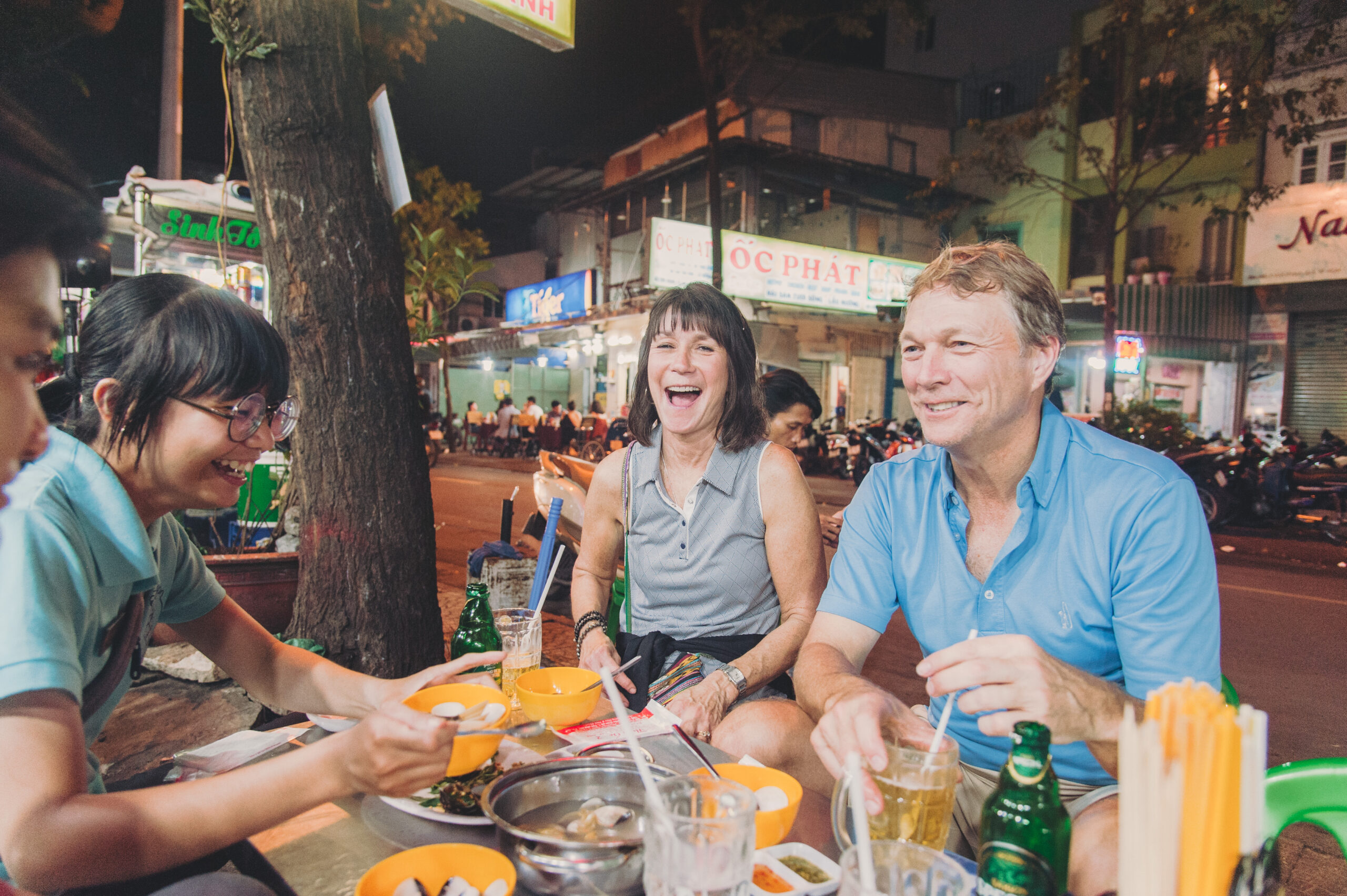
Ho Chi Minh Food Safari With 20 Tastings
Explore Ho Chi Minh City through its food on our Ho Chi Minh Food Safari, featuring 20 authentic street food...
 Bestseller
Saigon | Combo Street Food And Sightseeing Tour By Scooter
Food and Sight Motorbike (Special Combo) Experience the ultimate Saigon adventure! Over 4 thrilling hours, hop on the back of...