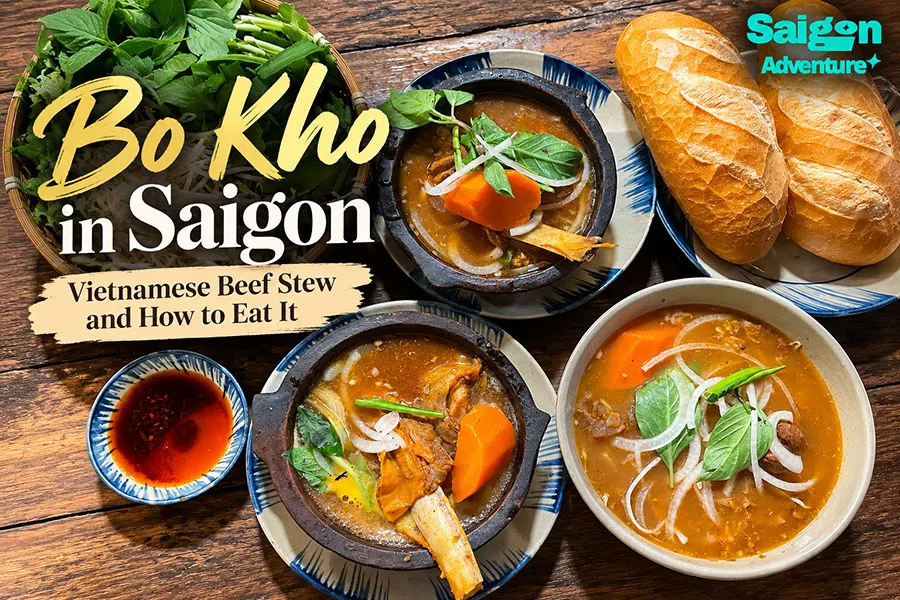
If you’ve already tried pho and banh mi, bo kho in Saigon is another Vietnamese dish worth discovering. This fragrant beef stew combines tender, slow-cooked meat, carrots, lemongrass, and warming spices in a rich orange-red broth.
Often served with a crispy Vietnamese baguette or noodles, bo kho is a comforting local favorite, especially for breakfast. It’s flavorful without necessarily being spicy, making it an approachable choice for first-time visitors.
Here’s what bo kho tastes like, how to eat it, what to order, and how to find a good bowl in Ho Chi Minh City.
What Is Bo Kho?
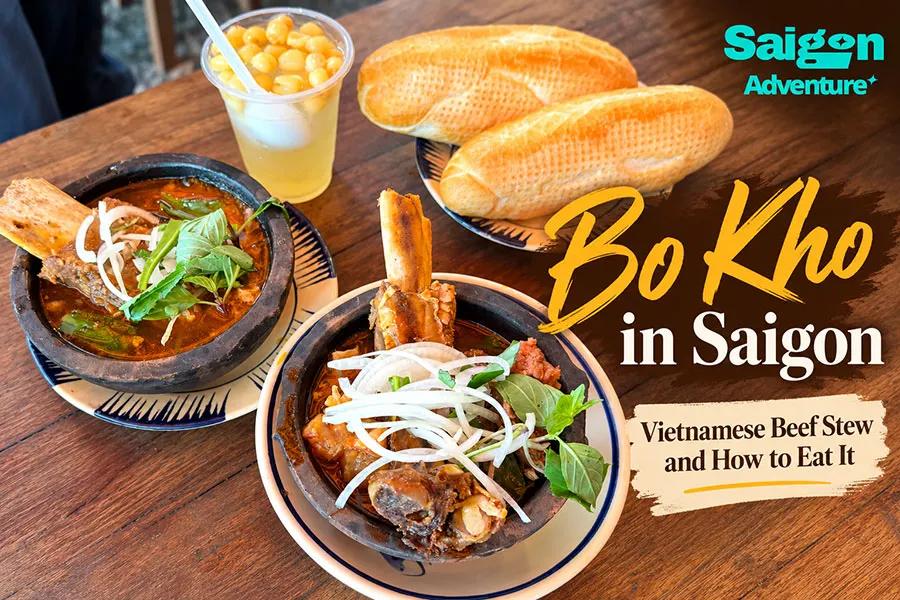
Bo kho (bò kho) is a Vietnamese beef stew traditionally prepared with beef shank, brisket, or tendon, slowly simmered with lemongrass, star anise, cinnamon, garlic, and other seasonings.
Unlike many Western beef stews, bo kho typically has a lighter, more aromatic broth rather than a thick gravy. Its distinctive orange-red color often comes from annatto oil and sometimes tomato.
The dish is especially popular in southern Vietnam, where locals enjoy it with bread, rice noodles, or egg noodles.
What makes bo kho memorable is its balance of savory beef, gentle sweetness, and fragrant spices. Each restaurant has its own recipe, so no two bowls taste exactly alike.
What Does Bo Kho Taste Like?
A good bowl of bo kho is rich, aromatic, and slightly sweet.
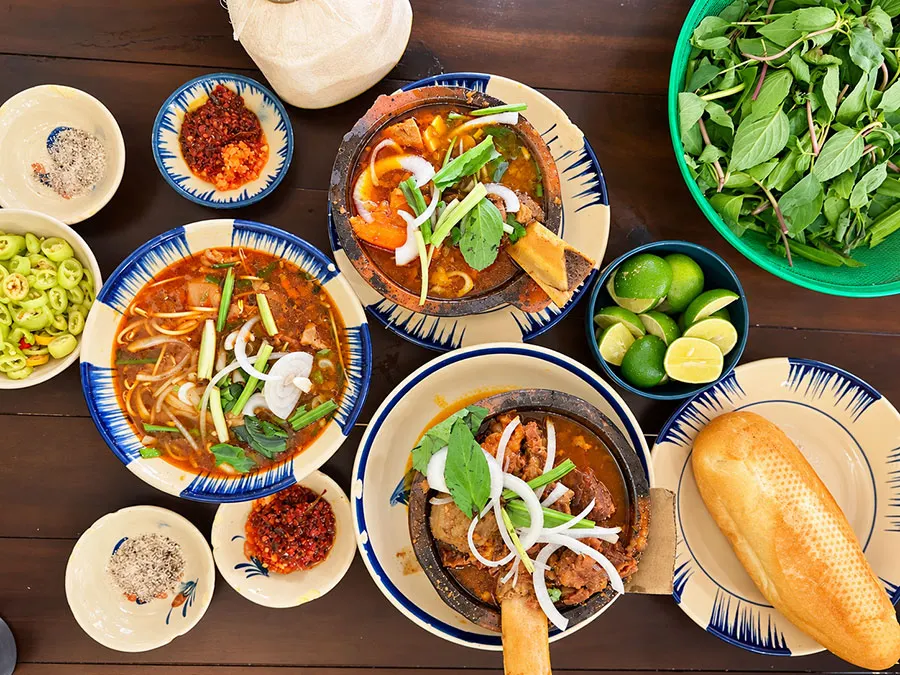
The beef becomes tender after hours of slow cooking, while carrots add natural sweetness. Lemongrass brings a fresh, citrus-like fragrance, and star anise and cinnamon give the broth its distinctive warmth.
Some southern recipes also use coconut water for a subtle sweetness.
Despite its reddish color, bo kho isn’t always spicy. Chili may be added during cooking or served separately, allowing diners to adjust the heat.
If you enjoy braised beef, hearty soups, or mildly spiced dishes, bo kho is an excellent introduction to Vietnamese comfort food.
How to Eat Bo Kho in Saigon
There are several ways to enjoy Vietnamese beef stew. The most popular choices are with bread or noodles.
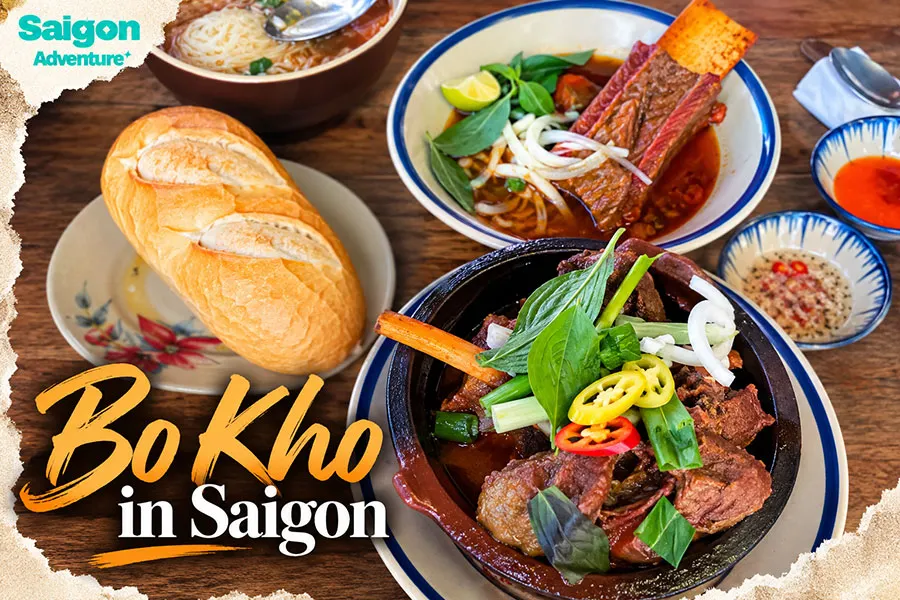
1. Banh Mi Bo Kho – Beef Stew With Bread
Best for first-time visitors
This is one of the most familiar ways to eat bo kho in southern Vietnam.
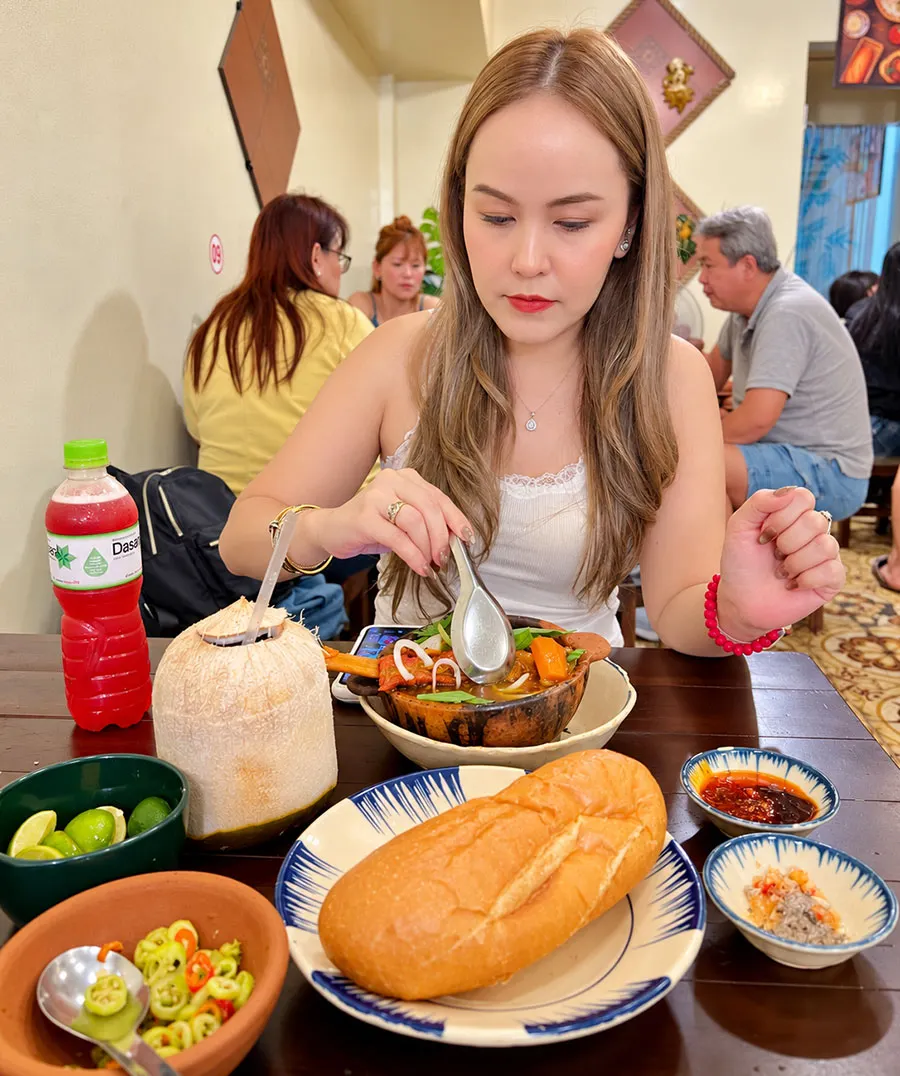
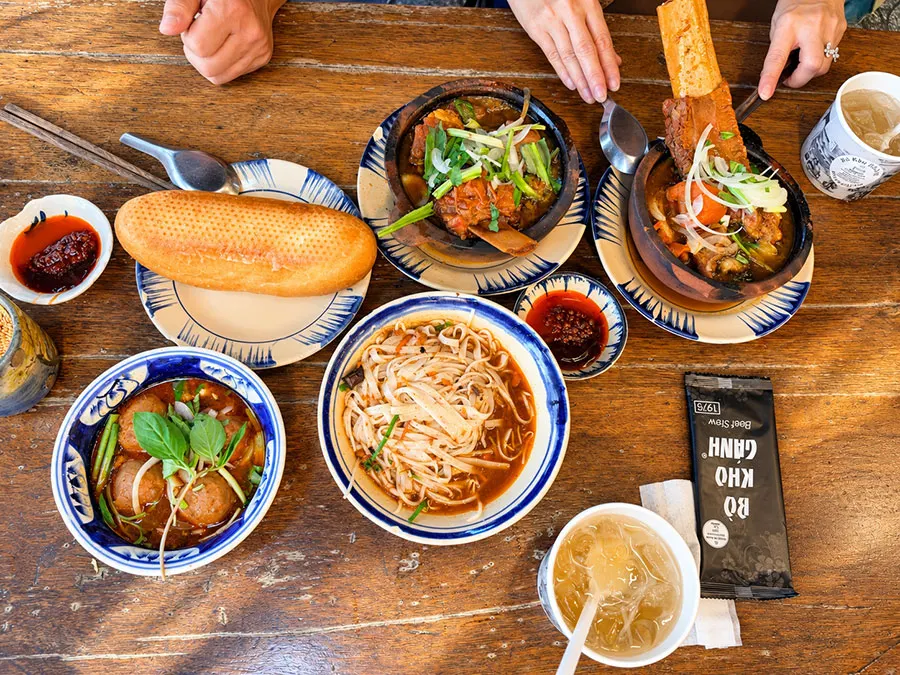
A steaming bowl of beef stew arrives with a crispy Vietnamese baguette on the side.
Instead of making a sandwich, tear the bread into small pieces and dip them into the fragrant broth. Enjoy each bite with tender beef or carrots.
The contrast between crunchy bread and rich stew is what makes this combination special.
Local tip: Dip the bread just before eating to keep it from becoming soggy.
2. Hu Tieu Bo Kho – Beef Stew With Rice Noodles
Best for noodle lovers
Hu tieu bo kho combines slow-cooked beef with hủ tiếu noodles, creating a filling and flavorful meal.
The noodles absorb the savory broth while maintaining a pleasant texture. Depending on the restaurant, fresh herbs, onions, and lime may be served alongside.
Use chopsticks for the noodles and a spoon for the broth.
This is a great alternative if you’ve already tried traditional Vietnamese noodle soups.
3. Mi Bo Kho – Beef Stew With Egg Noodles
Best for a heartier meal
Mi bo kho features yellow wheat or egg noodles, which are generally firmer and springier than rice noodles.
Their slightly richer flavor pairs well with the aromatic beef stew.
Some restaurants also serve bo kho with steamed rice, although bread and noodles are more commonly associated with the dish.
How to Order Bo Kho Like a Local
Ordering bo kho is easy, even if you don’t speak Vietnamese.
Here are a few useful phrases to remember:
| Vietnamese | English |
|---|---|
| Bò kho | Vietnamese beef stew |
| Bánh mì bò kho | Beef stew with baguette |
| Hủ tiếu bò kho | Beef stew with rice noodles |
| Mì bò kho | Beef stew with egg noodles |
| Không cay | Not spicy |
| Thêm bánh mì | Extra bread |
| Bao nhiêu tiền? | How much does it cost? |
To order beef stew with bread, simply say:
“Cho tôi một phần bánh mì bò kho, không cay.”
This means, “I’d like one serving of beef stew with bread, not spicy.”
At smaller restaurants, pointing to the menu or another customer’s dish is also perfectly normal.
How Locals Customize Their Bo Kho
Bo kho is delicious on its own, but a few additions can make the flavors even more interesting.
-
Fresh herbs: Thai basil, cilantro, or sawtooth coriander add freshness.
-
Lime: A small squeeze brightens the broth and balances its richness.
-
Chili: Fresh chili or chili sauce adds heat for those who enjoy spicy food.
-
Salt, pepper, and lime: Some restaurants offer this mixture for dipping pieces of beef.
Taste the broth before adding condiments. A well-prepared bo kho already has a carefully balanced flavor.
Where to Eat Bo Kho in Saigon
You don’t need an expensive restaurant to enjoy authentic bo kho. Many neighborhood eateries serve excellent versions at affordable prices.
District 1 – Convenient for Travelers
If you’re staying near Ben Thanh Market or central Ho Chi Minh City, look for casual Vietnamese restaurants serving breakfast and traditional dishes.
District 1 is convenient for travelers who want to try bo kho without traveling far from the main attractions.
District 3 – Neighborhood Food Culture
District 3 offers plenty of opportunities to explore everyday Saigon dining.
Small family-run restaurants and breakfast eateries are worth checking for traditional Vietnamese dishes, including bo kho.
District 5 – Local Culinary Experiences
District 5 and the surrounding Cho Lon area are known for their diverse Chinese-Vietnamese food culture.
While not every restaurant serves bo kho, the neighborhood is rewarding for travelers interested in traditional noodles, braised meats, and local eateries.
Local tip: Search Google Maps for “bò kho gần đây” (bo kho nearby), then check recent reviews, food photos, and opening hours before visiting.
When to Eat Bo Kho and How Much It Costs
Bo kho is particularly popular as a breakfast dish in southern Vietnam, although some restaurants also serve it for lunch or dinner.
A bowl of beef stew with a fresh baguette and Vietnamese iced coffee makes a satisfying morning meal.
For budgeting, a basic serving at a casual local restaurant may cost approximately 40,000–80,000 VND, depending on portion size and ingredients. This is a general estimate rather than a confirmed current menu price.
Extra bread, noodles, beef, or tendon may cost more.
If you’re visiting a small restaurant without displayed prices, ask before ordering.
Bo Kho vs Pho: What’s the Difference?
Both dishes feature beef and fragrant spices, but they offer different experiences.
| Feature | Bo Kho | Pho |
|---|---|---|
| Dish | Beef stew | Noodle soup |
| Broth | Rich, orange-red | Usually clear |
| Beef | Slow-cooked chunks | Sliced or slow-cooked cuts |
| Main flavors | Lemongrass, cinnamon, star anise | Ginger, cinnamon, star anise |
| Served with | Bread, noodles, or rice | Flat rice noodles |
Pho is generally lighter, while bo kho has a richer, more concentrated flavor.
If you enjoy hearty, slow-cooked dishes, bo kho is definitely worth trying.
Tips for First-Time Visitors
A few simple tips can improve your experience:
-
Choose busy local eateries: Good customer turnover is useful, although it doesn’t guarantee food safety.
-
Try the bread version first: Banh mi bo kho is an easy introduction to the dish.
-
Ask about tendon: Some versions include beef tendon, which has a soft, gelatinous texture.
-
Check ingredients if you have allergies: Fish sauce, soy-based seasonings, or wheat may be present.
-
Bring cash: Smaller restaurants may not accept international credit cards.
For more practical advice, explore Saigon Adventure’s guide to eating street food safely in Ho Chi Minh City.
Frequently Asked Questions About Bo Kho
Is Bo Kho Spicy?
Not necessarily. Bo kho is primarily aromatic, with lemongrass and warm spices. Some versions contain chili, so ask for a mild serving if needed.
Is bo Kho the Same as Pho?
No. Bo kho is a rich beef stew served with bread or noodles, while pho is a lighter noodle soup with a different broth and serving style.
Can You Eat Bo Kho for Breakfast?
Yes. Bo kho with baguette is a popular breakfast choice in southern Vietnam, although some restaurants serve it throughout the day.
Is Bo Kho Gluten-Free?
Not always. Some recipes use wheat-containing sauces or seasonings. Ask about ingredients and cross-contact, especially if you have celiac disease.
Is Bo Kho Worth Trying in Saigon?
Absolutely. It’s a comforting, flavorful dish that offers a different experience from Vietnam’s more internationally famous noodle soups.
Discover the Flavors of Saigon
Bo kho may not be as internationally famous as pho or banh mi, but it’s a wonderful example of Vietnamese comfort food.
A steaming bowl of tender beef, aromatic broth, and crispy bread offers a simple yet memorable taste of everyday Saigon.
If you’d like to explore more local dishes and hidden neighborhood eateries, consider a Saigon street food tour by motorbike with Saigon Adventure. Tour menus vary, so request bo kho in advance if it’s a dish you’d especially like to try.