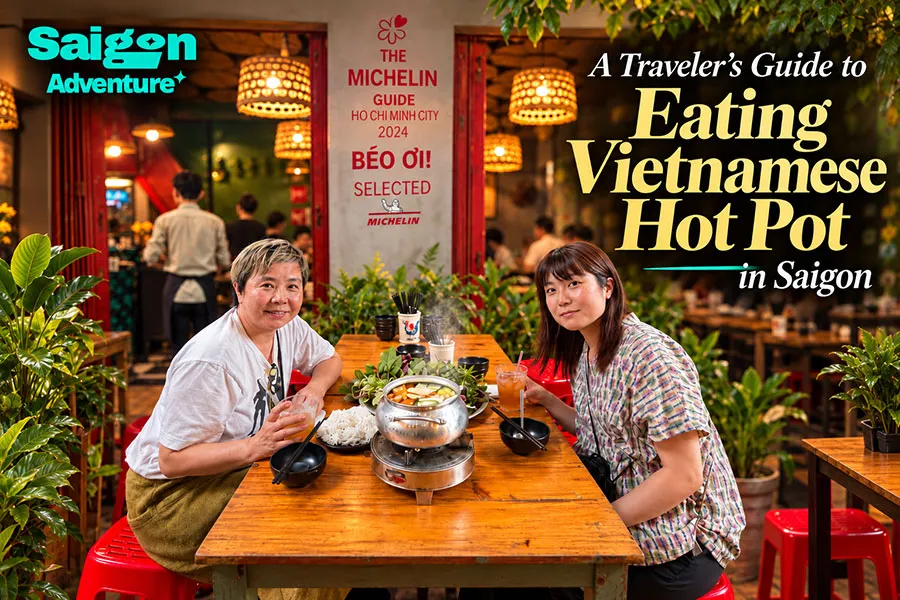
Vietnamese hot pot in Saigon is more than a bubbling pot of broth placed in the middle of a table. It is a relaxed, sociable meal in which diners cook meat, seafood, vegetables and noodles together, usually over a long conversation and several rounds of food.
For international travelers, eating hot pot is an enjoyable way to explore Vietnamese ingredients without needing to understand every dish on a long menu. Choose a broth, order ingredients for the table, add them gradually and eat everything while it is fresh and hot.
Quick Answer: What Is Vietnamese Hot Pot in Saigon?
Vietnamese hot pot, or lẩu, is one of the most social ways to eat in Saigon. Diners choose a broth, cook meat, seafood, vegetables and noodles at the table, and share everything from the same pot.
Popular choices include lẩu Thái, lẩu cá kèo, lẩu mắm, beef hot pot and mushroom hot pot, ranging from mild, beginner-friendly flavors to more distinctive southern specialties.
What is Vietnamese hot pot?
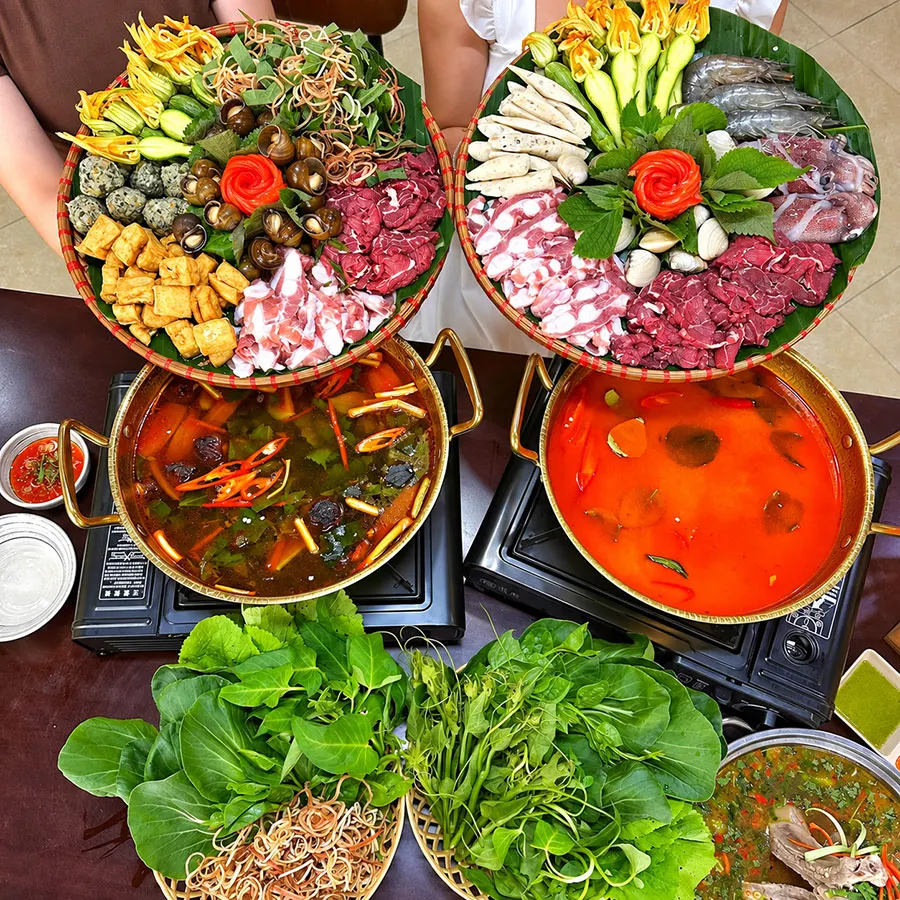
Known locally as lẩu, Vietnamese hot pot consists of a heated pot of broth surrounded by plates of uncooked ingredients. Diners add these ingredients to the broth themselves and share the cooked food directly from the central pot.
Unlike an individual bowl of noodle soup, hot pot develops throughout the meal. Vegetables soften, seafood adds sweetness, meat enriches the broth, and noodles absorb the combined flavors near the end.
The experience is highly communal. Friends, relatives and colleagues gather around the same pot, serve one another and continue ordering small extras if the evening lasts longer than expected.
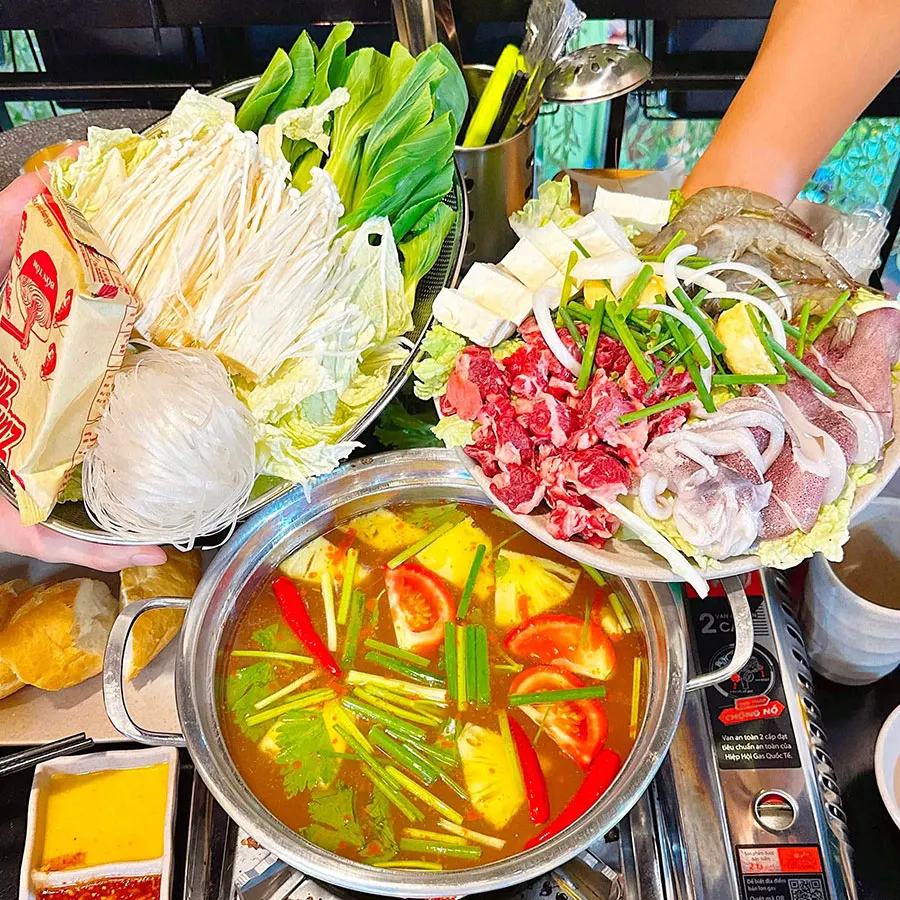
Is eating Vietnamese hot pot in Saigon worth it?
Yes, especially if you are traveling with at least one other person and want a local dining experience rather than a quick meal. Hot pot lets you taste several ingredients, adjust the pace and enjoy dinner as a shared activity.
It is also a useful choice for groups with different appetites because ingredients are usually ordered separately. One person can focus on vegetables while another tries beef, fish or seafood.
The main disadvantage is that hot pot requires more time than bánh mì, cơm tấm or a bowl of phở. It can also be difficult for solo diners because many portions and broth pots are designed for two or more people.
Travelers who want to compare this sit-down experience with Saigon’s smaller local dishes can explore a broader range of flavors on a Saigon food tour.
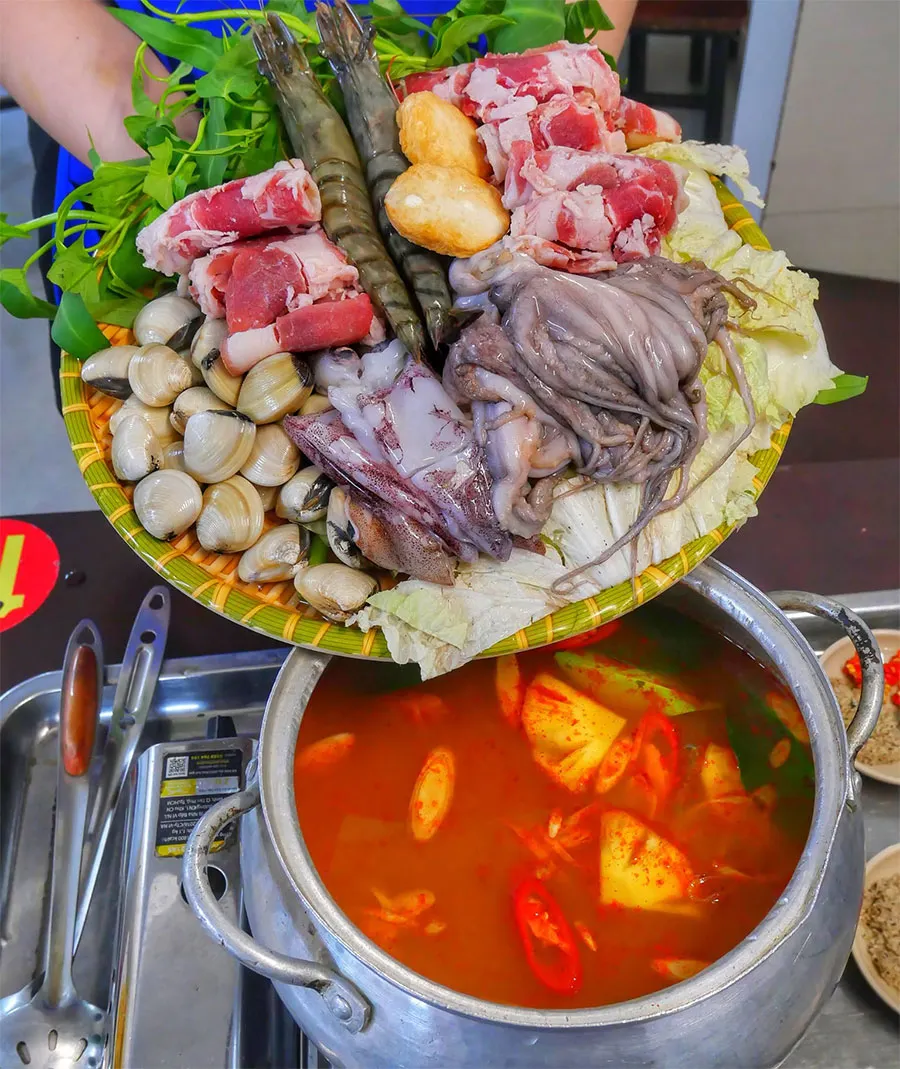
Popular types of Vietnamese hot pot to try
Saigon’s food culture draws influences from southern Vietnam and many other regions. As a result, hot pot menus range from approachable sweet-and-sour broths to intense fermented fish specialties.
Which Vietnamese Hot Pot Should You Try?
| Hot pot | Flavor | Best for |
|---|---|---|
| Lẩu Thái | Sour, spicy and aromatic | First-time visitors who enjoy bold flavors |
| Lẩu cá | Light, savory and slightly sour | Travelers who prefer fish and a lighter broth |
| Lẩu cá kèo | Tangy, fresh and distinctly southern | Visitors looking for a local southern specialty |
| Lẩu mắm | Rich, savory and strongly aromatic | Adventurous eaters who want deeper local flavors |
| Beef hot pot | Rich, comforting and familiar | Groups and travelers who want an easy choice |
| Mushroom hot pot | Mild, earthy and light | Travelers who prefer a gentler meal |
Lẩu Thái: A Popular Vietnamese Hot Pot for First-Time Visitors
Lẩu Thái is widely available and usually combines sour, spicy and aromatic flavors. Typical ingredients include seafood, mushrooms, tomatoes, herbs, vegetables and noodles.
Although the name refers to Thailand, the version served in Saigon is often adapted to Vietnamese preferences. It is a practical starting point for travelers who enjoy tom yum-style flavors but want to experience a local dining setting.
Ask whether the kitchen can reduce the chili if you are sensitive to heat. “Không cay” means not spicy, while “ít cay” means slightly spicy.
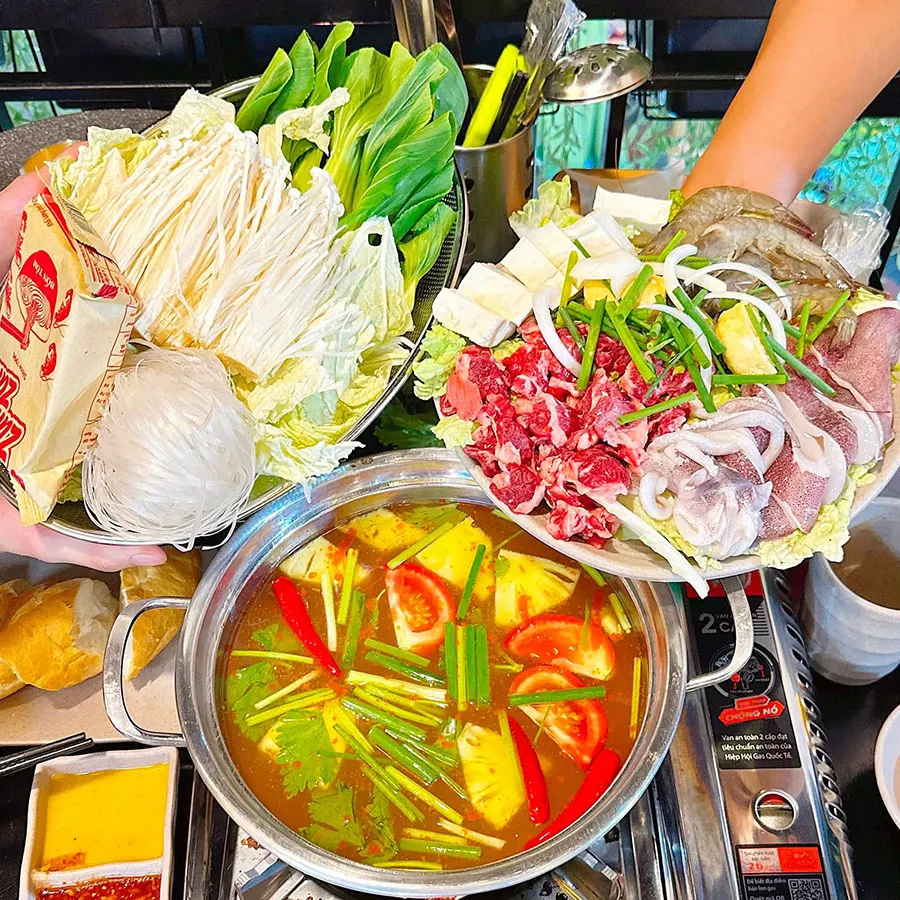
Lẩu Cá: Vietnamese Fish Hot Pot in Saigon
Fish hot pot may feature freshwater fish or other locally available varieties, depending on the restaurant. The broth is often light, slightly sour and served with leafy vegetables, herbs and rice noodles.
Be aware that fish may arrive in bone-in pieces rather than boneless fillets. Eat slowly, use your chopsticks to separate the flesh and place any bones discreetly on a small side plate.
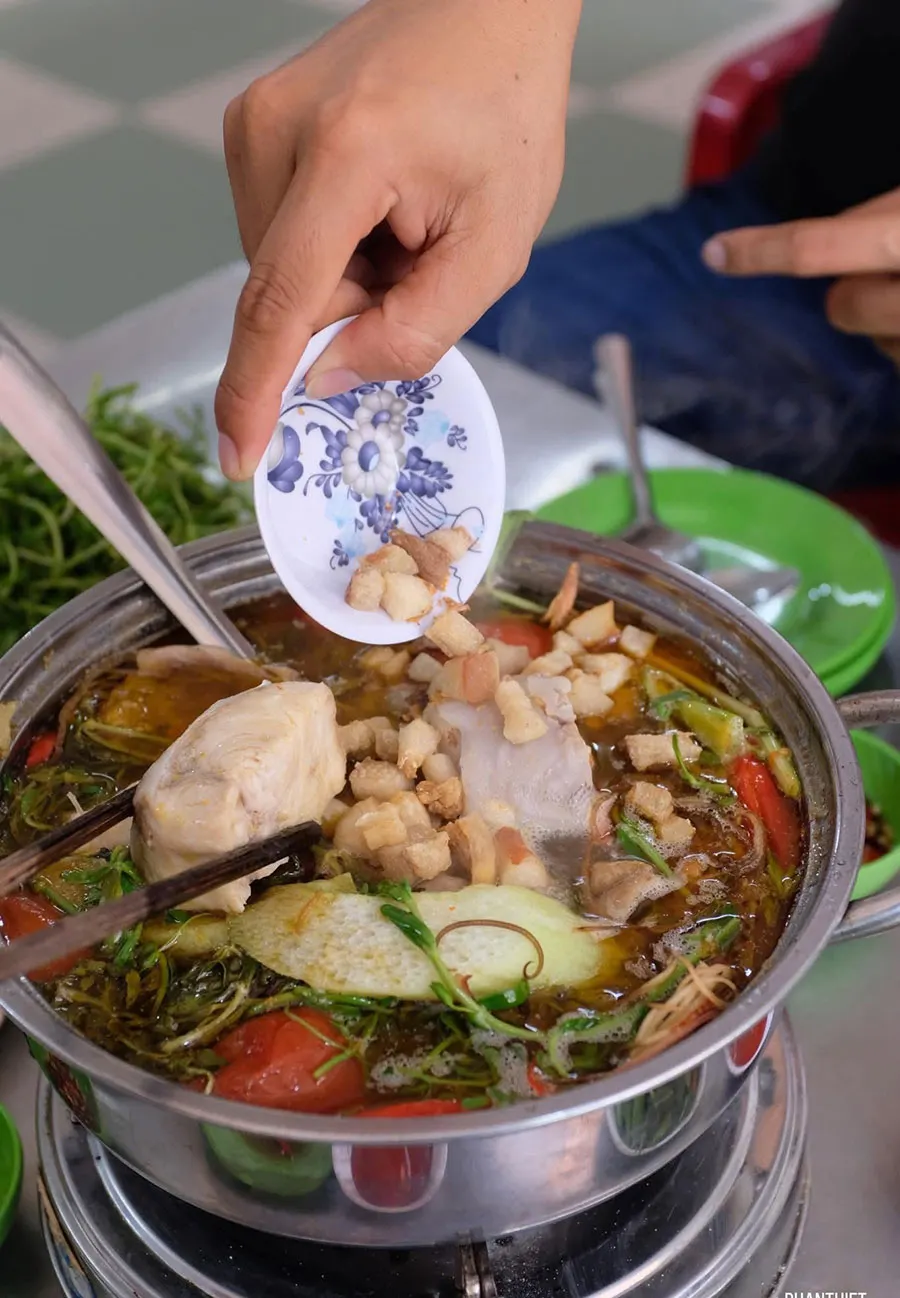
Lẩu Cá Kèo: A Southern Vietnamese Hot Pot Specialty
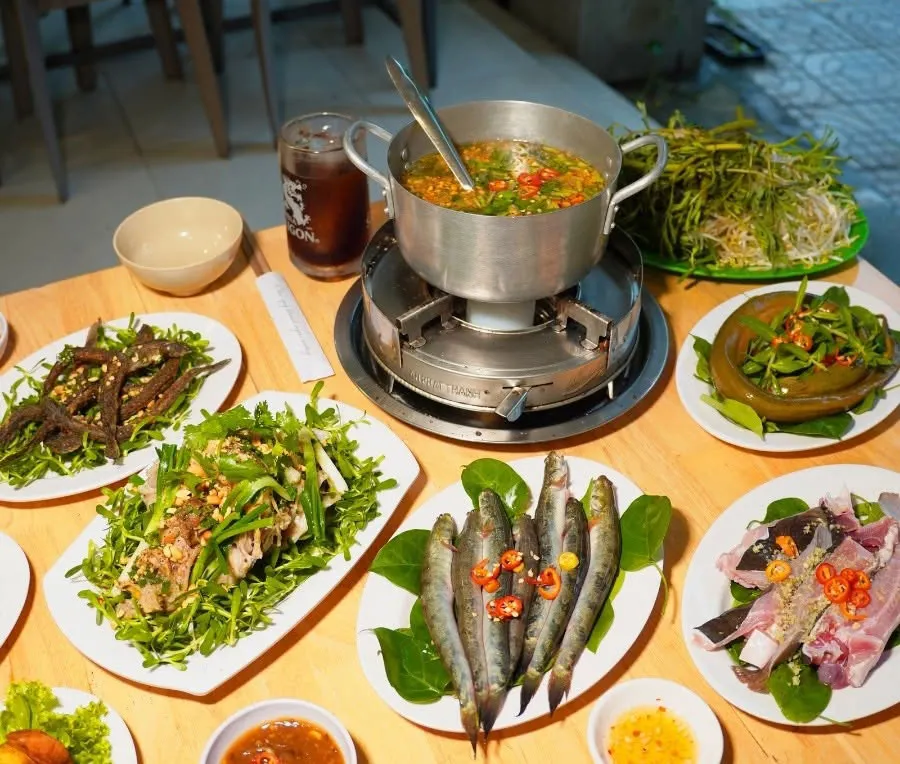
Lẩu cá kèo is associated with southern Vietnamese cooking and commonly includes goby fish, fresh greens and a tangy broth. It has a more distinctly local character than internationally familiar hot pot styles.
Some restaurants may serve the fish whole, which can surprise first-time visitors. The presentation is normal, but travelers uncomfortable handling whole fish may prefer seafood, beef or mushroom hot pot.
Lẩu Mắm: A Bold Mekong Delta Hot Pot
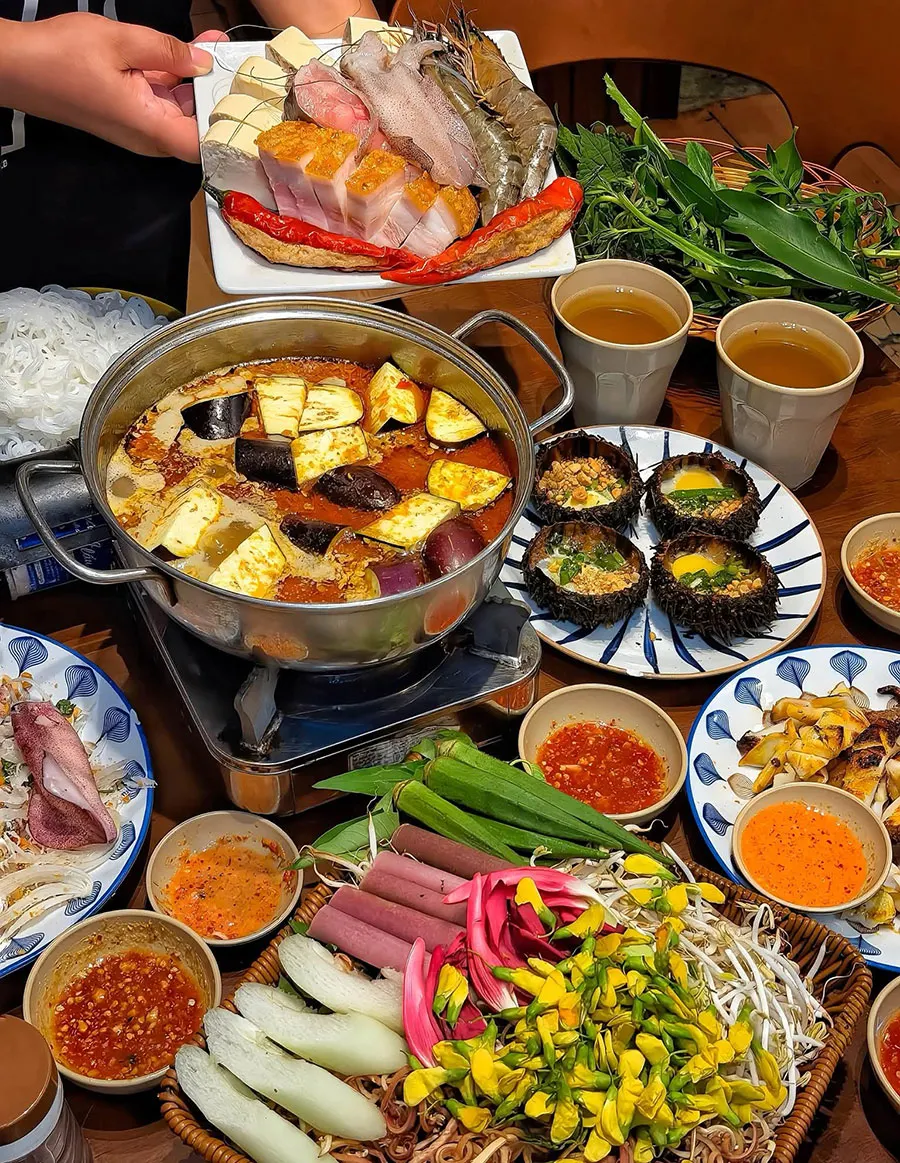
Lẩu mắm uses a deeply flavored fermented fish base and is closely connected to the cuisine of the Mekong Delta. The pot may include fish, seafood, pork, eggplant and a generous selection of southern vegetables.
Its aroma and salty-sweet intensity can be challenging for cautious eaters. However, visitors already familiar with fermented foods may find it one of the most memorable Vietnamese hot pot experiences in Ho Chi Minh City.
Beef, Goat and Mushroom Hot Pot in Saigon
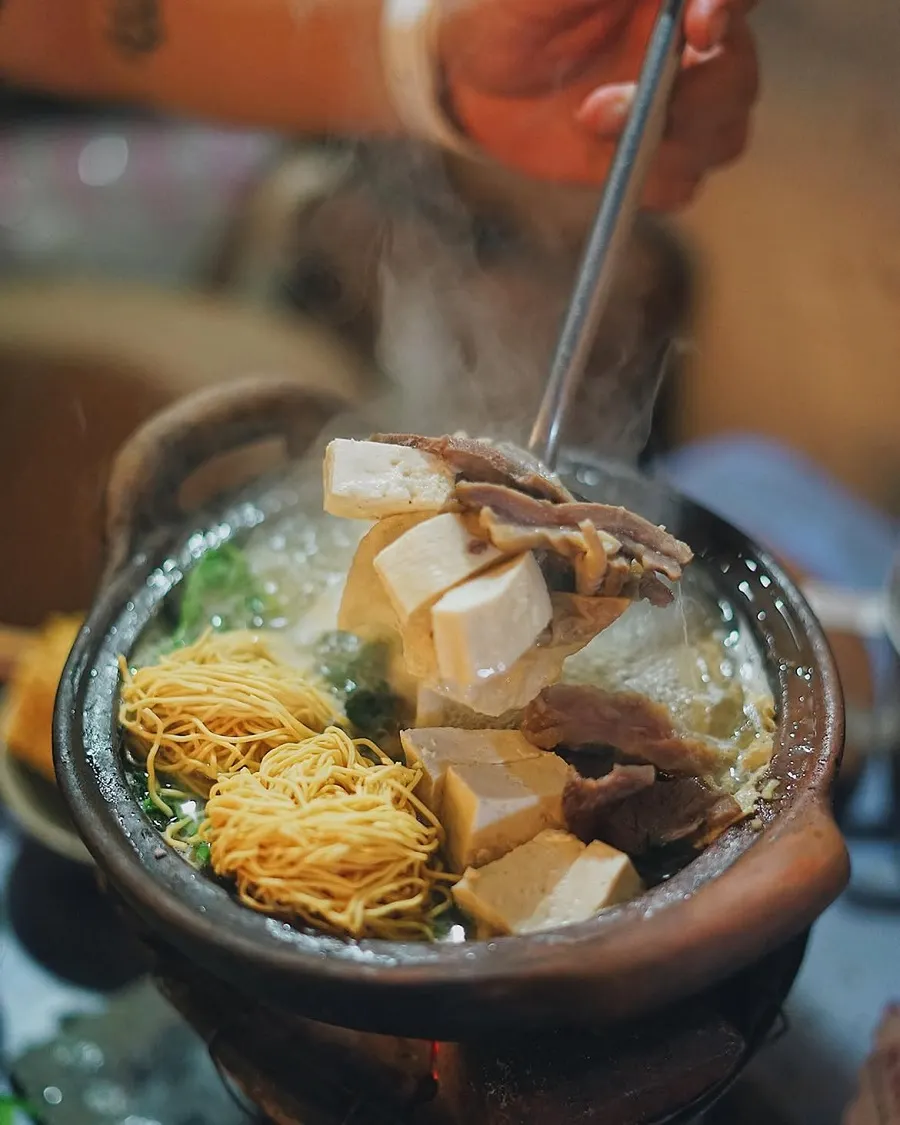
Beef hot pot is filling and generally approachable, while goat hot pot has a richer flavor and may include medicinal herbs or aromatic spices. Mushroom hot pot offers a lighter option, although the broth is not automatically vegetarian.
Always ask whether a vegetable or mushroom broth contains meat stock, fish sauce or seafood seasoning. Travelers following a strict plant-based diet may prefer a dedicated vegan restaurant or a curated vegan food tour in Saigon.
How to order hot pot in a Saigon restaurant
Begin by choosing the broth and size. Staff may ask how many people are eating, which helps them recommend a small or large pot.
Next, select the main protein and any additional vegetables, mushrooms, tofu or noodles. Some restaurants sell a complete set, while others charge separately for every plate.
A sensible order for two people is one small broth, one or two protein plates, vegetables and one noodle portion. Wait until the first ingredients arrive before ordering more because the plates can be larger than expected.
Useful Vietnamese phrases include:
- Một lẩu nhỏ — one small hot pot
- Cho hai người — for two people
- Ít cay — a little spicy
- Không cay — not spicy
- Thêm rau — more vegetables
- Tính tiền — the bill, please
Menus in central or modern restaurants often include pictures or English descriptions. At small neighborhood establishments, translation apps can help, but pointing politely at a nearby table is also common when you see something appealing.
How to eat Vietnamese hot pot correctly
Once the broth boils, begin with ingredients that require the longest cooking time. Dense mushrooms, firm vegetables, tofu and thicker pieces of meat generally go in before delicate greens or thinly sliced beef.
Do not place everything in the pot at once. Overloading it lowers the temperature, makes cooking times difficult to judge and can turn fresh vegetables unappealingly soft.
A simple cooking order for beginners
A practical sequence is:
- Allow the broth to reach a steady boil.
- Add firm vegetables, mushrooms and tofu.
- Add fish, seafood or thicker meat pieces.
- Cook thin beef slices in small batches.
- Add leafy greens shortly before eating them.
- Finish with noodles after the broth becomes richer.
Use the shared utensils provided for transferring raw ingredients. Avoid touching uncooked meat with the chopsticks you use for eating unless the restaurant clearly follows a different setup.
Fish, shrimp, shellfish and poultry must be cooked thoroughly. If you are uncertain, leave the ingredient in the boiling broth longer or ask a staff member for help.
Using dipping sauces and condiments
Vietnamese hot pot restaurants may provide fish sauce, chili, lime, garlic, soy sauce or fermented condiments. There is no need to combine everything immediately.
Taste the broth and cooked ingredient first, then build a dipping sauce that suits you. Start with a small quantity because fish sauce and fermented pastes can be considerably saltier than expected.
Local Tip: Watch how nearby diners prepare their sauce, but remember that condiments may vary by hot pot style. The sauce offered with goat hot pot may be very different from the one served with seafood.
Where to Eat Hot Pot in Ho Chi Minh City
The best area depends on the kind of hot pot experience you want. Central neighborhoods are convenient for first-time visitors, while districts farther from major attractions often offer a more local atmosphere and a wider range of Vietnamese hot pot styles.
District 1 is the easiest choice for international travelers, with air-conditioned restaurants, English-friendly menus and straightforward transport. Prices may be slightly higher, but ordering is usually simpler if this is your first hot pot meal in Saigon.
Districts 3 and 10 are good places to look for beef hot pot, fish hot pot and casual neighborhood restaurants. Districts 4 and 5 can be more interesting for seafood, lẩu cá, lẩu cá kèo and stronger southern flavors.
Large shopping centers also have polished hot pot chains with standardized menus. These are comfortable for families and cautious first-time diners, although the experience may feel less local than eating at an independent Vietnamese hot pot restaurant.
Wherever you eat, choose a busy restaurant with fresh-looking ingredients, clean utensils and broth kept properly boiling. A restaurant with steady table turnover is often a better sign than one that is simply cheap or hidden.
If you enjoy discovering local neighborhoods after sunset, a Saigon after-dark experience can introduce another side of the city’s evening food culture.
How much does hot pot cost in Saigon?
As a general planning estimate, a casual shared hot pot meal may cost approximately VND 150,000–400,000 per person. Premium beef, imported ingredients, large seafood platters, alcohol and upscale service can raise the total substantially.
Some menus advertise an affordable broth price, but meat, seafood, vegetables, noodles, sauces and drinks may be charged separately. Check whether the listed item is a complete set or only the soup base.
Before ordering, consider:
- The number of diners sharing the pot
- Whether ingredients are bundled or à la carte
- Charges for sauces, wet towels or drinks
- Taxes and service charges at higher-end restaurants
- Premium prices for seafood or specialty beef
Prices and menu formats vary by restaurant, so treat any online figure as an estimate. Reviewing the current menu at the entrance is more reliable than depending on an old travel post.
The best time to enjoy hot pot in Saigon
Hot pot restaurants are usually liveliest at dinner, when families and groups finish work and gather around the table. Arriving slightly before the main evening rush may provide faster service and a quieter introduction to the menu.
Rainy evenings are particularly atmospheric. A steaming pot, cold drink and busy dining room create a pleasant contrast with the rain outside.
Hot pot is still enjoyable in warm weather because many modern restaurants have air conditioning or strong fans. Open-air eateries can feel hotter, especially when several tabletop burners are operating.
Allow approximately 60–90 minutes for the experience. Larger groups ordering several rounds may remain considerably longer.
Who will enjoy a Saigon hot pot experience?
Vietnamese hot pot is particularly suitable for couples, families, groups of friends and travelers who enjoy interactive meals. It gives everyone control over what enters the pot and how quickly the meal progresses.
First-time visitors can choose beef, mushroom or sweet-and-sour seafood broth. More adventurous diners may prefer lẩu cá kèo or lẩu mắm for stronger southern Vietnamese flavors.
Solo travelers should look for restaurants offering individual pots, set meals or conveyor-belt formats. Joining a Saigon walking food experience can also be a more practical way to sample multiple dishes without ordering group-sized portions.
Dietary restrictions and food safety tips
Tell the staff about allergies before ordering, especially allergies to shellfish, fish, peanuts or soy. A broth may contain ingredients that are not visible, and removing one topping does not necessarily make the stock allergen-free.
Vegetarians should confirm both the broth and dipping sauce. The phrase tôi ăn chay means “I eat vegetarian food,” but specific questions are still important if your diet excludes fish sauce, eggs or dairy.
Keep raw and cooked ingredients separate, use serving utensils where available and wait for the broth to return to a boil after adding raw meat. Choose busy, clean restaurants where ingredients appear fresh and refrigerated foods are stored cold.
For broader practical advice, read this guide to eating street food safely in Ho Chi Minh City.
Common hot pot mistakes travelers should avoid
Ordering too much is the most frequent mistake. Begin modestly because vegetables, noodles and the rich broth become surprisingly filling.
Do not assume every red broth is extremely spicy or every clear broth is mild. Ask the staff, as flavor and heat vary between recipes.
Avoid leaving delicate seafood or thin meat unattended in the pot. Overcooking can make it tough, while undercooking creates a food-safety risk.
Finally, do not rush. Vietnamese hot pot is designed around sharing, conversation and gradual cooking rather than finishing a meal as quickly as possible.
Make hot pot part of your Saigon food journey
A Vietnamese hot pot dinner offers something that takeaway food cannot: the pleasure of cooking, sharing and discovering flavors together. Start with a familiar broth or challenge yourself with a southern specialty, order gradually and let the meal unfold at the table.
For a wider introduction to the city’s family-run eateries, hidden alleys and regional dishes, consider joining a local Saigon street food experience. Whether you explore independently or with a guide, arrive hungry and leave enough time to enjoy the evening at a genuinely local pace.
Frequently asked questions about Vietnamese hot pot in Saigon
What is Vietnamese hot pot called?
Vietnamese hot pot is called lẩu. It consists of simmering broth and separate plates of meat, seafood, tofu, mushrooms, vegetables and noodles that diners cook together at the table.
What is the best Vietnamese hot pot for beginners?
Lẩu Thái, beef hot pot and mushroom hot pot are approachable choices for most first-time visitors. Lẩu mắm and lẩu cá kèo offer more distinctive southern flavors but may be challenging for people unfamiliar with fermented broth or whole fish.
How much is hot pot in Ho Chi Minh City?
A casual meal can cost roughly VND 150,000–400,000 per person, depending on the restaurant, group size and ingredients. Seafood, imported beef, alcohol and premium service can increase the bill.
Can one person eat hot pot in Saigon?
Yes, but choose a restaurant offering individual pots or single-person sets. Traditional neighborhood hot pot portions are often designed for at least two diners, making them less economical for solo travelers.
Is Vietnamese hot pot spicy?
Not always. Lẩu Thái is commonly spicy, while fish, beef and mushroom broths may be mild. Ask for ít cay for less chili or không cay if you want a non-spicy option.
Is vegetarian hot pot available in Saigon?
Yes, especially at vegetarian and vegan restaurants. Confirm that the broth contains no meat, seafood or fish sauce because a mushroom-heavy hot pot is not automatically vegetarian.
What should go into a Vietnamese hot pot first?
Begin with firm vegetables, dense mushrooms, tofu and ingredients requiring longer cooking. Add seafood and meat in manageable batches, followed by delicate greens. Noodles usually go in near the end, when the broth has developed its fullest flavor.
Explore our best-selling tours
 Bestseller
Street Food Tour In Ho Chi Minh City By Motorbike
Saigon Street Food Tours: An Authentic Culinary Odyssey To experience Ho Chi Minh City, you need to do two things:...
 Bestseller
Saigon: Premium Award-Winning Food Tour with Ao Dai Female Riders
A Michelin food tour by scooter in Vietnam elevates the standard street food experience by combining world-class culinary recognition with...
 Bestseller
Saigon Foodie Tour By Scooter With Female Rider (With Beer & Seafood)
Beautiful female tour guides at Saigon Adventure ABOUT THIS TOUR Let us be your guide to experiencing Saigon By Night...
 Bestseller
Vegan Food Tour
Keep your travel plan flexible - book your spot now and pay nothing today! You only need to pay 4...
 Bestseller
Hanoi Local Food Tour with Train Street and Old Quarter
Discover the flavors and everyday life of Vietnam’s capital on a 3-hour Hanoi local food tour through the historic Old...
 Bestseller
Ho Chi Minh City Michelin Food and Live Music Scooter Tour
Welcome to our premier michelin food tour in Ho Chi Minh City! Secure your experience today with Total Flexibility Reserve...
 Bestseller
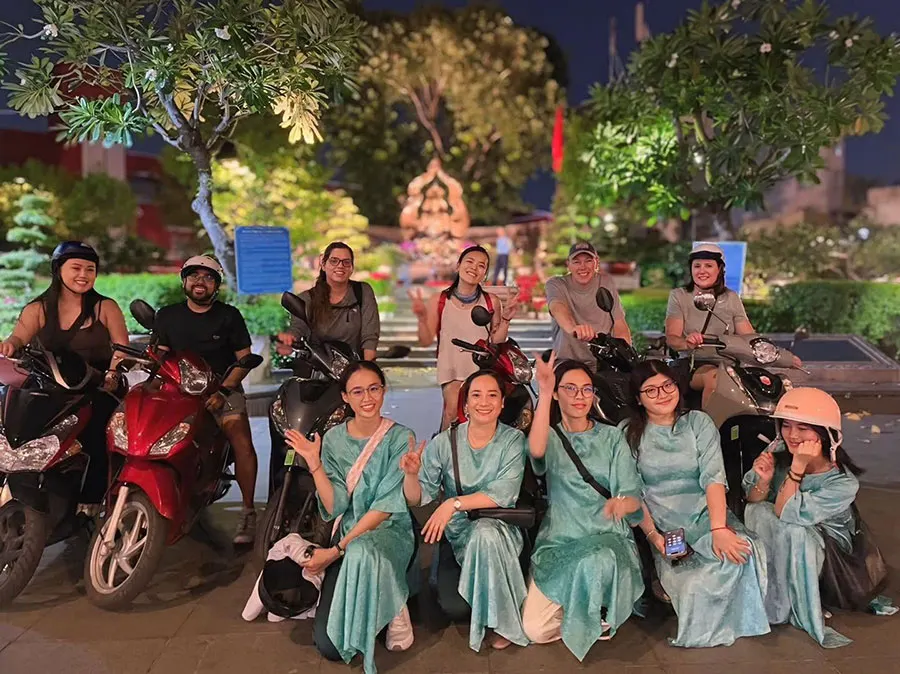
Premium Saigon Hidden Alleys & History: Private Motorbike Tour
Ho Chi Minh Hidden Alleys & History: Private Motorbike Tour Ready to step off the beaten path and discover the...
 Bestseller
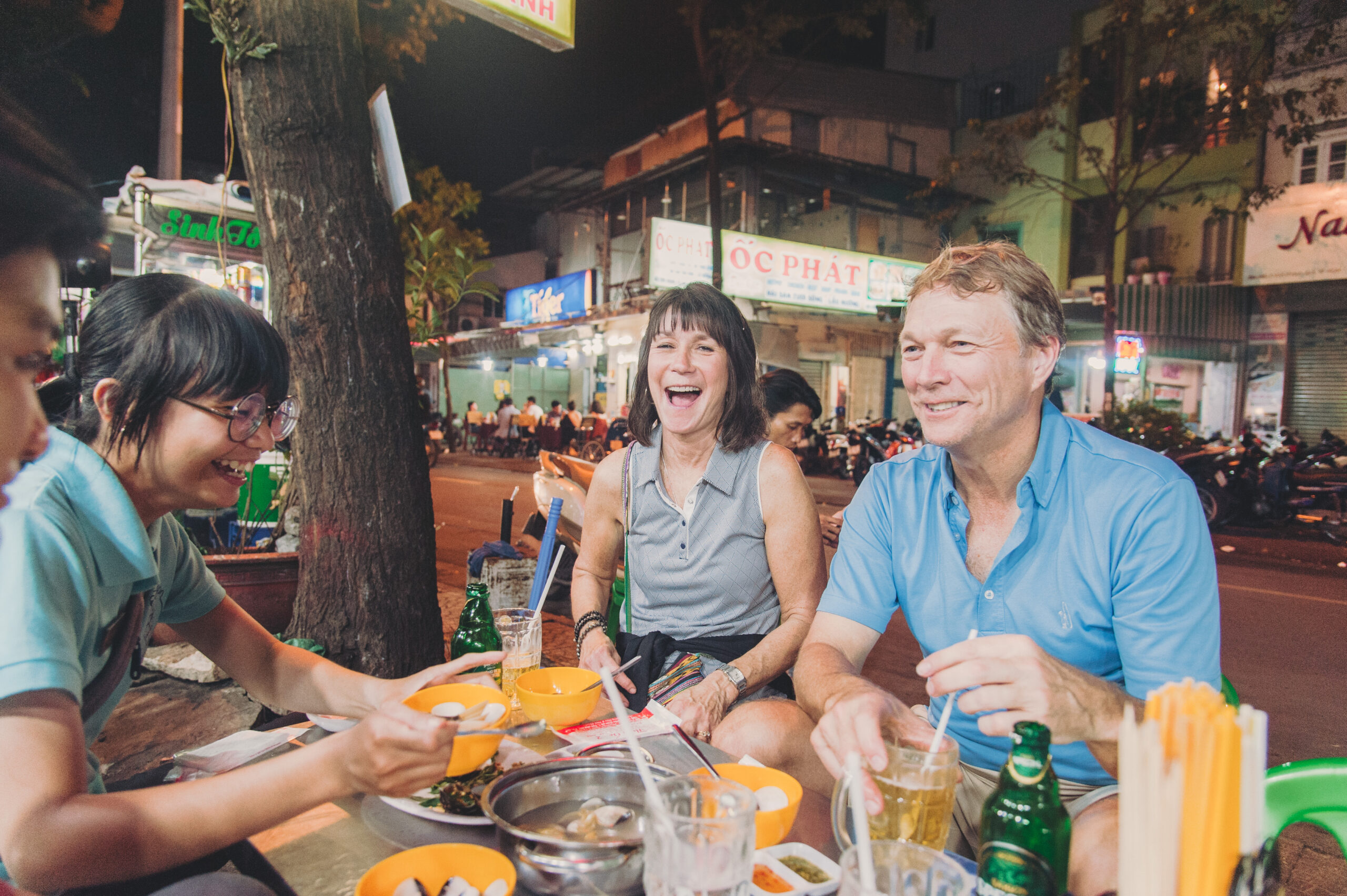
Ho Chi Minh Food Safari With 20 Tastings
Explore Ho Chi Minh City through its food on our Ho Chi Minh Food Safari, featuring 20 authentic street food...
 Bestseller
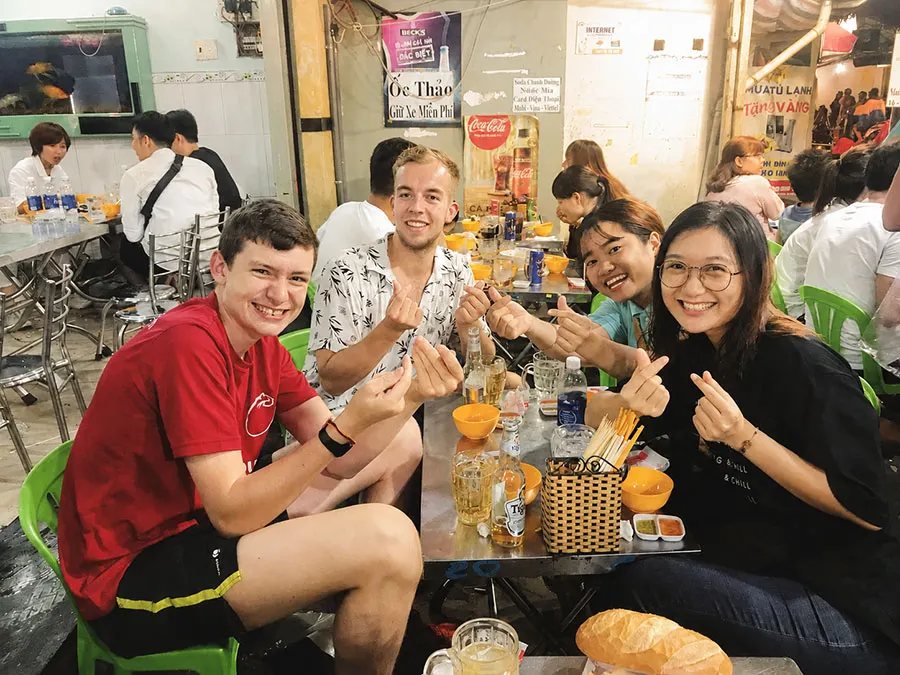
Saigon | Combo Street Food And Sightseeing Tour By Scooter
Food and Sight Motorbike (Special Combo) Experience the ultimate Saigon adventure! Over 4 thrilling hours, hop on the back of...
 Bestseller
Hanoi Michelin Street Food Tour With a Local Guide
Explore the Old Quarter through its most memorable flavors on our Hanoi Michelin Street Food Tour. Led by a knowledgeable...
 Bestseller
Saigon By Night (Motorbike Tour) With Rooftop Bar – Live Music And Seafood
Keep your travel plan flexible - book your spot now and pay nothing today! You only need to pay...
 Bestseller
Beers, Music & Foods
TOUR DETAILS Saigon After Dark: The Ultimate Scooter, Food & Live Music Odyssey Experience the electric energy of Ho Chi...