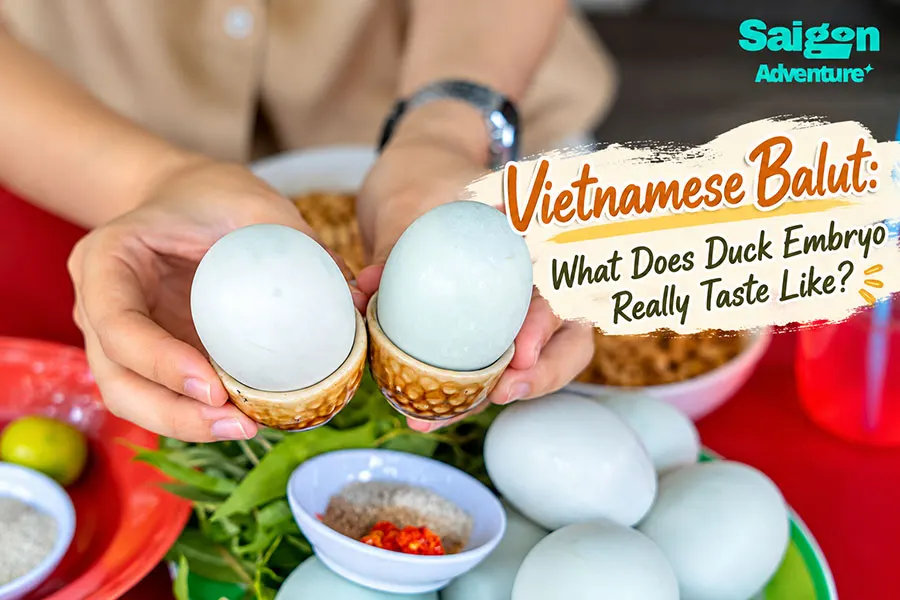
Vietnamese balut is one of those foods that can make first-time visitors hesitate before taking a bite. Known locally as hột vịt lộn, this traditional snack contains a partially developed duck embryo, cooked inside its shell and served with fresh herbs, salt, pepper, and lime.
But what does Vietnamese balut actually taste like? Surprisingly, the flavor is much less intimidating than its appearance. Expect a combination of rich boiled egg, savory chicken broth, tender meat, and creamy yolk. The texture, rather than the taste, is usually what challenges adventurous travelers.
If you’re curious about Vietnam’s more unusual street foods, here’s what to expect before trying your first balut.
What Is Vietnamese Balut (Hột Vịt Lộn)?
Vietnamese balut is a fertilized duck egg that has been incubated long enough for an embryo to begin developing. Unlike an ordinary boiled egg, it contains a combination of yolk, savory liquid, and partially developed duck.
The dish is called hột vịt lộn in southern Vietnam and trứng vịt lộn in northern regions. Although the names differ, both refer to the same traditional food.
Balut is commonly eaten as a snack rather than a complete meal. You’ll find it at roadside stalls, neighborhood markets, and small eateries where locals gather for a quick bite.
For travelers exploring the best street food in Ho Chi Minh City, balut offers something different from familiar favorites like bánh mì, phở, or cơm tấm.
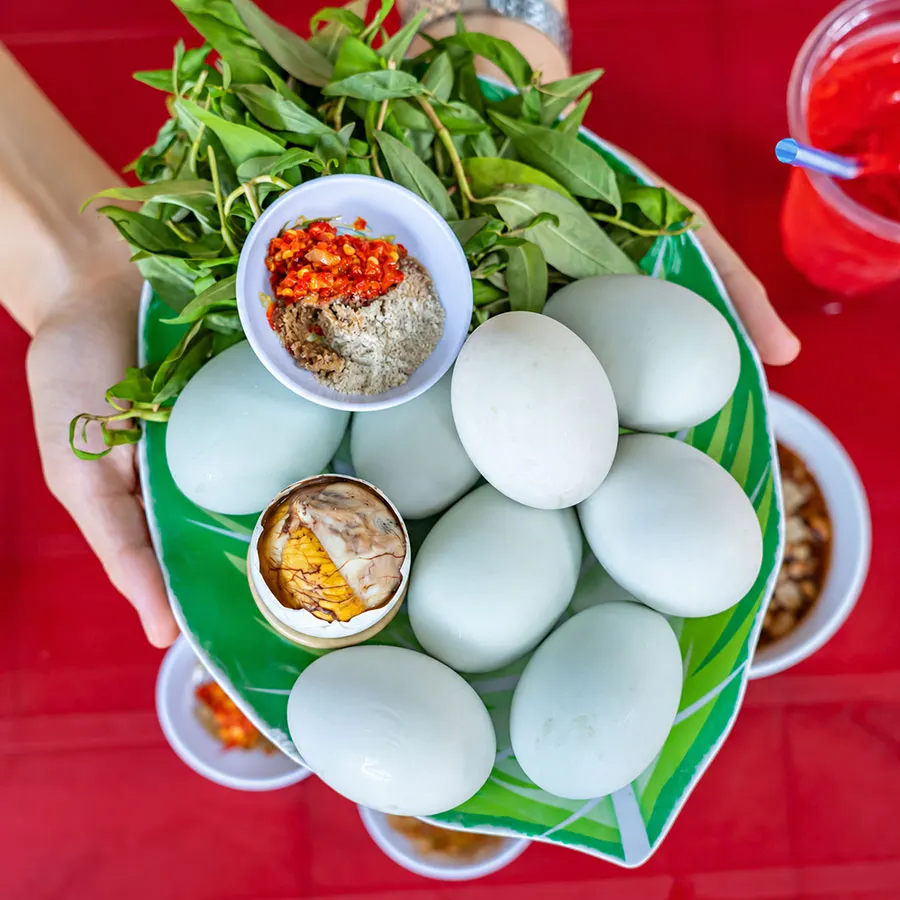
Is Balut Really a Duck Embryo?
Yes. A fertilized duck egg develops during incubation before being cooked, usually by boiling.
The embryo’s appearance varies depending on its developmental stage. Some eggs contain a relatively small embryo, while others have more recognizable features.
For first-time visitors, understanding this difference can make the experience less surprising.
What Does Vietnamese Balut Taste Like?
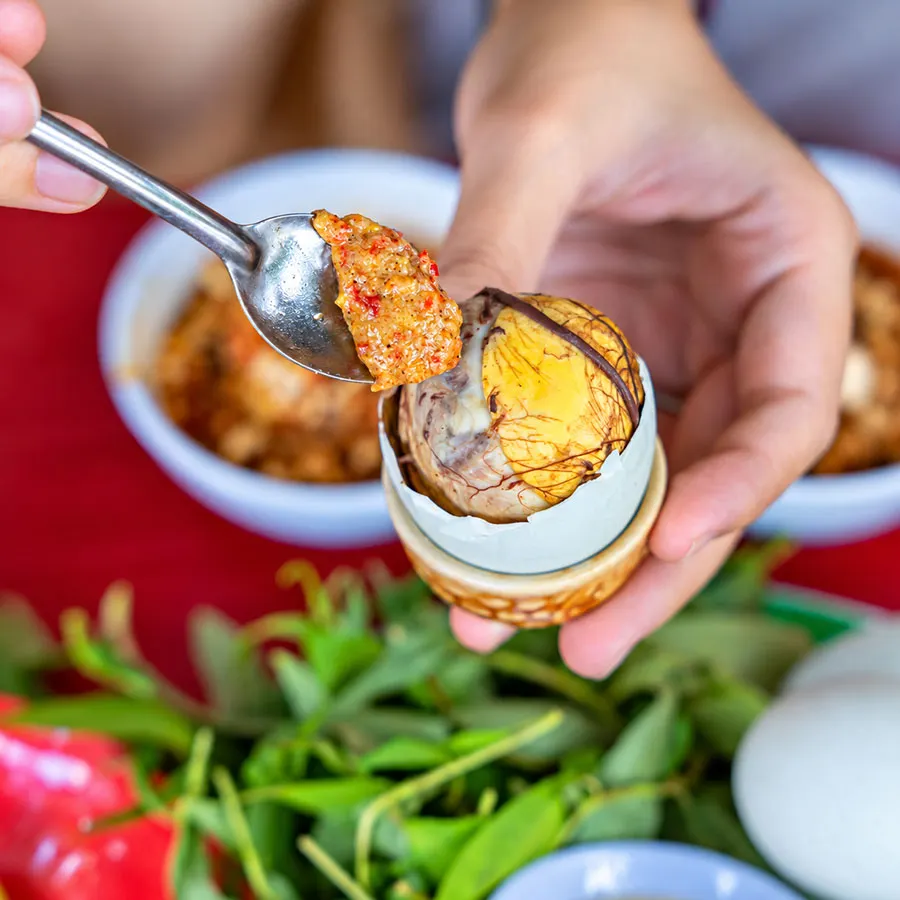
Vietnamese balut tastes rich, savory, and mildly meaty, combining the creaminess of egg yolk with a delicate poultry flavor. The warm liquid inside resembles a concentrated chicken or duck broth, while the embryo has a tender texture. Vietnamese coriander, lime, and pepper add freshness and balance.
Rather than having one consistent flavor, balut offers several distinct sensations within a single egg.
The Broth: Warm, Savory, and Surprisingly Familiar
When you carefully open a cooked balut, you’ll notice a small amount of warm liquid inside.
This liquid is often the first part locals enjoy. Its concentrated savory flavor resembles a light poultry broth, without the strong seasoning of a prepared soup.
A tiny sip can be an approachable introduction before exploring the different textures.
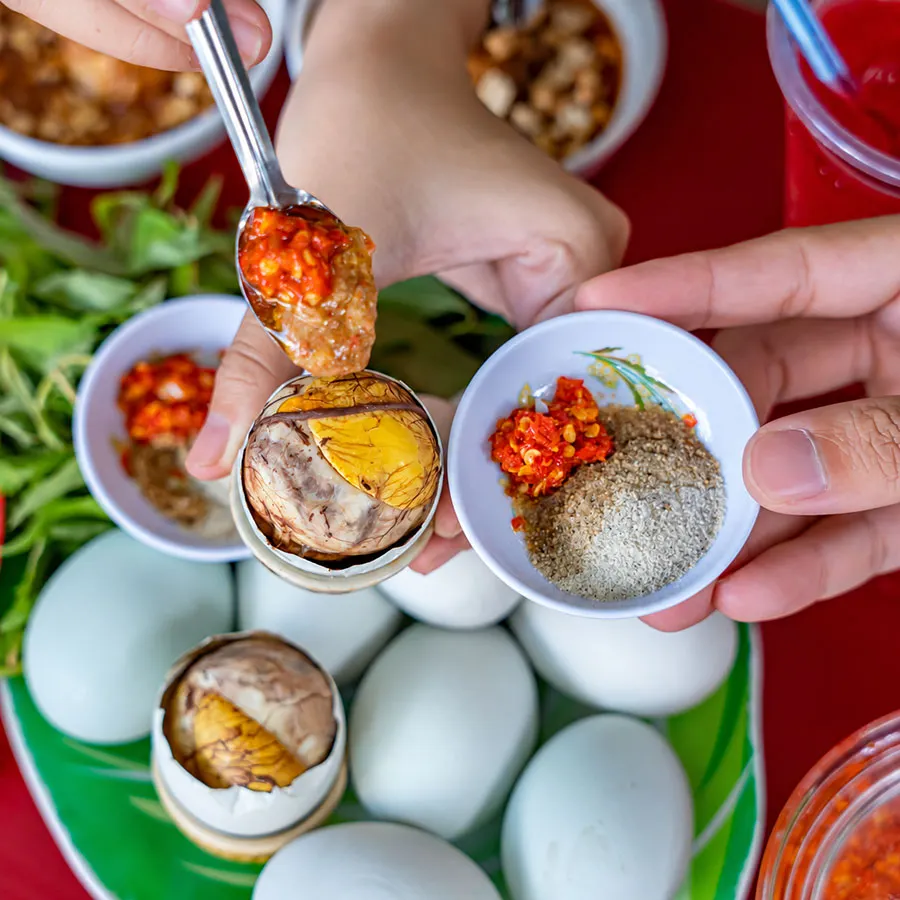
The Yolk: Rich, Creamy, and Slightly Dense
The yolk is familiar to anyone who enjoys boiled eggs, although its texture can be firmer and more compact.
It tastes rich and satisfying, especially with a little lime juice and pepper.
Some eggs also contain a firm, pale portion known locally as cùi dừa. This can be noticeably harder to chew, and many people simply leave it behind.
The Embryo: Tender Meat With an Unusual Texture
The embryo usually tastes more like mild poultry than anything particularly exotic.
Depending on its development, it may feel soft and tender or have firmer, more noticeable structures.
This variation explains why two travelers can describe eating balut very differently. One might remember the delicious broth, while another focuses entirely on the texture.
Local Tip: Ask for an egg with a less-developed embryo if available. Vendors may understand the request, although they cannot always guarantee what an unopened egg contains.
How Do Vietnamese People Eat Balut?
Eating balut is a simple local ritual involving a hot egg, fresh herbs, and a small bowl of seasoning.
You don’t need special equipment or previous experience. Watching how other customers eat can help you feel comfortable.
Step-by-Step: How to Eat Hột Vịt Lộn for the First Time
-
Choose a freshly cooked egg. Ask the vendor for a hot, fully cooked balut.
-
Crack the wider end gently. Remove a small section of the shell without spilling the liquid.
-
Sip the warm broth. Take a small sip before peeling away more shell.
-
Add your seasoning. Use salt, pepper, lime, and optional chili.
-
Eat with Vietnamese coriander. Take small bites and add herbs according to your preference.
There’s no requirement to finish everything. If you dislike a particular texture, it’s perfectly acceptable to stop.
Why Is Balut Served With Rau Răm?
Rau răm, commonly called Vietnamese coriander, has a peppery, slightly sharp flavor.
Its freshness cuts through the richness of the yolk and meat. Combined with lime and black pepper, it creates a more balanced tasting experience.
Don’t skip the herbs simply because they look unfamiliar. They’re an important part of how many Vietnamese people enjoy the dish.
Where Can You Try Balut in Ho Chi Minh City?
Ho Chi Minh City is an accessible place to try balut because the dish is available in many residential neighborhoods.
Rather than searching exclusively for a famous restaurant, look for an established snack vendor serving local customers.
Local Markets and Neighborhood Food Stalls
Areas around District 3, District 10, and older residential neighborhoods can be good places to explore traditional Vietnamese snacks.
Look for signs displaying hột vịt lộn or ask a local vendor directly.
You can also explore where locals eat in Ho Chi Minh City to discover neighborhoods known for everyday dining.
When Is the Best Time to Eat Balut?
Balut can be eaten at different times of day, but afternoon and evening snack stalls are particularly convenient for visitors.
Some vendors operate in the morning, while others specialize in evening customers.
Local Tip: Choose a stall with regular turnover and eggs that are cooked thoroughly and served hot. Popularity alone doesn’t guarantee food safety.
How Much Does Vietnamese Balut Cost?
Balut is generally an inexpensive local snack, although prices vary between cities, neighborhoods, and vendors.
A basic boiled egg usually costs less than a restaurant-prepared variation with additional ingredients.
Before ordering, ask “Bao nhiêu tiền một trứng?” meaning “How much is one egg?”
Consider buying just one initially. It gives you an opportunity to discover whether you enjoy the flavor without ordering more than you want.
Traditional Balut vs. Balut With Tamarind Sauce
Not every Vietnamese balut dish is served simply boiled.
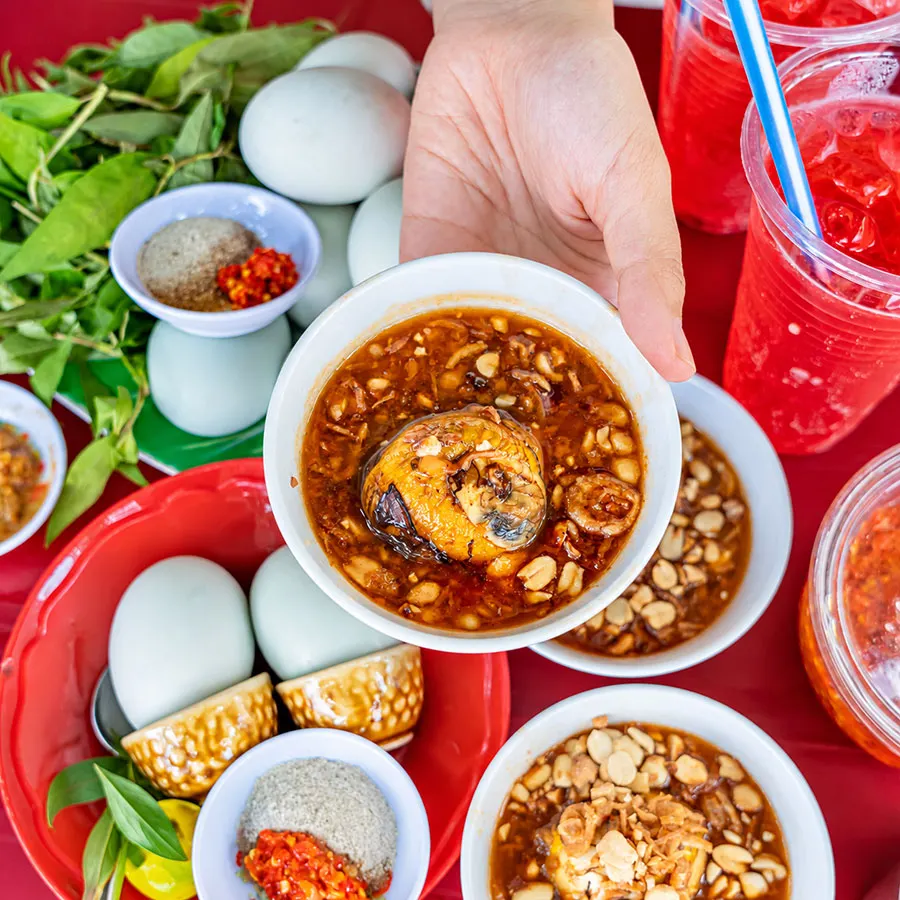
In southern Vietnam, hột vịt lộn xào me is another popular preparation. Cooked balut is tossed in a sweet-and-sour tamarind sauce, sometimes with peanuts, herbs, and crispy garlic.
| Feature | Boiled Balut | Tamarind Balut |
|---|---|---|
| Flavor | Rich, savory, egg-forward | Sweet, tangy, savory |
| Texture | Soft with varying firmness | Soft with a saucy coating |
| Seasoning | Herbs, salt, pepper, lime | Tamarind sauce and garnishes |
| Best for | Traditional first tasting | Visitors who enjoy bold sauces |
| Experience | Simple street snack | More elaborate snack dish |
For your first experience, plain boiled balut makes it easier to understand the original flavor. Tamarind balut is worth exploring afterward if you enjoy sweet-and-sour Vietnamese cooking.
Is Vietnamese Balut Safe for Tourists to Eat?
Proper cooking and hygienic handling matter because balut contains egg and developing poultry tissue.
Choose reputable vendors who cook eggs thoroughly, handle food cleanly, and avoid leaving cooked eggs sitting unrefrigerated for extended periods.
The U.S. Food and Drug Administration recommends cooking eggs thoroughly to reduce foodborne illness risks.
Who Should Be Extra Careful?
Pregnant travelers, young children, older adults, and people with weakened immune systems should be particularly cautious about foodborne illness.
Avoid raw or undercooked balut, and don’t assume a warm shell proves the entire egg has been properly cooked.
Anyone with an egg allergy should avoid balut. Travelers who prefer not to eat developing animals may also wish to choose a different snack.
For people managing allergies or other eating requirements, our guide to enjoying Saigon street food with dietary restrictions can be complemented by discussing specific ingredients with a local guide.
Is Eating Balut Worth It for First-Time Visitors?
That depends on what you enjoy about food and travel.
For adventurous eaters, balut offers an opportunity to experience something deeply connected to everyday Vietnamese food culture.
Its relatively mild flavor may surprise visitors expecting something overwhelmingly strong. However, the visual appearance and changing textures can be challenging.
Travelers who dislike unfamiliar animal products, follow vegetarian diets, or feel uncomfortable with embryos shouldn’t feel pressured to participate.
Local Tip: If you’re curious but nervous, start by tasting the broth and a small amount of yolk. You can decide whether to continue without turning the experience into a challenge.
Other Vietnamese Street Foods to Try After Balut
Balut is only one example of Vietnam’s diverse snack culture.
If you enjoy unusual textures and traditional ingredients, look for grilled snails, duck dishes, fermented flavors, or regional specialties.
For something more familiar, try bánh xèo, grilled seafood, bánh mì, or freshly made spring rolls.
Joining a Saigon street food tour by motorbike is another way to discover local eating traditions with guidance. Ask about specific dishes beforehand, since balut isn’t necessarily included in standard tour menus.
Frequently Asked Questions About Vietnamese Balut
1. What does Vietnamese balut taste like?
Vietnamese balut has a rich, savory flavor resembling boiled egg, poultry broth, and tender duck meat. Its texture varies according to the embryo’s development. Lime, pepper, and Vietnamese coriander help balance the richness.
2. Is Vietnamese balut the same as Filipino balut?
Both are made from fertilized duck eggs, but serving traditions differ. Vietnamese balut is commonly paired with rau răm, ginger, salt, pepper, and lime, while Filipino versions are often enjoyed with salt or vinegar.
3. Can tourists eat balut safely in Vietnam?
Tourists can reduce food safety risks by choosing reputable vendors and thoroughly cooked eggs served hot. No street food is completely risk-free, particularly for travelers vulnerable to foodborne illness.
4. Does balut taste like a normal boiled egg?
Partly. The yolk is familiar, but balut also contains savory liquid and a developing embryo. These additional elements create a more complex flavor and texture than an ordinary boiled egg.
5. Is Vietnamese balut expensive?
No. Balut is generally an affordable Vietnamese street snack. Prices depend on the location, preparation, and individual vendor, so check the current price before ordering.
6. Is balut suitable for vegetarians?
No. Balut contains a developing duck embryo and is an animal-based food. Vegetarian travelers should choose plant-based Vietnamese snacks instead.
7. Where is the best place to try balut in Saigon?
Established neighborhood food stalls and local markets are good starting points. Choose vendors with proper cooking practices, clean utensils, and freshly served eggs rather than relying only on online popularity.
Final Thoughts: Would You Try Vietnamese Balut?
Vietnamese balut is more than an unusual food to photograph. It’s a familiar snack for many locals, enjoyed with simple seasonings and shared as part of everyday life.
You might love its creamy yolk and flavorful broth, or decide that the texture isn’t for you. Either reaction is perfectly reasonable.
If you’d like to discover Vietnamese food beyond the usual tourist favorites, explore Saigon’s neighborhood stalls or join a local street food experience. Sometimes, understanding a destination begins with tasting something you never expected to enjoy.