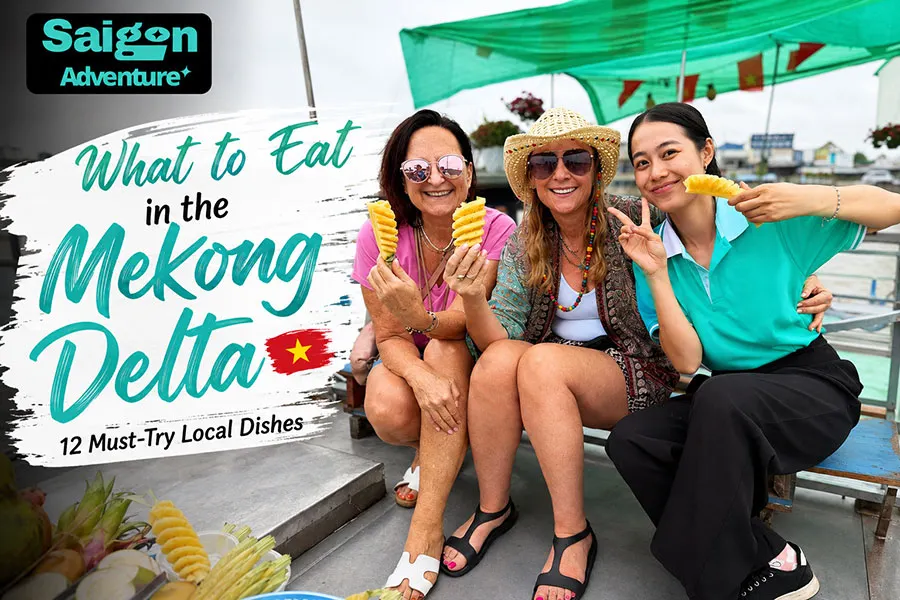
The Mekong Delta is often described through its rivers, coconut palms and floating markets, but its food is just as memorable as its landscapes. Here, meals follow the rhythm of the waterways: fish arrives fresh from the river, vegetables come from nearby gardens, and tropical fruit is picked only a short distance from the table.
For first-time visitors wondering what to eat in the Mekong Delta, expect food that is fresh, gently sweet, herb-filled and deeply local. It is not about finding one famous dish in a polished restaurant. The real pleasure comes from trying a bowl of noodles at breakfast, sharing a whole fried fish at lunch, then stopping for fruit or coconut candy during a slow afternoon on the canals.
A Mekong Delta tour from Ho Chi Minh City is an easy way to experience these flavours without guessing where to go. Below are the dishes and snacks genuinely worth looking for, plus a few local tips to help you order with confidence.
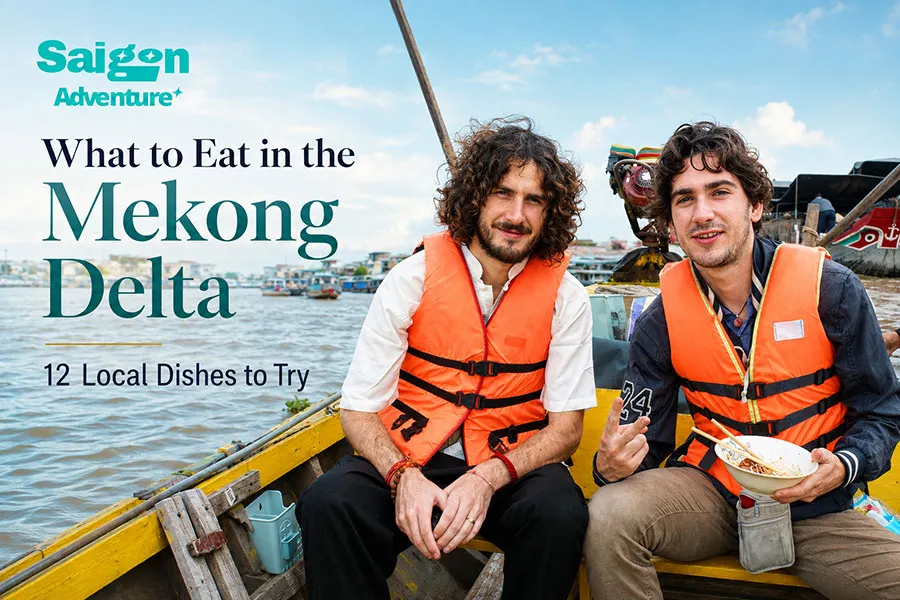
Why Mekong Delta Food Tastes Different
Southern Vietnamese food is often sweeter and more generous with herbs than food in the north or central regions. In the delta, that character becomes even clearer because cooks have direct access to coconut, sugarcane, freshwater fish, rice fields and orchards.
Many dishes are designed to be shared. A table may hold grilled fish, a plate of herbs, rice paper, pickles and dipping sauce, allowing each person to build a bite exactly as they like it. This is one reason eating in the delta feels relaxed and social rather than rushed.
Food also changes from province to province. Ben Tre is known for coconut-based treats, Can Tho for noodle soups and floating-market breakfasts, while areas around My Tho and Vinh Long are especially enjoyable for fruit gardens and riverfront meals.
1. Hu Tieu My Tho – A Comforting Southern Noodle Soup
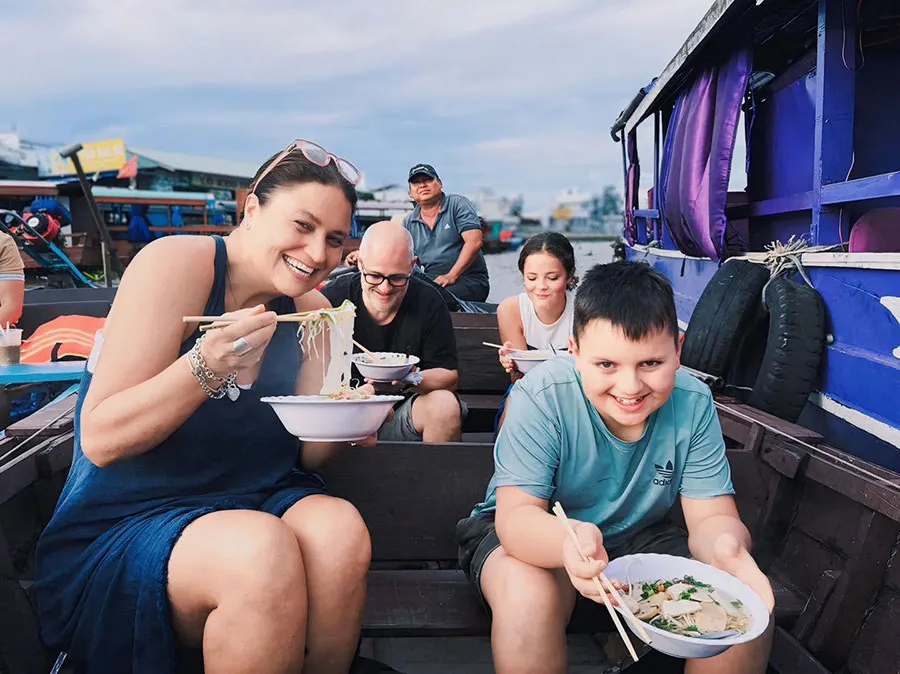
Hu tieu is one of the best answers to the question of what to eat in the Mekong Delta. This clear, lightly sweet noodle soup is usually served with pork, minced meat, shrimp, quail egg or fish, then finished with bean sprouts, chives and fragrant herbs.
My Tho-style hu tieu is often associated with soft rice noodles and a delicate pork-bone broth. You can order it as soup, called hu tieu nuoc, or dry, called hu tieu kho, with the broth served separately.
For breakfast, look for a busy local stall rather than an empty tourist-facing restaurant. A good bowl should smell clean and savoury, with fresh herbs on the side and a broth that feels balanced rather than overly sweet.
2. Banh Xeo – Crispy Vietnamese Pancakes Made for Sharing
Banh xeo is a thin, sizzling rice-flour pancake filled with shrimp, pork, bean sprouts and sometimes mung beans. Despite its English nickname, Vietnamese pancake, it is not sweet; its appeal comes from the crisp shell, warm filling and mountain of fresh herbs served alongside.
In the Mekong Delta, banh xeo can be larger than versions found in Ho Chi Minh City. Tear off a piece, wrap it in rice paper with lettuce, mustard leaf or herbs, then dip it in nuoc cham, the familiar Vietnamese fish-sauce dip.
Local Tip: Eat Banh Xeo with Plenty of Greens
Do not be shy about the herb basket. The peppery leaves, sour star fruit and cucumber help cut through the richness of the pancake, creating the balance that makes the dish special. If you are unfamiliar with a leaf, simply try a small amount first; that is part of the experience.
3. Elephant Ear Fish – The Classic River Delta Lunch
Elephant ear fish, usually fried until crisp and served upright on a platter, is one of the most recognisable Mekong Delta local dishes. The fish is commonly presented whole with rice paper, herbs, cucumber and pickled vegetables.
Its name comes from the broad shape of the fish, not its flavour. The flesh is mild, while the crisp skin and tangy dipping sauce make it ideal for a hands-on lunch by the river.
You may see this dish on the menu of garden restaurants or as part of a day-tour meal. It is best shared between two or more people, especially if you also want to try spring rolls or a vegetable dish.
4. Ca Loc Nuong Trui – Flame-Grilled Snakehead Fish
For a more rustic version of delta cooking, try ca loc nuong trui, snakehead fish grilled over straw or an open flame. The method gives the fish a smoky aroma while keeping the flesh moist and naturally sweet.
It is usually served with rice paper, herbs, green banana, star fruit and a sharp fish-sauce dip. Peel away the charred skin, pull the meat from the bones and make your own fresh rolls at the table.
This dish reflects the agricultural life of the region more closely than many restaurant staples. If you are visiting a rural village or orchard, it is a particularly satisfying lunch choice.
5. Lau Mam – Fermented Fish Hotpot for Adventurous Eaters
Lau mam is one of the boldest foods to try in the Mekong Delta. Its broth is made with fermented fish, then cooked with seafood, pork, fish, eggplant, water lily stems and a huge selection of vegetables.
The aroma can seem intense at first, but the finished hotpot is rich, savoury and surprisingly rounded. It is a fantastic meal for travellers who enjoy Thai curries, Korean fermented flavours or strong Southeast Asian soups.
This is not usually a solo meal. Order it with friends, add rice noodles and let the vegetables cook in the bubbling broth. Ask the staff how to eat it if needed; locals are used to guiding first-time diners.
6. Can Tho-Style Noodle Dishes
Can Tho is one of the delta’s best cities for food, especially early in the day. Alongside hu tieu, visitors can try bun rieu, a tomato-based crab noodle soup, or bun ca, rice noodles with freshwater fish and turmeric-coloured broth.
These dishes are usually light enough for breakfast but satisfying enough to keep you going through a morning market visit. The herbs, banana blossom and lime on the table allow you to adjust each bowl to your taste.
If your itinerary includes a private Mekong Delta tour to Can Tho, plan an early meal before visiting the floating market. Breakfast is when the city feels most energetic and local food stalls are at their best.
7. Banh Cong – Crispy Shrimp and Mung Bean Fritters
Banh cong is a small deep-fried cake made with mung beans, minced pork and a whole shrimp on top. It is crunchy outside, soft inside and often served with lettuce, herbs and a sweet-sour dipping sauce.
This snack is especially associated with Soc Trang, though you may find it in other parts of the delta. It is richer than banh xeo, so one or two pieces shared as an afternoon snack is usually enough.
Try it when freshly fried. The contrast between crisp batter, creamy beans and sweet shrimp disappears if it sits too long.
8. Coconut Candy and Coconut-Based Treats in Ben Tre
Ben Tre is coconut country, and coconut candy is the region’s most famous edible souvenir. Traditional workshops slowly cook coconut milk with sugar and malt syrup, then cut the thick mixture into small, individually wrapped pieces.
Flavours can include peanut, durian, cocoa, pandan or plain coconut. The softer varieties are especially good with hot tea, while firmer pieces travel more easily in your bag.
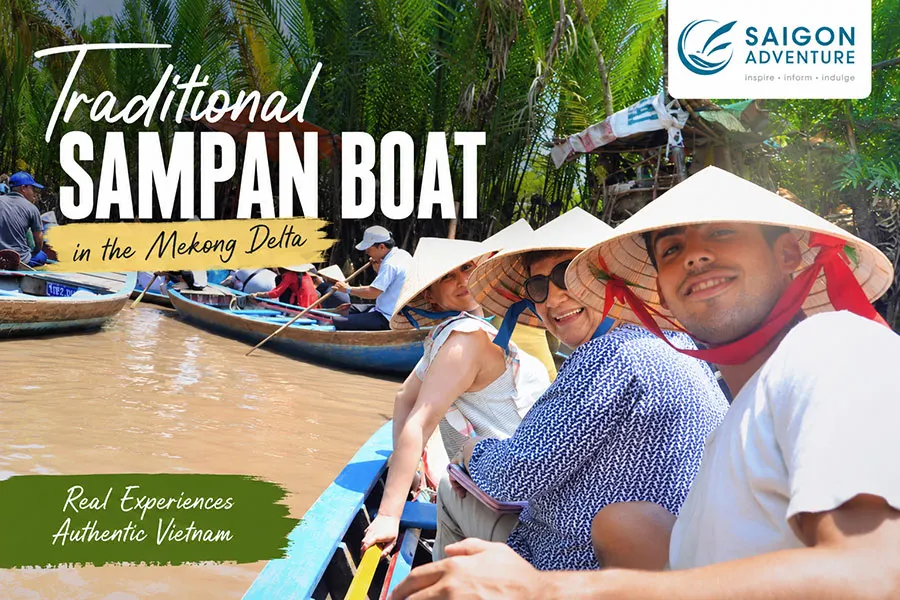
A stop in Ben Tre is often included on a traditional sampan boat experience in the Mekong Delta. Buy only sealed products if you want to take them home, and check your country’s food-import rules before packing them.
9. Fresh Tropical Fruit from Local Orchards
Mango, pomelo, pineapple, longan, dragon fruit, rambutan and jackfruit all grow in or near the delta, depending on the season. Fresh fruit plates are common during orchard visits, often served with tea and local folk music.
The experience is simple but memorable: fruit tastes different when it has travelled a few metres rather than hundreds of kilometres. Pomelo is particularly refreshing in the tropical heat, while ripe mango and pineapple make an easy snack between activities.
How to Choose Fruit Safely
Choose fruit that is peeled or cut in front of you, particularly if you have a sensitive stomach. Whole bananas, mandarins and rambutan are also convenient because you peel them yourself. Wash your hands or use sanitizer before eating when you are exploring markets.
10. Grilled River Prawns and Freshwater Fish
The delta’s canals and rivers provide freshwater prawns, catfish, snakehead fish and other local catches. You may see prawns grilled with salt and chilli, cooked with tamarind, or served in a clay pot with pepper.
These dishes tend to be less complicated than they sound. Their quality depends on freshness, so a riverside restaurant with a steady local crowd is often a better sign than an elaborate menu.
Ask for a recommendation from your guide if you want a seafood-focused meal. A good meal can be paired with steamed rice, morning glory and a cold coconut for a classic southern Vietnamese lunch.
11. Com Tam and Other Everyday Southern Favourites
Com tam, or broken rice, did not begin in the delta alone, but it is deeply woven into southern food culture and easy to find throughout the region. A typical plate includes grilled pork, pickles, cucumber, scallion oil and fish sauce.
It is a reliable choice for travellers who want something familiar after a few adventurous meals. The char-grilled pork is savoury and slightly sweet, while the rice has a pleasing texture that differs from regular steamed rice.
Do not overlook simple dishes because they look ordinary. Often, the most satisfying food in the Mekong Delta is a modest plate prepared well at a family-run stall.
12. Local Sweets, Che and Sugarcane Juice
After lunch, cool down with che, a Vietnamese sweet dessert that may contain beans, jelly, coconut milk, fruit or tapioca pearls. Versions vary widely, so it is worth asking what is in the glass before ordering.
Fresh sugarcane juice, called nuoc mia, is another excellent hot-weather option. It is pressed to order and sometimes mixed with kumquat for a bright, citrusy finish.
If you prefer less sugar, simply say “it ngot” when ordering. Vietnamese drinks and desserts can be sweeter than many international visitors expect, but vendors are often happy to adjust when possible.
Where Should You Eat in the Mekong Delta?
For the most enjoyable experience, combine a market breakfast, a countryside lunch and one casual evening meal in a local town. Floating markets are wonderful for atmosphere and quick bites, but they should not be your only food stop.
In Can Tho, start early around Cai Rang Floating Market, then eat noodles at a proper local shop afterwards. In Ben Tre or My Tho, orchard restaurants and small village kitchens are ideal for fish, fresh rolls and coconut treats.
A guided day trip is practical if you have limited time, while an overnight stay gives you more freedom to explore breakfast culture. If you are still deciding how long to stay, compare one-day, two-day and three-day Mekong Delta itineraries before booking.

Eat where food is cooked continuously and where locals are dining. Busy stalls usually mean fresher ingredients and faster turnover, especially for noodles, grilled seafood and fried snacks.
Tell your guide or server about allergies before ordering, particularly if you avoid shellfish, peanuts, fish sauce or pork. Vegetarian food is available, but clear communication matters because broths and sauces often contain fish sauce or meat stock.
Finally, do not try to eat everything in one meal. The best Mekong Delta food experiences happen slowly: a noodle breakfast, fruit in the afternoon, then a shared dinner by the water.
The Mekong Delta is not only a place to see from a boat; it is a place to taste with curiosity. From smoky grilled fish and crisp banh xeo to sweet coconut candy and orchard fruit, every meal reveals something about the river life that shapes this part of Vietnam. Join Saigon Adventure’s Mekong Delta tours to explore the waterways, villages and flavours with local insight—without missing the dishes that make the journey unforgettable.
Frequently Asked Questions
What food is the Mekong Delta famous for?
The Mekong Delta is famous for freshwater fish, hu tieu noodle soup, banh xeo, elephant ear fish, tropical fruit, coconut candy and dishes served with abundant fresh herbs.
Is Mekong Delta food spicy?
Most Mekong Delta food is not extremely spicy. Chilli is usually added separately, so you can control the heat to suit your taste.
What should vegetarians eat in the Mekong Delta?
Vegetarians can enjoy fresh fruit, vegetable spring rolls, tofu dishes, che and rice meals. Ask for “chay” and confirm that the broth or sauce does not contain fish sauce.
Can I eat food at the floating market?
Yes, you can try cooked noodles, coffee, fruit and snacks at a floating market. Choose boats with busy service and food prepared hot in front of you.
What is the best breakfast in the Mekong Delta?
Hu tieu, bun rieu and bun ca are excellent local breakfasts. In Can Tho, eating noodles after an early floating-market visit is a particularly authentic experience.
Is food in the Mekong Delta safe for tourists?
Yes, it is generally safe when you choose busy, clean food stalls and eat freshly cooked dishes. Use the same common-sense precautions you would use anywhere: drink sealed water, peel fruit when possible and mention dietary restrictions clearly.