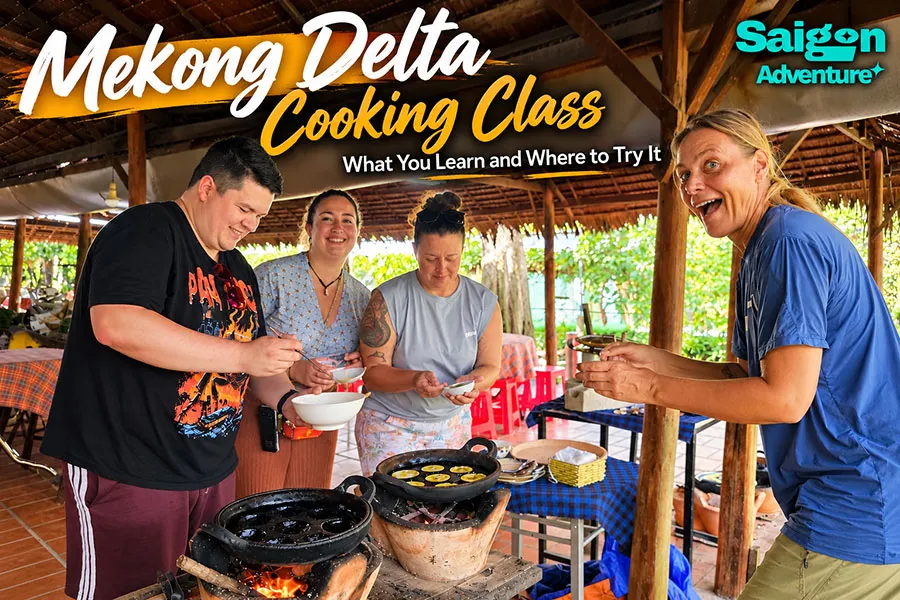
A Mekong Delta cooking class is more than a chance to prepare Vietnamese food. It is an opportunity to explore riverside markets, discover tropical ingredients, and learn how families in southern Vietnam turn fresh produce into memorable meals.
From wrapping crispy bánh xèo pancakes to preparing fragrant herbs and balancing sweet, sour, salty, and savory flavors, these hands-on experiences introduce travelers to the everyday food culture of the Mekong region.
Whether you’re visiting Ben Tre, Can Tho, or the countryside around My Tho, this guide explains what you can learn, where to find authentic cooking experiences, how much to budget, and what to consider before booking.
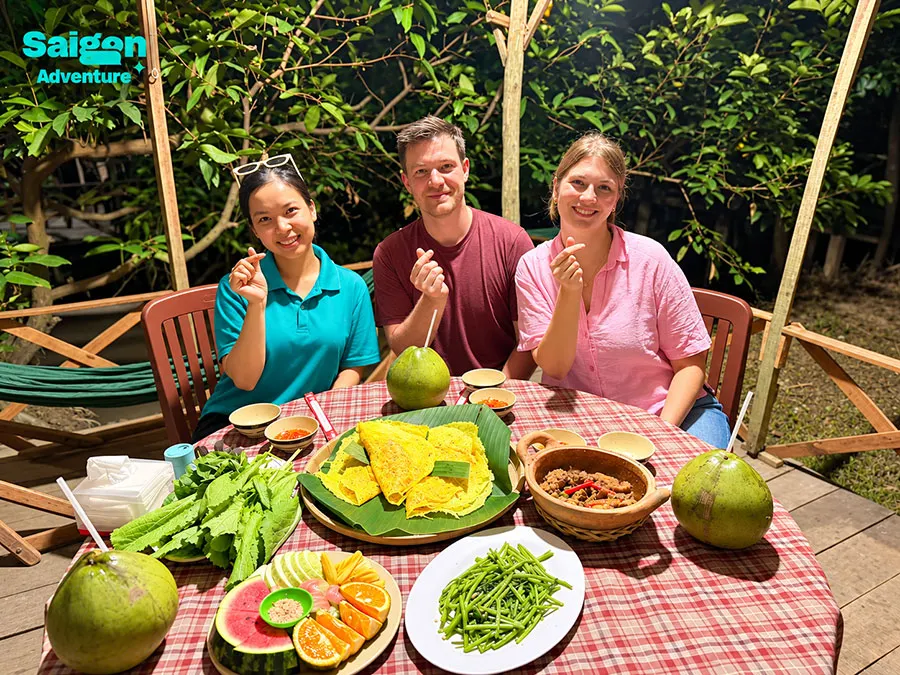
What Is a Mekong Delta Cooking Class?
A Mekong Delta cooking class is a guided culinary experience where visitors learn to prepare traditional southern Vietnamese dishes using local ingredients and cooking techniques.
Unlike a typical restaurant meal, participants may help select ingredients, prepare vegetables, mix dipping sauces, cook dishes, and enjoy the finished food together.
Some classes take place in family homes or countryside kitchens, while others operate at homestays, eco-lodges, or tourism facilities.
The most rewarding experiences explain not only how a dish is prepared but also why certain ingredients and flavors are important to local families.
For travelers interested in exploring the region beyond its cuisine, a Mekong Delta tour can provide additional opportunities to discover rural communities, waterways, and traditional activities.
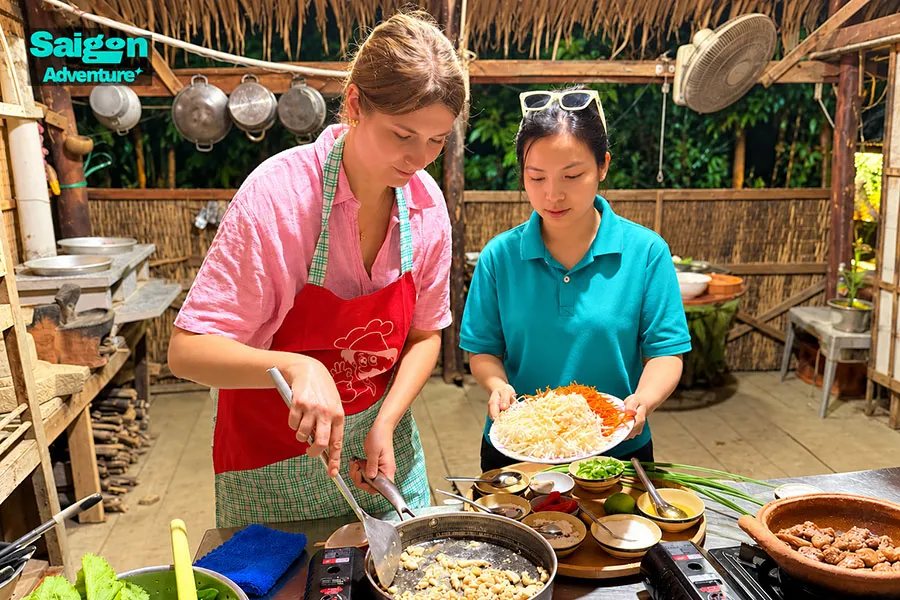
What Do You Learn in a Mekong Delta Cooking Class?
Cooking lessons vary by host, but most focus on practical techniques that visitors can understand and reproduce at home.
1. Preparing traditional southern Vietnamese dishes
Depending on the menu, you may learn to prepare several regional favorites.
-
Bánh xèo: Crispy Vietnamese pancakes filled with ingredients such as shrimp, pork, and bean sprouts.
-
Gỏi cuốn: Fresh rice paper rolls with vegetables, herbs, and selected proteins.
-
Gỏi bưởi: Pomelo salad combining citrus, herbs, and savory ingredients.
-
Cá kho tộ: Fish simmered in a savory-sweet caramelized sauce, traditionally associated with clay-pot cooking.
-
Canh chua: Sweet-and-sour soup featuring ingredients such as tamarind, pineapple, tomatoes, and fish.
Not every class teaches all these dishes. Menus depend on the host, season, available ingredients, and class duration.
Local tip: If you want to learn something distinctive, choose a class featuring regional dishes rather than a generic Vietnamese menu.
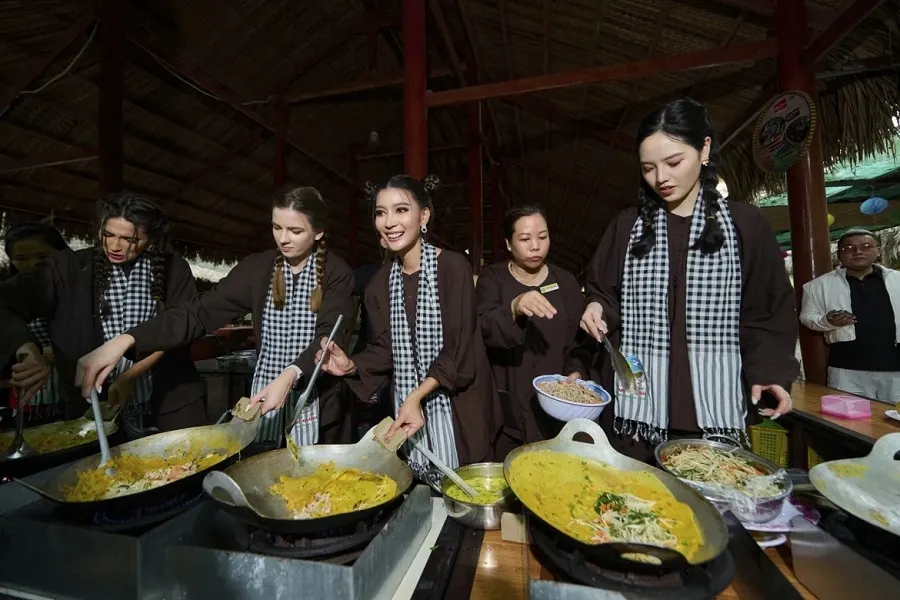
2. Balancing Vietnamese flavors
One of the most valuable lessons is understanding how Vietnamese cooks balance contrasting tastes.
Fish sauce provides saltiness and umami, while lime or tamarind contributes acidity. Sugar can soften sharp flavors, and fresh herbs bring fragrance and freshness.
Rather than following measurements blindly, participants may be encouraged to taste sauces and adjust the seasoning.
This is particularly useful when recreating Vietnamese recipes after returning home.
3. Using fresh herbs and tropical ingredients
The Mekong Delta’s agricultural landscape influences its cuisine.
Depending on the season, cooking classes may introduce banana blossom, water spinach, lemongrass, coconut, pomelo, and aromatic herbs.
You might also learn how ingredients are washed, sliced, shredded, or combined to create different textures.
Ask your instructor which ingredients can be substituted with produce available in your home country.
4. Learning practical Vietnamese cooking techniques
Hands-on lessons often introduce techniques that are simple but require practice.
These may include wrapping rice paper without tearing it, controlling the heat for crispy pancakes, preparing dipping sauces, and caramelizing ingredients without burning them.
Instructors may demonstrate each step before inviting participants to try.
A smaller class generally provides more opportunities to practice than a large demonstration-focused group.
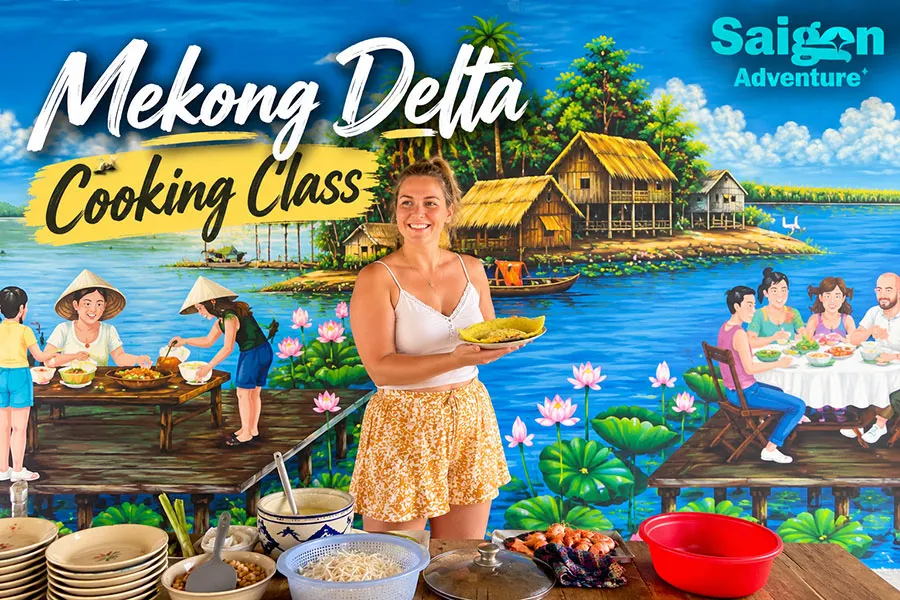
Where to Try a Cooking Class in the Mekong Delta
These destinations are useful places to search for cooking experiences. Specific class availability and menus should be confirmed directly with the provider.
Ben Tre: Coconut-inspired countryside cooking
Ben Tre is particularly appealing to travelers interested in rural food traditions and coconut-based ingredients.
Some homestays and countryside tourism providers offer cooking activities alongside garden visits, cycling, or boat excursions.
Depending on the host, participants may prepare spring rolls, traditional pancakes, or dishes incorporating coconut.
Best for: Couples, families, and travelers seeking a relaxed countryside atmosphere.
Can Tho: Cooking experiences and local markets
Can Tho is a convenient base for travelers who want to combine culinary activities with a longer exploration of the delta.
Cooking experiences may be arranged through homestays or local tourism providers, sometimes alongside market visits or countryside excursions.
The city also provides access to the famous Cai Rang Floating Market, although visiting the market and attending a cooking class are usually separate activities unless specifically included in a package.
Best for: Food enthusiasts spending one or more nights in the Mekong Delta.
My Tho and nearby countryside: Accessible from Ho Chi Minh City
My Tho is a popular gateway to the Mekong Delta for visitors traveling from Ho Chi Minh City.
The surrounding countryside offers opportunities to explore tropical fruit gardens, waterways, and local food traditions.
Cooking activities may be available through selected private experiences or rural hosts, but they should not be assumed to be included in standard sightseeing tours.
Best for: Travelers with limited time who want to explore southern Vietnam’s food culture.
How Much Does a Mekong Delta Cooking Class Cost?
Prices vary considerably according to location, group size, transportation, and included activities.
Rather than relying on a fixed regional price, compare the total package cost and what you receive.
| Experience type | Typical inclusions |
|---|---|
| Short cooking session | Instructor, ingredients, prepared meal |
| Cooking and market visit | Market exploration, ingredients, cooking lesson |
| Countryside experience | Cooking, local activities, sometimes lunch or transport |
| Private culinary experience | Personalized instruction, flexible menu, private arrangements |
Some providers charge per person, while private classes may have a minimum booking fee.
Before paying, confirm whether transportation from Ho Chi Minh City, drinks, entrance fees, and dietary accommodations are included.
A lower-priced class is not necessarily better value if much of the experience involves watching rather than cooking.
Is a Mekong Delta Cooking Class Worth It?
For travelers who enjoy food and cultural experiences, a cooking class can be one of the most memorable activities in the region.
It offers something different from sightseeing because you actively participate in preparing a meal and learn skills you can use later.
However, the experience may be less appealing to visitors who prefer fast-paced excursions or have little interest in cooking.
| Choose a cooking class if you… | Consider another activity if you… |
|---|---|
| Enjoy hands-on cultural experiences | Prefer sightseeing without participation |
| Want to learn Vietnamese recipes | Have very limited time |
| Like discovering local ingredients | Prefer a short restaurant visit |
| Travel with food-loving friends or family | Are uncomfortable working in a kitchen |
For many visitors, combining a cooking activity with a countryside visit offers a good balance between learning and exploring.
When Is the Best Time to Join a Cooking Class?
Cooking classes can operate throughout the year, although availability depends on individual providers.
The Mekong Delta generally experiences a drier period from around December to April and a wetter period from May to November.
During wetter months, occasional heavy rain may affect outdoor market visits, cycling, or boat transfers. Indoor cooking activities can still be enjoyable.
Morning sessions are often convenient when the itinerary includes shopping for fresh ingredients.
Local tip: If your class involves an outdoor kitchen, ask whether there is a covered cooking area and a backup plan during heavy rain.
How to Choose and Book an Authentic Cooking Experience
Not every activity advertised as a cooking class provides the same level of participation.
Before booking, consider these practical questions:
-
Will you cook yourself? Confirm whether the session is hands-on or primarily a demonstration.
-
How many dishes are included? Ask for the actual menu rather than assuming several courses.
-
Who teaches the class? A local home cook or experienced instructor may provide different perspectives.
-
How large is the group? Smaller groups often allow more individual guidance.
-
Can dietary needs be accommodated? Discuss allergies and vegetarian requirements in advance.
-
Is transport included? Check pickup points, travel times, and return arrangements.
Food hygiene also matters. Look for clean preparation areas, safe drinking water, properly stored ingredients, and thoroughly cooked seafood or meat.
If you have a serious food allergy, inform the provider before booking and ask about cross-contact risks, especially with fish sauce, shrimp paste, peanuts, and shellfish.
Can You Combine a Cooking Class With a Mekong Delta Tour?
Yes, although the cooking component must be arranged with a provider that specifically offers it.
A well-planned itinerary might include a morning market visit, a countryside cooking session, lunch, and time exploring nearby waterways or villages.
Travelers based in Ho Chi Minh City should account for road transfers, particularly when considering destinations farther into the delta.
If you’re planning a broader southern Vietnam journey, explore Saigon Adventure’s tour experiences and ask whether a cooking activity can be arranged as part of your itinerary.
Frequently Asked Questions About Mekong Delta Cooking Classes
1. Do I need cooking experience to join?
No. Many cooking classes welcome beginners, with instructors demonstrating basic preparation techniques before participants try them independently.
2. Are Mekong Delta cooking classes suitable for children?
Some are suitable for families, particularly classes involving fresh spring rolls or simple food preparation. Check minimum ages and supervision requirements, especially around knives and hot cooking surfaces.
3. Can vegetarians join a Vietnamese cooking class?
Many providers may accommodate vegetarian requests with advance notice. Confirm whether fish sauce, shrimp paste, or meat-based stock can be replaced.
4. How long does a cooking class usually take?
A standalone session may take around two to three hours, while experiences including markets, transport, or countryside activities can take considerably longer.
5. Can I join a cooking class on a Mekong Delta day trip?
Yes, if the itinerary specifically includes a cooking activity and allows sufficient time. Check the schedule carefully before booking.
6. What should I wear to a cooking class?
Wear comfortable clothing and closed-toe shoes with good grip. Tie back long hair and avoid loose accessories near cooking equipment.
Discover the Mekong Delta Through Its Food
A cooking class reveals a side of the Mekong Delta that ordinary sightseeing can easily miss: the ingredients, techniques, and everyday traditions behind southern Vietnamese meals.
Whether you’re preparing crispy pancakes in a countryside kitchen or discovering fresh produce at a local market, the experience can deepen your appreciation of regional food culture.
For a more complete journey, explore Mekong Delta travel experiences and choose an itinerary that matches your interests, travel time, and preferred level of participation.