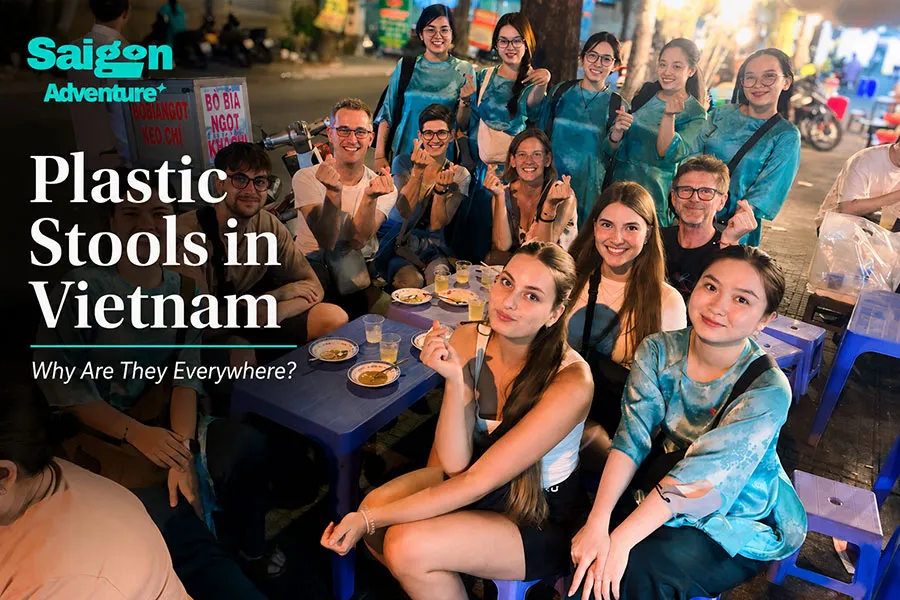
Plastic stools in Vietnam are among the first things travelers notice while exploring Ho Chi Minh City. They appear beside street food carts, inside narrow alleys, around local coffee stalls, and along some of Saigon’s busiest sidewalks.
These tiny seats may look ordinary, but they reveal a great deal about Vietnamese street food culture, family businesses, and everyday social life.
Quick Answer: Why Do Vietnamese People Use Small Plastic Stools?
Small plastic stools are popular in Vietnam because they are affordable, lightweight, easy to clean, and perfectly suited to narrow sidewalks.
Street food vendors can arrange them within seconds, stack them when space is needed, and quickly move them indoors when tropical rain begins. Their low, informal design also creates a relaxed atmosphere where people can eat, drink, and watch the city go by.
More than inexpensive furniture, these colorful stools have become an icon of Vietnamese street culture.
Designed for Saigon’s Narrow Streets
Space is limited in many parts of Ho Chi Minh City.
Traditional neighborhoods contain narrow houses, hidden alleys, parked motorbikes, food carts, and busy sidewalks. Full-sized dining tables and heavy chairs would occupy too much room.
Plastic stools offer a simple solution.
A vendor can fit several customers into a compact area without needing a permanent dining room. When the stall becomes busy, extra seats can be added immediately. At closing time, everything can be stacked neatly and carried inside.
This flexibility is especially useful for mobile vendors. Some transport an entire food stall—including cooking equipment, ingredients, tables, bowls, and stools—on a motorbike or pushcart.
Perfect for Saigon’s Tropical Weather
Ho Chi Minh City’s weather can change quickly, particularly during the rainy season.
A sunny sidewalk may be hit by heavy rain within minutes. Lightweight furniture allows vendors and customers to move beneath an awning without disrupting the meal for long.
Plastic stools are also easy to wash after rain, spilled sauces, or a busy day of service. Unlike upholstered or wooden furniture, they do not require complicated maintenance and dry quickly in Saigon’s warm climate.
This makes them practical for outdoor dining throughout the year.
How Plastic Stools Help Keep Street Food Affordable
Many Vietnamese street food stalls are small family businesses. Their success depends on serving tasty food quickly at prices local residents can afford regularly.
Plastic stools cost far less than traditional restaurant furniture. Vendors do not need an expensive dining room, elaborate decorations, or air conditioning.
These lower operating costs can help keep meals reasonably priced.
Customers are paying for the food rather than the setting. A bowl of noodles served beside the street may come from a family recipe perfected over several generations, even if the “restaurant” consists of a cart, a metal table, and a dozen colorful stools.
A Front-Row Seat to Everyday Saigon
Sitting close to the ground changes how you experience Ho Chi Minh City.
You notice the sound of a hot wok, the aroma of meat cooking over charcoal, the movement of scooters, and the friendly conversations between vendors and regular customers.
You are not separated from the neighborhood by glass windows or air-conditioned walls. You are sitting directly inside its daily rhythm.
For international travelers, this often becomes one of the most memorable parts of eating in Saigon. The furniture is basic, but the experience feels immediate, personal, and unmistakably local.
The Social Side of Sidewalk Dining
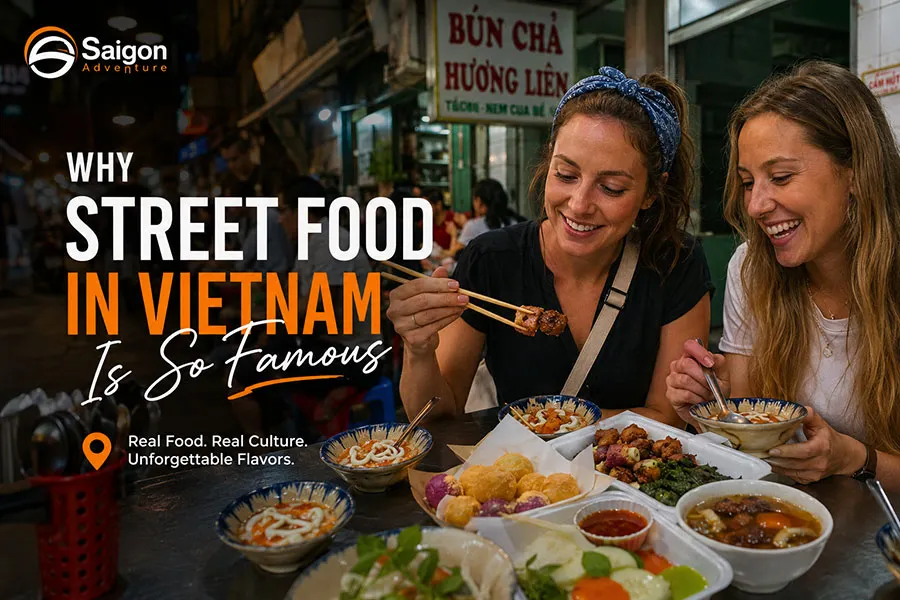
Vietnamese street food is not only about finding a quick meal.
Sidewalk stalls serve as informal meeting places where neighbors exchange news, colleagues relax after work, and friends gather over snacks or cold drinks.
There is no need to dress formally or make a reservation. Customers can stop for ten minutes or stay much longer for a conversation.
During busy periods, strangers may sit close together or share the same table. This is normal in Vietnam and helps create a communal atmosphere rarely found in more formal restaurants.
The small stools naturally reduce the physical distance between people. Everyone eats at the same level, creating a casual and welcoming social space.
Vietnamese Coffee and the Pleasure of Watching the Street
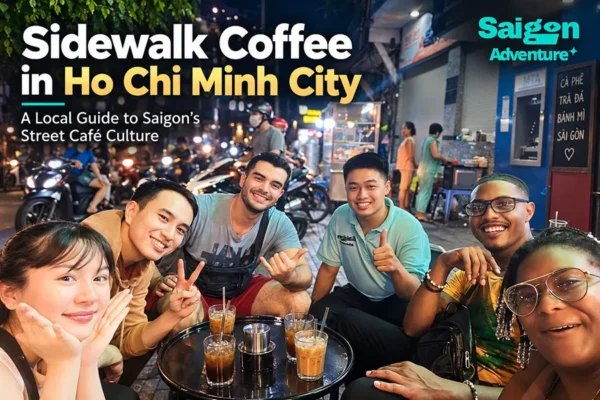
Plastic stools are closely connected with Vietnam’s sidewalk coffee culture.
Early in the morning, local residents gather for cà phê sữa đá, strong iced coffee sweetened with condensed milk. Others prefer cà phê đen đá, a bold black coffee served over ice.
People do not always drink their coffee quickly. They sit, read the news, check their phones, talk with friends, or simply watch the morning traffic.
This habit is part of the pleasure of observing street life. Saigon provides the entertainment, while a tiny plastic stool offers a front-row seat.
Popular Foods Served at Sidewalk Stalls
Almost any casual Vietnamese dish can be enjoyed on a plastic stool, but some foods are especially connected with sidewalk dining.
Bánh Mì
Bánh mì is easy to take away, but many vendors provide several stools for customers who want to eat immediately.
A freshly prepared sandwich, accompanied by Vietnamese iced coffee or soy milk, makes a quick and satisfying local breakfast.
Noodle Soups
Phở, hủ tiếu, bún bò Huế, and other noodle soups are often served at simple neighborhood eateries.
Low tables usually hold baskets of herbs, sliced chili, lime, fish sauce, and other condiments. Customers season each bowl according to their taste.
Cơm Tấm
Cơm tấm, or broken rice, is one of Saigon’s signature dishes.
A typical plate includes grilled pork, shredded pork skin, egg meatloaf, pickled vegetables, scallion oil, and fish sauce. The smell of pork sizzling over charcoal often attracts customers before they even see the stall.
Bánh Xèo and Street Snacks
Crispy bánh xèo, bánh khọt, fried bananas, and Vietnamese rice-paper snacks are commonly enjoyed in small, informal spaces.
These foods become particularly popular during the late afternoon, when students finish school and workers begin heading home.
Snails and Seafood
Vietnamese snail restaurants become lively after dark.
Groups of friends sit around low tables, sharing snails, clams, grilled seafood, and cold drinks. Instead of ordering one large meal, they choose several small dishes and eat slowly throughout the evening.
Are Vietnamese Plastic Stools Comfortable?
Comfort depends on your height, mobility, and what you are accustomed to.
The stools can feel low and narrow to taller travelers, especially during a long meal. However, they are designed for casual dining rather than formal seating.
Choose a stool that looks sturdy and place it on a flat surface. Sit carefully in the center rather than leaning heavily to one side.
Travelers with knee, back, or mobility problems should not feel pressured to use them. Many local restaurants provide standard chairs while serving equally authentic Vietnamese food.
Is Food From Sidewalk Stalls Safe?
The size of the chairs does not determine whether a food stall is clean or trustworthy.
A simple roadside vendor may follow careful preparation practices, while an attractive restaurant is not automatically reliable. Observe how ingredients are stored, handled, cooked, and served.
Positive signs include:
- A steady flow of local customers
- Food being cooked fresh and served quickly
- Raw and cooked ingredients kept separately
- Clean bowls, utensils, and preparation surfaces
- Ingredients protected in covered containers
- A vendor specializing in only a few dishes
- Meat and seafood stored at appropriate temperatures
Busy stalls often have faster ingredient turnover, but travelers should still use good judgment, particularly when managing food allergies or sensitive stomachs.
For more practical guidance, read how local food guides choose safe street food vendors.
Simple Street Food Etiquette for Visitors
Eating at a Vietnamese sidewalk stall is relaxed, but a few local habits can make the experience smoother.
Keep Empty Stools Available
During busy hours, avoid placing your backpack or shopping bags on an extra stool. Keep your belongings close so another customer can use the seat.
Pointing at Food Is Acceptable
You do not need to speak fluent Vietnamese to order confidently.
Pointing politely while saying “Cho tôi một phần”, meaning “One portion, please,” is completely acceptable. Many vendors are accustomed to helping international visitors.
Share the Condiments
Chili, lime, herbs, fish sauce, and other condiments are usually shared by everyone at the table. Use what you need and return each item to the center.
Prepare Small Vietnamese Notes
Most traditional street food vendors prefer cash. Carrying smaller notes makes payment easier, especially when purchasing inexpensive dishes or drinks.
Customers usually pay after eating unless the vendor indicates otherwise. If you are unsure about the price, ask “Bao nhiêu tiền?”, meaning “How much?”
The Plastic Stool Is Not a Tourist Attraction
Colorful stools frequently appear in travel photos, but Vietnamese sidewalk dining was never created for tourists.
Students, office workers, market sellers, construction workers, business owners, and families use these spaces every day. The setting is practical, familiar, and closely connected to the city’s pace of life.
Some stalls have served the same neighborhood for decades. Vendors remember regular customers, their usual orders, and even how much chili they prefer.
That personal connection is difficult to reproduce inside a large commercial restaurant.
Where to Experience Authentic Sidewalk Dining in Saigon
Plastic stools and informal eateries appear throughout Ho Chi Minh City, but every district offers a slightly different atmosphere.
District 1 is convenient and has plenty of recognizable dishes, although central areas can feel more tourist-oriented. District 3 combines historic residential streets with busy cafés and long-running family eateries.
District 4 is known for narrow alleys, seafood, snails, and evening snacks. District 5 offers Chinese-Vietnamese noodles, dumplings, herbal drinks, and traditional desserts shaped by the city’s Chinatown heritage.
District 10 and Bình Thạnh also contain lively food neighborhoods beyond the most familiar sightseeing routes.
Many worthwhile places are not famous restaurants. They are family-run stalls hidden inside alleys or located along streets most visitors would never think to explore.
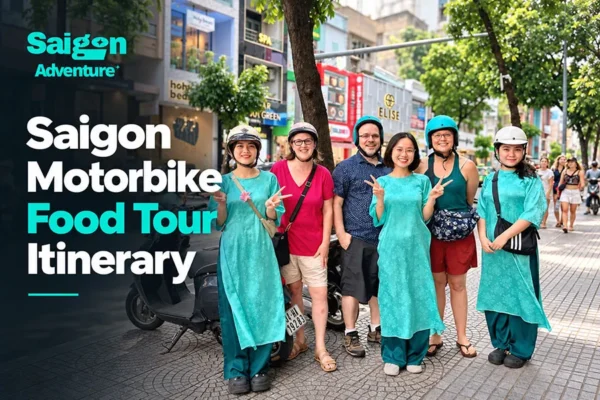
Joining a Food Tour in Ho Chi Minh City can help first-time visitors understand what to order, how to combine condiments, and which local dishes match their preferences.
A guided motorbike food tour also makes it possible to visit several districts in one evening instead of remaining within the tourist center.
Why the Plastic Stool Became a Symbol of Vietnam
The small plastic stool represents much more than inexpensive furniture.
It reflects adaptability, affordability, and the Vietnamese ability to create welcoming social spaces almost anywhere.
A section of sidewalk can become a breakfast restaurant in the morning, disappear during the afternoon, and return as a lively seafood stall after sunset.
There may be no elaborate decoration, yet the experience is full of character.
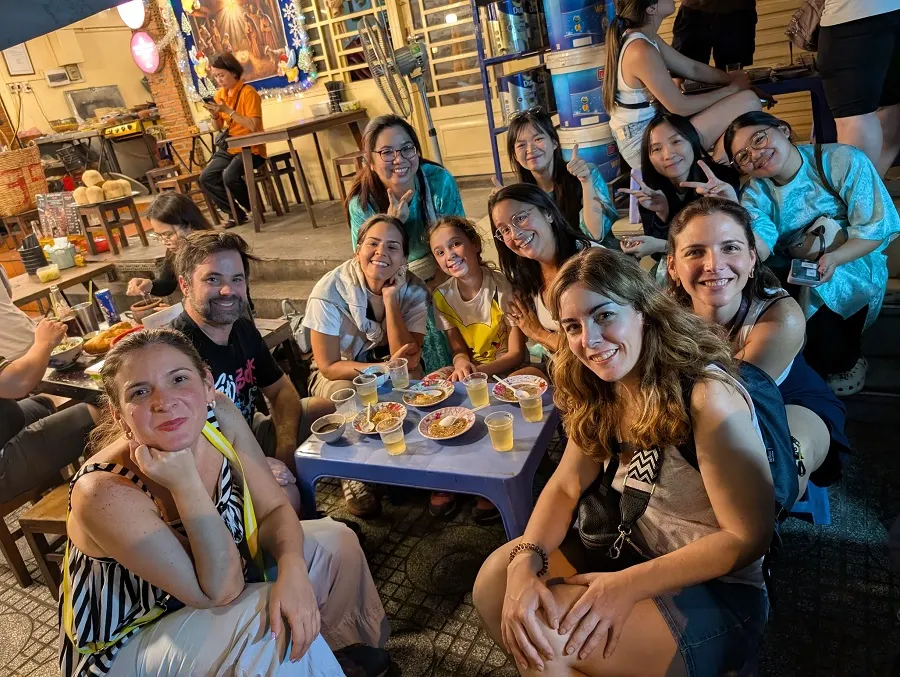
For travelers, sitting on one of these stools provides a small but meaningful connection with local life. You eat at the same level, use the same condiments, and share the same busy street as everyone around you.
Ready to Eat Like a Local in Saigon?
Leave the familiar tourist streets behind and discover family-run eateries, hidden alleys, and authentic sidewalk dining with Saigon Adventure.
Our local guides introduce you to the flavors, stories, and neighborhoods that make the city’s food culture unforgettable. Join a Ho Chi Minh City Food Tour and experience Saigon from the best seat in town—even if that seat happens to be a tiny plastic stool.
Frequently Asked Questions
Why are Vietnamese street food chairs so small?
Small stools are affordable, lightweight, stackable, and suitable for narrow sidewalks. Vendors can arrange, clean, or remove them quickly as customer numbers and weather conditions change.
Is it rude for tourists to sit at local street food stalls?
No. International visitors are welcome at most stalls. Be polite, avoid occupying unnecessary seats, and follow the vendor’s directions when choosing a table.
Are Vietnamese plastic stools strong enough for foreign travelers?
Most are designed for adults, but their quality varies. Choose a sturdy stool on level ground and sit in the center. Ask for a standard chair if you feel uncomfortable.
Can I order street food without speaking Vietnamese?
Yes. Pointing politely at a dish is acceptable. Basic phrases, photos, translation apps, and friendly gestures can make ordering easier.
Should I bring cash to Vietnamese street food stalls?
Yes. Small vendors commonly accept cash, and smaller notes are particularly useful. Local digital payments may not be convenient for international travelers.
What is the best time to experience sidewalk dining in Saigon?
Early morning is ideal for noodle soups, bánh mì, and Vietnamese coffee. From approximately 6:00 p.m., sidewalks become livelier with grilled food, seafood, snacks, and groups of local diners.