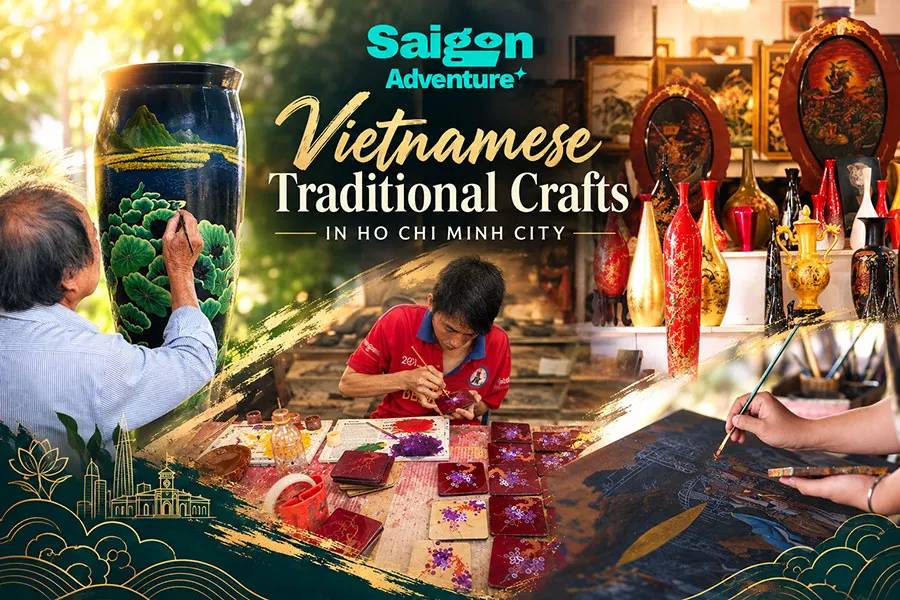
Ho Chi Minh City is famous for its street food, busy motorbike traffic, and modern skyline, but there is another side of the city that many visitors overlook: its traditional craftsmanship. From delicate lacquerware and hand-shaped ceramics to historic artworks and workshops where visitors can try making something themselves, these experiences offer a different way to understand Vietnamese culture.
If you want to do more than visit museums or buy souvenirs, exploring traditional crafts can bring you closer to the people, skills, and stories behind Vietnam’s handmade products. Some experiences are suitable for a short cultural stop in the city center, while others require a half-day trip to a craft village or specialist workshop.
Here is where to discover Vietnamese traditional crafts in Ho Chi Minh City, what you can expect, and how to choose an experience that suits your trip.
Why explore traditional crafts in Ho Chi Minh City?
Vietnamese handicrafts reflect centuries of practical knowledge, artistic expression, and regional identity. Techniques are often passed from one generation to the next, with artisans learning how to prepare materials, shape objects, apply decorative patterns, and finish each piece by hand.
In southern Vietnam, lacquerware and ceramics are particularly interesting crafts to explore. Lacquerware is known for its layered finishes and carefully decorated surfaces, while ceramics combine functional design with traditional and contemporary artistic styles.
For international travelers, craft experiences offer several advantages. They provide an indoor activity during hot or rainy weather, create opportunities to meet local artists, and offer a more personal alternative to buying mass-produced souvenirs.
Not every craft destination offers hands-on activities, however. Some are museums or exhibition spaces, while others are working villages or venues with bookable workshops. Check the current program before visiting if making your own souvenir is a priority.
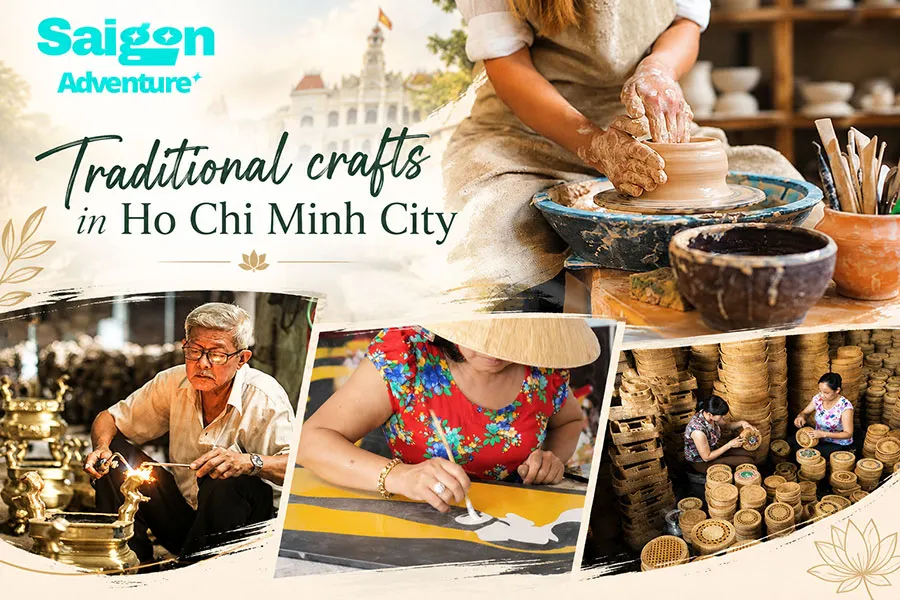
1. Discover Vietnamese lacquerware in Tuong Binh Hiep Craft Village
Tuong Binh Hiep Lacquerware Village is one of the most interesting places to learn about the lacquerware tradition of southern Vietnam. Located in Thu Dau Mot, within present-day Ho Chi Minh City, the village has a long association with lacquer production and decorative craftsmanship.
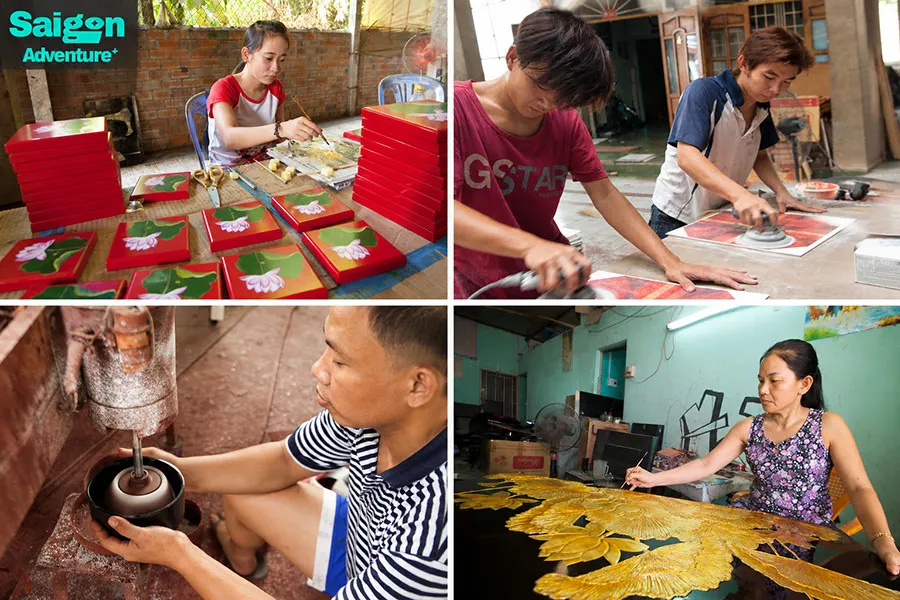
Lacquerware is more than a shiny coating applied to wood. Depending on the technique and product, artisans may prepare a surface, apply multiple layers, decorate it with pigments or other materials, and carefully polish the finish. The process requires patience because individual stages may need time to dry or cure before the next one can begin.
What can you see there?
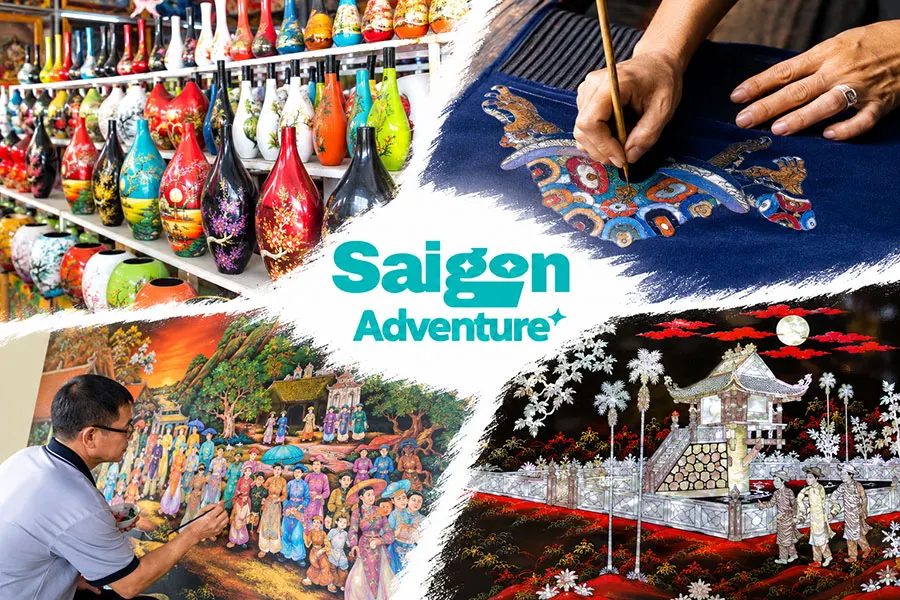
A visit may introduce you to lacquer paintings, decorative panels, wooden objects, and other finished products. Depending on the workshop and whether production is taking place, you may also be able to observe parts of the manufacturing process.
Look closely at the depth of color, reflective surfaces, fine details, and the way decorative elements are arranged. These features help explain why handmade lacquerware can require considerably more work than an ordinary souvenir.
Can visitors try making lacquerware?
Hands-on activities depend on the individual workshop. Do not assume that every production facility accepts tourists or offers short classes. Contact a workshop in advance to ask about demonstrations, English-speaking guidance, available activities, and whether visitors can make or decorate a small item.
Tuong Binh Hiep is best suited to travelers who have a particular interest in traditional materials and craftsmanship. Because it is outside the central sightseeing area, allow additional travel time rather than treating it as a quick stop between nearby attractions.
2. Try pottery at the Minh Long Ceramics and Porcelain Museum
If you want a more structured craft experience, the Minh Long Ceramics and Porcelain Museum in Thu Dau Mot is worth considering. The venue combines an introduction to ceramics with activities that allow visitors to explore the process more directly.
Unlike a simple souvenir shop, a ceramics experience helps you understand how clay becomes a finished object. The material must be prepared, shaped, dried, decorated, and fired. Each stage affects the appearance and durability of the final piece.
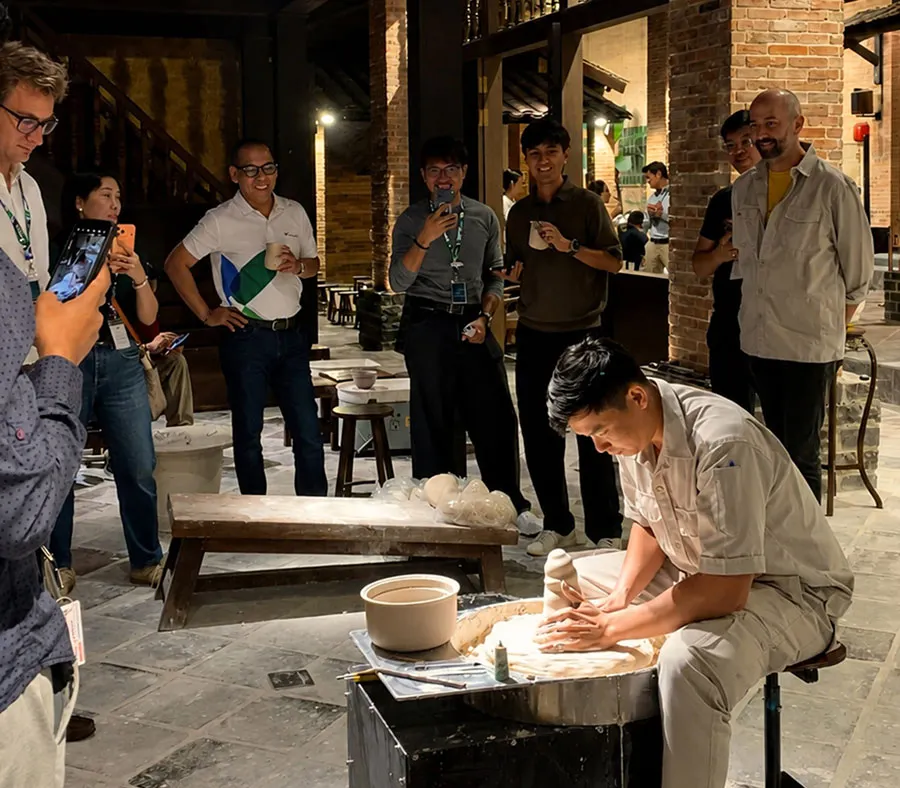
Join a pottery or ceramic-painting activity
The museum advertises hands-on experiences that include pottery wheel throwing and ceramic decoration. Depending on the activity you book, you may have the opportunity to shape clay or decorate a ceramic item.
Working with clay can be surprisingly challenging. Applying too much pressure or distributing the material unevenly can change the shape, so beginners should expect a learning experience rather than a perfectly finished piece on their first attempt.
Ceramic painting is another option if you prefer a more accessible activity. It allows you to focus on colors and patterns without needing to master the pottery wheel.
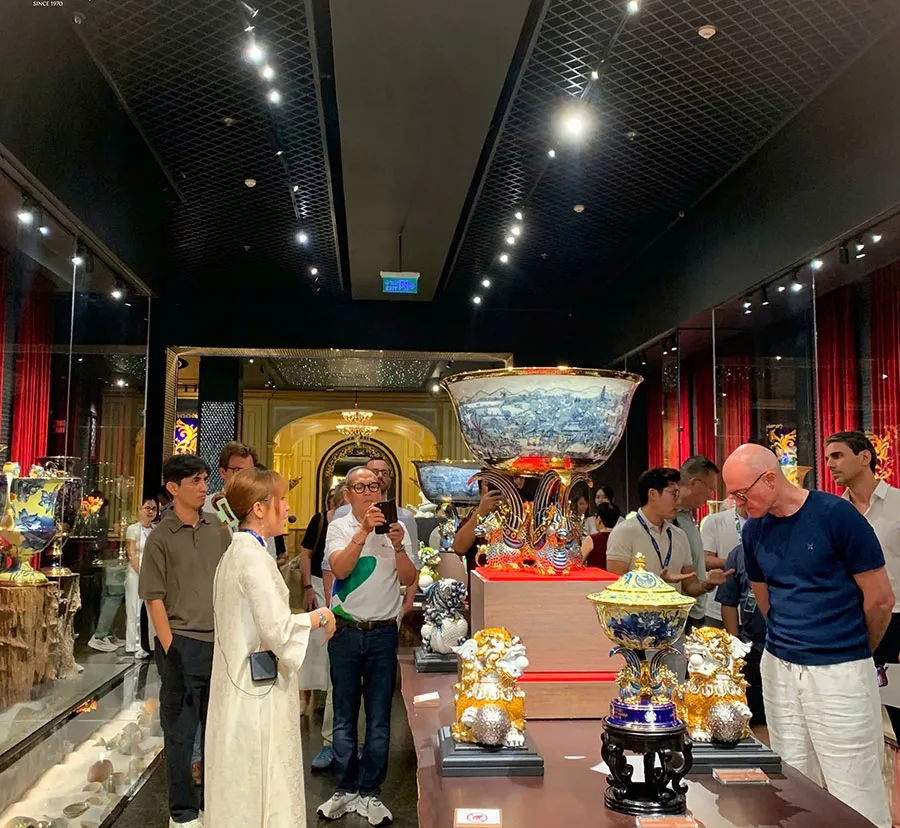
Practical information
The museum is located at 333 Hung Dinh 24 Street, Hung Loc neighborhood, Thuan An, Ho Chi Minh City. Its published visiting hours are 8:00 AM–12:00 PM and 1:00 PM–4:30 PM daily.
Advance booking is recommended for experiential activities. The venue publishes different prices for admission and individual experiences, so check the current international visitor rates and activity fees before you go.
This destination is a better choice for travelers who want an organized, hands-on activity rather than simply browsing handmade products.

3. Explore Vietnamese art and traditional decorative techniques at the Ho Chi Minh City Museum of Fine Arts
You do not have to travel outside central Saigon to discover Vietnam’s artistic traditions. The Ho Chi Minh City Museum of Fine Arts offers an opportunity to explore Vietnamese art, including works that demonstrate traditional materials and decorative techniques.
The museum is housed in a historic building that is itself worth noticing. Its architecture, interior details, and exhibition spaces provide a different atmosphere from the city’s modern commercial districts.
What should you look for?
As you explore the collections, pay attention to works made with lacquer, silk, ceramics, wood, and other materials. These objects reveal how Vietnamese artists have adapted traditional techniques to different subjects, styles, and periods.
Lacquer paintings are particularly interesting because their finished surfaces can conceal a complicated production process. Silk works offer a contrasting experience, using delicate materials and subtle layers of color to create a different visual effect.
The museum is primarily an art and exhibition destination, not a guaranteed craft workshop. It is ideal for travelers who want to understand the artistic background of Vietnamese handmade objects before visiting a specialist studio or buying a piece to take home.
Allow time to explore the building as well as the collections, and check current exhibitions and opening arrangements before your visit.
4. Look for a hands-on craft workshop in the city center
For travelers with limited time, a short workshop in central Ho Chi Minh City may be more practical than traveling to a craft village. Depending on current availability, you may find activities involving painting, handmade decorations, ceramics, or other creative techniques.
The key is to distinguish between a genuine participatory experience and a shop that simply sells locally made products.
How to choose the right workshop
Before booking, ask a few questions:
- Will I make or decorate an object myself, or only watch a demonstration?
- Is the instructor able to explain the process in English?
- How long does the activity take?
- Is the material and equipment included in the price?
- Can I take the finished item home on the same day?
- Does the finished product need additional drying, firing, or processing?
These questions are especially important for ceramics and lacquerware, where the complete production process can take much longer than a tourist workshop.
A short class is a good choice for couples, families with older children, solo travelers, or anyone who wants a creative break from sightseeing. Check age restrictions and any booking requirements before confirming your place.
5. Visit local craft shops to understand handmade Vietnamese souvenirs
Not every meaningful craft experience requires a class. Visiting a reputable shop that works with local artisans can help you learn about materials, traditional patterns, and the differences between handmade and factory-produced products.
Instead of buying the first item that catches your eye, take time to ask where it was made, what materials were used, and whether the seller can explain the production process.
What makes a good Vietnamese craft souvenir?
Lacquerware can be a distinctive decorative piece, while ceramics may be practical as well as attractive. Smaller handmade objects can be easier to transport than large paintings or fragile decorative items.
Look for consistent finishing, carefully executed details, and clear information about the material. Handmade objects may have small variations, which can be part of their character rather than a defect.
If you plan to bring a piece home, consider its weight, fragility, packaging, and your airline’s baggage restrictions. For expensive artworks or antiques, ask for appropriate documentation and verify any relevant export rules before purchasing.
A craft shop visit is not the same as meeting an artisan at work, but it can complement a museum visit or workshop and help you make a more informed purchase.
How to plan a traditional craft experience in Saigon
The best itinerary depends on how much time you have and whether you want to observe, learn, or create something yourself.
If you have two to three hours
Stay in central Ho Chi Minh City. Visit the Museum of Fine Arts and, if available, book a nearby creative workshop. This option works well if you are already exploring the city center and do not want to spend much of the day traveling.
If you have half a day
Choose one main activity, such as a pottery experience at the Minh Long Ceramics and Porcelain Museum, or arrange a visit to a lacquerware workshop in Tuong Binh Hiep.
Check travel times carefully and confirm that the workshop can receive visitors before setting out. These destinations are outside the traditional central sightseeing circuit.
If you have a full day
You can plan a more focused cultural day around ceramics or lacquerware, combining a pre-arranged workshop with time to explore the surrounding area. Avoid scheduling several distant destinations too tightly, especially if you depend on road transport.
For a more relaxed trip, choose one craft and learn about it in depth rather than trying to fit every destination into one day.
Tips for visiting Vietnamese craft workshops respectfully
Traditional crafts are often the result of years of practice, so a little preparation can make your visit more rewarding.
Ask before taking photographs. Some artisans are happy to have their work photographed, while others may prefer that visitors avoid filming certain stages or private working areas.
Respect the working environment. Do not touch tools, unfinished pieces, or materials unless the artisan invites you to do so. In a working workshop, safety and production needs come first.
Be realistic about what you can make. A short activity usually introduces one part of a craft rather than teaching the complete traditional process.
Confirm prices in advance. Ask what is included, especially if materials, firing, delivery, or shipping may involve additional charges.
Leave time for conversation. If an artisan is available to explain their work, asking thoughtful questions can be just as valuable as taking home a finished object.
Frequently asked questions
Where can I try traditional Vietnamese crafts in Ho Chi Minh City?
The Minh Long Ceramics and Porcelain Museum offers pottery and ceramic-decoration experiences. Tuong Binh Hiep is known for lacquerware, while the Ho Chi Minh City Museum of Fine Arts is a useful place to explore Vietnamese artistic traditions. Confirm workshop availability before visiting.
Can tourists make their own Vietnamese souvenirs?
Yes, some venues offer activities such as pottery wheel throwing or ceramic painting. Other workshops may provide demonstrations only, so check the exact activity before booking.
Is Tuong Binh Hiep worth visiting?
It is worth considering if you are interested in lacquerware and traditional craftsmanship. Because it is outside central Saigon, plan transport in advance and confirm that a workshop can accommodate visitors.
How much do traditional craft experiences cost?
Prices vary by venue and activity. Museum admission, pottery sessions, ceramic painting, and private workshops may be charged separately. Check current prices directly with the venue before planning your budget.
Are craft workshops suitable for children?
Some creative activities may be suitable for children, but age limits vary. The Minh Long Ceramics and Porcelain Museum publishes specific visitor restrictions for younger children, so check its current policy before booking.
What is the best traditional craft experience for first-time visitors?
For a structured, hands-on activity, pottery or ceramic painting is a good starting point. If you are more interested in the history and visual details of Vietnamese art, begin with the Museum of Fine Arts or arrange a lacquerware visit.
Discover a more creative side of Ho Chi Minh City
Traditional crafts reveal a quieter, more personal side of Saigon. Instead of focusing only on famous landmarks, you can learn how local materials become distinctive works of art, discover the patience behind handmade products, and gain a better understanding of Vietnamese cultural heritage.
Whether you choose a pottery activity, explore lacquerware in Tuong Binh Hiep, or spend time with the collections at the Museum of Fine Arts, the most rewarding experience is one that matches your interests and allows enough time to appreciate the process.
Plan ahead, confirm workshop availability, and approach each visit with curiosity. You may leave with more than a souvenir: a new appreciation for the skills and stories behind Vietnamese craftsmanship.