
The sounds of Saigon can seem chaotic when you first arrive: motorbike horns, street vendors calling, coffee spoons tapping against glasses and food sizzling over charcoal. Listen more carefully, however, and the noise begins to reveal how Ho Chi Minh City works.
These everyday sounds are not simply background noise. They announce food, guide traffic, mark the rhythm of neighborhoods and connect residents with services that move through the streets. Learning what they mean is a free, surprisingly intimate way to experience local life beyond the usual attractions.

What do the everyday sounds of Saigon mean?
Saigon’s street sounds form an informal language shaped by commerce, traffic, food and community life. A repeated call may advertise bread or fruit, a short horn may signal a motorbike approaching, and the scrape of chairs may announce that a sidewalk café is opening for the morning.
Not every sound has one universal meaning. Its purpose often depends on the neighborhood, time of day and situation, but visitors who slow down will soon notice recognizable patterns.
This is one reason a Ho Chi Minh City motorbike tour can feel so different from sightseeing behind a closed vehicle window. You do not merely see the city—you hear its daily routines unfolding around you.
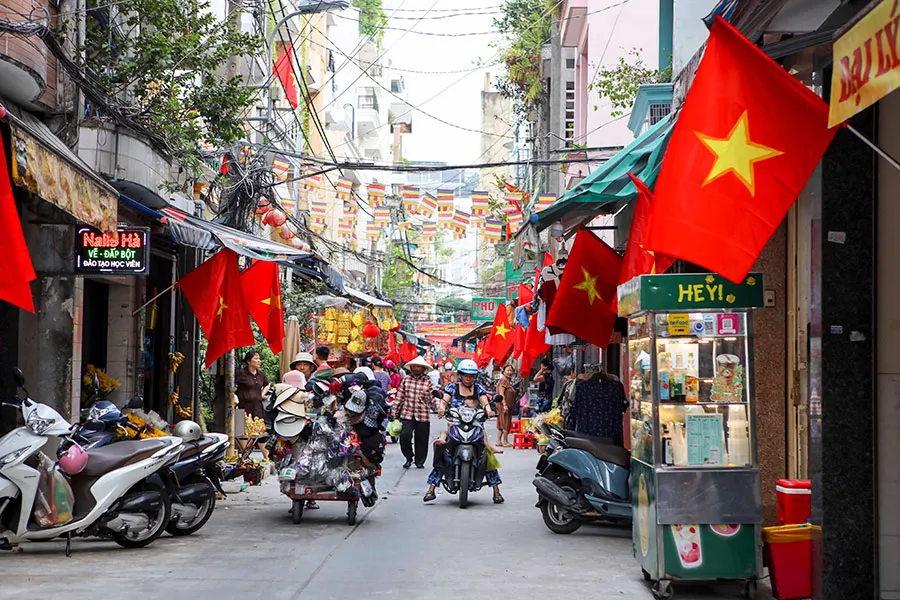
Why Saigon sounds different from other cities
Ho Chi Minh City lives extensively at street level. Meals are prepared near open shopfronts, coffee is served on sidewalks, markets begin working before sunrise and countless journeys take place by motorbike.
The climate also encourages buildings and businesses to remain open to the street. Sound travels between homes, alleys, cafés and pavements, blurring the boundary between private routines and public life.
Instead of interpreting every noise as disorder, think of Saigon as a city constantly exchanging information. Some sounds warn, some sell, some entertain, and others simply confirm that a neighborhood is awake.
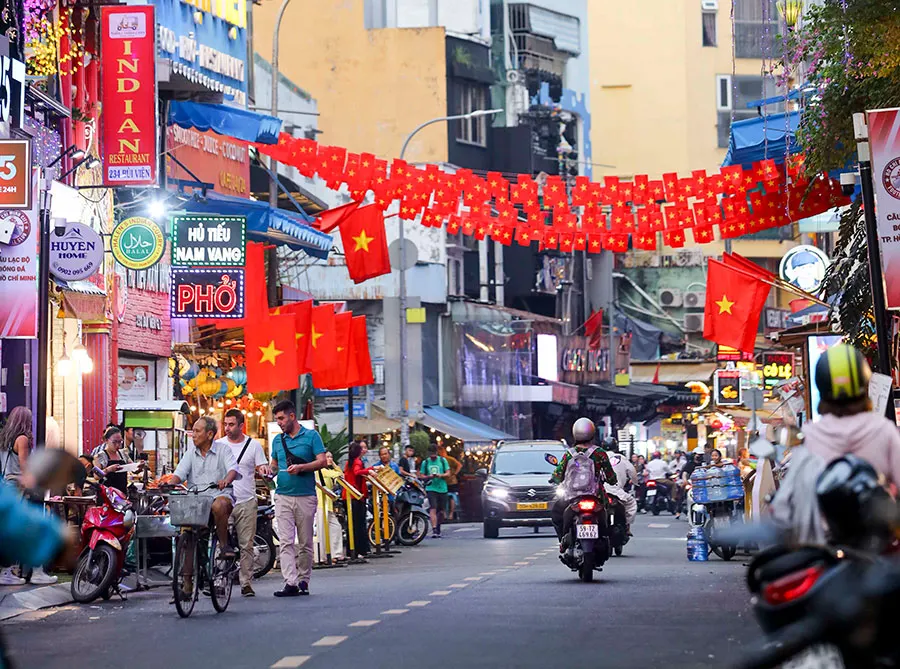
Motorbike horns: a practical language of movement
For many first-time visitors, traffic is the loudest part of the Saigon soundscape. Horns may initially feel aggressive, particularly at busy intersections where streams of motorbikes seem to move in several directions at once.
In many everyday situations, however, a brief horn functions as a signal: “I am here,” “I am passing,” or “Please notice me.” It is often about awareness rather than anger.
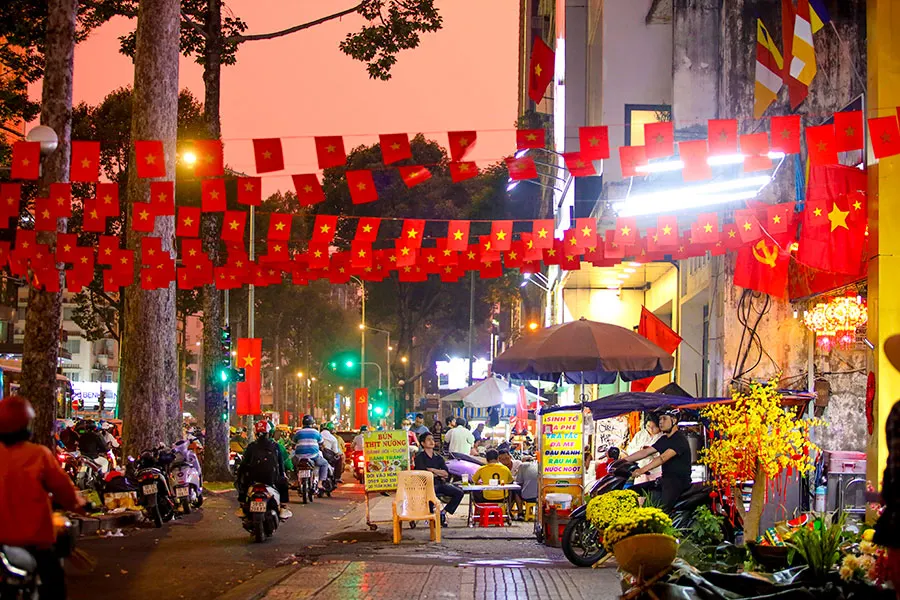
What different traffic sounds tell you
A light beep may come from a rider approaching another vehicle, entering an alley or passing through a crowded section of road. Longer or repeated horns can indicate greater urgency, but tourists should never depend on sound alone when deciding whether it is safe to cross.
Watch the flow, use designated crossings where available and walk predictably rather than making sudden movements. If you want to understand the city’s road culture from a visitor’s perspective, this guide to exploring Saigon by scooter versus car provides useful context.
Local Tip: Remove headphones before crossing a road. Hearing approaching vehicles is an important part of staying aware in Ho Chi Minh City traffic.
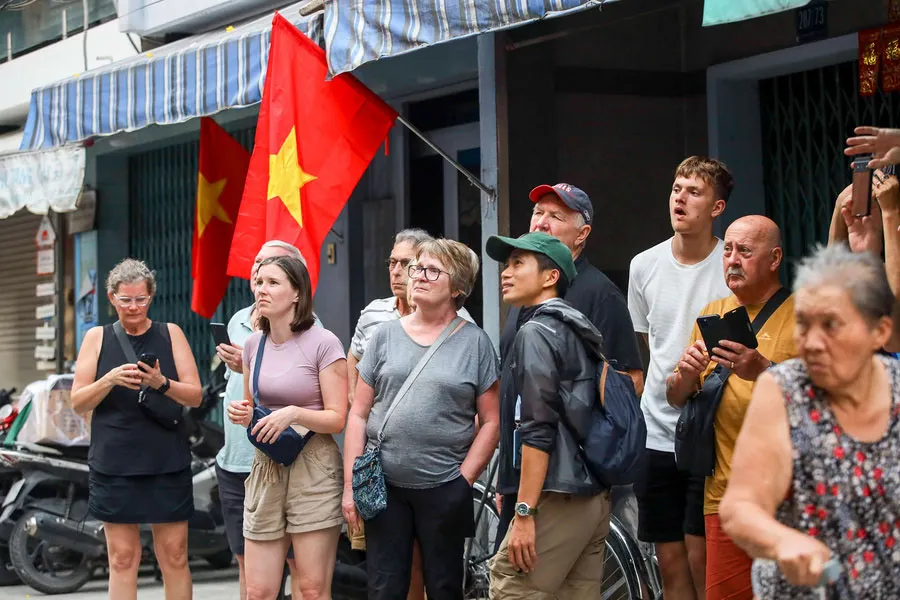
Street vendor calls: commerce carried by voice
Some of Saigon’s most distinctive sounds belong to mobile vendors. Sellers may walk, cycle or push carts through residential streets while calling out the name of what they offer.
Depending on the neighborhood, you might hear vendors announcing bread, fruit, snacks or household services. Some use a natural voice, while others play a short recorded message through a small speaker.
The words can be difficult for international visitors to understand because calls are often stretched, shortened or delivered melodically. Even Vietnamese speakers may listen for the rhythm rather than every syllable.
Why vendors repeat the same call
Repetition lets residents hear the seller before the cart reaches their house. It gives people enough time to step outside, prepare money or call the vendor to stop.
These calls turn a small street into a moving marketplace. They also show how convenience in Saigon sometimes arrives at the doorstep instead of waiting inside a fixed shop.
Observe respectfully and ask before taking a close portrait. A vendor is working, not performing solely for visitors.
The morning soundscape: markets, breakfast and coffee
Saigon begins early. Before the midday heat builds, markets receive produce, cooks prepare breakfast and residents complete errands on their way to work.
Near a local market, the soundscape may include shutters opening, plastic baskets being moved, vendors discussing prices and motorbikes stopping for quick purchases. In nearby food stalls, bowls meet countertops as noodle soup, cơm tấm and other breakfast dishes are served.
Coffee adds a softer rhythm. Ice shifts inside glasses, metal spoons stir condensed milk, and conversations rise from low tables. Those small details are central to the city’s sidewalk coffee culture in Ho Chi Minh City.

When is the best time to hear local morning life?
Explore between approximately 6:00 a.m. and 8:30 a.m., when many neighborhoods are active but the day has not reached its hottest or busiest period. Residential streets and traditional markets usually offer a richer soundscape than enclosed shopping centers.
Avoid blocking entrances or photographing people at close range without permission. Morning is productive time for residents, even when it feels like a cultural experience to a visitor.
The sounds of Saigon street food
Street food announces itself before it reaches your table. You may hear oil crackling, knives striking cutting boards, charcoal popping beneath a grill or metal tongs tapping against a cooking surface.
These sounds carry useful information. A busy stall preparing dishes continuously often feels more energetic and allows visitors to see how food moves from cooking station to customer.
Join a Saigon street food tour if you want someone local to explain both the dishes and the scenes surrounding them. The soundtrack—from steaming pots to evening grills—is part of the experience rather than an interruption.

Can sound help you choose a food stall?
Sound alone cannot confirm cleanliness or food safety. Combine what you hear with visible signs such as food being cooked thoroughly, ingredients stored sensibly, clean utensils and steady customer turnover.
A sizzling pan may be inviting, but use your eyes and judgment too. Choose freshly cooked food served hot and walk away if preparation or storage makes you uncomfortable.
Alley sounds and neighborhood life
Saigon’s alleys, known locally as hẻm, are often more acoustically intimate than major roads. Without constant streams of heavy traffic, smaller sounds become easier to notice.
A gate opens, someone sweeps the pavement, breakfast dishes are washed, neighbors greet one another and a radio plays inside a home. Later, you may hear children returning from school, delivery riders finding an address or families preparing dinner.
These sounds show that an alley is not merely a shortcut or photogenic setting. It is a shared living environment, so visitors should keep voices low, avoid pointing cameras into homes and allow motorbikes to pass.
How Saigon’s sounds change throughout the day
The city does not maintain one soundtrack from morning to night. Each period reveals a different layer of urban life.
| Time | Typical atmosphere | Sounds you may notice |
|---|---|---|
| Early morning | Local and purposeful | Market deliveries, sweeping, breakfast preparation |
| Late morning | Busy and commercial | Traffic, shop activity, vendor calls |
| Afternoon | Slower in residential areas | Café conversations, fans, occasional vendors |
| Early evening | Social and energetic | Grills, dishes, families, food customers |
| Late evening | Lively or quiet by area | Music, nightlife, closing stalls, lighter traffic |
For a stronger contrast, compare a residential alley at sunrise with a central entertainment area after dark. The difference helps explain how Saigon shifts between work, food, family life and leisure.
Travelers interested in the evening atmosphere can experience Saigon after dark by scooter, when illuminated streets and nighttime dining create an entirely different sensory impression.

Where to experience the authentic sounds of Saigon
You do not need a special ticket or famous viewpoint. Traditional markets, neighborhood cafés, food streets, riverside areas and residential lanes all offer opportunities to listen.
District 1 provides an accessible introduction but includes significant traffic and tourism activity. Former District 3 has leafy streets, cafés and older residential areas, while District 4 offers alleys, food activity and riverside life close to the center.
Chợ Lớn has another distinctive rhythm shaped by markets, commerce and long-established communities. Whichever area you choose, explore slowly instead of trying to collect as many attractions as possible.
Is listening to Saigon’s street sounds free?
Yes. Listening while walking through public streets costs nothing, although you may naturally spend money on coffee, food or transportation.
A drink at a local café gives you a comfortable place to observe without rushing. If you enter a market or stop at a stall, buying something small is a thoughtful way to participate in the local economy.

Who will enjoy this side of Ho Chi Minh City?
This experience suits curious travelers, photographers, writers, repeat visitors and anyone interested in daily Vietnamese culture. It is especially rewarding for people who prefer neighborhood observation to checking landmarks off a list.
Families can turn it into a simple listening game, asking children to identify cooking, traffic or market sounds. Older travelers may prefer a café-based experience or a guided route with fewer busy crossings.
Visitors sensitive to noise should begin early in a quieter neighborhood and carry earplugs for congested roads. Listening closely does not mean exposing yourself to uncomfortable sound levels for hours.
How to explore Saigon through sound
Choose one compact neighborhood and spend 60–90 minutes walking slowly. Pause at a café, market edge or food stall and notice which sounds repeat, where they come from and how residents respond.
Try this simple approach:
- Begin early in the morning or before dinner.
- Keep headphones and phone notifications turned off.
- Compare a main road with a nearby alley.
- Listen before photographing or recording.
- Ask a guide or local resident about an unfamiliar call.
- Write down three sounds that changed your impression of the city.
A guided walking tour in Ho Chi Minh City can add valuable explanation, particularly when language or local customs make a sound difficult to interpret.
Local Tip: Record short ambient clips only where it is appropriate. Avoid recording private conversations, children or people inside their homes without consent.
Are the sounds of Saigon worth experiencing?
Yes—especially if you want to understand Ho Chi Minh City beyond its landmarks. Street sounds reveal when neighborhoods wake, how vendors reach customers, how road users communicate and where people gather to eat or talk.
The experience costs little and can fit into any itinerary. Its disadvantage is that busy roads may feel overwhelming, so choosing the right time and location matters.
Saigon becomes more understandable when you stop treating its soundtrack as random noise. Listen with curiosity, respect the people creating the city’s daily rhythm, and even an ordinary street can become one of your most memorable travel experiences.
Frequently asked questions about the sounds of Saigon
Why is Saigon so noisy?
Saigon has dense traffic, active sidewalks, open-front businesses, street vendors and a strong culture of eating and socializing near the street. Noise levels vary significantly, with main roads and commercial districts usually louder than residential alleys.
What do motorbike horns mean in Ho Chi Minh City?
A short horn often alerts nearby road users that a rider is approaching, passing or entering a tight space. It is not always an expression of anger, although visitors should continue watching traffic carefully instead of relying only on sound.
What are Saigon street vendors calling out?
Mobile vendors commonly call out the goods or services they offer. The pronunciation may be stretched or rhythmic, and some sellers use recorded announcements, making the words difficult for new visitors to recognize.
What is the best time to hear everyday Saigon life?
Early morning, roughly between 6:00 a.m. and 8:30 a.m., is ideal for markets, breakfast stalls and neighborhood routines. Early evening is better for grills, street dining and social activity.
Where can tourists experience authentic Saigon street sounds?
Try traditional markets, sidewalk cafés and residential alleys outside the busiest tourist blocks. Former District 3, District 4 and Chợ Lớn provide varied soundscapes while remaining reasonably accessible from central Ho Chi Minh City.
Is it safe to record street sounds in Saigon?
Recording general public ambience is usually less intrusive than filming individuals, but privacy and courtesy still matter. Avoid capturing private conversations or recording people closely without permission, and remain aware of traffic while using your phone.
How can noise-sensitive travelers explore Ho Chi Minh City?
Choose quieter residential streets, begin early and take breaks inside cafés or air-conditioned spaces. Earplugs can help near major roads, while a private or small-group experience allows greater control over pace and route.