Discovering the Art of Traditional Vietnamese Incense
A Vietnamese incense village offers a glimpse into a side of Vietnam that many travelers never see. Beyond the busy streets and famous landmarks, local artisans continue to prepare fragrant incense sticks by hand, using techniques connected to family traditions, spiritual practices, and everyday life.
In a traditional Vietnamese incense village, visitors can watch bamboo sticks being prepared, fragrant mixtures being applied, and rows of incense drying beneath the sun. One of the best-known places to experience this craft is Quang Phu Cau, a village near Hanoi famous for its colorful displays of incense arranged in large fans and bundles.
Visiting an incense-making village is more than a photography opportunity. It helps travelers understand why incense remains important in Vietnamese homes, temples, and ancestral worship, while offering a closer look at the people who keep this traditional craft alive.
What Is a Traditional Vietnamese Incense Village?
A traditional incense village is a community where local households or workshops produce incense for religious ceremonies, family rituals, temples, and everyday use. Depending on the village, production may take place in small family workshops, courtyards, or outdoor drying areas.
Incense making combines practical skills with cultural knowledge. Artisans need to prepare suitable materials, apply the fragrant mixture evenly, and dry the finished sticks carefully so they can burn properly.
These villages are not all identical. Some are known for particular fragrances or production methods, while others have become recognized destinations because visitors can observe traditional work and photograph the colorful drying yards.
Why is Quang Phu Cau famous among travelers?
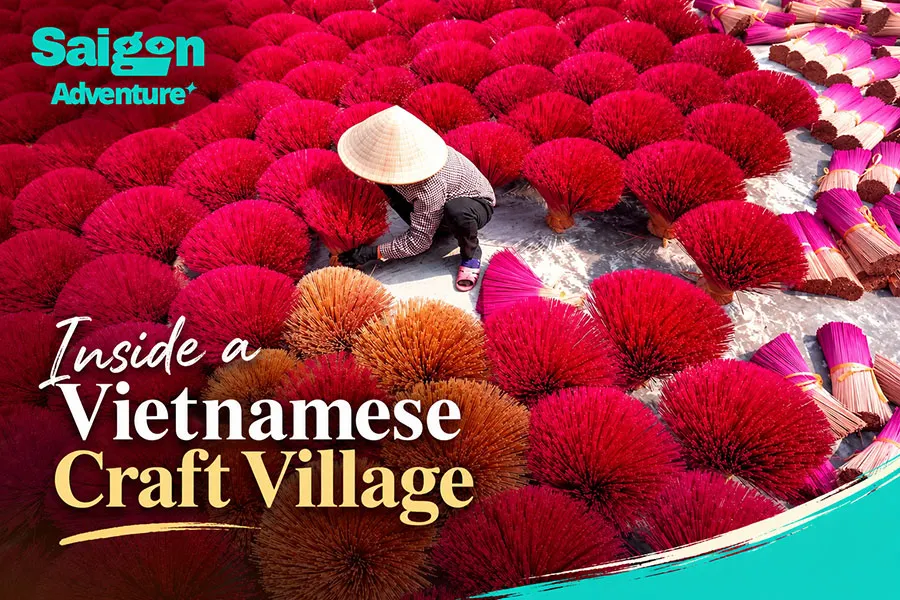
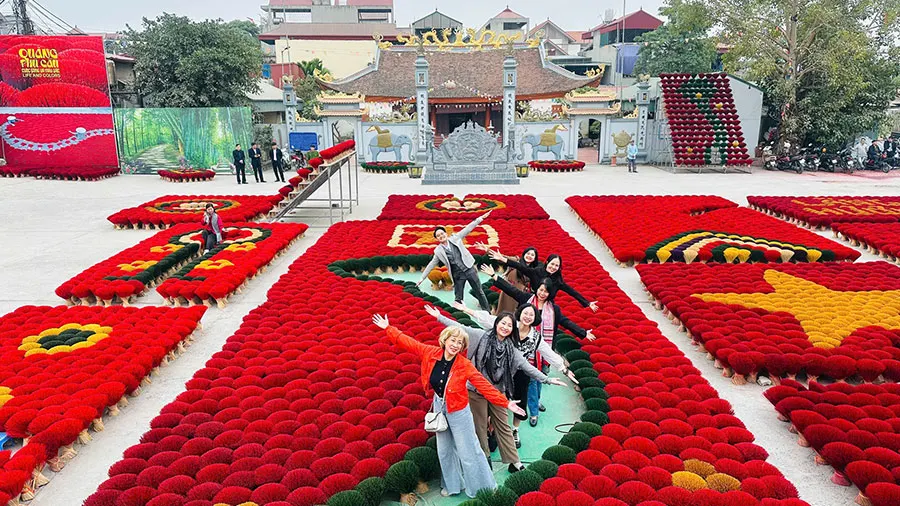
Quang Phu Cau, in Hanoi’s wider area, has become well known for its vivid arrangements of red incense sticks. Artisans often gather the sticks into large circular bundles or fan-shaped displays, creating striking patterns against courtyards and workshop floors.
However, these displays should not be mistaken for the entire production process. They are also part of how finished or partially prepared incense is arranged for drying, handling, and, in some settings, photography.
For international visitors, Quang Phu Cau is especially appealing because it connects a working craft with a visual experience. Travelers can explore traditional production, learn about local customs, and see a different side of life outside central Hanoi.
Why Incense Is Important in Vietnamese Culture
Incense has a meaningful place in many Vietnamese households and religious spaces. Families commonly light incense on ancestral altars during occasions such as Lunar New Year, death anniversaries, family commemorations, and other important days.
The rising smoke can symbolize respect, remembrance, and a spiritual connection between the living and their ancestors. Practices vary between families and religious traditions, so there is no single explanation that represents every Vietnamese household.
Incense is also used in Buddhist temples and other places of worship. Visitors may notice people lighting incense quietly, bowing, or placing sticks in designated holders as part of their prayers.
For travelers, understanding this context makes a village visit more rewarding. Rather than seeing incense simply as a colorful souvenir, visitors can appreciate its role in rituals that remain part of contemporary Vietnamese life.
How Is Traditional Vietnamese Incense Made?
Traditional incense production involves several stages, from preparing the bamboo core to drying the coated sticks. Methods and ingredients vary by producer, so the following describes a common approach rather than a universal recipe used by every Vietnamese workshop.
1. Preparing the bamboo sticks
Many traditional incense sticks begin with thin bamboo pieces that serve as the central support. The bamboo must be prepared into suitable lengths and thicknesses before the fragrant coating is applied.
Consistency matters because uneven sticks can be harder to coat and may burn differently. Depending on the workshop, bamboo preparation may involve splitting, cutting, smoothing, and sorting the pieces by size.
2. Mixing the fragrant ingredients
The coating typically combines powdered aromatic materials with a binding ingredient and, where necessary, other components that help the mixture adhere to the bamboo. Depending on the producer, aromatic ingredients may include woods, plant materials, resins, or other fragrance sources.
The exact recipe is often specific to the workshop or product. It is best not to assume that every incense stick contains the same wood, herb, or natural ingredient simply because it was made in a traditional village.
The mixture must have a workable consistency. If it is too dry or uneven, it may not adhere well; if it is too wet, the sticks can require more drying time.
3. Applying the mixture to the sticks
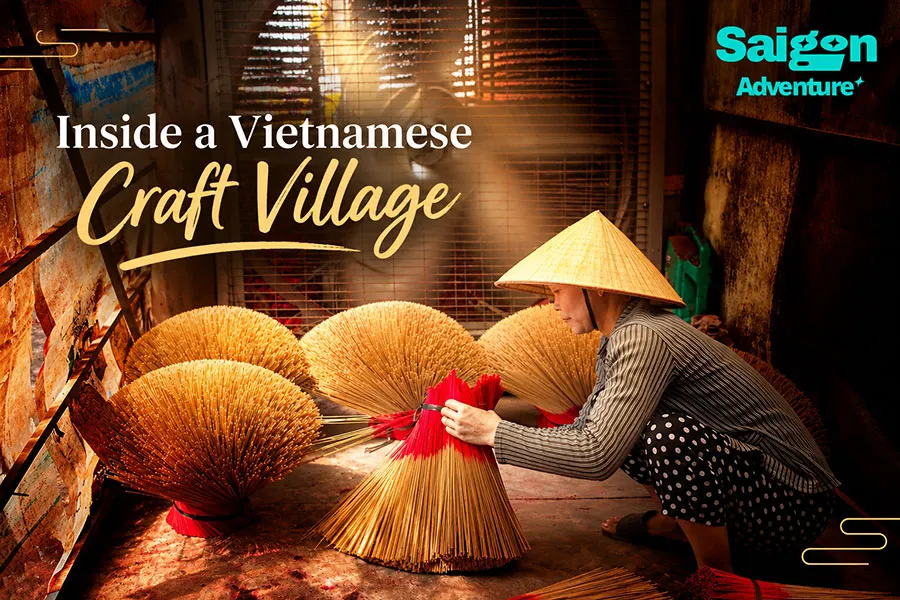
Once the mixture is prepared, artisans coat the bamboo cores with the fragrant material. Depending on the method, this may involve rolling the sticks through the mixture, applying successive layers, or using other workshop-specific techniques.
The coating needs to be distributed evenly along the usable portion of each stick. Experienced workers develop a sense of how much material to apply and how to handle the sticks without damaging the coating.
This is one of the most interesting stages to observe because it reveals the repetitive, hands-on work behind an everyday object. A finished incense stick may look simple, but producing consistent batches requires care and practice.
4. Drying the incense under the sun
Drying is an essential part of production. In suitable weather, incense sticks may be spread out or arranged in bundles under the sun to help remove moisture from the coating.
The time required depends on factors such as humidity, sunlight, airflow, and the composition of the mixture. Rain or damp conditions can slow the process, which is one reason outdoor production areas can change considerably from one day to another.
At Quang Phu Cau, the sight of red incense bundles arranged across open spaces is particularly memorable. For visitors, these drying areas often provide the most recognizable images of the village, although colorful displays are not guaranteed during every visit.
5. Bundling, checking, and preparing incense for sale
After drying, the sticks can be gathered into bundles and prepared for storage, distribution, or sale. Producers may check the appearance and condition of the sticks before packing them.
The final product varies according to its intended use, fragrance, size, and the producer’s methods. Some incense is made for regular household use, while other products may be prepared for particular ceremonies or markets.
This final stage also highlights the commercial side of the craft. Traditional skills are not preserved in isolation; they continue because households, retailers, religious communities, and other customers still need incense.
Inside Quang Phu Cau Incense Village: What Can You Experience?
A visit to Quang Phu Cau offers a different perspective on the Hanoi region. Instead of spending the entire day among museums, monuments, and crowded streets, travelers can see how a traditional product is prepared and how local workshops fit into the surrounding community.
The most recognizable feature is the bright red incense arranged in circular bundles, sometimes spread across courtyards or placed in carefully organized patterns. These arrangements can be visually impressive, especially when viewed from an elevated photography position where available.
Can you see artisans making incense by hand?
Depending on the workshop and the day’s production schedule, visitors may see bamboo preparation, coating, drying, or bundling. Not every stage will necessarily be taking place when you arrive, because production depends on orders, weather, and the individual workshop.
If watching the process matters more to you than taking photographs, ask your tour provider whether the visit includes an active workshop demonstration. A photo stop and a craft-focused visit are different experiences, even when they take place in the same village.
Is Quang Phu Cau worth visiting?
Quang Phu Cau is worth considering if you enjoy traditional crafts, cultural photography, and experiences beyond Hanoi’s central attractions. It can be particularly rewarding for curious travelers who want to understand the story behind a familiar household or ceremonial object.
The main limitation is that the experience can be relatively brief if you only visit the best-known photo areas. Travelers seeking deeper cultural interaction should look for opportunities to learn from artisans, understand the production stages, and support local businesses rather than simply arriving, taking pictures, and leaving.
How to Visit a Vietnamese Incense Village
Quang Phu Cau is located outside central Hanoi, so the visit requires some transport planning. The most practical option depends on your starting point, budget, schedule, and whether you prefer independent travel or a guided excursion.
Getting there from Hanoi
-
Private car or taxi: A convenient choice for couples, families, and small groups who want flexible departure times.
-
Guided tour: Useful for travelers who want transport arranged and would appreciate explanations of the craft and local culture.
-
Motorbike: Offers flexibility for confident riders who understand local traffic conditions and have the appropriate licence and insurance.
-
Public transport: May be possible with a combination of local services and a final transfer, but the route and connections should be checked before departure.
Travel time varies with the exact starting point and traffic. Check current directions before leaving, and confirm the workshop’s location rather than relying only on a general map pin for the village.
If you are planning a wider trip, you can also explore our Vietnam travel experiences and cultural activities to find other ways to discover the country’s local traditions.
When is the best time to visit?
Morning is often a sensible choice for avoiding some of the midday heat and leaving time for other Hanoi attractions. However, the best time for photography depends on the light, weather, workshop activity, and whether the artisans have arranged incense outdoors.
Dry, sunny conditions generally make outdoor drying more likely, but no particular month guarantees a full display. Before traveling, ask the workshop or tour operator whether incense production is taking place and whether visitors are welcome that day.
Local tip: If your main goal is photography, confirm that the workshop permits visitors to photograph its displays. Some areas may have entry charges, designated viewing spaces, or restrictions around working areas.
If you have extra time in Hanoi, consider combining your visit to Quang Phu Cau with a local food experience featuring the city’s street food, Train Street, and Old Quarter. Discover our Hanoi local food tour with Train Street and Old Quarter highlights for another way to explore local life and culture.
How Much Does an Incense Village Visit Cost?
There is no single fixed price for every visit to Quang Phu Cau. Your total cost may include transportation from Hanoi, workshop admission if charged, a guide, food, and any purchases you make from local sellers.
For a realistic budget, check these items before booking:
-
Whether transport is included in the tour price.
-
Whether workshop or photography-area admission is charged separately.
-
Whether a guide explains the craft or the stop is mainly for photographs.
-
Whether the itinerary includes other destinations that affect the overall price.
-
Whether shopping is optional and whether any purchases are included.
Avoid relying on old online prices without checking the current arrangements. Admission policies and tour packages can change, and different workshops may offer different experiences.
For independent travelers, arranging transport separately may provide flexibility. A guided excursion can be better value when it includes convenient transport, meaningful explanations, and enough time to explore without negotiating every part of the journey.
Photography Tips and Cultural Etiquette
Quang Phu Cau is visually striking, but thoughtful photography makes the experience better for both visitors and the people who work there. Remember that the colorful displays belong to a working community, not a public photo studio without rules.
How to take better incense village photos
-
Look for patterns: Circular bundles, repeating lines, and contrasting colors can create strong compositions without elaborate editing.
-
Use natural light: Soft morning light can help preserve detail in the red incense and surrounding surfaces.
-
Include the working environment: A photograph showing artisans, tools, or a drying courtyard can tell a richer story than a close-up of colorful sticks alone.
-
Keep people in context: Ask permission before making close-up portraits of workers.
-
Respect designated areas: Do not step over incense, move bundles, or rearrange materials to create a photograph.
A few well-composed images often communicate more than dozens of hurried shots. If you use a phone, try different angles and include details of the work rather than photographing only the most famous display.
What should visitors avoid?
Do not touch unfinished products or enter work areas without permission. Avoid blocking pathways, interrupting artisans during delicate tasks, or assuming that every person working in the village wants to appear in a photograph.
Incense smoke and fragrance can be intense in some areas. If you are sensitive to smoke or strong scents, spend less time close to burning incense and ask your guide to help you choose a suitable viewing area.
Who Should Visit a Vietnamese Incense Village?
An incense village is especially suitable for travelers interested in Vietnamese culture, traditional manufacturing, local photography, and everyday life beyond major tourist attractions. It can also be an engaging stop for families with older children who enjoy learning how ordinary products are made.
Couples and photography enthusiasts may appreciate the vivid displays, while slow travelers can use the visit to explore the relationship between craft production and local customs. Travelers who prefer hands-on activities should check in advance whether a workshop offers an actual demonstration or participation.
The experience may be less suitable for visitors with very limited time in Hanoi who prefer major historical landmarks, or for anyone expecting a large interactive museum with guaranteed demonstrations. Its appeal lies in observing a real craft environment, and that experience can vary by day.
Responsible Travel: Supporting Traditional Craft Communities
Traditional crafts survive when skills can be passed between generations and artisans can continue earning a living from their work. Visitors can contribute by paying any required entrance fee, purchasing directly from local producers when practical, and choosing tours that respect the community.
Buying incense is optional. If you decide to bring some home, ask about its ingredients, packaging, and suitability for your intended use, and check your destination country’s customs rules before packing plant-based products.
Most importantly, approach the village with curiosity rather than treating it only as a backdrop. A respectful visit gives artisans room to work and allows travelers to appreciate both the beauty of the finished product and the labor behind it.
Frequently Asked Questions About Vietnamese Incense Villages
1. Where can you visit a traditional incense village in Vietnam?
Quang Phu Cau, in the Hanoi region of northern Vietnam, is one of the best-known destinations for seeing colorful incense displays and traditional production. Confirm the specific workshop’s visitor arrangements before traveling.
2. How is traditional Vietnamese incense made?
A common process involves preparing bamboo sticks, mixing aromatic ingredients with a suitable binder, coating the sticks, drying them, and bundling the finished products. Exact ingredients and techniques vary between producers.
3. Can tourists watch incense being made in Quang Phu Cau?
Yes, some workshops and visitor areas welcome tourists, but the activities available vary by location and day. Ask in advance whether you can see active production rather than only photograph prepared displays.
4. What is the best time to visit Quang Phu Cau incense village?
Morning is often convenient for combining comfortable sightseeing with photography. Sunny, dry weather may improve the chance of seeing incense drying outdoors, but displays and production schedules are not guaranteed.
5. How much does it cost to visit an incense village near Hanoi?
Costs depend on transport, workshop admission, guiding services, and tour inclusions. Check the current price directly with the workshop or tour operator instead of assuming that every village uses the same admission policy.
6. Is an incense village worth visiting if I am not interested in photography?
Yes, especially if you are interested in traditional crafts, Vietnamese ancestral customs, or small-scale production. For a more meaningful visit, choose a workshop that can explain the process and allow you to observe artisans at work.
7. Can I buy Vietnamese incense to take home?
You may be able to buy incense from local producers or sellers. Ask about the ingredients and packaging, and check import rules in your destination country because some plant-based products may be subject to restrictions.
Experience a Different Side of Vietnam
Vietnam’s traditional craft villages reveal stories that are easy to miss when traveling only between famous landmarks. At Quang Phu Cau, the color of the incense is what first catches the eye, but the preparation, patience, and cultural meaning behind each bundle are what make the visit memorable.
If you are planning a trip to Vietnam, consider adding a craft village to your itinerary and taking time to learn directly from local artisans. Explore more cultural experiences in Vietnam and plan a journey that goes beyond the usual sightseeing stops.