During the Vietnam War, cooking was a matter of survival for soldiers living beneath the ground around Cu Chi, northwest of Saigon. How did soldiers cook underground at the Cu Chi Tunnels? They prepared meals using concealed cooking areas, including specially designed stoves associated with the Hoang Cam smokeless stove system, which helped disperse smoke away from the fire rather than allowing it to rise in one obvious column. Food preparation required careful timing, fuel management, and an understanding of the surrounding landscape.
Today, visitors exploring the Cu Chi Tunnels can learn about this lesser-known side of wartime life. Beyond narrow passages and hidden entrances, the cooking system reveals how people tried to maintain ordinary routines under extraordinary conditions.
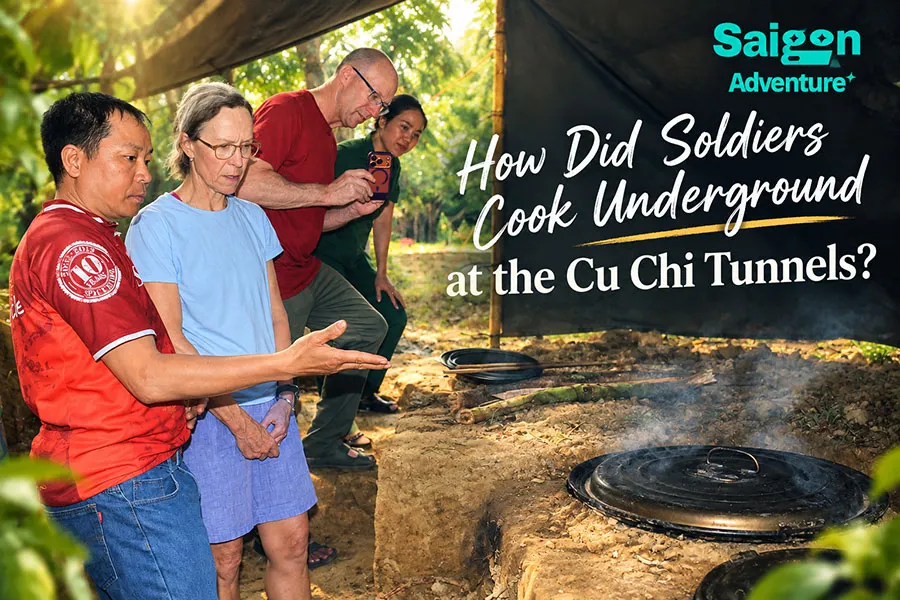
How Did Soldiers Cook Food Inside the Cu Chi Tunnels?
Cooking underground was not as simple as lighting a fire inside a tunnel. Fire consumes oxygen, produces heat, and releases smoke, making an enclosed space dangerous and potentially revealing. For that reason, cooking generally required designated areas with ventilation and smoke-management arrangements rather than an open flame in a confined passage.
In the Cu Chi region, underground living formed part of a much larger network of tunnels, shelters, work areas, and concealed facilities. Cooking methods varied with the location, available materials, and immediate military circumstances, so it would be misleading to assume every tunnel had an identical kitchen.
Soldiers and other people using the tunnel network needed to balance several practical concerns:
-
Preparing enough food to sustain people carrying out physically demanding work.
-
Finding fuel and water in an environment where movement could be dangerous.
-
Managing smoke and heat without creating an obvious sign of activity.
-
Keeping food preparation separate from cramped sleeping and working spaces where possible.
These challenges explain why the wartime kitchen is an important part of the Cu Chi story, even though it is less familiar to many international visitors than the tunnels themselves.
What Was the Hoang Cam Smokeless Stove?
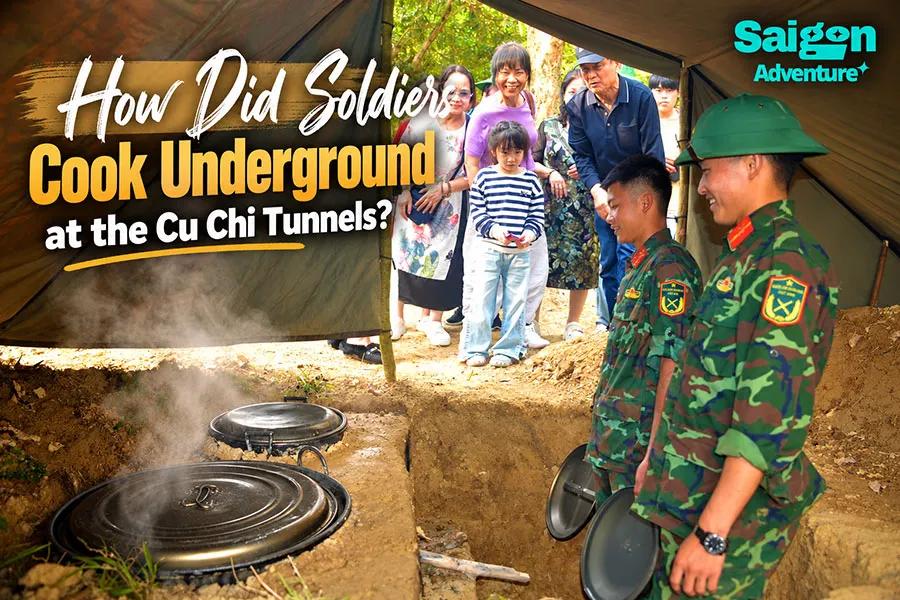
The Hoang Cam stove was a wartime cooking system designed to reduce the visibility of smoke. It is associated with Vietnamese wartime ingenuity and is commonly explained in connection with the underground life of soldiers, including at Cu Chi.
Rather than treating the stove as a simple fire pit, it is more useful to understand it as a system that combined a fire chamber with routes for smoke to travel and disperse. The goal was to prevent smoke from emerging in a concentrated, easily noticed plume directly above the cooking area.
How did the stove help conceal cooking smoke?
The basic principle was to guide smoke away from the immediate fire and distribute it through concealed channels or outlets. As smoke travelled and cooled, it could disperse over a wider area, making the source less conspicuous than an exposed cooking fire.
The exact construction and layout could differ between installations. Visitors should therefore be cautious about claims that every Hoang Cam stove used precisely the same underground ducts, dimensions, or outlet arrangement.
The term “smokeless stove” can also be misleading if taken literally. The system was intended to make smoke less visible, not to eliminate combustion products or guarantee that a cooking site could never be detected.
Why was smoke management so important at Cu Chi?
Smoke could reveal human activity to observers above ground, particularly in a landscape where military operations and surveillance made concealment important. A cooking fire might be small, but repeated meals meant that smoke management was an everyday logistical problem rather than a one-time concern.
The system also illustrates an important distinction between hiding a tunnel entrance and concealing activity around it. A well-camouflaged entrance could still be compromised if nearby activity produced conspicuous signs, including smoke.
For more context on how concealment worked across the wider network, read the guide to Cu Chi Tunnels photo spots, which covers features associated with the tunnels and their wartime landscape.
What Did Soldiers Eat at the Cu Chi Tunnels?
The everyday diet of people living and working in the Cu Chi tunnel network was shaped by availability, storage, physical demands, and wartime supply conditions. Rice and other basic foods were important, while cassava and sweet potatoes are particularly associated with the wartime food experience presented to visitors today.
These foods were practical because they could provide energy without requiring elaborate preparation. However, diets were not necessarily identical across all units or periods, and modern visitor meals should not be treated as a complete record of what every soldier ate during the war.
Why were cassava and sweet potatoes important?
Cassava is a starchy root that can be boiled or steamed, while sweet potatoes offer another filling source of carbohydrates. Both are familiar ingredients in Vietnamese cooking and help visitors picture the straightforward meals that could sustain people during difficult conditions.
At Cu Chi, visitors may be offered boiled cassava with sesame salt as part of a historical food experience. It is a simple dish, but tasting it provides a tangible connection to the site’s presentation of wartime life rather than simply reading about the underground network.
Did soldiers cook every meal underground?
Not necessarily. The specific arrangements depended on circumstances, and it would be inaccurate to claim that every meal was cooked below ground or that every person followed one fixed routine.
The presence of dedicated kitchens, food-storage areas, and wells within the documented Cu Chi complex demonstrates that food preparation and supply were integrated into a broader underground infrastructure. The official Vietnamese cultural heritage record identifies Hoang Cam kitchens, food stores, wells, and other facilities among the site’s historical features.
How Did the Underground Kitchen Fit Into Daily Life?
A wartime kitchen was part of a larger system that had to support people over time. Food had to be obtained, prepared, distributed, and stored, while water and sanitation also mattered in a confined environment.
The Cu Chi tunnels were not simply narrow passages designed for movement. Historical records describe a network containing living areas, storage spaces, medical facilities, meeting rooms, wells, and kitchens, illustrating how different functions were connected.
This broader context helps explain why the cooking story is worth exploring. A tunnel entrance may capture attention because it is hidden, but the kitchen offers a different perspective: how people maintained daily routines when ordinary activities carried unusual risks.
How did people manage heat, water, and food storage?
A fire produces heat even when smoke is carefully managed, and enclosed underground areas can become uncomfortable. Separating cooking from sleeping and working spaces where possible, maintaining ventilation, and managing water supplies were practical considerations in an environment with limited room.
Food storage also required protection from moisture, contamination, and spoilage. The historical presence of dedicated storage areas indicates that supplies were part of the wider system, although the precise storage methods and conditions could vary.
For modern travelers, the key takeaway is that survival underground depended on more than ingenious tunnel construction. It also required planning for basic needs that people above ground might take for granted.
Can You See the Underground Kitchen at Cu Chi Today?
Yes. The Cu Chi historical site includes reconstructed or preserved features associated with wartime life, including Hoang Cam kitchens and other underground facilities. The Vietnamese government’s cultural heritage documentation identifies these kitchen structures at the Cu Chi sites, including Ben Duoc and Ben Dinh.
What visitors can see depends on the specific area, the route included in their visit, and which exhibits are accessible on the day. A reconstruction or interpretive display helps explain how a facility worked, but it should not automatically be assumed that every visible structure remains exactly as it was during the war.
Which Cu Chi site should you visit?
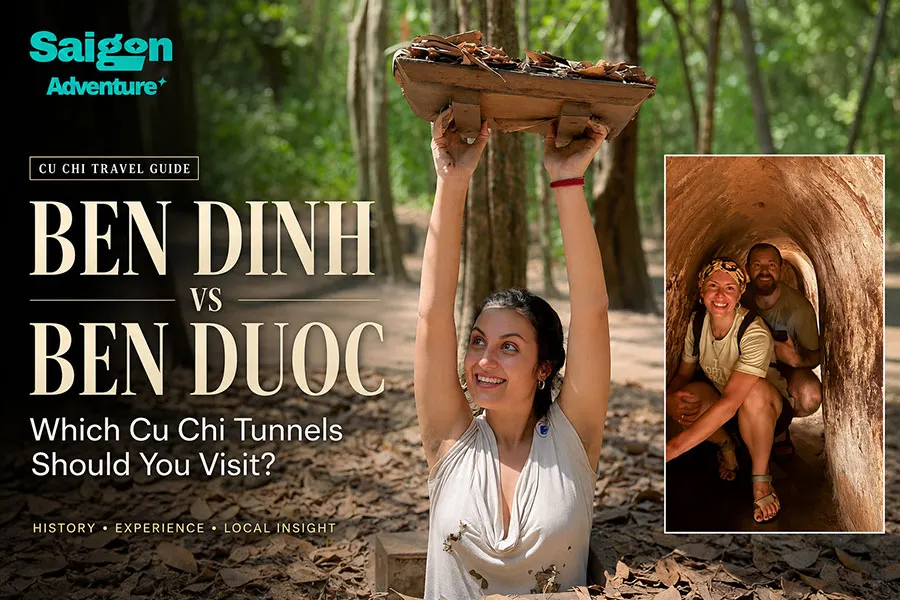
Cu Chi is commonly visited through the Ben Dinh and Ben Duoc areas. They are part of the same wider historical story, but the visitor experience, travel distance, and route can differ.
-
Ben Dinh: Often considered by travelers looking for a convenient visit from central Ho Chi Minh City.
-
Ben Duoc: Worth considering if you want to explore another part of the historical complex and have more time for the wider memorial area.
Neither option guarantees access to every kitchen display or underground feature. Before booking, check which site the tour visits and ask whether the guide includes the Hoang Cam stove or wartime cooking facilities in the itinerary.
For transport, timing, and general tour options, start with the Cu Chi Tunnels tour guide. If photography is a priority, the separate guide to photographing Cu Chi Tunnels can help you plan what to look for.
Is the Cu Chi Underground Cooking Experience Worth Seeing?
For travelers interested in military history, engineering, and everyday life during the Vietnam War, the kitchen is one of the more revealing details of a Cu Chi visit. It shifts the focus from weapons and combat to the practical systems that helped people live in a difficult environment.
The experience is especially worthwhile if you enjoy understanding how something worked rather than simply seeing a historical object. The stove provides a concrete example of how a basic necessity—cooking food—became a challenge involving concealment, ventilation, and careful use of resources.
It may be less compelling for visitors who want only dramatic attractions or a quick tunnel crawl. In that case, ask your guide to explain the kitchen briefly and connect it to the wider layout, rather than planning an entire visit around one exhibit.
Practical Tips for Visiting the Cu Chi Tunnels
A little preparation can make it easier to appreciate the kitchen exhibits and the wider historical site. Conditions can be hot and humid, and walking between outdoor displays may involve uneven paths.
When is the best time to visit?
An early-morning visit is a sensible choice if you want to explore before the strongest midday heat and potentially avoid some tour-group congestion. The site is generally presented as a daytime attraction, but confirm current opening hours and admission arrangements before travelling. The official Ho Chi Minh City tourism website provides background on visiting the tunnels and the experiences available there.
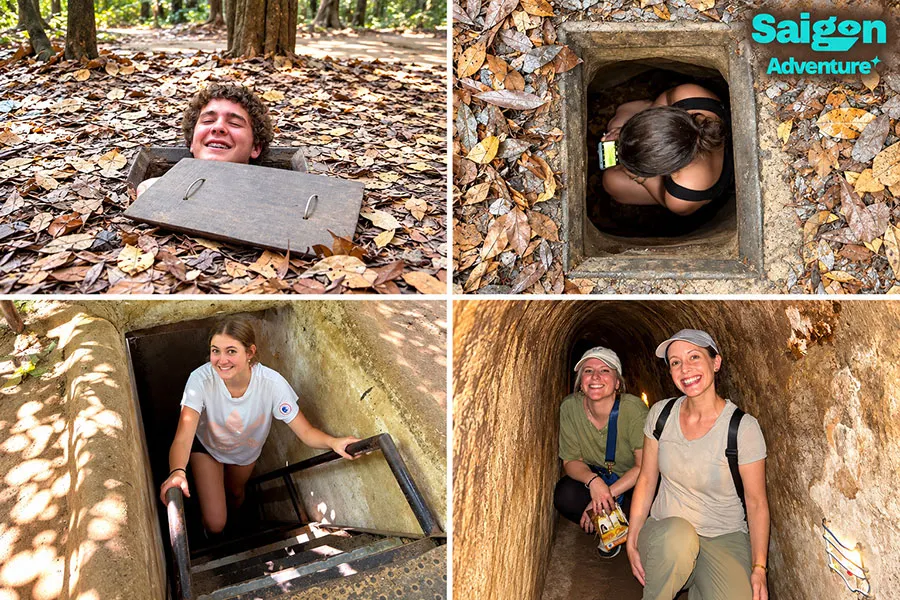
Wear comfortable walking shoes, bring drinking water, and consider light clothing that is suitable for a humid climate. If you plan to enter a tunnel, follow the guide’s instructions and do not feel obliged to crawl through a narrow section if you are uncomfortable.
What should you ask your guide?
A good guide can help distinguish historical information from modern reconstructions. Consider asking:
-
Is the kitchen display original, restored, or reconstructed?
-
How did the Hoang Cam stove direct and disperse smoke?
-
Where were food and water stored in relation to the kitchen?
-
What foods are included in today’s visitor experience, and how do they relate to wartime accounts?
-
Which parts of the site can visitors access on this tour?
These questions can turn a short stop into a more meaningful history lesson. They also help you avoid assuming that every display represents an identical arrangement used throughout the entire tunnel network.
Local tip: If you are particularly interested in wartime engineering, tell your guide before the tour begins. That gives them a chance to spend more time explaining ventilation, cooking, storage, and daily life instead of focusing exclusively on entrances and tunnels.

Frequently Asked Questions
1. How did soldiers cook underground at the Cu Chi Tunnels?
They used designated cooking areas and, in documented facilities, Hoang Cam stoves designed to reduce the visibility of smoke. These systems directed smoke through concealed routes so it could disperse rather than rise directly above an exposed fire.
2. What is a Hoang Cam stove?
A Hoang Cam stove is a wartime cooking system associated with Vietnamese military ingenuity. It was designed to make cooking smoke less conspicuous by directing and dispersing it through concealed channels, rather than eliminating smoke entirely.
3. What food did soldiers eat at Cu Chi?
Rice and other staple foods formed part of wartime diets, while cassava and sweet potatoes are closely associated with the site’s food demonstrations today. Available ingredients varied according to supply conditions and circumstances.
4. Can tourists see the Hoang Cam kitchen at Cu Chi?
The historical complex includes facilities associated with Hoang Cam kitchens, but which displays visitors see depends on the selected site and tour route. Ask your operator whether a kitchen exhibit is included before booking.
5. Can visitors taste wartime food at the Cu Chi Tunnels?
Visitors may be offered boiled cassava with sesame salt as part of the experience. Availability can vary, so check with your tour provider if tasting local food is important to your plans.
6. How long should I spend exploring the Cu Chi Tunnels?
Allow around half a day for a typical visit from Ho Chi Minh City, with additional time if you want to explore more exhibits or combine the trip with another attraction. Actual travel and visit times depend on the selected site, traffic, and itinerary.
7. Is visiting the Cu Chi Tunnels suitable for everyone?
Many visitors can enjoy the outdoor historical displays without entering the tunnels. Narrow passages may be challenging for people with claustrophobia, mobility limitations, or certain health concerns, so choose activities according to your comfort and follow site safety instructions.
Discover the Everyday History Beneath Cu Chi
The story of cooking at Cu Chi is a reminder that wartime survival depended on much more than moving through hidden passages. Food, water, storage, ventilation, and the careful management of smoke all played a part in supporting life underground.
When you visit, take time to look beyond the famous tunnel entrances and ask how the people who lived there managed ordinary tasks under extraordinary pressure. Explore the Cu Chi Tunnels with a knowledgeable guide and discover the practical ingenuity behind one of Vietnam’s most remarkable historical sites.