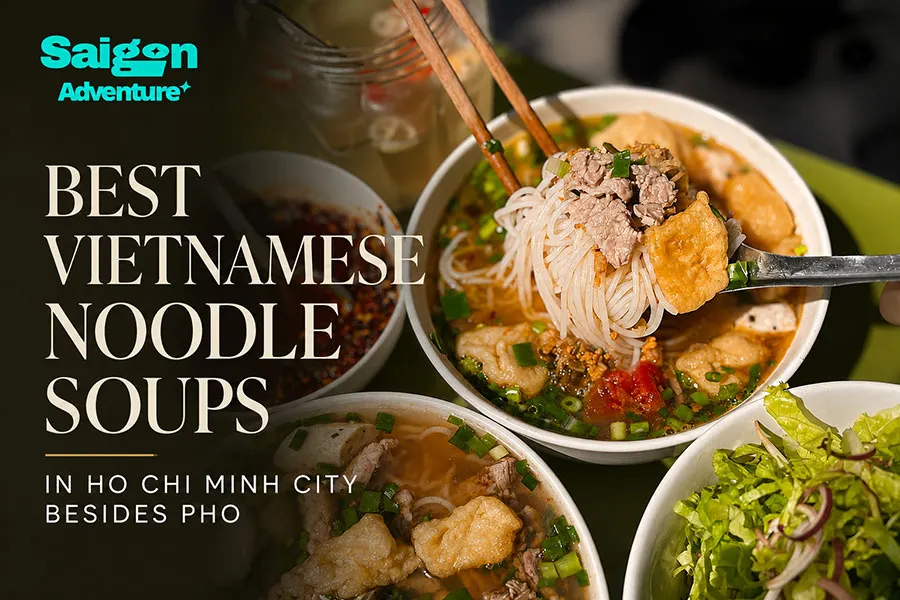
Pho may be Vietnam’s most famous bowl, but it represents only one corner of the country’s remarkably varied noodle culture. The best Vietnamese noodle soups in Ho Chi Minh City range from lemongrass-scented beef broth and tomato-based crab soup to thick crab noodles and the boldly aromatic bún mắm of the Mekong Delta.
Each dish has its own noodles, regional identity, toppings and way of balancing sweet, sour, salty, spicy and savoury flavours. If you want to eat beyond the familiar classics, Saigon is one of the easiest places in Vietnam to explore them all.
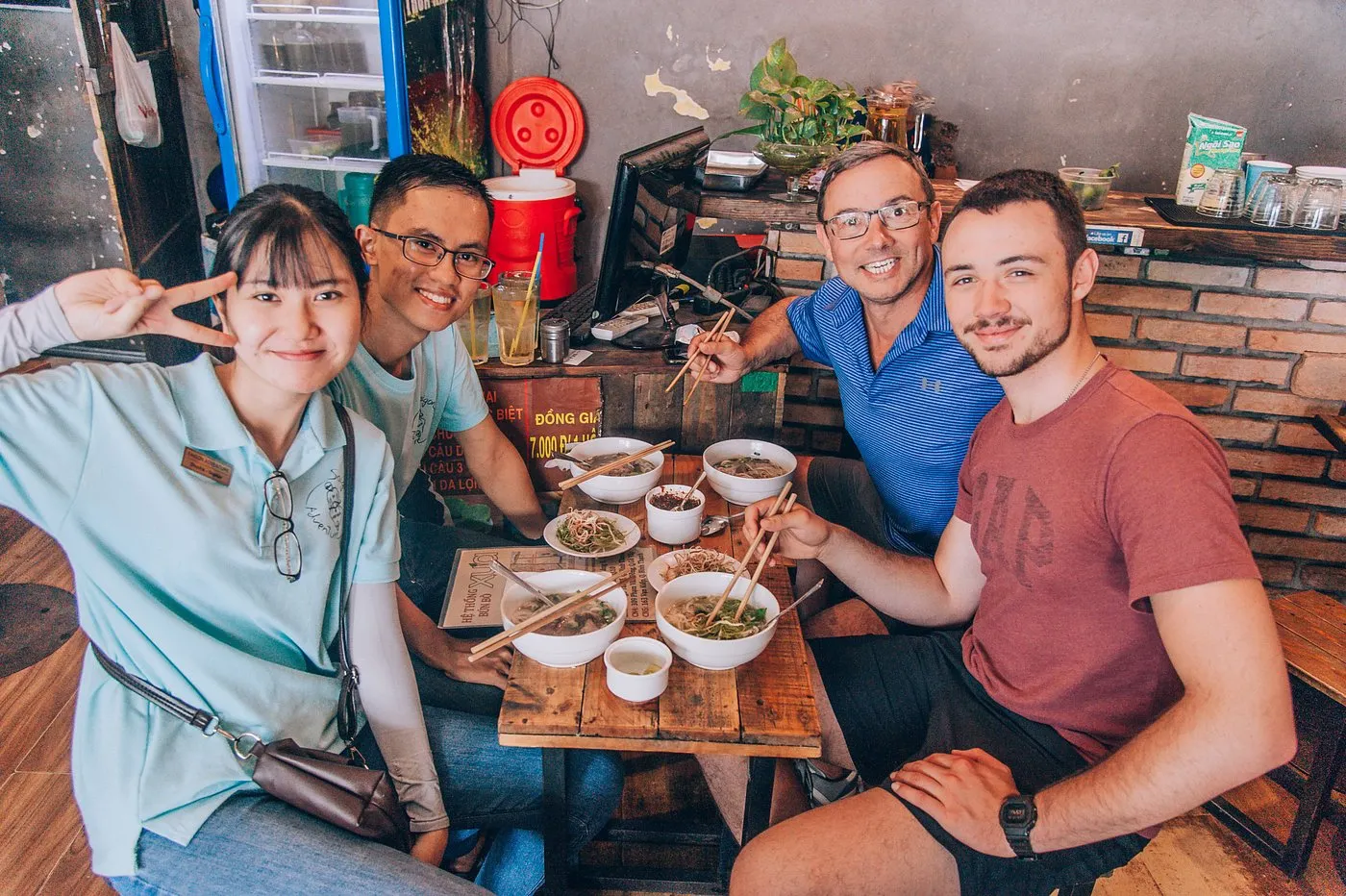
What Vietnamese Noodle Soup Should You Try Besides Pho?
Quick Answer: The best Vietnamese noodle soups in Ho Chi Minh City beyond pho include bún bò Huế, bún riêu, hủ tiếu Nam Vang, bánh canh cua, bún mắm, bún mọc, mì hoành thánh and miến gà.
For first-time visitors, try hủ tiếu Nam Vang for its mild broth, bún riêu for its tangy crab-and-tomato flavour, or bún bò Huế for a rich, spicy experience. Adventurous eaters shouldn’t miss bún mắm, a distinctive Mekong Delta speciality.
| Noodle soup | Main flavour | Noodle type | Best suited to |
|---|---|---|---|
| Bún bò Huế | Spicy, savoury, lemongrass | Thick rice vermicelli | Diners who enjoy bold flavours |
| Bún riêu | Tangy, tomato-rich, lightly briny | Thin rice vermicelli | First-time food explorers |
| Hủ tiếu Nam Vang | Clear, mildly sweet and savoury | Rice or tapioca noodles | Travelers wanting a gentle introduction |
| Bánh canh cua | Thick, rich and crab-forward | Thick tapioca or rice noodles | Seafood lovers |
| Bún mắm | Intense, fermented and aromatic | Rice vermicelli | Adventurous eaters |
| Bún mọc | Light, clean and comforting | Thin rice vermicelli | Families and cautious eaters |
| Mì hoành thánh | Savoury and subtly sweet | Egg noodles | Fans of wontons and Chinese-Vietnamese food |
| Miến gà | Delicate and peppery | Glass noodles | A lighter breakfast or lunch |
Eight Vietnamese Noodle Soups Worth Trying in Ho Chi Minh City
1. Bún Bò Huế – Spicy Beef Noodle Soup with Lemongrass
Originally from Central Vietnam, bún bò Huế is known for its fragrant lemongrass broth, thick rice noodles and generous meat toppings. A typical bowl combines beef, pork and Vietnamese sausage, often accompanied by fresh herbs and vegetables.
What makes it special is the balance of savoury depth, aromatic lemongrass and chili heat. Unlike pho, its broth has a bolder character, although the level of spiciness varies between restaurants.
Local tip: Ask for “không cay” (not spicy) if you prefer a milder bowl. Taste the broth before adding extra chili or shrimp paste.
Best for: Travelers who enjoy rich, aromatic noodle soups.
For more recommendations, explore our guide to the best bún bò Huế in Ho Chi Minh City.
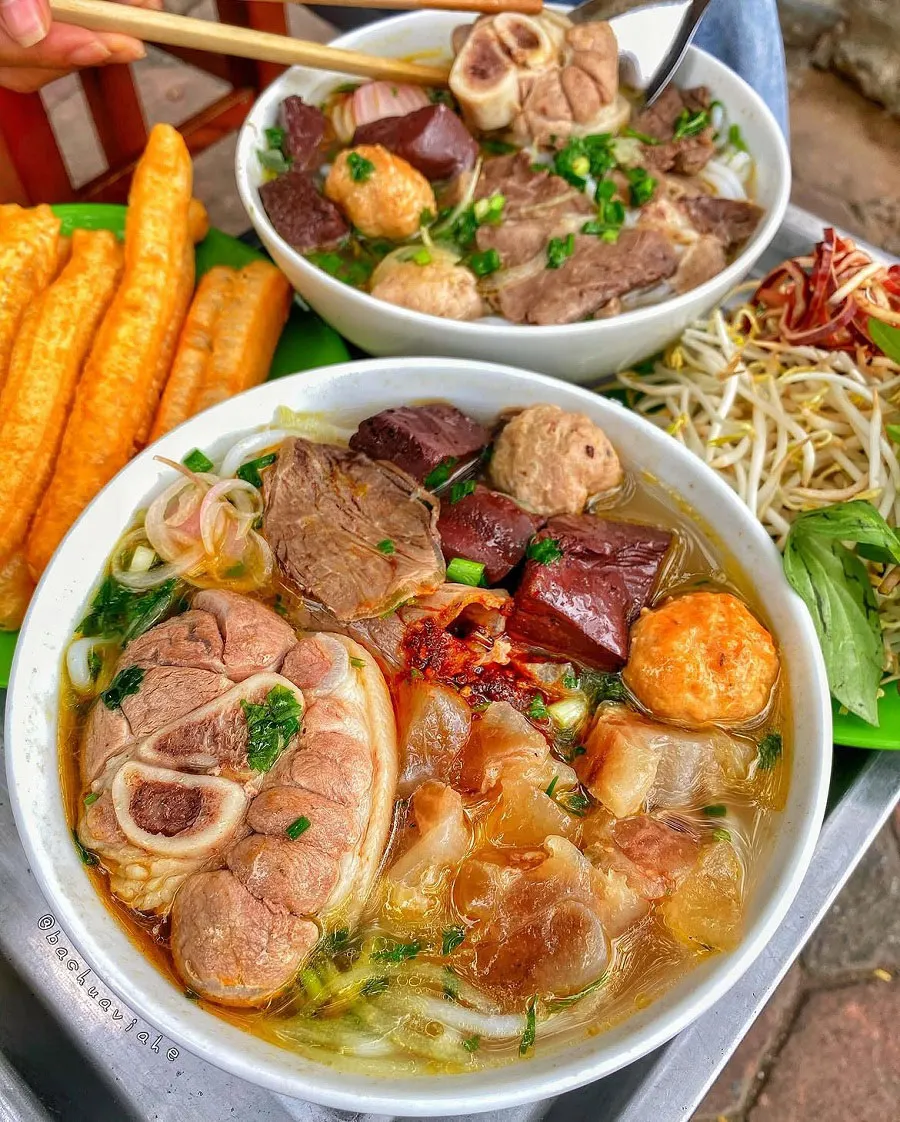
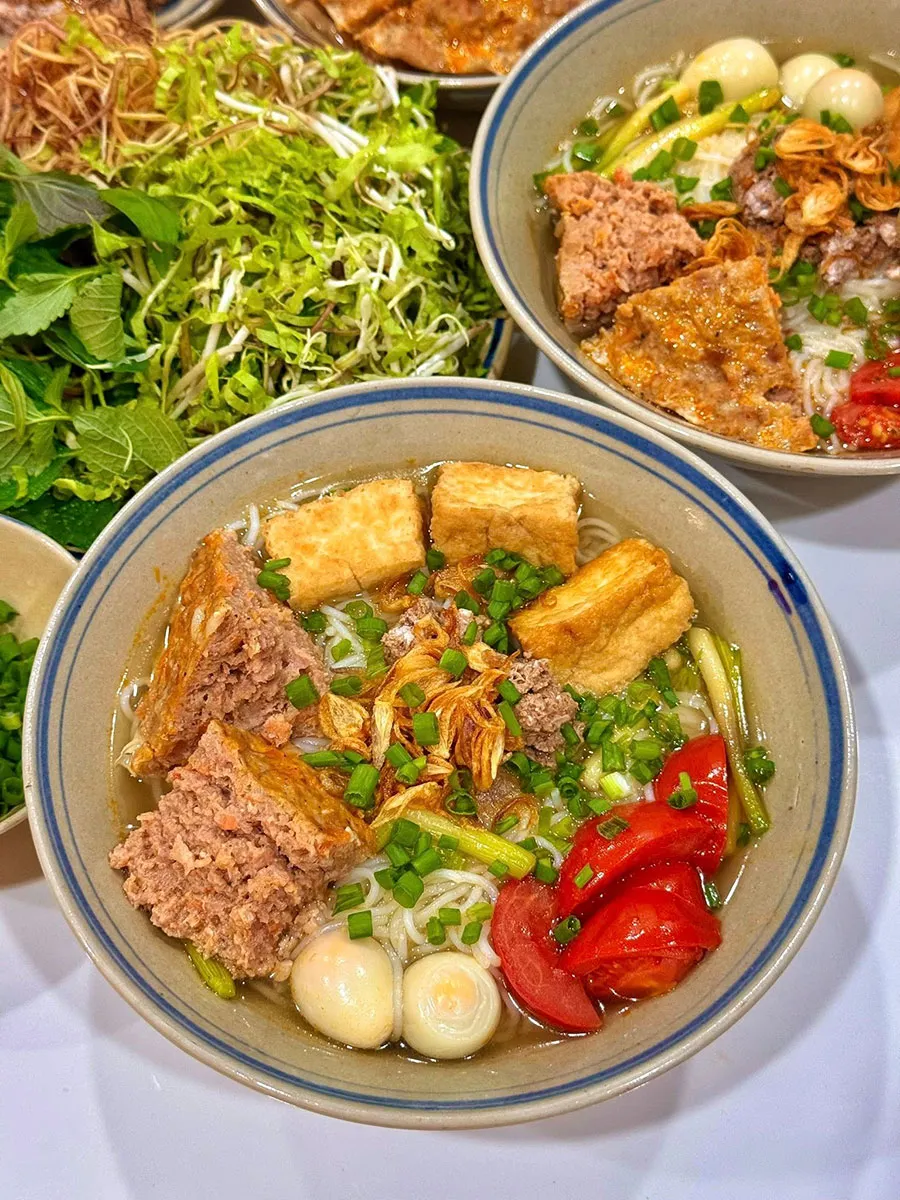
2. Bún Riêu – Crab, Tomato and Tofu Noodle Soup
If you want something refreshing yet full of flavour, bún riêu is an excellent choice. This traditional Vietnamese noodle soup features rice vermicelli in a tomato-based broth, commonly served with crab mixture, tofu and fresh herbs.
The slightly tangy broth makes bún riêu particularly enjoyable in Saigon’s warm weather. Depending on the vendor, your bowl may also include snails, pork, Vietnamese sausage or blood pudding.
Local tip: Add a little lime and fresh herbs gradually. If you prefer to avoid certain toppings, point to the ingredients before ordering.
Best for: First-time visitors who enjoy seafood and gently sour flavours.
3. Hủ Tiếu Nam Vang – A Southern Vietnamese Favourite
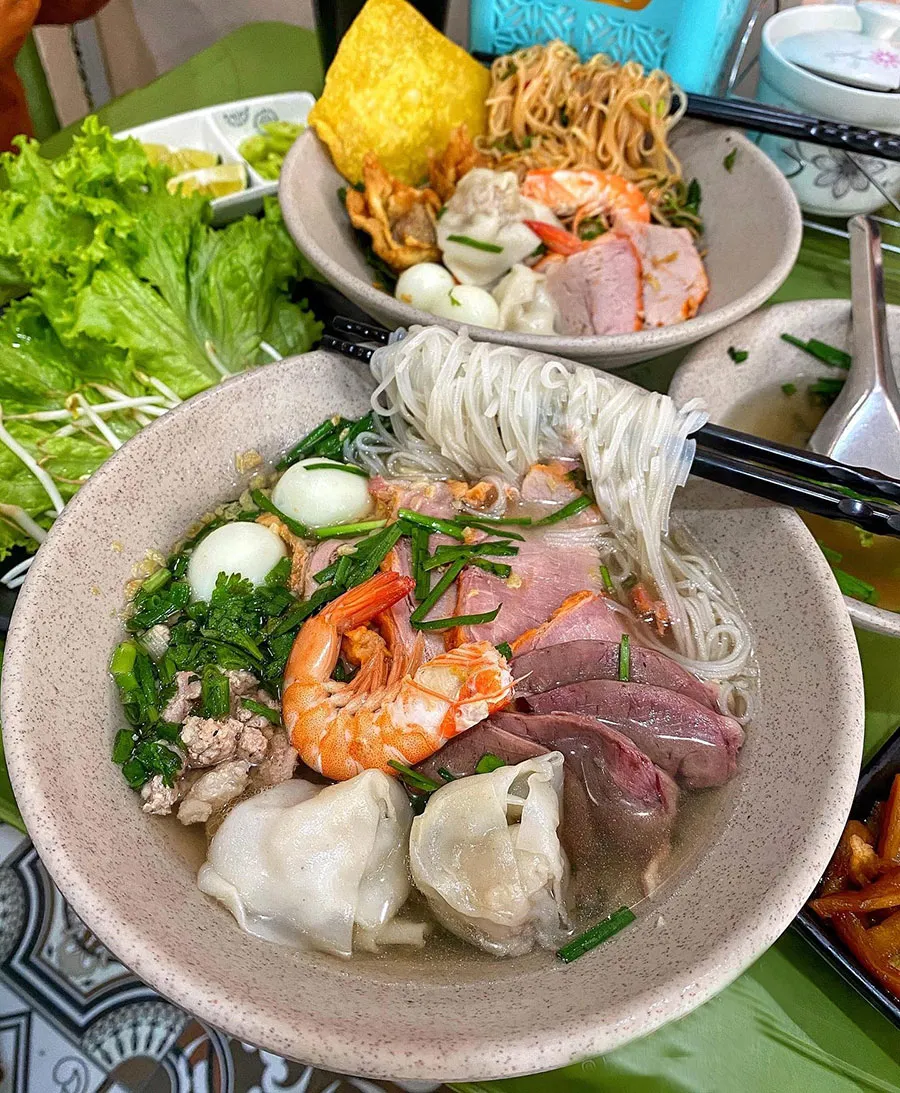
Hủ tiếu Nam Vang reflects the culinary connections between Southern Vietnam, Cambodia and Chinese communities. It typically combines noodles with pork, shrimp, minced meat and herbs in a clear, savoury broth.
One of the most interesting things about this dish is that you can enjoy it in two ways:
- Hủ tiếu nước: Noodles served in hot broth.
- Hủ tiếu khô: Noodles tossed with sauce, with broth served separately.
Both versions are popular, making this a versatile introduction to Southern Vietnamese noodle culture.
Local tip: Try the dry version if you want to experience a different noodle texture and a more concentrated sauce.
Best for: Travelers looking for a mild, satisfying meal.
Learn more in our guide to the best hủ tiếu in Ho Chi Minh City.
4. Bánh Canh Cua – Thick Crab Noodles
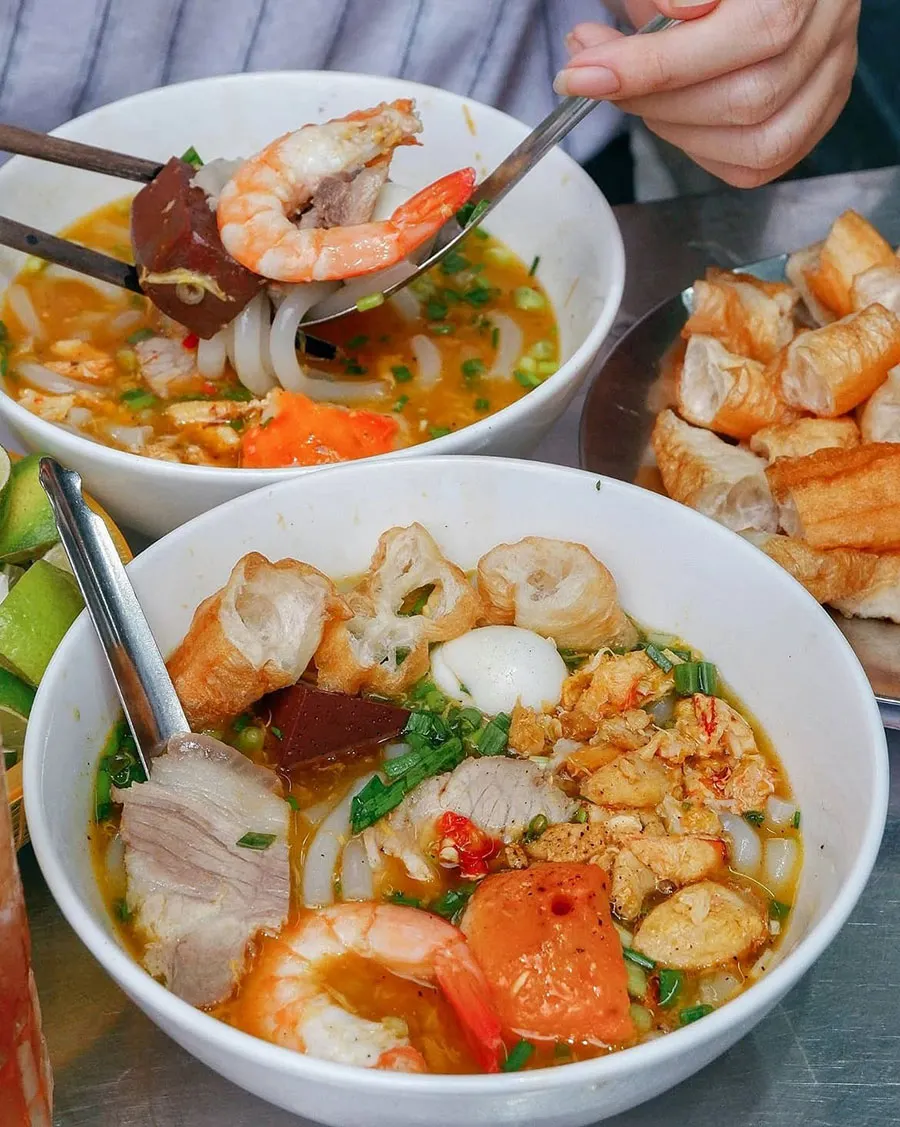
Bánh canh cua stands out for its thick, chewy noodles and rich crab-based broth. Unlike the thin noodles found in many Vietnamese soups, bánh canh noodles are made from rice flour, tapioca starch or a combination of both.
A bowl may include crab meat, shrimp, fish cake, pork and quail eggs. The broth is often slightly thickened, creating a comforting texture that pairs well with the seafood.
Local tip: Use both chopsticks and a soup spoon to enjoy the slippery noodles. Check the price before ordering additional crab or seafood toppings.
Best for: Seafood lovers and travelers who enjoy hearty noodle dishes.
5. Bún Mắm – The Bold Taste of the Mekong Delta
For adventurous food lovers, bún mắm offers one of the most distinctive noodle soup experiences in Southern Vietnam.
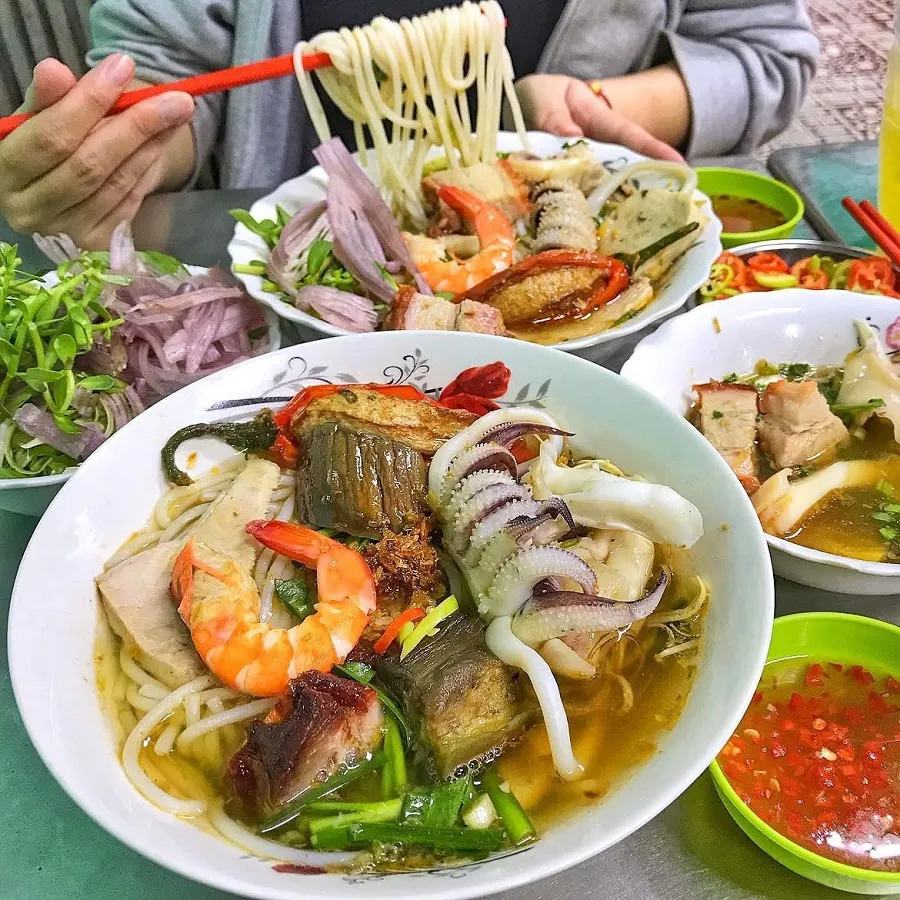
Originating from the culinary traditions of the Mekong Delta, this dish features a deeply savoury broth seasoned with fermented fish. It is commonly served with rice vermicelli, seafood, roasted pork, eggplant and fresh vegetables.
The aroma can be strong at first, but the broth combines salty, savoury and subtly sweet flavours into a complex dish.
Local tip: Try a small spoonful of broth before adding herbs or chili. Fresh vegetables help balance its rich fermented flavour.
Best for: Curious travelers who enjoy bold flavours and regional specialities.
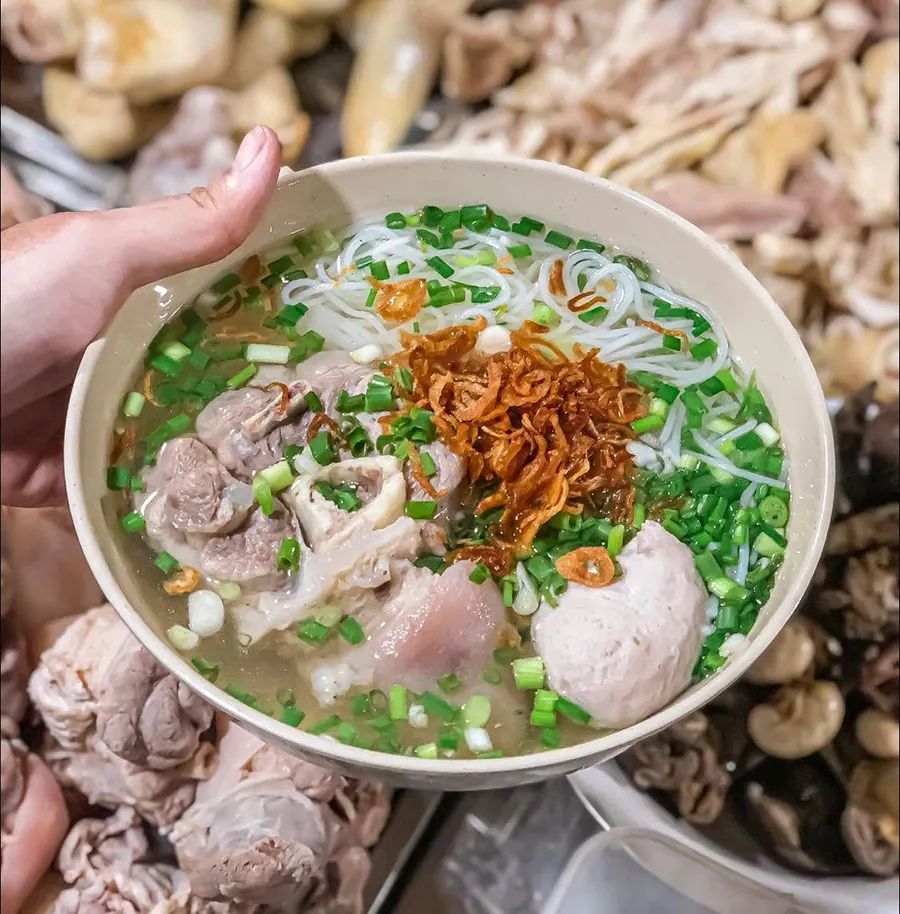
6. Bún Mọc – Light Pork and Mushroom Meatball Soup
Not every Vietnamese noodle soup needs to be spicy or intensely flavoured. Bún mọc is a comforting option featuring rice vermicelli, clear pork broth and springy pork-and-mushroom meatballs.
Some versions also include pork ribs, Vietnamese sausage and fresh herbs. Its gentle flavour makes it an approachable choice for travelers unfamiliar with Vietnamese food.
The broth is generally lighter than bún bò Huế or bún mắm, allowing the natural sweetness of the pork to stand out.
Local tip: Try bún mọc for breakfast when you want something warm, filling and relatively mild.
Best for: Families, cautious eaters and travelers who prefer lighter flavours.
7. Mì Hoành Thánh – Egg Noodles with Wontons
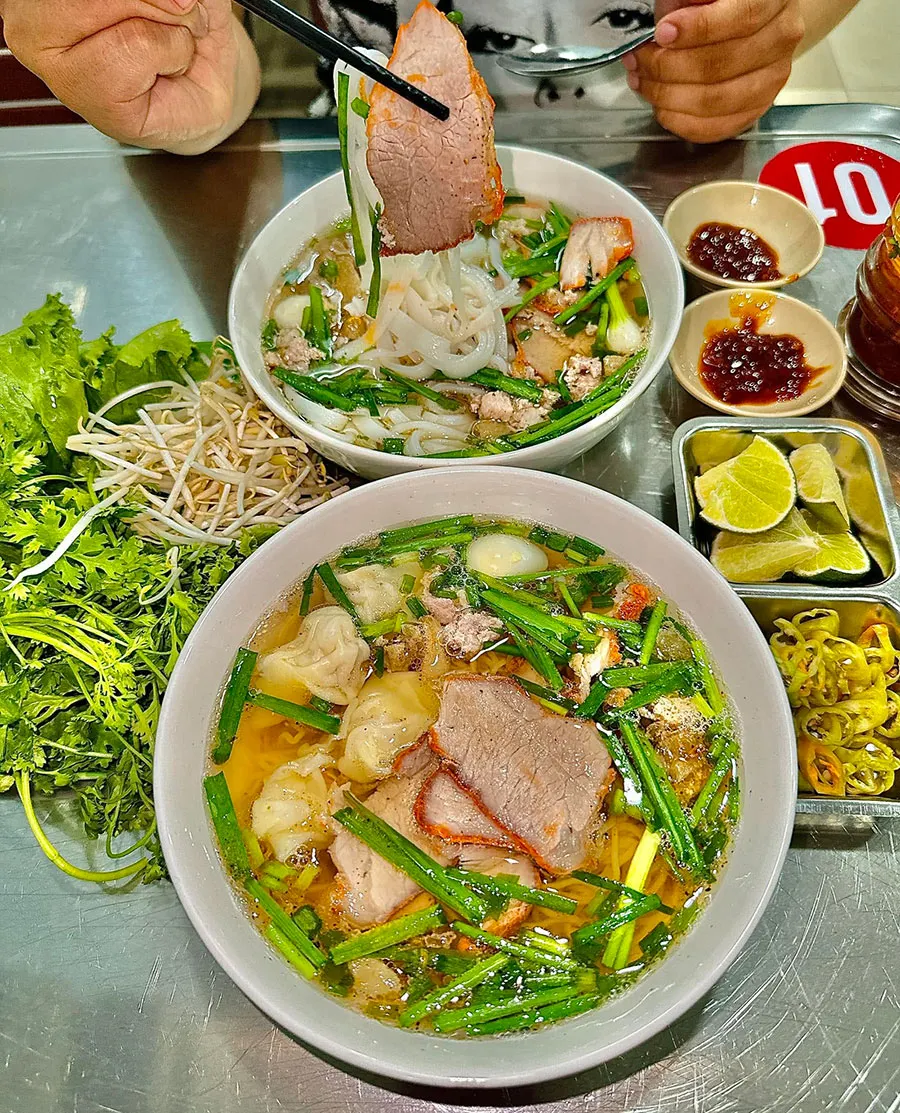
Mì hoành thánh highlights the Chinese-Vietnamese culinary heritage of Ho Chi Minh City, particularly in Chợ Lớn, the city’s historic Chinatown.
This comforting dish features springy yellow egg noodles, delicate wontons and a clear savoury broth. Depending on the restaurant, toppings may include char siu pork, shrimp, leafy greens and other ingredients.
Unlike rice-based noodle soups, mì hoành thánh has a distinctive egg noodle texture and flavour.
Local tip: Ask whether the restaurant offers mì khô (dry noodles) if you want to try the noodles with sauce and broth on the side.
Best for: Travelers interested in Chinese-Vietnamese cuisine and traditional Saigon food culture.
Want to discover more of Saigon’s local food culture? Join a Saigon walking tour to explore lively streets, local neighbourhoods and the everyday food scene beyond the usual tourist spots.
8. Miến Gà – Delicate Chicken and Glass Noodle Soup
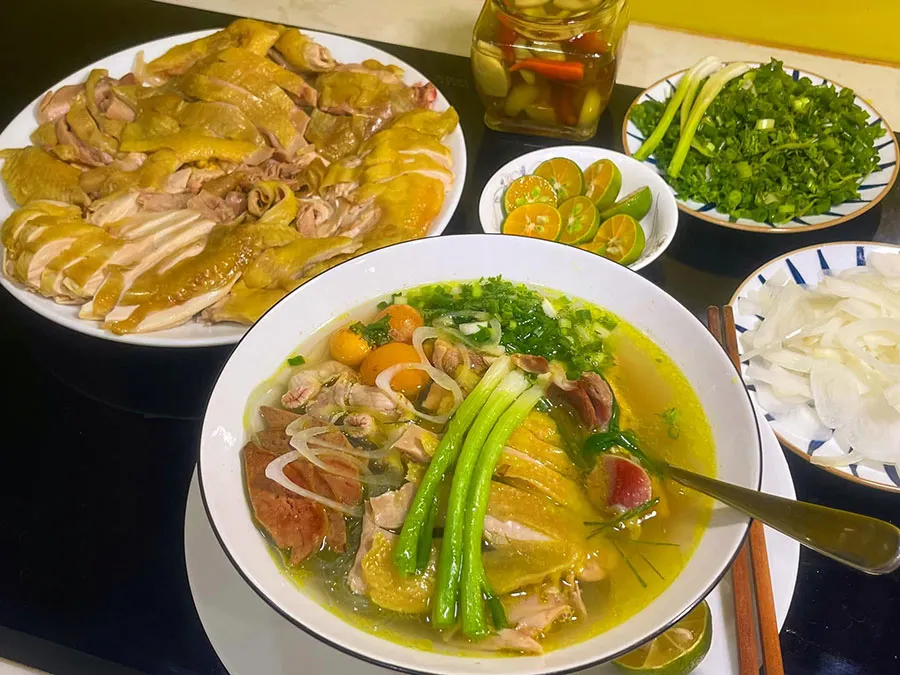
If you prefer a lighter meal, miến gà is worth trying. This traditional chicken noodle soup uses translucent glass noodles, usually made from mung bean starch, instead of rice noodles.
The clear chicken broth is typically served with shredded or chopped chicken, spring onions, coriander and black pepper. Its delicate flavour makes it a comforting alternative to richer noodle soups.
Miến gà is especially suitable for breakfast or lunch, although availability depends on the restaurant.
Local tip: Add a little lime or black pepper to enhance the broth without overpowering its natural chicken flavour.
Best for: Travelers seeking a light, comforting meal without strong spice.
Where to Find Good Noodle Soup in Ho Chi Minh City
Finding delicious Vietnamese noodle soups in Ho Chi Minh City is easier when you know where to look. From busy central streets to small family-run eateries tucked inside local alleys, Saigon offers plenty of opportunities to explore its diverse noodle culture.
Best Areas to Explore for Local Noodle Soup
Districts 1 and 3: Convenient for first-time visitors, with a mix of traditional noodle shops, casual restaurants and easy access from central hotels.
District 5 (Chinatown): An interesting area to explore Chinese-Vietnamese food traditions, particularly egg noodles, wontons and hủ tiếu.
Districts 4 and 10: Worth exploring for neighbourhood eateries, local markets and casual street-food experiences away from the main tourist streets.
Recommended Noodle Soup Shops in Saigon
These three places offer a practical starting point for trying different Vietnamese noodle soups.
| Noodle soup shop | What to try | Address |
|---|---|---|
| Bún Bò Huế Cô Như | Bún bò Huế with beef and pork toppings | 274/29 Võ Văn Tần Street, Bàn Cờ Ward |
| Hủ Tiếu Hồng Phát | Hủ tiếu with pork, shrimp and other available toppings | 389–391 Võ Văn Tần Street, Bàn Cờ Ward |
| Bánh Canh Cua Bà Ba | Thick crab noodle soup with seafood | 84/6 Nguyễn Biểu Street, Chợ Quán Ward |
Local tip: Some popular noodle shops are hidden inside narrow alleys or operate limited hours. Check their latest location, opening times and menu prices before visiting.
How to Choose a Good Local Noodle Shop
You don’t need an expensive restaurant to enjoy authentic Vietnamese noodle soup. Look for places with regular local customers, freshly prepared ingredients, hot broth and clean eating areas.
For a wider introduction to Saigon’s food culture, explore our guide to what to eat in Ho Chi Minh City besides pho and bánh mì.
The most memorable food experiences often come from exploring neighbourhoods, trying unfamiliar dishes and discovering how locals enjoy their everyday meals.
How Much Does Vietnamese Noodle Soup Cost in Saigon?
Vietnamese noodle soup is an affordable way to experience Saigon’s local food culture. A typical bowl at a neighbourhood eatery costs around 40,000–80,000 VND, while speciality restaurants or seafood-heavy dishes may cost 80,000–120,000 VND or more.
Prices vary by location, portion size and toppings. Check the menu before ordering, especially if you want extra meat, crab or shrimp.
Local tip: Carry small Vietnamese dong notes, as some street-food stalls prefer cash. For a broader breakdown of meal costs, read our Vietnam Food Prices 2026 guide.
Best Time to Eat Noodle Soup Like a Local
Early morning, around 7:00–9:00 a.m., is a great time to enjoy Vietnamese noodle soup in Ho Chi Minh City. Join locals starting their day with steaming bowls of hủ tiếu, bún bò Huế or miến gà before the streets become busier and hotter.
Many noodle shops also serve lunch or dinner, making noodle soup an easy meal at almost any time of day. However, smaller family-run stalls may close once their daily ingredients sell out.
Local tip: Check opening hours before visiting a specific restaurant, especially if you plan to eat outside the usual breakfast or lunch periods.
How to Order Vietnamese Noodle Soup
Ordering Vietnamese noodle soup is easier than you might think. Most local shops specialise in a few dishes, so simply point to the menu or say the name of your preferred soup.
Here are some useful Vietnamese phrases:
| Vietnamese phrase | English meaning |
|---|---|
| Một tô | One bowl |
| Không cay | Not spicy |
| Ít cay | Less spicy |
| Không nội tạng | No organ meat |
| Không hành | No spring onions |
| Không rau thơm | No fresh herbs |
| Bao nhiêu tiền? | How much does it cost? |
Local tip: Taste the broth before adding lime, chili, fish sauce or herbs. Vietnamese noodle soups are carefully seasoned, and a few extra ingredients can noticeably change their flavour.
If you have food allergies or dietary restrictions, explain them before ordering rather than relying only on how a dish looks.
Is Street-Side Noodle Soup Safe for Travelers?
Eating Vietnamese noodle soup at street-side stalls can be a memorable part of visiting Ho Chi Minh City. While no food vendor can guarantee complete safety, choosing carefully can help reduce the risk of foodborne illness.
Look for busy stalls serving freshly cooked food, steaming-hot broth and properly stored ingredients. Check that utensils and preparation areas appear clean, and avoid food that has been sitting uncovered in the heat.
Travelers with food allergies should be especially careful. Vietnamese broths may contain fish sauce, shrimp paste, shellfish or other ingredients that are not immediately visible. If you have a serious allergy, confirm ingredients clearly before ordering and avoid dishes when staff cannot provide reliable information.
Local tip: Choose freshly cooked toppings and bottled or otherwise safe drinking water. A popular stall can be a useful sign, but crowds alone do not guarantee food safety.
For a more comfortable introduction to local cuisine, join a Saigon motorbike food tour. A local guide can help explain ingredients, assist with ordering and introduce you to neighbourhood food spots.
For more practical advice, read our guide to eating street food safely in Ho Chi Minh City.
Which Noodle Soup Is Best for You?
The best Vietnamese noodle soup in Ho Chi Minh City depends on your personal taste. If you prefer something light and comforting, hủ tiếu Nam Vang or miến gà are excellent starting points. For richer flavours, try bún bò Huế, while bún mắm offers a more adventurous introduction to Southern Vietnamese cuisine.
Rather than searching for one perfect bowl, explore different regional flavours, noodle textures and local cooking traditions. Each dish reveals something unique about Vietnam’s diverse food culture.
Want to experience Saigon’s street-food scene with a local? Join Saigon Adventure’s award-winning motorbike food tour to discover neighbourhood eateries, traditional dishes and the stories behind the city’s everyday cuisine.
Frequently Asked Questions
1. What is the best Vietnamese noodle soup besides pho?
Bún bò Huế is a great choice for its aromatic lemongrass broth and bold flavours. For something milder, try hủ tiếu Nam Vang, while bún riêu offers a refreshing crab-and-tomato broth.
2. What is the most popular noodle soup in Ho Chi Minh City?
Pho and hủ tiếu are among the city’s best-known noodle soups. Hủ tiếu is particularly associated with Southern Vietnamese cuisine, while bún bò Huế, bún riêu and mì hoành thánh are also widely enjoyed.
3. Which Vietnamese noodle soups are not spicy?
Hủ tiếu Nam Vang, bún mọc, miến gà and mì hoành thánh are generally mild. However, recipes vary, so ask for “không cay” (not spicy) when ordering.
4. What is the difference between pho and bún bò Huế?
Pho typically features flat rice noodles in a fragrant broth seasoned with warm spices. Bún bò Huế uses thicker, round rice noodles and a stronger lemongrass-flavoured broth, often with chili.
5. How much does Vietnamese noodle soup cost in Ho Chi Minh City?
A typical bowl at a local eatery costs approximately 40,000–80,000 VND. Speciality restaurants and dishes with premium seafood or extra toppings may cost 80,000–120,000 VND or more.
6. Can vegetarians eat Vietnamese noodle soup in Saigon?
Yes. Look for “món chay” (vegetarian dishes) and confirm that the broth contains no meat, fish sauce or shrimp paste. Dedicated vegetarian restaurants are often the easiest option.
7. Is Vietnamese noodle soup commonly eaten for breakfast?
Yes. Noodle soup is a popular Vietnamese breakfast, especially between 7:00 and 9:00 a.m. Many local stalls serve freshly prepared bowls in the morning, although opening hours vary.