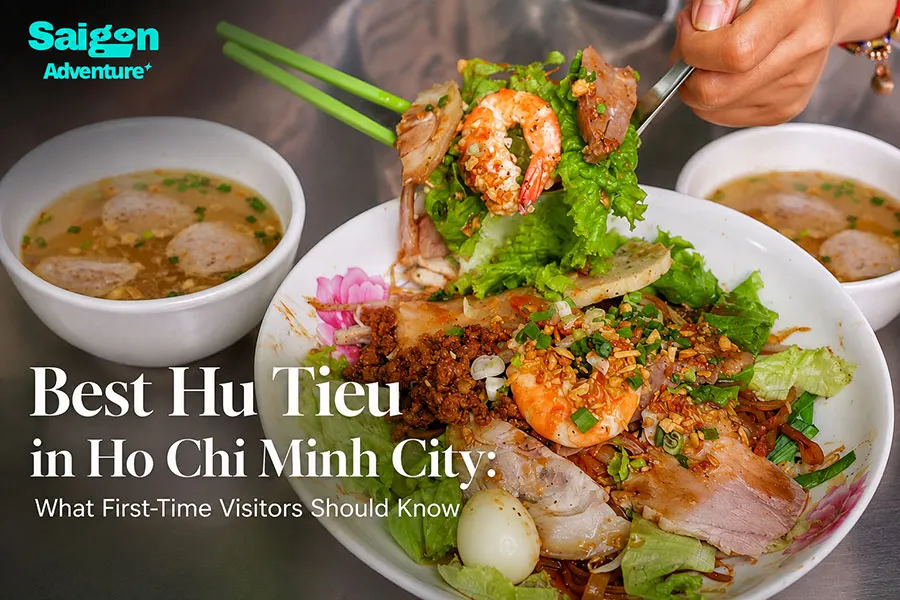
Pho may be Vietnam’s most internationally famous noodle soup, but in Ho Chi Minh City, another bowl tells a more distinctly southern story. Hu tieu is lighter, more flexible and wonderfully varied—a dish that can arrive with clear broth, served dry with sauce, topped with pork and shrimp, or kept beautifully simple with beef meatballs.
For first-time visitors, finding the best hu tieu in Ho Chi Minh City is not about chasing one famous restaurant. It is about understanding the different styles, knowing how to order and recognizing the small signs of a good local noodle shop.
Once you learn those basics, hu tieu becomes one of the easiest and most rewarding ways to eat like a Saigon local.
What exactly is hu tieu?
Hu tieu is a Southern Vietnamese noodle dish commonly served with a clear, savory broth. Its roots reflect the cultural connections between southern Vietnam, Cambodia and the Teochew Chinese community, although Saigon cooks have adapted it into numerous local versions.
The noodles may be thin and slightly chewy, soft and flat, or made from egg noodles. Toppings vary by shop but often include sliced pork, minced pork, shrimp, pork liver, quail eggs, fish, seafood or beef meatballs.
A plate of bean sprouts, lettuce, Chinese celery, chives, lime and fresh chili may accompany the bowl. Diners adjust the flavor themselves, which is one reason hu tieu feels so personal: no two finished bowls need to taste exactly alike.
Why hu tieu deserves a place on your Saigon food list
A good bowl has contrast without feeling heavy. The broth is clear yet deeply savory, the noodles retain some bite, and fresh greens bring fragrance and crunch.
It is also remarkably adaptable. Hu tieu works as breakfast, lunch, dinner or a late-night meal, while portions are usually manageable enough for travelers planning several tastings in one day.
Unlike dishes built around one fixed recipe, hu tieu reveals how individual vendors cook. One family may be known for its broth, another for handmade meatballs, and another for a particularly good dry sauce.
If you are building a broader food itinerary, this guide to what to eat in District 1 offers more local dishes to try alongside your noodle hunt.
The best types of hu tieu to try in Ho Chi Minh City
There is no single “correct” bowl. These are the principal styles first-time visitors are most likely to encounter around Saigon.
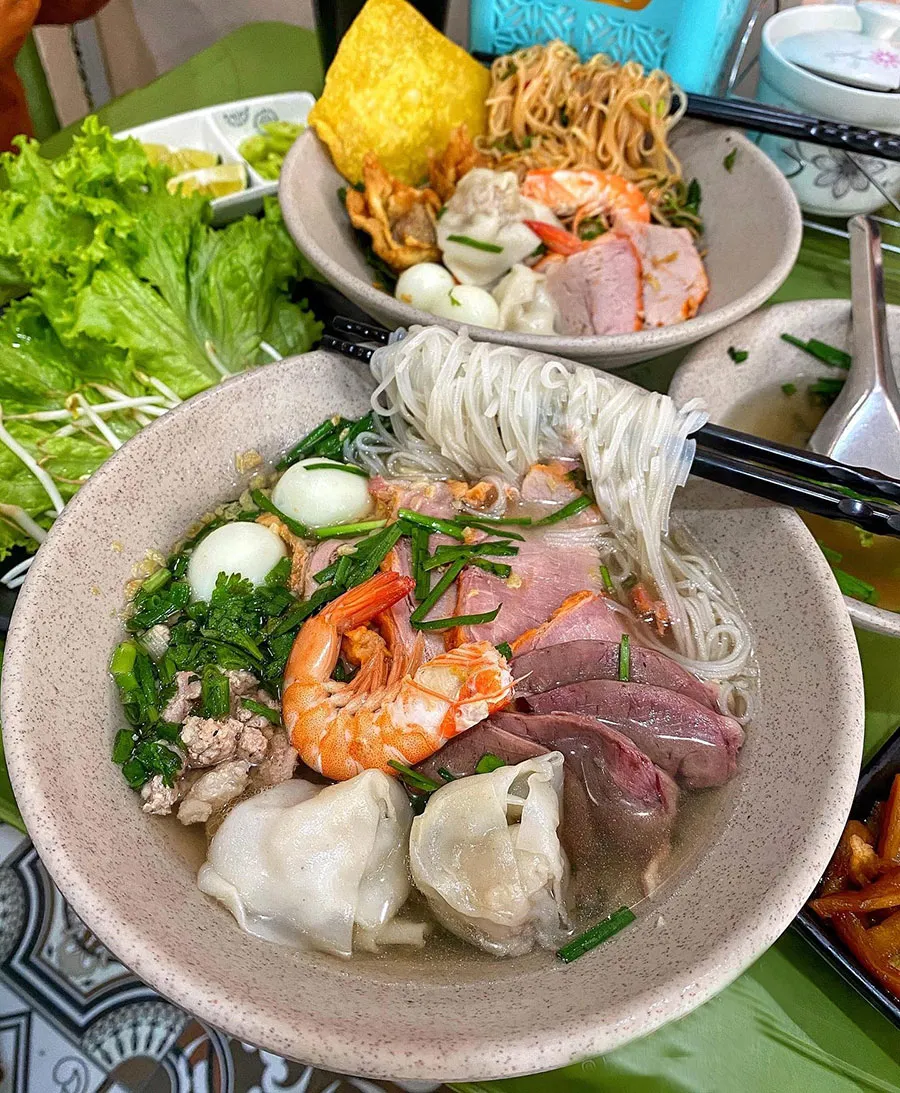
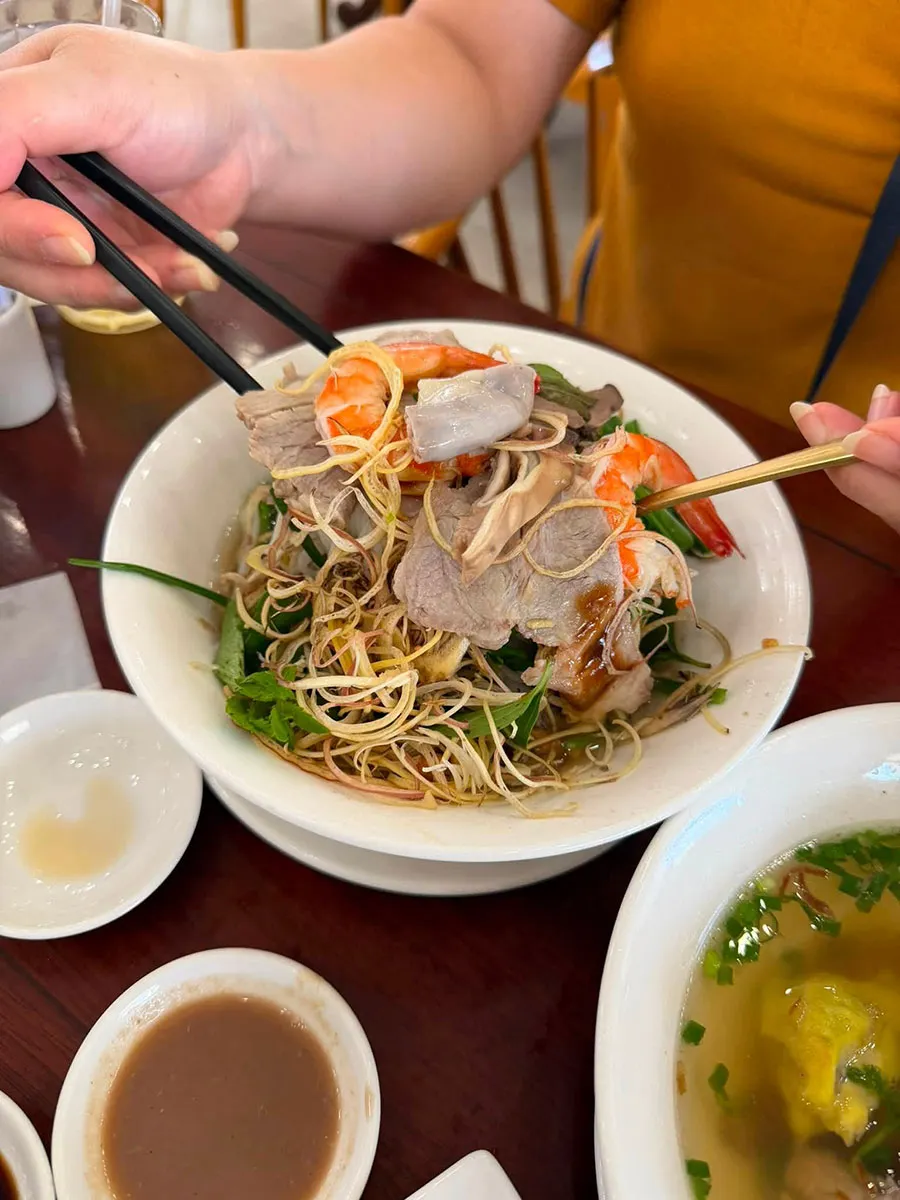
Hu tieu Nam Vang
Hu tieu Nam Vang is the best introduction for many international travelers. “Nam Vang” is the Vietnamese name traditionally used for Phnom Penh, reflecting the dish’s Cambodian connection before it developed its own Southern Vietnamese identity.
A typical bowl may contain sliced pork, minced pork, shrimp, quail egg and sometimes pork liver or intestine. The clear broth is usually gently sweet, savory and aromatic rather than strongly spiced.
Choose this style if you want a generous, colorful bowl with several textures. Travelers who prefer familiar ingredients can request the bowl without liver or offal.
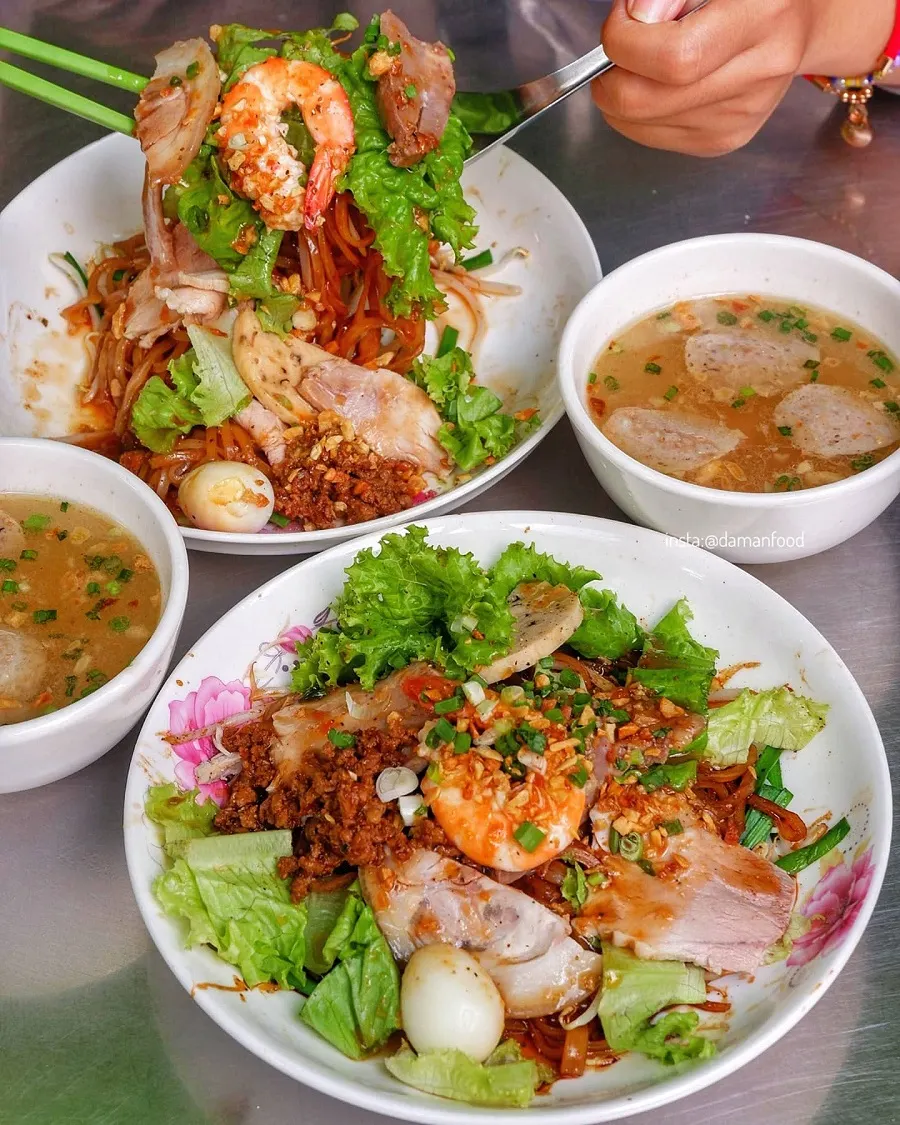
Hu tieu kho
“Khos” means dry, although the dish is not literally dry. The noodles are mixed with a seasoned sauce and toppings, while a small bowl of broth arrives separately.
This version gives the noodles a more concentrated flavor and firmer texture. Stir thoroughly before eating so the sauce, herbs, minced pork and noodles are evenly combined.
Sip the broth between bites or add a spoonful to loosen the noodles. For many repeat visitors, hu tieu kho becomes even more memorable than the soup version.
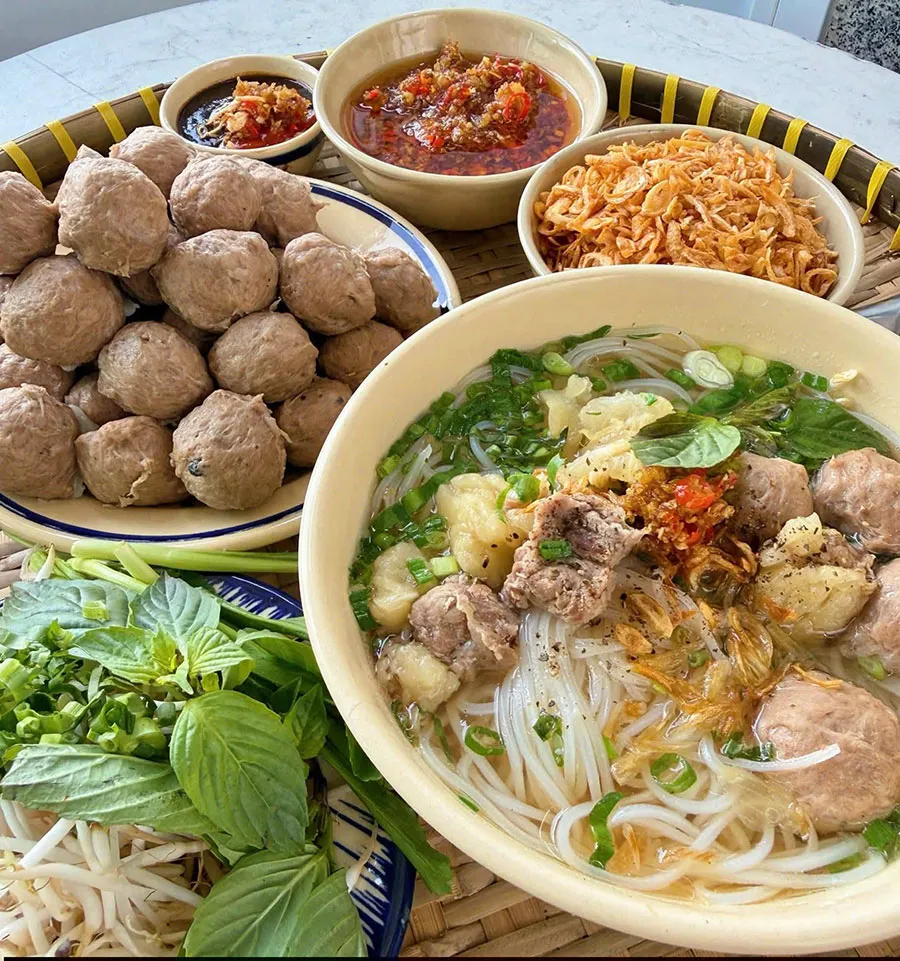
Hu tieu bo vien
Hu tieu bo vien is a simpler bowl topped with springy beef meatballs. Its straightforward character makes it approachable for children, cautious eaters and anyone who does not want seafood or organ meats.
The quality depends heavily on the meatballs and broth. Well-made beef balls should feel pleasantly firm rather than rubbery, while the broth should taste clean and balanced.
Saigon Adventure has also visited one of the city’s oldest hu tieu bo vien shops, where a concise menu and decades of continuity show how much locals value consistency.
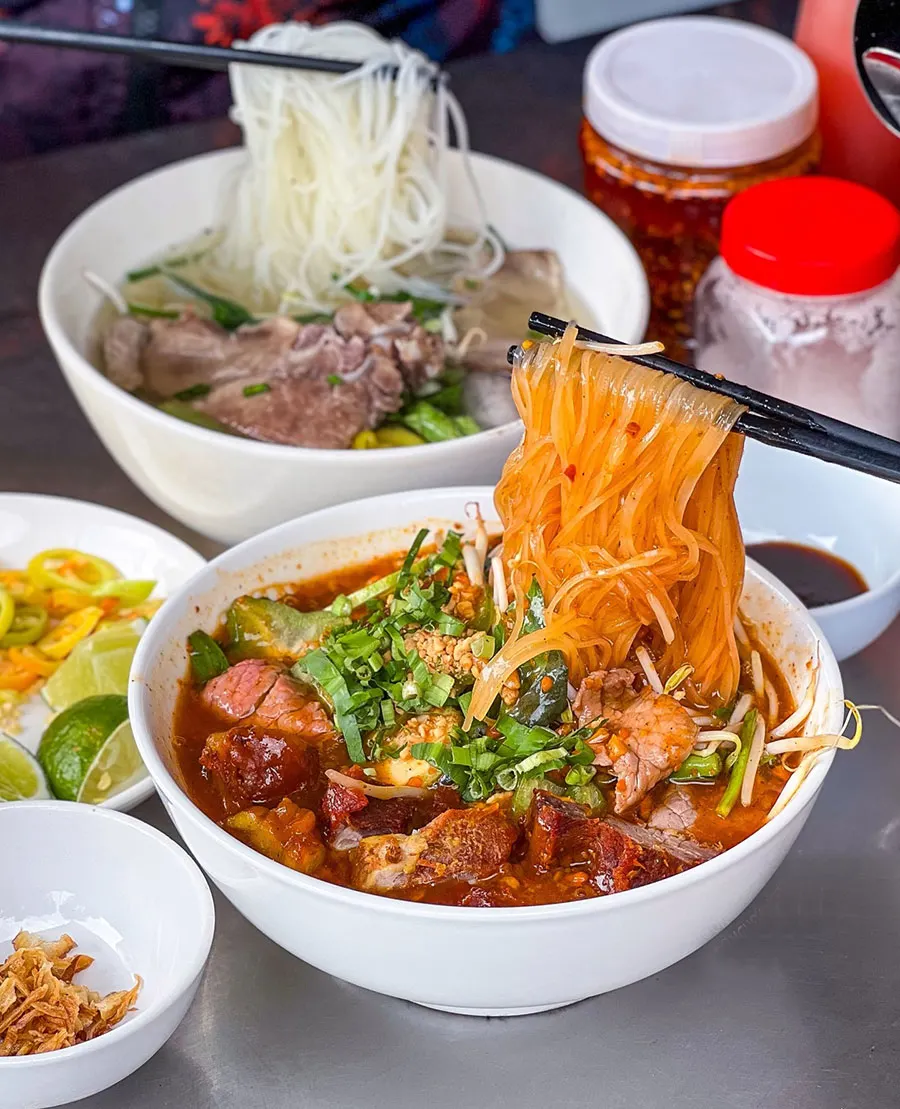
Hu tieu My Tho
Associated with My Tho in the Mekong Delta, this version is particularly known for its noodles. They tend to be firmer and chewier than many mass-produced alternatives, helping them retain their texture in hot broth.
Toppings may include pork, shrimp, minced meat or seafood. In Ho Chi Minh City, recipes vary, so look for shops that specifically advertise “hu tieu My Tho” rather than assuming every bowl follows the regional style.
Hu tieu muc or seafood hu tieu
Seafood lovers should look for hu tieu muc, prepared with squid, or hu tieu hai san, which may combine shrimp, squid, fish and other seafood.
These bowls are often lighter than pork-heavy versions, although the final flavor depends on the stock and toppings. Choose a busy shop with high ingredient turnover, especially when ordering seafood in warm weather.
Hu tieu go
Hu tieu go is not one strict recipe. The name is connected to mobile vendors who traditionally announced their presence by knocking wooden or metal pieces together, creating a recognizable sound in residential neighborhoods.
It is an inexpensive, unpretentious expression of everyday Saigon food culture. The bowl may be simple—noodles, sliced pork, minced meat, chives and broth—but the experience carries a sense of neighborhood life that polished restaurants cannot reproduce.
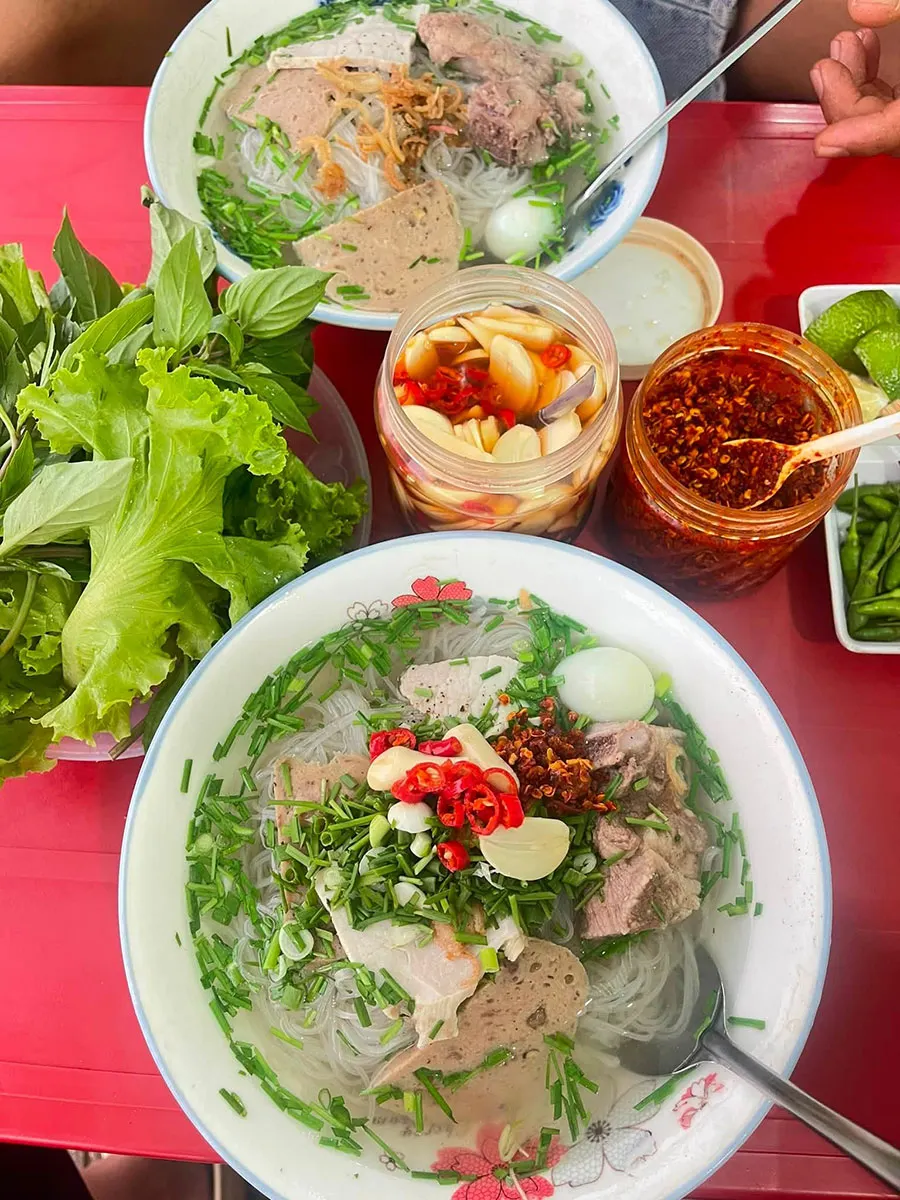
Where to find good hu tieu in Saigon
District 1 is convenient, especially if you are staying near Ben Thanh Market, Nguyen Hue or the central hotels. You can find satisfying bowls here, but central locations may charge more and are not always the places locals visit most frequently.
Districts 3, 5, 6, 10 and 11 offer a broader view of neighborhood food culture. District 5 and the wider Cho Lon area are particularly relevant because of the Chinese influence on Saigon’s noodle traditions.
You do not need to search for an empty “hidden gem.” In Vietnam, a crowded local shop is often a more useful sign than stylish décor. Look for steady turnover, freshly assembled bowls, condiments that appear clean and customers who seem to be regulars.
Reaching several food districts independently can take time. A motorbike food tour in Ho Chi Minh City makes it easier to move beyond the central tourist streets and compare dishes in different neighborhoods.
Travelers who want a dedicated evening of tastings can also join a Saigon street food tour, with local guidance on ingredients, ordering and dining customs.
How to order hu tieu like a local
The first choice is soup or dry. Say “hu tieu nuoc” for noodles in broth and “hu tieu kho” for dry-style noodles with broth served separately.
You may also hear “dac biet,” meaning special. This generally includes a fuller selection of toppings, but the exact ingredients depend on the shop.
Useful phrases include:
- “Khong cay” — not spicy
- “It cay” — a little spicy
- “Khong noi tang” — no offal
- “Khong gia” — no bean sprouts
- “Cho toi mot hu tieu kho” — please give me one dry hu tieu
Do not add every condiment before tasting the broth. Try one spoonful first, then adjust it gradually with lime, chili, pepper, fish sauce or other condiments provided by the shop.
How much does hu tieu cost?
Prices vary by district, portion and toppings. A modest neighborhood bowl may cost roughly VND 35,000–60,000, while seafood, premium toppings or central locations can raise the price to VND 70,000–100,000 or more.
Check the menu before ordering whenever possible. If prices are not displayed, asking “Bao nhieu?”—how much?—is completely normal.
Cash remains useful at small stalls, although many established eateries accept local bank transfers. International cards are less dependable at traditional street-side shops, so carry smaller Vietnamese notes.
When is the best time to eat hu tieu?
Morning is an excellent time to see hu tieu as locals know it: quick, practical and woven into the daily commute. Popular breakfast vendors may begin early and finish once their stock sells out.
Evening brings a different atmosphere. Pavement tables fill, mobile vendors appear and steaming bowls become especially inviting after sunset or rain.
If you enjoy exploring slowly, Saigon’s walking tours can introduce you to markets, alleys and local neighborhoods where food is part of the surrounding community rather than an isolated restaurant stop.
For visitors interested in the city beyond its cuisine, a Ho Chi Minh City motorbike tour can connect those dining experiences with temples, old apartment blocks, historic sites and everyday street life.
Food safety and practical tips for first-time visitors
Choose a busy vendor where food is cooked continuously and ingredients do not sit unused for long periods. Broth should arrive properly hot, while herbs and bean sprouts should look fresh.
Travelers with allergies need to be cautious. Broth, sauces and meatballs may contain ingredients that are not immediately visible, including fish sauce, shellfish, soy or pork.
Vegetarian hu tieu exists, usually labelled “hu tieu chay,” but confirm that the broth is vegetable-based. Simply removing meat from a standard bowl does not make the stock vegetarian.
Keep tissues and hand sanitizer with you, and avoid placing bags or phones too close to the edge of a pavement table. Small plastic stools and shared condiment containers are normal parts of the experience; follow what local diners do and enjoy the informality.
What makes a bowl of hu tieu genuinely good?
Start with the broth. It should have depth without tasting aggressively salty, oily or dominated by sugar.
The noodles should not be mushy. Toppings need to taste fresh, greens should provide a clean contrast, and the dry version’s sauce should coat the noodles without forming a heavy puddle at the bottom.
Most importantly, the elements should work together. The best hu tieu in Ho Chi Minh City is not necessarily the largest or most photographed bowl—it is the one that makes you pause after the first spoonful and then keeps drawing you back.
Discover Saigon one bowl at a time
Hu tieu introduces visitors to a side of Ho Chi Minh City that pho alone cannot explain. Its Cambodian connections, Chinese influences, Mekong Delta variations and distinctly Saigon adaptations all meet in one deceptively simple meal.
Try a classic hu tieu Nam Vang first, then order a dry bowl or a neighborhood-style hu tieu bo vien. If unfamiliar menus and far-flung districts feel daunting, join Saigon Adventure and let a local guide turn your noodle search into a richer journey through the city’s food, people and everyday culture.
Frequently asked questions
Is hu tieu the same as pho?
No. Hu tieu generally uses different noodles and a lighter Southern-style broth, while pho has its own rice noodles, spices and preparation traditions. The toppings and dry option also make hu tieu noticeably different.
Should I order hu tieu dry or with soup?
Choose hu tieu nuoc for a comforting noodle soup. Order hu tieu kho if you prefer firmer noodles, a concentrated sauce and broth served separately.
What is the best hu tieu for a first-time visitor?
Hu tieu Nam Vang is an excellent starting point because it combines clear broth, noodles, pork, shrimp and fresh greens. Request no offal if you prefer familiar toppings.
Is hu tieu spicy?
Hu tieu is generally not served extremely spicy. Fresh chili and chili sauce are usually available separately, allowing diners to control the heat.
Can vegetarians eat hu tieu?
Yes, but order hu tieu chay and confirm that the broth contains no meat or fish products. Regular hu tieu broth is commonly prepared with pork bones or other animal ingredients.
Can I eat hu tieu for breakfast?
Absolutely. Hu tieu is a popular breakfast in Southern Vietnam, although it is also eaten at lunch, dinner and late at night.
How much should I expect to pay for hu tieu in Ho Chi Minh City?
A bowl commonly costs around VND 35,000–60,000 at a neighborhood eatery. Central locations, seafood and premium toppings can increase the price to VND 70,000–100,000 or more.