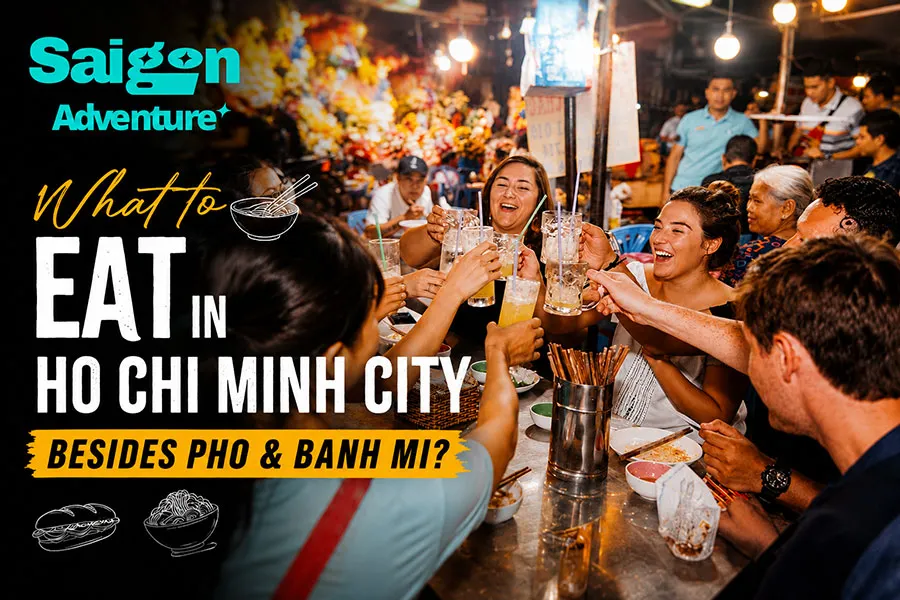
You have tried pho. You have probably eaten a banh mi. Now comes the fun part: what to eat in Ho Chi Minh City besides pho and banh mi?
The answer is far more exciting than simply adding another noodle soup to your list.
In Saigon, a smoky pork chop can arrive on a plate of broken rice. A sizzling yellow pancake gets torn apart and wrapped in fresh herbs. A bowl of grilled pork noodles arrives cold, colorful and fragrant, while a tiny sidewalk table turns into a seafood feast after dark.
This is the side of Ho Chi Minh City food that many first-time visitors miss.
If you want to discover authentic Vietnamese food in Saigon, these are the dishes worth seeking out — what they taste like, how locals eat them, and which ones are easiest for international travelers to try.
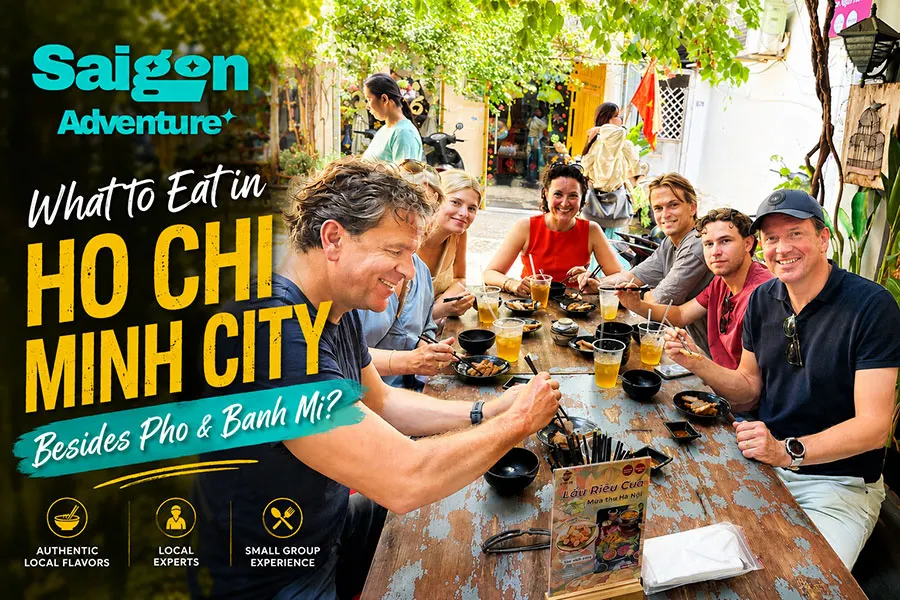
The Best Vietnamese Foods to Try Beyond Pho and Banh Mi
There is no single “best” Vietnamese dish in Ho Chi Minh City. The city’s food culture is shaped by southern Vietnamese cooking, migration, Chinese-Vietnamese influences and generations of family recipes.
For a first visit, the smartest approach is variety. Choose dishes with different textures, cooking methods and flavors rather than eating five versions of the same thing.

1. Com Tam – The Saigon Dish You Should Not Skip
If there is one dish that belongs near the top of your Ho Chi Minh City food guide, it is com tam.
Com tam means “broken rice,” referring to the small fractured grains traditionally used for the dish. In Saigon, it is commonly served with grilled pork, a fried egg, pickled vegetables, cucumber, scallion oil and a sweet-savory fish sauce.
The star is usually the grilled pork chop.
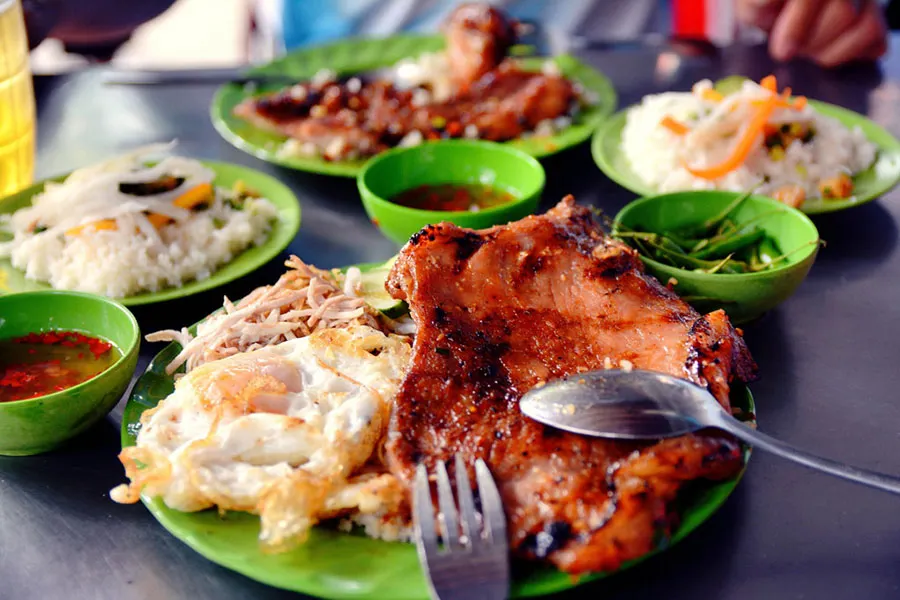
It arrives smoky from the grill, slightly caramelized around the edges and fragrant with garlic and fish sauce. Mix a little of the sauce into the rice, add a bite of pork and some pickled vegetables, and you get the salty, sweet, smoky and fresh flavors that make southern Vietnamese food so addictive.
Best for: first-time visitors, meat lovers and anyone wanting a genuinely local Saigon meal.
When to eat it: breakfast, lunch or an early dinner.
Local tip: Do not wait for an elaborate restaurant. Some of the most satisfying com tam meals are served in simple neighborhood eateries where the grill is working constantly.
2. Banh Xeo – The Crispy Pancake You Eat With Your Hands
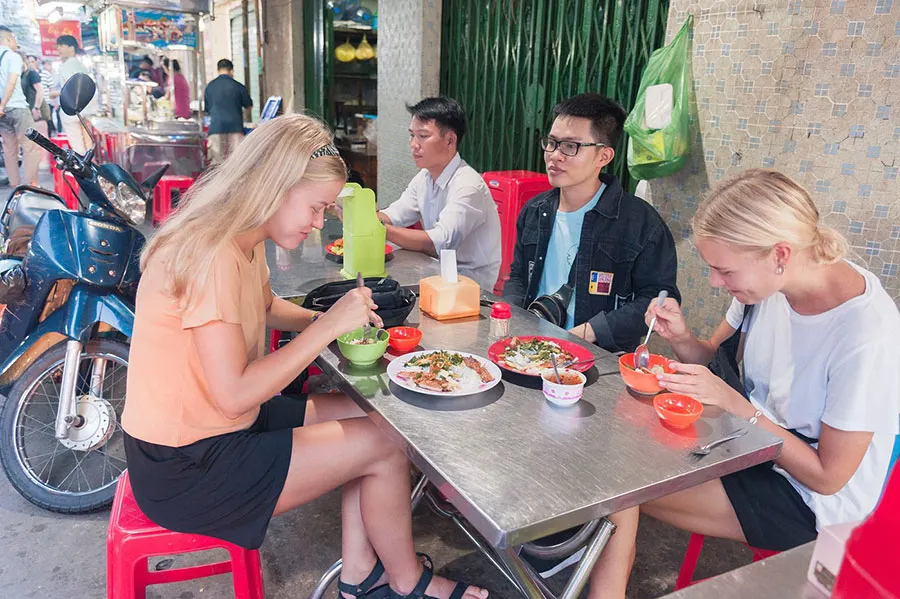
You will know banh xeo before you see it.
First comes the sound — sssizzle — as rice batter hits a hot pan.
This southern Vietnamese savory pancake is cooked until crisp, then filled with ingredients such as pork, shrimp and bean sprouts. The large Saigon-style version is designed for sharing and comes with lettuce, herbs and dipping sauce.
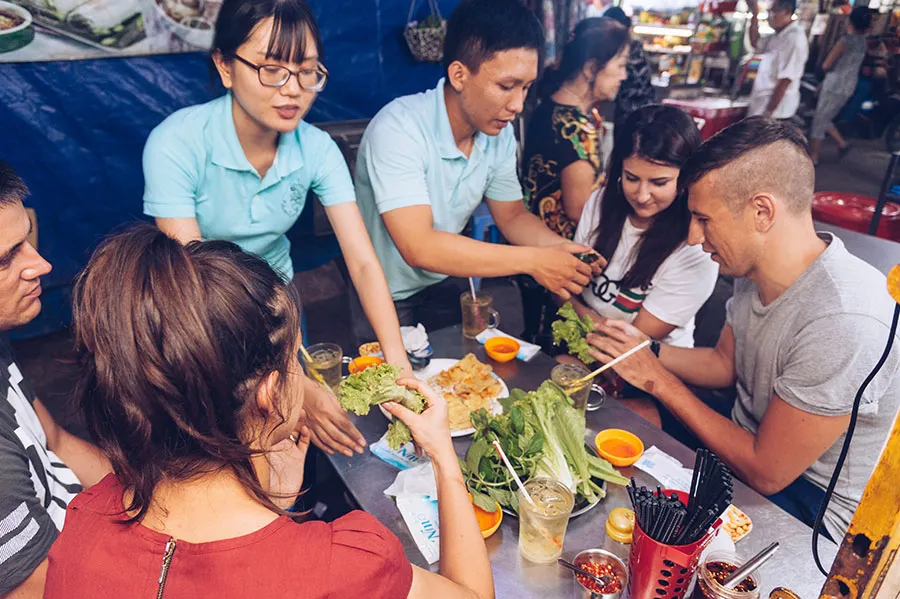
Here is the important part: do not eat it like a Western pancake.
Tear off a piece, wrap it with lettuce and herbs, then dip it into the sauce. The contrast is fantastic: brittle, crispy batter against cool herbs, juicy filling and a bright, savory-sweet dipping sauce.
For travelers looking for what to eat in Saigon besides pho, banh xeo is one of the easiest recommendations.
3. Bun Thit Nuong – A Fresh, Smoky Bowl of Saigon
Hot weather and a bowl of steaming soup do not always make the perfect combination.
That is where bun thit nuong comes in.
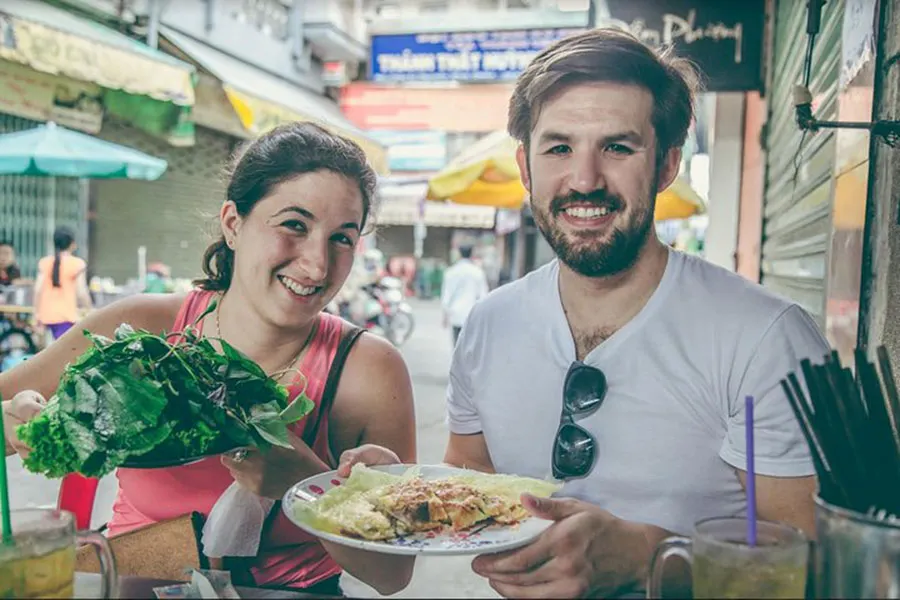
This popular Saigon dish combines rice vermicelli with charcoal-grilled pork, fresh herbs, lettuce, cucumber, pickled vegetables, peanuts and often a crispy spring roll. Instead of a soup broth, the bowl is finished with a sweet-savory fish sauce.
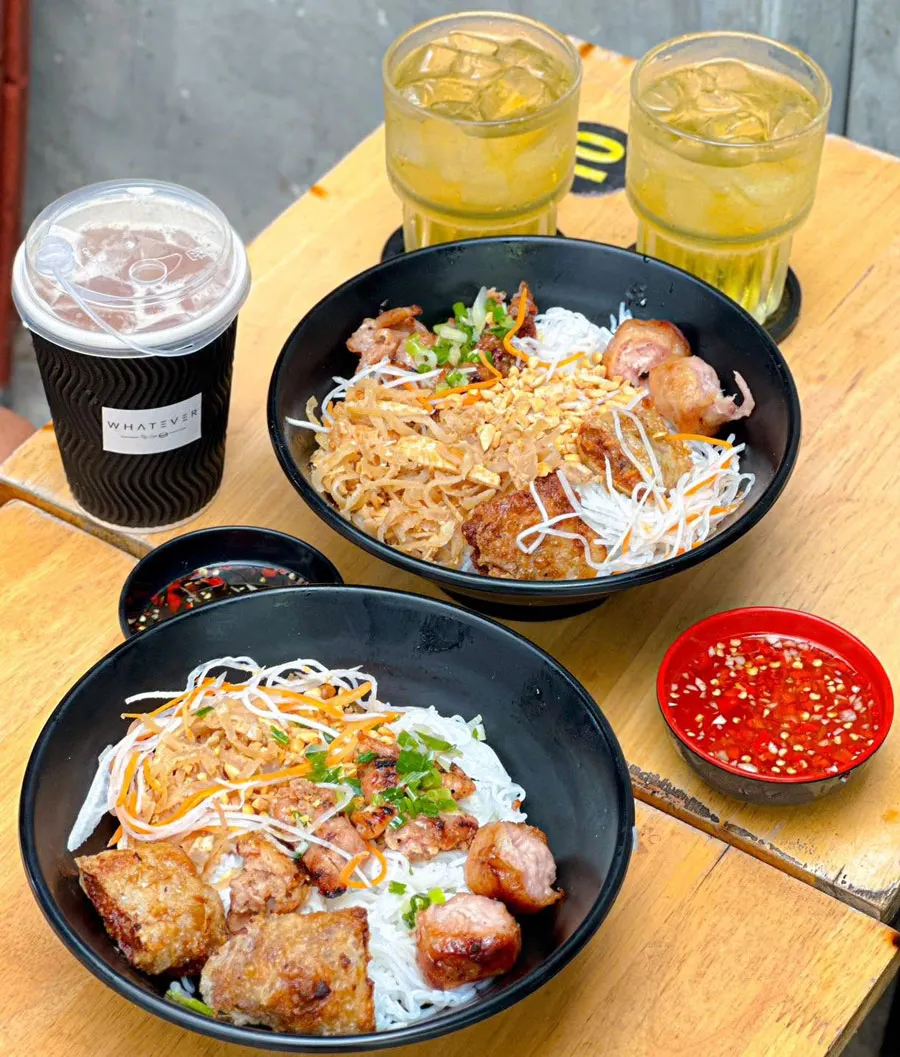
Mix everything together before eating.
You get smoky meat, cool vegetables, soft noodles, crunchy peanuts and tangy pickles in almost every bite. It is filling without feeling heavy, which makes it particularly appealing during a warm afternoon in Ho Chi Minh City.
Best for: travelers who want something fresh, balanced and less soup-heavy.
Search tip: Look for both “bun thit nuong” and “grilled pork vermicelli” when searching local food spots.
4. Hu Tieu Nam Vang – Saigon’s Other Great Noodle Bowl
If you still want noodles but want to move beyond pho, order hu tieu Nam Vang.
This southern favorite has connections to Phnom Penh and developed into its own beloved style in southern Vietnam. A typical bowl can contain thin rice noodles, pork, shrimp, minced meat, vegetables and other toppings in a clear, savory broth.
You may also see hu tieu kho, the dry version.
Instead of noodles swimming in broth, the noodles are mixed with sauce and toppings while the broth arrives separately. For many visitors, this is an especially fun way to experience a familiar noodle format in a completely different style.
Best for: noodle lovers who want something lighter and more complex than pho.
5. Bo Kho – Vietnamese Beef Stew With Serious Comfort-Food Energy
Imagine walking down a Saigon street and catching the smell of beef slowly simmering with spices.
That is bo kho.
This Vietnamese beef stew is rich, aromatic and warming, usually prepared with beef, carrots, lemongrass and fragrant spices. Depending on the restaurant, it can be served with noodles, rice or bread.
For international visitors, eating it with bread is particularly enjoyable.
You tear off a piece and dip it into the thick, savory broth, picking up tender beef and carrots along the way. It feels familiar enough to be comforting while still tasting unmistakably Vietnamese.
Best for: travelers who enjoy stews, slow-cooked meat and rich savory flavors.
6. Oc – The Saigon Food Experience That Starts After Dark
Want to see how locals really socialize over food?
Try oc.
The Vietnamese word oc refers broadly to snails, but Saigon’s oc restaurants often serve much more: clams, scallops, oysters and other shellfish prepared in a variety of ways.
Garlic butter. Tamarind. Chili. Grilled with scallion oil. Steamed with lemongrass.
The menu can look intimidating at first, especially if you cannot read Vietnamese. That is part of the adventure.
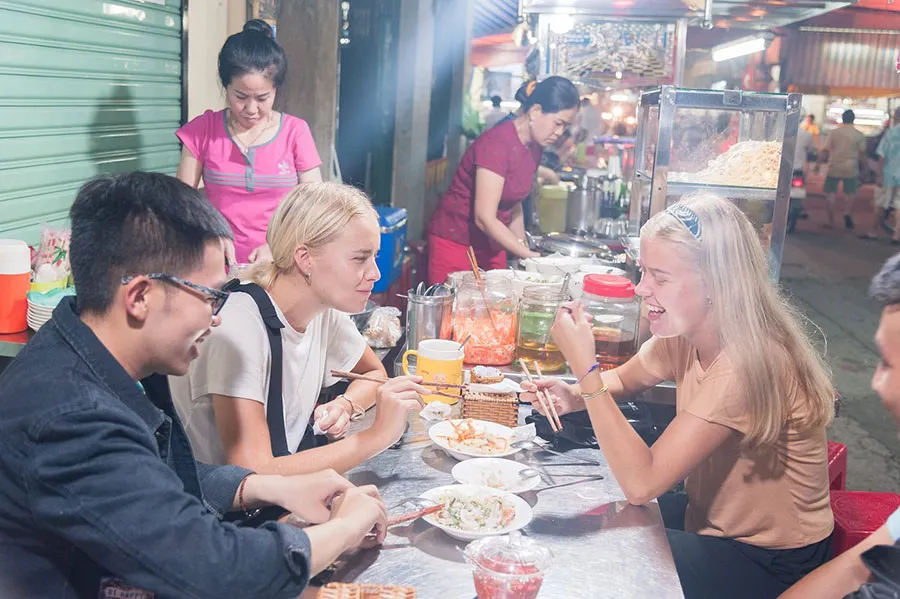
Order several small dishes and share them around the table. Oc is less about having one perfect main course and more about sitting together, picking at different plates and discovering flavors one by one.
Best for: adventurous eaters and travelers who want a social local-food experience.
Important: if you have a seafood or shellfish allergy, tell the restaurant before ordering.
7. Bot Chien – Crispy, Chewy and Completely Addictive
Some of the best Saigon street food is not a full meal at all.
Bot chien is a classic example.
Small pieces of fried rice-flour cake are cooked on a hot pan until crisp outside and soft inside. Egg, green onions and a sweet-savory sauce are commonly added before the dish reaches your table.
The texture is the attraction.
Crispy edges. Soft center. Rich egg. Fresh scallions. A little sweetness from the sauce.
It is the kind of snack that makes sense at 4 p.m., when you are not hungry enough for dinner but absolutely willing to eat something delicious.
Best for: adventurous snackers and travelers exploring local markets or neighborhoods.
8. Pha Lau – For Travelers Who Want Something Truly Local
Not every dish on a Ho Chi Minh City street food tour needs to be an obvious crowd-pleaser.
For the more adventurous traveler, there is pha lau.
Usually made with beef offal and cooked with aromatic spices and a coconut-based seasoning, pha lau has a distinctive savory, slightly sweet flavor and a pleasantly chewy texture.
It is commonly enjoyed with bread or noodles.
This is one of those foods where your reaction may be immediate: I love this — or I am glad I tried it once. Either way, it gives you a glimpse into the everyday food culture that exists beyond the dishes most commonly marketed to tourists.
9. Banh Cuon – Silky Steamed Rice Rolls
For a lighter meal, try banh cuon.
Thin rice sheets are steamed until silky and delicate, then filled with seasoned minced pork and wood ear mushrooms. Fried shallots, herbs and dipping sauce add savory depth and texture.
It is particularly popular as a breakfast or light meal.
The preparation itself is worth watching. At a traditional shop, the cook spreads rice batter across a steaming cloth, lifts the incredibly thin sheet and rolls it with practiced speed.
That little moment at the counter can be just as memorable as the meal.
10. Che – Save Room for Vietnamese Dessert
Vietnamese food does not finish with a cup of coffee.
It can finish with che.
The word covers a huge family of Vietnamese sweet desserts made with ingredients such as beans, coconut milk, jelly, fruit, sticky rice and tapioca pearls.
Some versions are warm. Others are served over crushed ice, making them especially refreshing in Ho Chi Minh City’s tropical heat.
Do not worry if you cannot identify every ingredient.
Point at something colorful, ask what is inside and give it a try. Che is one of the easiest ways to turn dessert into a small cultural discovery.
What Should You Eat First in Ho Chi Minh City?
If you only have one or two days in the city, do not try to eat everything.
Start with com tam to experience a classic Saigon rice meal. Then try bun thit nuong for something fresh and herb-heavy, followed by banh xeo for a completely different texture.
In the evening, make room for oc or bot chien.
Finish with che and a Vietnamese iced coffee if you still have space.
This gives you a much better introduction to Saigon cuisine than simply ticking off pho and banh mi.
Where to Find Authentic Food in Ho Chi Minh City
One of the biggest mistakes visitors make is assuming the best food is concentrated around the main tourist streets.
It is not.
Food culture spreads through residential neighborhoods, small alleys, markets and streets where locals eat every day. Recent food guides continue to highlight areas such as District 3 for dishes including banh xeo and com tam, District 4 for seafood and oc, and District 5/Cho Lon for noodle dishes and Chinese-Vietnamese food.
That is why a short walk away from the busiest tourist zone can completely change what you find.
A crowded local stall is not automatically perfect, but steady local traffic is a useful sign. Fresh food turnover is usually preferable to a quiet stall where ingredients have been sitting for long periods.
How to Order Vietnamese Street Food as a Tourist
You do not need to speak Vietnamese to eat well in Saigon.
Start by learning the Vietnamese name of the dish you want. Showing the name on your phone can make ordering much easier at small stalls.
If the menu is unclear, look at what people nearby are eating.
Pointing to a dish is perfectly normal. You can also ask for “không cay” if you do not want chili.
For unfamiliar seafood or meat dishes, start with one portion and share it. That way, trying something new feels like an adventure rather than a risky full meal.
Is Street Food in Ho Chi Minh City Worth Trying?
Absolutely — provided you use sensible food-hygiene habits.
Choose busy places where food is cooked frequently, prioritize freshly prepared dishes and be cautious with foods that have been sitting unrefrigerated for long periods.
For travelers with allergies, dietary restrictions or strong sensitivities, communicate clearly before ordering. Vietnamese street food is incredibly varied, so there is usually another dish worth trying.
The goal is not to eat recklessly.
It is to eat curiously.
The Easiest Way to Discover More Than the Tourist Classics
There is a reason food tours work particularly well in Ho Chi Minh City.
The city is enormous, and its best food is scattered across neighborhoods rather than concentrated in one convenient tourist district. A local guide can take you between small eateries, explain unfamiliar dishes and remove much of the guesswork.
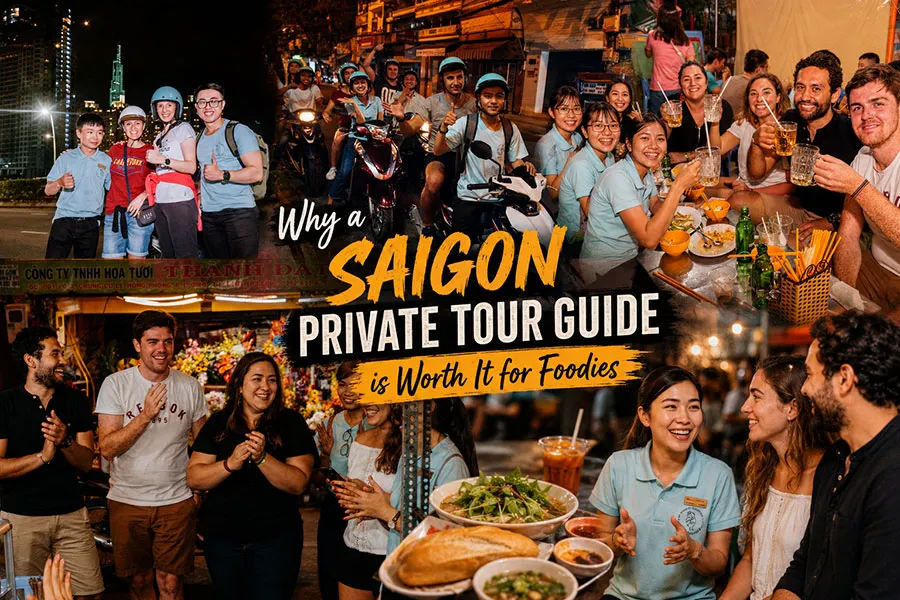
Saigon Adventure’s Ho Chi Minh City Food Tour, for example, combines multiple tastings with local guides and explores different parts of the city by scooter. The experience currently offers tasting options and routes through several districts, making it particularly useful for visitors who want to sample more than they could comfortably discover alone.
For travelers specifically interested in discovering local neighborhoods on two wheels, the Motorbike Food Tour in Ho Chi Minh City collection is another natural option. Saigon Adventure describes its street-food experiences as combining local eateries, hidden neighborhoods and multiple Vietnamese tastings rather than simply stopping at tourist-oriented restaurants.
And if your idea of dinner includes seafood, nightlife and the city after sunset, the Saigon By Night food and motorbike experience combines local food with an evening ride through Ho Chi Minh City.
Final Bite: Saigon Has Much More Than Pho and Banh Mi
Pho and banh mi may be Vietnam’s global ambassadors, but they are only the opening chapter.
The deeper story is found in a sizzling banh xeo, a plate of smoky com tam, a bowl of bun thit nuong covered with herbs, a table crowded with oc dishes or a cold glass of che melting into the heat of the afternoon.
That is what makes Ho Chi Minh City food so memorable.
Do not come to Saigon simply asking, “Where can I find the famous Vietnamese dishes?”
Ask a better question:
“What are locals eating tonight?”
That question can lead you somewhere much more interesting.
If you want to taste the city beyond the obvious tourist dishes, explore Saigon Adventure’s local food experiences and let a local guide take you into the neighborhoods, alleys and family-run eateries where Saigon’s food culture really comes alive.
Frequently Asked Questions
What should I eat in Ho Chi Minh City besides pho and banh mi?
Start with com tam, banh xeo, bun thit nuong, hu tieu Nam Vang, bo kho, oc, bot chien and che. Together, these dishes showcase grilled meats, fresh herbs, noodles, seafood, snacks and Vietnamese desserts.
What is the most local food to try in Ho Chi Minh City?
Com tam is one of the strongest choices. Broken rice with grilled pork is deeply associated with Saigon’s everyday food culture and is widely eaten as a regular meal.
What is the best street food in Ho Chi Minh City for first-time visitors?
For an easy introduction, try com tam, bun thit nuong and banh xeo. They offer recognizable ingredients while introducing the fresh herbs, sauces, grilled flavors and textures common in southern Vietnamese cuisine.
What should I eat in Saigon if I do not like spicy food?
Try com tam, banh cuon, bun thit nuong, hu tieu or bo kho and ask for chili on the side or no chili. Many Vietnamese dishes are flavorful without being particularly hot.
What Vietnamese food is good for adventurous travelers?
Try oc for shellfish and snail dishes or pha lau if you are comfortable with offal. These are more distinctive local specialties and can be very different from the Vietnamese food commonly served overseas.
Where can tourists find authentic food in Ho Chi Minh City?
Look beyond the main tourist streets and explore residential neighborhoods, local markets and small family-run eateries. Districts 3, 4 and 5 are among the areas frequently associated with different parts of Saigon’s local food scene.
Is a Ho Chi Minh City food tour worth it?
Yes, especially for first-time visitors. A good local food tour can help you sample several dishes, navigate unfamiliar menus and reach neighborhoods or small eateries that may be difficult to discover independently. Saigon Adventure currently offers food experiences combining local guides, multiple tastings and exploration across different parts of the city.