
If you are planning to crawl through the Cu Chi Tunnels, here is what you need to know before going underground. The guide disappears first. One moment he is standing beneath the trees; the next, only his voice rises from a dark opening in the earth. You lower yourself after him, bend almost double and feel the daylight shrink behind your shoulders.
Inside, the Cu Chi Tunnels are warmer, tighter and quieter than they look in photographs. Your thighs begin working immediately, the ceiling feels unexpectedly close, and every bend hides what comes next.
Then a square of daylight appears ahead. You climb out dusty and slightly breathless, having spent only a few minutes underground—but those minutes change how you understand the entire site.

Quick Answer: What Is It Like to Crawl Through the Cu Chi Tunnels?
Crawling through the Cu Chi Tunnels is a short but unforgettable experience that lets visitors explore the narrow underground passages used during the Vietnam War. Expect low ceilings, warm air, dim lighting and the need to crouch or move on your hands and knees. Most tourist crawls take around 2–10 minutes, depending on the available route and your comfort level.
Is it difficult or scary? It can feel challenging, especially for first-time visitors or anyone uncomfortable in confined spaces. However, crawling is optional, and you can still enjoy the historical site without entering the tunnels. Ask your guide about the shortest route and available exits before going underground.
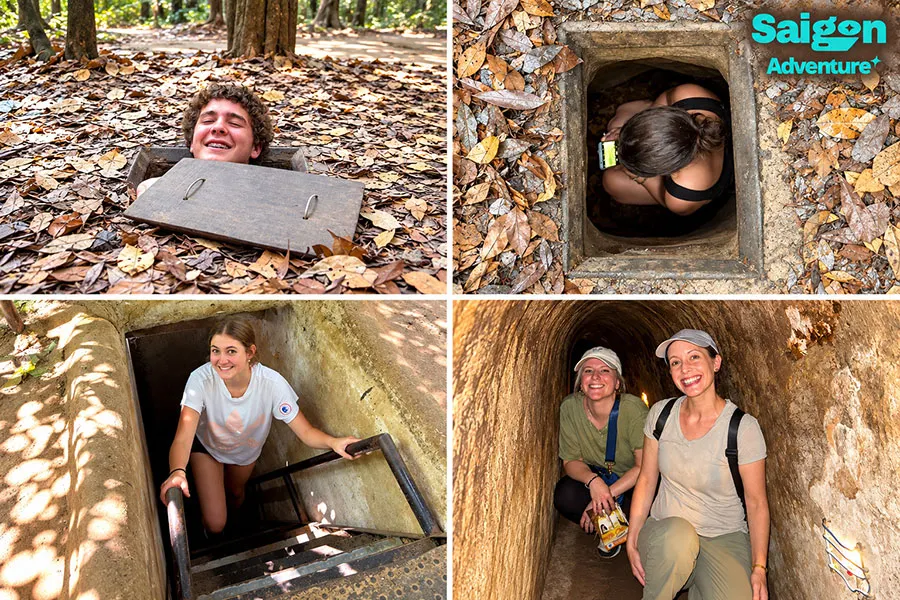
What does crawling through the Cu Chi Tunnels feel like?
Crawling through the Cu Chi Tunnels feels less like walking through a museum and more like entering the exhibit itself. The passage forces you to slow down, lower your body and pay attention to every movement.
Most international visitors cannot stand upright. Depending on your height and flexibility, you may shuffle in a deep squat, lean forward with one hand near the wall or briefly move on your hands and knees.
The experience is intense, but usually brief. It is not meant to recreate wartime life in full; it gives visitors a controlled physical glimpse of how demanding movement underground could be.

How narrow, dark and hot are the visitor tunnels?
The tourist-accessible Cu Chi tunnel sections remain low and confined, although some have been widened or reinforced for modern visitors. They are more manageable than many original wartime passages, but they can still feel surprisingly small.
The air often feels warm and still. Combined with the effort of crouching, Cu Chi’s tropical humidity can make a two-minute crawl feel much longer.
Claustrophobia is not only about size. The most unsettling moment is often realizing that you cannot immediately see the next exit, even when it is not far away.
How long will you actually be underground?
The visitor route used during many Cu Chi tours may extend roughly 100–150 meters, but you are not expected to complete all of it. Exit points allow travelers to leave earlier, and available distances can depend on the site and daily arrangements.
On Saigon Adventure’s regular visits, guides commonly explain that exits appear at intervals of about 30 meters. The crawl may take approximately two to ten minutes, depending on the section you choose and the pace of the group.
Always confirm the route before entering because accessible sections may change. Tall travelers usually feel the strain in their thighs and lower back, while shorter visitors may find the height easier.
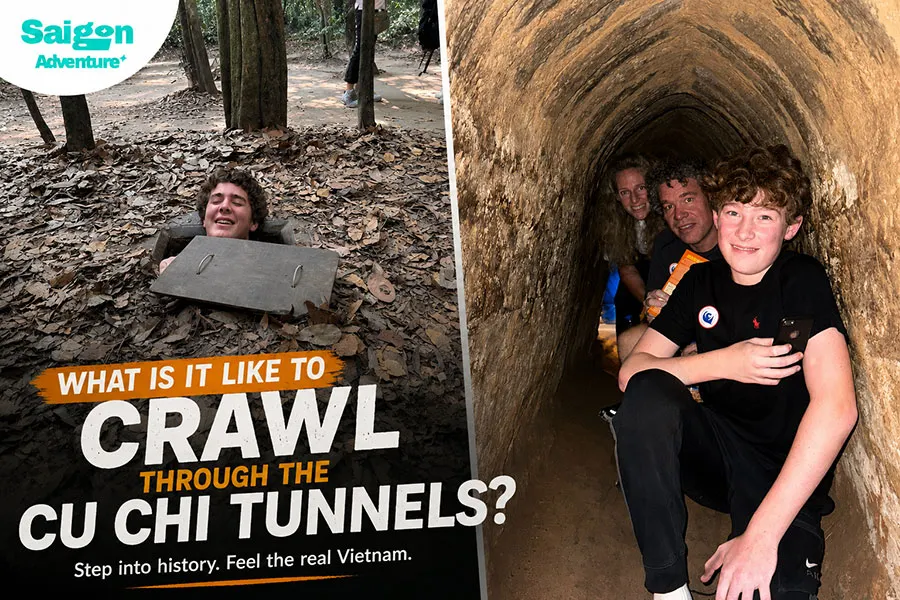
How to crawl without exhausting yourself
Start with the shortest available section. You can always continue if you feel comfortable, but there is no reason to turn the first attempt into a challenge.
Move slowly and keep your steps small. A controlled crouch uses less energy and protects your head.
Leave your backpack outside with a companion or follow the guide’s instructions. A bag adds heat, catches against the walls and makes it harder to turn through narrow Cu Chi tunnel passages.
Keep your hands free and leave a comfortable gap ahead in case another traveler pauses.
Local tip: enter close to the guide
If you feel nervous but still want to try, enter near the guide rather than at the back of a large group. You will hear directions clearly and know when the next exit is approaching.
Wait if the passage looks crowded. A gap between groups creates a calmer experience.
What if you feel claustrophobic inside?
Tell the guide before entering, even if your claustrophobia is mild. Ask where the first exit is and agree that you will take the shortest route.
Breathe slowly before you descend. If anxiety rises underground, stop, speak clearly to the guide and use the nearest designated exit instead of forcing yourself forward.
Do not enter when you feel dizzy, overheated or unwell. Travelers with serious knee, back, heart or respiratory conditions, restricted mobility or recent injuries may be better remaining above ground.
Is Crawling Through the Cu Chi Tunnels Scary for First-Time Visitors?
For first-time visitors, crawling through the Cu Chi Tunnels can feel more intimidating than it looks from the entrance. The passages are low and narrow, the air can feel warm, and you may need to move slowly while keeping your head down. Even a short distance underground can seem longer when you cannot stand upright.
The experience is particularly challenging for travelers with claustrophobia or those who feel anxious in dark, enclosed spaces. However, not everyone finds it frightening. Some visitors enjoy the unusual experience and gain a deeper appreciation of the conditions people endured during the war.
Local tip: Before entering, ask your guide about the shortest available section, lighting and exit points. You do not have to complete the crawl to appreciate the historical significance of the Cu Chi Tunnels.
Who Should Skip the Cu Chi Tunnel Crawl?
Not every visitor needs to crawl underground to have a meaningful experience at the Cu Chi Tunnels. If you have severe claustrophobia, significant knee or back problems, limited mobility, or a medical condition that makes physical exertion difficult, staying above ground may be the more comfortable choice.
The passages require visitors to bend deeply, maintain their balance and move through confined spaces without standing upright. Travelers who feel unwell, overheated or uncomfortable at the entrance should not feel pressured to continue.
A worthwhile alternative: Explore the concealed entrances, underground ventilation systems, wartime shelters and historical displays with your guide. These above-ground attractions offer valuable insight into the Cu Chi tunnel network without the physical demands of crawling.
Can you enjoy the Cu Chi Tunnels without crawling?
Absolutely. Most of the Cu Chi Tunnels visit takes place above ground, where travelers can explore concealed entrances, bunkers, ventilation features, wartime displays and the forest landscape surrounding the underground network.
Guests who skip the crawl can usually walk to the tunnel’s exit point and rejoin the group within minutes. You still hear the same historical explanation and experience the main visitor site.
One person can enter while another waits outside, so nobody needs to follow the group underground.
What should you wear inside the Cu Chi Tunnels?
Wear lightweight clothes that allow a deep bend at the knees and hips. Stretchable trousers, breathable sportswear or practical shorts work better than tight jeans, flowing skirts or delicate white clothing.
Choose closed-toe shoes with reliable grip. The tunnel floor can be dusty, while outdoor forest paths may become muddy or slippery after rain.
Tie back long hair and secure phones, sunglasses and loose accessories. Expect some soil on your hands, shoes or clothing.
For more practical packing advice, see our complete guide to what to wear to the Cu Chi Tunnels before your visit.
Why the experience stays with you
Before the crawl, the Cu Chi Tunnels can sound like an impressive engineering statistic. Underground, the story becomes physical: your legs burn, your shoulders turn sideways and the surface suddenly feels far away.
Modern travelers spend only minutes in a managed passage. Wartime tunnel users faced danger and uncertainty that a tourism experience cannot reproduce, so the crawl offers connection—not a claim of fully understanding underground life.
What happens after the tunnel crawl?
Back above ground, most travelers need water and a moment to straighten their legs. Hidden kitchens, shelters and ventilation systems now make more sense.
Some visitors also consider the optional firing activity nearby. Check the current Cu Chi Tunnels shooting range price and experience before deciding, as ammunition is paid separately and the activity is not required to enjoy the historical site.
Treat the shooting range as a separate optional activity. The tunnel system and its history should remain central to the visit.
Is crawling through the Cu Chi Tunnels worth it?
Yes—if confined spaces and deep crouching are manageable for you. The crawl is short, memorable and far more revealing than simply looking into a tunnel entrance from above.
Stopping at the first exit or skipping the crawl is equally reasonable. Historical context matters more than the distance completed.
Experience the Cu Chi Tunnels with a local guide
Travelers who prefer to avoid road traffic can also reach the site on a Cu Chi Tunnels tour by luxury speedboat, combining the historical visit with a scenic journey along the Saigon River.
If you are planning your first visit, explore our Cu Chi Tunnels tour options from Ho Chi Minh City to compare different ways to experience this remarkable historical site. Whether you prefer a comfortable car transfer, a small-group adventure or a more personalized journey, choosing the right tour can make your visit easier and more enjoyable.
With Saigon Adventure, you can discover the history behind the underground network, explore its fascinating wartime features and decide whether crawling through the tunnels is right for you. There is no pressure to enter confined spaces—what matters most is understanding the history and enjoying the experience at your own pace.
Frequently asked questions
Do you have to crawl through the Cu Chi Tunnels?
No. Entering the visitor passage is optional, and you can experience the historical site without crawling. Travelers who remain above ground can normally meet their group near the tunnel exit.
How long does the Cu Chi tunnel crawl take?
The crawl commonly takes around two to ten minutes, depending on the chosen section and group pace. Shorter exits may allow visitors to leave at intervals, but confirm the current route with your guide.
Are the Cu Chi Tunnels safe for tourists?
Visitors should use only designated public sections and follow their guide’s instructions. Move slowly, protect your head and take the nearest exit if you become uncomfortable.
Are the Cu Chi Tunnels suitable for claustrophobic travelers?
Claustrophobic visitors can enjoy the above-ground site without entering. Anyone who wants to try should begin with the shortest section, stay close to the guide and know the next exit location.
Can tall or plus-size travelers enter the tunnels?
Some tourist passages have been widened, but comfort depends on height, body size, flexibility and the specific route. Inspect the entrance and discuss the shortest option with your guide first.
Will my clothes get dirty inside the tunnels?
Probably a little. Dust and soil can transfer to shoes, hands and clothing, so wear flexible, washable items and avoid delicate fabrics.
Can children crawl through the Cu Chi Tunnels?
It depends on the child, the accessible section and current site rules. Children need close adult supervision and must be able to stay calm, move carefully and follow the guide’s instructions.
Explore our best-selling tours
 Bestseller
Cu Chi Tunnels Tour from Ho Chi Minh City by Car
Overview of the Cu Chi Tunnels Tour by Car Travel from Ho Chi Minh City to the Cu Chi Tunnels...
 Bestseller
Cu Chi Tunnels & Mekong Delta 1-Day Tour from Ho Chi Minh City
EXCURSION HIGHLIGHTS: AT CU CHI TUNNELS Watch Documentary Video (Only Showed In This Place) Experience The Thrill Of Crawling Into...
 Bestseller
Cu Chi Tunnels Tour By Luxury Speedboat
Cu Chi Tunnels Speedboat Tour from Ho Chi Minh City Experience the Cu Chi Tunnels by luxury speedboat with a...
 Bestseller
Cu Chi Tunnels and Mekong Delta Small Group Tour from Ho Chi Minh City
A tourist exploring coconut canals on Cu Chi Tunnel And Mekong Delta Small Group Tour If you only have one...
 Bestseller
Cu Chi Tunnel Small Group Tour (12 People)
The Ultimate Introduction to the Cu Chi Tunnels Trade the high-energy streets of Saigon for a legendary Cu Chi Tunnels...
 Bestseller
Cu Chi Tunnels & Saigon City Tour in 1 Day
Tour Overview Experience the dramatic contrast of Vietnam’s history and modern energy with our Cu Chi Tunnels & Saigon City...
 Bestseller
Cu Chi Tunnel And Black Virgin Ba Den Mountain 1 Day Tour
Discover Cu Chi Tunnels & Ba Den Mountain in One Day Experience two very different sides of southern Vietnam on...
 Bestseller
Private Cu Chi Tunnels and City Tour in 1 Day By Car
ITINERARY 8:00 Depart to Cu Chi for your Private Cu Chi Tunnels and City Tour. We drive 70km to north-...
Bestseller
Cu Chi Tunnels By Scooter
Keep your travel plan flexible - book your spot now and pay nothing today! You only need to pay 4...
 Bestseller
Cu Chi Tunnels & Sidecar Adventure
This tour tends to sell out, please book it in advance Departure: From 8:00 AM To 8:30 AM Lasts 7 Hours Foreign...