The Mid-Autumn Festival in Ho Chi Minh City falls on September 25 in 2026, but travelers do not need to wait until the main night to experience it. Lantern displays, mooncake stalls and seasonal activities usually begin appearing several weeks earlier.
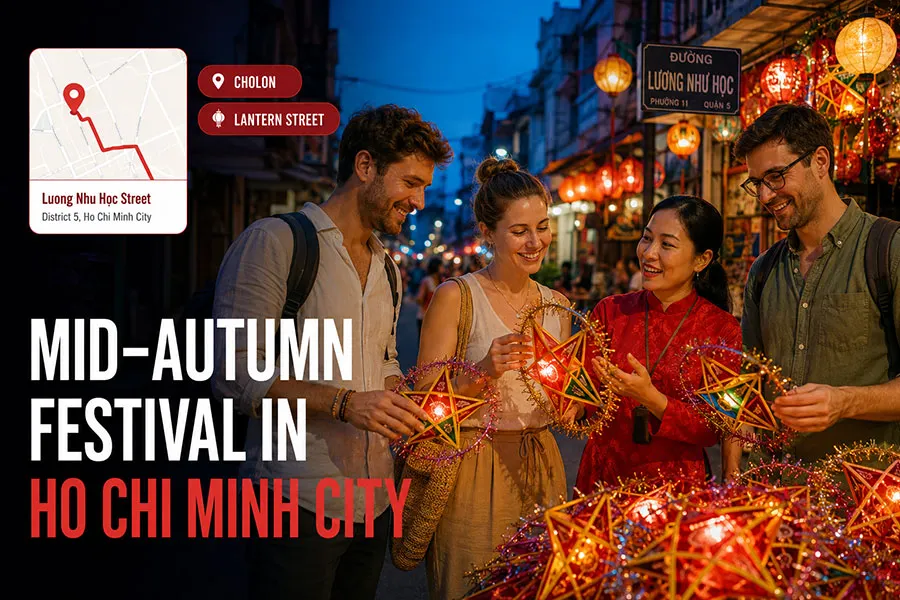
For first-time visitors, Luong Nhu Hoc Lantern Street in Cholon is the best-known place to see colorful lanterns and enjoy the festive atmosphere. Visit on a weekday between approximately 5:00 p.m. and 7:00 p.m. during the week before the festival for illuminated displays and more manageable crowds.
Tết Trung Thu is not a public holiday, so shops, restaurants and attractions normally remain open. Public street celebrations are generally free, although workshops and organized performances may require advance booking.
Why Is the Mid-Autumn Festival Special in Vietnam?
The Mid-Autumn Festival has historical connections with the harvest season, family reunion and appreciation of the full moon. In modern Vietnam, however, it is especially associated with children.
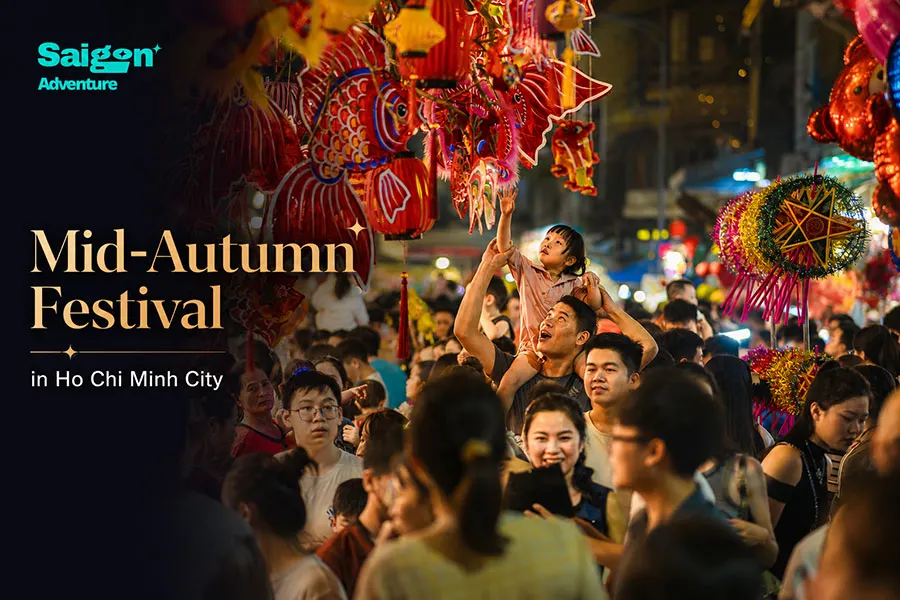
Families give children colorful lanterns, masks and small gifts. Neighborhoods may organize lantern processions, games or lion dances, while relatives gather to share mooncakes and tea.
Visitors will often hear the festival before they see it. The beat of drums, cymbals and gongs announces the arrival of a lion dance troupe, sometimes moving between shops, homes and public spaces.
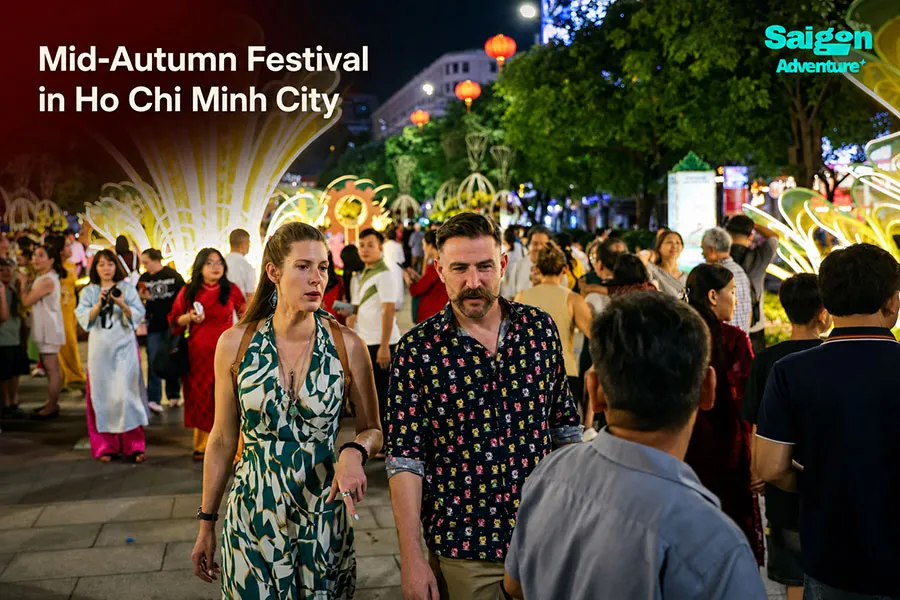
The atmosphere in Ho Chi Minh City is less formal than many travelers expect. Rather than one large citywide parade, celebrations appear across shopping streets, residential neighborhoods, schools, community centers and commercial venues.
When Is the Mid-Autumn Festival in Ho Chi Minh City in 2026?
In 2026, the Mid-Autumn Festival falls on Friday, September 25. The full-moon evening is normally the busiest time, particularly around Luong Nhu Hoc Lantern Street and popular shopping areas.
For easier walking and photography, visit three to seven days before the main festival. The lantern shops will already be brightly decorated, but the area is generally more comfortable than it is on September 25.
Lion dance schedules, workshops and public performances may only be confirmed shortly before the festival. Check with your hotel, event venue or local guide before visiting instead of relying on schedules from previous years.
Best Things to Do in Ho Chi Minh City During the Mid-Autumn Festival
Walk Through Luong Nhu Hoc Lantern Street
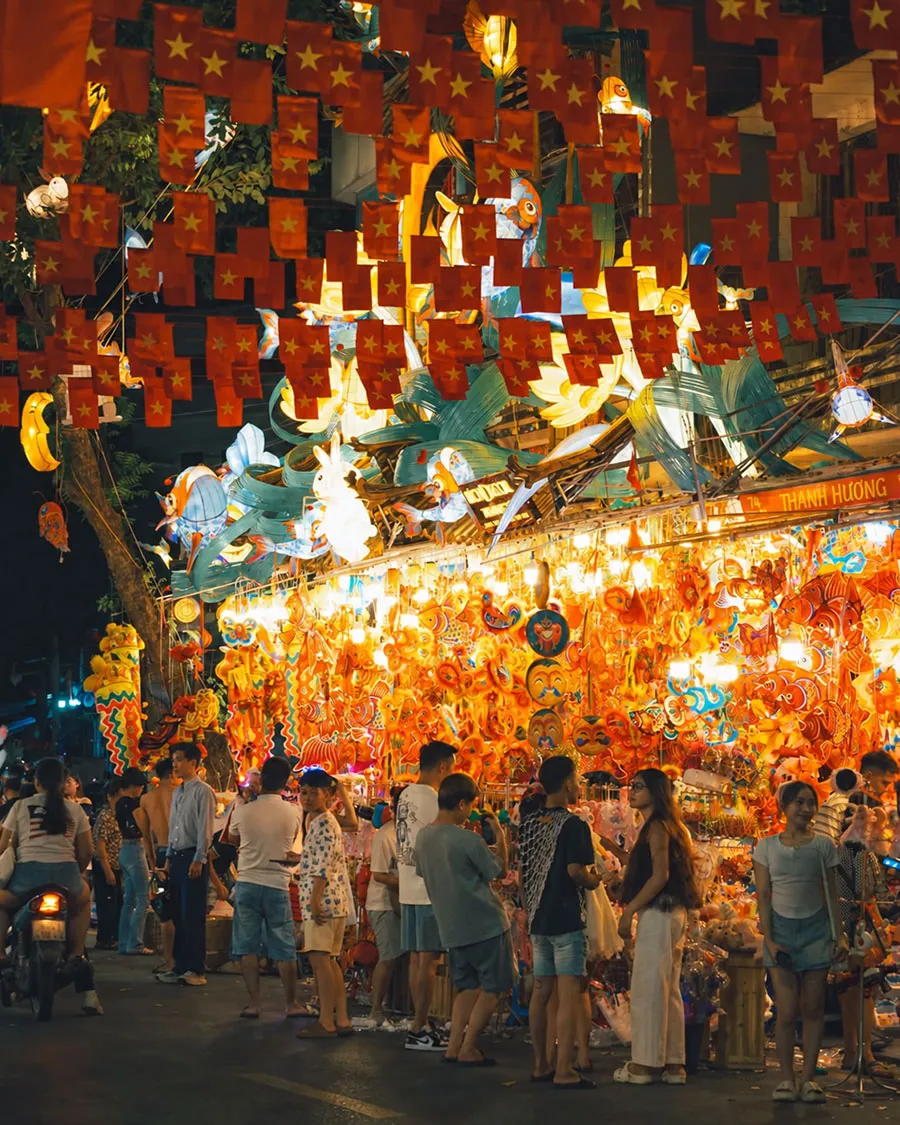
The most famous place to experience the Mid-Autumn Festival in Ho Chi Minh City is Luong Nhu Hoc Street in Cholon, the city’s historic Chinatown. In the weeks before the festival, shops fill their entrances with lanterns in dozens of shapes and colors.
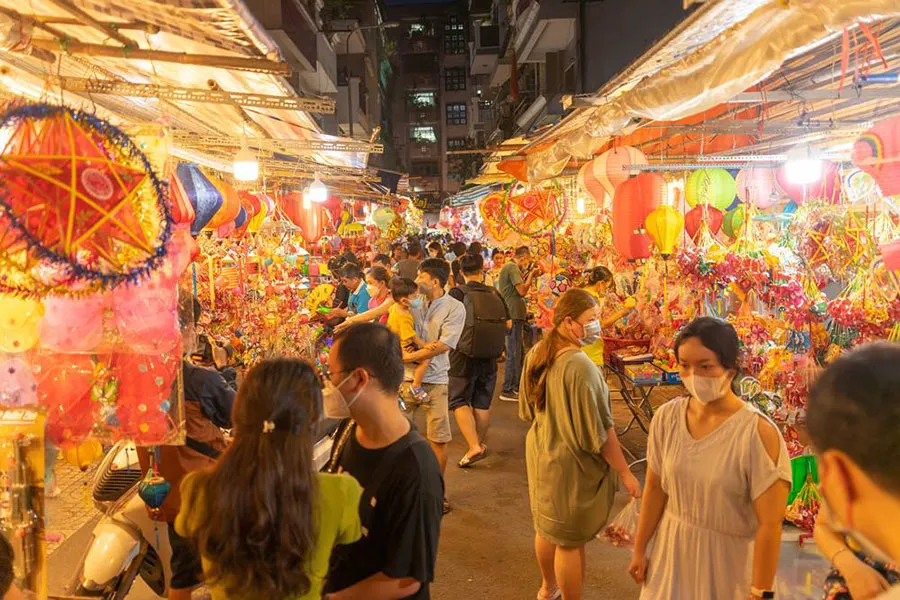
Traditional red lanterns hang beside star-shaped lights, carp designs and brightly colored children’s toys. After dark, the narrow street attracts families, photographers, shoppers and curious travelers.
Visit before sunset to see the products clearly, then stay for the illuminated displays. The final nights can become extremely crowded, particularly between 7:00 PM and 9:00 PM, so keep your belongings secure and avoid blocking shop entrances while taking photographs.
For directions and photography advice, read this detailed Luong Nhu Hoc Lantern Street guide.
Local tip: Arrive around 5:00 PM on a weekday about one week before the main celebration. You will still enjoy the glowing displays while avoiding the heaviest festival-night crowds.
Watch a Vietnamese Lion Dance
Lion dancing, called múa lân, is one of the most exciting Mid-Autumn traditions in southern Vietnam. Performers wear elaborate costumes and move to the rhythm of drums, gongs and cymbals.
Some performances feature Ông Địa, a cheerful character with a round fan and smiling mask who playfully interacts with the lion. More elaborate shows may include performers balancing on high poles, although these displays are usually held at organized venues.
There is no single permanent schedule for lion dances across the city. Performances may take place outside businesses, shopping centers, hotels, schools and neighborhood community halls during the days surrounding the festival.
Ask your hotel or local guide about confirmed performances rather than relying on an old online schedule. If you encounter a street performance, stand behind local families and give children space to see.
Taste Mooncakes Like a Local
Mooncakes are the signature food of the Vietnamese Mid-Autumn Festival. Weeks before the celebration, temporary stalls and bakery counters appear throughout Ho Chi Minh City.
Traditional bánh nướng have a baked golden crust with fillings such as mung bean, lotus seed, mixed nuts or salted egg yolk. Savory versions may contain Chinese sausage, roasted meat or preserved ingredients.
The softer bánh dẻo uses a pale glutinous-rice exterior and is generally sweeter. Modern bakeries also offer chocolate, coffee, matcha, cheese, fruit and reduced-sugar varieties.
Do not be surprised by the density of a traditional mooncake. Locals often cut one cake into small wedges and share it with tea rather than treating it as an individual dessert.
Buy several different flavors and organize your own informal tasting. Unsweetened green tea or lotus tea balances the rich fillings particularly well.
Choose an established bakery and check the ingredient list, production date and expiration date. Travelers with allergies should remember that mooncakes may contain nuts, eggs, meat products or other ingredients that are not visible from the outside.
Buy a Traditional Vietnamese Star Lantern
A handmade lantern is one of the most meaningful Mid-Autumn souvenirs you can bring home. Vietnam’s classic star lantern is constructed from a light bamboo frame covered with brightly colored cellophane.
Carp-shaped lanterns are also significant because carp are associated with perseverance and transformation in Vietnamese folklore. Rotating shadow lanterns create moving silhouettes when illuminated, although they are less common than mass-produced toys.
Look closely before buying. Slight differences in shape, glue lines and bamboo joints often indicate that a lantern was assembled by hand rather than manufactured from molded plastic.
If you intend to carry your lantern through a crowded street, use an LED light instead of a candle. It is safer, lasts longer and does not damage the delicate material.
Join a Lantern-Making or Mooncake Workshop
Travelers who prefer hands-on activities can look for a seasonal lantern-making or mooncake workshop. Cooking studios, hotels and cultural venues sometimes organize these experiences during the weeks before Tết Trung Thu.
A mooncake class may teach you how to prepare a filling, press decorative patterns into the dough and bake the finished cake. Lantern workshops usually focus on assembling bamboo frames and adding colored paper or cellophane.
These activities are particularly suitable for families because they provide cultural context without the pressure of a large crowd. They also give children something personal to take back to their hotel.
Programs and English-language availability change each year. Check current schedules, recent reviews and age requirements before making a reservation.
Discover Seasonal Street Food in the Evening
Cholon offers much more than mooncakes. Its streets and markets are excellent places to discover dumplings, noodle soups, roasted meats and Chinese-Vietnamese desserts. Explore the best street food in District 5 and Cholon to decide what to try nearby.
A guided Ho Chi Minh City food tour can help visitors understand unfamiliar ingredients, communicate dietary requirements and find trusted local vendors. Festival traffic may affect the usual route, so safety and comfortable stops should take priority over entering the busiest streets.
Finish the evening with a small mooncake tasting. Traditional mooncakes are rich and especially enjoyable when shared with tea.
Enjoy the Full Moon From a Quieter Location
The busiest lantern streets are exciting, but the festival also has a reflective side. The round moon represents reunion, harmony and time spent with loved ones.
After exploring Cholon, choose a quieter riverside or open-air location to enjoy the evening skyline. Bach Dang Wharf and the Thu Thiem riverfront offer broad city views, although neither should be assumed to have an official festival program every year.
Bring tea and a mooncake to share with your travel companions. This simple pause often feels closer to the spirit of the occasion than rushing between multiple commercial events.
Check the weather before leaving, as September can still bring sudden tropical showers. A cloudy night does not cancel the celebrations, but a compact umbrella is worth carrying.
A Perfect Mid-Autumn Evening Itinerary for Tourists
Begin around 3:30 PM at Thien Hau Temple, then spend time exploring the surrounding streets of Cholon. The softer afternoon light is ideal for observing architectural details before the evening crowds arrive.
Reach Luong Nhu Hoc Street at approximately 5:00 PM. Browse the shops in daylight, select a traditional lantern and remain as the street begins to glow.
Around 6:30 PM, stop for a local dinner or join a guided street food experience. Share a mooncake afterward, preferably with unsweetened Vietnamese tea.
If a confirmed lion dance is taking place nearby, make it the final highlight of your evening. Otherwise, enjoy a slow walk through the illuminated neighborhood and leave before the roads become heavily congested.
Practical Tips for Visiting Tết Trung Thu in Saigon
Wear breathable clothing and comfortable closed-toe shoes. The weather can remain hot and humid after sunset, while pavements in busy neighborhoods may be uneven.
Keep your phone and wallet inside a zipped crossbody bag. Luong Nhu Hoc Street is not inherently unsafe, but dense crowds create opportunities for accidental loss and petty theft.
Ride-hailing vehicles may be unable to reach the busiest part of the lantern area. Set your pick-up point a few blocks away and allow additional travel time.
Avoid standing in the road for photographs, even when others are doing so. Motorbikes can emerge quickly from side streets, and festival excitement does not stop normal neighborhood traffic.
Most importantly, remember that Tết Trung Thu belongs to local families. Ask before taking close-up photographs, give children space during performances and treat temples as living religious places rather than decorative backgrounds.
Is the Mid-Autumn Festival in Ho Chi Minh City Worth Experiencing?
Absolutely. Tết Trung Thu shows a side of Saigon that travelers rarely find inside conventional museums or landmark itineraries.
Its magic comes from small, unscripted moments: a child carefully choosing a star lantern, drums echoing between old shop houses or strangers sharing pieces of mooncake beneath the evening lights.
To experience more than the most crowded photo spots, explore with someone who understands the city’s neighborhoods. A thoughtfully designed Ho Chi Minh City tour with a local guide can connect Cholon’s food, temples, lanterns and living traditions into one memorable festival evening.
Frequently Asked Questions
When is the Mid-Autumn Festival in Ho Chi Minh City?
The festival falls on the 15th day of the eighth lunar month, usually in September or early October. In 2026, Tết Trung Thu is celebrated on September 25, although decorations and activities begin earlier.
Where can tourists see lanterns in Ho Chi Minh City?
Luong Nhu Hoc Street in Cholon is the city’s best-known Mid-Autumn lantern destination. Visit before the main night for a more comfortable balance of colorful displays and manageable crowds.
Is Luong Nhu Hoc Lantern Street worth visiting?
Yes, especially for first-time visitors interested in photography and local culture. Combine it with temples, food and historic streets in Cholon rather than visiting only for a quick picture.
Is the Mid-Autumn Festival a public holiday in Vietnam?
No. Restaurants, shops and tourist attractions generally operate as usual, although some streets may experience heavier traffic during evening celebrations.
Is Tết Trung Thu suitable for families with children?
Yes, but the loud drums and dense crowds can overwhelm very young children. Visit early, carry water and choose a quieter viewing position during lion dances.
Do tourists need tickets for the festival?
No ticket is normally required to visit Luong Nhu Hoc Street or observe public neighborhood celebrations. Organized workshops, shows and private events may charge admission.
What should tourists wear during the Mid-Autumn Festival?
Light clothing and comfortable walking shoes are best for the humid weather. Wear modest clothes covering the shoulders and knees if you plan to visit temples.
Explore our best-selling tours
 Bestseller
Street Food Tour In Ho Chi Minh City By Motorbike
Saigon Street Food Tours: An Authentic Culinary Odyssey To experience Ho Chi Minh City, you need to do two things:...
 Bestseller
Cu Chi Tunnels Tour from Ho Chi Minh City by Car
Overview of the Cu Chi Tunnels Tour by Car Travel from Ho Chi Minh City to the Cu Chi Tunnels...
 Bestseller
Cu Chi Tunnels & Mekong Delta 1-Day Tour from Ho Chi Minh City
EXCURSION HIGHLIGHTS: AT CU CHI TUNNELS Watch Documentary Video (Only Showed In This Place) Experience The Thrill Of Crawling Into...
 Bestseller
Saigon: Premium Award-Winning Food Tour with Ao Dai Female Riders
A Michelin food tour by scooter in Vietnam elevates the standard street food experience by combining world-class culinary recognition with...
 Bestseller
Mekong Delta Tour
The Mekong Delta is celebrated as one of the world's most vital biological wonders and a premier cultural destination in...
 Bestseller
A Less-Touristy Mekong Delta Day Trip to Ben Tre
Delta Tour 1 Day from Ho Chi Minh City, exploring the peaceful waterways and coconut villages of Ben Tre. This...
 Bestseller
Cu Chi Tunnels Tour By Luxury Speedboat
Cu Chi Tunnels Speedboat Tour from Ho Chi Minh City Experience the Cu Chi Tunnels by luxury speedboat with a...
 Bestseller
Saigon Foodie Tour By Scooter With Female Rider (With Beer & Seafood)
Beautiful female tour guides at Saigon Adventure ABOUT THIS TOUR Let us be your guide to experiencing Saigon By Night...
 Bestseller
Ho Chi Minh City Motorbike Tour With Student
Keep your travel plan flexible - book your spot now and pay nothing today! We are Saigon Adventure - Top...
 Bestseller
Vegan Food Tour
Keep your travel plan flexible - book your spot now and pay nothing today! You only need to pay 4...
 Bestseller
Saigon Unseen By Scooter
ABOUT THIS SAIGON UNSEEN TOUR It cannot be considered a great trip if you only get to see famous tourist...
 Bestseller
Can Gio Monkey Island Tour from Ho Chi Minh City – Full Day Group Tour
Keep your travel plan flexible - book your spot now and pay nothing today! You only need to pay 14...