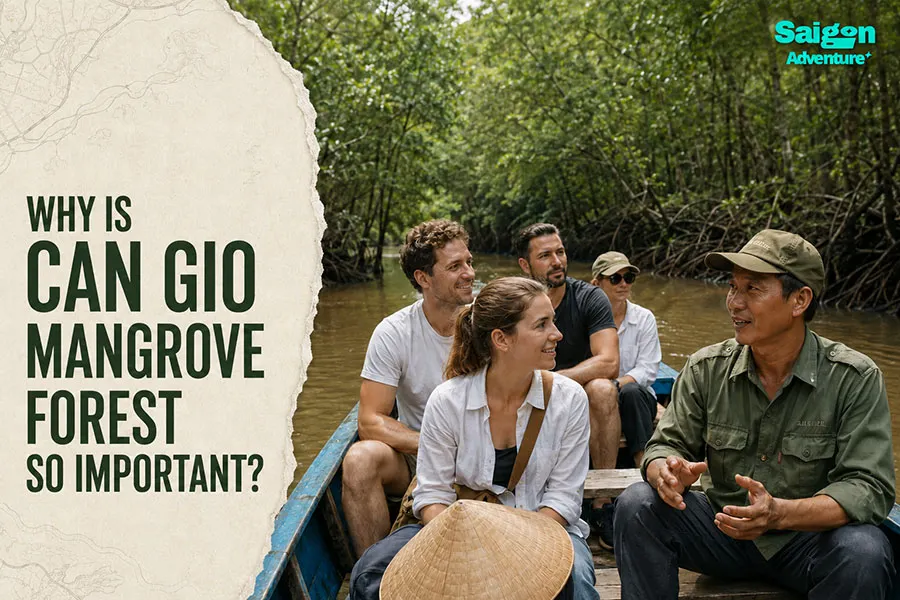
From central Ho Chi Minh City, the road to Can Gio feels like a journey between two different worlds. The traffic slowly thins, apartment blocks disappear and walls of green begin to rise beside waterways stained brown by the tide.
At first, Can Gio Mangrove Forest may look like a quiet maze of trees and muddy canals. Beneath that calm surface, however, it is protecting coastlines, storing carbon, sheltering wildlife and supporting communities that depend on the sea.
It is also one of Vietnam’s most remarkable environmental recovery stories. A landscape once heavily damaged has grown back into an internationally recognized biosphere reserve on the doorstep of one of Southeast Asia’s largest cities.
So, why is Can Gio Mangrove Forest so important? The answer reaches far beyond Monkey Island or its growing reputation as one of the best weekend trips from Ho Chi Minh City.
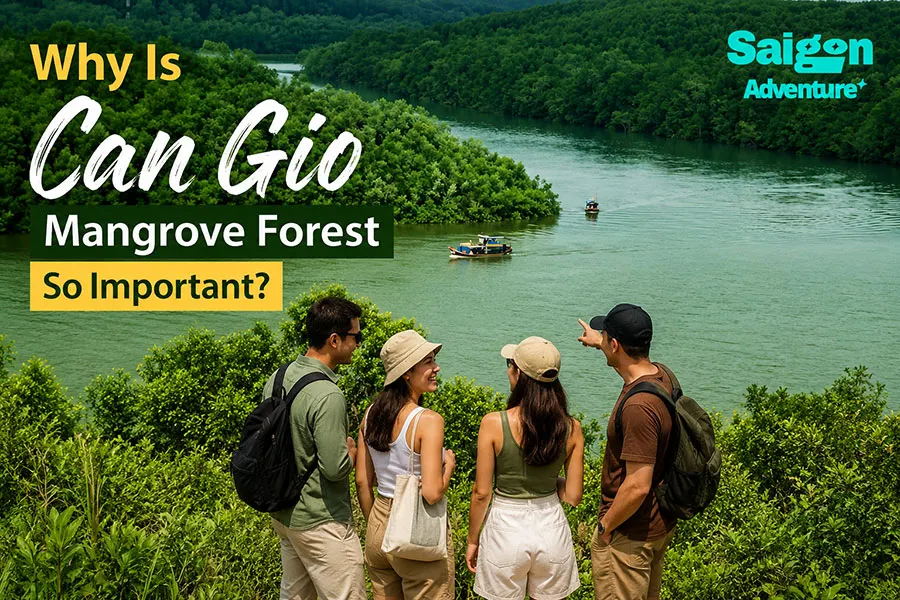
Why Can Gio Mangrove Forest Matters More Than You Might Think
Can Gio Mangrove Forest acts as a living barrier between Ho Chi Minh City and the coast. Its trees help slow waves, stabilize muddy shorelines, store carbon and create nursery grounds for fish, crabs, shrimp and other aquatic life.
The wider reserve also supports birds, reptiles and mammals while providing income through fishing, aquaculture, salt production and responsible tourism. Its ecological value led UNESCO to recognize Can Gio as a biosphere reserve in 2000.
Where is Can Gio Mangrove Forest?
Can Gio lies southeast of central Ho Chi Minh City, where the Saigon and Dong Nai river systems meet the sea. The journey normally involves crossing the Binh Khanh Ferry before continuing through a landscape of tidal rivers, palms and mangrove forest.
According to UNESCO’s Can Gio Mangrove profile, the biosphere reserve covers 75,740 hectares. Its environment includes mangroves, wetlands, salt marshes, mudflats, waterways and seagrass habitats.
This combination makes Can Gio more than a single forest. It is an interconnected coastal ecosystem shaped by freshwater, saltwater, tides and sediment.
A forest built by rivers and tides
Mangroves grow in a difficult place between land and sea. The soil is soft, salty and regularly flooded—conditions that most ordinary trees cannot tolerate.
Mangrove species have developed remarkable ways to survive here. Some use exposed roots to obtain oxygen from waterlogged mud, while others filter or remove excess salt.
Their unusual roots also slow moving water and trap sediment carried downstream. Over time, this helps form and stabilize the muddy ground on which the forest depends.
Every tide changes the landscape slightly. It brings nutrients into the creeks, carries young fish through the waterways and connects the forest with estuaries and coastal waters.
Can Gio is a powerful story of recovery
The forest visitors see today did not simply remain untouched for centuries. Large areas of the Rung Sac mangroves were severely damaged by warfare and chemical defoliants during the 20th century.
After the war, restoration teams began the difficult work of bringing the forest back. Local residents, forestry workers and conservation authorities replanted mangroves and protected areas where natural regeneration could occur.
This recovery took years of physical labor and careful management. Trees had to survive changing tides, unstable mud, storms and the pressures created by human activity.
Wildlife gradually returned as the forest matured. Canals became shaded again, roots created new habitat and the recovering ecosystem began performing its natural functions.
Can Gio is now often presented as a successful example of mangrove restoration. Its story proves that damaged coastal land can recover, but only when restoration is followed by long-term protection.
It creates a living coastal defense
One of the clearest reasons why Can Gio Mangrove Forest is so important is its role in coastal protection. A healthy belt of mangroves can reduce the energy of waves before they reach more exposed land.
Branches and trunks create resistance above the water. Below the surface, dense roots hold soft soil together and slow the movement of sediment.
This does not make mangroves an impenetrable wall against every storm. Instead, they form a flexible natural buffer that works alongside dikes, drainage systems and other coastal protection measures.
That role is increasingly valuable as low-lying coastal areas face erosion, extreme weather and rising sea levels. Losing the forest would leave shorelines and nearby communities more exposed.
Why the strange-looking roots matter
The tangled roots are one of Can Gio’s most memorable sights. They may look chaotic, but their structure is perfectly suited to the tidal environment.
These roots anchor trees in unstable mud and create calmer pockets of water. They also collect leaves, organic matter and sediment rather than allowing everything to be washed immediately toward the sea.
Small fish, crabs and other animals use the spaces between the roots to hide from larger predators. A single patch of mangroves can therefore function as shelter, feeding ground and nursery at the same time.
It is a nursery for marine life
Many coastal species do not spend their entire lives in one habitat. Young fish and shellfish may begin in sheltered mangrove creeks before moving into larger rivers, estuaries or open coastal waters.
Can Gio provides the shallow water, food and protection these animals need during vulnerable stages of life. Its health can therefore influence ecosystems and fisheries beyond the visible forest boundary.
Crabs search for food across exposed mud when the tide falls. Molluscs live in wet sediment, while shrimp and fish move through flooded roots as the water returns.
These creatures may receive less attention than Can Gio’s monkeys, but they are central to the ecosystem. They recycle nutrients, feed larger animals and help support local fishing livelihoods.
Can Gio protects extraordinary biodiversity
The Can Gio ecosystem contains several connected habitats, each supporting a different community of plants and animals. Mangrove stands, tidal creeks, mudflats and salt marshes all contribute to its biodiversity.
UNESCO highlights the reserve’s high diversity of mangrove plants, mangrove-dwelling invertebrates and associated fish and shellfish. Recorded fauna include the king cobra, fishing cat, spot-billed pelican and saltwater crocodile.
Visitors are far more likely to see macaques, waterbirds or mud-dwelling animals than rare mammals. Wildlife sightings should always be treated as a privilege rather than something a tour can guarantee.
Can Gio is much more than Monkey Island
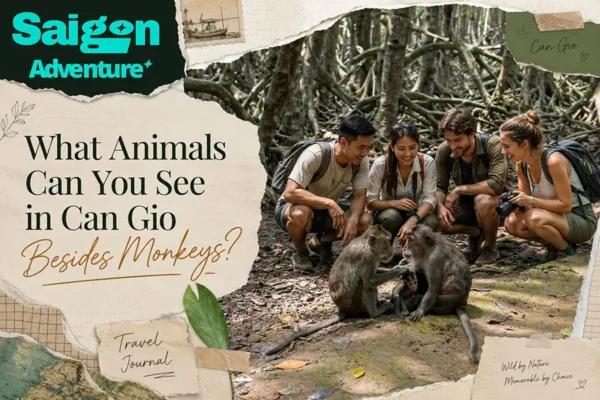
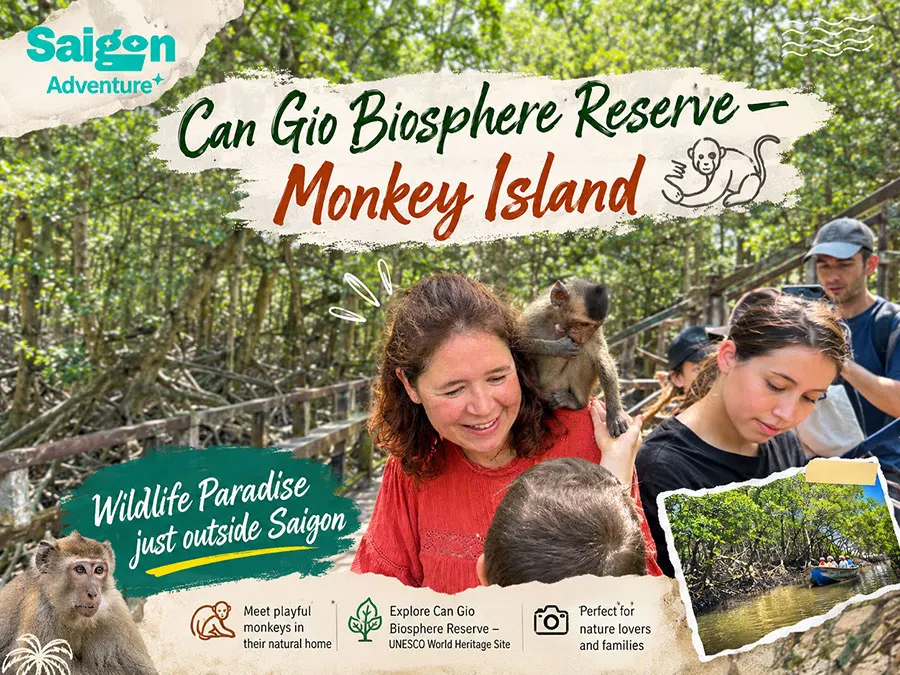
Monkey Island is the reserve’s most famous tourist stop. Its long-tailed macaques are intelligent, curious and highly skilled at removing food, sunglasses or loose belongings from distracted visitors.
Yet focusing only on the monkeys misses the larger story. The health of Can Gio depends just as much on its fish, insects, molluscs, birds, microorganisms and mangrove plants.
Once you understand that connection, the forest becomes more interesting. A crab hole in the mud or a bird feeding beside a creek is evidence of an ecosystem working quietly around you.
It stores carbon above and below ground
Mangroves absorb carbon dioxide as they grow. Carbon becomes stored in their trunks, branches and roots, but much of the long-term value lies beneath the surface.
Leaves and organic material collect in waterlogged soil where decomposition is often slow. This allows mangrove wetlands to retain significant quantities of what scientists often call blue carbon.
Protecting an existing mangrove forest therefore does two things. It allows the trees to continue absorbing carbon and helps prevent carbon already stored in the soil from being released through disturbance.
Can Gio is frequently described as the “green lungs” of Ho Chi Minh City. The phrase is symbolic, but it reflects the forest’s importance for carbon storage, environmental regulation and regional climate resilience.
It connects Ho Chi Minh City with the sea
Can Gio sits downstream from a vast urban and industrial region. Water carried by rivers and canals eventually passes through the estuarine landscape on its way to the coast.
Mangrove roots can trap sediment and help filter some materials transported by the water. However, the forest cannot absorb unlimited amounts of plastic, wastewater or chemical pollution.
Its condition is closely connected to decisions made far beyond Can Gio. Waste management, river health, industrial activity and urban development upstream can all affect the reserve.
For travelers, this creates a powerful lesson. A plastic bottle discarded in the city may eventually reach a wetland, beach or animal habitat many kilometers away.
It supports local communities
Can Gio is not an empty wilderness separated from human life. Communities in the transition zone depend on fishing, aquaculture, salt production, small businesses and tourism.
A healthy mangrove system helps support aquatic species connected to local food and income. Protecting the forest can therefore strengthen both biodiversity and community resilience.
Responsible tourism creates another source of value. Local guides, boat operators, drivers, restaurants and market vendors can all benefit when visitors spend money within the district.
The UNESCO biosphere reserve model recognizes this relationship. Its purpose is not simply to exclude people, but to combine conservation, research and sustainable development across carefully managed zones.
What would happen if Can Gio disappeared?
Without its mangroves, the coastline would become more vulnerable to erosion and wave action. Fish and shellfish would lose important nursery habitat, placing additional pressure on wildlife and local livelihoods.
Stored carbon in damaged soil could also be released, while birds and other animals would lose places to feed, breed or rest. Replacing these ecological services with artificial infrastructure would be difficult and expensive.
Ho Chi Minh City would lose more than a green escape. It would lose part of the natural system that connects its rivers, coastal communities and surrounding sea.
This is why conservation must go beyond planting new trees. Water flow, sediment, biodiversity and sufficient space for the forest to adapt are all essential to long-term survival.
Why travelers should experience Can Gio
Visiting Can Gio reveals a side of Ho Chi Minh City that many international travelers never expect. As one of the most rewarding day trips beyond Ho Chi Minh City, it takes you from dense urban streets to ferries, fishing communities, forest trails and tidal waterways in a single day.
Can Gio also deserves a place among the best weekend trips from Ho Chi Minh City, especially for travelers who prefer nature, wildlife and a slower coastal atmosphere to nightlife or shopping.
The experience becomes much richer when you understand what the landscape is doing. Those muddy roots are stabilizing soil, those quiet creeks are sheltering young fish and those unremarkable mudflats may be feeding grounds for birds.
A local guide can explain how the forest’s ecology connects with its wartime history and present-day communities. That context turns a simple sightseeing trip into a meaningful lesson in resilience.
Can Gio is ideal for nature and wildlife lovers. Travelers who prefer wartime history and underground sites may instead consider a Cu Chi Tunnels tour by car, another popular full-day escape from central Ho Chi Minh City.
How to visit Can Gio responsibly
Responsible travel begins with respecting the forest as a living habitat rather than treating it like an amusement park.
- Never feed, touch or tease wild monkeys.
- Store food and loose belongings in a zipped bag.
- Remain on designated paths and visitor areas.
- Do not leave plastic, cigarette ends or food packaging behind.
- Keep noise low around birds and other animals.
- Follow ranger and guide instructions during boat journeys.
- Support local businesses that follow responsible practices.
Local tip for visiting Monkey Island
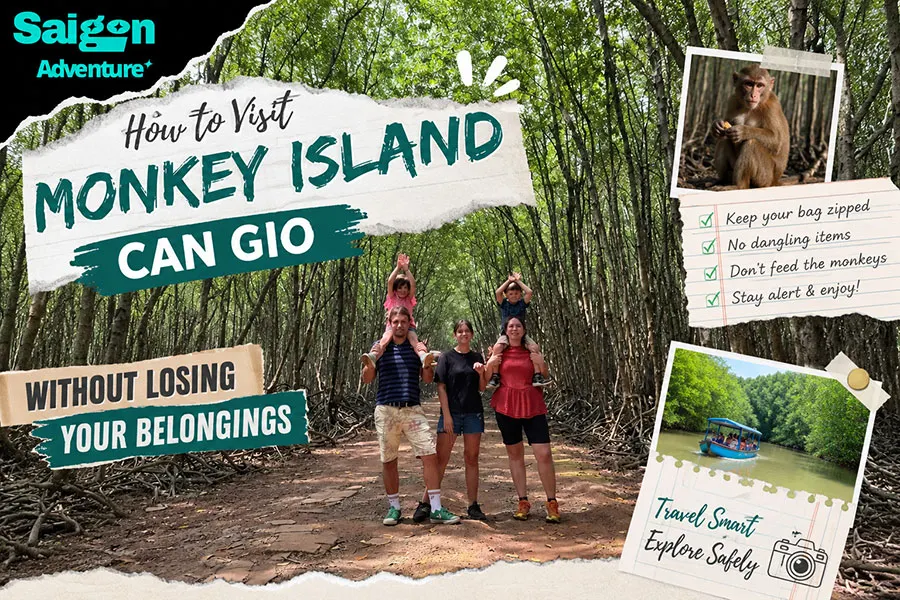
Put sunglasses, hats, snacks, phones and plastic bags away before approaching the macaques. The monkeys often associate visible bags and loose objects with food.
Do not chase or confront a monkey if it takes something. Move away calmly and ask a ranger or guide for assistance.
Prepare for the real environment
Can Gio is hot, humid and sometimes muddy. Wear light clothing, use insect repellent and choose shoes with enough grip for wet paths.
Bring sun protection and drinking water, preferably in a reusable bottle. Boat routes may change with tidal conditions, so allow some flexibility in your expectations.
Can Gio deserves more than a quick photo
Can Gio Mangrove Forest is important because it performs work that is easy to overlook. It protects shorelines, stores carbon, supports wildlife and helps sustain the people who live around it.
Its greatest lesson may be its recovery. The green waterways seen today are evidence of what patient restoration and long-term protection can achieve.
Explore Can Gio slowly and its value becomes visible everywhere—from the roots gripping the mud to the fishing boats moving with the tide.
To experience the forest with local insight, join a Can Gio Biosphere Reserve and Monkey Island tour from Ho Chi Minh City. You will return with more than wildlife photos; you will understand why this remarkable landscape deserves to survive.
Frequently asked questions
Why is Can Gio Mangrove Forest important?
Can Gio protects coastlines, stores carbon and provides habitat for fish, birds, reptiles and other wildlife. It also supports local livelihoods and creates a natural environmental buffer near Ho Chi Minh City.
Is Can Gio a UNESCO World Heritage Site?
No. Can Gio is a UNESCO Biosphere Reserve under the Man and the Biosphere Programme, not a UNESCO World Heritage Site. It received biosphere reserve recognition in 2000.
How large is Can Gio Biosphere Reserve?
UNESCO records a total area of 75,740 hectares. The reserve includes mangrove forest, wetlands, mudflats, salt marshes, tidal rivers and seagrass habitats.
What wildlife can visitors see in Can Gio?
Visitors commonly see long-tailed macaques, waterbirds, crabs and other wetland animals. The reserve supports many additional species, but sightings of rare or secretive wildlife cannot be guaranteed.
How does Can Gio protect the coast?
Mangrove roots stabilize sediment while trunks and branches help reduce wave energy. Together, they limit erosion and create a natural buffer for coastal land and communities.
Is Can Gio worth visiting from Ho Chi Minh City?
Yes. Can Gio is one of the most accessible nature-focused day trips from Ho Chi Minh City, combining wildlife, mangrove scenery, local history and coastal culture.
How can tourists help protect Can Gio?
Visitors should avoid feeding wildlife, stay on designated routes, reduce disposable plastic and follow local conservation rules. Choosing a responsible tour also helps support guides, businesses and communities in Can Gio.