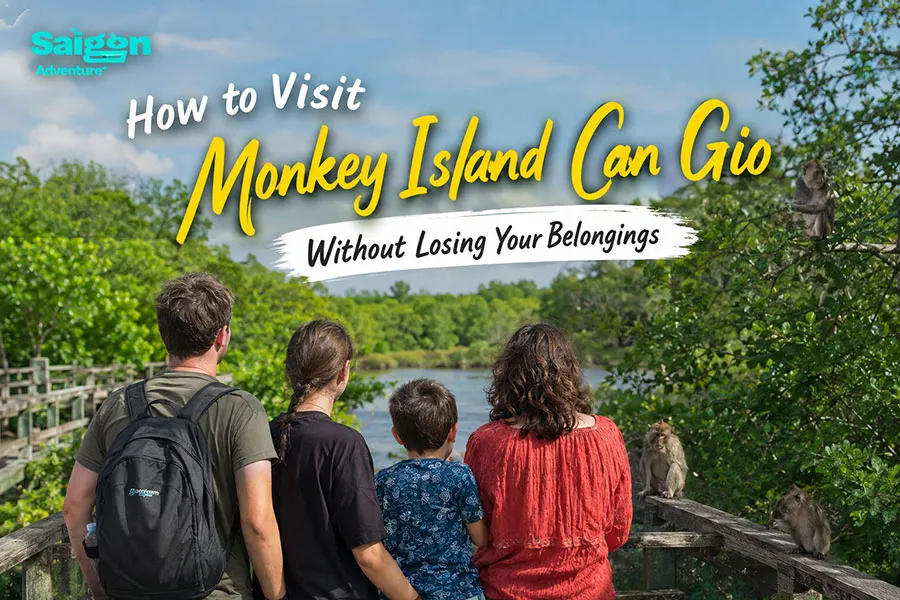
A monkey taking your sunglasses may sound like a hilarious Vietnam travel story. It becomes much less amusing when those glasses disappear into the mangrove canopy five minutes after you arrive.
At Monkey Island Can Gio, the resident macaques are curious, confident and astonishingly quick. Phones, hats, food bags, water bottles and anything left hanging outside a backpack can attract their attention.
The good news is that losing something is not an unavoidable part of the experience. Most incidents can be prevented by preparing your bag, understanding the monkeys’ behavior and keeping a sensible distance.
This practical guide explains exactly what to secure, how to behave around the monkeys and what to do if one approaches—or manages to take something.
How to Keep Your Belongings Safe at Monkey Island Can Gio
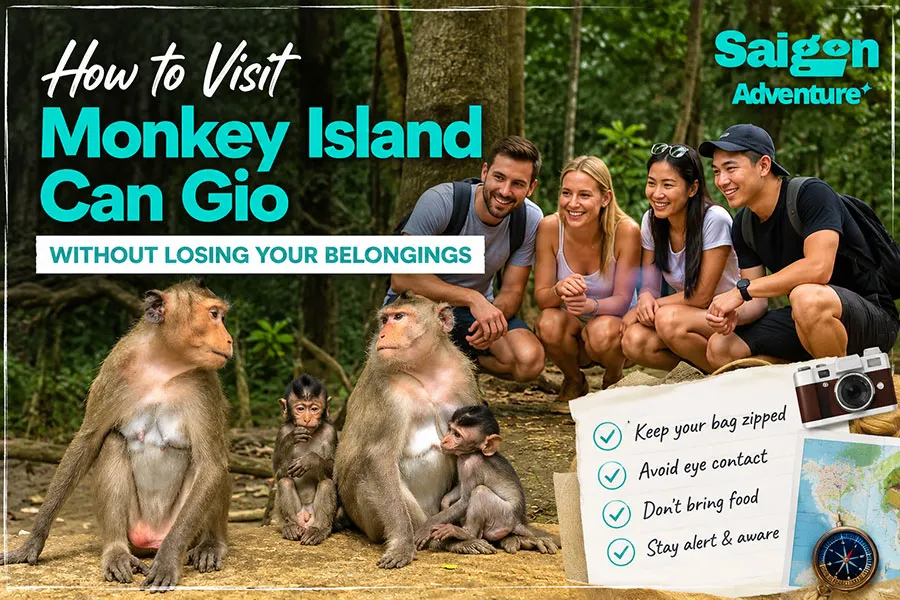
Before entering the monkey area, remove sunglasses, hats, loose jewelry and decorative hair accessories. Place your phone, wallet, snacks and water bottle inside a fully zipped backpack or crossbody bag.
Do not carry plastic shopping bags or open food containers. Monkeys often associate the sight and sound of these items with something edible.
Use a wrist strap when taking photographs, keep children beside you and never chase a monkey that has taken an object. Ask a ranger, guide or park employee for help instead.
The most useful rule is simple: if a monkey can see it, smell it or reach it, secure it before entering.
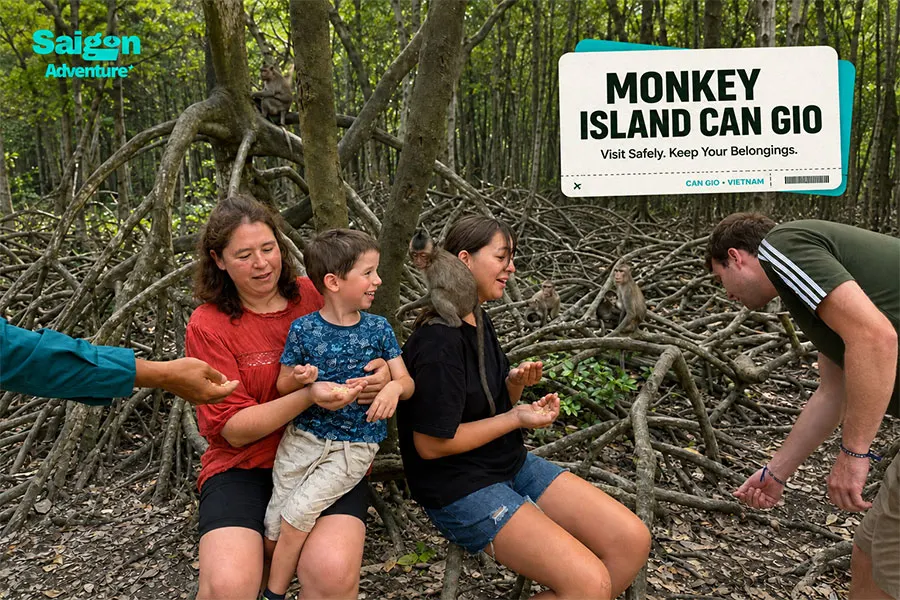
Where is Monkey Island Can Gio?
Monkey Island is located inside the Can Gio Mangrove Biosphere Reserve, a vast coastal wetland southeast of central Ho Chi Minh City. Can Gio was recognized by UNESCO as Vietnam’s first mangrove biosphere reserve in 2000.
Although visitors often call the entire attraction Monkey Island, the monkey area is only one part of a much larger ecosystem. Can Gio contains mangrove waterways, wetlands, wildlife habitats and sites connected with the history of the Rung Sac region.
The island is home to a large population of long-tailed macaques. They move freely around the forest, across visitor paths and through the trees rather than remaining behind conventional zoo barriers.
This freedom makes a Can Gio wildlife experience far more memorable. It also means visitors must treat the macaques as intelligent wild animals—not trained performers or friendly pets.
Why do the Can Gio monkeys steal things?
A monkey does not understand that your sunglasses cost $200 or that your phone contains every photograph from your Vietnam holiday. It simply sees an accessible object that may be interesting or connected with food.
The macaques have become familiar with human behavior. They recognize plastic bags, food wrappers and the movements people make when reaching for snacks.
Loose belongings are also easy targets. A hat resting on your head, glasses hanging from your shirt or a bottle stored in an open backpack pocket can be grabbed in seconds.
Some animals may take objects because previous visitors offered food to get stolen belongings back. This accidentally teaches them that taking a phone or hat can produce a reward.
For this reason, prevention is more than personal protection. It helps discourage behavior that could make future encounters more stressful for both visitors and monkeys.
The two-minute safety check before entering
Stop before you reach the main monkey area and inspect everything you are carrying. Do not wait until several macaques are already watching you.
Put these items inside a fully closed bag:
- Mobile phones not currently in use
- Wallets, passports and cash
- Sunglasses and reading glasses
- Hats, scarves and hair accessories
- Earbuds and headphones
- Food, chewing gum and sweets
- Plastic bags and takeaway containers
- Sunscreen and insect repellent
- Small cameras and detachable lenses
- Water bottles in open side pockets
Check every zipper, including small outer compartments. Monkeys have nimble fingers and may investigate partially open pockets.
A zippered backpack is usually more practical than a tote bag. A secure crossbody bag also works well when worn across the chest with its opening facing your body.
Avoid loosely holding anything “just for a moment.” That moment is often all a macaque needs.
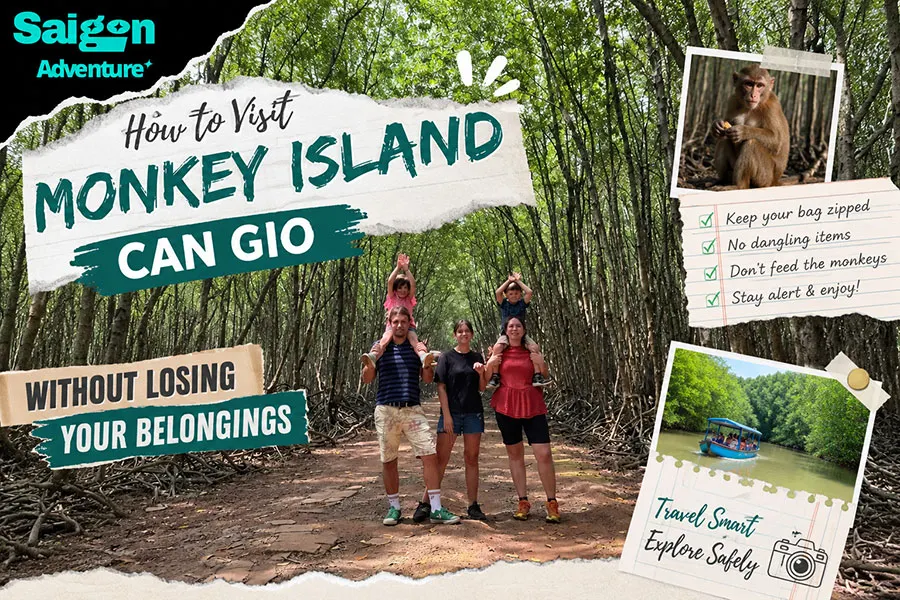
Local tip: Organize your bag before leaving the vehicle
Apply sunscreen, insect repellent and lip balm before getting off your vehicle. Put away everything you will not need during the walk and confirm that all pockets are closed.
Repacking an open bag at the entrance can reveal food and valuables to nearby monkeys. Preparing earlier also lets you enter calmly instead of struggling with several loose items.
Never let the monkeys see your food
Visible food is one of the most common causes of unwanted attention at Can Gio Monkey Island. Even sealed snacks can create problems when carried inside recognizable packaging.
Do not enter with bananas, bread, fruit, sweets or takeaway food in your hands. Avoid opening a backpack to search for snacks while monkeys are nearby.
A plastic bag can attract attention even when it contains no food. The animals may have learned to associate its shape and rustling sound with something edible.
Never tease a monkey by displaying food and then pulling it away. This can cause frustration, competition and more forceful grabbing.
Feeding also encourages macaques to approach future visitors. If any controlled feeding activity is available, participate only when authorized staff allow it and follow their instructions precisely.
How to photograph monkeys without losing your phone
Monkey Island offers fantastic wildlife photography, especially when macaques move through the forest or sit beside the mangrove paths. You do not need a close-up selfie to capture the experience.
Before taking out your phone, look around and check whether a monkey is behind or above you. Hold the device securely with both hands and avoid stretching it toward an animal.
A strong wrist strap or crossbody phone tether adds useful protection. Make sure it is attached correctly before entering rather than trying to fit it while surrounded by monkeys.
Keep a respectful distance and use your camera’s zoom. Do not crouch beside a macaque, block its route or encourage it to climb onto you for a photograph.
Once you have taken the shot, return the phone to a zipped pocket. Walking through the area with it loosely in one hand makes it unnecessarily vulnerable.
Camera users should keep the neck or wrist strap attached. Change lenses away from the monkey area and never place equipment on a bench, railing or forest path.
How to behave when a monkey approaches
Seeing a macaque walking directly toward you can feel intimidating, particularly on your first visit. An approaching monkey is not necessarily preparing to attack, but your response matters.
Stay calm and avoid screaming, running or waving your arms. Sudden reactions can frighten the animal or turn the encounter into a chase.
Keep your hands visible and slowly create space when the path is clear. Do not stare directly into the monkey’s eyes for an extended period, as some primates may interpret this as threatening behavior.
Allow the animal an escape route. Never stand between an adult macaque and a younger monkey.
Do not touch, stroke or reach toward it, even if it appears relaxed. A wild monkey can react instantly when it feels surprised, trapped or challenged.
If a monkey jumps onto you
Remain as still and calm as possible. Do not hit the animal, grab its tail or attempt to shake it off.
Avoid opening your backpack or offering food. Ask a guide or staff member for assistance and let the monkey move away without being cornered.
Loud reactions may attract more attention. A calm response usually gives the animal less reason to remain interested in you.
What should you do if a monkey steals something?
Do not chase the monkey. Macaques are faster, more agile and much better at climbing than visitors, so pursuit rarely ends well.
Never pull an object from its hands or try to trap it against a tree. Recovering a hat is not worth risking a scratch or bite.
Step back and notify a ranger, guide or park employee immediately. Staff members understand local animal behavior and can assess whether the item may be recovered safely.
Do not independently offer food as a trade. Although the strategy may occasionally recover an object, it reinforces the connection between stealing and receiving a reward.
If the item is inexpensive, be prepared to leave it behind. Your safety is more important than a water bottle, cap or pair of non-prescription sunglasses.
What if you are scratched or bitten?
Any bite or scratch from a monkey should be treated seriously, including a small injury that barely breaks the skin.
Move away from the animals and wash the affected area immediately with soap and plenty of running water for at least 15 minutes. Apply an antiseptic if one is available.
Seek professional medical attention as soon as possible. A qualified healthcare provider should evaluate the need for rabies treatment, a tetanus booster or other care.
Do not wait for symptoms and do not rely solely on advice from other travelers. Save your travel insurer’s contact information and the details of a suitable medical facility in Ho Chi Minh City before taking the trip.
What should you wear to Monkey Island?
Can Gio is generally warm and humid, so choose breathable clothing that allows you to walk comfortably. Lightweight long trousers can provide extra protection from insects, vegetation and sun exposure.
Wear closed-toe shoes or secure walking sandals with reliable grip. Forest paths and boat access areas may become slippery after rain.
Avoid dangling earrings, loose scarves and decorative accessories. Tie long hair simply without bright clips that could attract attention.
A hat is useful elsewhere in Can Gio, but consider placing it inside your bag before entering a busy monkey area. If you need prescription glasses, use a secure sports strap rather than removing them and walking with impaired vision.
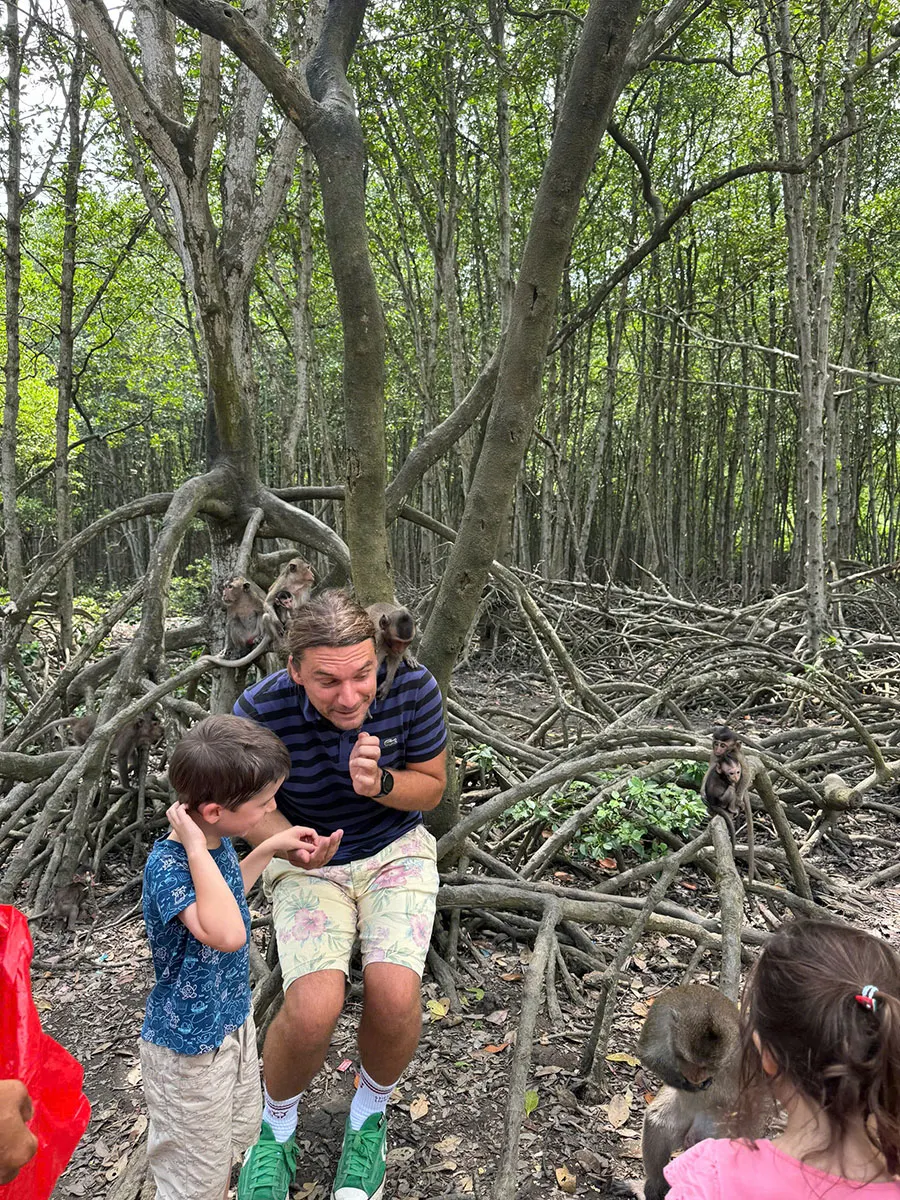
What to pack for a Can Gio day trip
Pack lightly and keep everything inside one secure bag. A practical Monkey Island Can Gio packing list includes:
- Zippered backpack or secure crossbody bag
- Refillable water bottle stored inside the bag
- Lightweight rain jacket or poncho
- Sunscreen and insect repellent
- Small first-aid kit
- Hand sanitizer and tissues
- Portable phone charger
- Cash stored in an inner pocket
- Secure phone or camera strap
- Dry bag for electronics during boat trips
- Travel insurance information
Leave unnecessary valuables at your hotel. When possible, store your passport securely and carry only the identification required for the day.
Is Monkey Island safe for children?
Families can enjoy Monkey Island, but children need close supervision throughout the visit. A child holding food, running toward a monkey or waving a colorful object may attract attention quickly.
Explain the rules before entering: stay beside an adult, speak quietly and never feed, chase or touch the monkeys. Children should not carry toys, snacks, bottles or loose accessories.
Parents should also avoid placing food in an easily opened stroller pocket. Keep the stroller moving through busy areas and maintain extra distance from groups of macaques.
A guided Can Gio Monkey Island tour from Ho Chi Minh City can make the day more manageable. A local guide can explain the environment, recognize risky situations and help families move through the forest safely.
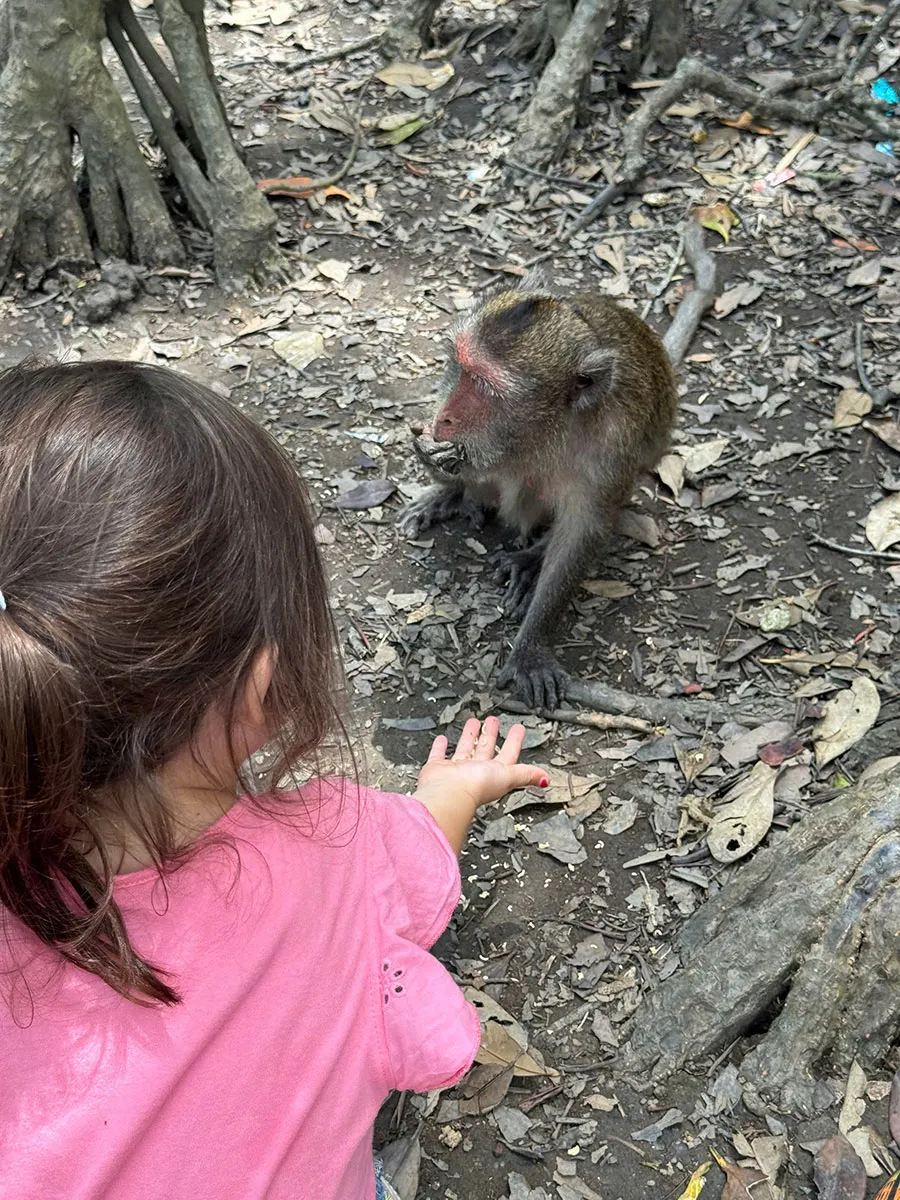
When is the best time to visit Monkey Island Can Gio?
Visiting earlier in the day usually means cooler weather and a more comfortable walk. Weekdays may feel less crowded than weekends and Vietnamese public holidays.
Can Gio has a tropical climate, so high humidity and sudden rain are possible. Check the weather forecast before leaving Ho Chi Minh City and bring a lightweight poncho during wetter periods.
Recent rain can make paths slippery, while strong sunshine increases the need for hydration and sun protection. Apply sunscreen before entering the monkey area so you do not need to open your bag unnecessarily.
Monkey behavior is never completely predictable. Stay alert regardless of the time, weather or number of other visitors.
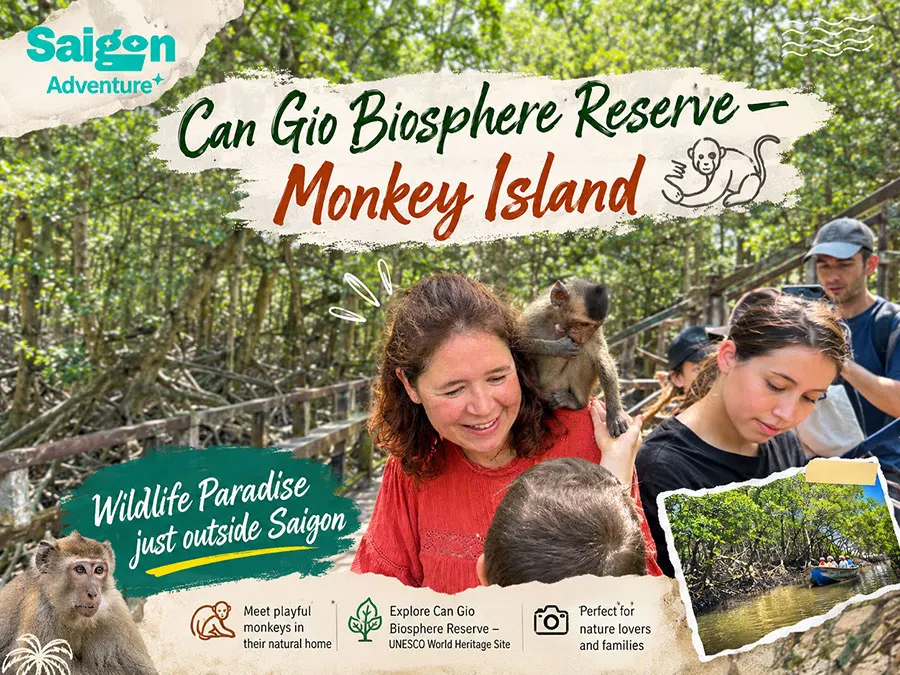
Turn the visit into a complete Can Gio adventure
The monkeys may receive most of the attention, but they are only one part of this remarkable destination. Mangrove waterways, tangled roots and quiet stretches of forest reveal a side of Ho Chi Minh City that many international visitors never expect to see.
A full-day itinerary may combine Monkey Island with a boat trip through the mangroves, the historic Rung Sac base and a local meal. The result feels more balanced than visiting solely to photograph wildlife.
The official Ho Chi Minh City tourism guide to Can Gio provides additional background on the reserve and its natural attractions.
Travelers interested in other landscapes around southern Vietnam can also compare a Mekong Delta tour or a historical Cu Chi Tunnels tour. Each offers a very different day trip from Saigon.
Responsible wildlife encounters create better memories
The best Monkey Island photograph is not the closest one. It is the image captured without frightening, feeding or disturbing the animal.
Stay on designated paths, keep noise under control and take all rubbish away with you. Never leave food packaging in the forest or throw objects toward the monkeys.
These choices protect travelers while reducing the animals’ dependence on human food. They also help preserve a more respectful wildlife experience for future visitors.
Visit Monkey Island Can Gio with confidence
Monkey Island Can Gio can be exciting, surprising and occasionally chaotic. With a little preparation, however, it becomes an unforgettable part of a nature-filled day outside central Saigon.
Zip your bag, hide food, secure your phone and give every macaque enough space. You will return with your belongings—and a much better story than the traveler who watched a monkey disappear with their sunglasses.
Ready to discover the mangrove forest without coordinating transportation, ferry connections and activities yourself? Join Saigon Adventure’s Can Gio Biosphere Reserve and Monkey Island tour for a comfortable day trip with local guidance from Ho Chi Minh City.
Frequently asked questions
Do monkeys really steal belongings at Can Gio?
Yes. Can Gio’s macaques may grab food, plastic bags, phones, sunglasses, hats and other visible items. Store everything inside a fully zipped bag before entering the monkey area.
Can I bring food to Monkey Island Can Gio?
Avoid carrying visible food through areas where monkeys gather. Food smells, wrappers and plastic bags may attract them even when you do not intend to feed them.
Can I use my phone around the monkeys?
Yes, but hold it securely with both hands or attach a reliable wrist strap. Keep a safe distance, use the camera zoom and return the phone to a zipped pocket after taking photographs.
What should I do if a monkey takes my belongings?
Do not chase, corner or fight the animal. Move back and ask a ranger, guide or park employee for assistance.
Are visitors allowed to feed the monkeys?
Do not feed monkeys independently. Follow the current rules displayed at the attraction and only participate in activities explicitly permitted and supervised by authorized staff.
Is Monkey Island suitable for young children?
Children can visit with constant adult supervision. They should remain beside an adult and must not carry food, approach monkeys, make sudden movements or attempt to touch them.
Is a guided Can Gio tour worth it?
A guided tour is convenient for travelers unfamiliar with the route from Ho Chi Minh City. It can combine transportation, Monkey Island, mangrove attractions and local guidance in one organized itinerary.