Most travelers arrive in Can Gio expecting monkeys. They certainly find them—curious long-tailed macaques patrol the forest paths with enough confidence to inspect an unattended bag before its owner notices.
But monkeys are only one part of the story.
Look beyond Monkey Island and Can Gio becomes a surprisingly rich wildlife destination. Its mangrove forests, tidal creeks, mudflats and coastal wetlands shelter birds, fruit bats, reptiles, fish, crabs and countless smaller creatures adapted to life between land and sea.
Unlike a conventional zoo, Can Gio is a living ecosystem. What you see depends on the tide, weather, season, location and, perhaps most importantly, how quietly you explore.
Animals in Can Gio Besides Monkeys You May Actually See
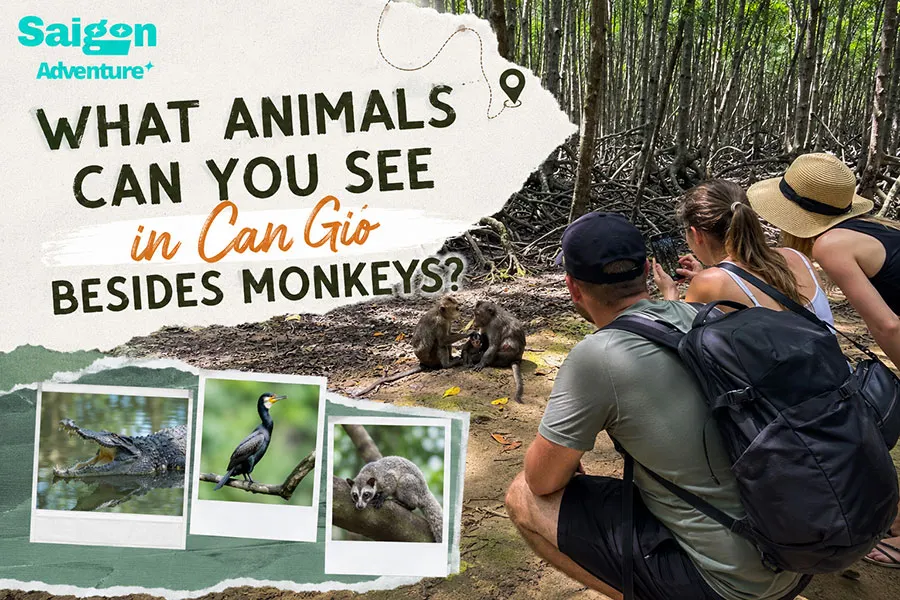
Besides monkeys, visitors may see herons, egrets, kingfishers, storks, cormorants, fruit bats, water monitor lizards, mudskippers, fiddler crabs, butterflies and dragonflies.
Crocodiles can also be viewed at Vam Sat Ecological Tourist Area, although they are generally kept within a managed conservation zone rather than roaming beside public tourist trails.
Birds and mudflat creatures are among the easiest animals to observe in natural surroundings. Bats and monitor lizards require more patience, while rare mammals should be considered a fortunate surprise rather than a guaranteed sighting.
Why does Can Gio have so much wildlife?
Can Gio lies southeast of central Ho Chi Minh City, where several rivers approach the sea. Freshwater and saltwater mix here, creating brackish channels, tidal flats and dense mangrove habitats.
Mangrove roots are more than an unusual background for photographs. They provide shelter for young fish, feeding grounds for birds and safe spaces for crabs, molluscs and other small animals.
This ecological variety is why the Can Gio Mangrove Forest is so important. UNESCO recognizes Can Gio as a biosphere reserve, while scientific studies have documented its diverse birds, reptiles, fish, crustaceans and aquatic invertebrates.
For travelers, that means one day can include forest walking, bird watching, boat travel and close observation of life on an exposed mudflat.
Waterbirds are Can Gio’s underrated wildlife stars
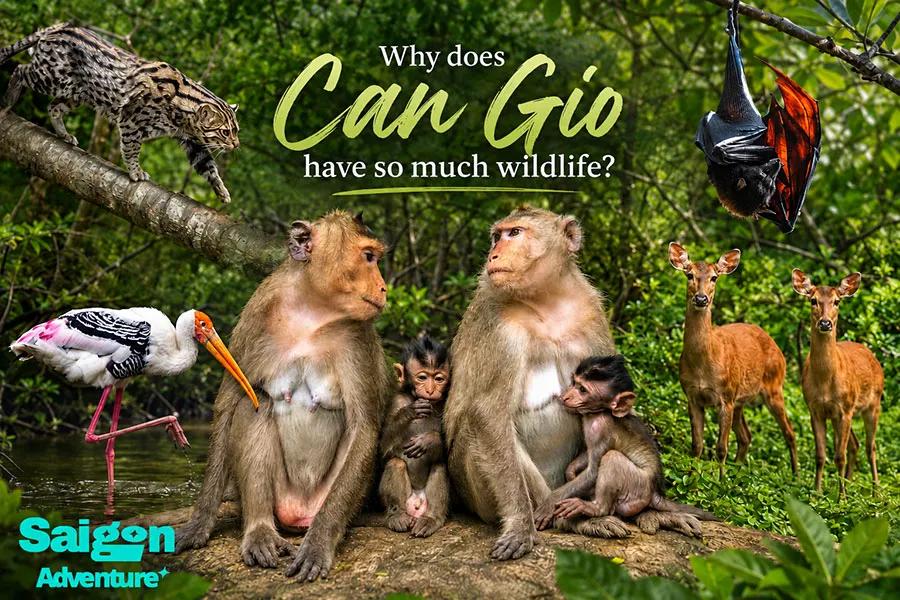
Monkeys may receive more attention, but birds often provide the most rewarding wildlife encounters in Can Gio. The reserve’s waterways and wetlands offer resting, nesting and feeding areas for resident and migratory species.
Egrets and herons are among the easiest to recognize. They often stand completely still beside shallow water before striking quickly at a fish, frog or crustacean.
Kingfishers are smaller and easier to miss. Watch for a sudden flash of blue or turquoise moving between branches above a quiet canal.
Depending on the season and location, visitors may also spot storks, cormorants and other waterbirds. Sightings are never guaranteed, but the forest usually rewards people who slow down and scan the water’s edge.
Where to see birds in Can Gio
Vam Sat Ecological Tourist Area is one of the most accessible places for Can Gio bird watching. Its boat routes, waterways and viewing areas make it possible to reach quieter habitats away from busy roads.
Early morning is normally the best time to look. Temperatures are cooler, birds tend to be more active and fewer visitors means less noise.
Bring binoculars if possible. Even a small pair can reveal details that a phone camera cannot capture from a respectful distance.
Fruit bats hidden above the waterways
One of the most memorable animals in Can Gio besides monkeys is the fruit bat. Colonies can be observed around the bat habitat at Vam Sat, usually during a quiet journey through narrow mangrove channels.
During daylight hours, the bats hang upside down in the canopy. At first, they can look like clusters of dark leaves until one stretches its wings or changes position.
Fruit bats play a valuable role in tropical ecosystems by pollinating plants and dispersing seeds. Their presence is not just a novelty; it helps support the wider health of the forest.
Keep your voice low and avoid flash photography. Trying to frighten bats into flight may create a dramatic photograph, but it disrupts resting animals and is not responsible wildlife tourism.
Can you see crocodiles in Can Gio?
Crocodiles are one of the headline attractions at Vam Sat. However, visitors should understand the nature of the experience before arriving.
The crocodiles seen on regular tourist itineraries are generally viewed inside a managed conservation area. Protected platforms, walkways or boats allow travelers to observe them without direct contact.
This can still be an impressive experience, especially when a crocodile moves silently through dark water. It should not, however, be advertised as a guaranteed encounter with a free-ranging wild crocodile.
Follow staff instructions, respect barriers and never place your hands near the water. Wildlife activities may change, so check current arrangements before visiting.
Water monitor lizards and smaller reptiles
Water monitor lizards are among the largest reptiles travelers may encounter in the Can Gio mangroves. They are usually much more cautious around humans than the resident macaques.
A monitor may appear beside a creek, cross a muddy bank or swim with only its head visible above the water. Its natural coloring blends so well with roots and wet soil that movement is often the first thing visitors notice.
Geckos and smaller lizards also live throughout the area. Snakes are part of the wider ecosystem, although they are rarely seen during a normal daytime visit.
Stay on designated paths, wear closed shoes and avoid reaching into vegetation. Never chase a reptile for a closer photograph.
Mudskippers and crabs put on the best small show
Some of Can Gio’s most fascinating wildlife is found beneath your feet. When the tide falls, exposed mudflats become busy with mudskippers and crabs.
Mudskippers are fish that can move across wet mud using their fins. Watch carefully and you may see them hop between puddles, rest beside mangrove roots or defend small territories.
Fiddler crabs are easy to recognize because males carry one oversized claw. Groups of them waving across the mud create one of the reserve’s most entertaining natural scenes.
These animals are small, but they are essential to the mangrove food web. They recycle organic matter, disturb and aerate the sediment, and provide food for birds, fish and reptiles.
Local tip: Check the tide before visiting
Low tide is generally better for observing mudskippers, fiddler crabs and birds feeding on exposed mud. At high tide, much of this activity disappears beneath the water.
Ask your guide about the tidal schedule rather than relying only on the clock. Tides change daily, so the best wildlife-viewing period will not always occur at the same time.
Fish, shrimp and shellfish beneath the surface
Much of Can Gio’s animal life remains hidden under its brown-green waterways. Fish, shrimp, crabs and molluscs use submerged mangrove roots as shelter, feeding areas and nursery habitat.
Visitors may not identify many individual species from a boat, but signs of aquatic life appear everywhere. Watch for ripples beneath overhanging roots, birds hunting near the bank and local fishing equipment beside the channels.
This underwater productivity also supports nearby communities. Fishing, shrimp production and shellfish harvesting have long been connected to life in Can Gio.
The relationship makes the reserve more than a wildlife attraction. It is a place where conservation, local livelihoods and responsible tourism must remain in balance.
Butterflies, dragonflies and overlooked wildlife
Not every memorable sighting needs to be large. Butterflies can be seen around sunny forest edges and flowering plants, while dragonflies patrol open water in search of smaller insects.
Scientific research has continued to document the butterfly diversity of the Can Gio Mangrove Biosphere Reserve. These small species add color and movement to areas that may initially appear quiet.
Pause occasionally instead of walking continuously. A stationary traveler often notices far more than someone rushing toward the next major attraction.
Are there otters and other rare mammals in Can Gio?
Can Gio supports a broader variety of wildlife than most visitors will see during one day. However, animals living in quiet forest zones may be shy, nocturnal or naturally difficult to locate.
Otters are associated with wetland environments in southern Vietnam, but spotting one during a standard Can Gio tour would be extremely unusual. No responsible guide should guarantee such an encounter.
The same principle applies to other elusive mammals. Treat rare sightings as a privilege, not an expectation, and avoid operators that use baiting or feeding to attract wildlife.
Where should you go for the best wildlife experience?
Monkey Island is the obvious place to see macaques, but it does not represent the full diversity of Can Gio. Visitors interested in birds, bats, reptiles and wetland life should also include Vam Sat or a guided boat route.
A good itinerary combines forest trails with time on the water. Walking reveals lizards, insects and macaques, while boating opens access to bird habitats, bat roosts and quieter mangrove channels.
Travelers planning to visit the macaques should first read this guide to visiting Monkey Island Can Gio without losing their belongings. Sunglasses, food, phones and loose items can quickly attract unwanted attention.
Can Gio is one of the most distinctive day trips from Ho Chi Minh City, but it works best when treated as a nature destination rather than a quick animal photo stop.
How to improve your chances of seeing wildlife
Arrive early, move slowly and keep conversations quiet. Wildlife often disappears before noisy groups even realize it was nearby.
Wear lightweight clothing in neutral colors, closed shoes and insect repellent. Bring drinking water, sun protection, binoculars and a camera with optical zoom.
Avoid feeding any animal, including monkeys. Feeding changes natural behavior, creates dependency and can make wildlife more aggressive around future visitors.
Remain on marked paths and follow your guide’s instructions. Do not collect feathers, shells, plants or other natural objects, even when they appear abandoned.
Can Gio is much more than Monkey Island
So, what animals can you see in Can Gio besides monkeys? Potential sightings range from elegant waterbirds and sleeping fruit bats to water monitor lizards, crocodiles, mudskippers and crowds of tiny fiddler crabs.
The real magic is not finding every animal on a checklist. It is watching the mangrove ecosystem change with the tide and discovering how much life is hidden among its roots, branches and waterways.
Explore Can Gio with patience, realistic expectations and respect for the forest. For a smoother experience, join a responsibly operated Can Gio Mangrove Forest tour from Ho Chi Minh City with a local guide who can locate easily missed wildlife while keeping every encounter safe and ethical.
Frequently asked questions
What animals can you see in Can Gio besides monkeys?
Visitors may see herons, egrets, kingfishers, storks, fruit bats, water monitor lizards, mudskippers, fiddler crabs, butterflies and dragonflies. Crocodiles can also be viewed in a managed area at Vam Sat.
Can you see wild crocodiles in Can Gio?
Travelers should not expect to encounter free-ranging crocodiles beside normal tourist trails. The crocodiles included in most Vam Sat visits are viewed within a controlled conservation and tourism area.
Where can you see bats in Can Gio?
Fruit bats may be observed around the bat habitat at Vam Sat, often during a quiet boat trip through the mangroves. Binoculars make it easier to see them without disturbing their roost.
Is Can Gio good for bird watching?
Yes. Can Gio’s waterways, mudflats and mangrove canopy support many waterbirds. Early morning and quieter boat routes generally provide the best bird-watching conditions.
What is the best time to see wildlife in Can Gio?
Early morning is usually best because it is cooler and wildlife can be more active. Low tide is especially useful for spotting mudskippers, crabs and feeding birds on exposed mudflats.
Is wildlife in Can Gio dangerous?
Most animals avoid people when left undisturbed. Keep a safe distance, stay on marked routes, secure food and personal belongings, and never touch or feed wildlife.
Do you need a guide to see animals in Can Gio?
A guide is not compulsory in all visitor areas, but local knowledge can significantly improve wildlife sightings. Guides understand the tides, animal behavior and quieter observation locations.