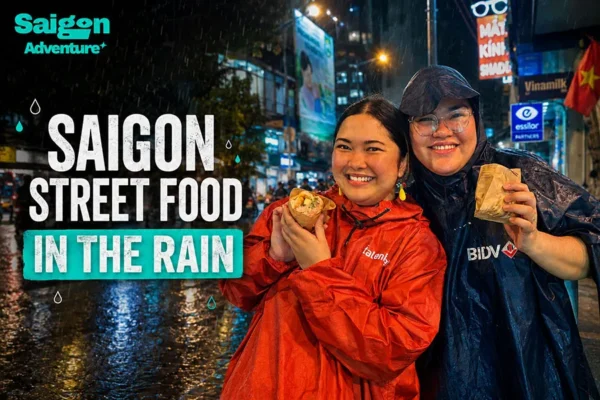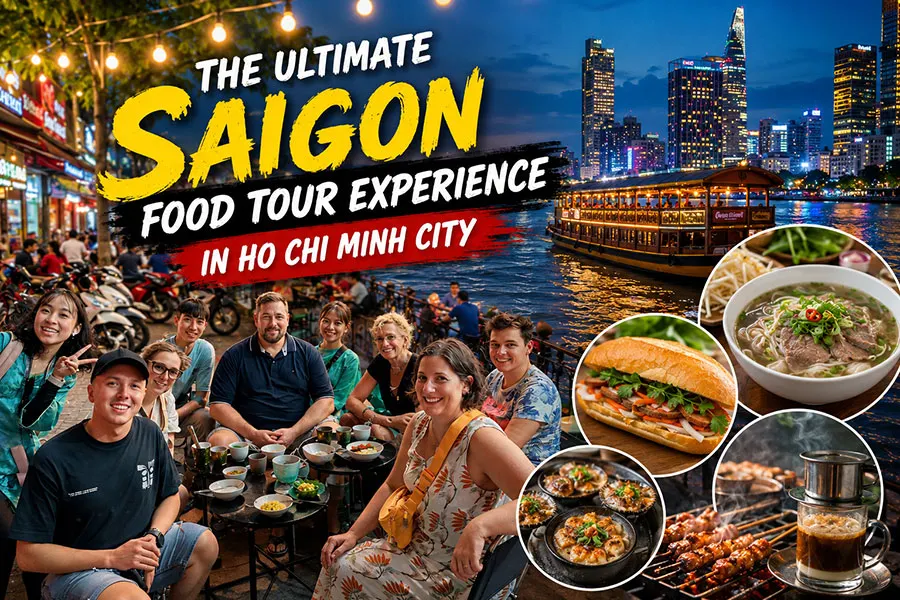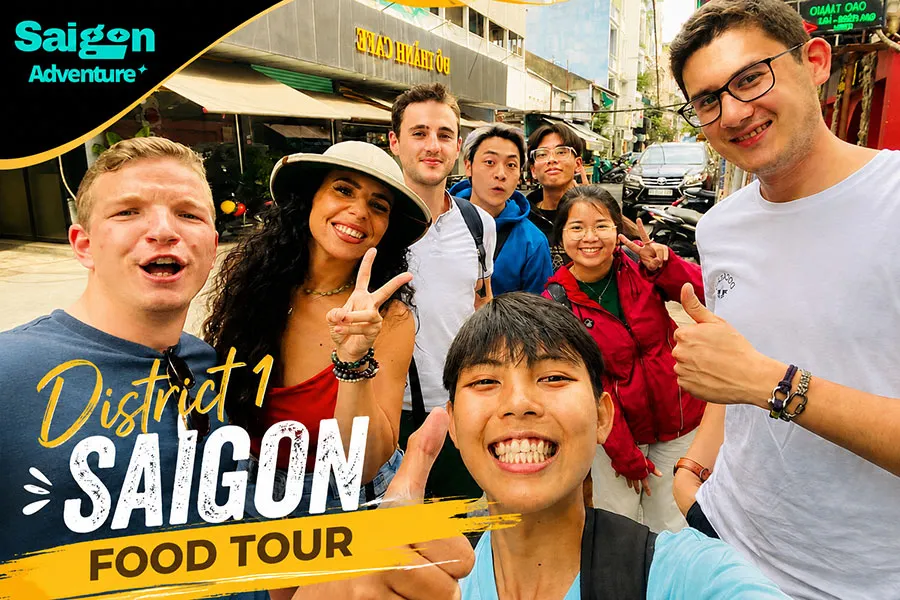
A District 1 food tour is one of the easiest and most enjoyable ways for first-time visitors to discover Saigon’s local cuisine. Beyond Ben Thanh Market and the city’s famous landmarks, central Saigon is filled with hidden alleys, sidewalk kitchens, family-run restaurants and lively food streets.
Follow the aroma of pork grilling over charcoal and you may find a small cơm tấm shop crowded with local workers. Turn into another lane, and a street vendor may be preparing bánh xèo, fresh spring rolls or colorful bowls of chè.
The best District 1 food tour is not simply a checklist of famous dishes. It connects local flavors with the people, neighborhoods and everyday traditions behind them.
This guide explains what to eat in District 1, where to find authentic street food and whether a walking, motorbike or guided food tour is the right choice for your visit.
Is a District 1 Food Tour Worth It?
Yes. A District 1 food tour is especially worthwhile for first-time visitors who want to experience Saigon’s street food without traveling far from the city center. In three to four hours, travelers can explore local markets, hidden alleys and family-run eateries while tasting dishes such as cơm tấm, bánh xèo, Vietnamese seafood, chè and iced coffee.
A walking tour is suitable for exploring nearby streets at a relaxed pace, while a motorbike food tour offers greater variety by connecting District 1 with less-touristy neighborhoods across Saigon.
Why Take a District 1 Food Tour in Saigon?
District 1 sits at the cultural and commercial heart of Ho Chi Minh City. Although it is no longer an official district-level unit following the 2025 administrative reorganization, travelers still commonly use “District 1” to describe Saigon’s historic center.
The area combines two different sides of the city. Around Nguyen Hue and Dong Khoi, modern restaurants, cafés and rooftop bars dominate, while Co Giang, Tan Dinh Market and the streets near Ben Thanh Market preserve a more local food culture.
That contrast makes a Saigon District 1 food tour more interesting than a simple restaurant crawl. Within one evening, travelers can move from famous landmarks to lively markets and family-run eateries hidden inside narrow alleys.
A Flavor-First District 1 Food Tour Itinerary
The most rewarding route is not necessarily the one with the greatest number of dishes. A better experience moves gradually through different flavors, textures and settings.
The following itinerary is designed as a flexible journey rather than a rigid list of restaurants. Individual vendors may change their schedules, but the route itself captures the atmosphere of eating through central Saigon.
Stop 1: Begin at Ben Thanh Market
Ben Thanh Market is busy, colorful and unapologetically tourist-friendly. Although it is not the city’s most secluded food destination, it provides a fascinating introduction to southern Vietnamese ingredients.
Walk through the produce and dry-goods sections before ordering anything. Look for tropical fruit, dried seafood, coffee, pepper, rice noodles and the fresh herbs that appear throughout Vietnamese cooking.
Prepared-food counters may serve noodle soups, broken rice, fresh spring rolls and sweet drinks. If you plan to make several stops, share one small dish instead of beginning with a full meal.
Prices around the market can be higher than in residential neighborhoods. Check the menu first, confirm the cost before ordering and treat this stop as an introduction rather than the entire experience.
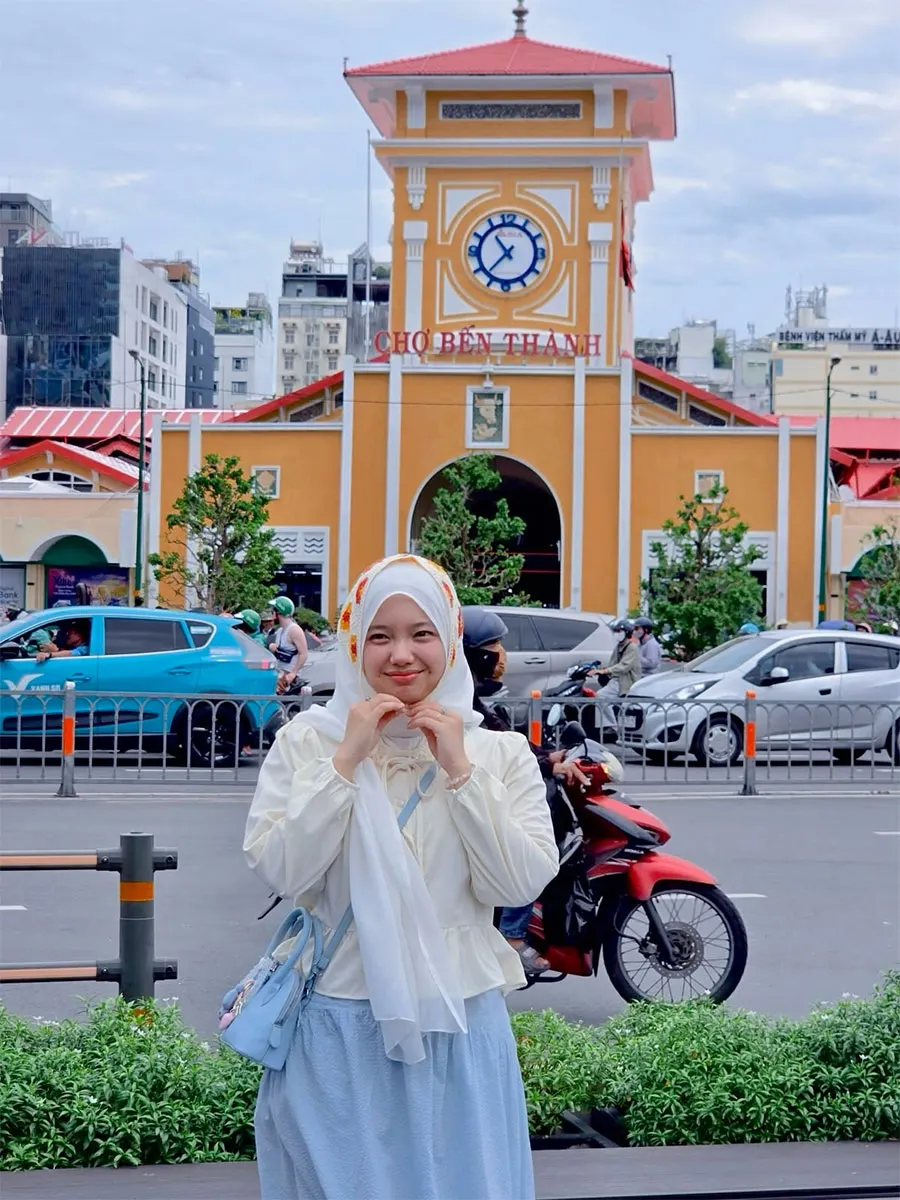
Stop 2: Move Beyond the Tourist Streets
From Ben Thanh, leave the busiest souvenir area and follow the streets toward smaller local businesses. The atmosphere begins to change within a few blocks.
This transition is an essential part of a District 1 street food tour. You move from a landmark known around the world into the everyday city where residents collect takeaway meals, drink iced coffee and gather around sidewalk tables.
Look for vendors cooking food in view and serving a steady stream of customers. A crowded stall is not automatically perfect, but regular turnover usually means the ingredients are being prepared frequently.
For more dish-specific ideas before planning your route, read this guide to the best street food in District 1. It complements this itinerary without limiting your experience to one market or restaurant.
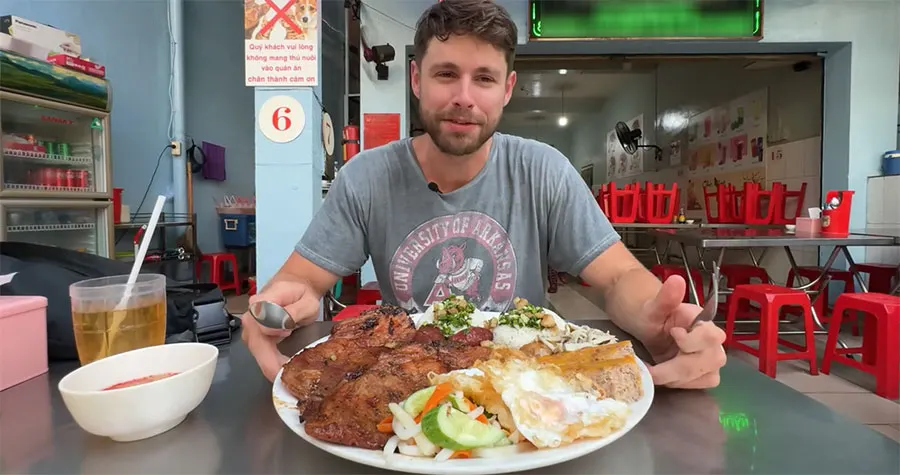
Stop 3: Taste Cơm Tấm, Saigon’s Signature Rice Dish
Cơm tấm is one of the dishes most closely associated with Saigon. It is built around broken rice grains once considered less valuable than intact rice but now celebrated for their distinctive texture.
A classic plate often includes grilled pork, pickled vegetables, cucumber, scallion oil and a seasoned fish sauce dressing. Some versions add a fried egg, shredded pork skin or a slice of steamed egg cake.
The aroma usually reaches you before the plate does. Pork sizzling over charcoal creates a smoky sweetness that feels perfectly matched to the energy of the street.
Add the fish sauce gradually rather than pouring everything at once. The dressing is intended to season the rice, but each cook makes it with a slightly different balance of sweetness, saltiness and acidity.
Stop 4: Explore the Food Streets Around Cô Giang
Cô Giang and its surrounding lanes provide a more neighborhood-focused experience. Small eateries in this part of central Saigon serve noodles, rice dishes, grilled snacks, desserts and drinks to local residents.
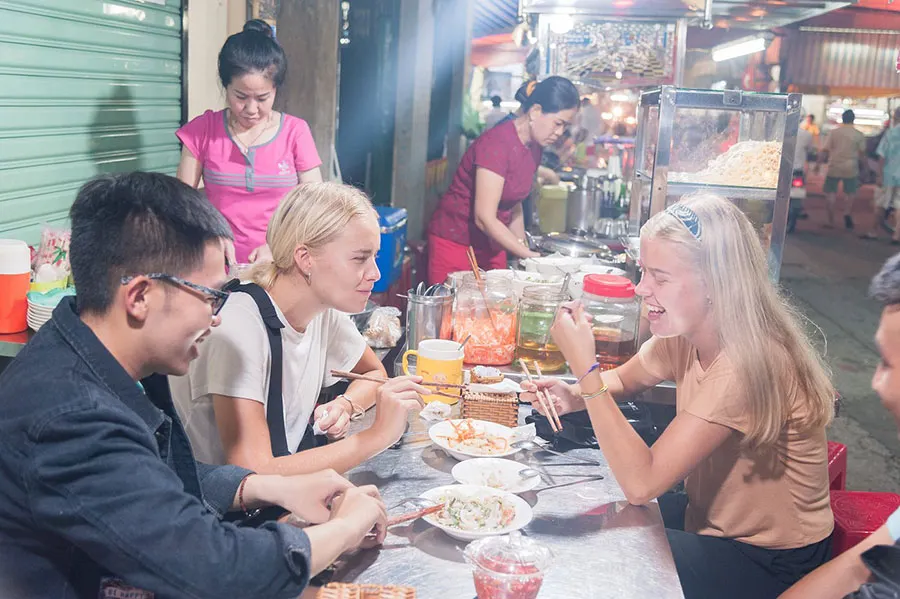
There may be little ceremony. Tables can be close together, plastic stools may seem unusually low, and dishes often arrive whenever they are ready.
That informality is part of the appeal. Vietnamese street dining is not about elaborate presentation; it is about freshness, speed, flavor and the pleasure of sharing food in a lively public space.
Local tip: Explore Cô Giang in the late afternoon or early evening, when more food stalls begin serving and the surrounding lanes feel livelier. Vendor schedules can change, so treat the street as a flexible food area rather than relying on one specific restaurant.
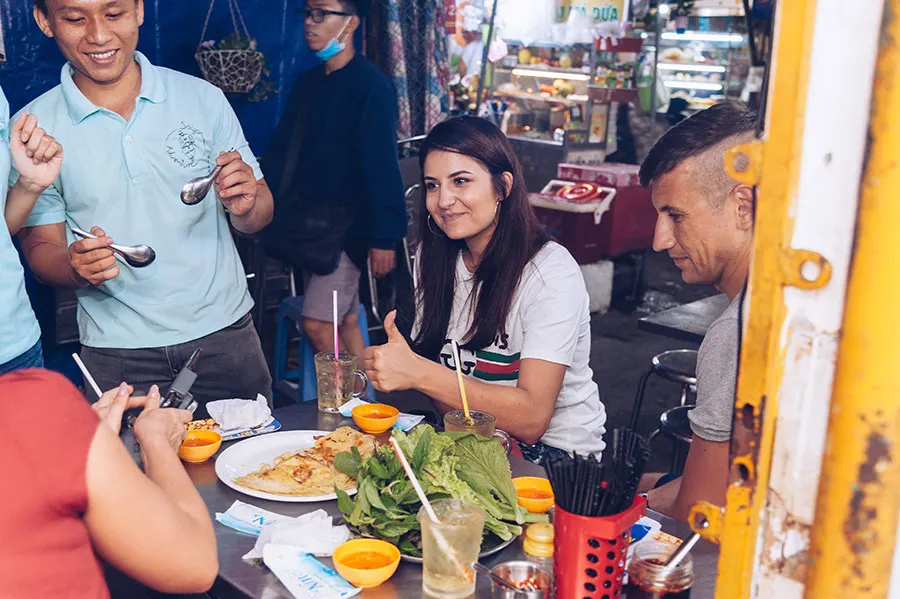
Stop 5: Share Bánh Xèo or a Savory Street Snack
Bánh xèo announces itself with a sharp sizzle as turmeric-tinted rice batter hits a hot pan. The pancake is fried until crisp, then commonly filled with pork, shrimp and bean sprouts.
Do not approach it like a Western pancake. Tear off a manageable piece, place it inside lettuce with fresh herbs and dip the bundle into the accompanying sauce.
The result is a wonderfully layered bite: brittle pancake, juicy filling, cool herbs and a savory-sweet dressing. Sharing one pancake also leaves room for later stops.
Depending on the route, you might choose gỏi cuốn, bánh khọt or bánh tráng nướng instead. Each offers a different introduction to how Vietnamese cuisine combines texture with fresh herbs and dipping sauces.
Stop 6: Try an Evening Seafood or Ốc Experience
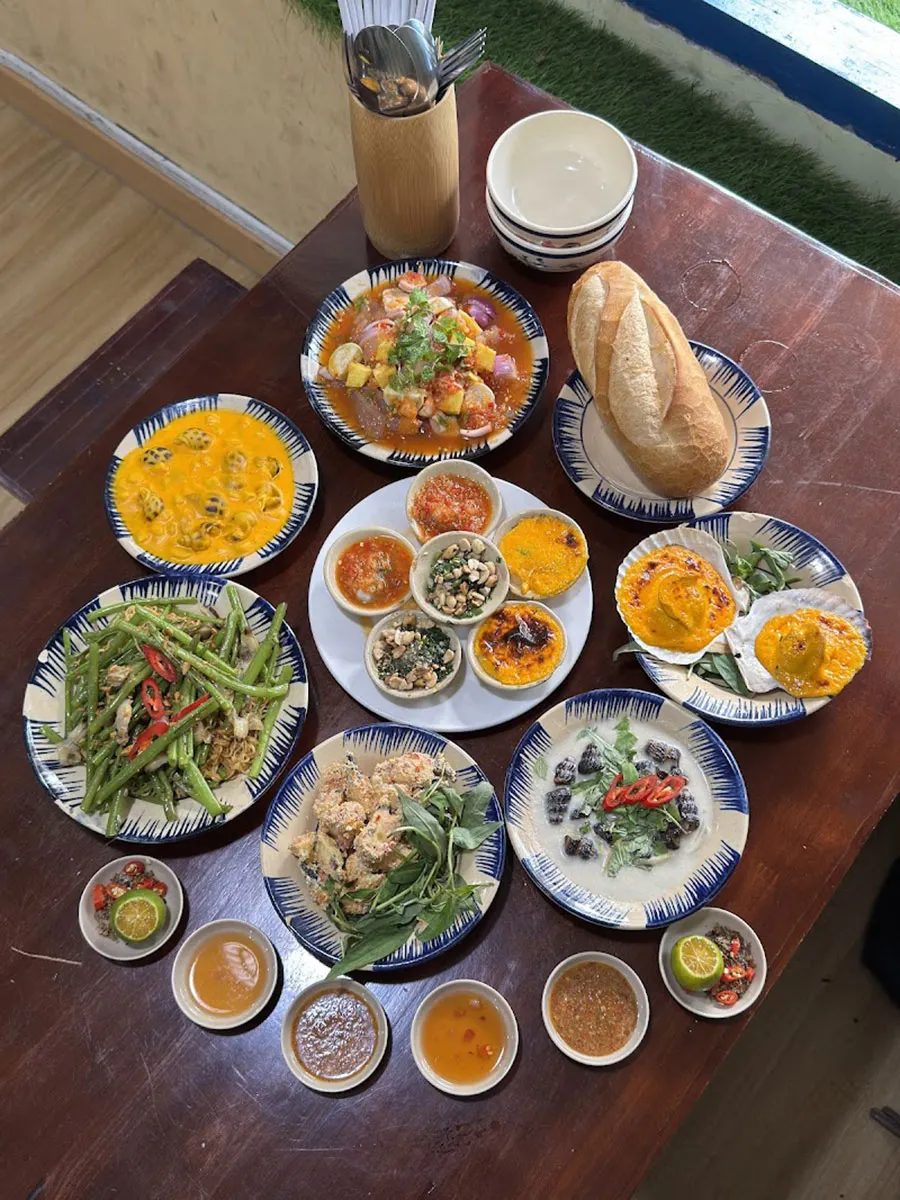
An ốc restaurant is one of Saigon’s most social evening experiences. Although ốc means snails, the menu may also include clams, scallops, prawns, crab and other seafood.
The cooking method is often as important as the main ingredient. Seafood can be grilled with scallion oil, stir-fried with garlic, steamed with lemongrass or coated in tamarind, coconut or salted egg sauce.
Order two or three small plates for the table rather than choosing one large portion. This encourages sharing and lets everyone compare different seasonings.
Menus at local seafood restaurants can be challenging for first-time visitors because the ingredient and cooking style may be listed separately. This is one situation where an English-speaking guide becomes particularly valuable.
Stop 7: Finish With Chè or Vietnamese Coffee
After grilled meat, noodles and seafood, a light dessert provides a natural ending. Chè is a broad category of Vietnamese sweet soups, puddings and chilled desserts.
A bowl might combine coconut milk with beans, jelly, fruit, sticky rice, lotus seeds or tapioca. Some varieties are warm and comforting, while others arrive over ice.
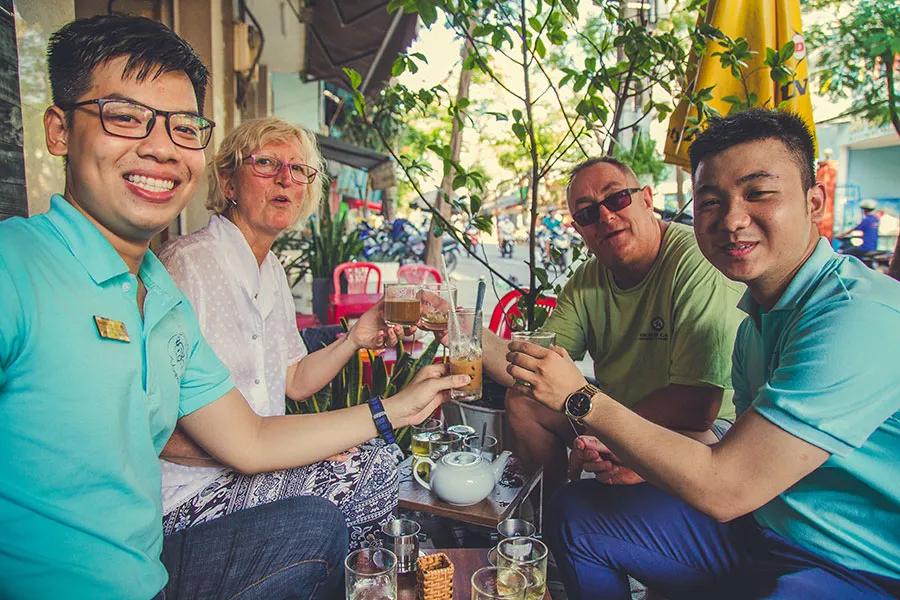
Travelers who prefer something less sweet can finish with Vietnamese coffee. Cà phê sữa đá combines strong coffee, condensed milk and ice, creating a bold drink that suits Saigon’s warm evenings.
Take time with the final stop. A food tour becomes more memorable when it ends with conversation rather than a hurried return to the hotel.
What Makes a District 1 Food Tour Different?
District 1 is not necessarily where every legendary Saigon dish originated. Its strength lies in accessibility, variety and the unusual concentration of old and new Saigon within a relatively compact area.
You can begin beside a historic market, eat in a residential lane and finish near the illuminated skyline. Few parts of the city allow those settings to appear so naturally within one route.
A tour also introduces more than food. Guides can explain why herbs are served separately, how fish sauce changes between dishes and why some noodle shops sell out before the traditional dinner hour.
That context turns tasting into cultural understanding. Instead of remembering only that a dish was delicious, you remember the family behind it, the correct way to eat it and the neighborhood where you found it.
Walking vs Motorbike Food Tours in District 1
Walking is ideal for travelers who enjoy observing small details. You can pause beside an old apartment entrance, watch vendors prepare ingredients and explore alleys that would be easy to miss from a vehicle.
A walking route works best when the stops are close together. Heat, rain, crowded sidewalks and busy crossings can make an overly ambitious itinerary tiring.
A scooter offers a broader view of the city. It can connect District 1 with residential food areas in Districts 3, 4, 5 or 10, allowing travelers to compare central Saigon with neighborhoods where fewer tourists stay.
A well-organized Saigon motorbike food tour is therefore a strong choice for visitors who want more culinary variety in a single evening. The journey between stops becomes part of the experience rather than lost travel time.

Self-Guided or Guided: Which Experience Is Better?
A self-guided food walk gives you complete freedom. You can change the route, spend an hour over coffee or return to a dish you enjoyed earlier.
The challenge is that online popularity does not always lead to the most suitable experience. Opening schedules may vary, translated menus can be limited and the number of available dishes can quickly become overwhelming.
Dietary needs add another layer of difficulty. Fish sauce, shellfish, peanuts and meat-based broth may be present even when they are not obvious from the English description.
A guided tour removes much of that uncertainty. A local host can manage ordering, explain ingredients and introduce places that travelers would otherwise pass without noticing.
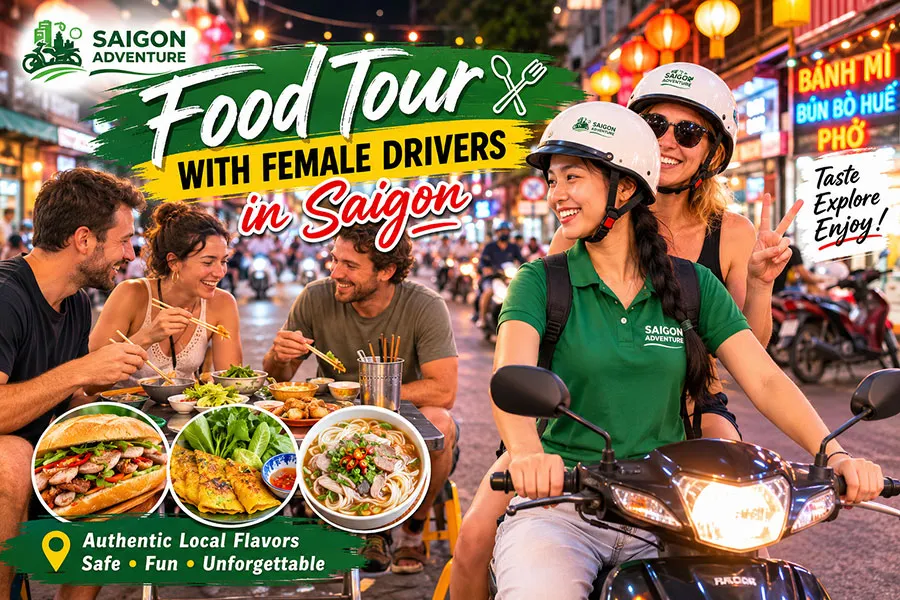
Visitors who want an energetic evening of authentic tastings can explore the Street Food Lover motorbike tour. Those who prefer a more personal experience with local female guides can consider the Saigon Foodie Tour by scooter with a female rider.
Local Tips for Eating Around District 1
Begin with a light appetite, not an empty stomach. Arriving extremely hungry often leads travelers to overeat at the first stop and miss the variety that makes a food tour worthwhile.
Carry Vietnamese đồng in smaller notes. Many local stalls accept cash more readily than cards, particularly when the total is modest.
Choose food cooked fresh in front of you whenever possible. Look for organized preparation areas, protected ingredients and regular customer turnover.
Ask before taking close-up photographs of vendors. Markets and food stalls are working spaces, and a friendly gesture shows respect.
Wear light clothing and comfortable shoes. A compact rain poncho is also useful because Saigon showers can arrive quickly, even during an otherwise sunny afternoon.
Finally, mention allergies and dietary restrictions before a guided tour begins. Clear advance communication gives the operator time to prepare appropriate alternatives.
Experience the Local Flavors of District 1
A food tour in District 1, Ho Chi Minh City is especially worthwhile for first-time visitors. It introduces the flavors of Saigon without requiring you to travel far from the city’s central attractions.
The experience is even stronger when the route reaches beyond Ben Thanh Market. Markets offer visual excitement, but neighborhood alleys and family-run shops reveal how local food fits into everyday life.
District 1 should be the beginning of your culinary exploration, not its boundary. A motorbike tour can use the city center as a convenient starting point before carrying you toward districts with their own specialties and dining traditions.
Come curious, share your portions and be willing to try a dish you cannot pronounce perfectly. In Saigon, the most memorable meal is often waiting one turn beyond the street you originally planned to follow.
Ready to discover the city through its food? Join Saigon Adventure and let a friendly local guide connect central landmarks, hidden alleys and authentic Vietnamese flavors in one unforgettable evening.
Frequently Asked Questions About District 1 Food Tours
What food should I try in District 1?
Start with cơm tấm, bánh mì, hủ tiếu, bánh xèo, fresh spring rolls, grilled seafood and chè. Sharing portions allows you to experience more dishes without becoming full too early.
Where is the best street food in District 1?
Ben Thanh Market is convenient for beginners, while Cô Giang and the smaller streets around the central area provide a more local atmosphere. Tân Định is also worth exploring for markets, breakfast dishes and neighborhood eateries.
How long does a District 1 food tour take?
A comfortable tour usually needs around three to four hours. This allows time for several tastings, travel between stops and explanations about ingredients and local dining culture.
Is District 1 street food safe for international visitors?
Many travelers enjoy street food safely by choosing busy vendors, freshly cooked dishes and stalls with clean, organized preparation areas. Visitors with allergies should communicate their needs clearly before ordering.
Can vegetarians join a Saigon food tour?
Yes, but advance notice is essential. Fish sauce, meat broth and dried seafood may appear in dishes that otherwise look vegetarian, so a knowledgeable guide can help identify appropriate alternatives.
Is District 1 easy to explore on foot?
Individual parts of District 1 are suitable for walking, particularly around Ben Thanh Market and nearby streets. However, traffic, heat and rain make a scooter more practical for visiting several neighborhoods in one evening.
Should I book a guided or self-guided food tour?
Choose a self-guided walk if flexibility matters most and you are comfortable navigating local menus. Choose a guided tour if you want cultural explanations, easier ordering, dietary assistance and access to less obvious food stops.
Explore our best-selling tours
 Bestseller
Street Food Tour In Ho Chi Minh City By Motorbike
Saigon Street Food Tours: An Authentic Culinary Odyssey To experience Ho Chi Minh City, you need to do two things:...
 Bestseller
Saigon: Premium Award-Winning Food Tour with Ao Dai Female Riders
A Michelin food tour by scooter in Vietnam elevates the standard street food experience by combining world-class culinary recognition with...
 Bestseller
Saigon Foodie Tour By Scooter With Female Rider (With Beer & Seafood)
Beautiful female tour guides at Saigon Adventure ABOUT THIS TOUR Let us be your guide to experiencing Saigon By Night...
 Bestseller
Vegan Food Tour
Keep your travel plan flexible - book your spot now and pay nothing today! You only need to pay 4...
 Bestseller
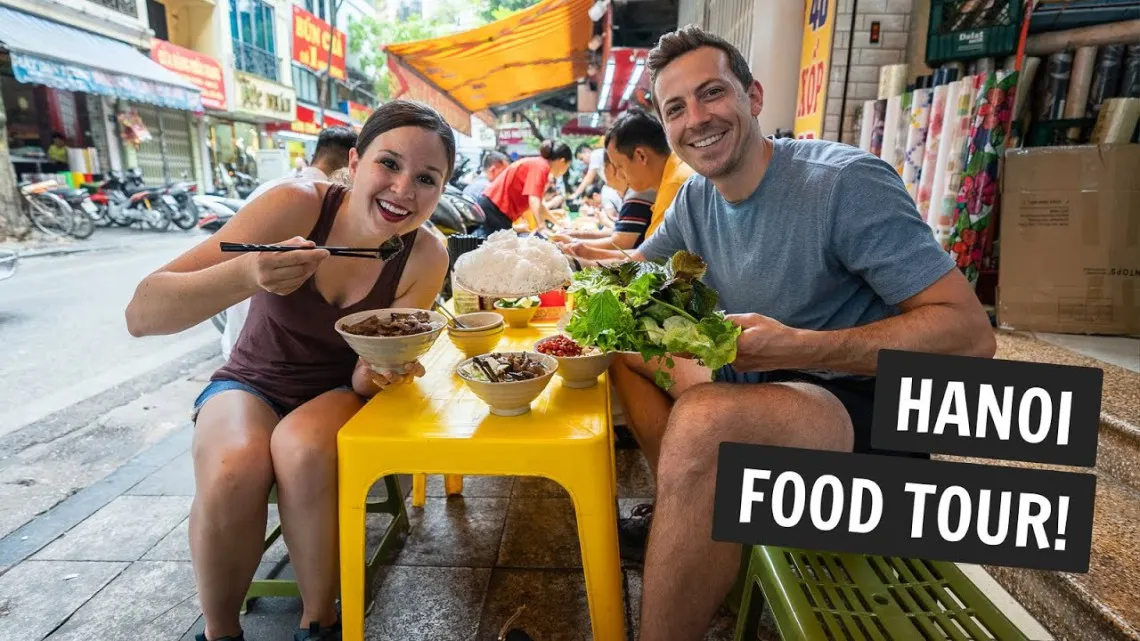
Hanoi Local Food Tour with Train Street and Old Quarter
Discover the flavors and everyday life of Vietnam’s capital on a 3-hour Hanoi local food tour through the historic Old...
 Bestseller
Ho Chi Minh City Michelin Food and Live Music Scooter Tour
Welcome to our premier michelin food tour in Ho Chi Minh City! Secure your experience today with Total Flexibility Reserve...
 Bestseller
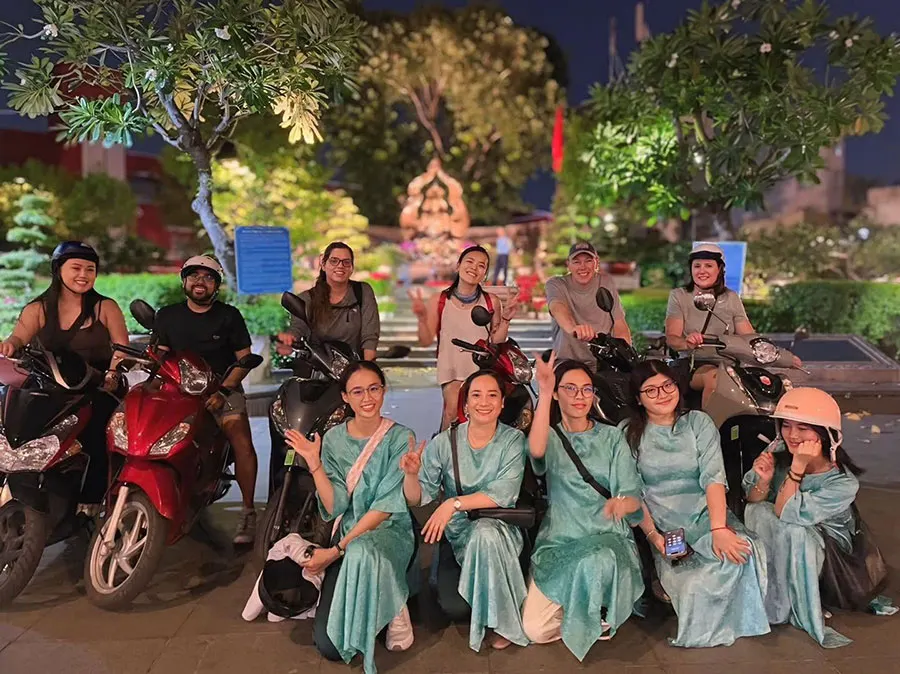
Premium Saigon Hidden Alleys & History: Private Motorbike Tour
Ho Chi Minh Hidden Alleys & History: Private Motorbike Tour Ready to step off the beaten path and discover the...
 Bestseller
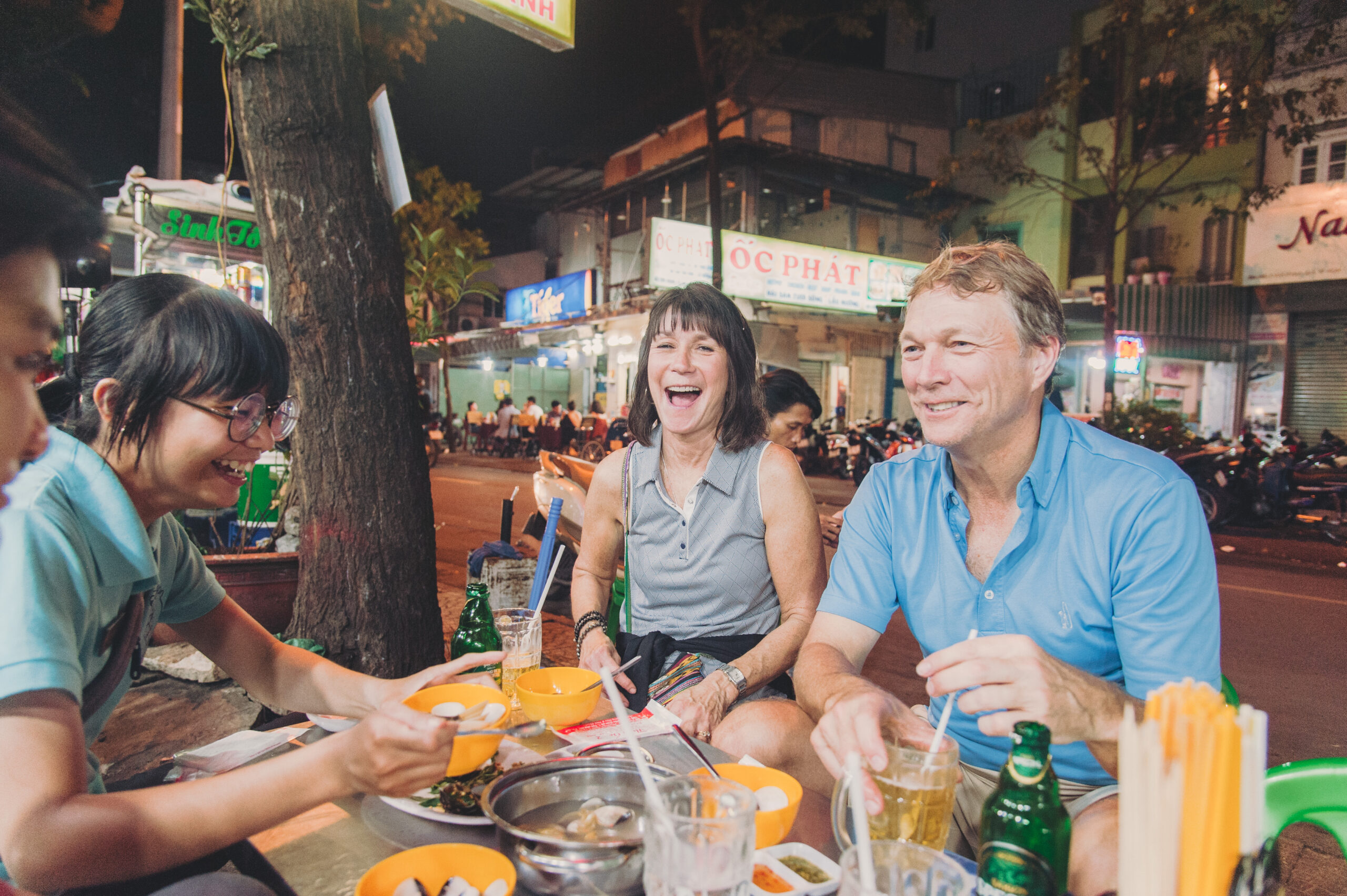
Ho Chi Minh Food Safari With 20 Tastings
Explore Ho Chi Minh City through its food on our Ho Chi Minh Food Safari, featuring 20 authentic street food...
 Bestseller
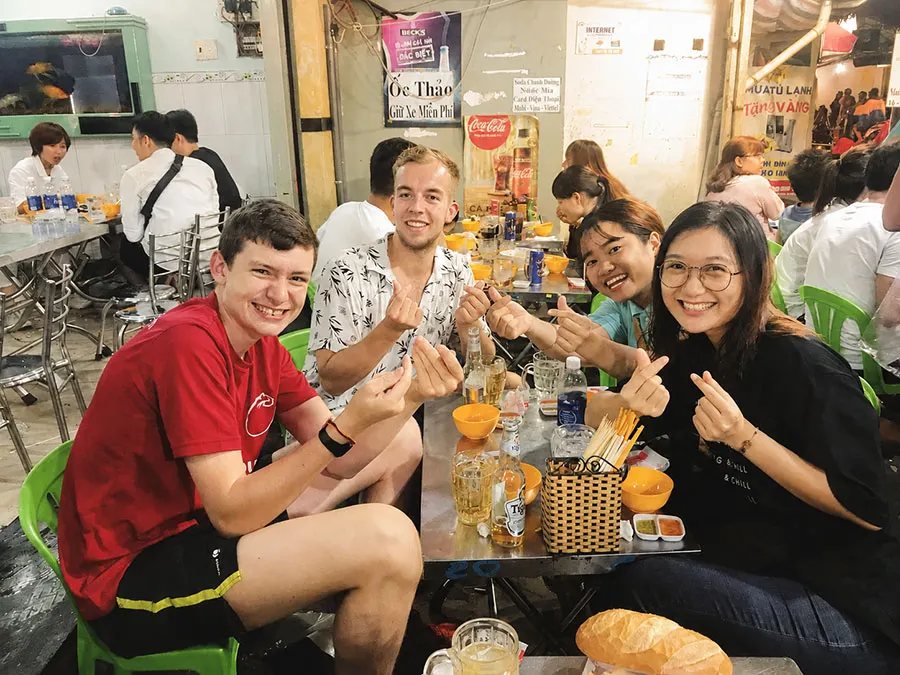
Saigon | Combo Street Food And Sightseeing Tour By Scooter
Food and Sight Motorbike (Special Combo) Experience the ultimate Saigon adventure! Over 4 thrilling hours, hop on the back of...
 Bestseller
Hanoi Michelin Street Food Tour With a Local Guide
Explore the Old Quarter through its most memorable flavors on our Hanoi Michelin Street Food Tour. Led by a knowledgeable...
 Bestseller
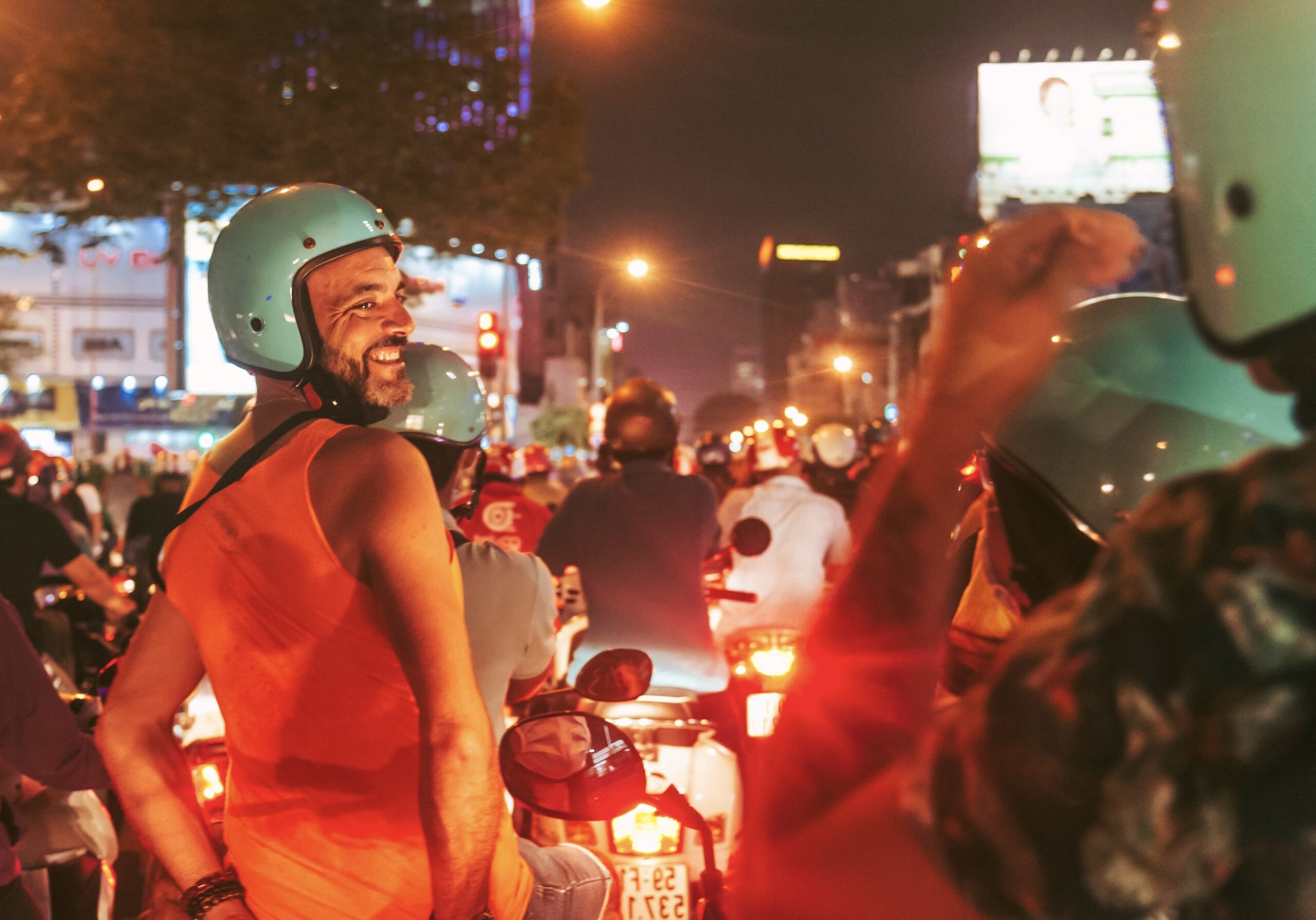
Saigon By Night (Motorbike Tour) With Rooftop Bar – Live Music And Seafood
Keep your travel plan flexible - book your spot now and pay nothing today! You only need to pay...
 Bestseller
Beers, Music & Foods
TOUR DETAILS Saigon After Dark: The Ultimate Scooter, Food & Live Music Odyssey Experience the electric energy of Ho Chi...