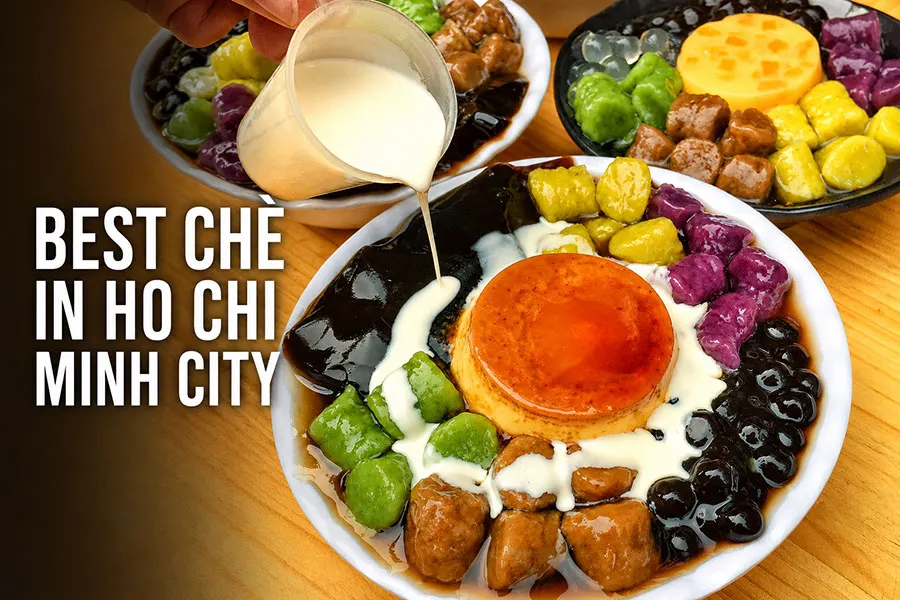
A bowl of chè may look like a simple dessert, but the first spoonful tells a different story. Silky coconut milk meets crushed ice, soft beans, tropical fruit, fragrant pandan jelly and pleasantly chewy tapioca pearls.
Every ingredient brings a different texture. Together, they create one of the most colorful and memorable desserts in Vietnam.
For travelers searching for the best chè in Ho Chi Minh City, the exciting part is not finding one perfect recipe. It is discovering how many different desserts can exist under the same name.
Some varieties are cool and refreshing after a humid afternoon. Others arrive warm, rich and gently scented with ginger or coconut.
You will find chè inside traditional markets, at family-run dessert shops and on small street corners far beyond the main tourist areas. Exploring these places is also a delicious way to experience everyday life in Saigon.
Quick Answer: Where Can You Find the Best Chè in Ho Chi Minh City?
The best places to eat chè in Ho Chi Minh City are often found in Districts 1, 3, 5 and 10. Long-standing names such as Chè Hiển Khánh, Chè Hà Ký and Chè Mâm Khánh Vy offer very different sides of the city’s dessert culture.
First-time visitors can begin with chè ba màu, chè khúc bạch or chè Thái. For a more traditional experience, try warm chè trôi nước, black sesame sweet soup or creamy chè bà ba.
Ben Thanh Market is convenient for travelers staying in central Saigon. However, neighborhood markets and family-run dessert stalls usually provide a more relaxed local atmosphere.
There is no single bowl that can officially be called the best. The right choice depends on whether you prefer something fruity, creamy, refreshing, chewy or warm.
What Is Vietnamese Chè?
Chè is commonly translated as Vietnamese sweet soup, although that description only captures part of its personality. Depending on the recipe, it can resemble a pudding, drink, fruit cocktail, warm porridge or layered ice dessert.
The word refers to a large family of Vietnamese sweets rather than one specific dish. Each variety is usually named after its main ingredient, such as black beans, lotus seeds, corn, banana or mung beans.
A typical bowl may contain sticky rice, tapioca pearls, jelly, tropical fruit, sweet potatoes, taro, cassava or coconut cream. Some combinations are wonderfully simple, while others bring several colors and textures into one glass.
Chè can be served warm, chilled or poured over crushed ice. This makes it suitable for almost any time of day, from a refreshing afternoon snack to a comforting dessert after dinner.
Why Chè Is One of Saigon’s Most Exciting Desserts
Western desserts often focus on butter, cream, chocolate or baked pastry. Traditional Vietnamese desserts take a different approach, using beans, seeds, fruit, roots, sticky rice and aromatic plants.
The flavors are usually built around balance rather than sweetness alone. Coconut milk adds richness, ginger brings warmth, pandan contributes a gentle fragrance and crushed ice keeps heavier ingredients refreshing.
Texture is equally important. One spoonful might combine creamy mung beans, slippery jelly, crunchy water chestnuts and chewy tapioca pearls.
This playful contrast is a major reason chè feels so distinctive. You do not simply taste it—you explore it one spoonful at a time.
Chè is also closely connected with daily life in Ho Chi Minh City. Students enjoy it after school, office workers buy it during afternoon breaks and families share it after an evening meal.
For international visitors, stopping at a local chè shop offers more than a sugar fix. It provides a small but genuine window into Saigon’s food culture.

Seven Types of Chè You Should Try in Ho Chi Minh City
Chè Ba Màu – The Famous Three-Color Dessert
Chè ba màu is one of the easiest introductions to Vietnamese chè. Its colorful layers commonly include beans, mung bean paste, pandan jelly, coconut milk and crushed ice.
The ingredients may arrive in separate layers. Mix them together before eating so the creamy, chewy and refreshing textures come through in every spoonful.
This three-color dessert is an excellent choice for first-time visitors. It looks beautiful in photographs but still tastes unmistakably local.

Chè Trôi Nước – Glutinous Rice Dumplings in Ginger Syrup
Chè trôi nước features soft glutinous rice balls filled with smooth mung bean paste. They are served in warm ginger syrup and often finished with coconut cream and toasted sesame seeds.
The rice shell is pleasantly chewy, while the lightly savory filling balances the sweet syrup. Ginger adds a gentle warmth that prevents the dessert from becoming too heavy.
Eat the dumplings slowly because the center can be surprisingly hot. This comforting dessert is particularly enjoyable during one of Saigon’s sudden rainy evenings.

Chè Khúc Bạch – Silky Milk Jelly with Lychee
Chè khúc bạch is a lighter and more delicate choice. It usually combines soft milk or almond-flavored jelly with lychee, longan, sliced almonds and a clear chilled syrup.
The jelly has a smooth texture similar to panna cotta but feels less rich. Fresh fruit and ice give the bowl a clean, refreshing finish.
Travelers who do not enjoy very sweet desserts often prefer this variety. It is also an ideal afternoon treat after walking through the warm streets of central Ho Chi Minh City.
Chè Thái – Tropical Fruit, Jelly and Coconut Milk
Saigon’s chè Thái is bold, colorful and filled with tropical character. A typical serving contains jackfruit, longan, colorful jelly and a creamy milk-based sauce.
Many versions also include durian, which gives the dessert its unmistakably powerful aroma. Durian lovers may consider it the highlight, while newcomers might prefer to try a small amount first.
If you want the dessert without durian, say “không sầu riêng.” The remaining fruit, jelly and chilled coconut flavors still make it one of the most refreshing Saigon desserts.
Chè Đậu Đen – Simple, Comforting Black Bean Dessert
Chè đậu đen is made by slowly cooking black beans until they become tender while still holding their shape. The beans are then served in lightly sweetened syrup, either warm or over crushed ice.
A spoonful of coconut milk adds creaminess without hiding the earthy flavor of the beans. Some vendors also include chewy tapioca pearls for extra texture.
This simple dessert is widely available at local markets and small neighborhood stalls. It is a safe choice if you prefer traditional flavors over colorful toppings.
Chè Bà Ba – A Creamy Southern Vietnamese Classic
Chè bà ba is one of the most comforting traditional Vietnamese desserts to try in Saigon. A typical bowl combines sweet potato, taro, cassava, mung beans, tapioca and rich coconut milk.
Pandan leaves give the dessert a gentle herbal aroma. Every spoonful feels creamy and satisfying, with soft pieces of root vegetables adding natural sweetness.
This Southern Vietnamese sweet soup is more filling than it first appears. Order a small bowl if you have already enjoyed a full street food dinner.
Chè Hạt Sen – Delicate Lotus Seed Sweet Soup
Chè hạt sen features lotus seeds cooked until soft and served in a clear, lightly sweetened syrup. Some versions pair them with longan, creating a fragrant combination with subtle floral notes.
The flavor is cleaner and less creamy than coconut-based chè. It is ideal for travelers who want a traditional dessert that does not feel overly rich.
Lotus seeds have a mild, nutty character and a pleasantly tender bite. Their simplicity allows the fragrance of the syrup and fruit to stand out.
Where to Find the Best Chè in Ho Chi Minh City
Finding excellent chè in Saigon does not require an expensive restaurant. Many of the city’s most memorable desserts are served in modest family shops where recipes have been prepared the same way for decades.
Districts 3, 5 and 10 are particularly rewarding for dessert lovers. Each area offers a different atmosphere, from nostalgic shops to lively Chinese-Vietnamese neighborhoods and hidden stalls beside old apartment buildings.
Opening hours and addresses can change, especially at small local businesses. Check the latest map listing before visiting rather than relying on an old travel post.
Chè Hiển Khánh – A Taste of Old Saigon
Chè Hiển Khánh is a familiar name among locals who enjoy delicate jellies and lighter traditional sweets. Its simple setting and old-fashioned presentation create an atmosphere that feels pleasantly removed from modern dessert cafés.
The shop is especially associated with refreshing jelly-based desserts and chè khúc bạch. The syrup is generally lighter than the thick coconut mixtures found at many Southern-style chè stalls.
Come here if you enjoy subtle sweetness and a nostalgic Saigon experience. It is also a good stop for travelers who find heavily layered desserts overwhelming.
Chè Hà Ký – Chinese-Vietnamese Desserts in Cholon
District 5 is home to Cholon, Ho Chi Minh City’s historic Chinese quarter and one of its richest food neighborhoods. Chè Hà Ký reflects that heritage through warm and cold sweet soups influenced by Chinese-Vietnamese cooking.
The menu may include black sesame soup, almond-based desserts, lotus seeds, longan and herbal ingredients. These flavors are often deeper and less tropical than the fruit-and-coconut combinations found elsewhere in Saigon.
Visit in the evening and combine dessert with a walk around Cholon. The busy streets, traditional shops and distinctive aromas make the journey as interesting as the bowl itself.
Chè Mâm Khánh Vy – Share a Tray of Sweet Treats
At Chè Mâm Khánh Vy, the highlight is not one large dessert but a tray of many small bowls. Known as chè mâm, this format allows diners to compare several traditional recipes in a single sitting.
The selection may include corn, banana, beans, taro, mung bean, sticky rice and other familiar ingredients. Availability can vary, which makes each tray feel slightly different.
Come with at least two or three people and share everything. Passing the bowls around and debating which one tastes best is part of the experience.
Bé Chè at Ben Thanh Market – Easy for First-Time Visitors
Bé Chè is a convenient option for travelers already exploring Ben Thanh Market in central Ho Chi Minh City. Its colorful display makes ordering easier, even when you cannot read the Vietnamese menu.
You can point to the ingredients that look appealing and watch the vendor assemble your dessert. It is a simple introduction to Saigon desserts without traveling far from the city’s main attractions.
Ben Thanh Market is more visitor-oriented than a residential neighborhood. Confirm the price before ordering and keep small Vietnamese notes ready for payment.
Neighborhood Markets – Follow the Local Crowd
Not every great chè stall has a famous name. Some of the best local discoveries appear beside traditional markets, inside old apartment areas or along busy residential streets.
Explore Districts 3, 5, 10, Phú Nhuận or Bình Thạnh in the late afternoon and early evening. Look for vendors with a steady stream of local customers and ingredients stored in clean, covered containers.
A busy stall usually prepares and replaces ingredients more frequently. It also gives you the chance to see what regular customers order before choosing your own dessert.
Local Tip: Create Your Own Saigon Chè Crawl
A good chè crawl should include contrasting flavors rather than several similar cups. Begin with a cold, coconut-rich chè ba màu before trying a warm traditional bowl such as chè trôi nước.
Finish with a Chinese-Vietnamese dessert in Cholon or a light chè khúc bạch. Sharing each portion allows you to taste more without becoming too full.
This simple route reveals how broad Vietnamese dessert culture can be. Within one evening, chè can move from tropical and playful to warm, fragrant and deeply comforting.
How to Order Chè Like a Local
Vietnamese chè menus are easier to understand once you know that the main ingredient usually follows the word chè. For example, chè đậu đen means black bean chè, while chè hạt sen means lotus seed chè.
Pointing at the display is completely acceptable. Many local shops arrange their beans, fruit and jellies where customers can see them.
Use these simple Vietnamese phrases:
- Cho tôi một chè ba màu – One three-color chè, please.
- Ít ngọt – Less sweet.
- Ít đá – Less ice.
- Không đá – No ice.
- Không nước cốt dừa – No coconut milk.
- Không sầu riêng – No durian.
- Bao nhiêu tiền? – How much is it?
Some ingredients are sweetened before they reach the serving bowl. If “less sweet” is unavailable, ask for less syrup or more ice.
Local Tips for Enjoying Chè Safely
Choose stalls with a steady flow of local customers, covered ingredients and clean serving utensils. High turnover usually means the beans, fruit and coconut milk are replaced more frequently.
For more practical advice, read how local guides choose safe street food vendors before exploring neighborhood markets.
Carry small Vietnamese notes because independent dessert stalls may not accept credit cards. Confirm the price before ordering, especially when adding durian or several extra toppings.
Chè may contain coconut milk, dairy, peanuts, sesame, almonds or gelatin. Travelers with serious allergies should show a translated allergy card and ask about every ingredient.
Start with one serving and share it. Vietnamese sweet soups can be surprisingly filling, and sharing allows you to compare more flavors.
Chè vs Other Vietnamese Desserts
Choose chè when you want contrasting textures and plenty of variety. Every glass can feel different depending on its fruit, beans, jelly, syrup and toppings.
However, Saigon’s sweet scene goes far beyond chè. Bánh flan offers silky caramel custard, chuối nướng combines grilled banana with coconut sauce, while bánh da lợn delivers chewy layers of pandan and mung bean.
Explore the best Vietnamese desserts in Ho Chi Minh City to discover more local sweets worth adding to your food itinerary.
Taste the Sweeter Side of Saigon
The best chè in Ho Chi Minh City might be a colorful glass at a busy market, a warm bowl in Cholon or a small dessert shared beside an old apartment building.
Follow the local crowd, stay curious and do not be afraid of unfamiliar ingredients. Beans, roots and jelly may sound unusual in a dessert, but their contrasting flavors are what make Vietnamese chè so memorable.
If you want to discover hidden food streets with someone who knows the city, join a Ho Chi Minh City food tour with Saigon Adventure.
Our local guides introduce you to trusted vendors, regional flavors and the stories behind every stop. Come hungry, leave room for dessert and experience Saigon one delicious bite at a time.
Frequently Asked Questions About Chè in Ho Chi Minh City
What is the most popular chè in Ho Chi Minh City?
Chè ba màu, chè Thái, chè khúc bạch and chè đậu đen are widely enjoyed. There is no official favorite because every neighborhood and family has its own preferences.
Is Vietnamese chè always served cold?
No. Fruit and jelly desserts are commonly served over ice, while chè trôi nước, black sesame soup and several bean-based varieties can be served warm.
Is chè suitable for vegans?
Some versions made with beans, fruit and coconut milk are naturally plant-based. Others may contain dairy or gelatin, so always confirm the ingredients with the vendor.
How much does chè cost in Ho Chi Minh City?
Chè is generally an affordable local dessert, but prices vary by location and ingredients. Durian, premium fruit and additional toppings usually cost more.
Is street-side chè safe to eat?
Choose busy vendors that cover their ingredients and use clean utensils. Travelers with sensitive stomachs may feel more comfortable at an established dessert shop.
How do you pronounce chè?
It sounds roughly like “cheh,” spoken with a low, falling tone. Perfect pronunciation is unnecessary because pointing at the menu works perfectly well.
Where should first-time visitors try chè?
Ben Thanh Market is convenient, while Districts 3, 5 and 10 offer more local experiences. Chè Hiển Khánh, Chè Hà Ký and Chè Mâm Khánh Vy are useful names to research.