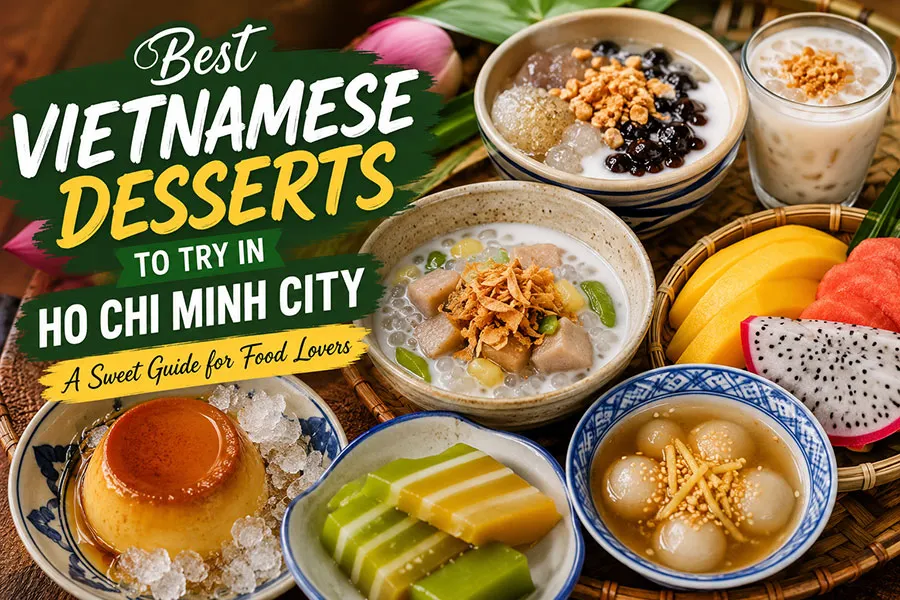
Vietnam is famous for its vibrant food culture, and desserts are an essential part of the experience. In Ho Chi Minh City, you can find everything from colorful chè and creamy bánh flan to pandan cakes, sticky rice sweets and refreshing coconut desserts.
This guide covers the best Vietnamese desserts in Ho Chi Minh City, what each one tastes like, and where to try them while exploring Saigon. Whether you prefer something rich, light, chewy or refreshing, there is an easy local favorite to start with.
Best Vietnamese Desserts in Ho Chi Minh City at a Glance
| Dessert | What It Is | Best For |
|---|---|---|
| Chè Ba Màu | Three-color sweet soup with beans, jelly and coconut milk | First-time visitors |
| Chè Chuối | Banana, tapioca and coconut milk dessert | Coconut lovers |
| Chè Trôi Nước | Glutinous rice balls in warm ginger syrup | Traditional flavors |
| Bánh Flan | Vietnamese caramel custard | Easy introduction |
| Bánh Da Lợn | Soft layered pandan and coconut cake | Local market snacks |
| Bánh Chuối Nướng | Baked banana and coconut cake | Rich, comforting dessert |
| Kem Dừa | Coconut ice cream with tropical toppings | Hot afternoons |
| Sữa Chua Nếp Cẩm | Yogurt with black sticky rice | Light and refreshing |

Why Vietnamese Desserts Are Worth Trying
Vietnamese desserts are very different from the cakes and pastries many international visitors are familiar with. Instead of heavy cream and butter, most recipes use fresh fruit, coconut milk, sticky rice, beans, pandan leaves, sesame, and tapioca.
The flavors are naturally balanced rather than overly sweet. Many desserts combine creamy, chewy, crunchy, and refreshing textures in a single serving, creating a unique eating experience.
Another reason travelers love Vietnamese desserts is their variety. Some are served hot, others are filled with crushed ice, while many change with the seasons. Every visit offers something new to discover.
Traditional Vietnamese Desserts You Shouldn’t Miss
Chè – One of the Best Vietnamese Desserts in Ho Chi Minh City
If there is one local dessert every visitor should try in Saigon, it is chè. Rather than referring to a single dish, chè describes a diverse collection of Vietnamese sweet soups, puddings, and refreshing dessert drinks.
Depending on the recipe, chè may contain beans, lotus seeds, taro, sticky rice, jelly, tapioca pearls, coconut milk, or tropical fruit. Some varieties are served warm, while others come chilled with crushed ice—perfect for Ho Chi Minh City’s tropical weather.
Travelers searching for the best chè in Ho Chi Minh City will find plenty of choices in local markets and family-run dessert shops across Districts 1, 3, 5, and 10. Chè ba màu, chè chuối, and chè trôi nước are three approachable options for first-time visitors.

Chè Ba Màu (Three-Color Dessert)
One of the most colorful Vietnamese desserts is Chè Ba Màu, also known as the Three-Color Dessert. It combines red beans, mung beans, pandan jelly, coconut milk, and crushed ice into a refreshing layered dessert.
Each spoonful delivers a different texture, making it both visually appealing and satisfying. It’s especially popular on hot afternoons when locals are looking for something cool and light.
For first-time visitors, this is often the easiest chè to enjoy because its flavors are mild and refreshing.

Chè Chuối (Banana Sweet Soup)
Chè Chuối is made with ripe bananas slowly cooked in rich coconut milk and soft tapioca pearls. The bananas become naturally sweet while the coconut milk adds a creamy finish.
Many vendors sprinkle roasted peanuts or sesame seeds on top for extra crunch. The combination of soft fruit and nutty toppings creates a comforting dessert that’s simple but unforgettable.
Although it looks modest, Chè Chuối remains one of Vietnam’s most beloved homemade desserts.

Chè Trôi Nước (Sweet Glutinous Rice Balls)
This traditional dessert features soft glutinous rice balls filled with sweet mung bean paste and served in fragrant ginger syrup.
The warm ginger balances the sweetness and gives the dessert a comforting aroma. It’s especially popular during traditional festivals and family celebrations.
Beyond its delicious flavor, Chè Trôi Nước also reflects the importance of sharing food and family traditions in Vietnamese culture.

Fresh Tropical Fruits: Vietnam’s Natural Dessert
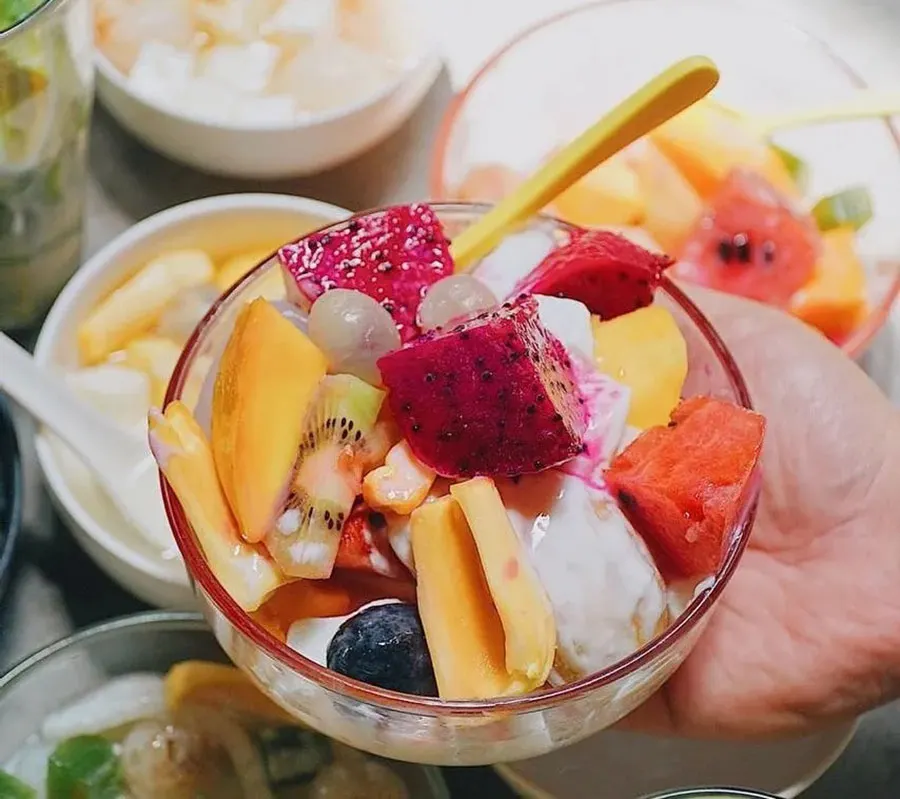
Not every Vietnamese dessert is cooked. Fresh tropical fruit is an important part of daily life and often enjoyed as a healthy dessert after meals.
In Ho Chi Minh City, visitors can taste mango, dragon fruit, mangosteen, rambutan, longan, papaya, jackfruit, and many seasonal specialties. Most are picked locally, making them sweeter and juicier than imported varieties.
Many street vendors also serve fresh fruit with chili salt. This unusual combination of sweet, salty, and mildly spicy flavors surprises many international visitors and quickly becomes a favorite.
Sweet Cakes You Can Find at Local Markets
Traditional markets are excellent places to discover authentic Vietnamese desserts that many tourists never notice.
Bánh Chuối Nướng (Grilled Banana Cake)
Made with ripe bananas, bread, coconut milk, and a light custard mixture, Bánh Chuối Nướng has a crispy golden exterior and a soft, creamy center.
Its natural banana flavor pairs perfectly with Vietnamese coffee, making it a popular afternoon snack for locals.
Because it’s freshly baked throughout the day, you’ll often enjoy it warm from the oven.

Bánh Da Lợn (Layered Pandan Cake)
Recognized by its bright green layers, Bánh Da Lợn is made from tapioca flour, rice flour, coconut milk, and fragrant pandan leaves.
Its chewy texture is unlike most Western cakes, while the coconut and pandan create a light, naturally sweet flavor.
This traditional cake is commonly sold in markets, local bakeries, and family-owned dessert shops throughout Ho Chi Minh City.

Unique Vietnamese Desserts Every Traveler Should Experience
Bánh Flan (Vietnamese Caramel Flan)
Although inspired by French cuisine, Vietnamese bánh flan has become a favorite local dessert. It’s made with eggs, milk, and caramel, then served chilled with crushed ice or rich Vietnamese coffee.
The texture is silky and smooth, while the caramel adds just the right amount of sweetness. Many cafés also top it with coconut milk or shaved ice for extra flavor.
It’s a simple dessert, but one you’ll see enjoyed by people of all ages across Ho Chi Minh City.

Sữa Chua Nếp Cẩm (Yogurt with Black Sticky Rice)
This refreshing dessert combines creamy yogurt with fermented black sticky rice. The rice has a slightly chewy texture and a naturally nutty flavor that pairs perfectly with the smooth yogurt.
Locals often enjoy it as both a dessert and a healthy snack. It’s rich in texture without feeling too heavy, making it perfect after a street food feast.
If you’re looking for something different from traditional sweets, this is an excellent choice.
Kem Dừa (Vietnamese Coconut Ice Cream)
Coconut lovers shouldn’t miss Kem Dừa, one of Vietnam’s most refreshing desserts. It’s usually served inside a fresh coconut shell with shredded coconut, roasted peanuts, and crispy coconut chips.
The ice cream has a light coconut flavor that’s less sweet than many Western versions. Every bite feels cool and refreshing, especially on a hot afternoon.
Many dessert cafés in Ho Chi Minh City have their own creative versions, but the traditional recipe remains the most popular.

Where to Find the Best Vietnamese Desserts in Ho Chi Minh City
Ho Chi Minh City has no shortage of places to try traditional sweets, from busy markets to long-running neighborhood dessert shops.
District 1 is the easiest place to start if you’re staying in central Saigon. Bến Thành Market and nearby streets offer chè, fresh fruit, bánh flan and other familiar desserts in a convenient location.
District 3 is a good choice for travelers who want a more local atmosphere without going too far from the city center. Small dessert shops and family-run cafés here often serve traditional chè, flan and homemade sweets.
District 5 and Chợ Lớn are especially worth exploring for Vietnamese-Chinese dessert traditions. You’ll find a wider range of sweet soups, herbal desserts, lotus seed desserts and coconut-based dishes.
District 10 is another strong area for local dessert shops, particularly in the evening when many small eateries and sweet stalls become busier.
For first-time visitors, start in District 1 for convenience, then explore District 5 or District 10 if you want a more local dessert experience.
When Is the Best Time to Eat Vietnamese Desserts?
Unlike many countries where desserts are reserved for the end of a meal, Vietnamese sweets can be enjoyed at almost any time of day.
A cold bowl of chè is perfect during the afternoon heat, while warm desserts like Chè Trôi Nước are comforting on rainy evenings. Fresh tropical fruit is also a popular choice after lunch or dinner.
Because dessert culture is so relaxed, don’t hesitate to stop whenever something catches your eye. Some of the best discoveries happen simply by following the locals.
Helpful Tips for Trying Vietnamese Desserts
If it’s your first time, start with familiar flavors like coconut, banana, mango, or yogurt before exploring more traditional ingredients such as lotus seeds or taro.
Many desserts are naturally vegetarian, but it’s always worth asking if you’re following a special diet. Some recipes may include condensed milk or other dairy products.
Don’t be afraid to try small family-run stalls. These businesses often specialize in just a few desserts, allowing them to perfect recipes that have remained unchanged for many years.
Explore Vietnamese Desserts Like a Local
Vietnamese desserts are an easy way to discover another side of Ho Chi Minh City’s food culture. From colorful bowls of chè to bánh flan, pandan cakes and coconut-based sweets, each dessert reflects local ingredients and everyday eating habits.
Travelers who want to explore beyond dessert shops can join a Ho Chi Minh City Motorbike Food Tour to combine traditional sweets with local street food and neighborhood stops.
If you prefer another way to experience the city’s food scene, a Food Tour in Ho Chi Minh City is also a convenient option for discovering Vietnamese desserts alongside other local specialties.
Whether you explore independently or with a guide, leave some room for dessert—you may discover one of your favorite flavors in the most unexpected place.
End Your Vietnam Journey on a Sweet Note
Vietnamese desserts are more than just something sweet to eat—they’re an important part of the country’s culture, traditions, and daily life. From refreshing bowls of chè to fragrant pandan cakes and tropical fruits, every dessert tells a story about local ingredients and regional flavors.
While famous dishes like pho and banh mi deserve their reputation, don’t miss the chance to discover Vietnam’s incredible world of sweets. Some of the most memorable food experiences happen at small family-run shops and hidden street stalls that many visitors walk right past.
If you want to taste authentic desserts while learning about local culture, joining a guided food tour is one of the easiest ways to discover places you might never find on your own. Along the way, you’ll meet friendly locals, explore hidden neighborhoods, and enjoy flavors that make Ho Chi Minh City one of Asia’s most exciting food destinations.
Ready to satisfy your sweet tooth? Let Saigon Adventure show you where locals enjoy the city’s best desserts, hidden food gems, and unforgettable street food experiences.
Frequently Asked Questions
1. What is the most popular Vietnamese dessert?
Chè is one of Vietnam’s most popular desserts. It includes many varieties of sweet soups and puddings made with beans, coconut milk, fruit, jelly, sticky rice, and tapioca pearls.
2. Are Vietnamese desserts very sweet?
Not usually. Many Vietnamese desserts are lighter than typical Western desserts and rely on ingredients such as coconut milk, fruit, beans, pandan, and sticky rice for flavor and texture.
3. Where can I find the best Vietnamese desserts in Ho Chi Minh City?
Districts 3, 5, and 10 are known for long-established dessert shops and local chè stalls. District 1 is convenient for first-time visitors, while Chợ Lớn in District 5 is a good area to explore Vietnamese-Chinese dessert traditions.
4. Are Vietnamese desserts suitable for vegetarians?
Many traditional desserts are vegetarian because they are made with coconut milk, beans, sticky rice, fruit, and tapioca. However, some recipes contain condensed milk or other dairy products, so it is worth checking before ordering.
5. What Vietnamese dessert should first-time visitors try?
Chè Ba Màu, Bánh Flan, Chè Chuối, Bánh Chuối Nướng, and Kem Dừa are approachable choices for first-time visitors.
6. When is the best time to eat Vietnamese desserts?
Cold desserts such as chè and coconut ice cream are especially refreshing during the afternoon, while warm desserts like Chè Trôi Nước are popular in the evening or on rainy days.
7. Can I try Vietnamese desserts on a food tour in Ho Chi Minh City?
Yes. Many food tours include traditional sweets alongside local street food, allowing visitors to try desserts while exploring different neighborhoods in Ho Chi Minh City.
Explore our best-selling tours
 Bestseller
Street Food Tour In Ho Chi Minh City By Motorbike
Saigon Street Food Tours: An Authentic Culinary Odyssey To experience Ho Chi Minh City, you need to do two things:...
 Bestseller
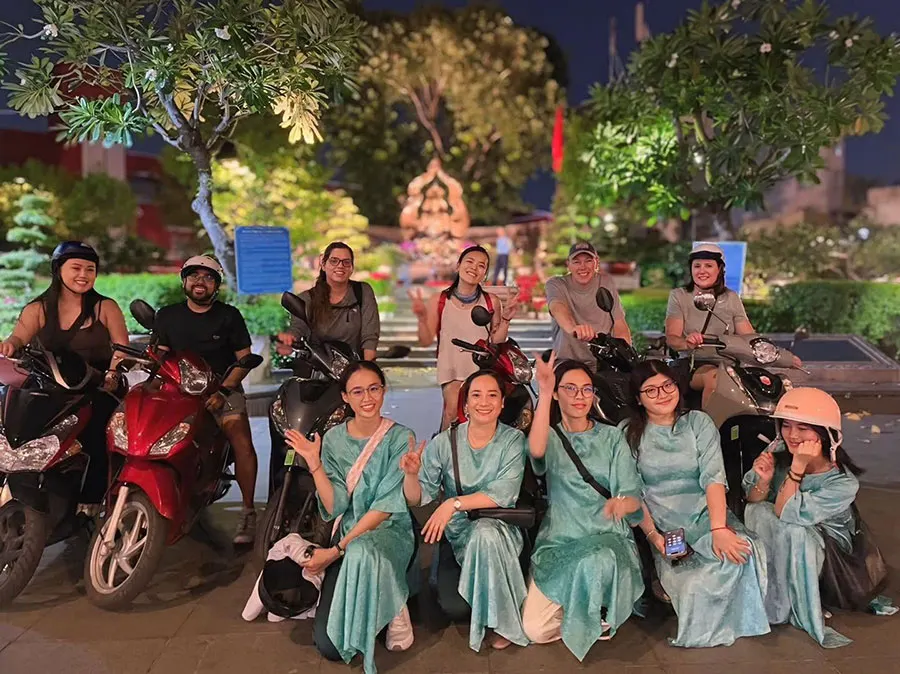
Saigon: Premium Award-Winning Food Tour with Ao Dai Female Riders
A Michelin food tour by scooter in Vietnam elevates the standard street food experience by combining world-class culinary recognition with...
 Bestseller
Saigon Foodie Tour By Scooter With Female Rider (With Beer & Seafood)
Beautiful female tour guides at Saigon Adventure ABOUT THIS TOUR Let us be your guide to experiencing Saigon By Night...
 Bestseller
Vegan Food Tour
Keep your travel plan flexible - book your spot now and pay nothing today! You only need to pay 4...
 Bestseller
Ho Chi Minh City Michelin Food and Live Music Scooter Tour
Welcome to our premier michelin food tour in Ho Chi Minh City! Secure your experience today with Total Flexibility Reserve...
 Bestseller
Premium Saigon Hidden Alleys & History: Private Motorbike Tour
Ho Chi Minh Hidden Alleys & History: Private Motorbike Tour Ready to step off the beaten path and discover the...
 Bestseller
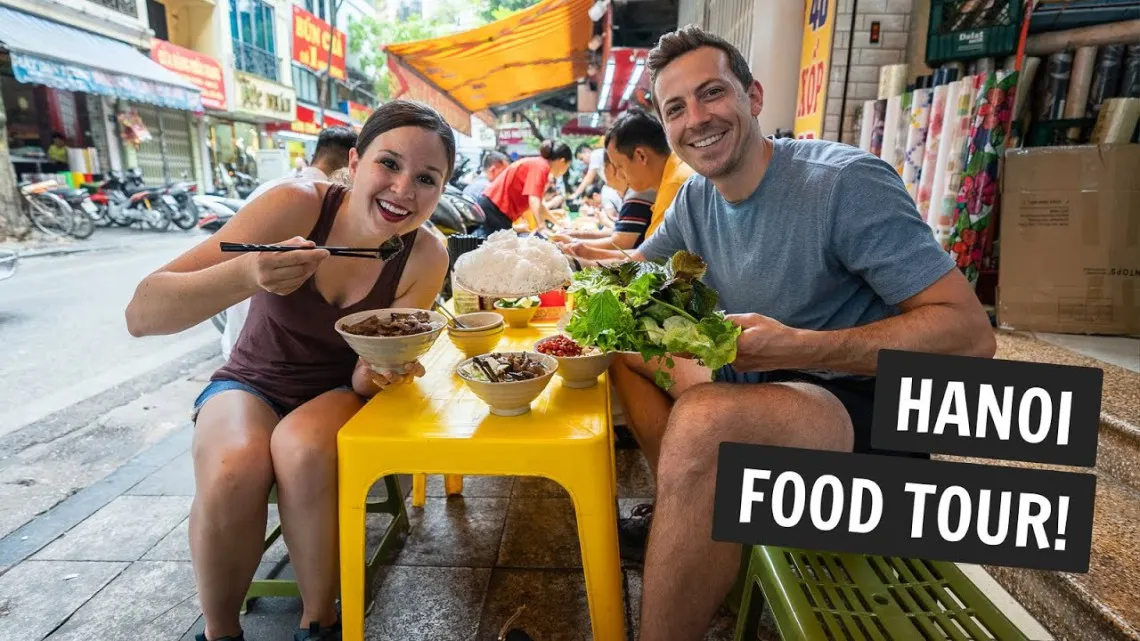
Hanoi Local Food Tour with Train Street and Old Quarter
Discover the flavors and everyday life of Vietnam’s capital on a 3-hour Hanoi local food tour through the historic Old...
 Bestseller
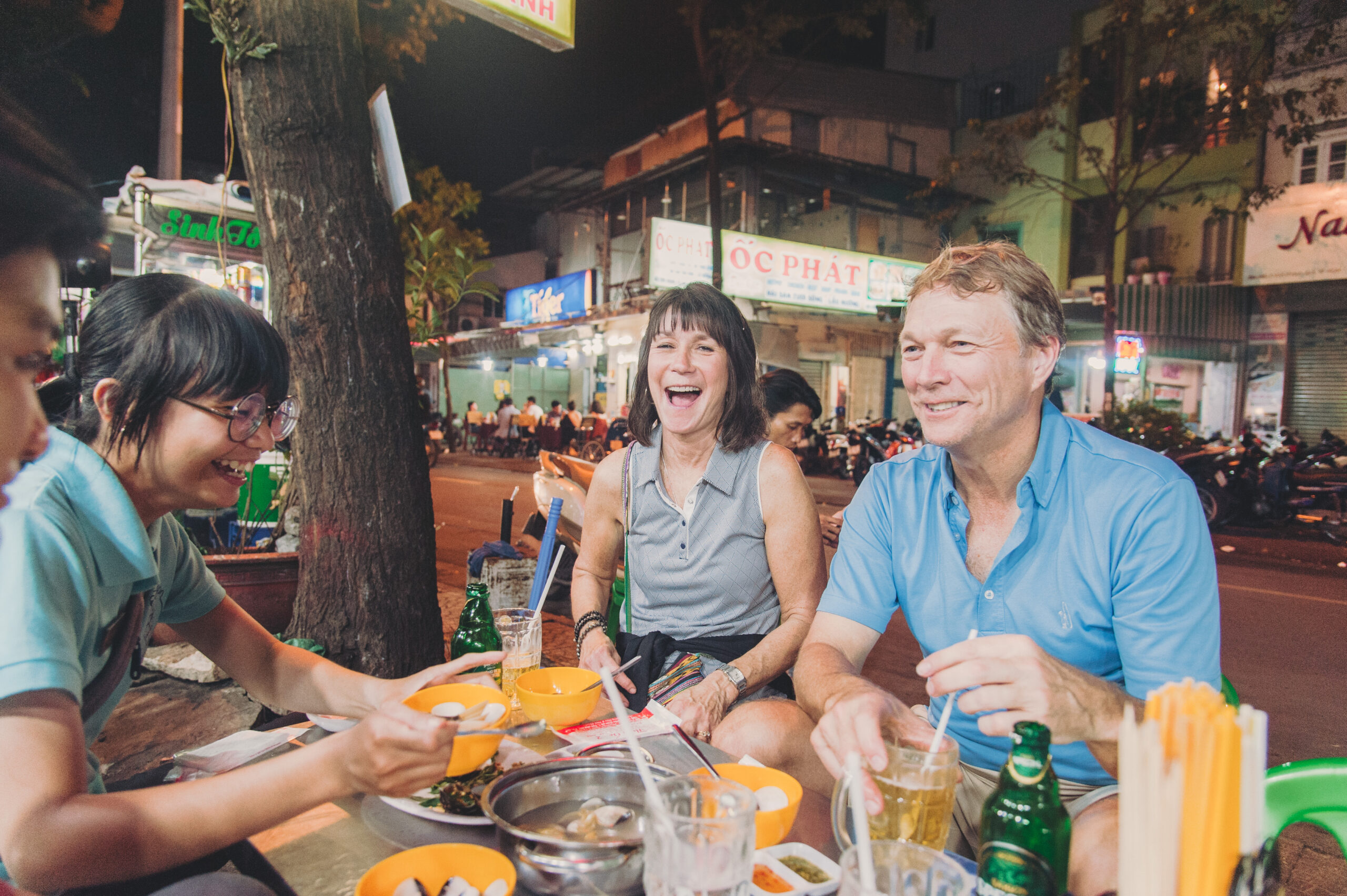
Ho Chi Minh Food Safari With 20 Tastings
Explore Ho Chi Minh City through its food on our Ho Chi Minh Food Safari, featuring 20 authentic street food...
 Bestseller
Saigon | Combo Street Food And Sightseeing Tour By Scooter
Food and Sight Motorbike (Special Combo) Experience the ultimate Saigon adventure! Over 4 thrilling hours, hop on the back of...