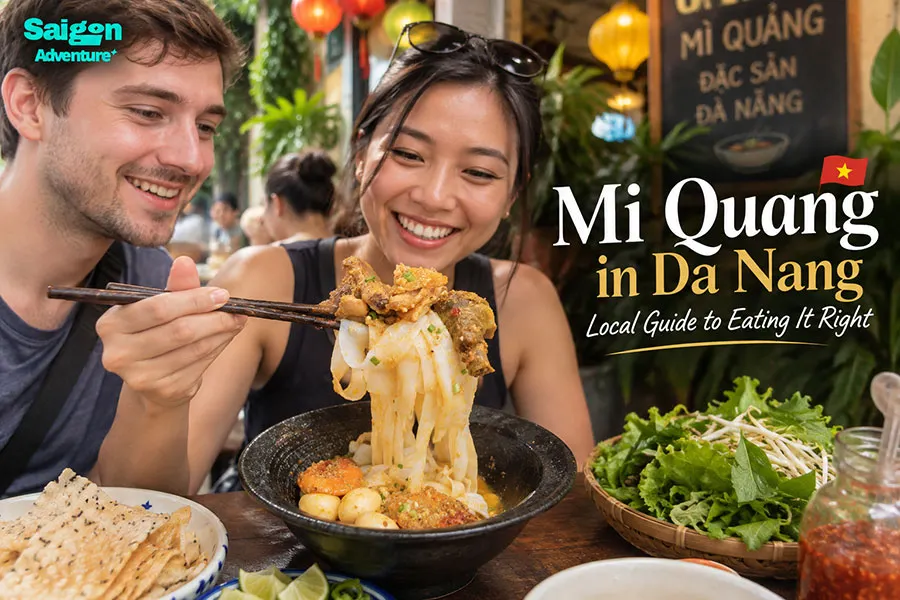
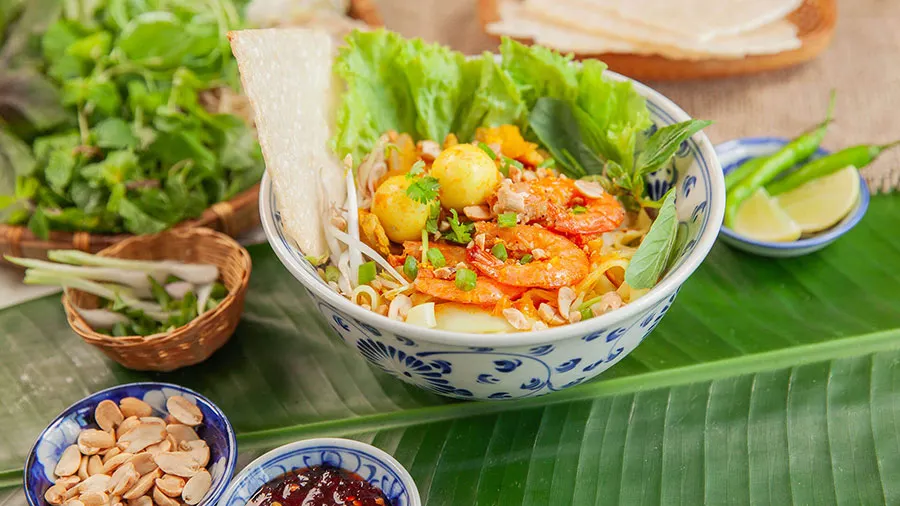
If you want to understand Central Vietnam through one bowl, start with Mi Quang in Da Nang. The dish combines wide rice noodles, a small amount of broth, fresh herbs, peanuts, protein and a crisp rice cracker, but the way those ingredients come together matters as much as the ingredients themselves.
For first-time visitors, the biggest surprise is that Mi Quang is not meant to look like a full bowl of noodle soup. The broth is deliberately shallow and concentrated. Once you know how to mix the bowl, use the herbs and season it gradually, the dish makes much more sense.
What Is Mi Quang?
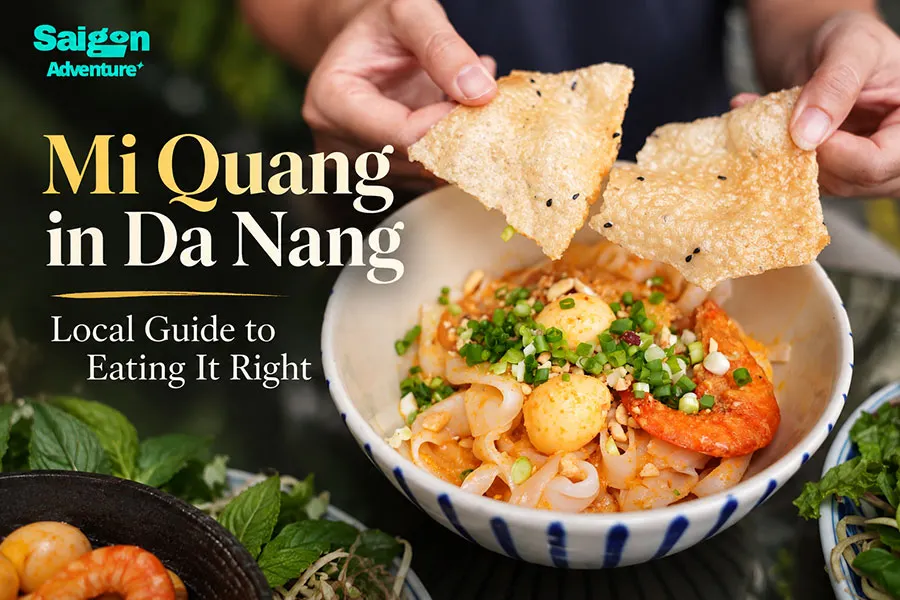
Mi Quang is a Central Vietnamese noodle dish closely associated with Quang Nam and Da Nang. It usually features broad rice noodles served with a small amount of richly seasoned broth, fresh herbs, crushed peanuts and toasted rice cracker, with toppings that vary by cook and restaurant.
Common versions may include shrimp and pork, chicken, fish, frog or mixed toppings. Recipes differ from shop to shop, and the appeal comes from contrast between soft noodles, crunchy peanuts, crisp rice cracker, warm broth and cool herbs.
If you are building a wider itinerary, browse the Da Nang travel collection to combine food stops with the city’s other attractions.
Why Does Mi Quang Have So Little Broth?
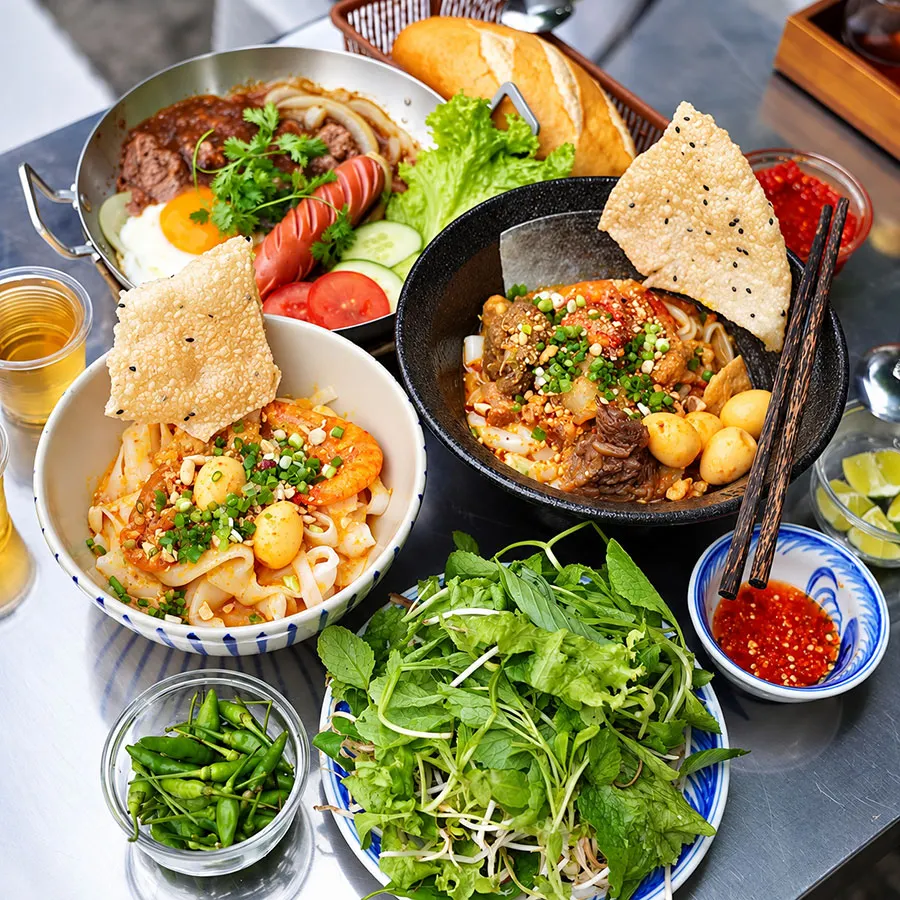
The shallow broth is one of the defining features of Mi Quang. Unlike pho or many other Vietnamese noodle soups, the liquid is not intended to fill the bowl. It sits near the bottom so it can coat the noodles and carry the seasoning.
Before deciding that your serving looks dry, mix it properly. The concentrated broth is meant to spread through the noodles, herbs and toppings as you eat.
For travelers familiar with pho, think of Mi Quang as a noodle bowl with broth rather than a broth-based noodle soup.
How to Eat Mi Quang Like a Local
There is no strict ceremony, but a few habits will help you experience the bowl more naturally.
1. Taste Before Adding Condiments
Your table may have lime, fresh chili, chili paste, fish sauce or other seasonings. Do not add everything immediately.
Taste the bowl first. Different kitchens produce different levels of saltiness, richness and heat, and you cannot remove chili or fish sauce once it has been added.
2. Add the Fresh Herbs
The plate or basket of greens is part of the meal, not decoration. Tear larger leaves into smaller pieces and add enough to bring freshness and texture to the bowl.
The exact herbs vary. If you are unfamiliar with one, try a small amount first rather than adding the whole plate at once.
3. Break the Rice Cracker
A toasted rice cracker, often with sesame, is a familiar part of Mi Quang. Break it into smaller pieces and eat some alongside the noodles or crumble a little into the bowl.
If you like it crunchy, keep part of the cracker dry. Pieces left in the broth soften quickly.
4. Mix From the Bottom Up
Use chopsticks to lift and turn the noodles so the broth at the bottom coats the rest of the bowl. This is the step many first-time visitors miss.
5. Adjust Lime and Chili Gradually
After mixing, add lime for brightness or chili for heat. Central Vietnamese condiments can be stronger than some visitors expect, so add a little, taste again and continue only if needed.
This lets you understand the cook’s original seasoning before adjusting the bowl to your preference.

What Should You Order for Your First Bowl?
For a first Mi Quang in Da Nang, a shrimp-and-pork or chicken version is an approachable choice. These toppings let you focus on the noodles, broth, herbs and rice cracker before trying more unusual variations.
Later, you can explore frog, fish or mixed versions while keeping the same basic noodle-bowl structure.
If the menu is only in Vietnamese, pointing to a photo or asking what the shop is serving that day is perfectly practical. Travelers comparing regional food can also read Saigon Adventure’s guide to the best street food cities in Vietnam.
When Is the Best Time to Eat Mi Quang in Da Nang?
Mi Quang is commonly eaten in the morning and around lunch, although serving times vary by shop. Some small noodle restaurants prepare a limited batch and stop when it sells out, while others stay open later.
Breakfast is a practical choice because it gives you a filling start before sightseeing and leaves the evening free for another Da Nang food experience.
Do not rely on an old social-media post for opening hours. Check recent information before crossing the city for one specific shop.
If you want seafood later in the day, use this Da Nang seafood guide to understand how ordering and pricing work at coastal restaurants.
How to Choose a Good Mi Quang Shop
You do not need a famous restaurant to have a satisfying bowl. Look for a place that specializes in Mi Quang, has steady customer turnover and keeps the preparation area reasonably clean and organized.
A short menu can be useful because the kitchen is focused on a small number of dishes. Busy local tables may signal regular demand, though popularity alone does not guarantee quality.
At markets and neighborhood eateries, observe how ingredients are stored and whether cooked food is served hot. For broader practical advice, read is street food safe in Vietnam for tourists?.
Common Mistakes First-Time Visitors Make
The most common mistake is expecting Mi Quang to behave like pho. If you judge it by the amount of broth, you miss one of the dish’s defining characteristics.
Another mistake is ignoring the herb plate or rice cracker. Both add texture and freshness, so leaving them untouched changes the balance of the bowl.
Avoid covering everything with chili paste before tasting. Also, do not assume every bowl has the same ingredients, especially if you have dietary restrictions.
Do not turn “eating like a local” into a performance. Eat comfortably and use local habits as guidance rather than rigid rules.
Vegetarian, Allergy and Dietary Notes
Vegetarian Mi Quang exists, but a meat-free topping does not automatically mean the broth or seasoning is vegetarian. Look for “Mi Quang chay” and confirm the broth and sauces if this matters to you.
Peanuts are common, while seafood, fish sauce and meat-based broth may appear depending on the recipe. Travelers with serious allergies should carry a clearly translated Vietnamese allergy card.
If a restriction is medically important, choose a restaurant that can explain ingredients clearly. Cross-contact may occur in small kitchens where utensils and cooking surfaces are shared.
Make Mi Quang Part of a Da Nang Food Day
A good food day in Da Nang does not need six heavy meals. Start with Mi Quang for breakfast or lunch, leave time to walk or visit a local market, then choose a different style of meal later.
The value of Mi Quang is not only that it is a well-known regional dish. It also shows how Central Vietnamese cooking can combine concentrated seasoning, fresh herbs and contrasting textures in a simple, satisfying bowl.
For more ideas beyond one dish, explore the Da Nang travel collection and leave some room in your itinerary for spontaneous local food discoveries.
If Mi Quang makes you curious about how people eat across Vietnam, continue with our street food guide for food lovers to discover more regional dishes, markets and everyday food experiences.
Frequently Asked Questions About Mi Quang in Da Nang
Is Mi Quang a soup?
Not in the same way as pho. Mi Quang uses only a shallow amount of concentrated broth, which is mixed through the noodles rather than filling the bowl.
What is usually in Mi Quang?
A typical bowl includes wide rice noodles, a little broth, herbs, peanuts, toasted rice cracker and a protein. Exact toppings and seasonings vary between restaurants.
Should I mix Mi Quang before eating it?
Yes. Gently lift and turn the noodles so the broth at the bottom coats the noodles, herbs and toppings. Then taste before adding extra lime or chili.
What is the crispy cracker served with Mi Quang?
It is usually toasted rice cracker, often with sesame. Break it into smaller pieces and eat it alongside the noodles or add some to the bowl for crunch.
Is Mi Quang spicy?
It does not have to be. Some bowls and condiments are spicy, but diners can often control the heat by adding chili gradually.
Can vegetarians eat Mi Quang in Da Nang?
Yes, vegetarian versions can be found, usually labeled “Mi Quang chay.” Confirm that the broth, sauces and toppings are fully vegetarian if this is important to you.
When should I eat Mi Quang in Da Nang?
Morning and lunchtime are common choices, especially at smaller shops that cook limited quantities. Check current hours if you are visiting a specific restaurant.