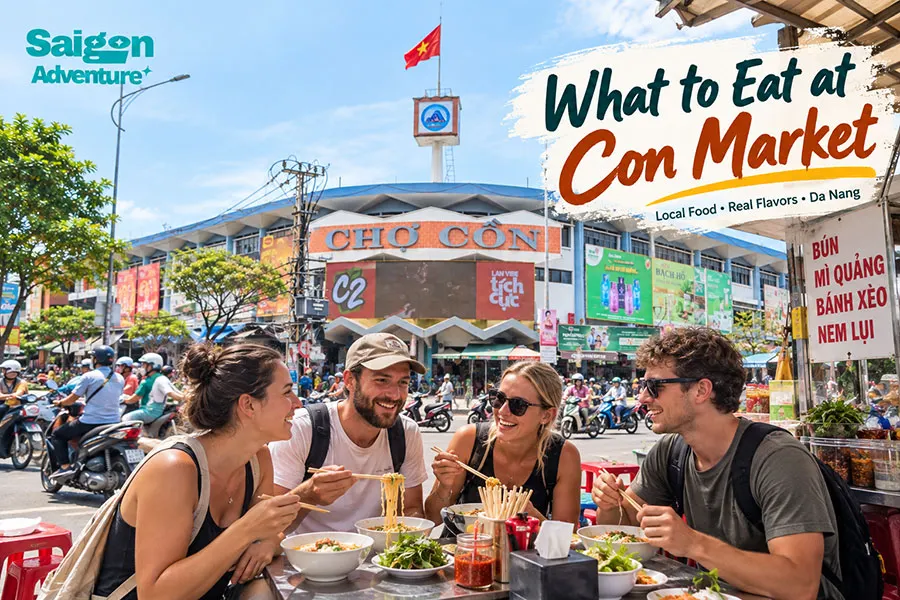
If you are wondering what to eat at Con Market, the smartest approach is not to order the biggest bowl you see. Begin with a small steamed cake, move through a roll-your-own dish, share one Central Vietnamese main course, sample a snack and finish with something sweet.
This self-guided route is designed for first-time visitors who want to experience several flavors without becoming full at the first counter. It also explains how to order, ask about ingredients and navigate a busy local market with confidence.
Con Market is an active marketplace rather than a food hall created specifically for tourists. Expect compact seats, narrow passages, quick service and vendors concentrating on their work. That everyday atmosphere is part of the appeal.
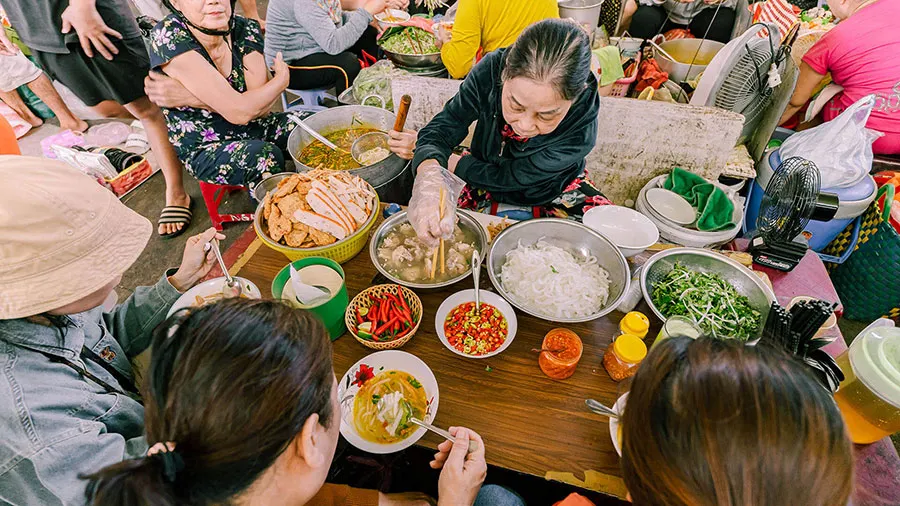
Where Is Con Market in Da Nang?
Con Market is commonly listed at 290 Hung Vuong Street in central Da Nang, close to the junction with Ong Ich Khiem Street. Its central location makes it relatively convenient to combine with other city attractions, although the market deserves enough time to explore without rushing.
The market sells much more than ready-to-eat food. Shoppers come for fresh ingredients, dried products, clothing, household items and everyday necessities, creating an experience that feels different from a conventional restaurant visit.
For food lovers, its main attraction is variety within a compact area. Travelers can encounter steamed rice cakes, noodles, rolls, fermented sauces, snacks and desserts without crossing the city between every dish.
Visitors planning a wider Central Vietnam itinerary can browse the Da Nang travel collection before deciding how the market fits into their day.
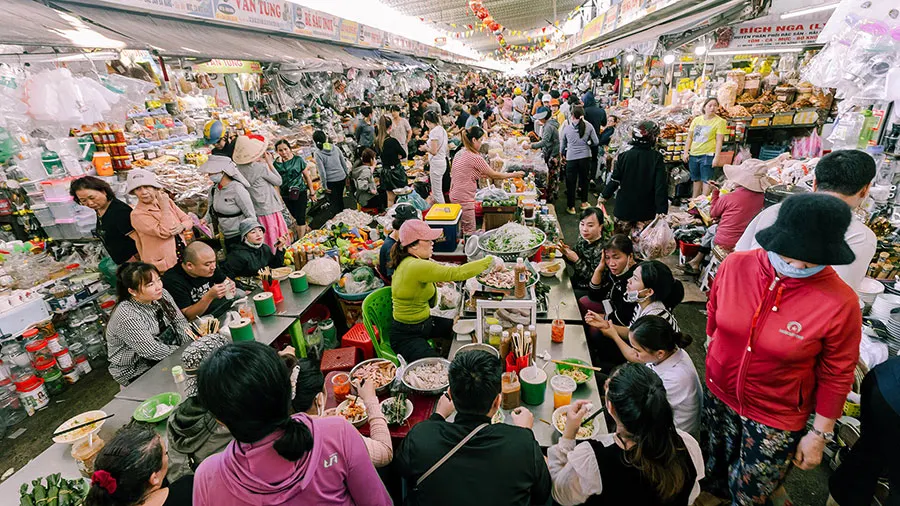
When Should You Visit Con Market for Food?
Late morning through the afternoon is generally a practical period for exploring the food sections. More stalls are likely to be active than very early in the morning, while visitors still have time to compare counters without arriving close to closing.
Operating times and food availability can vary between vendors. A dish seen online may not be available on the day of your visit, so treat this route as a flexible sequence rather than a checklist that must be completed exactly.
Avoid arriving with a completely empty stomach if that makes you order impulsively. The aim is to taste gradually, pause between stops and save room for the final dessert.
Local Tip: Go with at least one other person. Sharing portions with a friend or family member makes it much easier to try five or six dishes without wasting food.
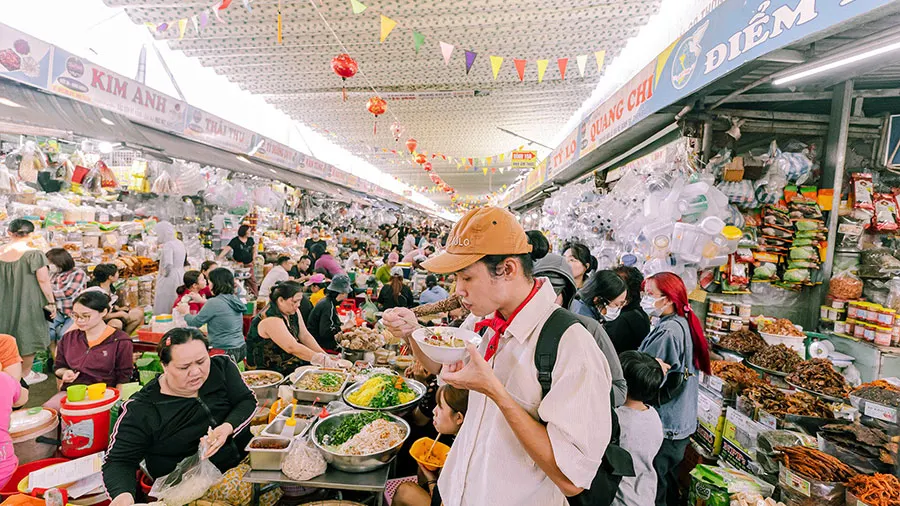
Indoor Food Counters vs Outside Stalls
The indoor food area usually feels more contained, with small counters and seats arranged close together. It can be useful for beginning your route because you can look at several dishes, observe how they are served and choose a manageable first portion.
The food stalls around the market may feel busier and more spontaneous. Depending on the time of day, you may encounter snacks, fruit, drinks and dishes prepared for people shopping or stopping briefly on their way home.
Neither area is automatically better. Walk through both before ordering, notice where food is being prepared and choose a counter where the ingredients and working area look well maintained.
A stall being popular with local diners can be a helpful sign of turnover, but it does not guarantee that every dish will suit your taste or dietary needs. Always ask about the ingredients that matter to you.
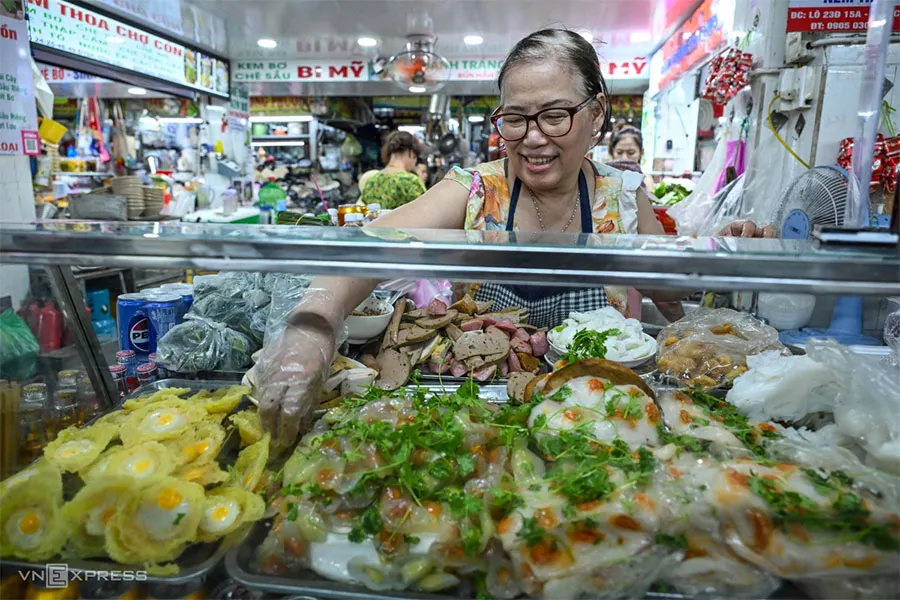
How to Order Without Filling Up Too Early
Before starting, decide whether you want one substantial main course or several smaller tastes. A sensible route for two people might include two small starters, one shared bowl, one snack and one dessert each.
Ask whether a small serving is available and share whenever practical. Do not order a full bowl at the first stop simply because you are hungry; Central Vietnamese noodles and roll-your-own dishes can be more filling than they appear.
Useful Vietnamese phrases include:
- Không cay – Not spicy
- Ít cay – A little spicy
- Không mắm – No fermented or fish-based sauce
- Không thịt heo – No pork
- Không hải sản – No seafood
- Bao nhiêu tiền? – How much is it?
- Phần nhỏ được không? – Can I have a small portion?
- Món này có gì? – What is in this dish?
“Không mắm” may not remove fish-based ingredients already included in a broth, filling or dressing. If you have an allergy, show the ingredient written in Vietnamese and ask clearly before ordering.
Stop 1: Begin With Bánh Bèo or Bánh Bột Lọc
Start with something small enough to awaken your appetite without controlling the rest of the route. Bánh bèo and bánh bột lọc both work well, but ordering one rather than both will leave more space for later stops.
Bánh bèo consists of small steamed rice cakes, typically served with savory toppings and a seasoned dipping sauce. Its soft texture and modest size make it an approachable introduction to the rice-based snacks found across Central Vietnam.
Bánh bột lọc has a chewier, more translucent wrapper and commonly contains a savory filling. Pork or shrimp may be used, so travelers avoiding either ingredient should ask before ordering.
Taste the cake first and add the dipping sauce gradually. Central Vietnamese sauces can be salty, sweet, spicy or fish-forward, and pouring everything over the dish immediately gives you little control.
Stop 2: Wrap Ram Cuốn Cải or Nem Lụi
The second stop introduces a more interactive style of eating. Depending on what is available, choose ram cuốn cải or nem lụi and share one serving between your group.
Ram cuốn cải combines crisp fried rolls with mustard greens, herbs and rice paper. Place a modest amount in the wrapper, fold the sides inward and roll it firmly before dipping.
Nem lụi is usually served with grilled meat, rice paper, fresh vegetables and sauce. Rather than stuffing the wrapper until it breaks, use a small amount of each component and make several compact rolls.
This stop is more filling than the steamed cakes, so resist the temptation to finish all the rice paper and herbs simply because they are on the table. Confirm whether the sauce contains peanuts, seafood ingredients or fermented products if these are a concern.
Stop 3: Make Mì Quảng Your Main Course
Now move to the route’s main dish. Mì Quảng is closely associated with Central Vietnam and combines broad rice noodles with herbs, toppings, a modest amount of concentrated broth and crisp rice cracker.
Unlike a large bowl of soup, mì Quảng is not supposed to be submerged in liquid. Mix the noodles gently so the broth coats the other ingredients, then break a little rice cracker over the bowl for extra texture.
Toppings vary and may include pork, chicken, shrimp, egg or combinations of these. Ask what is included rather than assuming every bowl follows the same recipe.
One bowl shared between two people is usually the most practical choice on a multi-stop route. If you want a full individual portion, consider skipping the next strong-flavored noodle stop and moving directly to a lighter snack.
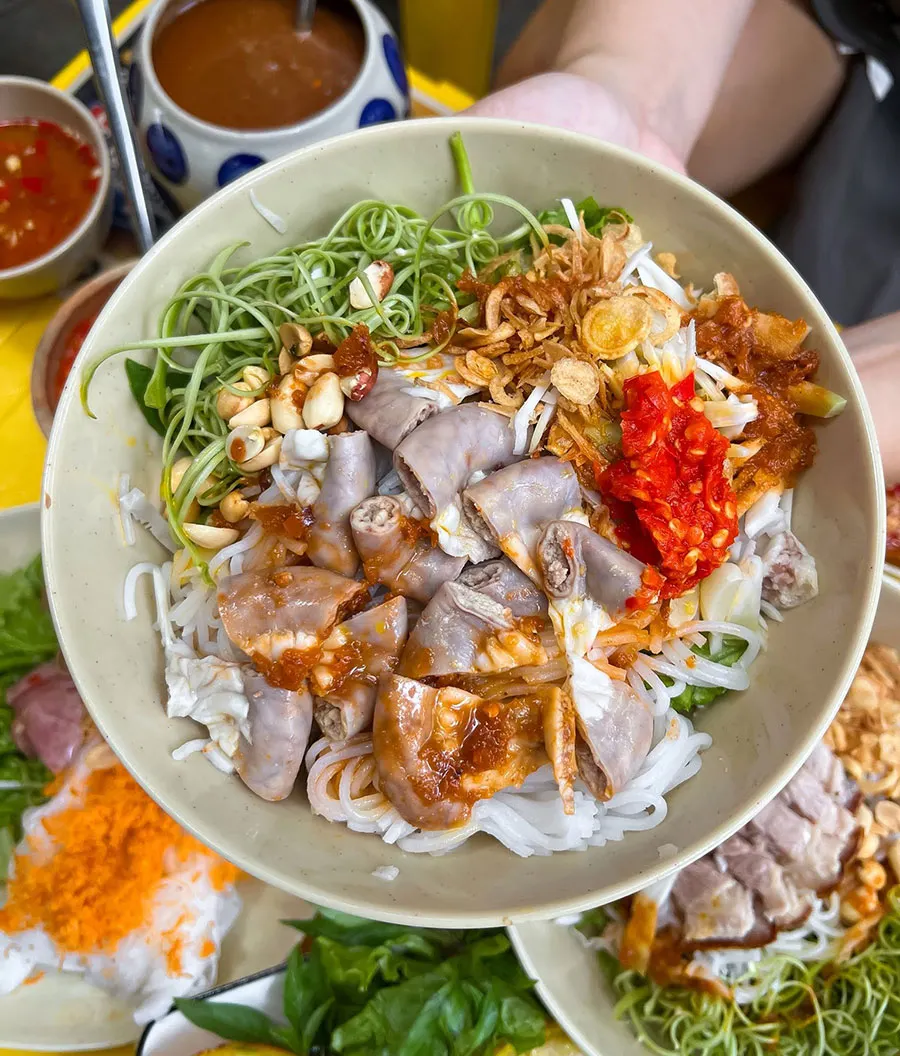
Stop 4: Try Bún Mắm Nêm—If You Enjoy Bold Flavors
Bún mắm nêm offers a sharper transition after mì Quảng. It usually brings together rice noodles, vegetables, herbs and savory toppings with mắm nêm, a fermented sauce known for its strong aroma and deeply salty, umami-rich character.
For travelers unfamiliar with fermented fish flavors, ask for the sauce on the side if possible. Add a small amount, mix and taste before deciding whether you want more.
This should be an optional tasting stop rather than a compulsory second main course. Share a small portion, choose it instead of mì Quảng or simply watch how local customers eat it if you know fermented seafood is not for you.
Vietnam’s relationship with markets, portable dishes and shared tables extends far beyond one destination. Understanding why street food in Vietnam is so famous can add useful cultural context to what you observe at Con Market.
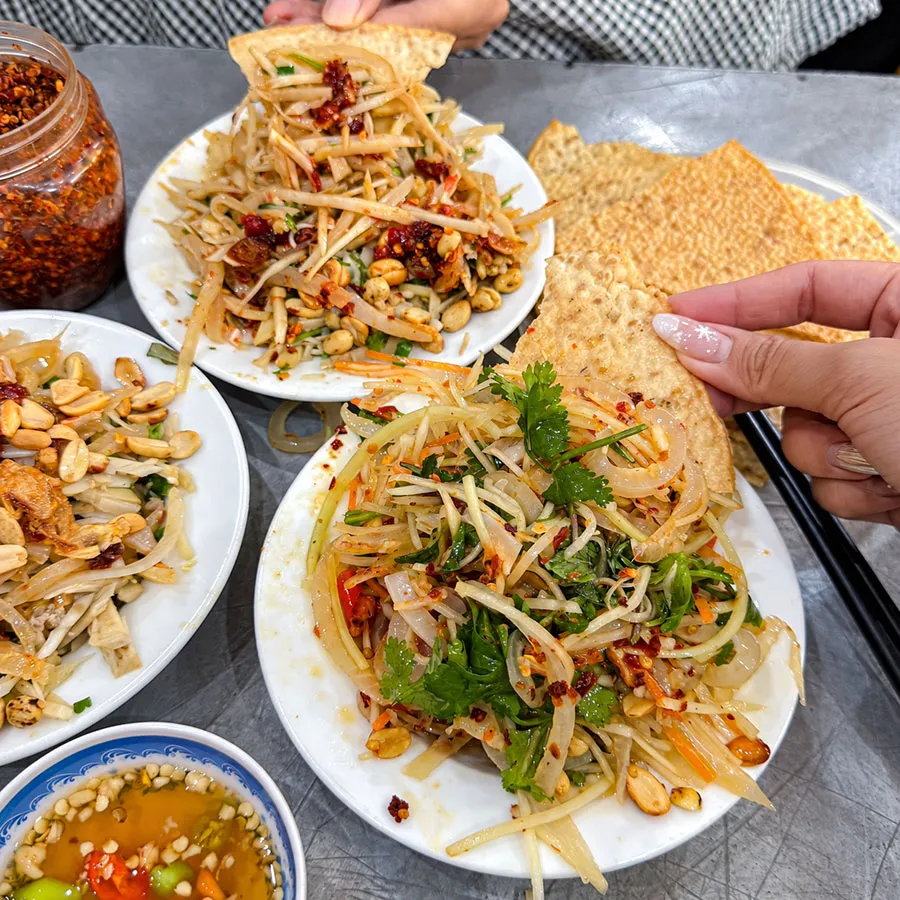
Stop 5: Reset Your Palate With Mít Trộn
After the noodles, look for a lighter local snack such as mít trộn. The dish commonly uses young jackfruit mixed with herbs and savory ingredients, producing a combination of soft, chewy, fresh and crunchy textures.
Recipes vary between sellers, and additions may include pork, seafood-based seasonings or peanuts. Ask what is in the prepared mixture because removing one ingredient after everything has been combined may not be possible.
Order one plate for the table and eat it slowly. Its herbs and varied textures create a welcome change after the richer sauces of the previous stops.
Stop 6: Share Ốc Hút or Another Local Snack
If your group still has room, choose a social snack rather than another bowl of noodles. Ốc hút—small snails cooked with aromatic seasoning—is eaten slowly, making it better for sharing and conversation than for a hurried meal.
Ask the vendor to demonstrate how to eat it if you are unsure. The seasoning may be spicy, and the dish is unsuitable for anyone with a shellfish allergy.
Availability changes, so an alternative snack is perfectly acceptable. Let what looks freshly prepared guide the choice instead of searching the entire market for one specific item.
Travelers whose main interest is coastal dining can continue with this practical Da Nang seafood guide, which covers a different experience from market snacking.
Stop 7: Finish With Chè or a Cooling Drink
End the route with chè or a simple cold drink. Chè is a broad category of Vietnamese sweet dishes that may contain beans, jelly, fruit, coconut milk or other ingredients depending on the variety.
Look at the available containers and ask the seller what each option contains. If you dislike very sweet desserts, request less syrup or choose a fruit-based drink instead.
This final stop offers a natural moment to sit, cool down and consider which flavor surprised you most. It also prevents the route from ending abruptly after a spicy or strongly fermented dish.
Is Con Market Suitable for Vegetarians and Travelers With Allergies?
Vegetarian visitors may find fruit, drinks, sweets and some plant-based snacks, but a dish that looks meat-free can still contain fish sauce, shrimp seasoning, pork stock or other animal ingredients. Use the phrase “Tôi ăn chay”—“I am vegetarian”—and ask about both the topping and the sauce.
For allergies, do not rely only on removing a visible ingredient. Cross-contact can occur in compact kitchens where utensils, grills, oils and preparation surfaces are shared.
Carry a translated allergy card that states the ingredient and the seriousness of your allergy. If communication remains uncertain, it is safer to skip the dish than to make assumptions.
Practical Tips for a Comfortable Visit
Bring small-denomination Vietnamese cash and ask the price before ordering. Con Market can suit a budget-conscious food experience, but the total still depends on your choices and how many portions you order.
Carry tissues and hand sanitizer, especially if you plan to handle rice paper or shared snacks. Choose food that appears freshly cooked and served hot when appropriate.
Keep your phone, wallet and bag secure in crowded passages. Do not stand in the middle of an aisle to frame a photo, and ask permission before photographing a vendor at close range.
Most importantly, stay flexible. The most enjoyable route may differ from the plan because a dish is unavailable, a counter is crowded or you discover something you would rather try.
Is Con Market Worth Visiting for Food?
Yes—Con Market is worth visiting for travelers who want to sample several Central Vietnamese flavors in an energetic, everyday setting. Its value lies not in finding one universally “famous” stall but in observing how people shop, order and eat within a working local market.
The experience is better when you arrive with realistic expectations. Seats may be compact, service can move quickly and not every vendor will speak English, yet simple phrases and patient observation go a long way.
Come with a friend or family member, share small portions and allow the route to change with availability. If you prefer help identifying ingredients and communicating dietary needs, exploring Da Nang with a local guide can add valuable context—but independent visitors can still have a rewarding food journey with thoughtful planning.
For more local experiences across Vietnam, visit Saigon Adventure and continue building a trip around the places, people and flavors that interest you most.
Frequently Asked Questions
What food should I try first at Con Market?
Begin with a small serving of bánh bèo or bánh bột lọc. Both provide an accessible introduction to Central Vietnamese flavors without filling you up before the main dishes.
What is the best time to visit Con Market for food?
Late morning through the afternoon is generally practical, although individual stalls follow their own schedules. Check current market information and avoid arriving too close to closing time.
How many dishes can two people reasonably share?
Two people can build a varied route from several small portions, one shared main dish, a snack and dessert. Appetite and serving size vary, so pause before ordering the next stop.
Is food at Con Market suitable for budget travelers?
The market can be a budget-friendly place to try local food. Bring small cash notes, ask the price before ordering and share portions to manage both spending and appetite.
Can I eat at Con Market if I do not like spicy food?
Yes. Say “không cay” for no chili or “ít cay” for less chili, and request sauces separately when possible. Remember that a dish may still contain pepper or strongly flavored fermented ingredients.
Are vegetarian dishes available at Con Market?
Some suitable options may be available, but sauces, broths and toppings can contain hidden animal ingredients. Say “Tôi ăn chay” and confirm the ingredients directly with the seller.
Is Con Market easy to explore without a guide?
Yes, especially with this route, small cash notes and a few Vietnamese phrases. A local guide is helpful for deeper explanations or complex dietary requirements, but independent exploration is entirely possible.