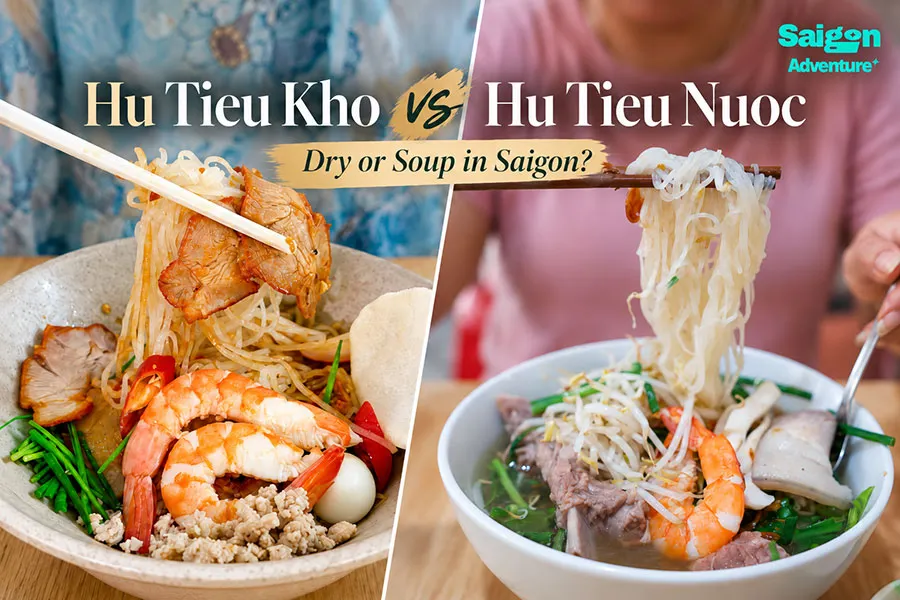
If you order hu tieu in Saigon, one of the first questions you may hear is simple: “Kho or nuoc?” In other words, do you want your noodles dry, with broth on the side, or served directly in soup? For first-time visitors, that small choice can change the whole experience.
Both versions use the same basic idea—noodles, toppings, herbs and a light savory broth—but they eat very differently. Hu tieu kho gives you firmer noodles coated in sauce and a separate bowl of broth, while hu tieu nuoc brings everything together in one comforting bowl. If you can try only one, the dry version is especially worth considering because it shows a side of Saigon noodle culture that many visitors do not expect.
What Is the Difference Between Hu Tieu Kho and Hu Tieu Nuoc?
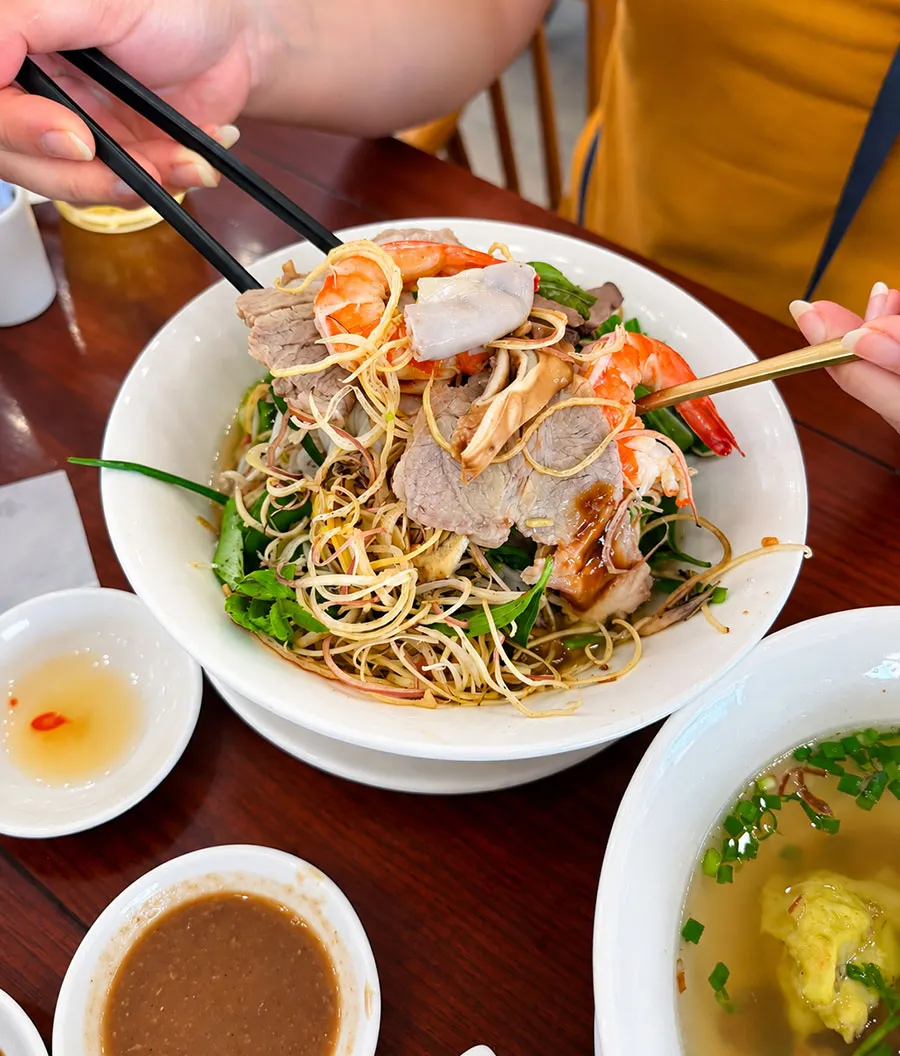
Hu tieu kho means “dry hu tieu,” although the name can be misleading. The noodles are usually tossed with a seasoned sauce, topped with meat or seafood depending on the shop, and accompanied by a small bowl of hot broth. Hu tieu nuoc is the soup version, with the noodles, toppings and broth arriving together in one bowl.
The important point is that the choice is not simply “with broth” or “without broth.” With hu tieu kho, you still get broth—you just enjoy it separately. For a broader introduction to the dish, including common styles and ordering tips, read our guide to the best hu tieu in Ho Chi Minh City.
Why Try Hu Tieu Kho in Saigon?
The biggest appeal of hu tieu kho is texture. Because the noodles are not sitting in a full bowl of broth, they can retain more bite, while the sauce clings directly to each strand. The seasoning can feel more concentrated on the noodles than in the soup version.
Depending on the shop, the sauce may lean savory, slightly sweet or garlicky. The separate broth creates a two-part rhythm: take a few bites of noodles, then sip the hot broth. This lets you taste the seasoned noodles and cleaner broth separately.
For travelers who associate Vietnamese noodles mainly with pho, hu tieu kho can feel especially distinctive. It shows that a local noodle meal does not always have to arrive as one large bowl of soup.
Who Is Hu Tieu Kho Best For?
Choose the dry version if you enjoy firmer noodles, stronger seasoning and contrasting textures. It is also a good choice if you like mixing your own bowl and adjusting the balance with herbs, lime or chili.
Why Choose Hu Tieu Nuoc Instead?
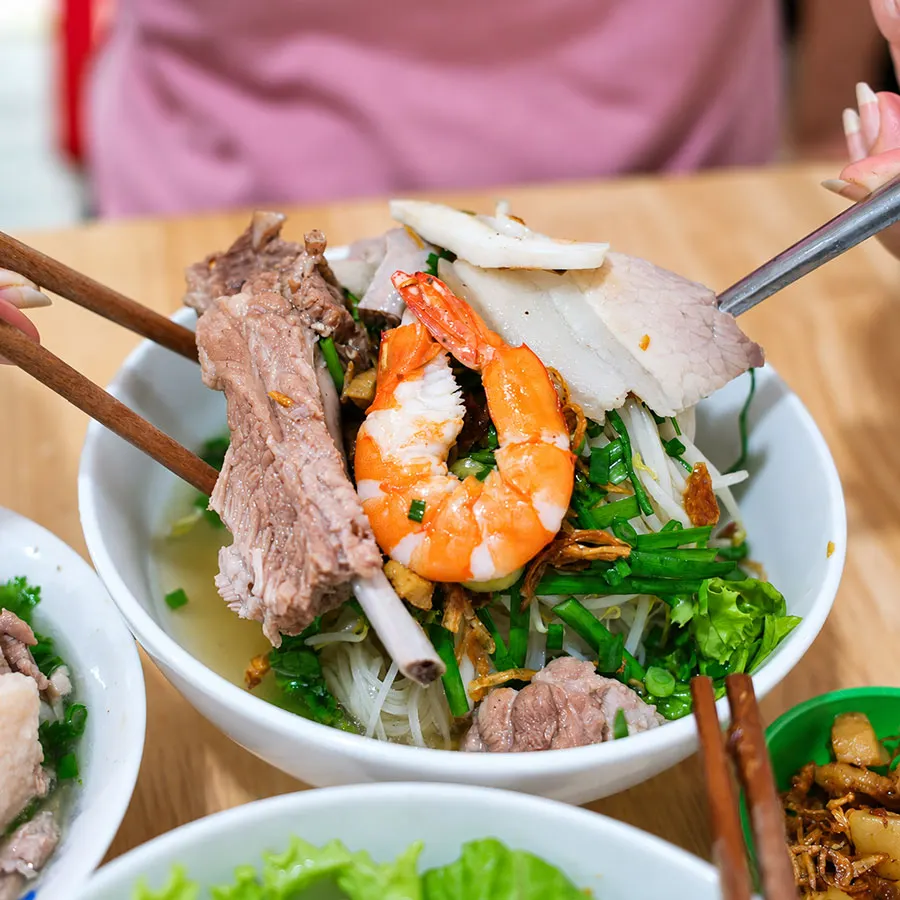
Hu tieu nuoc is straightforward, warm and easy to understand. The broth surrounds the noodles and toppings, so every spoonful combines several parts of the dish at once. This version naturally places more attention on the broth.
Toppings vary widely, but pork, shrimp, minced meat, quail egg and other additions are common in different Saigon versions. Soup hu tieu is also easier for travelers who want a familiar eating style because there is no need to alternate between two bowls.
If you are exploring the wider local food scene, our guide to the best street food in Ho Chi Minh City places hu tieu alongside other everyday Saigon favorites.
Who Is Hu Tieu Nuoc Best For?
Choose hu tieu nuoc if you want a lighter, more integrated bowl and prefer sipping broth with your noodles. It is a comfortable starting point for travelers who love noodle soups but have never tried hu tieu before.
Dry vs Soup Hu Tieu: Which Tastes Better?
There is no universal winner because the better choice depends on what you enjoy most. Hu tieu kho usually emphasizes the noodles and sauce, while hu tieu nuoc emphasizes the broth and the way all the ingredients come together.
If you like bold seasoning and texture, start with dry. If you prefer a soothing noodle soup with less mixing, choose soup. Traveling with another person makes the decision easier: order one of each and compare.
Recipes differ between shops, so tasting both is more useful than assuming every dry or soup version will taste the same.
How to Order Hu Tieu Dry or Soup in Saigon
Ordering is simple once you know two phrases. Say “hu tieu kho” for the dry version and “hu tieu nuoc” for the soup version. If a stall offers several noodle types or topping combinations, the server may ask additional questions, so pointing to a menu photo can help when language becomes difficult.
Do not assume “dac biet,” or special, means the same toppings everywhere. A fuller serving can include ingredients such as pork, shrimp, liver, intestine or quail egg depending on the shop, so ask before ordering if you avoid offal or have dietary restrictions. For more confidence around neighborhood dining, see our guide to eating like a local in Ho Chi Minh City.
How to Eat Hu Tieu Kho
When the dry bowl arrives, mix the noodles thoroughly before your first bite. Much of the seasoning may sit lower in the bowl, so eating from the top without mixing can make the flavor uneven. Taste the noodles before adding chili, lime or extra sauce, then adjust gradually.
Sip the broth separately between bites. You can also add a small spoonful to loosen the noodles if you prefer, but you do not need to turn the dry bowl into soup. Fresh herbs and bean sprouts may be served on the side, so add only what you enjoy.
How to Eat Hu Tieu Nuoc
With soup hu tieu, start by tasting the broth before adding condiments. This helps you notice its natural balance before chili or lime changes it. Then loosen the noodles with chopsticks and combine them with the toppings.
Add herbs, sprouts or chili in small amounts, and eat while the bowl is hot because the noodles will continue to soften in the broth. Travelers who enjoy discovering dishes in context can also explore a Saigon motorbike food tour, where local guides introduce food, neighborhoods and dining customs along the route.
Common Mistakes First-Time Visitors Make
The first mistake is thinking “dry” means no broth. Hu tieu kho normally comes with broth on the side, so you are not giving up the soup entirely. The second is adding too many condiments before tasting, which can hide the flavor you came to try.
Another mistake is expecting every shop to serve identical toppings. Hu tieu is flexible, and recipes can change according to the style and vendor. Finally, do not treat hu tieu as simply another version of pho; it belongs to a different Southern noodle tradition and offers its own choices in noodles, toppings and serving style.
Hu tieu is also a good starting point for understanding Saigon’s wider street food culture. Travelers who want to explore more local dishes, neighborhood markets and everyday dining spots can experience them on a Saigon street food tour with a local guide.
If You Can Try Only One, Choose Dry First
For a first food-focused visit to Saigon, hu tieu kho is the more distinctive choice. You get seasoned noodles, toppings and a separate bowl of broth, so one order lets you experience two textures and two ways of tasting the dish.
That does not make the soup version inferior. Hu tieu nuoc is comforting and often the better choice for travelers who want a familiar noodle-bowl format. If your trip includes several meals in the city, try both on different days.
After that, continue exploring beyond a single dish with our guide to what to eat in Ho Chi Minh City besides pho and banh mi.
Frequently Asked Questions
Is Hu Tieu Better Dry or With Soup?
Neither is objectively better. Dry hu tieu suits travelers who prefer chewy noodles and concentrated seasoning, while soup hu tieu is better for those who want the noodles, toppings and broth together.
Does Dry Hu Tieu Still Come With Soup?
Yes. Hu tieu kho is typically served with a separate bowl of broth, while the noodles themselves are mixed with sauce rather than submerged in soup.
What Should a First-Time Visitor Order?
If you want the more distinctive experience, start with hu tieu kho. If you prefer a gentler introduction to the dish, hu tieu nuoc is the easier choice.
Is Hu Tieu the Same as Pho?
No. Hu tieu differs from pho in its noodles, broth, toppings and the option to order it dry with broth on the side.
Can I Ask for Hu Tieu Without Offal?
Usually you can request unwanted toppings to be left out, but ingredients vary by shop. Ask clearly before ordering, especially if you have allergies or strict dietary requirements.
Can I Share One Dry and One Soup Bowl With a Friend?
Yes. Ordering one hu tieu kho and one hu tieu nuoc is a practical way to compare noodle texture, seasoning and broth while both bowls are still hot.