
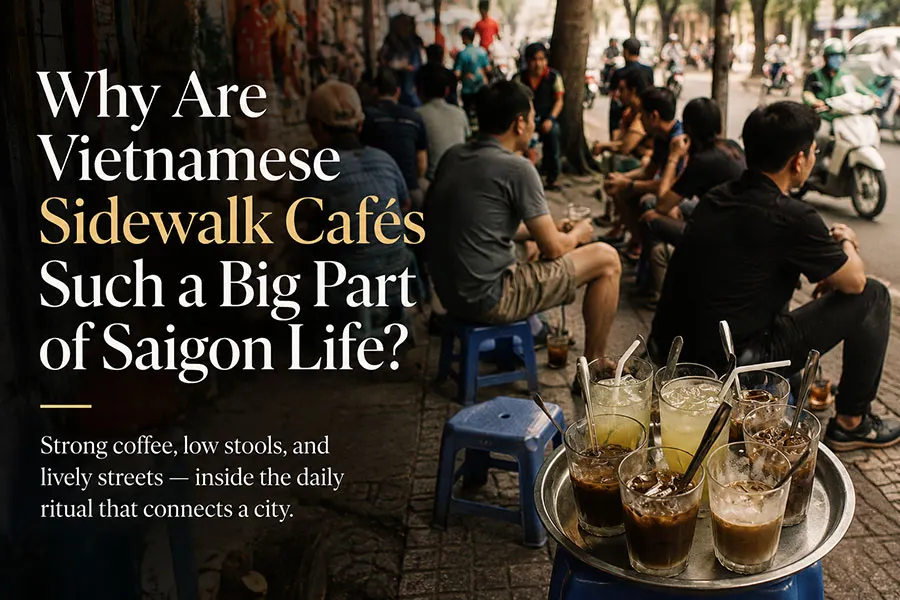
Before Saigon’s office towers fill and its shopping malls switch on their lights, the sidewalks are already awake. Metal coffee filters drip slowly over glasses, spoons strike ice, motorbikes hum past, and neighbors lean toward one another on tiny plastic stools.
Nothing about the scene appears luxurious. A typical sidewalk café may consist of an umbrella, several low tables, a handwritten menu and a vendor who remembers exactly how every regular takes their coffee.
Yet these modest street-side cafés hold a remarkable place in daily life. They are meeting rooms, observation decks, neighborhood noticeboards and open-air living rooms—all for the price of one drink.
For travelers, sitting at a Vietnamese sidewalk café is more than a caffeine stop. It is one of the simplest ways to feel Saigon rather than merely look at it.
Why Are Sidewalk Cafés So Important in Saigon?
Vietnamese sidewalk coffee culture is an essential part of Saigon life because it brings people together in affordable, welcoming public spaces. From early morning coffee on tiny plastic stools to relaxed conversations beside busy streets, these cafés reflect the city’s social connections and everyday rhythms. For travelers, enjoying a traditional Vietnamese coffee at a sidewalk café is one of the simplest ways to experience authentic local life in Ho Chi Minh City.

Sidewalk cafés are Saigon’s open-air living rooms
Ho Chi Minh City is densely populated, and private living space can be limited. For generations, residents have extended parts of everyday life beyond their front doors, turning sidewalks and alley entrances into places for eating, working and socializing.
A street coffee stall fits naturally into this urban rhythm. People can meet without making reservations, dressing formally or committing to an expensive meal.
The setting is public, but it often feels personal. Café owners learn their customers’ routines, preferred drinks and usual arrival times, while regulars recognize one another even when they have never formally exchanged names.
This familiarity explains why many customers return to the same simple stall for years. They are not only buying coffee; they are returning to a small community where their presence is noticed.
Coffee gives a fast city permission to slow down
Saigon moves quickly. Traffic rarely pauses, businesses open early, and daily life seems to unfold in several directions at once.
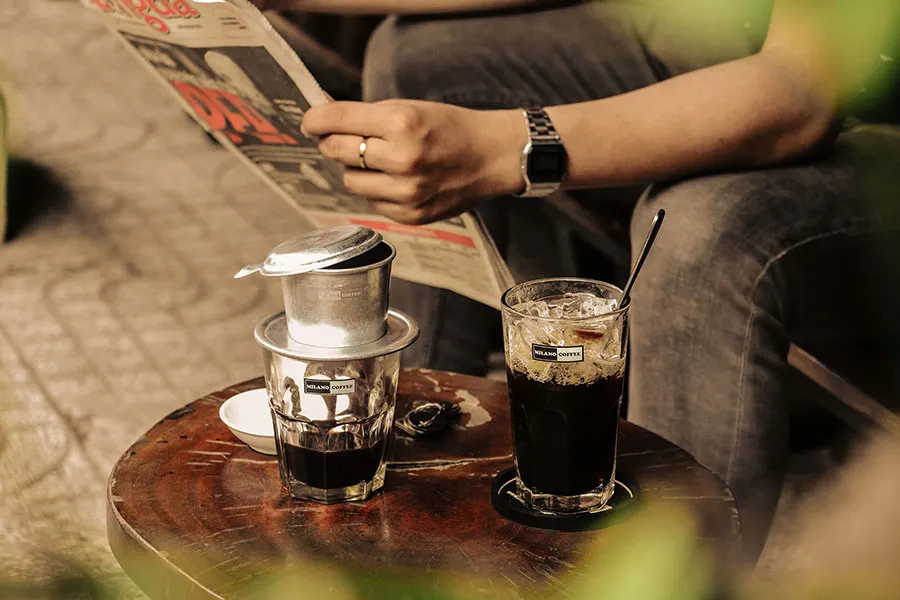
Sidewalk coffee creates a counter-rhythm. A glass of cà phê sữa đá may sit unfinished while its owner reads the news, checks messages, discusses work or simply watches the street.
In some countries, lingering over a low-cost drink may feel unusual. In Saigon, time is part of what the coffee stall provides.
The drink gives people a reason to stop without needing a formal event. Even 20 quiet minutes at a local café can restore a sense of space in the middle of an energetic city.

Morning coffee reveals Saigon at its most local
Early morning is the best time to witness traditional Saigon coffee culture. The heat is gentler, breakfast vendors are busy, and familiar customers arrive before work.
You may hear the faint drip of coffee passing through a metal phin, followed by the sharp clink of ice against glass. Nearby, someone unfolds a newspaper while another customer calls across two tables to greet a friend.
By 8:00 or 9:00 AM, the crowd begins to change. Office workers, students, delivery drivers and business owners stop briefly before continuing their day.
This is also an excellent time to combine coffee with a food tour in Ho Chi Minh City, when breakfast stalls and neighborhood markets offer a lively introduction to local eating habits.
Afternoon cafés become urban shelters
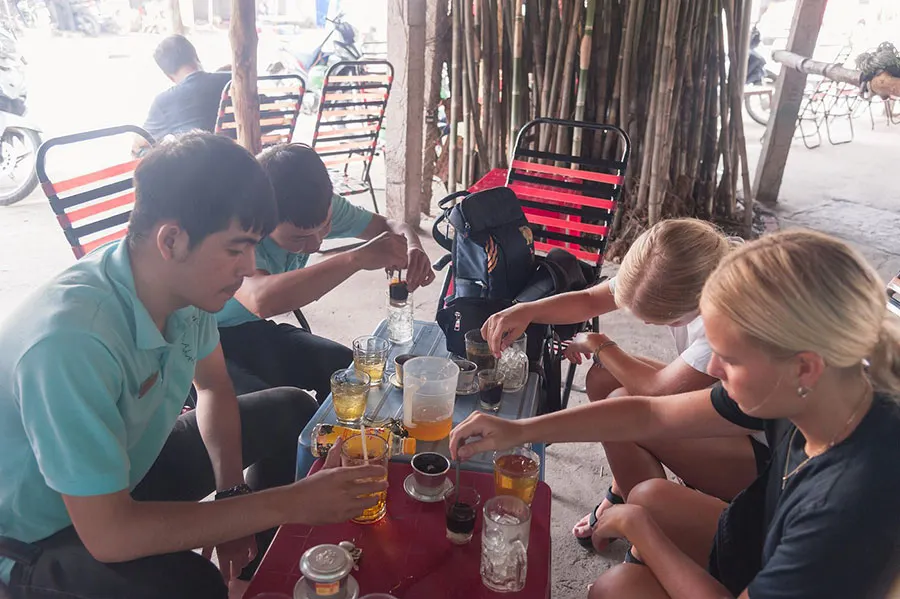
During the hottest part of the day, shaded sidewalk cafés offer an inexpensive place to rest. Customers gather beneath awnings, trees and umbrellas with iced coffee, tea or fresh coconut.
The atmosphere is often quieter than in the morning. Workers pause between appointments, friends talk without watching the clock, and long-time residents sit facing the street as if it were a familiar television channel.
When the sun begins to soften, the sidewalks become active again. Some cafés welcome an evening crowd, while others pack their tables away so the same space can serve another purpose.

Why are the stools at Vietnamese cafés so small?
The low plastic stool has become an unofficial symbol of Vietnamese street life. It is light, inexpensive, easy to wash and practical for businesses that must adapt to limited space.
Owners can rearrange an entire café within minutes when rain begins or pedestrian traffic increases. At closing time, the furniture can be stacked and stored without requiring a large building.
Small stools also shape the social atmosphere. Customers sit close together and at a similar level, making the café feel more communal and less formal.
For first-time visitors, the seating may require a little adjustment. Select a sturdy stool, keep your feet away from the road and place your bag where it will not block the narrow walkway.
The plastic stool is not simply a quirky photo opportunity. It reflects the flexibility, resourcefulness and shared use of space that characterize much of everyday Saigon life.
What do locals drink at Saigon sidewalk cafés?
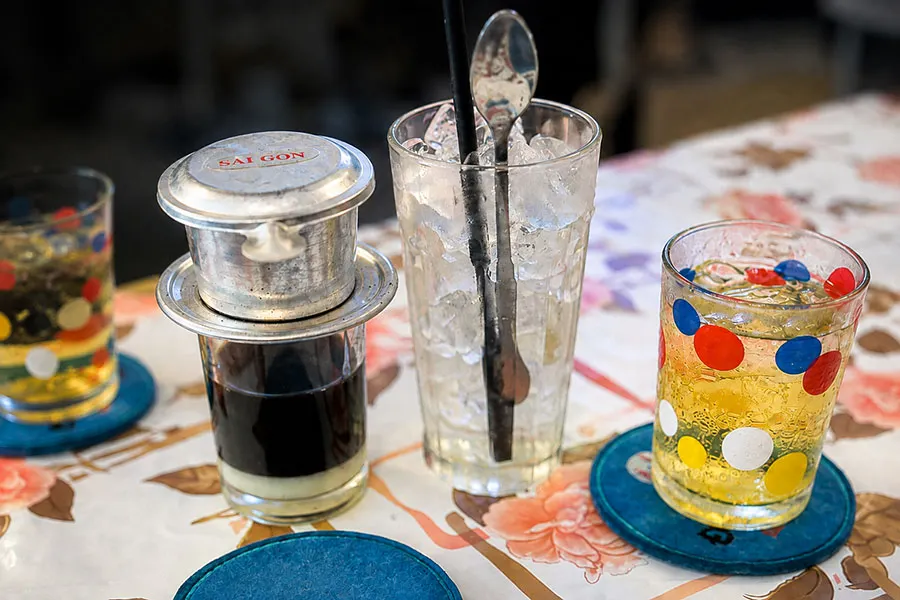
The most recognizable order is cà phê sữa đá—strong Vietnamese coffee mixed with sweetened condensed milk and poured over ice. Its intense, bitter-sweet flavor works particularly well in Saigon’s tropical heat.
Those who prefer coffee without milk can order cà phê đen đá, or iced black coffee. Ask for ít ngọt if you want less sweetness, although the result may still taste sweeter than coffee served in many Western countries.
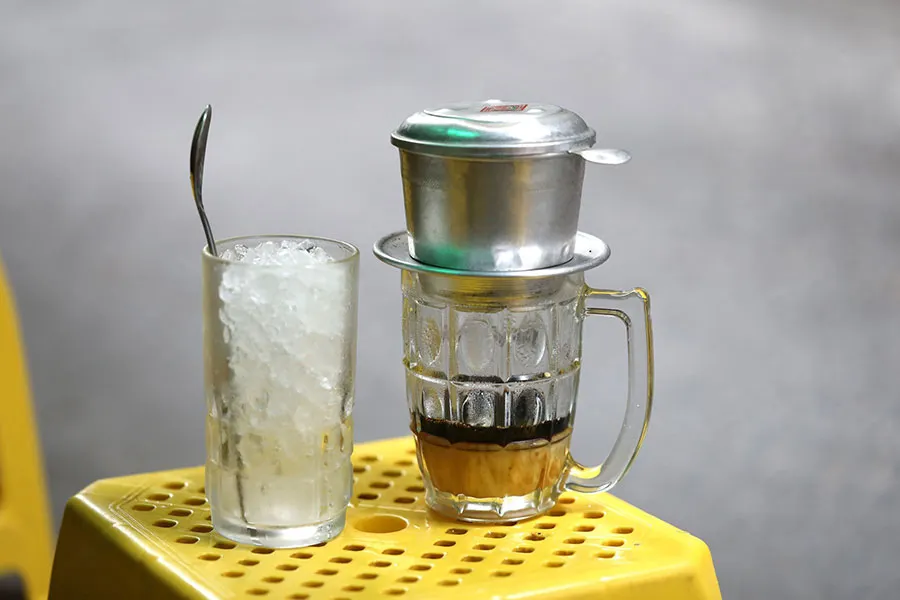
Some traditional vendors brew each serving with a metal phin filter. Others prepare coffee in batches during busy periods, especially when commuters expect quick service.
Coffee is not the only option. Depending on the stall, the menu may include iced tea, soft drinks, fresh coconut, sugarcane juice or bottled water.
Popular Vietnamese Sidewalk Coffee Drinks and Prices
One of the best things about Vietnamese sidewalk coffee culture is how accessible it is. Traditional neighborhood cafés often serve familiar drinks at modest prices, making it easy to experience local coffee habits without spending much.
| Vietnamese Drink | What to Expect | Typical Budget Price |
|---|---|---|
| Cà phê sữa đá | Strong iced coffee with sweetened condensed milk | 15,000–30,000 VND |
| Cà phê đen đá | Bold iced black coffee, sometimes sweetened | 12,000–25,000 VND |
| Cà phê sữa nóng | Hot coffee with condensed milk | 15,000–30,000 VND |
| Bạc xỉu | A sweeter, milkier coffee with a gentler coffee flavor | 18,000–35,000 VND |
| Trà đá | Simple iced tea, often served alongside coffee | Free–10,000 VND |
Prices are approximate planning ranges for modest local cafés, not verified prices at specific establishments. Tourist-oriented cafés and specialty shops may charge more.
Local Tip: If Vietnamese coffee tastes too strong, start with bạc xỉu. It contains more milk and offers a sweeter, smoother introduction to Saigon coffee culture.
Travelers interested in exploring beyond coffee can discover more neighborhood flavors on a Saigon street food tour, where drinks are experienced alongside the dishes locals actually eat.
Useful phrases for ordering Vietnamese coffee
A few simple phrases make ordering easier and often lead to a warmer interaction:
- Một cà phê sữa đá: One iced coffee with condensed milk
- Một cà phê đen đá: One iced black coffee
- Ít ngọt: Less sweet
- Không đường: No sugar
- Không đá: No ice
- Bao nhiêu tiền?: How much is it?
- Cảm ơn: Thank you
Do not worry about perfect pronunciation. Speak slowly, smile and point to a drink when needed; most vendors will understand what you are trying to order.
If you want to explore different drinks, ordering tips and the best times for a coffee stop, read our sidewalk coffee guide to Ho Chi Minh City.
Sidewalk coffee connects different generations
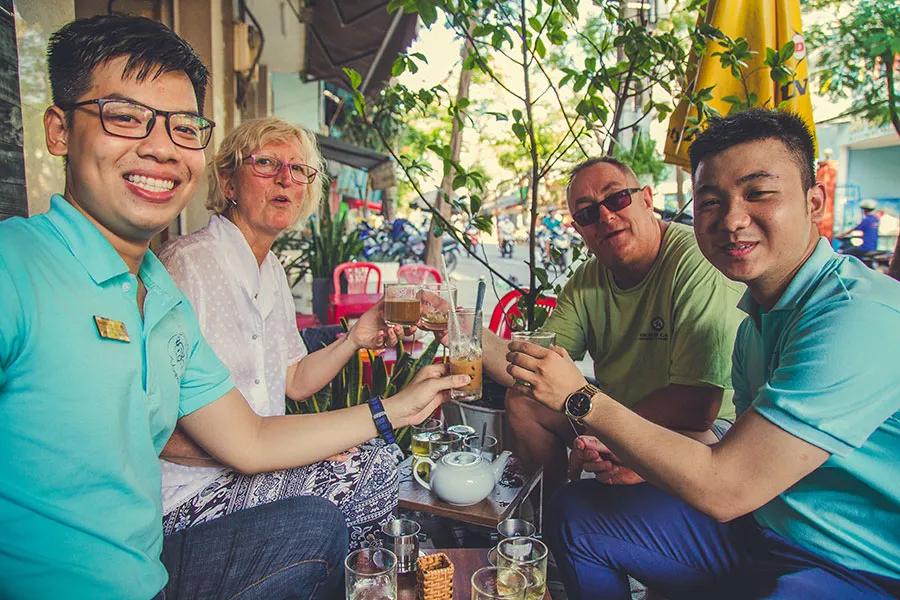
One reason Vietnamese sidewalk cafés remain relevant is their accessibility. Customers do not need a reservation, formal clothes or a generous travel budget.
Older residents may visit the same neighborhood stall each morning, following routines established over many years. Students and young professionals also use street cafés for quick meetings, casual conversations and inexpensive drinks.
Modern specialty coffee shops have become increasingly visible across Ho Chi Minh City, but they have not erased the sidewalk tradition. Many residents enjoy both, choosing between them according to mood, convenience and company.
An air-conditioned café may suit focused work or a long afternoon. A sidewalk table is often better for spontaneous conversation and direct contact with the neighborhood.
Every table offers a front-row view of Saigon
Famous landmarks tell visitors about a city’s history. Sidewalk cafés reveal how the city lives between those landmarks.
From one seat, you may watch a bánh mì vendor preparing breakfast, schoolchildren riding past with their parents, shopkeepers opening metal shutters and delivery drivers navigating a narrow alley.
These scenes are not performances arranged for tourists. They are ordinary moments that gradually form a more honest portrait of Ho Chi Minh City.
The open setting also encourages small interactions. A stranger may help translate your order, move a stool into the shade or point out that your drink has arrived.
This is why coffee on the sidewalk feels different from sitting behind a café window. The boundary between customer, business and neighborhood is never completely closed.
A guided Ho Chi Minh City motorbike tour can add useful context, connecting these everyday scenes with the history, communities and hidden corners that shaped them.
Where to find authentic sidewalk cafés in Saigon
District 1 has convenient street cafés, but those close to major attractions may be busier and more visitor-oriented. Walk a few streets away from landmarks such as Ben Thanh Market or Nguyen Hue Walking Street, and the atmosphere can change quickly.
If you are exploring central Saigon, combine your coffee stop with local specialties using our guide to what to eat in District 1 Ho Chi Minh City.
District 3 is especially rewarding for its shaded roads, older houses and mixture of traditional coffee stalls and contemporary cafés. Bình Thạnh and Phú Nhuận also offer abundant neighborhood coffee culture away from the busiest tourist routes.
District 5 provides a different backdrop, shaped by the history and food traditions of Chợ Lớn, Saigon’s Chinatown. Here, coffee stalls sit beside markets, family businesses and long-established places of worship.
Some of the most memorable cafés are hidden inside residential lanes. Exploring these smaller streets on one of Saigon’s walking tours can reveal places that are easy to miss when traveling only by taxi or main road.
An authentic café does not have to be unknown or completely free of tourists. Look for a place with a natural flow of local customers, a comfortable atmosphere and drinks being prepared with care.
Best Areas to Experience Saigon Sidewalk Coffee Culture
You do not need to visit a famous café to enjoy Vietnamese street coffee. Some of the most interesting experiences happen in ordinary neighborhoods where residents gather before work or meet friends in the late afternoon.
| Area | What Makes It Special | Best For |
|---|---|---|
| District 1 | Convenient central streets and cafés near local businesses | First-time visitors |
| District 3 | Shaded streets, older architecture and neighborhood coffee stalls | Relaxed mornings and photography |
| Bình Thạnh | Busy residential streets and everyday local cafés | Observing daily Saigon life |
| Phú Nhuận | Neighborhood coffee spots away from major tourist attractions | Travelers seeking a quieter atmosphere |
| District 5 – Chợ Lớn | Traditional markets, local businesses and Chinese-Vietnamese cultural influences | Culture and food enthusiasts |
Local Tip: Walk a few streets away from major attractions before choosing a café. Look for small tables occupied by neighborhood regulars, freshly prepared drinks and shaded seating away from heavy traffic.
Instead of searching for the most Instagram-famous coffee shop, choose somewhere comfortable and spend 20–30 minutes watching how the neighborhood changes around you.
How to choose a comfortable street café
Begin by observing the stall for a minute. A steady stream of customers, a tidy preparation area and clean-looking glasses are positive signs.
Choose a table set back from heavy traffic if you are sensitive to noise or exhaust. A shaded alley entrance or tree-lined side street usually provides a more relaxing first experience than a stool beside a major intersection.
Pay attention to how cups, utensils and ice are handled. If the setup does not feel comfortable, keep walking—another coffee stall is rarely far away in Saigon.
Prices are sometimes displayed, but small local cafés may use only a simple menu or none at all. Ask the price before ordering if you are uncertain, especially in highly visited areas.
Sidewalk café etiquette travelers should know
Keep bags close to your body and avoid using extra stools for belongings when the café is crowded. These businesses often operate with limited seating, particularly during the morning rush.
Do not photograph customers at close range without permission. Wide images of the general street scene may feel less intrusive, but local residents should never be treated as props in a travel photograph.
Payment customs vary. Some vendors collect money when serving the drink, while others expect customers to pay before leaving; watch what regulars do or ask politely.
Tipping is not normally required at small coffee stalls. Paying the stated amount without bargaining is an appropriate way to support a local business.
Local tip: sit safely and protect your belongings
Avoid holding your phone toward the road while taking photographs or checking directions. Keep handbags between your feet, against a wall or securely across your body rather than hanging loosely from a stool.
Remain aware without becoming anxious. The same sensible precautions used in any large city are usually enough to enjoy the experience comfortably.
Are sidewalk cafés suitable for first-time visitors?
Yes. You only need to be comfortable with simple seating, open-air surroundings and a service style that may be less structured than in a conventional coffee shop.
Start on a quiet side street if busy traffic feels overwhelming. Order something familiar and stay long enough to notice the café’s natural rhythm.
There is no need to turn the experience into a checklist item. The value appears when you stop concentrating on “trying Vietnamese coffee” and begin observing the conversations, sounds and movements around you.
That shift—from spectator to temporary participant—is what makes a humble coffee stop memorable.
How to Experience a Vietnamese Sidewalk Café Like a Local
Experiencing Saigon coffee culture does not require an expensive coffee-tasting session or a carefully planned itinerary. A simple neighborhood café can offer one of the most memorable moments of your visit.
Start with a morning coffee. Arrive between 6:30 and 8:30 AM, when many neighborhoods are waking up. You may see office workers stopping for iced coffee, older residents reading the news and breakfast vendors preparing their first customers’ meals.
Choose a drink you will enjoy. Cà phê sữa đá is an excellent introduction if you like strong, sweet coffee. Bạc xỉu is better for visitors who prefer a milder, milkier flavor.
Take a seat and slow down. Find a stable plastic stool away from moving traffic. There is no need to rush through your drink, although you should avoid occupying limited seating for too long during busy periods.
Enjoy the little details. Listen to conversations, watch motorbikes passing through the neighborhood and notice how customers interact with the café owner. These small moments reveal more about everyday Saigon life than a staged cultural performance.
Respect local routines. Keep the pedestrian path clear, ask permission before photographing people and pay the stated price without bargaining.
Local Tip: Combine your morning coffee with a nearby bánh mì or breakfast stop. It is an easy way to experience two everyday Saigon traditions without following a crowded sightseeing route.
Why sidewalk cafés still define Saigon life
Ho Chi Minh City continues to change, with high-rise buildings, international chains and elegant specialty cafés reshaping its streets. Sidewalk coffee survives because it offers something indoor spaces cannot fully reproduce: immediate contact with the city.
These cafés are affordable, flexible and socially open. They allow people to claim a small place in public life, even when that place consists of one stool and half a table.
For international visitors, the experience offers a valuable reminder that Saigon is not understood only through museums and monuments. Its character also lives in melting ice, slow conversation, passing motorbikes and the aroma of coffee drifting across a warm pavement.
Slow down and experience the Saigon locals know
Take a seat, order a cold coffee and allow the next half-hour to remain unscheduled. Saigon’s most memorable stories do not always wait inside famous attractions; sometimes they unfold around a tiny table beside the street.
For a deeper look at the cafés, markets, alleys and communities behind the city’s energetic surface, join a locally guided Saigon city tour by motorbike. Travel with a local host, leave the standard tourist trail and discover the everyday Ho Chi Minh City that many visitors pass without seeing.
Frequently asked questions about Vietnamese sidewalk cafés
What is a Vietnamese sidewalk café?
A Vietnamese sidewalk café is an informal open-air drink stall set up along a pavement, alley or building frontage. It commonly uses low plastic stools and serves coffee, tea and cold drinks to neighborhood customers.
Why is coffee culture so important in Saigon?
Coffee provides space for conversation, rest and social connection in a fast-moving city. Sidewalk cafés are affordable and accessible, allowing people from different generations to share public space comfortably.
What coffee should first-time visitors order?
Try cà phê sữa đá if you enjoy strong, sweet iced coffee. Choose cà phê đen đá for iced black coffee, or request ít ngọt if you prefer less sweetness.
What is the best time to visit a Saigon sidewalk café?
Early morning offers cooler weather and the liveliest glimpse of neighborhood routines. Late afternoon is another pleasant time, particularly once the strongest heat begins to fade.
Are Vietnamese sidewalk cafés safe for tourists?
They are generally easy to enjoy with ordinary city precautions. Keep valuables secure, avoid holding your phone toward moving traffic and choose a clean, well-frequented stall.
Do sidewalk cafés have English menus?
Cafés in central districts may offer English menus, while smaller neighborhood stalls often do not. Basic Vietnamese phrases, pointing or a translation app will usually be sufficient.
Do you need to tip at a sidewalk café in Vietnam?
Tipping is not generally expected at small sidewalk cafés. Pay the requested price politely and avoid bargaining over an already inexpensive drink.