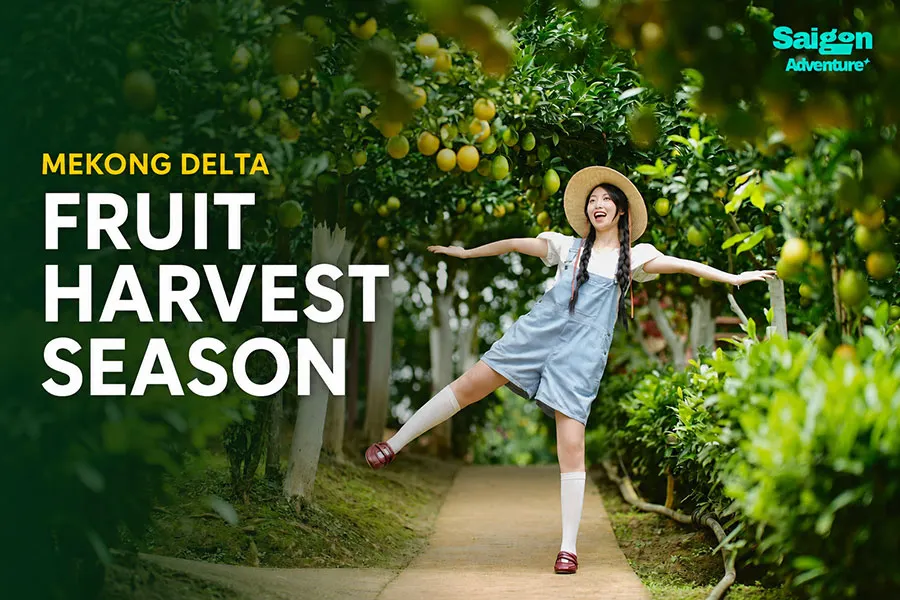
The first thing you notice is the color. Clusters of crimson rambutans glow beneath dark green leaves, pomelos hang like lanterns above narrow canals, and wooden boats sit low in the water under the weight of pineapples, bananas and durians.
Then come the sounds: pruning shears clipping stems, baskets landing on wooden platforms and small engines carrying produce toward riverside markets. Sweet fruit, damp soil and tropical rain mingle in the warm air.
This is the Mekong Delta during fruit harvest season—lush, busy and far less polished than a staged tourist garden. It is a working landscape where orchards, waterways, family homes and local commerce remain closely connected.
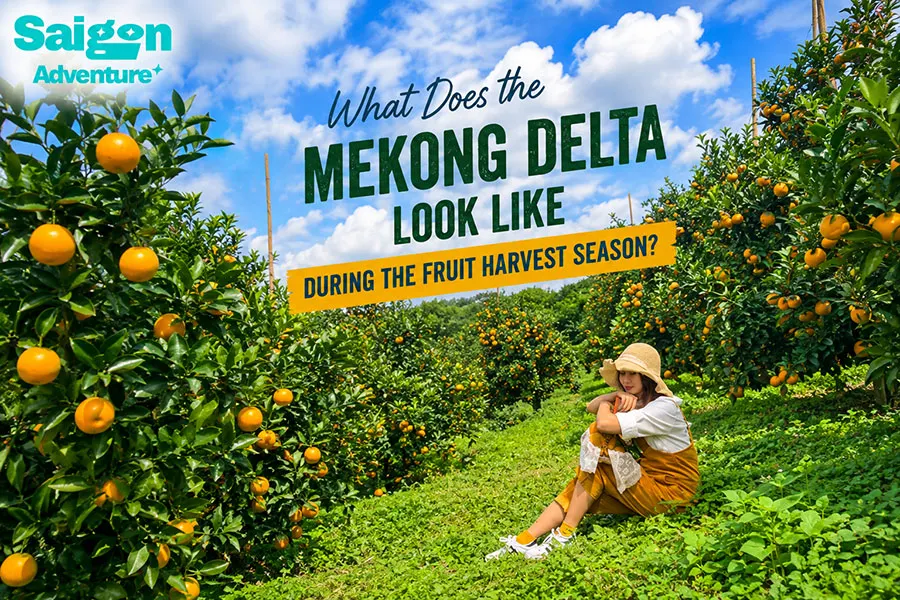
When Is Fruit Harvest Season in the Mekong Delta?
The Mekong Delta produces fruit throughout the year. Its tropical climate, alluvial soil and extensive irrigation system allow farmers to grow bananas, coconuts, papayas, guavas and several citrus varieties across different seasons.
However, the main Mekong Delta fruit season generally runs from May to August. June, July and August are especially rewarding because many rambutan, mangosteen, durian, longan and mango varieties reach maturity during this period.
There is no single harvest date for the entire delta. The region covers numerous provinces, while flowering times, rainfall, farming techniques and fruit varieties can shift each harvest by several weeks.
That variation matters when planning an orchard tour. One farm may be full of ripe rambutans while another nearby orchard is waiting for its durians or longans to mature.
Is June to August the Best Time for Fruit?
For travelers hoping to see the widest variety, June to August is usually the strongest period. Vietnam’s official tourism information also identifies these months as the main fruit-ripening season around Can Tho.
This period overlaps with southern Vietnam’s rainy season. The countryside becomes intensely green, but orchard paths may be muddy and sudden tropical showers are common.
Rain does not necessarily ruin the experience. A brief downpour can cool the air, deepen the colors of the garden and leave raindrops shining on fruit and leaves.
What Does the Mekong Delta Look Like at Peak Harvest?
Peak harvest does not turn the delta into one continuous orchard. Instead, the scenery unfolds in layers: broad rivers, coconut-lined canals, villages, rice fields and pockets of productive fruit gardens hidden behind family homes.
From a small boat, you may see branches leaning over brown water and wooden platforms stacked with empty baskets. Farther inland, narrow concrete paths pass beneath banana leaves, jackfruit trees and trellises heavy with climbing plants.
The landscape feels abundant but practical. Irrigation ditches divide the gardens, fruit may be wrapped to protect it from pests, and tools are often left near sorting areas because these are active farms rather than decorative attractions.
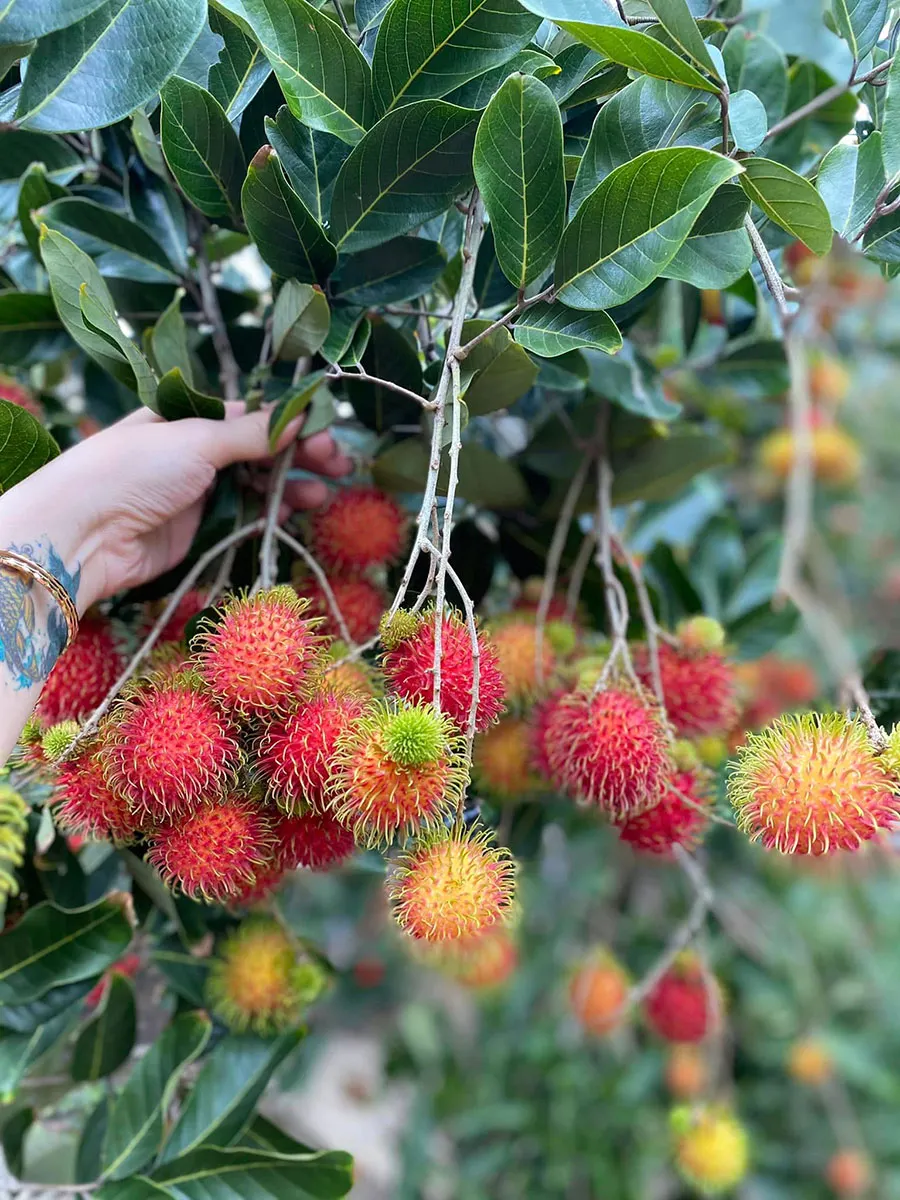
Rambutan Orchards Turn Red
Few sights capture the Mekong Delta harvest season as vividly as a rambutan orchard. Hundreds of red, pink or yellow fruits cluster among glossy leaves, making entire trees appear to glow from within.
The garden is usually cooler beneath the dense canopy. As farmers cut ripe clusters with long poles or pruning tools, the fruit is collected carefully to reduce bruising before being sorted and transported.
Rambutans should not be judged only by the color of their spines. Different varieties ripen differently, so ask the orchard owner which fruit is ready instead of picking one yourself.
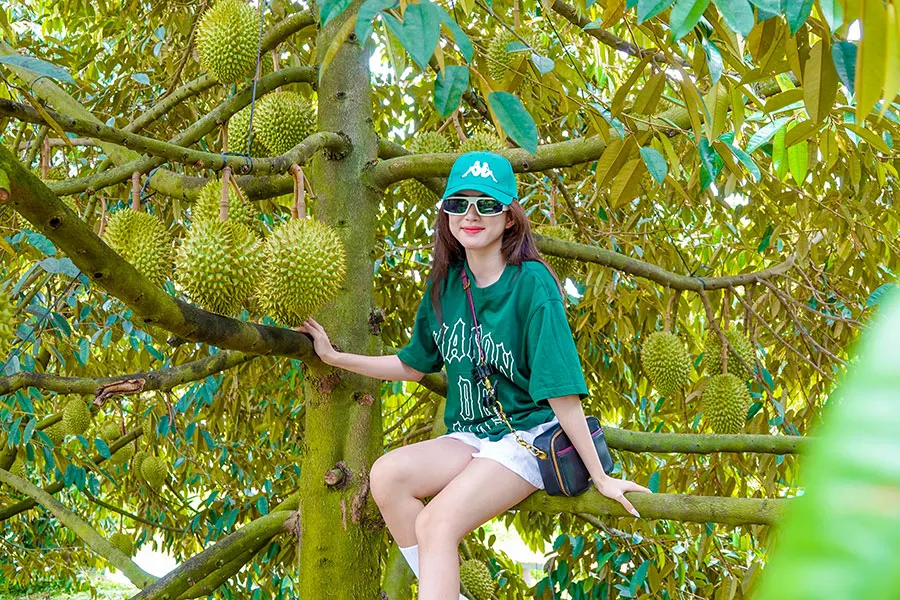
Durians Hang from Trunks and Heavy Branches
Durian orchards create a more dramatic scene. The large, thorn-covered fruits hang from trunks and strong branches, sometimes supported by cords so they do not fall unexpectedly.
When harvest approaches, the orchard may carry durian’s unmistakable aroma. Some travelers find it rich and inviting, while others need time to adjust to its intensity.
Never stand directly beneath a durian tree or attempt to remove a fruit without permission. Orchard workers understand which branches are safe and which durians are close to falling.
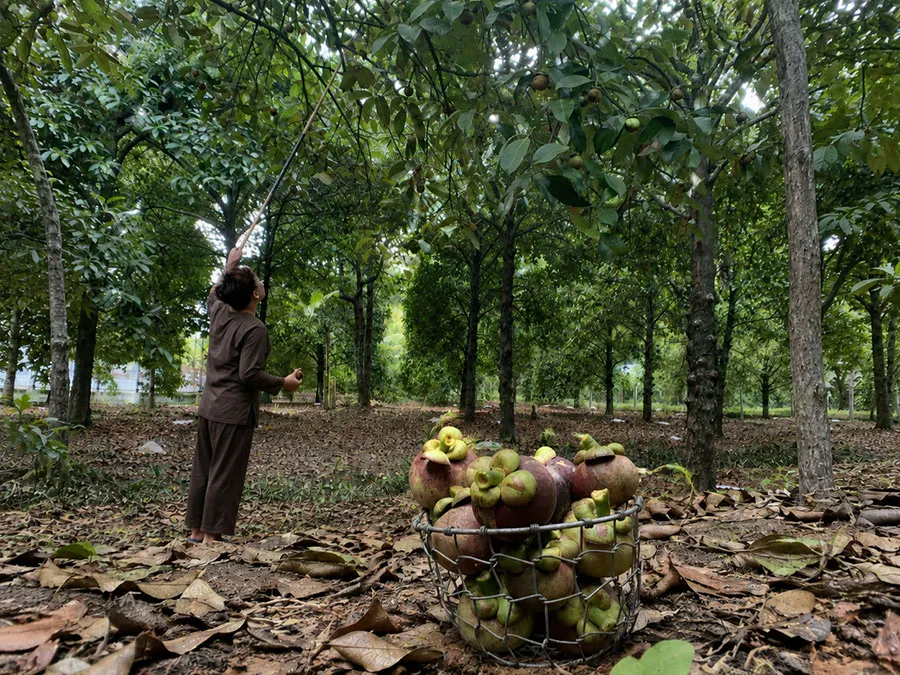
Mangosteens Hide Beneath the Leaves
Mangosteen trees are quieter and more elegant. Their deep purple fruit sits beneath thick green foliage, so you may not notice how much the tree carries until you step under its canopy.
Inside the firm rind are white segments with a delicate balance of sweetness and acidity. Mangosteen is generally available from May to August, although exact timing can vary.
Fruit picked at the right stage can taste remarkably fresh and floral. It is one reason a tasting inside a working garden feels different from buying imported tropical fruit at home.
Pomelos and Jackfruits Add Scale
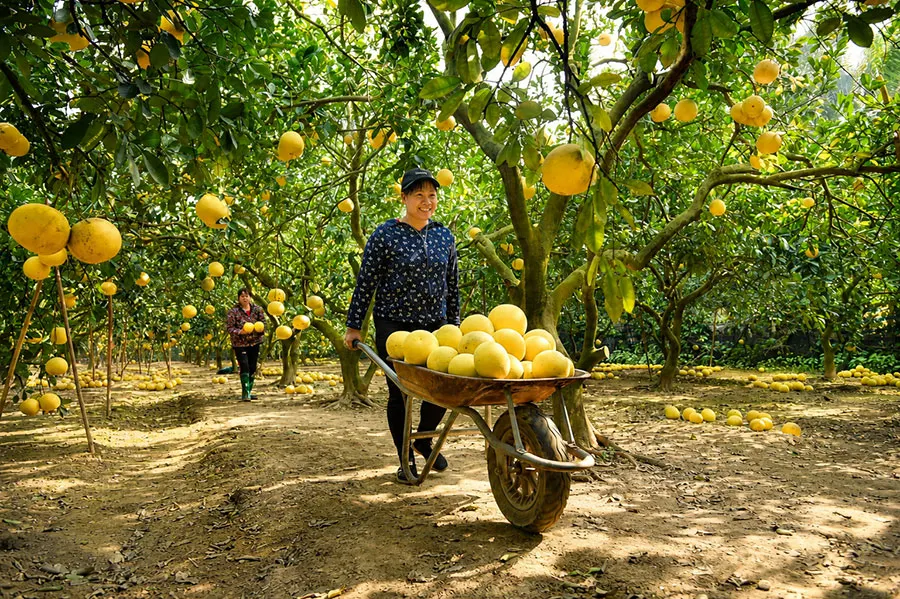
Pomelos resemble large green lanterns hanging among dense leaves. Their size makes them particularly photogenic, especially when morning light filters through the orchard.
Jackfruits look even more unusual because they grow directly from trunks and major branches. A mature fruit can be surprisingly large, yet several may crowd around the same tree.
These striking shapes make the fruit orchards in the Mekong Delta visually different from temperate farms. Fruit appears above your head, beside the path and sometimes only a few centimetres from the ground.
How Fruit Moves from Orchard to River
Harvesting is only the beginning. Farmers cut, collect, inspect and sort fruit before packing it into baskets, sacks or plastic crates for local markets, wholesalers and other distribution channels.
On river islands, produce may travel first by handcart or motorbike to a small landing. From there, boats carry it across canals or toward larger roads and trading points.
This movement gives harvest season its energy. Loaded motorbikes pass through quiet villages, scales appear beside farm gates and empty crates pile up while families prepare the next shipment.
At Cai Rang, large boats may carry pineapples, watermelons, pumpkins and other agricultural products in bulk. Travelers interested in this river-based trading culture can read more about the best floating markets in the Mekong Delta.
What Does Visiting an Orchard Feel Like?
A genuine orchard visit is usually simple and unhurried. You may cross a narrow bridge, follow a shaded path and sit at a basic table while the owner prepares a plate of whatever is actually ripe.
Freshly harvested rambutan can be exceptionally juicy, while pomelo may taste sweeter and less dry than fruit stored for long-distance transport. Even familiar mangoes and bananas can have aromas that feel noticeably stronger.
The most meaningful moments often come between tastings. A farmer may demonstrate how to identify a ripe fruit, explain why a tree is wrapped or point to the water level inside an irrigation canal.
Not every garden offers fruit picking, and that is not a sign of a poor visit. Some orchard owners allow guests to taste fruit but restrict harvesting to trained workers to protect branches and prevent accidents.
Local Tip: Ask What Is Ripe Today
Do not ask whether an orchard has “all the Mekong fruits.” A better question is: “What is ripe in the garden today?”
Seasonal availability changes quickly, and a truthful answer may be only one or two fruits. That smaller selection is often more authentic than a large tasting plate assembled from produce purchased elsewhere.
A knowledgeable local guide can also help identify working orchards with a current harvest. This is one advantage of booking a well-planned Mekong Delta tour from Ho Chi Minh City rather than choosing a garden only from old photographs.
Best Places to See Mekong Delta Fruit Orchards
Cai Be and Tan Phong Islet
Cai Be in Tien Giang is one of the most accessible orchard destinations from Ho Chi Minh City. The surrounding countryside contains narrow canals, village roads, old homes and productive gardens growing rambutan, jackfruit, mango and other tropical fruit.
Tan Phong Islet is particularly enjoyable by bicycle or small boat. Its shaded lanes allow visitors to move slowly between orchards instead of viewing the landscape through a vehicle window.
Travelers wanting a river-focused experience can consider a Mekong floating market and countryside tour. Seasonal orchard conditions should still be confirmed before departure.
Vinh Long
Vinh Long lies between branches of the Mekong and is known for fertile river islands. Homestays surrounded by gardens make it a good choice for travelers who want more time in the countryside.
Staying overnight changes the rhythm of the experience. After the day visitors leave, boats become less frequent, insects grow louder and family kitchens begin preparing dinner with ingredients from nearby farms.
Can Tho
Can Tho combines orchard visits with urban comforts, quiet canals and Cai Rang Floating Market. It is a practical base for travelers who want to explore both the agricultural and commercial sides of the delta.
An early market visit followed by a garden stop reveals the journey from farm to trade. For more time in the region, a two-day Mekong Delta floating market tour provides a less hurried alternative to a single-day trip.
Ben Tre
Ben Tre offers a different version of fruit country. Coconut palms dominate the landscape, rising over homes, waterways and small workshops where local families produce coconut candy and other goods.
Coconuts are harvested throughout much of the year, so Ben Tre does not depend on one short peak season. It remains a strong option for travelers who value sampan rides, village life and palm-lined scenery.
If you are unsure which area fits your travel style, this comparison of Ben Tre vs Can Tho explains the differences between their landscapes and experiences.
Practical Tips for Visiting During Fruit Harvest Season
Start early, ideally before the strongest midday heat. Morning light is softer for photography, markets are more active and working orchards often feel calmer.
Wear breathable clothing and shoes with reliable grip. Narrow bridges, wet leaves and muddy garden paths can become slippery after rain.
Carry sunscreen, mosquito repellent and a lightweight rain jacket. A waterproof phone pouch is also useful during sampan rides and sudden tropical showers.
Bring small Vietnamese banknotes if you want to buy fruit directly from a farm. Digital and card payments should not be assumed in rural gardens.
Always ask before picking, climbing or entering a growing area. A heavily laden branch may look irresistible, but its crop is part of a family’s income.
Avoid expecting a perfectly arranged photo location. The crates, irrigation hoses, muddy paths and sorting tables are precisely what make a real Mekong Delta orchard tour interesting.
Is Fruit Harvest Season the Best Time to Visit?
Fruit lovers should strongly consider visiting between June and August. Orchards are lush, tropical produce is abundant and harvest activity adds color and movement to the countryside.
The trade-off is humid weather and regular rain. Travelers who prioritize comfortable cycling and drier conditions may prefer December to February, although fewer peak-season fruits may be available.
There is still plenty to experience throughout the year. Floating markets, coconut groves, family workshops, regional food and peaceful waterways are among the reasons the Mekong Delta is famous far beyond its summer fruit harvest.
Experience the Mekong Delta When Its Orchards Come Alive
During harvest season, the Mekong Delta looks generous, hardworking and beautifully untidy. Red rambutan clusters brighten the trees, boats carry fresh produce along sediment-rich rivers, and family orchards turn tropical fruit into daily income.
The best visit is not necessarily the orchard with the longest tasting menu. It is the one where fruit is genuinely ripe, the garden is treated respectfully and someone helps you understand the people behind the harvest.
Explore Saigon Adventure’s Mekong Delta tours to experience seasonal orchards, peaceful canals and local river life with knowledgeable guides. Instead of simply receiving a plate of fruit, you can discover where it grows, how it is harvested and why it matters to southern Vietnam.
Frequently Asked Questions
What is the best month for fruit in the Mekong Delta?
June to August generally provides the widest variety of ripe tropical fruit. Exact harvest times vary according to the province, weather, fruit variety and individual orchard.
What fruits can travelers see during harvest season?
Depending on the location and month, travelers may see rambutan, mangosteen, durian, longan, mango, pomelo and jackfruit. Bananas, coconuts, guavas and papayas may also be available outside the main summer season.
Can tourists pick fruit in Mekong Delta orchards?
Some farms allow supervised picking, but many offer only garden walks and prepared tastings. Always ask the owner because incorrect picking can damage branches or unripe crops.
Is July a good time to visit Mekong Delta orchards?
Yes. July usually falls within the main fruit-ripening period, making it a good month for variety and lush scenery. It is also rainy and humid, so bring suitable footwear and a light waterproof layer.
Can I see durian harvesting in the Mekong Delta?
It may be possible during the correct local harvest period, but it cannot be guaranteed on every tour. Durian harvesting requires care, and visitors should remain with the orchard owner or guide around fruit-bearing trees.
Which destination is best for a one-day orchard tour?
Cai Be and nearby Tan Phong Islet are strong choices for combining orchards, canals and village paths. Ben Tre is more suitable for travelers primarily interested in coconut groves and small waterways.
Is the Mekong Delta worth visiting outside fruit season?
Yes. The delta offers river scenery, local food, family workshops, floating markets and rural communities throughout the year. Seasonal fruit adds to the experience but is not the region’s only attraction.