Quick Answer
You don’t need to speak fluent Vietnamese to enjoy the country’s incredible street food. Learning a few simple phrases like “Xin chào” (Hello), “Cho tôi…” (I’d like…), “Bao nhiêu tiền?” (How much?) and “Cảm ơn” (Thank you) makes ordering easier, helps you communicate with local vendors and creates a more enjoyable travel experience.
Vietnam is famous for its vibrant street food culture, from steaming bowls of pho and crispy bánh mì to fresh gỏi cuốn. While many restaurants in tourist areas offer English menus, smaller family-run stalls often don’t.
The good news is that you only need a handful of everyday Vietnamese phrases to order confidently. This guide introduces 15 essential expressions, explains when to use them and shares practical tips to help you eat like a local wherever your journey takes you.
Why Learning a Few Vietnamese Food Phrases Matters
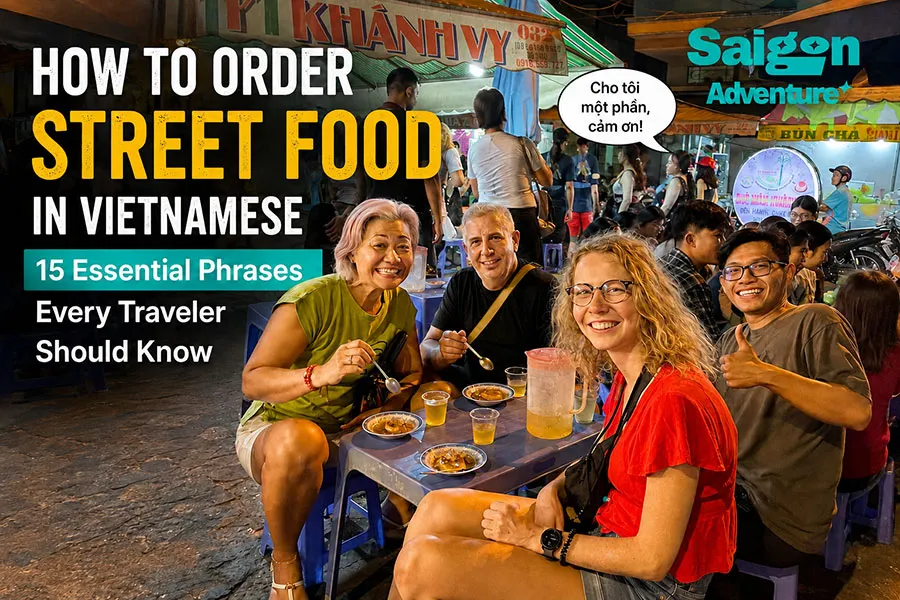
Many of Vietnam’s best meals are served at small street stalls where English is limited or not spoken. Knowing a few simple Vietnamese phrases makes ordering easier and gives you more confidence when trying local dishes.
Looking for authentic places to eat? Our guide to street food in Ho Chi Minh City features hidden local favorites that many first-time visitors never discover.
Using basic greetings and polite expressions also shows respect for local culture. Even if your pronunciation isn’t perfect, vendors usually appreciate the effort and often respond with a smile.
These phrases can help you ask about prices, understand simple answers and discover dishes you might have otherwise overlooked. A few words of Vietnamese can turn a simple meal into a memorable cultural experience.
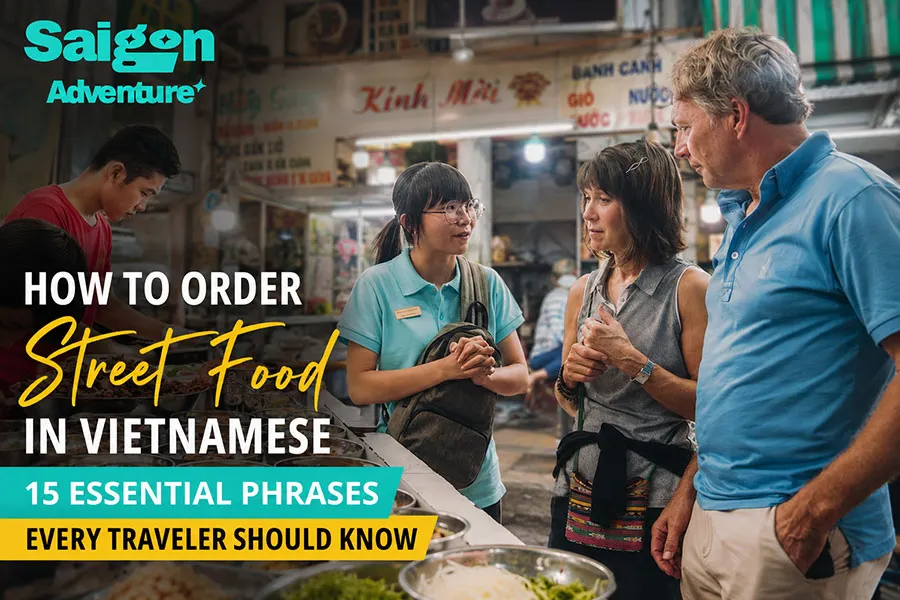
Essential Vietnamese Phrases for Ordering Street Food
You don’t need to memorize dozens of expressions before visiting Vietnam. These practical phrases cover the most common situations you’ll encounter at street food stalls, local markets and neighborhood eateries.
1. Xin chào (Sin Chao) — Hello
A friendly greeting is always a great way to start.
Saying “Xin chào” when you approach a food stall creates a welcoming atmosphere and shows basic courtesy. It’s a simple phrase, but locals always appreciate visitors who make the effort.
Example
Xin chào!
Local Tip: Pair your greeting with a smile. Friendly body language is just as important as the words you say.
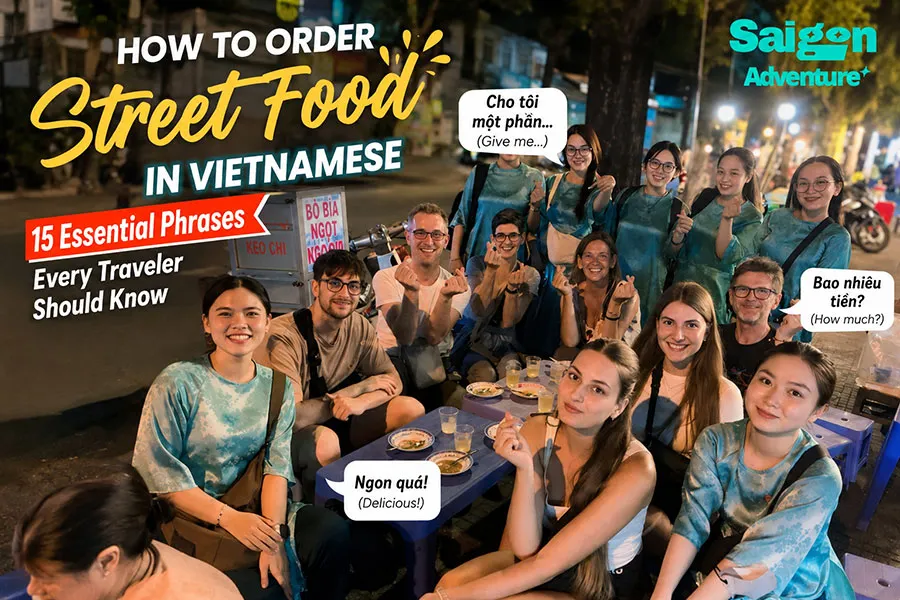
2. Cho tôi… (Cho Toy…) — I’d Like…
This is one of the most useful phrases you’ll use throughout your trip.
Simply say “Cho tôi…” followed by the name of the food or drink you want.
Examples
- Cho tôi một tô phở. (I’d like a bowl of pho.)
- Cho tôi bánh mì. (I’d like a bánh mì.)
- Cho tôi cà phê sữa đá. (I’d like an iced Vietnamese coffee.)
Don’t worry if your pronunciation isn’t perfect. Pointing at the dish while speaking usually makes your order easy to understand.
3. Cái này là gì? (Guy Nay La Yee?) — What Is This?
Vietnamese street food is full of delicious surprises, and you’ll often come across dishes you’ve never seen before.
If something catches your eye, point to it and ask:
“Cái này là gì?”
The vendor may explain the dish, show you the ingredients or simply tell you its name. It’s an easy way to discover new local specialties beyond the famous favorites.
As you explore different dishes, you’ll notice that many recipes are seasoned with fish sauce, an essential ingredient in Vietnamese cooking. Learn why it plays such an important role in our guide to Vietnamese fish sauce.
4. Bao nhiêu tiền? (Bao Nyew Tien?) — How Much Is It?
Most street food in Vietnam is affordable, but it’s always a good idea to check the price if it isn’t displayed.
Simply ask:
“Bao nhiêu tiền?”
Many vendors will answer by saying the price, writing it on paper or showing it on a calculator. All three are common and perfectly normal.
Local Tip: Carry small Vietnamese đồng notes when buying street food. It makes paying faster and is appreciated by vendors.
5. Cảm ơn (Cam Un) — Thank You
A simple “Cảm ơn” is one of the easiest ways to show appreciation after your meal.
Vietnamese people value politeness, and saying thank you often earns a warm smile. Even if that’s the only Vietnamese phrase you remember, it’s always worth using.
6. Ngon quá! (Ngon Kwa!) — It’s Delicious!
If you love your meal, let the vendor know.
Just say:
“Ngon quá!”
It’s a genuine compliment that many local cooks enjoy hearing. Don’t be surprised if they smile proudly or recommend another dish for you to try.
7. Không cay (Khong Kai) — Not Spicy
Although many Vietnamese dishes aren’t extremely spicy, some noodles, dipping sauces and regional specialties can have quite a kick.
If you don’t like spicy food, simply say:
“Không cay.”
This phrase is especially useful when ordering dishes with fresh chilies or chili sauce.
8. Ít cay (It Kai) — A Little Spicy
Want a bit of heat without overwhelming your taste buds?
Ask for:
“Ít cay.”
Many vendors are happy to adjust the amount of chili, especially in tourist-friendly cities like Ho Chi Minh City, Hanoi and Da Nang.
9. Không thịt (Khong Teet) — No Meat
Vegetarian travelers will find this phrase very useful.
Say:
“Không thịt.”
Keep in mind that some dishes may still contain fish sauce or meat broth, even without visible meat. If you follow a strict vegetarian diet, it’s worth asking a few extra questions or choosing vegetarian restaurants.
10. Mang về (Mang Veh) — Take Away
Not every meal has to be eaten at the stall.
If you’d like your food packed to enjoy later, simply say:
“Mang về.”
Takeaway meals are very common throughout Vietnam, and vendors usually package them quickly in containers or paper bags.
Common Situations You’ll Encounter
Learning individual phrases is helpful, but knowing when to use them makes ordering much more natural. Here are a few everyday situations most travelers experience.
Ordering Your First Bowl of Pho
Walk up to the stall, greet the vendor with “Xin chào,” then say “Cho tôi một tô phở.” If the price isn’t listed, ask “Bao nhiêu tiền?” before paying.
Discovering a Dish You’ve Never Seen
Many market stalls display foods without English names. Simply point at the dish and ask “Cái này là gì?” You may discover a local specialty that never appears in travel guides.
Asking for Less Spice
If you prefer milder flavors, remember to say “Không cay” or “Ít cay” before your meal is prepared. It’s much easier than trying to remove fresh chilies afterward.
Ending the Meal Politely
Before leaving, smile, say “Cảm ơn,” and if you especially enjoyed the food, add “Ngon quá!” Small gestures like these often leave a lasting positive impression.
More Tips for Ordering Street Food in Vietnam
Learning a few phrases is helpful, but a little local etiquette makes the experience even smoother. These simple tips can help you order with confidence wherever you travel in Vietnam.
Pointing Is Perfectly Acceptable
If you enjoy exploring neighborhoods on foot, our Ho Chi Minh City walking tours introduce you to hidden food streets, bustling local markets and family-run eateries where these simple Vietnamese phrases come in handy.
If you can’t pronounce the name of a dish, don’t worry. Pointing at the food while saying “Cho tôi…” is completely normal and widely understood at street food stalls.
Keep Cash Handy
Although digital payments are becoming more common, many small vendors still prefer cash. Carrying small Vietnamese đồng notes makes paying quicker and avoids the need for change.
Don’t Worry About Perfect Pronunciation
Vietnamese is a tonal language, but locals generally appreciate any effort visitors make. Speak slowly, smile and use gestures if needed—the combination usually works surprisingly well.
Watch What Locals Order
Not sure what to try? Take a look at the tables around you. Popular dishes with local diners are often the safest and most delicious choices.
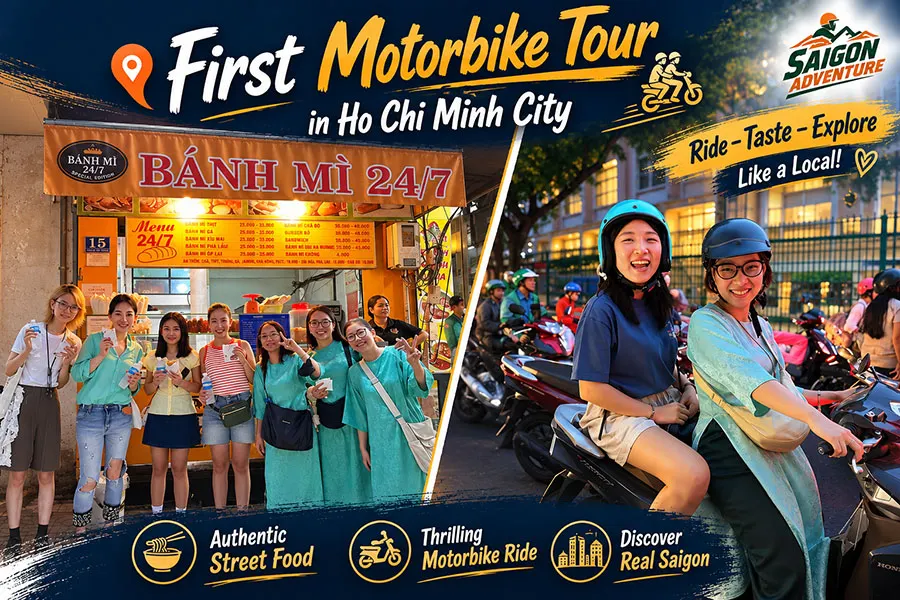
If you prefer discovering hidden eateries, a motorbike food tour in Ho Chi Minh City takes you beyond the city center to neighborhoods where locals eat every day. It’s a great way to practice your new Vietnamese phrases while tasting authentic dishes that many visitors never discover on their own.
Experience an Authentic Ho Chi Minh City Food Tour
Ordering street food in Vietnam doesn’t have to be intimidating. With just a handful of simple Vietnamese phrases, you’ll find it much easier to communicate, order confidently and enjoy authentic local flavors.
More importantly, making the effort to speak a little Vietnamese often leads to friendlier interactions and memorable moments that go beyond the food itself. Whether you’re enjoying a bowl of pho in Hanoi, a crispy bánh mì in Ho Chi Minh City or fresh seafood in Da Nang, these phrases will help you experience Vietnam like a local.
If you’re still unsure what to order, don’t hesitate to smile, point and be adventurous. Some of the best meals in Vietnam are the ones you never planned to try.
Experience Vietnam’s Street Food with a Local Guide
Learning a few Vietnamese phrases is a great start, but exploring with a local guide makes the experience even more rewarding. You’ll discover hidden street food stalls, learn the stories behind each dish and enjoy authentic flavors that many visitors never find on their own.
Whether you’re looking for a walking experience or an exciting scooter adventure, joining a local food tour is one of the easiest ways to eat like a local while gaining a deeper appreciation for Vietnam’s rich culinary culture.
Frequently Asked Questions
Do I need to speak Vietnamese to order street food?
No. Many vendors understand simple English or communicate through gestures. However, learning a few basic Vietnamese phrases makes ordering much easier and more enjoyable.
Is English commonly spoken at street food stalls?
In major tourist areas, some vendors speak basic English. At smaller neighborhood stalls and local markets, Vietnamese is usually the primary language.
What’s the most useful Vietnamese phrase for travelers?
“Cho tôi…” (I’d like…) is one of the most practical phrases because you can use it to order almost any food or drink.
Can I ask for food without chili?
Yes. Simply say “Không cay” (Not spicy) or “Ít cay” (A little spicy) before your food is prepared.
Should I carry cash for street food?
Yes. While digital payments are growing in Vietnam, many small street food vendors still prefer cash, especially in local neighborhoods.
Is it polite to point at food?
Absolutely. Pointing at dishes while ordering is common practice in Vietnam, particularly when there isn’t an English menu.
What if I pronounce Vietnamese incorrectly?
Don’t worry. Most locals appreciate the effort and will usually understand you with the help of gestures, context and a friendly smile.