Lunch in Vietnam is rarely treated as an afterthought. From a quick plate of grilled pork and rice to a family meal shared around the table, the midday meal reveals how Vietnamese people balance flavour, freshness, convenience and community.
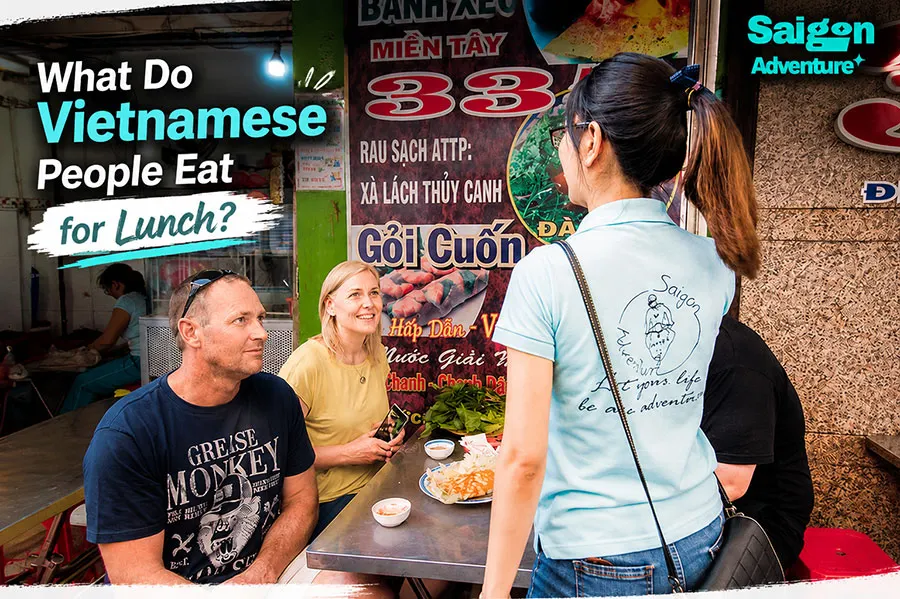
For travellers, lunchtime offers an easy way to experience local culture without visiting an expensive restaurant. Walk beyond the main tourist streets around noon, and you will see office workers, students and families gathering at neighbourhood eateries for dishes prepared earlier that morning.
What Do Vietnamese People Eat for Lunch?
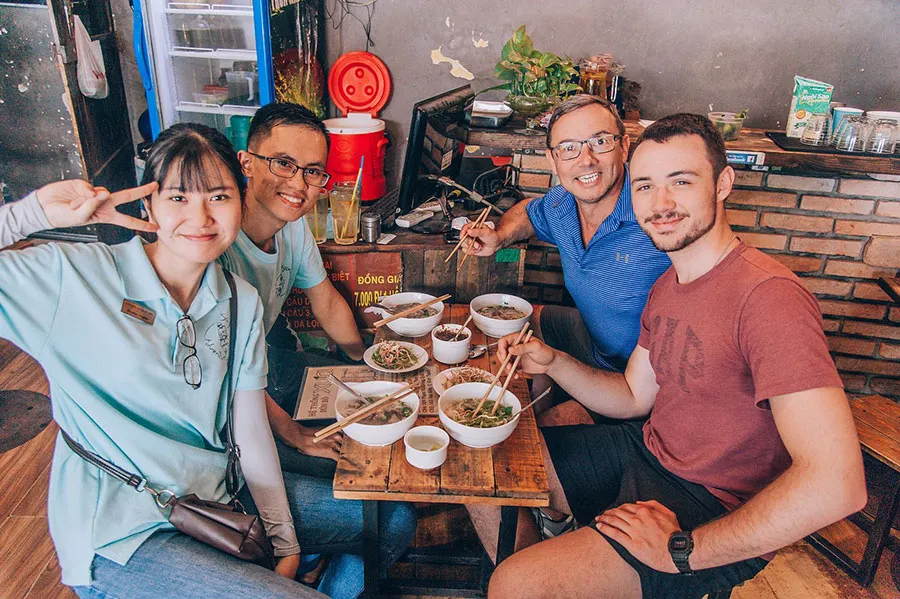
Vietnamese people eat many different foods for lunch, but rice remains the most common foundation. A traditional home-cooked meal often includes steamed rice, meat or fish, cooked vegetables, a light soup and one or more dipping sauces.
Busy workers usually choose convenient dishes such as cơm tấm, cơm gà or cơm bình dân. Noodle dishes, including bún thịt nướng, bún chả, hủ tiếu and mì Quảng, are also popular because they are filling, affordable and served quickly.
There is no single national lunch menu. What people eat depends on the region, season, work schedule, family habits and personal budget.
What a Typical Vietnamese Lunch Looks Like
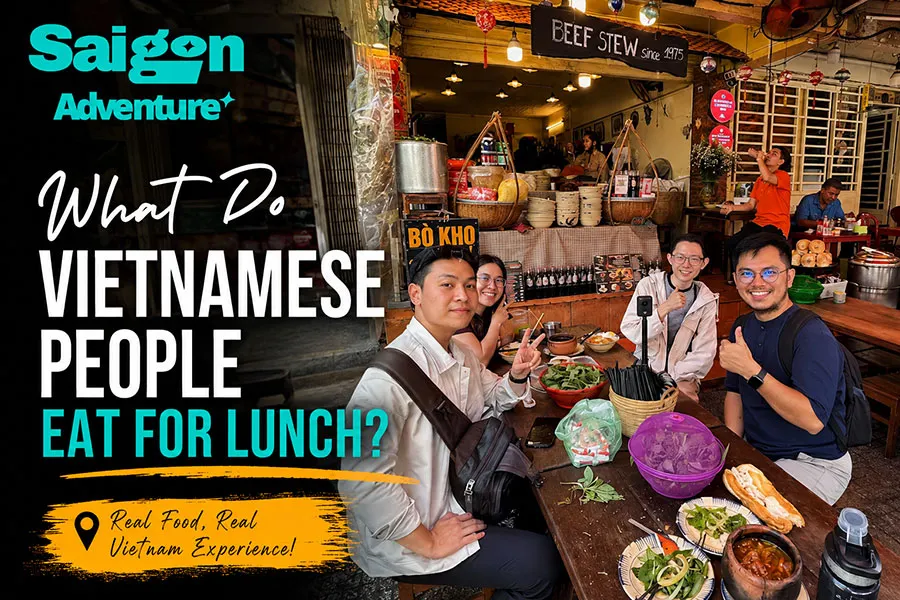
A typical Vietnamese lunch consists of rice accompanied by pork, chicken, fish or tofu, plus vegetables and soup. At casual restaurants, locals often order a complete rice plate or a bowl of noodles instead of several shared dishes.
Popular choices include cơm tấm in Ho Chi Minh City, bún chả in Hanoi, mì Quảng in central Vietnam and cơm gà in Hội An. Bánh mì and phở are also eaten at lunchtime, even though international visitors may associate them mainly with breakfast.
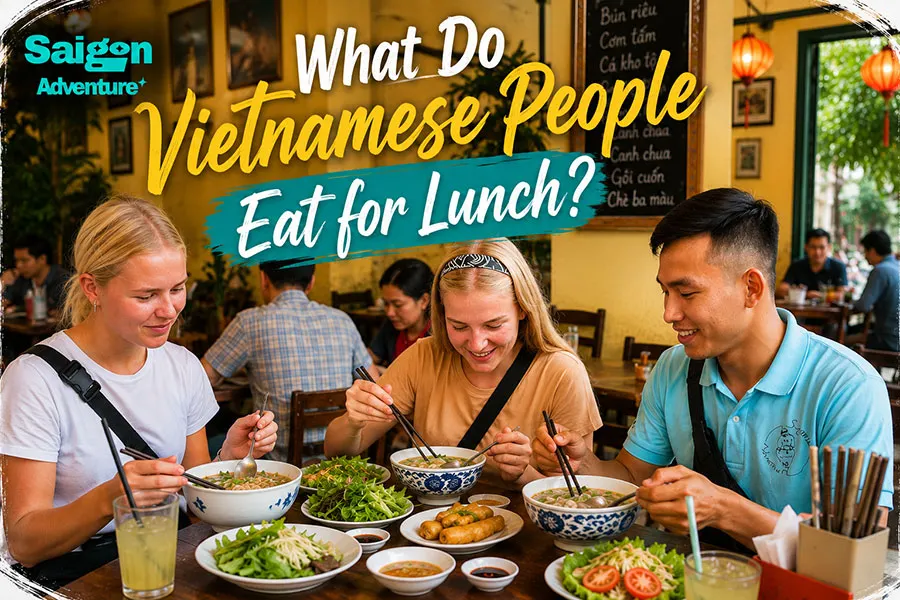
What Time Is Lunch in Vietnam?
Lunch generally takes place between 11:00 a.m. and 1:30 p.m. Office workers commonly leave for lunch around midday, while market vendors and people who start work early may eat before 11:30 a.m.
Popular local restaurants can become crowded from 11:30 a.m. onward. Arriving slightly early usually means faster service, more available dishes and a better chance of finding a comfortable seat.
Local tip: Some small cơm bình dân eateries sell out of their most popular food before the lunch period ends. If a particular shop interests you, avoid waiting until mid-afternoon.
How Vietnamese People Eat Lunch at Home
A home-cooked Vietnamese lunch is usually served family-style. Rather than receiving separate main courses, everyone takes food from several shared dishes placed in the centre of the table.
A balanced meal may feature braised fish, grilled pork, boiled chicken or tofu, followed by stir-fried or boiled vegetables. A light soup helps balance richer flavours, especially during hot weather.
Each person receives an individual bowl of rice. Fish sauce, soy sauce, fresh chilli or a mixture of salt, pepper and lime may be provided for dipping.
Weekday meals are often simpler because family members have different work and school schedules. Larger shared lunches are more common on weekends, public holidays and family occasions.
Popular Vietnamese Lunch Dishes to Try
Cơm bình dân
Cơm bình dân translates roughly as “affordable everyday rice.” These casual eateries display trays of prepared dishes behind a counter, allowing customers to select exactly what they want.
Options may include caramelised pork, fried fish, braised eggs, tofu, stir-fried vegetables and sour soup. Pointing at your preferred dishes is completely acceptable, making this one of the easiest local lunch experiences for first-time visitors.
Cơm tấm
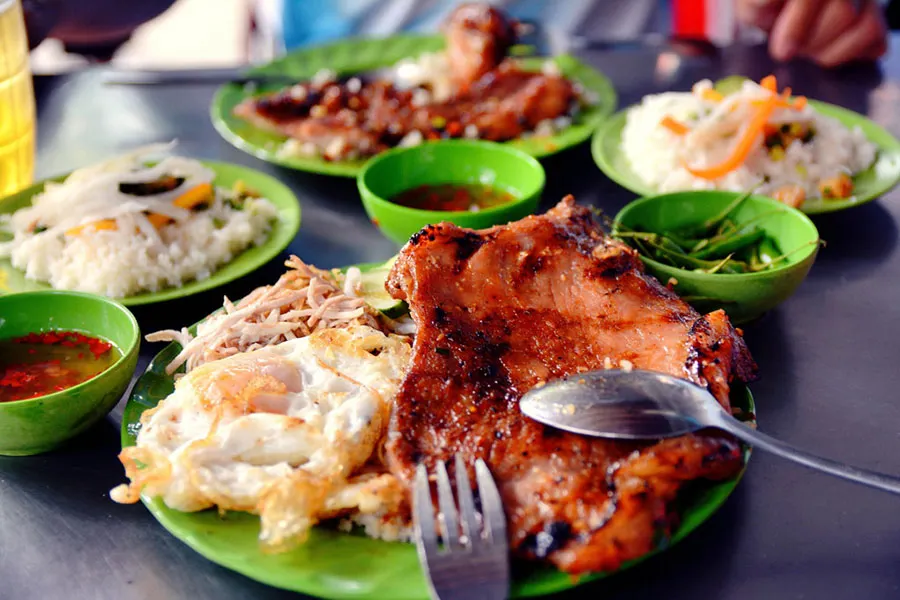
A Saigon favourite, cơm tấm is made with broken rice and commonly served with grilled pork. A complete portion may also include shredded pork skin, a steamed egg-and-meat loaf, pickled vegetables, cucumber and scallion oil.
Sweet and savoury fish sauce is poured over the rice according to taste. Travellers can use this guide to the best cơm tấm in Ho Chi Minh City to find famous restaurants and less touristy local favourites.
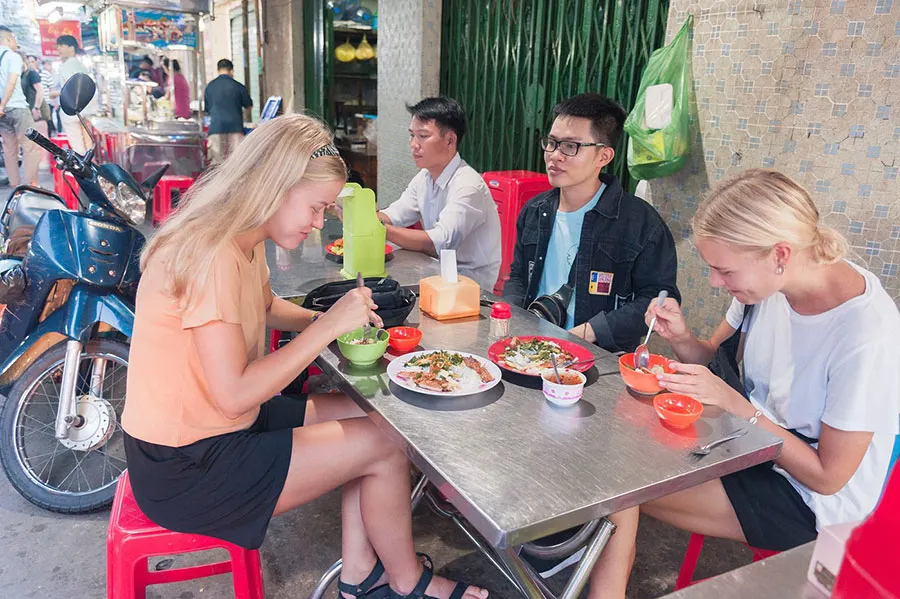
Cơm gà
Vietnamese chicken rice appears in several regional forms. Depending on the restaurant, the chicken may be poached, roasted, fried or shredded and mixed with herbs and onions.
In Hội An, cơm gà is known for its fragrant yellow rice, tender chicken and fresh herbs. Other cities have their own versions, so ordering chicken rice in different destinations can lead to surprisingly different meals.
Bún thịt nướng
Bún thịt nướng combines cool rice vermicelli with smoky grilled pork, lettuce, herbs, cucumber, pickled vegetables and crushed peanuts. Southern versions are usually finished with sweet-and-sour fish sauce.
The contrast between warm pork, fresh greens and soft noodles makes it particularly enjoyable in southern Vietnam’s tropical climate. Some restaurants add a crispy spring roll for extra texture.
Bún chả
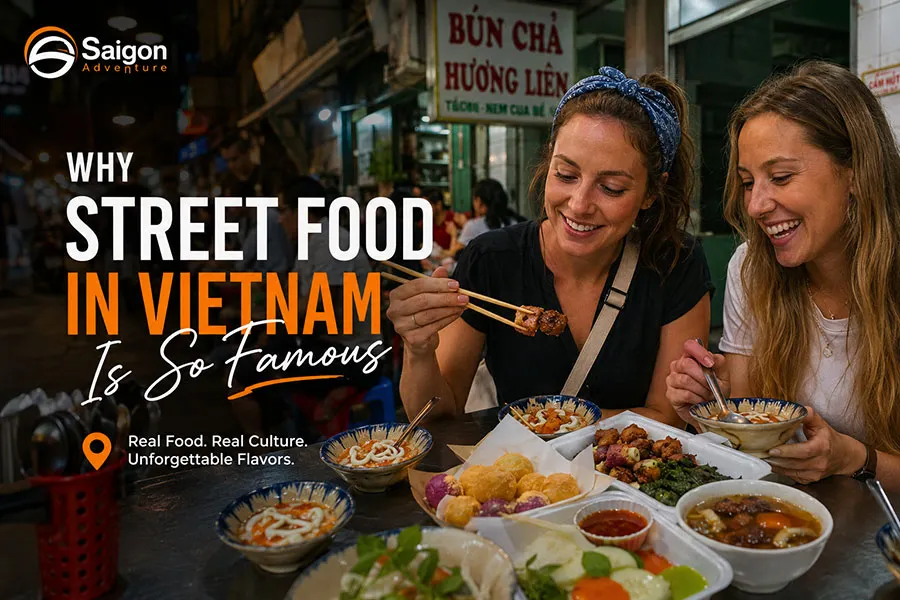
Closely associated with Hanoi, bún chả consists of grilled pork patties and slices of pork belly served in seasoned fish sauce. Rice vermicelli, lettuce and aromatic herbs arrive separately.
Diners add noodles and herbs to the dipping bowl a little at a time. Travellers who want to explore the capital’s food culture can try the dish on a Hanoi Michelin street food walking tour led by a local guide.
Hủ tiếu
Hủ tiếu is especially popular in southern Vietnam. A bowl may contain pork, prawns, minced meat, quail eggs or offal, depending on the vendor and regional style.
You can order it as a noodle soup or “dry,” with sauce mixed through the noodles and a small bowl of broth served separately. Hủ tiếu Nam Vang, influenced by Cambodian and Chinese culinary traditions, is one of Ho Chi Minh City’s best-known variations.
Mì Quảng
Originating in central Vietnam, mì Quảng features broad rice noodles with a small amount of concentrated broth. Common toppings include chicken, pork, prawns, peanuts, herbs and pieces of crisp rice cracker.
Unlike phở, the noodles are not submerged in a large bowl of soup. Its rich seasoning and contrasting textures make mì Quảng satisfying without feeling excessively heavy.
Bún bò Huế
Bún bò Huế is a robust noodle soup associated with Vietnam’s former imperial capital. It combines round rice noodles and beef with a broth fragrant with lemongrass.
The level of heat varies between restaurants, so travellers sensitive to spice should taste the broth before adding chilli paste. Herbs, lime and bean sprouts are often provided for adjusting the flavour.
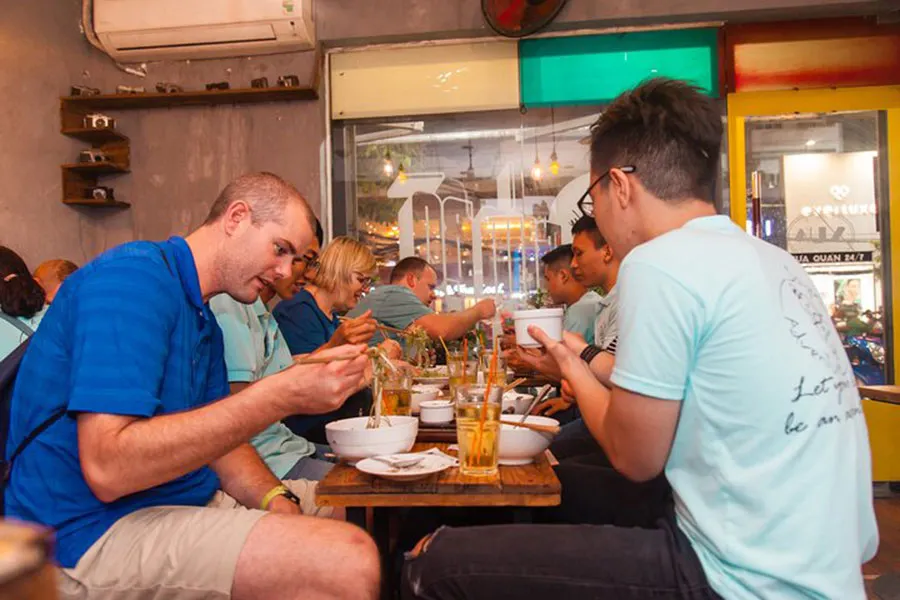
Phở
International visitors often think of phở as breakfast, but Vietnamese people do not restrict it to the morning. Many restaurants serve this aromatic noodle soup at lunchtime and into the evening.
Phở bò contains beef, while phở gà is prepared with chicken. The balance of broth, rice noodles, meat and herbs makes either version a dependable midday meal.
Bánh mì
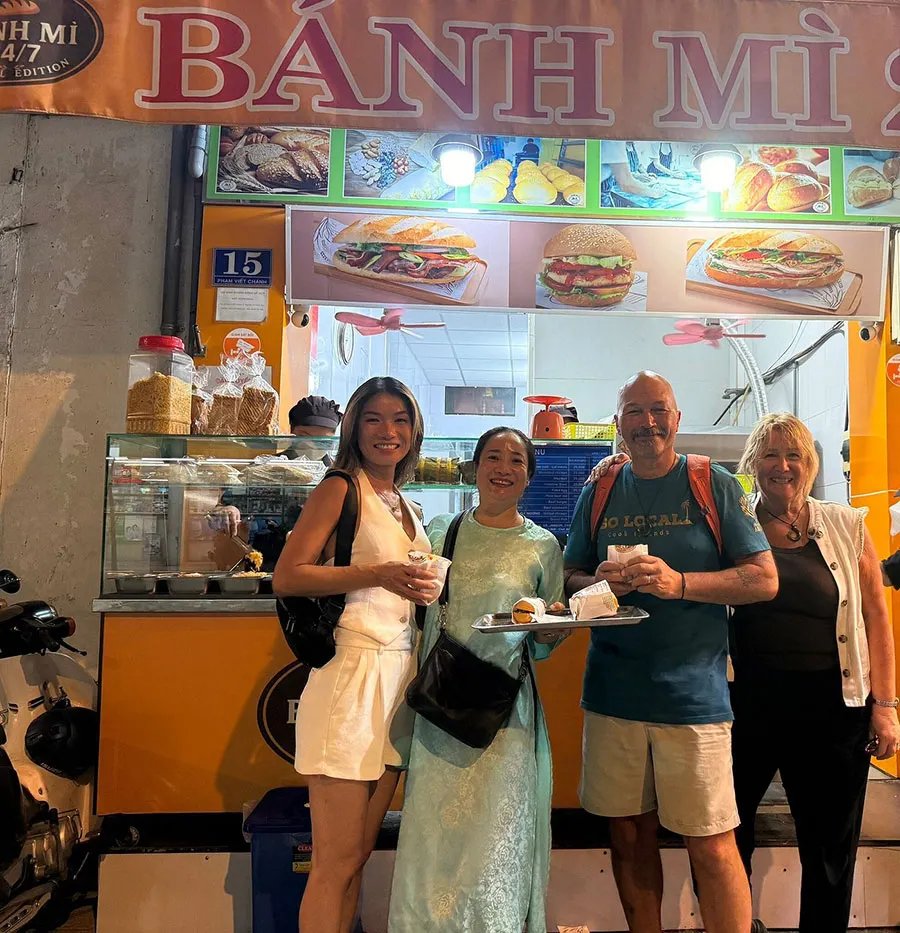
Bánh mì is ideal when there is little time for a seated lunch. A crisp baguette may be filled with grilled pork, cold cuts, pâté, eggs, chicken, pickled vegetables, cucumber, coriander and chilli.
Fillings vary widely between vendors, and most sandwiches are assembled to order. Our guide to the best bánh mì in Ho Chi Minh City includes traditional bakeries, neighbourhood stalls and practical ordering tips.
Bánh canh
Bánh canh is a comforting soup made with thick, chewy noodles produced from rice flour, tapioca starch or a combination of both. Regional versions may contain crab, fish cakes, pork hock or snakehead fish.
The texture is noticeably different from phở and thin rice vermicelli. Travellers who enjoy hearty noodle soups should look for bánh canh cua, a crab-based version commonly found in southern Vietnam.
Vegetarian Rice and Noodles
Vegetarian restaurants, usually marked with the word chay, are found throughout the country. Lunch options may include tofu, mushrooms, braised vegetables, meat-free noodle soups and mixed rice plates.
Demand often increases on the first and fifteenth days of the lunar month, when some Vietnamese people choose vegetarian meals for religious or personal reasons. However, dedicated vegetarian restaurants normally serve them every day.

Regional Differences in Vietnamese Lunch
Northern Vietnamese cooking often favours balanced, restrained seasoning. Hanoi is particularly associated with phở, bún chả and bún đậu mắm tôm.
Central Vietnamese food can be saltier, spicier and more intensely seasoned. Huế offers bún bò Huế and numerous small savoury dishes, while Quảng Nam and Đà Nẵng are natural places to try mì Quảng.
Southern cooking commonly features sweeter sauces, abundant herbs and influences from the Mekong Delta, Cambodia and Chinese communities. In Ho Chi Minh City, cơm tấm, hủ tiếu and bún thịt nướng are dependable local lunch choices.
These are general patterns rather than strict rules. Migration has carried regional specialities across the country, so travellers can now find northern noodles in Saigon and southern rice dishes in Hanoi.
How Much Does Lunch Cost in Vietnam?
Local rice and noodle shops are generally more affordable than restaurants in tourist districts. Prices vary according to the city, location, portion size, ingredients and type of establishment.
Seafood, premium cuts of meat and restaurants in central tourist areas usually cost more. Check the displayed menu or confirm the price before ordering, particularly when seafood is sold by weight.
Cash remains useful at street stalls and small family-run eateries. Carrying smaller Vietnamese đồng notes makes payment more convenient, although many modern restaurants also accept cards or domestic digital payments.
Where to Eat Lunch Like a Local
Look for modest restaurants that become busy around noon. A steady flow of customers, visible food preparation and dishes being replenished regularly are generally encouraging signs.
Cơm bình dân shops are useful when you want variety, while restaurants specialising in one dish often prepare that dish particularly well. Local markets and neighbourhood food streets can also offer excellent lunches, although seating may be simple.
Do not dismiss an eatery because it has metal tables or small plastic stools. In Vietnam, an unpretentious setting can still produce a carefully prepared and memorable meal.
Practical Tips for Ordering Lunch
Learn a few useful Vietnamese expressions before visiting a local restaurant. “Cho tôi một phần này” means “Please give me one portion of this,” while “không cay” means “not spicy.”
Mention dietary restrictions clearly instead of assuming a dish is suitable. Vegetable soup may contain meat broth, while apparently meat-free dishes can include fish sauce or dried shrimp.
Choose busy, clean-looking vendors where ingredients appear fresh and hot dishes are served hot. Use bottled or properly treated water and follow any dietary guidance relevant to your health.
Taste Vietnamese Food Beyond the Tourist Districts
A Vietnamese lunch offers more than a satisfying meal. It provides a glimpse into daily routines, regional identity and the importance of sharing food.
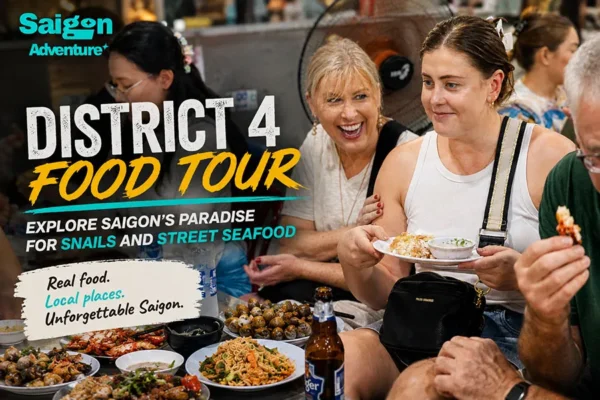
In Ho Chi Minh City, a Food Tour in Ho Chi Minh City can introduce you to family-run eateries, unfamiliar ingredients and neighbourhoods beyond the central tourist streets.
For an experience focused on hidden vendors and authentic local flavours, join a Saigon street food tour. Come hungry, follow your local guide and discover why everyday Vietnamese food can become one of the most memorable parts of your journey.
Frequently Asked Questions
What is the most common lunch in Vietnam?
Rice with meat or fish, vegetables and soup is among the most common home-cooked lunches. Workers also frequently choose cơm bình dân, cơm tấm and convenient noodle dishes.
Do Vietnamese people eat phở for lunch?
Yes. Although phở is widely enjoyed in the morning, many restaurants serve it at lunch and dinner. It is not limited to breakfast.
Is Vietnamese lunch usually spicy?
Not every Vietnamese dish is spicy. Chilli is often provided separately, although some central Vietnamese dishes may already contain noticeable heat.
What should first-time visitors eat for lunch?
Cơm tấm, cơm gà, phở and bún thịt nướng are approachable choices. They use familiar ingredients while introducing visitors to Vietnamese herbs, sauces and cooking techniques.
Can vegetarians find lunch easily in Vietnam?
Yes, particularly in cities and popular travel destinations. Look for the word chay, but explain whether you also avoid fish sauce, eggs or dairy products.
Do local lunch restaurants accept credit cards?
Larger restaurants often accept cards, while small eateries and street stalls may prefer cash or domestic digital payments. Carrying Vietnamese đồng is the safest option.
Is tipping expected at Vietnamese restaurants?
Tipping is not traditionally required at casual restaurants or street stalls. However, a small tip is appreciated when you receive especially attentive service.