Imagine waking up in complete darkness.
There is no window, no fresh morning breeze, and barely enough room to stand. Somewhere above you, the countryside of southern Vietnam is beginning another day. Below the ground, however, every movement has to be careful, quiet, and purposeful.
This was part of daily life inside the Cu Chi Tunnels during the wars in Vietnam. The tunnels were not simply places to hide from enemy forces. They developed into a remarkable underground system where people could move, rest, prepare food, receive medical treatment, store supplies, communicate, and survive under extraordinary conditions.
For international travelers, understanding this human side of the Cu Chi Tunnels in Vietnam can completely change the way you experience the site. The narrow passage you walk through today becomes more than a tourist attraction. It becomes a glimpse into what everyday survival once meant.

What Was Daily Life Like Inside the Cu Chi Tunnels?
Life underground was nothing like normal village life.
The tunnel network formed part of a much larger wartime landscape around Cu Chi, where underground passages, bunkers, shelters, farms, villages, and surface routes were interconnected. The exact way people used the tunnels varied according to their roles, location, and wartime conditions.
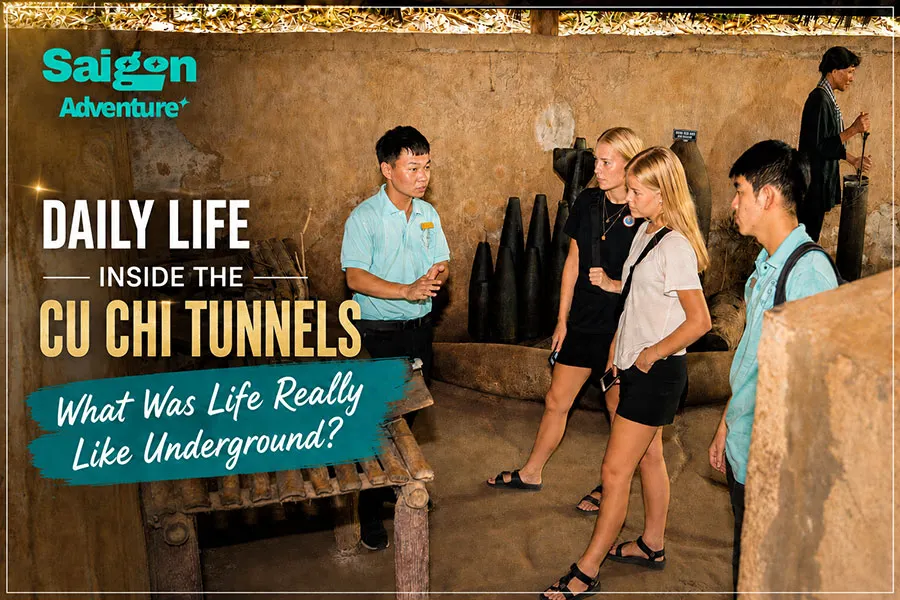
The tunnels included spaces associated with sleeping, meetings, food preparation, storage, medical care, and military activities. Modern visitors can still see reconstructed or preserved examples of some of these functions at the Cu Chi historical sites.
What makes the story remarkable is not simply the construction of the tunnels. It is the way ordinary human needs had to be accommodated underground.
People still needed to eat.
They needed to sleep.
They needed clean enough air to breathe, places to treat injuries, ways to communicate, and methods of moving without being detected.
Everyday life became a problem of survival.

How Did People Sleep Underground?
Sleeping in the Cu Chi Tunnels was a far cry from staying in a hotel in Ho Chi Minh City.
Underground spaces were cramped, dark, and uncomfortable. Privacy was limited, and people often had to remain alert to changing conditions above ground.
Rest therefore had a different meaning.
It was not simply about getting a comfortable night’s sleep. It was about recovering enough energy to continue working, moving, carrying supplies, maintaining the tunnels, or performing other necessary duties.
The tunnel environment also affected daily routines. When conditions above ground became dangerous, remaining underground could become essential. At other times, people could move between underground areas and the surrounding countryside depending on the circumstances.
This makes the idea of living inside the Cu Chi Tunnels more complicated than the popular image of thousands of people permanently living below ground.
The tunnels were part of a wider system of survival.
What Did People Eat in the Cu Chi Tunnels?
Food was one of the most basic challenges.
People needed meals that could be prepared with limited resources and that fitted the realities of wartime life. Cassava, also known as tapioca, became strongly associated with the Cu Chi experience because it was an important source of energy and could be grown locally.
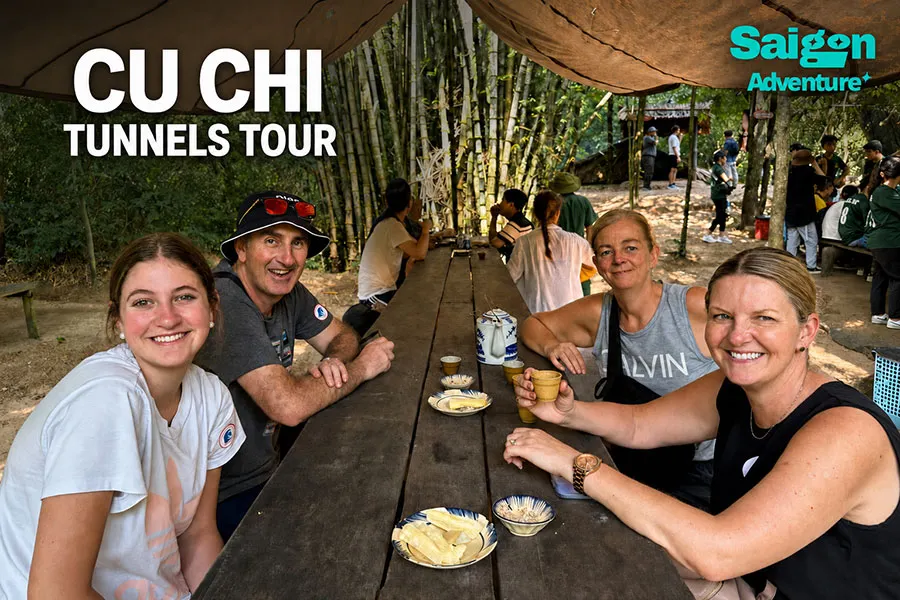
Today, visitors to Cu Chi may taste steamed cassava with tea as part of the historical presentation.
It is a surprisingly simple snack.
But that simplicity tells an important story. Underground survival was not about comfort, elaborate meals, or culinary variety. Food had to provide energy while being practical in a difficult environment.
How Did They Cook Without Being Discovered?
Cooking underground created another problem: smoke.
A visible column of smoke could potentially reveal human activity to observers above ground. The tunnel system therefore incorporated specially designed underground kitchens and ventilation arrangements intended to make cooking less obvious.
This is one of the details worth paying attention to during a Cu Chi Tunnels tour.
Look beyond the kitchen itself.
Ask your guide why smoke mattered, how air moved through the tunnels, and how ordinary activities such as cooking had to be adapted during wartime.
Suddenly, something as simple as preparing breakfast becomes part of a much larger survival story.
How Did People Breathe Underground?
Fresh air was essential.
A complex underground environment could not function without some method of ventilation. The Cu Chi system included ventilation points and openings designed to bring air into underground spaces while making them difficult to identify from the surface.
This was an impressive example of practical wartime engineering.
The tunnels were not simply holes dug into the earth. Different levels and sections served different purposes, creating an underground network that could support movement and shelter while helping people remain concealed.
For modern visitors, ventilation may be easy to overlook.
For someone spending hours underground, however, air was just as important as food.
Medical Care Beneath the Ground
Another important part of life inside the Cu Chi Tunnels was medical care.
Wartime conditions inevitably brought injuries and illness. Underground areas were therefore used for medical treatment, allowing wounded people to receive care away from immediate danger.
Treating patients in such conditions was extremely difficult.
Space was restricted. Resources were limited. Hygiene was challenging. Medical workers also had to consider the danger of discovery.
Yet medical care had to continue.
This is one reason it is more accurate to think of the Cu Chi Tunnels as an underground community and support system rather than simply a network of hiding places.
Different functions depended on one another.
Food supported people working underground. Ventilation made the spaces usable. Medical facilities supported the wounded. Communication connected different groups. Storage allowed essential supplies to be kept underground.
The entire system depended on organization.
Did Families and Children Live in the Tunnels?
This is where the history becomes especially human.
War does not erase everyday needs. People still had families, relationships, responsibilities, and communities even when conflict disrupted normal life.
However, it would be misleading to imagine that every resident of Cu Chi lived permanently underground in exactly the same conditions.
The tunnel network existed within a broader rural environment. People interacted with the surface landscape, including villages, agricultural areas, and other parts of the countryside.
Their relationship with the tunnels changed according to circumstances.
Sometimes the underground network offered protection. At other times, people could work or move above ground when conditions allowed.
For visitors, this distinction is important because it avoids turning a complicated historical reality into a simple tourist story.
A Day in the Life of Someone Underground
Try imagining one ordinary day.
You wake in a narrow underground space. There is little natural light, little personal space, and no certainty about what is happening above you.
The first priority is safety.
A simple meal may follow. Then come essential tasks: moving supplies, maintaining sections of the tunnel, preparing food, communicating with others, treating injuries, or supporting military operations.
If conditions permit, some activities may take place above ground.
If danger increases, people retreat underground.
Then comes the waiting.
Perhaps this is the hardest part for modern travelers to imagine. Much of survival is not dramatic. It is sitting quietly, conserving energy, listening, and waiting for the danger to pass.
That is why the daily life of the Cu Chi Tunnels deserves attention.
History is not only made up of battles. It is also made up of thousands of ordinary moments between them.
Why Were the Cu Chi Tunnels So Important?
The Cu Chi Tunnels became an extensive underground defense and communication network used during the conflicts in Vietnam.
Their importance came from more than their physical size.
The tunnels allowed people to move and organize activities while reducing their exposure on the surface. They also provided spaces for storage, shelter, meetings, medical support, and other functions.
Saigon Adventure’s current Cu Chi travel guide also describes the network as an underground system connected to the wider wartime landscape, while highlighting the differences between the Ben Dinh and Ben Duoc visitor areas.
This is why visiting Cu Chi can be more rewarding when you focus on the question:
How did people make ordinary life possible in such an extraordinary environment?
That question reveals much more than simply asking how long the tunnels were.
Ben Dinh vs. Ben Duoc: Which Experience Helps You Understand Cu Chi Better?
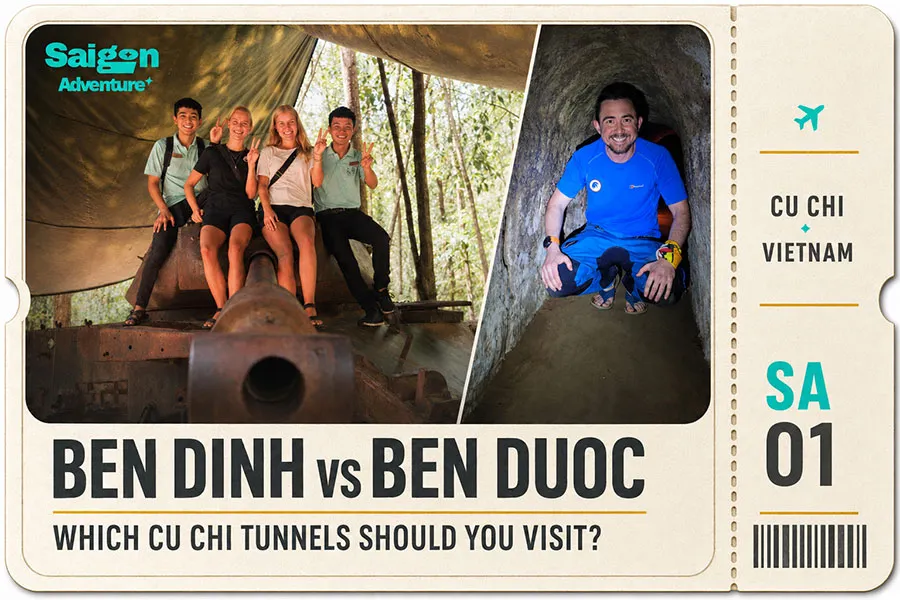
International visitors commonly encounter two main visitor areas: Ben Dinh and Ben Duoc.
Ben Dinh is closer to Ho Chi Minh City and is popular with travelers who have limited time. Some tunnel sections have been adapted for visitors, making the underground experience more accessible.
Ben Duoc is farther away and is generally associated with a quieter atmosphere. Saigon Adventure’s current guide describes it as a less crowded option with a more countryside-oriented journey and narrower original tunnel sections.
If your priority is convenience, Ben Dinh can work well.
If you are especially interested in history and want a quieter experience, asking about Ben Duoc may be worthwhile.
Either way, the quality of the guide matters enormously. Historical context can turn a short tunnel walk into a much more meaningful experience.
What Can Travelers Experience at Cu Chi Today?
You cannot recreate wartime life—and you should not expect to.
Today’s Cu Chi visitor experience combines historical displays, preserved or adapted tunnel sections, reconstructed underground facilities, demonstrations, and guided explanations.
Some tours also include a chance to taste cassava and explore areas connected with underground kitchens and bunkers. Saigon Adventure’s current Cu Chi offerings, for example, emphasize underground exploration, historical interpretation, and local food experiences.
The goal should not be to pretend that a tourist crawling through a tunnel for several minutes is experiencing wartime life.
Instead, use the physical experience to understand the conditions.
Notice the low ceiling.
Notice the darkness.
Notice how quickly a narrow passage can feel uncomfortable.
Then imagine remaining there not for five minutes, but as part of a much longer wartime routine.
That mental shift makes the visit far more powerful.

What Should You Know Before Visiting the Cu Chi Tunnels?
A little preparation can make the experience much better.
Wear Comfortable Clothes
Choose lightweight clothing and comfortable shoes. Cu Chi can be hot and humid, and the outdoor sections involve walking.
If you plan to enter the tunnel, clothing that allows easy movement is much more practical than formal travel wear.
Bring Water and Sun Protection
The site includes outdoor areas, so sunscreen, water, sunglasses, and insect repellent can be useful.
Saigon Adventure also recommends sun protection and mosquito repellent for its Cu Chi experiences.
Do Not Force Yourself Into the Tunnel
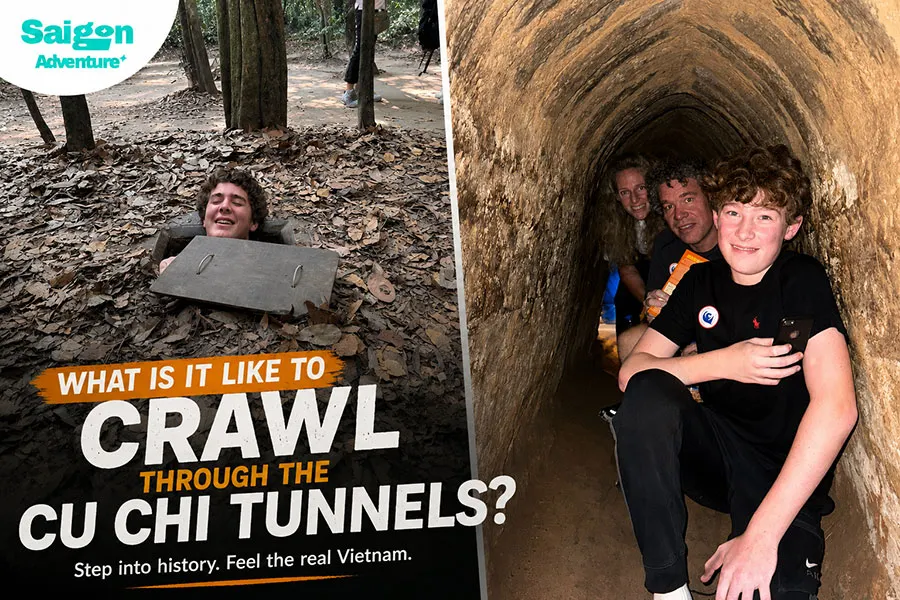
The underground sections can feel surprisingly tight.
If you dislike enclosed spaces, you can still learn a great deal without crawling through every tunnel section. The historical exhibits and explanations above ground are valuable in their own right.
Go With a Guide Who Explains the Context
This may be the single best tip.
A narrow tunnel by itself tells you very little.
A good English-speaking guide can explain how food, ventilation, shelter, medical care, movement, and military strategy were connected, allowing you to understand the tunnel as part of a living historical system.
For travelers planning their visit, Saigon Adventure’s Cu Chi Tunnels 1 Day Tour Guide provides practical information about the experience and what first-time visitors can expect.
Why This Human Side of Cu Chi Matters
There is an easy temptation to focus on the dramatic parts of Cu Chi: hidden entrances, traps, weapons, and underground passages.
They certainly attract attention.
But the quieter details may tell you more.
A bowl of simple food. A place to rest. A hidden medical area. A ventilation opening. A narrow passage connecting one underground space to another.
These things reveal how people adapted ordinary needs to extraordinary circumstances.
That is the real story behind daily life inside the Cu Chi Tunnels.
Not simply how people fought.
But how they ate, rested, worked, cared for one another, moved, waited, and survived.

Make Your Cu Chi Visit More Meaningful
If Cu Chi is on your Ho Chi Minh City itinerary, give yourself time to look beyond the obvious attractions.
Ask questions.
Listen to the local stories.
Notice the relationship between the underground spaces and the green countryside above them.
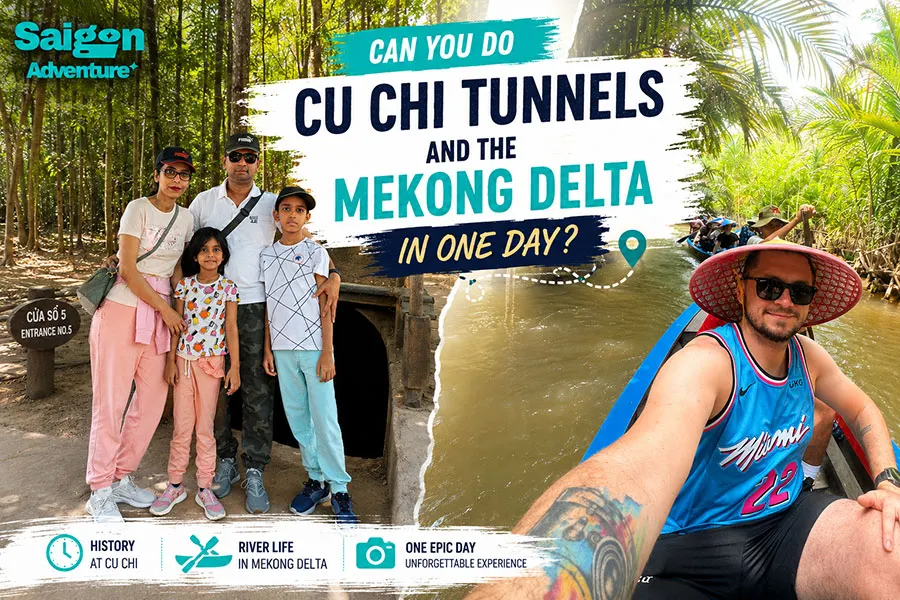
If you want to combine the historical experience with another major southern Vietnam attraction, a Cu Chi Tunnel & Mekong Delta 1-Day Tour can combine both experiences in one long day. Saigon Adventure currently lists this as an 11–12-hour itinerary from Saigon.
For travelers who prefer a more unusual way to reach the tunnels, the Cu Chi Tunnels by Scooter combines the historical visit with countryside scenery, local roads, and a Vietnamese lunch.
The Human Story Behind the Cu Chi Tunnels
The Cu Chi Tunnels are easy to describe as an underground military network.
But that description misses something important.
Behind every tunnel was a human need.
Someone needed somewhere to sleep. Someone had to prepare food. Someone needed medical attention. Someone had to maintain the passageways. Someone waited quietly for the danger above to pass.
That is what makes life inside the Cu Chi Tunnels so fascinating for modern travelers.
When you eventually climb back into the sunlight, the experience may stay with you for a simple reason: you have not only seen where people lived and worked during wartime—you have spent a few moments thinking about how they managed to live at all.
If you are staying in Ho Chi Minh City and want to explore Cu Chi with an English-speaking local guide, you can see Saigon Adventure’s Cu Chi Tunnels tours from Ho Chi Minh City and choose an itinerary that fits your travel style.
Frequently Asked Questions
1. What was daily life like inside the Cu Chi Tunnels?
Daily life was cramped, uncomfortable, and highly organized. People used underground spaces for different purposes, including shelter, resting, food preparation, medical care, storage, meetings, and movement.
2. Did people actually live inside the Cu Chi Tunnels?
Some people spent extended periods using the tunnel system, but it is inaccurate to imagine that everyone lived underground permanently. The tunnels were part of a larger wartime environment connecting underground and surface activities.
3. What did people eat in the Cu Chi Tunnels?
Food had to be practical and suited to wartime conditions. Cassava became closely associated with the Cu Chi area and is still commonly presented to visitors as part of the historical experience.
4. How did people cook underground without being detected?
Cooking required careful management because smoke could reveal underground activity. Underground kitchens and ventilation arrangements were designed to reduce the visibility of cooking-related signs from the surface.
5. Can tourists go inside the Cu Chi Tunnels?
Yes. Visitors can enter adapted tunnel sections at the tourist sites. However, the passages can be narrow and uncomfortable, so travelers who dislike confined spaces should not feel obligated to crawl through them.
6. Is Cu Chi suitable for first-time visitors to Vietnam?
Yes, particularly for travelers interested in Vietnamese history and the Vietnam War. Combining the physical tunnel experience with an English-speaking guide can provide much more context than visiting the site without explanation.
7. What should I bring to the Cu Chi Tunnels?
Wear lightweight, comfortable clothes and walking shoes. Sunscreen, water, sunglasses, and mosquito repellent are also useful, particularly because parts of the experience take place outdoors.