Paying for things in Ho Chi Minh City is easier than many first-time visitors expect. The city is becoming more cashless every year, but cash still plays an important role in daily life.
Knowing when to use cash and when to pay by card helps you avoid unnecessary fees, save time and enjoy local experiences without interruption.
You don’t need to carry a wallet full of banknotes. You just need the right balance.

Cash or Credit Card: Which One Is Better?
The short answer is both.
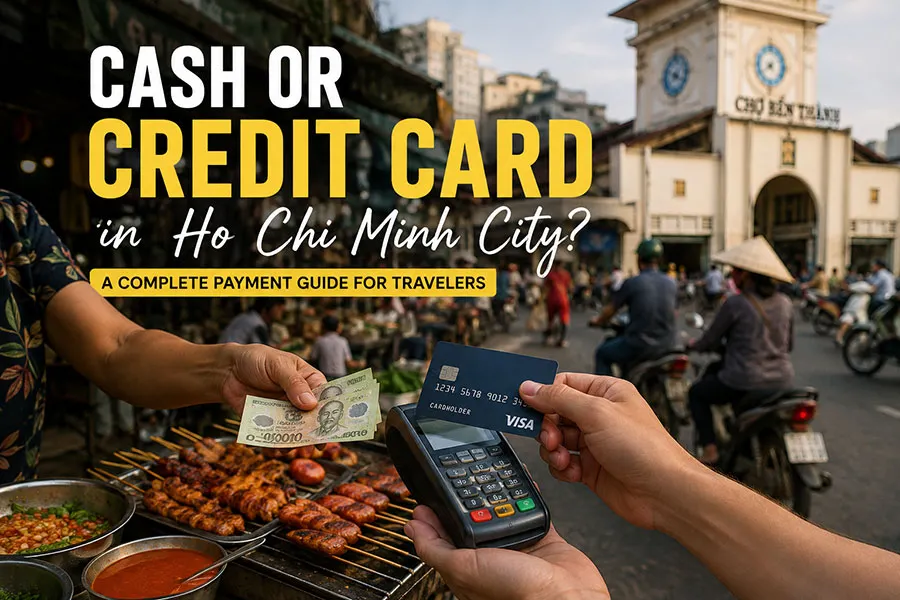
Credit cards are perfect for hotels, shopping malls, airport services and many restaurants. Cash, however, is still the easiest way to pay at street food stalls, traditional markets and many family-run businesses.
Most experienced travelers use a simple strategy: pay by card for larger purchases and keep some Vietnamese đồng (VND) for everyday spending.
That approach gives you the best of both worlds.
Cash vs Credit Card at a Glance
| Cash | Credit Card |
|---|---|
| Accepted almost everywhere | Accepted at hotels, malls and many restaurants |
| Best for street food | Great for larger purchases |
| Ideal for markets | Convenient for online bookings |
| No card fees | More secure than carrying lots of cash |
| Perfect for small purchases | Easy to track your spending |
There’s no winner here. The smartest travelers simply know when to use each one.
Where Credit Cards Work Best
If you’re spending time in District 1 or other popular tourist areas, you’ll find credit cards widely accepted.
International hotels, shopping malls, supermarkets and most upscale restaurants accept Visa and Mastercard. Many cafés, rooftop bars and spas also support contactless payments.
Booking a tour, paying for your hotel or shopping for souvenirs is usually quick and straightforward with a card.
Places That Usually Accept Credit Cards
You can normally pay by card at:
- Hotels and resorts
- Shopping malls
- Supermarkets
- Convenience stores
- Fine dining restaurants
- Rooftop bars
- Modern cafés
- Spa and wellness centers
- Tour operators
- Airline offices
As a general rule, larger businesses are much more likely to accept international cards.
Where Cash Is Still Essential
This is where Ho Chi Minh City feels most authentic.
The best bowl of pho might come from a tiny shop with plastic stools. Your favorite bánh mì could be sold from a street cart that’s been serving locals for decades.
Many of these small businesses still prefer cash because it’s fast, simple and doesn’t require card machines or internet connections.
Traditional markets are another place where cash remains the norm. Whether you’re buying fresh fruit, local snacks or handmade souvenirs, having small VND notes makes shopping much easier.
If you enjoy discovering hidden cafés, local neighborhoods and street food, carrying some cash isn’t just convenient—it’s part of the experience.
How Much Cash Should You Carry?
You don’t need to carry millions of đồng in your pocket all day.
For most travelers, 500,000–1,500,000 VND (around US$20–60) is more than enough for street food, taxis, coffee, market shopping and other daily expenses.
If you’re planning to buy jewelry, electronics or luxury goods, paying by credit card is usually the safer choice.
Traveler Tip: Carry a few 20,000 VND, 50,000 VND and 100,000 VND notes. Small vendors may not always have enough change for large bills.
Where to Get Cash in Ho Chi Minh City
Finding an ATM is easy.
You’ll see ATMs at the airport, shopping malls, convenience stores, banks and busy streets throughout the city. Most international travelers can withdraw Vietnamese đồng using Visa, Mastercard, Plus or Cirrus cards.
ATMs are generally reliable, but withdrawal limits and fees vary depending on the bank and your card issuer.
If possible, withdraw a larger amount once instead of making several small withdrawals to reduce banking fees.
Should You Exchange Money Before Arriving?
Usually, no.
You’ll often get a competitive exchange rate by withdrawing Vietnamese đồng from an ATM after arriving in Ho Chi Minh City.
If you prefer carrying some cash before your trip, exchanging a small amount for your first taxi or coffee is perfectly reasonable. You can always withdraw more later.
Avoid exchanging money at unofficial locations or from individuals offering “better rates.”
Can You Use Apple Pay or Google Pay?
Yes—but don’t rely on them everywhere.
Many modern cafés, shopping malls and international retailers now support Apple Pay, Google Pay and contactless payments through compatible card terminals.
However, plenty of local restaurants and street food vendors still don’t.
Think of mobile payments as a convenient bonus rather than your primary payment method.
Is Grab Better with Cash or Card?
Both options work well.
Adding your credit card to the Grab app is the easiest choice. The fare is charged automatically, so there’s no need to prepare cash or worry about finding the correct change.
Some travelers still prefer paying cash, especially if they don’t want to connect their bank card while traveling.
Either way, Grab clearly shows the payment method before each ride, making it easy to switch whenever you like.
Will You Pay Extra for Using a Credit Card?
Sometimes.
Most hotels, shopping malls and established restaurants include card payments at no extra cost.
Some smaller businesses, however, may charge a 2–3% card processing fee, particularly for low-value purchases.
If a surcharge applies, staff will usually tell you before processing the payment.
Safety Tips for Paying in Ho Chi Minh City
Ho Chi Minh City is generally easy to navigate, but a few simple habits can make paying even safer.
- Keep your cash in separate places instead of carrying everything together.
- Use ATMs attached to banks whenever possible.
- Check the amount before tapping or inserting your card.
- Enable transaction notifications on your banking app.
- Keep a backup credit or debit card in case one doesn’t work.
A little preparation goes a long way, letting you focus on exploring the city instead of worrying about your wallet.
Common Payment Mistakes First-Time Travelers Make
One of the biggest mistakes is assuming every business accepts credit cards.
Another is carrying only large 500,000 VND notes. Small cafés and food stalls may struggle to give change early in the morning.
Some visitors also exchange too much money before arriving. Since ATMs are easy to find, there’s usually no need to carry large amounts of cash throughout your trip.
Finally, don’t forget to inform your bank before traveling if your card requires a travel notice. It can help prevent unexpected declines when making purchases in Vietnam.
Frequently Asked Questions
Can I use Visa and Mastercard in Ho Chi Minh City?
Yes. Visa and Mastercard are widely accepted at hotels, shopping malls, supermarkets, upscale restaurants and most tour companies. However, you’ll still need cash for many street food stalls, traditional markets and small local businesses.
Is Ho Chi Minh City mostly cashless?
Not yet.
Digital payments are growing quickly, but Ho Chi Minh City is best described as a hybrid payment city. You’ll use your credit card for some purchases and cash for others, often on the same day.
How much cash should I bring each day?
For most travelers, 500,000–1,500,000 VND is enough for meals, coffee, transportation and small purchases.
If you’re planning a shopping spree or buying expensive items, paying by card is generally the safer option.
Do taxis and Grab accept credit cards?
Grab allows you to pay by either cash or a linked credit card.
Traditional taxis often accept cards, but not every vehicle has a working card terminal. Carrying some cash is always a good backup.
Should I tip in cash?
Yes.
While tipping isn’t expected in Vietnam, many travelers leave a small cash tip after excellent service. Cash is the easiest and most appreciated way to do so.
Are ATMs easy to find?
Absolutely.
ATMs are available throughout Ho Chi Minh City, including at the airport, shopping malls, convenience stores and bank branches. Most accept international debit and credit cards.
Experience the Real Ho Chi Minh City with Local Experts
So, cash or credit card in Ho Chi Minh City? The answer isn’t one or the other—it’s both.
Use your credit card for hotels, shopping malls, tours and larger purchases. Keep some Vietnamese đồng in your wallet for street food, local cafés, markets and everyday spending.
With the right mix of cash and cards, you’ll spend less time worrying about payments and more time enjoying everything the city has to offer.
One of the best ways to experience authentic Ho Chi Minh City is by exploring beyond the main tourist streets. From hidden food stalls to lively local neighborhoods, many unforgettable moments still happen in places where cash is the preferred payment method.
If you’d like to discover the city’s real flavors with a knowledgeable local guide, join a Food Tour in Ho Chi Minh City. You’ll enjoy authentic Vietnamese dishes, visit local favorites that many visitors never find on their own, and gain practical travel tips that make the rest of your trip even easier.