
For many travelers, the Cu Chi Tunnels are more than just a famous attraction near Ho Chi Minh City—they’re an opportunity to step into one of Vietnam’s most remarkable chapters of history. Visiting the tunnels offers a deeper understanding of the country’s resilience, ingenuity, and the realities of life during wartime. Yet if it’s your first visit, you may wonder what actually happens during the tour, how physically demanding it is, what to wear, or whether it’s worth dedicating half or even a full day to the experience.
The truth is that a well-organized Cu Chi Tunnels tour is about much more than crawling through underground passages. Along the way, you’ll learn fascinating historical stories from knowledgeable local guides, explore hidden bunkers, discover ingenious survival systems, and experience the peaceful countryside that now surrounds one of Vietnam’s most important historical landmarks.
Whether you’re a history enthusiast, a cultural traveler, or simply looking for one of the best day trips from Ho Chi Minh City, this guide explains exactly what to expect before, during, and after your visit so you can make the most of your experience.

Why the Cu Chi Tunnels Are One of Vietnam’s Must-Visit Attractions
Located around 70 kilometers northwest of Ho Chi Minh City, the Cu Chi Tunnels form an underground network stretching over 250 kilometers. Originally expanded during the Vietnam War, these tunnels served as living quarters, communication routes, storage facilities, hospitals, kitchens, and defensive positions for Vietnamese fighters.
Today, the tunnels have become one of Vietnam’s most visited historical sites because they offer something that museums simply cannot: the chance to experience history firsthand.
Unlike reading about the war in books, visitors can actually enter sections of the underground tunnels, see hidden trapdoors disguised beneath the forest floor, observe reconstructed command centers, and understand how entire communities survived underground for years.
The surrounding forest has also recovered beautifully over the decades, creating a peaceful atmosphere that contrasts sharply with the stories told throughout the tour. This combination of history and nature makes the experience memorable even for travelers who normally don’t seek out historical attractions.

Is the Cu Chi Tunnels Tour Suitable for First-Time Visitors?
Absolutely.
Many travelers assume the tour is only for history buffs, but that’s far from reality. Every day, families, solo travelers, couples, photographers, students, and senior visitors enjoy the Cu Chi Tunnels without needing any previous knowledge of Vietnam’s history.
Professional guides explain everything in an easy-to-understand way, providing enough historical context to help visitors appreciate the significance of the site without overwhelming them with dates or military details.
If you’re visiting Vietnam for the first time, the Cu Chi Tunnels provide valuable insight into the country’s past while also helping you understand modern Vietnamese culture, resilience, and national identity.
What Happens During a Typical Cu Chi Tunnels Tour?
Although itineraries vary slightly between operators, most tours follow a similar structure that balances transportation, historical exploration, interactive experiences, and free time.
Hotel Pick-Up and Journey to Cu Chi
Most tours begin in the morning with hotel pick-up in central Ho Chi Minh City. Depending on traffic, the drive usually takes between 90 minutes and two hours.
During the journey, your guide often introduces Vietnam’s history, explains the significance of Cu Chi, and shares interesting facts about local villages, agriculture, and daily life outside the bustling city.
Rather than simply being transportation time, the drive helps visitors better understand what they’re about to experience upon arrival.
Arrival and Historical Introduction
Upon reaching the Cu Chi historical site, visitors typically begin with a short documentary introducing the history of the tunnel system.
Although the film reflects historical perspectives, it provides useful context before exploring the actual site. Your guide then explains how the tunnel network expanded over time and why it became strategically important during the war.
This introduction helps visitors appreciate the remarkable engineering skills required to construct such an extensive underground system using simple hand tools.
Exploring Hidden Tunnel Entrances
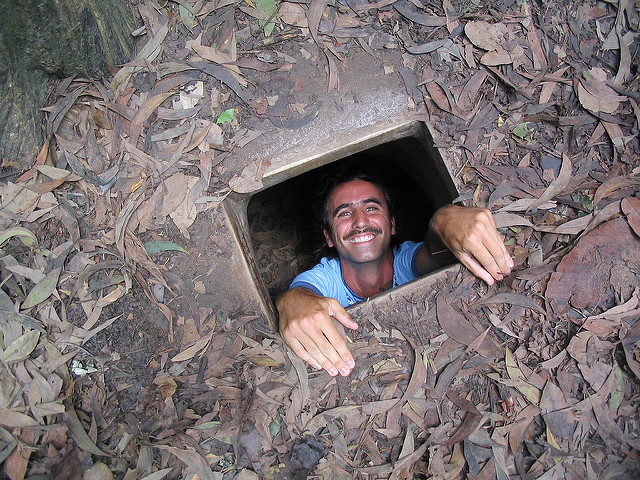
One of the most fascinating moments for first-time visitors is discovering just how well the tunnel entrances were concealed.
Many entrances measure only slightly wider than a person’s shoulders and are hidden beneath removable camouflage covers made from natural materials.
Your guide will usually demonstrate how these secret entrances worked before inviting visitors to try climbing inside for photos.
It’s often the first moment when travelers realize how incredibly small the original tunnels actually were.

Walking Through the Underground Tunnel System
For many visitors, crawling through the tunnels becomes the highlight of the entire day.
Fortunately, the sections open to tourists have been widened slightly compared with the original wartime dimensions, making them more accessible while still preserving the authentic experience.
Inside the tunnels, you’ll notice:
- Extremely narrow passageways
- Low ceilings
- Sharp turns
- Limited natural light
- Warm, humid conditions
Some sections are only 20 meters long, while others extend to 100 meters or more. Visitors can usually exit at several points if they feel uncomfortable, so there’s no pressure to complete the longest route.
Even spending a few minutes underground provides a powerful perspective on the conditions people once endured for years.
Those with claustrophobia, mobility limitations, or certain medical conditions may prefer observing the tunnel entrances rather than entering them. Fortunately, the overall tour remains highly rewarding even if you skip the underground section.

Discovering Ingenious Wartime Engineering
Beyond the tunnels themselves, you’ll encounter a variety of cleverly designed survival systems that reveal the remarkable resourcefulness of those who lived and fought here.
Your guide will explain features such as:

Hidden Ventilation Systems
Fresh air entered the tunnels through carefully disguised ventilation openings that blended naturally into the surrounding forest.
Many resembled termite mounds or tree roots, making them nearly impossible to detect from above.
This simple yet effective design allowed entire underground communities to breathe without revealing their location.

Underground Kitchens
Cooking underground presents an obvious challenge: smoke.
To solve this problem, specially designed “smokeless kitchens” dispersed cooking smoke through long underground channels before releasing it gradually far from the kitchen itself.
This ingenious system significantly reduced the risk of enemy detection while allowing people to prepare daily meals beneath the forest.

Underground Living Areas
Visitors also see reconstructed spaces that served as:
- Meeting rooms
- Sleeping quarters
- Medical stations
- Weapons storage areas
- Communication centers
These displays help transform the tunnels from a military structure into a vivid representation of everyday life during wartime, illustrating how entire communities adapted to extraordinary circumstances.

Seeing Traditional Traps and Defensive Systems
Another memorable part of the experience involves viewing the defensive traps that protected the tunnel network.
Your guide explains how these devices functioned and, importantly, places them within their historical context.
The displays are intended to educate visitors about wartime survival strategies rather than glorify violence.
Understanding these defensive mechanisms offers valuable insight into the tactical challenges faced by both sides during the conflict and helps visitors appreciate the ingenuity behind the tunnel system’s overall design.
Learning from a Local Guide Makes a Huge Difference
While it’s possible to visit the Cu Chi Tunnels independently, joining a guided tour significantly enriches the experience.
Historical sites often become much more meaningful when someone can explain not only what you’re seeing, but also why it mattered.
Experienced local guides share personal stories, regional history, cultural traditions, and historical context that most visitors would never discover through information boards alone.
They also answer common questions about daily life inside the tunnels, wartime strategies, reconstruction efforts, and how the site has evolved into one of Vietnam’s most respected historical destinations.
For travelers who want a deeper understanding rather than simply checking off a famous attraction, a guided experience offers far greater value than exploring independently.
What Should You Wear for a Cu Chi Tunnels Tour?
Choosing comfortable clothing can make a noticeable difference during your visit. While the tour isn’t considered physically demanding, you’ll spend several hours walking along forest paths, climbing short staircases, and possibly crawling through narrow underground passages.
For the most enjoyable experience, consider bringing:
- Lightweight, breathable clothing suitable for Vietnam’s tropical climate
- Comfortable walking shoes or sneakers with good grip
- A hat or cap for sun protection
- Sunglasses
- Sunscreen
- Insect repellent, especially during the rainy season
- A reusable water bottle if it’s not included in your tour
Avoid wearing high heels, flip-flops, or tight-fitting clothing if you plan to enter the tunnels. Loose, comfortable outfits make crawling and bending much easier.

How Physically Challenging Is the Experience?
One of the biggest misconceptions is that everyone must crawl through long, cramped tunnels.
In reality, the experience is highly flexible.
Visitors can choose how much of the tunnel system they’d like to explore. Several exit points allow you to leave at any stage, meaning you can try a short section without committing to the entire route.
Most of the tour itself involves leisurely walking through shaded forest trails while stopping at historical exhibits.
If you have knee problems, back pain, claustrophobia, or mobility concerns, simply inform your guide beforehand. They can recommend alternative viewing areas while ensuring you don’t miss the site’s most important highlights.
The tour is generally suitable for:
- Families with older children
- Solo travelers
- Couples
- Senior travelers with reasonable mobility
- History enthusiasts
- Educational groups
Can You Take Photos at the Cu Chi Tunnels?
Absolutely—and you’ll find countless opportunities for memorable photos throughout the site.
Some of the most popular photography spots include:
The Hidden Tunnel Entrance
Visitors often enjoy posing as they emerge from the tiny concealed entrance hidden beneath the forest floor. It’s one of the most iconic images from any Cu Chi visit.
Forest Walking Trails
The peaceful jungle surroundings create a striking contrast to the site’s wartime history, making them ideal for atmospheric travel photography.
Historic Military Displays
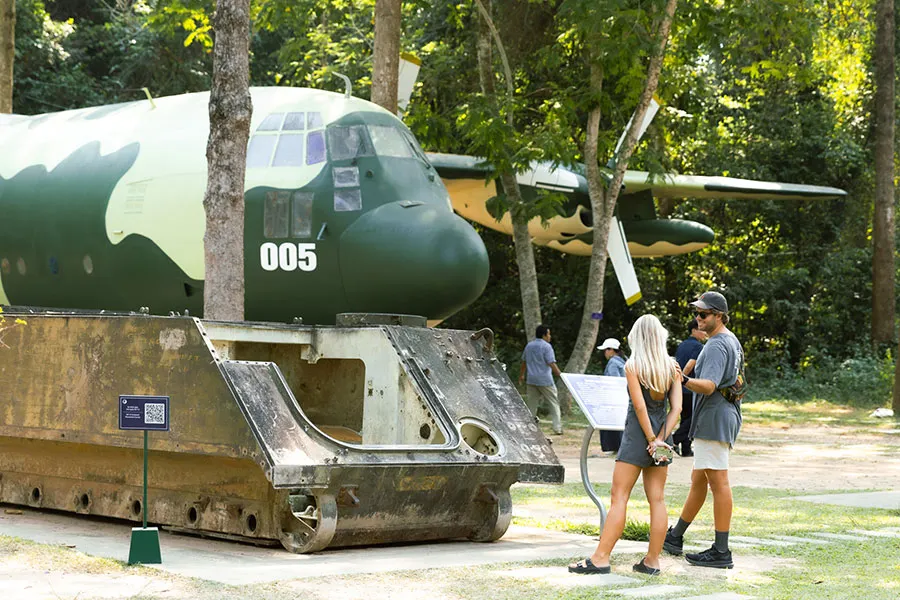
Several restored vehicles and historical exhibits provide additional photo opportunities while helping tell the story of the tunnel network.
Underground Tunnel Exits
If you’re comfortable bringing your camera through the tunnels, the dimly lit passageways create unique perspectives rarely found elsewhere in Vietnam.
Remember to be respectful when taking photographs. The Cu Chi Tunnels are an important historical site and hold deep cultural significance for many Vietnamese people.

What Can You Eat During the Tour?
Many visitors are surprised to learn that food also forms part of the experience.
Near the end of the visit, guests are often invited to sample boiled cassava served with crushed peanuts and salt—a simple meal commonly eaten by people living within the tunnel network during wartime.
Although modest, tasting this traditional food provides meaningful insight into the daily hardships experienced during that period.
Depending on your chosen itinerary, your tour may also include lunch at a local restaurant, where you’ll have the opportunity to enjoy authentic southern Vietnamese cuisine before returning to Ho Chi Minh City.
Half-Day vs. Full-Day Cu Chi Tunnels Tour
One of the most common questions travelers ask is whether to choose a half-day or full-day experience.
The answer depends on your travel style, available time, and interests.
Half-Day Tour
A half-day tour is ideal if:
- You have limited time in Ho Chi Minh City.
- You’re mainly interested in the historical tunnels.
- You want a shorter excursion before exploring the city in the afternoon or evening.
- You’re visiting on a tight schedule.
Most half-day tours last around 5–6 hours, including transportation.
Full-Day Tour
A full-day experience is better if you prefer a slower pace and want to combine the tunnels with nearby attractions.
Some itineraries include:
- Local villages
- Rubber plantations
- Countryside scenery
- Traditional craft workshops
- Additional cultural experiences
A full-day tour allows for more interaction with local communities while offering a broader perspective on southern Vietnam beyond the historical site itself.
If you have more time, our Cu Chi Tunnel & Mekong Delta Tour lets you experience two of southern Vietnam’s most iconic destinations in one unforgettable day.
Alternatively, if you’re looking for a more unique way to reach the tunnels, our Cu Chi Tunnels Tour by Luxury Speedboat combines a scenic cruise along the Saigon River with an unforgettable historical experience before arriving at the Cu Chi Tunnels.

Common Mistakes First-Time Visitors Should Avoid
Preparing in advance helps ensure a much smoother experience.
Here are some of the most common mistakes travelers make:
Expecting an Action-Packed Adventure
The Cu Chi Tunnels are primarily an educational and cultural destination rather than a thrill-seeking activity.
Approach the visit with curiosity and an open mind instead of expecting a theme-park experience.
Underestimating the Weather
Southern Vietnam can be hot and humid throughout much of the year.
Drink plenty of water, wear breathable clothing, and pace yourself while exploring the site.
Skipping the Historical Explanations
Some visitors rush ahead to reach the tunnels themselves.
However, the stories shared by experienced guides provide the context that transforms the visit into a meaningful learning experience.
Trying to Force Yourself Through the Entire Tunnel
Many first-time visitors believe they must complete the longest tunnel route.
There’s absolutely no obligation to do so.
If you begin feeling uncomfortable, simply exit at the next available opening and continue enjoying the remainder of the tour above ground.
Is a Guided Cu Chi Tunnels Tour Worth It?
For most international visitors, the answer is undoubtedly yes.
Without expert interpretation, many parts of the site appear to be little more than holes in the ground or reconstructed buildings. A knowledgeable guide connects these physical spaces with the stories, strategies, and everyday realities that shaped Vietnam’s history.
Guided tours also eliminate the stress of arranging transportation, navigating independently, and managing logistics. Hotel pickup, comfortable transfers, entrance tickets, and a structured itinerary allow you to focus entirely on the experience.
If you’re comparing tour options, our Cu Chi Tunnels Tour is designed specifically for international travelers who want an informative, comfortable, and authentic experience led by passionate local guides. The itinerary balances historical storytelling, hands-on exploration, and practical travel convenience without feeling rushed.
For travelers interested in discovering more of southern Vietnam after visiting Cu Chi, you may also enjoy our Mekong Delta Tours, where peaceful waterways, floating markets, fruit orchards, and traditional villages offer a completely different perspective on the country’s culture and landscapes.
Make Your First Cu Chi Tunnels Visit Truly Memorable
A visit to the Cu Chi Tunnels is far more than a history lesson—it’s an opportunity to better understand Vietnam’s resilience, culture, and remarkable ability to overcome adversity. From crawling through underground passages and discovering hidden trapdoors to hearing powerful stories from local guides, every part of the experience offers a deeper appreciation of one of the country’s most significant historical landmarks.
Whether you’re passionate about history or simply looking for one of the best day trips from Ho Chi Minh City, the Cu Chi Tunnels deliver an unforgettable combination of education, culture, and adventure. By knowing what to expect before you arrive, you’ll feel more comfortable, better prepared, and able to fully enjoy every moment of the journey.
If you’re looking for a professionally guided experience with knowledgeable local guides, comfortable transportation, and carefully planned itineraries, explore our Cu Chi Tunnels Tours. It’s one of the best ways to experience this world-famous historical site while gaining insights that go far beyond what guidebooks can offer.
If you’re planning to stay longer in Saigon, our Ho Chi Minh City Tours are the perfect complement to your Cu Chi adventure, helping you discover the city’s rich history, colonial architecture, bustling markets, and vibrant street life with experienced local guides.

Frequently Asked Questions
How long does a Cu Chi Tunnels tour usually take?
Most half-day tours take approximately 5–6 hours, including round-trip transportation from Ho Chi Minh City. Full-day tours typically last between 8 and 10 hours, depending on the itinerary.
Can children visit the Cu Chi Tunnels?
Yes. Children are welcome, although younger kids may choose not to enter the narrow tunnel sections. Above-ground exhibits and demonstrations are suitable for families.
Do I have to crawl through the tunnels?
No. Entering the tunnels is completely optional. Visitors can explore as much or as little of the underground network as they feel comfortable with.
Is the Cu Chi Tunnels tour suitable for seniors?
Yes. Most of the tour involves easy walking on designated paths. Seniors who prefer not to crawl through the tunnels can still enjoy the historical exhibits and guided explanations.
What is the best time of year to visit the Cu Chi Tunnels?
The dry season (roughly December to April) generally offers the most comfortable weather, but the tunnels are open year-round and can be visited in any season.
Are the tunnels original?
Many sections of the tunnel network are original, while some areas have been carefully restored and slightly widened to allow visitors to experience them safely without significantly altering their historical character.
Should I book a guided tour or visit independently?
For first-time visitors, a guided tour is highly recommended. Local guides provide historical context, cultural insights, and practical assistance that greatly enhance the overall experience.
Explore our best-selling tours
 Bestseller
Cu Chi Tunnels Tour from Ho Chi Minh City by Car
Overview of the Cu Chi Tunnels Tour by Car Travel from Ho Chi Minh City to the Cu Chi Tunnels...
 Bestseller
Cu Chi Tunnels & Mekong Delta 1-Day Tour from Ho Chi Minh City
EXCURSION HIGHLIGHTS: AT CU CHI TUNNELS Watch Documentary Video (Only Showed In This Place) Experience The Thrill Of Crawling Into...
 Bestseller
Cu Chi Tunnels Tour By Luxury Speedboat
Cu Chi Tunnels Speedboat Tour from Ho Chi Minh City Experience the Cu Chi Tunnels by luxury speedboat with a...
 Bestseller
Cu Chi Tunnels and Mekong Delta Small Group Tour from Ho Chi Minh City
A tourist exploring coconut canals on Cu Chi Tunnel And Mekong Delta Small Group Tour If you only have one...
 Bestseller
Cu Chi Tunnel Small Group Tour (12 People)
The Ultimate Introduction to the Cu Chi Tunnels Trade the high-energy streets of Saigon for a legendary Cu Chi Tunnels...
 Bestseller
Cu Chi Tunnels & Saigon City Tour in 1 Day
Tour Overview Experience the dramatic contrast of Vietnam’s history and modern energy with our Cu Chi Tunnels & Saigon City...
 Bestseller
Cu Chi Tunnel And Black Virgin Ba Den Mountain 1 Day Tour
Discover Cu Chi Tunnels & Ba Den Mountain in One Day Experience two very different sides of southern Vietnam on...
 Bestseller
Private Cu Chi Tunnels and City Tour in 1 Day By Car
ITINERARY 8:00 Depart to Cu Chi for your Private Cu Chi Tunnels and City Tour. We drive 70km to north-...
Bestseller
Cu Chi Tunnels By Scooter
Keep your travel plan flexible - book your spot now and pay nothing today! You only need to pay 4...
 Bestseller
Cu Chi Tunnels & Sidecar Adventure
This tour tends to sell out, please book it in advance Departure: From 8:00 AM To 8:30 AM Lasts 7 Hours Foreign...