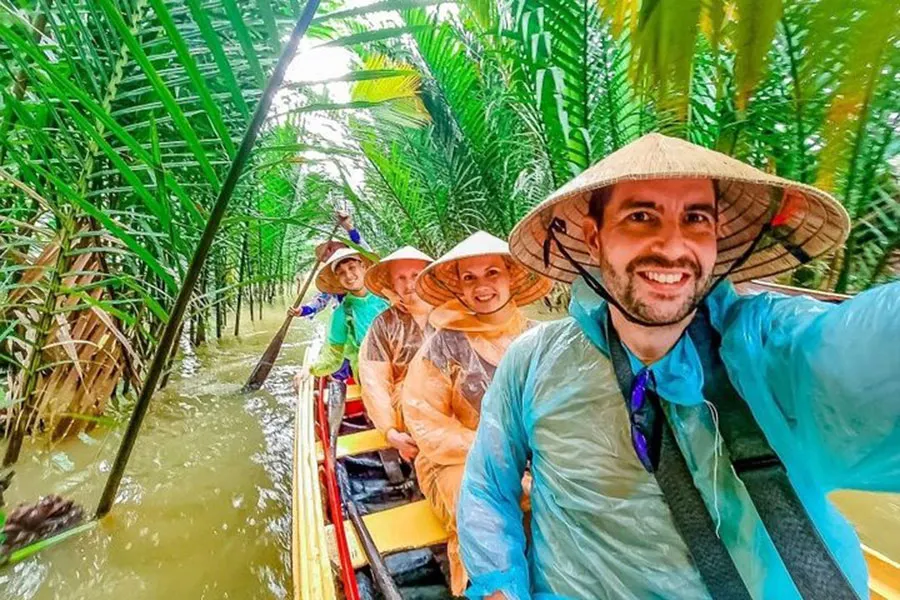
The sky darkens above a narrow canal, rain begins tapping against the water, and a boat disappears beneath an arch of coconut palms. An hour later, the clouds have moved on, sunlight returns and the entire riverside landscape seems freshly polished.
This is the Mekong Delta in August: warm, humid, brilliantly green and occasionally unpredictable. It is also a rewarding month for travelers who want to taste seasonal tropical fruit, explore fuller waterways and experience southern Vietnam beyond the dry-season crowds.
So, is August a good time to visit the Mekong Delta? Yes—provided you are comfortable with tropical rain and a flexible itinerary. August is not the best month for guaranteed sunshine, but it can be one of the most atmospheric times to see the Delta’s orchards, canals and farming communities at their most alive.

What is the Mekong Delta weather like in August?
August falls within southern Vietnam’s rainy season, which generally lasts from May until October or November. The weather is typically hot and humid, with a significant chance of rain on any given day.
That does not mean it rains continuously. Many mornings begin dry or partly cloudy before a concentrated shower arrives in the afternoon or early evening.
Some downpours pass within 30 to 60 minutes. Others can last longer or develop into thunderstorms, especially when wider weather systems affect southern Vietnam.
Daytime conditions often feel hotter than the temperature suggests because of the humidity. Boat rides beneath shaded palms can be comfortable, but cycling or walking through exposed orchards around midday may become tiring.

Will rain ruin a Mekong Delta tour?
Usually, no. Rain is part of everyday life in the Delta, and local guides, boat operators and farmers are accustomed to adjusting their activities around it.
An orchard walk can be scheduled in the morning, while a cooking demonstration, coconut workshop or family lunch takes place during a shower. Once the rain passes, temperatures may feel cooler and the wet countryside becomes wonderfully photogenic.
However, severe thunderstorms, strong winds or localized flooding can affect small-boat journeys and road transfers. No responsible operator should continue an exposed river activity when conditions are unsafe.
August travelers should therefore avoid an overly rigid schedule. A well-designed tour leaves room to change the order of activities without losing the character of the experience.
Why visit the Mekong Delta in August?
August reveals a side of the Delta that dry-season visitors do not always see. Seasonal rain feeds the canals, refreshes the rice fields and turns riverbanks into dense corridors of tropical vegetation.
The region feels deeply agricultural during this period. Farmers tend orchards between showers, boats transport produce along the waterways, and local markets display the results of the summer harvest.
August can also be quieter than the peak travel months between December and April. Famous stops still receive visitors, but smaller gardens, villages and canals may feel less commercial and more relaxed.
The trade-off is simple: you exchange consistently sunny weather for greener scenery, seasonal fruit and a more dramatic tropical atmosphere.
Fuller canals and intensely green landscapes
Higher water levels can make the Delta’s canal scenery especially attractive. Sampans move through waterways bordered by nipa palms, coconut trees and vegetation revived by weeks of rain.
Water conditions vary across the region, however. The Mekong Delta covers multiple provinces, and rainfall, tides and upstream river levels do not affect every destination in the same way.
In An Giang and Dong Thap, August may mark the beginning of the annual high-water transformation. The most extensive flooded landscapes often develop later, so visitors should not assume that every August trip will show peak flood-season conditions.
A more natural rhythm of local life
The most memorable moments in August are not always famous attractions. They may include sheltering from a shower with a farming family, drinking hot tea beside an orchard or watching vendors cover their produce as rain sweeps across a riverside market.
These unplanned pauses help travelers understand the Delta as a living region rather than a collection of sightseeing stops. Life continues around the weather instead of waiting for perfect conditions.
That is why August particularly suits curious travelers, photographers and repeat visitors to Vietnam. It rewards people who are willing to slow down and notice the details.
Is August fruit season in the Mekong Delta?
Yes. August falls near the end of the Delta’s abundant summer fruit season, making it an excellent month for travelers interested in orchards and regional produce.
According to Vietnam’s official tourism information, June to August is a major fruit-ripening period around Can Tho. Summer orchards in Can Tho, Vinh Long and neighboring areas can be heavy with colorful tropical fruit.
Harvest dates are not fixed, and no orchard can guarantee every variety. Weather, location, tree age and farming methods all influence what is ripe during a particular week.
Which fruits are available in August?
Depending on the province and current harvest, visitors may find rambutan, mangosteen, durian, longan, jackfruit, guava, pomelo, dragon fruit, pineapple and several varieties of banana.
Rambutan brings vivid color to orchards and market stalls, while mangosteen is prized for its delicate sweet-and-tangy flesh. Durian is more divisive, but August is a tempting time for adventurous visitors to try it close to where it is grown.
Do not judge an orchard by the number of fruit varieties alone. A smaller family-run garden can be more memorable when the owner explains how the trees are cultivated, harvested and protected during the rainy season.
Ask before picking anything directly from a tree. Entry, tasting and fruit taken away may be charged separately, even when a garden visit is included in a tour.
Where should fruit lovers go?
Can Tho is a practical base for combining fruit gardens with the Cai Rang Floating Market. Con Son Islet and areas around Phong Dien offer orchard visits, village activities and opportunities to meet local families.
Vinh Long is another strong choice, particularly around An Binh Islet. Its quiet canals, gardens and homestays make it suitable for travelers who want a slower experience away from a rushed day-trip route.
Ben Tre is most famous for coconuts, but its countryside also contains mixed gardens and small food workshops. Cai Be offers a convenient combination of orchards, canals and village scenery for visitors traveling from Ho Chi Minh City.
Best places to visit in the Mekong Delta in August
The best destination depends on whether you want a short day trip, a floating market, seasonal orchards or the early high-water landscapes of the western Delta.
Can Tho and Cai Rang Floating Market
Can Tho is ideal for a two-day journey. Staying overnight lets you reach Cai Rang around sunrise, when wholesale boats, breakfast vendors and river traffic are most active.
The market is a real commercial environment rather than a performance arranged for tourists. Its size and energy vary, but an early departure gives you the strongest chance of observing its authentic morning rhythm.
Afterward, continue to a local orchard or smaller canal. This creates a more complete experience than visiting the floating market and immediately returning to Ho Chi Minh City.
Ben Tre for a convenient day trip
Ben Tre works well for travelers with one free day. Its coconut groves, rowing-boat journeys, village paths and family workshops provide a gentle introduction to Mekong Delta culture.
The countryside looks especially fresh in August, although rain can make garden paths muddy. Choose secure footwear and avoid sandals that become dangerously slippery when wet.

Chau Doc and Tra Su Cajuput Forest
Chau Doc offers a different atmosphere, shaped by borderland culture, waterways and communities with Vietnamese, Khmer, Chinese and Cham influences.
Nearby Tra Su Cajuput Forest becomes increasingly attractive as water levels rise. Boat journeys through its green wetland scenery can be beautiful in August, but water coverage and wildlife sightings remain natural and variable.
Ask about current conditions before making Tra Su the centerpiece of your trip. Photographs taken at the height of the high-water season may not represent what the forest looks like every day in August.

August vs July and September: which month is better?
July and August both bring humid weather, tropical showers and summer fruit. August may offer slightly fuller waterways in some areas, while still retaining good opportunities to visit orchards near the end of the main fruit-ripening period.
September generally moves the Delta further into its high-water season, particularly in upstream provinces. It may provide more dramatic wetland scenery, but rain and water-related disruptions can also become more noticeable.
Choose July or early August if fruit gardens are your priority. Choose late August or September if you are more interested in high-water landscapes, while remembering that river conditions change from year to year.
How many days should you spend in August?
One day is sufficient for an introduction to Ben Tre or another destination within reasonable reach of Ho Chi Minh City. Keep the route compact instead of trying to combine too many distant attractions.
Two days and one night are better for Can Tho. You can visit Cai Rang early, explore an orchard and enjoy the river after day-trip groups have left.
Three days allow you to combine Can Tho with Vinh Long, Chau Doc or another province. The extra time also provides valuable flexibility if heavy rain requires a change of plan.
Practical travel tips for the Mekong Delta rainy season
Pack lightweight, breathable clothing that dries quickly. A compact rain jacket or poncho is more useful than heavy waterproof clothing, which can feel uncomfortable in tropical humidity.
Protect your phone, passport and camera with a waterproof pouch or small dry bag. Even when it is not raining, spray can enter an open sampan.
Wear shoes or secure sandals with non-slip soles. Wet wooden boats, tiled steps and muddy orchard paths can become surprisingly slippery.
Bring sunscreen, a hat and drinking water. Cloud cover does not eliminate ultraviolet exposure, and humid conditions can cause dehydration before you notice it.
Insect repellent is useful around orchards, wetlands and riverside accommodation. Long, lightweight trousers can provide additional protection in the evening without feeling excessively warm.

Local tip: check the hourly forecast
A daily weather icon showing thunderstorms does not necessarily mean a washed-out trip. Hourly forecasts and live radar provide a more useful picture of when rain may arrive.
Still, do not ignore an official warning simply because the morning looks bright. Tropical weather can change quickly, and local boat operators should make the final decision about river safety.
Start outdoor activities early
Morning is normally the best time for floating markets, cycling, orchard walks and small-boat trips. It is cooler, and afternoon showers are often less likely to interrupt the main activities.
Save covered workshops, leisurely lunches or road transfers for later in the day. This simple change makes an August itinerary far more resilient.
Leave extra time before a flight, train or long-distance bus. Heavy rain, traffic and temporary waterlogging on low-lying roads can make return journeys less predictable.
Is August the right month for you?
Visit the Mekong Delta in August if you enjoy green landscapes, seasonal food and experiences that feel connected to local life. It is particularly rewarding for fruit lovers, photographers and travelers who prefer smaller crowds.
Consider the dry season instead if you need predictable weather, dislike humidity or have limited mobility on wet and uneven surfaces. Families with very young children may also prefer a shorter, carefully paced August itinerary.
The key is not to expect a flawless blue-sky holiday. August offers something different: a Delta refreshed by rain, orchards approaching the end of their summer abundance and waterways beginning their seasonal transformation.
Discover the Mekong Delta beyond the weather forecast
An August shower may change the order of your day, but it does not have to diminish the experience. Sometimes the rain becomes part of the story—the moment everyone gathers beneath a garden shelter, shares fresh fruit and watches the tropical landscape come alive.
Explore carefully planned Mekong Delta tours from Ho Chi Minh City with Saigon Adventure. With a flexible route and knowledgeable local guide, you can enjoy the clearest hours, adapt to changing conditions and discover the river communities behind the scenery.
Frequently asked questions
Does it rain all day in the Mekong Delta in August?
Usually not. Rain often arrives in intense afternoon or evening showers, with dry periods earlier in the day. However, longer downpours remain possible, so a flexible itinerary is essential.
Is August a good month for Mekong Delta fruit orchards?
Yes. August falls near the end of the main summer fruit-ripening period. The exact fruits available depend on the province, orchard and current harvest.
Is it safe to take a Mekong Delta boat tour in August?
Boat tours normally operate during ordinary rainy-season weather. They may be delayed, shortened or canceled during thunderstorms, strong winds or unsafe river conditions.
Can I visit Cai Rang Floating Market in August?
Yes. Stay overnight in Can Tho and depart around sunrise for the best experience. Market activity varies because Cai Rang is a working wholesale market, not a staged attraction.
Is the Mekong Delta already flooded in August?
Water levels may begin rising in August, particularly in upstream provinces such as An Giang and Dong Thap. Peak high-water scenery is not guaranteed and may develop later.
What should I wear in the Mekong Delta in August?
Wear breathable, quick-drying clothes and secure footwear with non-slip soles. Carry sunscreen, insect repellent, a light rain jacket and waterproof protection for valuables.
Is one day enough for an August Mekong Delta trip?
One day works for Ben Tre or another compact destination near Ho Chi Minh City. Choose two days for Can Tho and at least three days if you want to explore several provinces.