
Ho Chi Minh City is famous for motorbikes, busy intersections and streets that seem to move in every direction at once. For first-time visitors, that can make one question surprisingly important: is Ho Chi Minh City walkable for tourists?
The short answer is yes — but not in the same way as compact European cities such as Florence, Prague or Amsterdam.
Many central attractions in Ho Chi Minh City are close enough to explore on foot, especially in District 1. However, heat, traffic, uneven sidewalks and the sheer size of the city mean that walking works best when combined with short taxi, Grab or metro rides.
Quick Answer: Is Ho Chi Minh City Walkable?
Yes, central Ho Chi Minh City is reasonably walkable for tourists, particularly around District 1, Nguyen Hue Walking Street, Dong Khoi Street, Ben Thanh Market and the historic city center.
You can comfortably explore several major attractions during the same walk, but trying to see the entire city on foot is unrealistic.
The best approach is simple: walk within individual neighborhoods and use transportation between districts.
That gives you the freedom to discover street food stalls, cafés, markets and small alleys without spending half your day walking along busy main roads.
Why Ho Chi Minh City Feels Less Walkable at First
The biggest challenge is rarely distance.
It is the environment.
Ho Chi Minh City has more motorbike traffic than many international visitors are accustomed to. Large intersections can initially feel intimidating, while some sidewalks may contain parked motorbikes, street vendors, café seating or other obstacles.
The tropical weather also changes how far people comfortably walk.
A 20-minute walk at 8:00 a.m. can feel pleasant. The same route around midday, when temperatures and humidity are higher, may feel considerably longer.
This does not mean you should avoid walking in Saigon. It simply means walking requires a slightly different strategy.
How Walkable Is District 1?
For most tourists, District 1 is the easiest part of Ho Chi Minh City to explore on foot.
Many famous landmarks are relatively close together, including:
- Nguyen Hue Walking Street
- Saigon Opera House
- Dong Khoi Street
- Saigon Central Post Office
- Notre-Dame Cathedral area
- Book Street
- Independence Palace
- Ben Thanh Market
- Bach Dang riverside area
You do not need a vehicle every time you move between attractions.
For example, walking between Nguyen Hue, the Opera House, Dong Khoi Street and the Central Post Office is usually much more enjoyable than repeatedly getting into a taxi.
Walking also allows you to notice details that are easy to miss from a vehicle: old apartment blocks, hidden coffee shops, tiny temples, local restaurants and narrow alleys filled with everyday city life.
If you want more ideas about where pedestrian exploration works particularly well, see our guide to the best neighborhoods to explore on foot in Ho Chi Minh City.

Can You Walk Between Major Tourist Attractions?
Many central attractions can be combined into a walking route, but not every famous sight should be reached on foot.
A practical sightseeing day might involve walking around the historic center before taking a short ride to another district.
For example, you could explore the Central Post Office, Book Street, Dong Khoi and Nguyen Hue on foot, then use Grab or another transport option to reach Chinatown or a more distant neighborhood.
This is usually more efficient than attempting one enormous walking route.
Think of Ho Chi Minh City as a collection of walkable pockets connected by transportation rather than one completely pedestrian-friendly city.
That distinction makes planning much easier.

The Best Areas for Walking in Ho Chi Minh City
Several parts of the city are particularly suitable for visitors who enjoy exploring on foot.
Historic District 1
This is the most obvious starting point for first-time visitors.
The area around Dong Khoi, Nguyen Hue, the Opera House and the Central Post Office has a high concentration of landmarks, restaurants, hotels and cafés.
Distances between attractions are manageable, making it one of the easiest places to walk without a fixed route.

Nguyen Hue and the Riverside
Nguyen Hue Walking Street offers a more open pedestrian environment than most streets in the city.
From here, you can continue toward the Saigon River, explore nearby streets or stop for coffee inside one of the area’s unusual old apartment buildings.
The atmosphere becomes especially lively in the evening.

Ben Thanh and Surrounding Streets
The streets surrounding Ben Thanh Market provide easy access to food, shopping and central attractions.
Rather than focusing only on the market itself, walk a few streets farther and you will quickly discover small restaurants, bakeries, cafés and local businesses.
For a deeper look at individual areas, use the neighborhood guide above rather than trying to cover every district in one walk.
Areas Where Walking Is Less Practical
Ho Chi Minh City is much larger than the central tourist zone.
Once you start traveling between distant districts, walking quickly becomes inefficient.
A destination may look reasonably close on a map but involve long roads, large intersections or stretches with little sightseeing value.
This is particularly important when planning trips from District 1 to areas such as Chinatown, residential neighborhoods or attractions farther from the city center.
Instead of asking, “Can I walk there?”, ask:
“Is the walk itself interesting?”
If the answer is no, taking a short ride and then exploring the destination on foot is usually the better choice.
Our getting around Ho Chi Minh City guide explains when walking, taxis, ride-hailing services and other transport options make the most sense.
How to Cross the Street in Ho Chi Minh City
Crossing the road is often the biggest concern for first-time visitors.
At major intersections, use pedestrian crossings and traffic lights whenever they are available.
On smaller streets without clear signals, wait for a reasonable opening and cross steadily rather than making sudden movements.
Local traffic can look chaotic, but drivers are generally reacting to the movement around them. Being predictable is therefore more useful than repeatedly stepping forward and backward.
Never assume that a green pedestrian signal means you can completely stop paying attention.
Look in both directions and remain aware of turning vehicles.
After a day or two, most visitors become considerably more comfortable with Saigon traffic.
What Are the Sidewalks Like?
Sidewalk conditions vary considerably.
Some central streets have wide, comfortable pavements, while others may require you to walk around parked scooters, trees, construction areas, restaurant seating or street vendors.
This is one reason distance alone does not tell you whether a route will be enjoyable.
Google Maps might suggest a 15-minute walk, but the real experience depends on the type of street you are following.
When possible, choose smaller central streets or routes passing through parks and commercial areas instead of walking beside major traffic corridors.
Comfortable walking shoes are also much more useful than fashionable footwear.
Is It Too Hot to Walk Around Ho Chi Minh City?
For many tourists, the weather matters more than the distance.
Ho Chi Minh City has a warm tropical climate throughout the year, so walking for hours during the hottest part of the day can become tiring.
Early morning and late afternoon are usually more comfortable times for longer walks.
During the middle of the day, plan shorter sections and take advantage of cafés, museums, restaurants or air-conditioned attractions.
Carry drinking water and use sunscreen if you expect to spend significant time outdoors.
Lightweight clothing and breathable shoes make a noticeable difference.
During the rainy season, a compact umbrella or lightweight rain jacket can also be useful. Tropical showers may be intense, but they do not always last long.
Is Ho Chi Minh City Safe to Walk at Night?
Popular central areas are generally active well into the evening, with restaurants, shops, street food vendors and cafés creating plenty of pedestrian activity.
Nguyen Hue, Dong Khoi and central District 1 are especially popular for evening walks.
Normal big-city precautions still apply.
Keep phones and valuables secure, pay attention when standing close to moving traffic and avoid wandering into unfamiliar, poorly lit streets simply because a navigation app suggests a shortcut.
Traffic also remains busy after dark, so road awareness is just as important at night as during the daytime.
For many travelers, evening is actually one of the most enjoyable times to walk because temperatures are cooler and the city becomes more atmospheric.
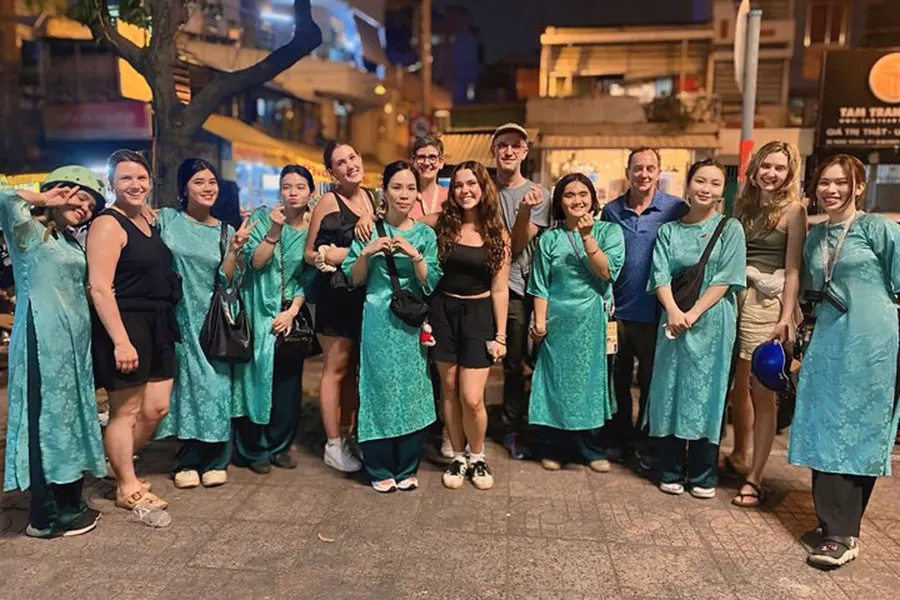
Walking With Children or Older Travelers
Families and older visitors can still explore central Ho Chi Minh City on foot, but shorter routes usually work better.
Frequent road crossings, high temperatures and inconsistent sidewalks may be tiring for anyone with limited mobility.
Instead of planning several hours of continuous walking, divide sightseeing into small sections.
Explore one cluster of attractions, stop for lunch or coffee, then use a short vehicle ride before beginning the next area.
This approach is often more enjoyable for everyone.

Walking Tour or Exploring Independently?
Independent walking is perfectly possible in central Saigon.
However, navigating the streets and understanding what you are seeing are two different things.
A local guide can introduce places that travelers frequently walk past without noticing: family-run food stalls, historic apartments, hidden alleyways, traditional markets and stories behind ordinary-looking buildings.
If you enjoy learning about the city while exploring at street level, joining one of our walking tours in Ho Chi Minh City can provide much more context than following a map alone.
Walking tours are particularly suitable for travelers who prefer slow, detailed exploration.
If your priority is covering several districts and seeing more of the city in limited time, a motorbike city tour may be more practical.

A Simple Walking Route for First-Time Visitors
If it is your first day in Ho Chi Minh City, you do not need an ambitious route.
Start around the Central Post Office and Book Street, then continue toward Dong Khoi Street and the Opera House.
From there, walk toward Nguyen Hue Walking Street and continue down toward the Saigon River.
You can finish with coffee, lunch or an evening drink nearby.
The route introduces several famous parts of central Saigon without turning sightseeing into an endurance challenge.
More importantly, it gives you time to look around rather than rushing from landmark to landmark.
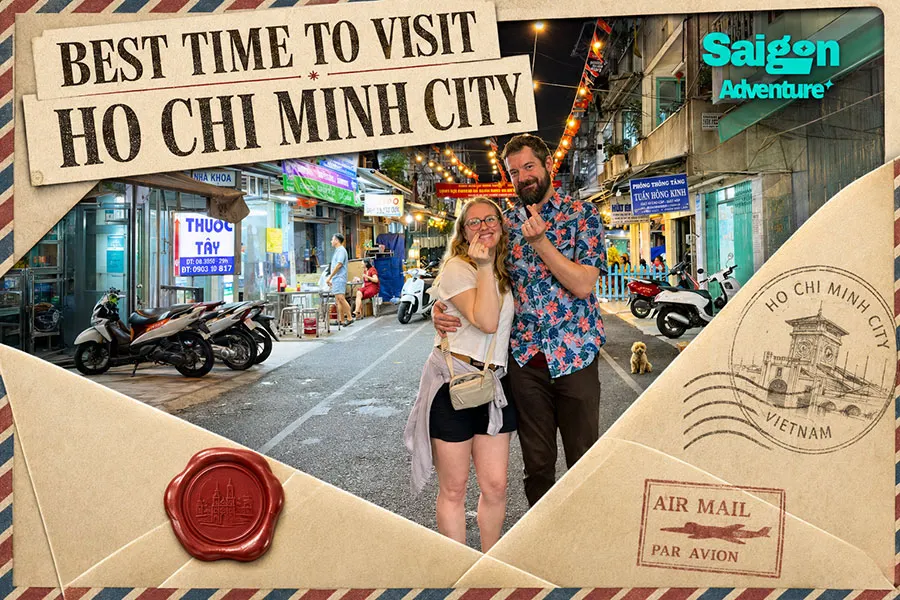
When Should You Walk and When Should You Take Transport?
Walk when attractions are concentrated within the same neighborhood.
Take transportation when you are moving between districts.
That simple rule works surprisingly well.
Walking is ideal for:
- Exploring central District 1
- Visiting several nearby landmarks
- Discovering cafés and local restaurants
- Exploring markets and small streets
- Evening sightseeing
- Photography and people-watching
Consider Grab, a taxi, metro or another transport option when:
- The next destination is several kilometers away
- You are traveling during the hottest part of the day
- Heavy rain begins
- Your route follows large roads with little to see
- You are short on time
- Someone in your group has limited mobility
Using transportation does not mean you are missing the local experience.
Often, it simply gives you more time to explore the places that are actually worth walking through.
Final Verdict: Is Ho Chi Minh City Walkable for Tourists?
Yes — Ho Chi Minh City is walkable for tourists when you approach it neighborhood by neighborhood.
Central District 1 is particularly easy to explore on foot, and walking is one of the best ways to discover the details that make Saigon memorable: tiny cafés, bustling food stalls, old buildings, markets and hidden alleyways.
The city becomes less practical for walking when you start moving between distant districts.
Instead of attempting to explore all of Ho Chi Minh City on foot, combine walking with short rides between neighborhoods.
You will see more, feel less exhausted and still experience Saigon from street level.
And if you would rather explore those streets with someone who knows the hidden shortcuts, local stories and places most visitors overlook, a guided Ho Chi Minh City walking tour is an easy way to turn an ordinary walk into a much deeper introduction to the city.
Frequently Asked Questions
Is District 1 walkable in Ho Chi Minh City?
Yes. District 1 is the most walkable tourist area in Ho Chi Minh City because many major attractions, restaurants, cafés and hotels are located relatively close together.
Can you explore Ho Chi Minh City without a motorbike?
Absolutely. Tourists can combine walking with taxis, Grab, public transport and the metro. Renting or riding a motorbike yourself is not necessary for exploring the city.
How much walking should I expect in Ho Chi Minh City?
It depends on your itinerary, but visitors exploring central District 1 may comfortably walk several kilometers during a sightseeing day. Short breaks are recommended because of the heat and humidity.
Is walking around Saigon safe for tourists?
Popular tourist areas are generally suitable for walking, but visitors should stay alert around traffic, secure valuables and use pedestrian crossings whenever possible.
What is the best time to walk around Ho Chi Minh City?
Early morning, late afternoon and evening are usually more comfortable than midday because temperatures are lower. Evening is particularly pleasant in central areas such as Nguyen Hue and Dong Khoi.
Do I need a walking tour in Ho Chi Minh City?
No. You can explore central Ho Chi Minh City independently, but a guided walking tour can help you understand local history, food culture and hidden neighborhoods that are difficult to discover by following maps alone.