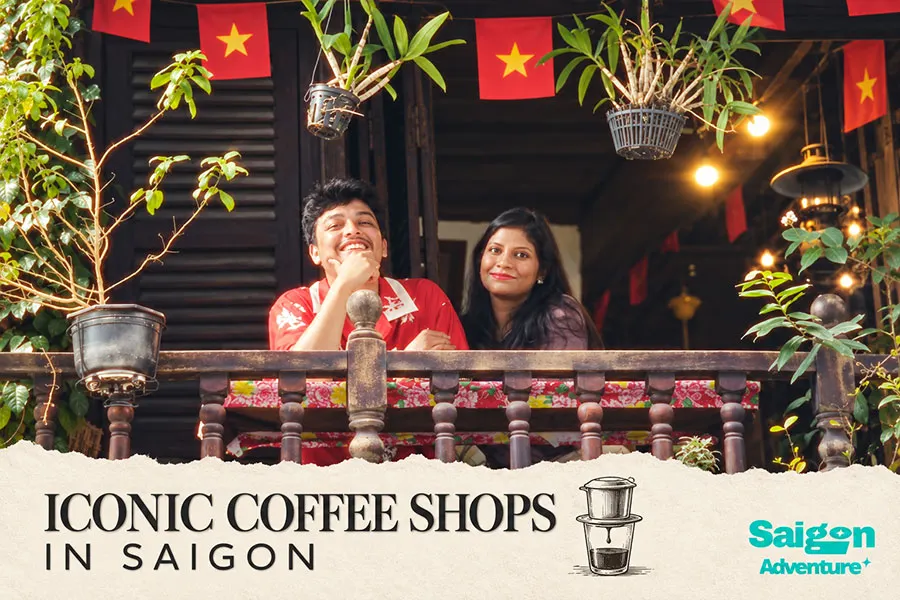
The most memorable coffee shops in Saigon offer much more than a quick caffeine stop. Some preserve old brewing methods in narrow family homes, while others occupy historic apartments, stylish heritage buildings or carefully designed specialty coffee spaces.
This guide brings together several iconic coffee shops in Saigon that reveal different sides of the city. Rather than ranking them by appearance alone, it explains why each place is worth considering, what kind of experience to expect and how to plan a practical coffee route.
Why Is Coffee Culture So Important in Saigon?
Coffee in Saigon is closely connected to the rhythm of everyday life. People drink it before work, during business conversations, beside busy markets and on plastic stools facing the street.
Traditional Vietnamese coffee is generally brewed slowly through a small metal phin filter. Strong coffee may be served black or mixed with condensed milk, then poured over ice to create the familiar cà phê sữa đá.
Another local favorite is bạc xỉu, which contains more milk and less coffee. Its sweeter, gentler flavor can be easier for travelers who are not accustomed to the strength of Vietnamese robusta coffee.
What makes the city interesting is the range of settings in which these drinks are served. A morning coffee might take place in a quiet alley, inside a former family residence or several floors above Nguyễn Huệ Walking Street.
Cheo Leo Café for an Old-Saigon Coffee Experience
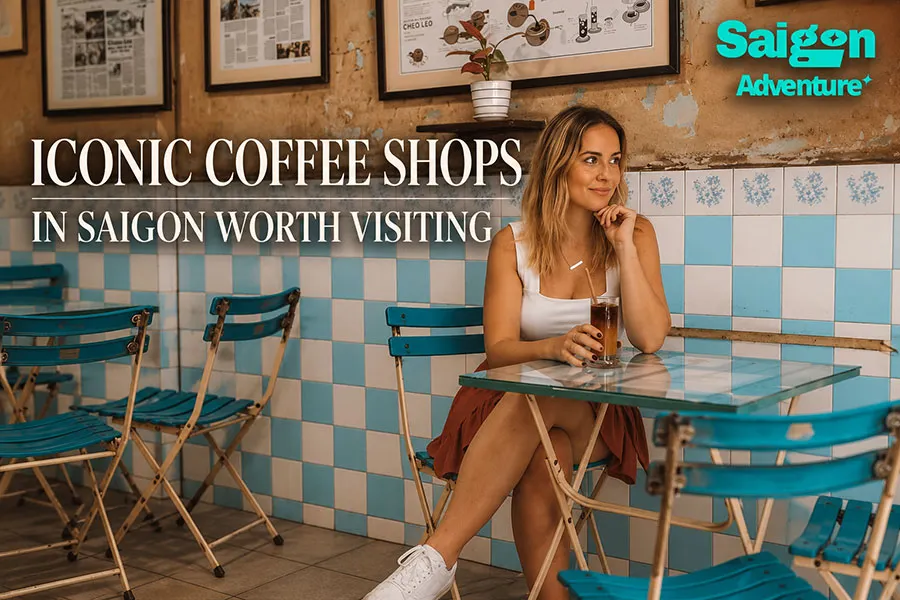
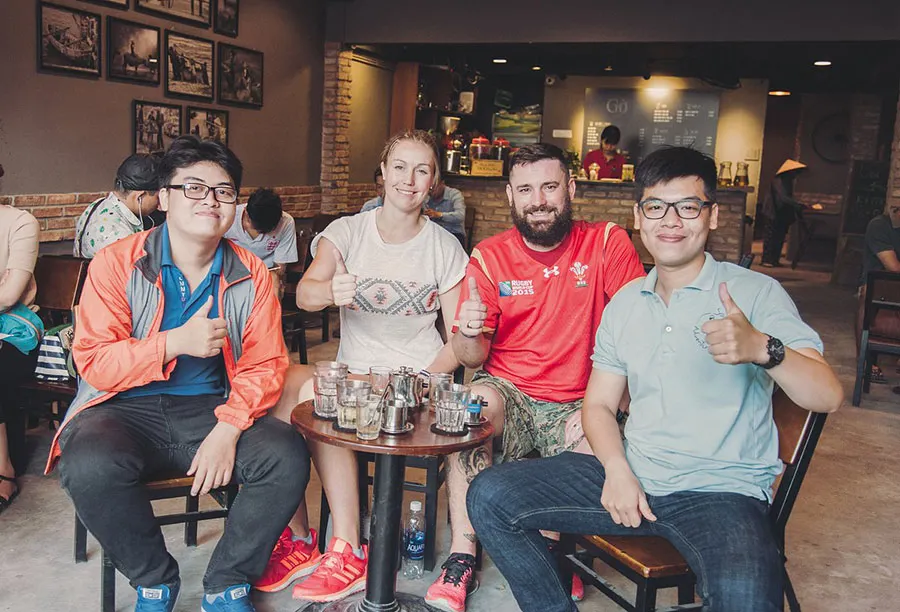
Hidden inside a residential alley off Nguyễn Thiện Thuật Street, Cheo Leo is commonly associated with Saigon’s long-established coffee culture. Its appeal comes from its simple surroundings and traditional approach rather than elaborate decoration.
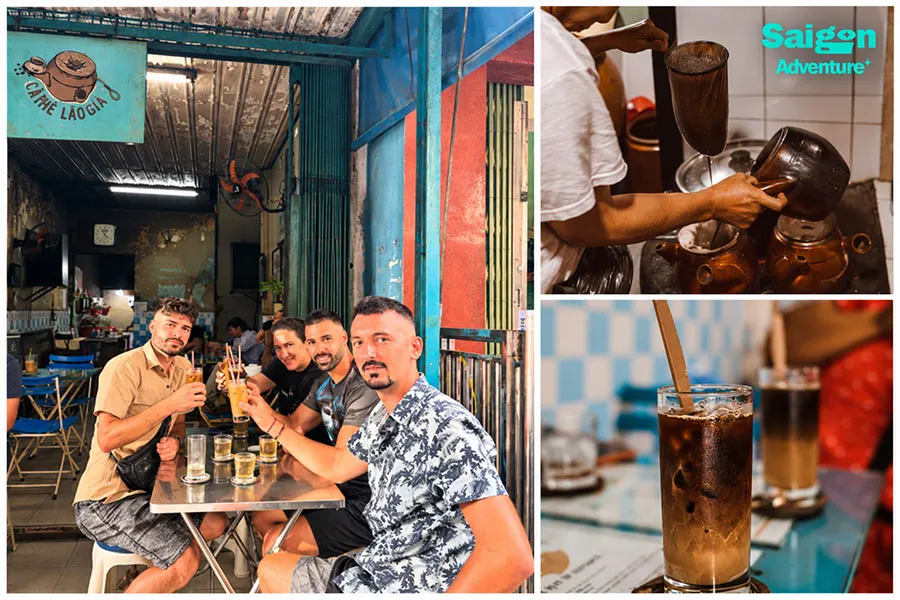
Coffee is prepared using a cloth-filter method often called cà phê vợt. Instead of ordering quickly and leaving, visitors can sit close to the preparation area and observe a slower routine that has survived while the surrounding city has changed.
The space is modest and can feel very different from a modern air-conditioned café. That contrast is precisely why Cheo Leo remains meaningful to travelers interested in how local residents drank coffee before international chains and specialty cafés became common.
Saigon Adventure already has a separate article dedicated to Cheo Leo, so this stop should remain a concise introduction within a wider coffee route. Current listings place it in the Nguyễn Thiện Thuật area, but visitors should verify its opening hours before traveling across the city. Tripadvisor’s current listing and other map services can help confirm recent details.
Cà Phê Đỗ Phủ for Coffee and Layers of Local History
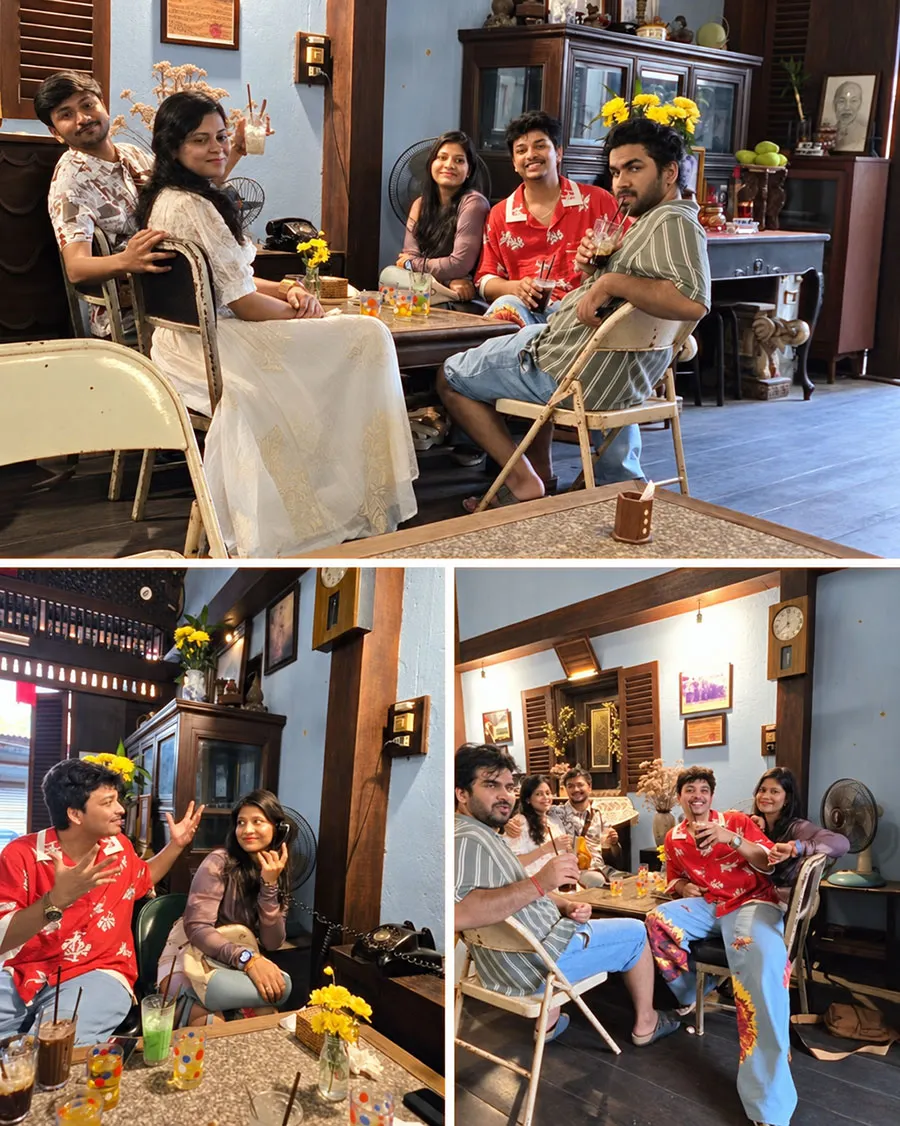
Cà Phê Đỗ Phủ is an unusual choice because its identity combines coffee, food, domestic architecture and twentieth-century history. The best-known location on Đặng Dung Street occupies a house connected with the activities of the Saigon Special Forces before 1975.
The interior does not feel like a conventional historical exhibition. Visitors encounter household objects, concealed spaces and details connected to the building’s past while sitting down for a drink or a serving of cơm tấm.
This makes the café suitable for travelers who prefer encountering history in an everyday setting instead of spending the entire morning inside a museum. The objects and stories deserve attention, so allow more time here than you would for a simple takeaway coffee.
Independent local coverage notes that much of the atmosphere comes from objects belonging to the house rather than modern decorations added merely to create a vintage appearance. Saigoneer’s feature on Cà Phê Đỗ Phủ provides further cultural context.
The Café Apartment for Views Over Nguyễn Huệ
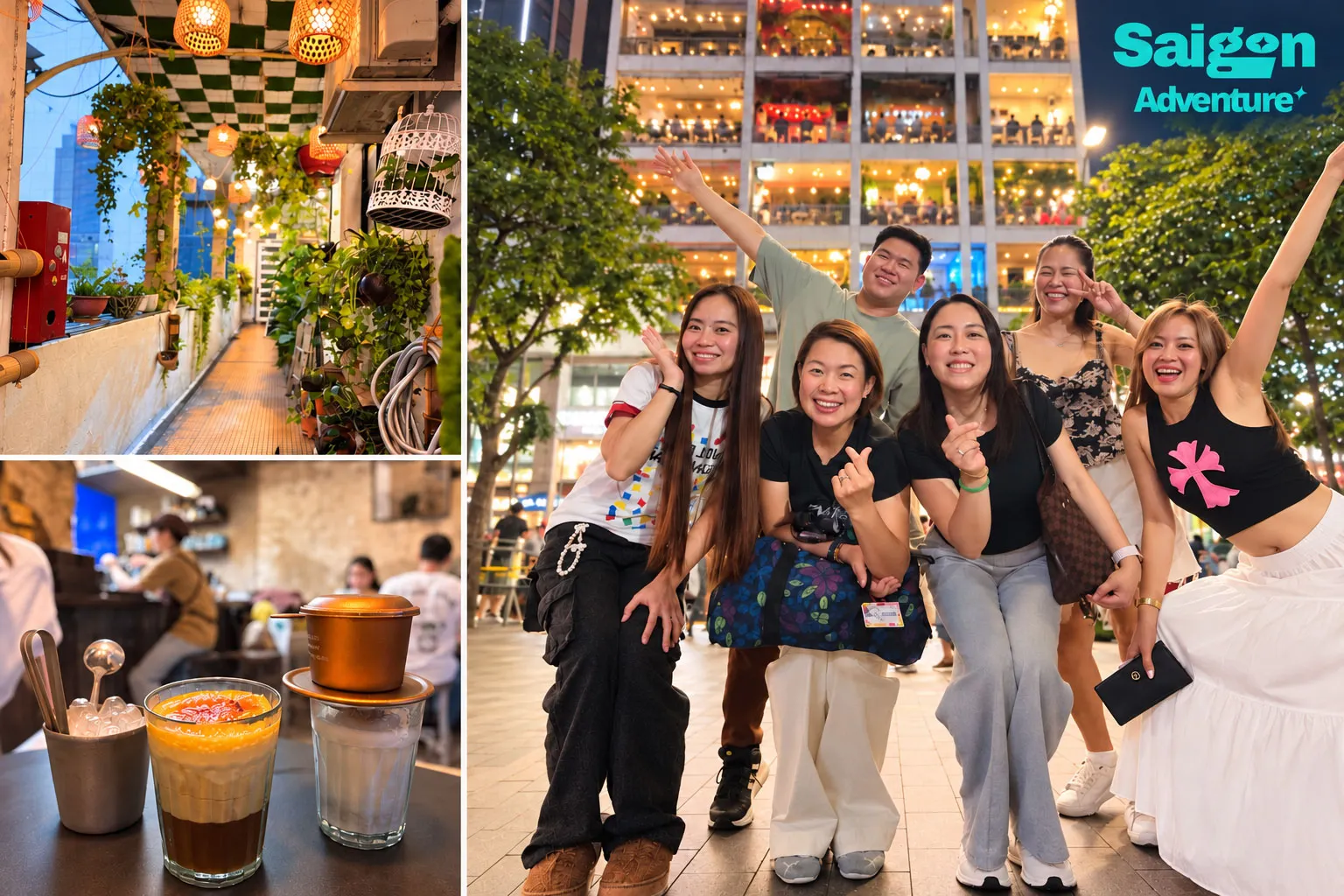
The Café Apartment at 42 Nguyễn Huệ is not one coffee shop but a multi-level building containing independent cafés, small boutiques and creative spaces. Its balconies and illuminated shopfronts have made the building one of downtown Saigon’s most recognizable urban images.
The experience begins before you choose a drink. From Nguyễn Huệ Walking Street, look up at the building and compare the different balconies, signs and interiors before selecting a floor.
Individual businesses inside the building can change, so it is better to choose according to the view, atmosphere and current menu instead of arriving for an old recommendation. Some cafés face Nguyễn Huệ directly, while others have quieter interiors or smaller balconies.
The building is located at 42 Nguyễn Huệ and contains multiple independent businesses rather than one centrally managed café. Published guides describe it as a nine-storey collection of cafés and boutiques, although the current tenants should always be checked before visiting. Vietnam Airlines’ guide confirms the central location on Nguyễn Huệ Walking Street.
The Workshop Coffee for a Specialty Coffee Introduction
The Workshop helped make specialty coffee more visible in central Saigon. Reaching it traditionally involves entering an older downtown building and climbing upstairs, creating a sharp transition from the traffic outside to a calmer, more focused coffee space.
This is a useful stop for travelers who want to compare traditional Vietnamese coffee with lighter roasts and modern brewing methods. Depending on the current menu, choices may include espresso-based drinks, pour-over coffee and beans with clearly explained origins.
The atmosphere is more polished than an alley café, but the emphasis remains on the coffee itself. Ask the staff for guidance if tasting notes and brewing methods are unfamiliar; there is no need to understand specialty terminology before ordering.
Choose The Workshop when you want to slow down, discuss the beans or spend longer over one carefully prepared drink. Check its current address and operating hours directly before visiting because business information can change.
Okkio Caffe for Contemporary Saigon Style
Okkio represents another face of the city’s modern café culture. Its branches are known for design-conscious interiors, central locations and a menu that can suit visitors who want Vietnamese flavors in a more contemporary environment.
Rather than treating it as a replacement for a traditional café, include it for comparison. Drinking coffee in an alley and ordering another cup in a refined urban space demonstrates how broadly Saigon’s coffee culture has developed.
Okkio can also be practical when traveling with companions who have different preferences. A modern café usually offers a broader choice of coffee styles, non-coffee drinks and light food than a small specialist stall.
Because branches may differ in layout and opening schedule, select a location that fits your sightseeing route. Avoid crossing the city solely to visit a particular branch without confirming that it is still operating.
L’Usine for Coffee, Brunch and Heritage-Inspired Design
L’Usine combines a café with retail and lifestyle design, making it a comfortable break during a day in central Saigon. Its spaces often draw on old architecture while presenting the experience in a clean, contemporary way.
This is not the place to seek the cheapest cup or the most traditional preparation. It is better suited to travelers who want breakfast, brunch or a longer air-conditioned rest between downtown attractions.
L’Usine also illustrates how older urban spaces can be adapted for modern use. The experience feels more international than Cheo Leo or Cà Phê Đỗ Phủ, yet it still reflects the city’s habit of turning unexpected buildings into social spaces.
Visit for convenience and atmosphere, but check the brand’s current location list before deciding which branch to include.
Bosgaurus Coffee Roasters for Modern Vietnamese Coffee Craft
Bosgaurus is a useful final addition for travelers curious about Vietnam’s developing specialty coffee scene. Its approach emphasizes roasting, brewing technique and the individual character of different beans.
A visit here can challenge the assumption that Vietnamese coffee must always be dark, intensely bitter and mixed with condensed milk. Modern roasters increasingly work with carefully sourced beans and brewing styles designed to reveal sweetness, acidity and aroma.
This stop is particularly suitable for serious coffee drinkers or anyone interested in the journey from Vietnamese farms to the finished cup. Ask what is currently being brewed rather than arriving with one fixed order in mind.
The pace is usually better suited to tasting than hurried sightseeing. Allow enough time to compare a modern brew with the traditional cà phê sữa đá you may have tried earlier.
How to Choose the Right Saigon Coffee Shop
The right café depends on what you want from the visit. Choose Cheo Leo for traditional preparation, Cà Phê Đỗ Phủ for historical context and the Café Apartment for downtown views and independent spaces.
The Workshop and Bosgaurus are stronger choices for specialty coffee, while Okkio and L’Usine provide comfortable modern settings. Visiting one place from each category creates a more balanced impression than selecting several cafés purely because they photograph well.
If you have only one morning, combine a traditional neighborhood café with one downtown stop. Travelers joining a Saigon motorbike city tour can reach districts and residential alleys that are less convenient to connect on foot.
Coffee can also be paired with a Saigon street food tour, especially when you want a guide to explain unfamiliar drinks, ordering habits and neighborhood food culture.
Practical Tips for Visiting Coffee Shops in Saigon
Check current information on the café’s official social media page or a recently updated map listing. Old articles may show former branches, outdated menus or businesses that have moved.
Traditional coffee can be considerably stronger than some visitors expect. If you are sensitive to caffeine, order a smaller portion, try bạc xỉu or avoid drinking several full-strength coffees within a short period.
Keep personal belongings close when sitting near an open doorway or pavement. In upper-floor cafés, take care on narrow staircases and do not enter private residential areas merely to take photographs.
Morning is generally best for observing the city’s everyday coffee routine. Late afternoon works well for Nguyễn Huệ, when the heat begins to ease and the central streets become livelier.
For a broader day of local exploration, use the Saigon destination guide to combine coffee stops with markets, historic neighborhoods and street food.
Common Mistakes on a Saigon Coffee Crawl
The first mistake is choosing every café for its interior. Attractive design can be enjoyable, but a route built entirely around photographs misses the preparation methods and social habits that make Saigon coffee distinctive.
The second is trying to visit too many places. Three thoughtful stops across a morning and afternoon usually provide a better experience than rushing through six cafés and ordering more caffeine than you can comfortably drink.
Do not assume that every café accepts international cards. Carry some Vietnamese currency, particularly when visiting small family businesses.
Finally, ask before photographing staff members, preparation areas or residents. A café may be well known online while still functioning as someone’s home or neighborhood workplace.
Which Iconic Saigon Café Should You Visit First?
First-time visitors should begin with a traditional café such as Cheo Leo, then compare it with a modern specialty venue or the Café Apartment. This sequence reveals how Saigon’s coffee culture has evolved without completely leaving its older habits behind.
Coffee is also an accessible way to understand the city beyond famous landmarks. If you would like local context and easier transport between neighborhoods, explore Saigon with Saigon Adventure or combine a coffee stop with its Ho Chi Minh Food Safari.
Frequently Asked Questions
What Coffee Should First-Time Visitors Order in Saigon?
Cà phê sữa đá is the classic starting point for visitors who enjoy strong, sweet iced coffee. Choose bạc xỉu if you prefer more milk and a milder coffee flavor, or cà phê đen đá for black coffee over ice.
Is Vietnamese Coffee Very Strong?
It can be. Many traditional cups use robusta coffee, which often tastes darker and contains more caffeine than the arabica coffee familiar to some international visitors. Drink slowly and avoid ordering several strong cups close together.
What Is Cà Phê Vợt?
Cà phê vợt is coffee brewed through a reusable cloth filter resembling a small net or sock. The method is associated with several long-running family coffee businesses in Saigon.
Is the Café Apartment One Café?
No. The building at 42 Nguyễn Huệ contains multiple independent cafés, shops and creative businesses. Tenants can change, so explore the building and check current menus before choosing a café.
When Is the Best Time for a Saigon Coffee Crawl?
Morning is ideal for traditional neighborhood cafés and observing local routines. Late afternoon is better for downtown balconies, cooler temperatures and the livelier atmosphere around Nguyễn Huệ Walking Street.
Can I Visit These Cafés Without a Guide?
Yes. Central venues are relatively straightforward to reach, although traditional cafés hidden in alleys may require more navigation. A local guide can add historical and cultural context while connecting places in different districts.