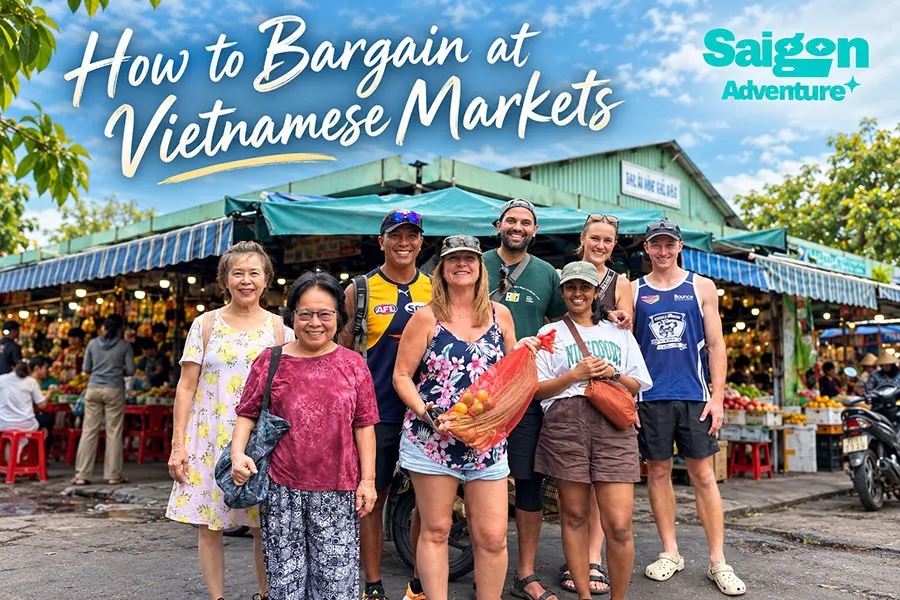
Walking through a Vietnamese market is an experience for the senses. Colorful fabrics hang above narrow aisles, baskets overflow with tropical fruit, and vendors invite passing shoppers to examine everything from handmade souvenirs to embroidered bags.
But when a seller quotes a price, should you accept it or negotiate?
Learning how to bargain at Vietnamese markets can help you avoid overpaying, shop confidently, and enjoy a fascinating part of local shopping culture. The secret is not to negotiate aggressively but to understand when bargaining is appropriate, how to recognize reasonable prices, and when to walk away.
Whether you’re shopping in Ho Chi Minh City, Hanoi, or Hoi An, these practical tips will help you find better deals without offending local sellers.
Quick Answer: How Do You Bargain at Vietnamese Markets?
To bargain at Vietnamese markets, compare prices at several stalls, politely ask the seller’s price, and make a reasonable counteroffer. At tourist-oriented souvenir markets, an opening offer around 50–60% of the asking price may be appropriate, depending on the item. Negotiate calmly, confirm the final amount, and avoid bargaining at fixed-price shops.
Is Bargaining Common in Vietnam?
Yes, bargaining is common at many traditional markets, particularly where souvenirs, clothing, accessories, and handicrafts are sold without fixed prices.
However, not every Vietnamese market operates the same way. Some stalls expect negotiation, while others display firm prices that customers normally accept.
Understanding this difference helps international visitors avoid uncomfortable situations.
Why Do Market Prices Sometimes Differ for Tourists?
At busy tourist markets, sellers may begin with higher asking prices because they expect customers to negotiate.
This does not necessarily mean a vendor is attempting to deceive you. Prices can also reflect product quality, location, rent, and the seller’s business costs.
The smartest approach is to compare similar products before deciding what represents fair value.

Where Can You Bargain in Vietnam?
Not every shopping destination offers the same opportunities to negotiate.
| Shopping location | Bargaining expected? |
|---|---|
| Traditional souvenir markets | Often |
| Independent clothing stalls | Often |
| Handicraft vendors | Sometimes |
| Fresh produce markets | Sometimes, especially for larger quantities |
| Supermarkets | No |
| Convenience stores | No |
| Fixed-price souvenir shops | Generally no |
| Restaurants with listed menus | Generally no |
A visible price tag, especially in an established retail store, usually means you should pay the displayed amount.

Bargaining at Ben Thanh Market in Ho Chi Minh City
Ben Thanh Market is one of Vietnam’s best-known shopping destinations, offering clothing, bags, coffee, souvenirs, and local handicrafts.
Negotiation is common at many independent souvenir stalls, although some shops operate with fixed prices.
Before buying, browse several aisles and compare similar products. You can learn more about the shopping environment in this guide to Ben Thanh Market.
Shopping at Dong Xuan Market and Hoi An
Hanoi’s Dong Xuan Market is known for wholesale and retail trading, while shops around the Old Quarter offer souvenirs, textiles, and accessories.
In Hoi An, bargaining may be possible at market stalls selling lanterns, clothing, and handicrafts. Tailor shops sometimes offer package prices, but material quality and workmanship matter more than obtaining the lowest quote.
Local Tip: Do not assume every vendor in a famous tourist destination charges unreasonable prices. Judge each offer individually.
How to Bargain at Vietnamese Markets Step by Step
Good bargaining begins before you mention your own price.
Step 1: Compare Prices Before Buying
Visit two or three stalls selling similar products and ask for their prices.
Pay attention to differences in material, stitching, size, and craftsmanship. Two bags that look identical from a distance may have different levels of quality.
Comparing offers gives you a realistic starting point rather than relying on a random discount percentage.
Step 2: Ask the Price Politely
Start with a friendly greeting and ask, “Bao nhiêu tiền?” meaning “How much does it cost?”
If communication becomes difficult, ask the vendor to enter the price on a calculator.
Keep your reaction neutral, even if the amount seems surprisingly high.
Step 3: Make a Reasonable Counteroffer
At a tourist-oriented souvenir stall, you might begin around 50–60% of the initial quote if comparable items suggest that amount is reasonable.
For example, imagine a vendor asks VND 300,000 for a souvenir bag. You could offer VND 180,000 and see whether the seller responds with a counteroffer.
This is an illustrative negotiation, not a guaranteed fair market price.
Step 4: Negotiate Calmly
Allow the seller to respond rather than immediately increasing your offer.
A friendly smile, relaxed conversation, and willingness to compromise often create a more pleasant experience than aggressive bargaining.
If your maximum budget is VND 220,000, explain that clearly instead of continuing indefinitely.
Step 5: Know When to Walk Away
If the price remains above your budget, thank the seller and leave politely.
Sometimes a vendor may make another offer, but you should never assume that walking away guarantees a discount.
Once you have agreed on a price and committed to buying, complete the transaction as promised.
How Much Should You Bargain in Vietnam?
There is no universal discount that works across every Vietnamese market.
The amount you can reasonably negotiate depends on the original quote, product quality, seller’s margins, and whether comparable goods are available nearby.
Consider these examples:
| Initial asking price | Illustrative opening offer | Possible agreed price |
|---|---|---|
| VND 100,000 | VND 60,000 | VND 80,000 |
| VND 200,000 | VND 120,000 | VND 160,000 |
| VND 300,000 | VND 180,000 | VND 220,000 |
| VND 500,000 | VND 300,000 | VND 380,000 |
These are hypothetical bargaining scenarios, not verified product prices or promised discounts.
For inexpensive handmade items, aggressive negotiation may be inappropriate. A small saving for a traveler can represent a meaningful amount to an independent craft seller.
Useful Vietnamese Bargaining Phrases for Tourists
Knowing a few Vietnamese expressions can make shopping easier, even if your pronunciation is imperfect.
| Vietnamese phrase | English meaning |
|---|---|
| Bao nhiêu tiền? | How much does it cost? |
| Đắt quá! | Too expensive! |
| Bớt chút được không? | Can you lower the price a little? |
| Giá tốt nhất là bao nhiêu? | What’s your best price? |
| Tôi mua hai cái. | I’ll buy two. |
| Cảm ơn! | Thank you! |
| Không, cảm ơn. | No, thank you. |
You can also show the amount on your phone to prevent misunderstandings.
Local Tip: Confirm whether the quoted amount refers to one item or the entire purchase, particularly when buying several souvenirs.
Common Tourist Shopping Mistakes That Lead to Overpaying
Some shopping mistakes have little to do with negotiating ability. They happen because visitors are unfamiliar with Vietnamese currency or local selling practices.
Confusing Vietnamese Dong Banknotes
Vietnamese dong (VND) uses large denominations, making it easy to misread an amount.
For example, VND 50,000 and VND 500,000 have a tenfold difference. Always check the digits and banknote denomination before handing over cash.
Keep smaller notes separately and count your change before leaving.
Accepting a Different Product After Negotiating
Inspect the exact item you intend to purchase before making payment.
Check zippers, stitching, packaging, and material quality, especially for clothing, handbags, and souvenirs.
If a vendor wraps the product, ensure it is the same item you examined.
Buying Too Quickly at the First Stall
Finding something attractive does not mean you must purchase it immediately.
Take a short walk, compare alternatives, and return if the original offer remains competitive.
This is particularly useful in large tourist markets where similar products appear repeatedly.
Best Time to Visit Vietnamese Markets for Shopping
The best shopping time depends on what you want to buy.
Morning visits are especially rewarding at fresh-food markets, where vendors arrange vegetables, herbs, seafood, and seasonal fruit for local customers.
Souvenir shopping can be convenient later in the day, although afternoon visits do not automatically guarantee lower prices.
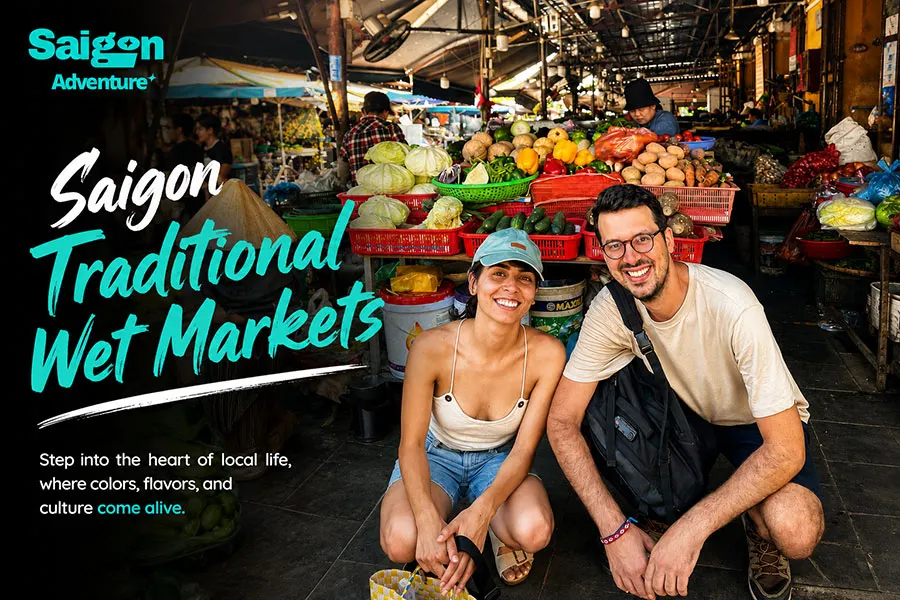
If you enjoy seeing everyday market activity beyond souvenir stalls, explore Saigon’s traditional wet markets for a different perspective on local shopping culture.
How to Avoid Getting Overcharged Without Being Rude
Successful bargaining is about finding a price acceptable to both buyer and seller.
Keep these habits in mind:
-
Decide your maximum budget before negotiating.
-
Compare product quality rather than prices alone.
-
Ask whether the price is fixed before making an offer.
-
Avoid insulting the seller’s merchandise.
-
Never pressure someone into accepting an unreasonable amount.
-
Agree on the total price before paying.
-
Leave politely when you cannot reach an agreement.
Travelers shopping with children or in groups may find it easier to appoint one person to negotiate while others keep the shopping area clear.
Is Shopping at Vietnamese Markets Worth It?
Absolutely, especially if you’re interested in discovering local culture beyond conventional sightseeing.
Markets bring together regional foods, traditional crafts, clothing, and everyday conversations that reveal how Vietnamese communities live and trade.
In Ho Chi Minh City, you can combine souvenir shopping with nearby attractions along Nguyen Hue Walking Street or explore local flavors through a District 1 food tour.
You don’t need to purchase anything to appreciate the atmosphere. Sometimes, browsing and observing the rhythms of a busy market become the most memorable parts of the visit.
For first-time visitors who prefer exploring with local guidance, a Ho Chi Minh City motorbike tour offers another way to discover the city’s markets, neighborhoods, and daily life.
Frequently Asked Questions About Bargaining in Vietnam
1. Do tourists need to bargain at Vietnamese markets?
Not always. Bargaining is common at souvenir stalls and some traditional markets, but many businesses use fixed prices. Check whether a price is displayed before negotiating.
2. How much lower should I offer when bargaining in Vietnam?
At tourist souvenir stalls, an opening offer around 50–60% of the quoted amount can be a starting point. However, the appropriate price depends on quality, comparable offers, and the seller’s flexibility.
3. Is bargaining rude in Vietnam?
No, polite bargaining is generally acceptable where prices are negotiable. Aggressive behavior, insulting products, or arguing over tiny amounts can create unnecessary tension.
4. Can you bargain at Ben Thanh Market?
Yes, many souvenir and clothing vendors at Ben Thanh Market are open to negotiation. However, some stalls operate with fixed prices, so ask before making a counteroffer.
5. Should you bargain for food in Vietnam?
Usually not for prepared meals with displayed prices. At traditional produce markets, some vendors may negotiate for larger purchases, but small everyday food transactions often involve little bargaining.
6. How can tourists avoid shopping scams in Vietnam?
Compare prices, inspect products, confirm the total payment, and carefully check Vietnamese dong banknotes. Avoid paying before understanding exactly what you are purchasing.
7. Is it better to shop at tourist markets or local markets?
Tourist markets are convenient for souvenirs and English-speaking assistance, while neighborhood markets offer a closer look at daily Vietnamese life. Choose according to your shopping interests and comfort level.
Final Thoughts: Shop Smart and Enjoy Vietnamese Market Culture
Bargaining in Vietnam is not about defeating the seller or finding the absolute cheapest souvenir. It’s about understanding local shopping customs, recognizing fair value, and approaching each interaction respectfully.
Take your time, compare prices, learn a few Vietnamese phrases, and enjoy the conversations along the way.
If you’re visiting Ho Chi Minh City, consider discovering its traditional markets and lively neighborhoods with Saigon Adventure. A little local knowledge can turn an ordinary shopping trip into a much more rewarding travel experience.