Table of Contents
ToggleA visit to the Cu Chi Tunnels for seniors can be comfortable and rewarding when the itinerary is planned around walking ability, health and personal pace. Older travelers do not have to crawl underground, as most historical displays, bunkers, demonstrations and tunnel models can be experienced above ground.
Visitors should still expect tropical heat, some uneven forest paths and occasional steps. Seniors with knee problems, reduced stamina or limited mobility should choose a flexible itinerary and inform the tour operator about their needs before booking.
Quick answer: Yes, many seniors can visit the Cu Chi Tunnels without entering the underground passages. Active older travelers may be comfortable on a standard tour, while visitors requiring frequent breaks, walking assistance or wheelchair access should confirm the exact route and consider a private tour.

Is the Cu Chi Tunnels Suitable for Your Mobility Level?
The table below provides a quick overview for seniors and travelers with different mobility needs. Individual conditions vary, so visitors requiring assistance should confirm the route and facilities with their tour operator before booking.
| Visitor profile | Is the visit suitable? | Recommended approach |
|---|---|---|
| Active senior | Usually suitable | Follow the standard surface route; entering the tunnels remains optional |
| Senior with limited stamina | Often suitable | Choose a shorter route, travel early and take regular breaks |
| Mild knee, hip or back pain | Possibly suitable | Remain above ground and avoid crouching or crawling |
| Walking-stick user | Possibly suitable | Wear supportive shoes and expect roots, shallow steps and uneven paths |
| Manual wheelchair user | Limited accessibility | Confirm the vehicle, surface route, toilet access and available assistance |
| Traveler requiring step-free access | Not guaranteed | Request a detailed accessibility assessment before booking |
| Claustrophobia or breathing condition | Surface visit recommended | Skip all underground passages and remain with the guide above ground |
| Severe mobility or health condition | May not be suitable | Consult an appropriate medical professional and tour operator beforehand |
Local Tip: A private tour is usually more comfortable for travelers who need a slower pace, frequent rest stops or a shortened walking route. It also allows other family members to enter the tunnels while the senior traveler continues exploring the above-ground exhibits with assistance.
Are the Cu Chi Tunnels Suitable for Your Mobility Level?
Yes. The Cu Chi Tunnels are suitable for many seniors, particularly those who can walk short distances, manage occasional uneven ground and explore the site at a comfortable pace. Entering the underground tunnels is optional, so older travelers can remain above ground throughout the visit.
Age alone does not determine whether the experience is appropriate. An active traveler in their seventies may explore the site comfortably, while someone younger with knee pain, poor balance, limited stamina or a respiratory condition may require a shorter and more flexible route.
Most of the visit involves walking between historical exhibits beneath a forest canopy. The shaded setting helps, but the weather can still be hot and humid, particularly around midday.

Seniors should generally be comfortable with:
- Walking on compacted soil and occasionally uneven paths
- Standing briefly during the guide’s explanations
- Getting into and out of the tour vehicle
- Managing tropical heat and humidity
- Navigating a few shallow steps or exposed tree roots
Travelers do not need to be highly athletic. However, anyone with limited mobility should explain their walking ability, health concerns and need for assistance to the tour operator before booking.
Do you have to crawl through the Cu Chi Tunnels?
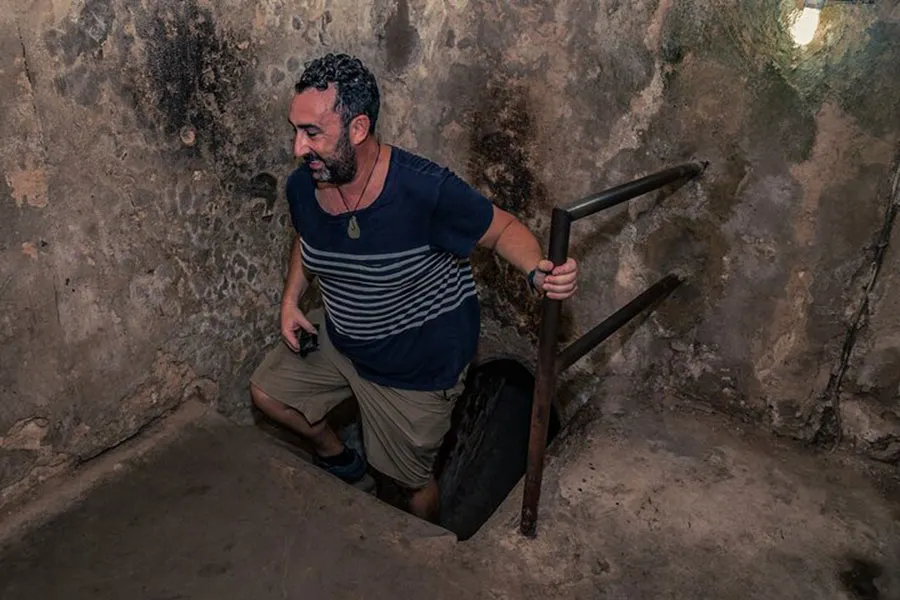
No. Entering the underground tunnels is completely optional.
This is the most important fact for seniors, people with limited mobility and anyone who feels uncomfortable in confined spaces. Visitors can skip every underground passage and still participate in the main historical tour.
The tunnel crawl is only one element of the experience. Above ground, travelers can learn how the tunnel network was constructed, how entrances were hidden and how local people survived while living in the area during wartime.
Visitors can also see ventilation systems disguised within the forest, reconstructed meeting rooms, defensive traps, cooking areas and models showing the different levels of the underground network.
Anyone with knee, hip, neck or back problems should think carefully before entering. Even tunnel sections modified for visitors remain narrow, low, warm and dark.
It is safer to stay above ground if you experience:
- Claustrophobia or anxiety in enclosed spaces
- Difficulty crouching or standing without support
- Knee, hip or lower-back pain
- Poor balance or reduced leg strength
- Dizziness in dark environments
- Heart or respiratory conditions affected by exertion
- A recent injury or surgical procedure
Skipping the crawl does not make the visit incomplete. In fact, many travelers spend only a few minutes underground during an experience lasting several hours.

What can less mobile travelers see above ground?
The Cu Chi Tunnels are not simply a hole in the ground. The attraction is an extensive historical site designed to explain how an underground community functioned beneath a heavily contested rural landscape.
Travelers who remain on the surface can still see many of its most memorable features.
A guide may introduce concealed trapdoors covered with leaves, ventilation openings disguised as natural objects and reconstructed bunkers used for meetings, medical care or food preparation.
Visitors can examine historical photographs, watch demonstrations and study cross-section models showing how different parts of the tunnel system connected. These visual explanations are especially helpful for anyone who cannot enter the passages.
Depending on the chosen route, above-ground highlights may include:
- Camouflaged tunnel entrances
- Reconstructed shelters and bunkers
- Ventilation and smoke-control systems
- Wartime traps and defensive displays
- Historical photographs and documentary material
- Military equipment and vehicles
- Traditional rice-paper or tapioca demonstrations
- Forest paths connected to former operational areas
A knowledgeable local guide adds considerable value here. Without an explanation, a small mound, air hole or wooden structure can appear ordinary. Once its purpose is revealed, it becomes part of a surprisingly sophisticated survival system.
How much walking is involved at the Cu Chi Tunnels?
A typical visit requires moderate walking, but it is not a continuous hike. Guests usually move between nearby exhibits, stop for an explanation and then continue to the next area.
The exact distance depends on the entrance, the guide’s route and how much of the complex the group explores. This is why travelers with reduced stamina should ask about walking requirements before choosing a tour.
The site should not be compared with a flat indoor museum. Some paths consist of paving, while others may include compacted soil, shallow steps, tree roots and slightly narrow sections through the forest.
Rain can make the ground slippery. During the dry season, heat and humidity may cause visitors to become tired faster than expected.
Resting areas are available in parts of the complex, but a seat may not always be located beside every display. Travelers who need frequent breaks will usually feel more comfortable on a flexible private itinerary.

Is the Cu Chi Tunnels wheelchair accessible?
Some above-ground areas may be reachable by wheelchair, but travelers should not assume that the entire Cu Chi Tunnels complex is fully wheelchair accessible.
Natural terrain, steps, forest paths and narrow routes can make independent wheelchair movement difficult. Underground passages are not suitable for wheelchair users.
Accessibility can also change according to the entrance, weather, current ground conditions and route selected on the day. A tour marketed as accessible may refer to its vehicle or selected attractions—not necessarily every part of the historical site.
Before booking a wheelchair-accessible Cu Chi Tunnels tour, ask specific questions:
- Can the vehicle carry the type and size of wheelchair being used?
- Does the traveler need to transfer into a standard seat?
- Are there high steps when entering the vehicle?
- How far is the parking area from the main exhibits?
- Which sections can be reached without using stairs?
- Is assistance available on uneven surfaces?
- Can the route be shortened when necessary?
- Are suitable toilet facilities available?
Travelers should provide accurate details about the wheelchair, mobility aid and level of assistance required. Clear information allows the operator to assess the situation realistically rather than offer a vague promise.
Ben Dinh or Ben Duoc: which site is better for seniors?
Visitors normally choose between the Ben Dinh and Ben Duoc tunnel sites. Both explain the history of Cu Chi, but they offer different atmospheres and travel times.
Neither site should automatically be described as fully accessible. The better choice depends on the traveler’s stamina, mobility and preferred pace.
Ben Dinh for a more convenient half-day trip
Ben Dinh is frequently included in half-day tours from Ho Chi Minh City. Its popularity and relatively convenient location can make it practical for seniors who want to avoid an especially long day.
The main drawback is that it can become busy. A crowded route may feel uncomfortable for someone who walks slowly or needs extra time at each stop.
Choosing an early departure can provide cooler conditions and, on some days, a calmer experience.
Ben Duoc for a quieter historical atmosphere
Ben Duoc is often chosen by travelers seeking a more spacious and less commercial atmosphere. Its forest setting can feel peaceful and immersive, allowing visitors to understand the wider landscape around the tunnels.
However, reaching Ben Duoc generally requires a longer journey from central Ho Chi Minh City. The visit may also involve more walking, depending on the planned route.
Active seniors may appreciate the quieter surroundings. Travelers with limited stamina should first confirm the driving time, expected walking distance and availability of rest stops.

Is a private or group tour better for older travelers?
A Cu Chi Tunnel small-group tour can suit active seniors who are comfortable following a fixed itinerary. It is generally more affordable and includes organized transportation from Ho Chi Minh City, but the group may not always be able to stop whenever one traveler needs a rest.
A private Cu Chi Tunnels tour for seniors offers greater control over the walking pace, vehicle choice, rest stops and time spent at each historical exhibit. It can be a more comfortable option for elderly travelers, wheelchair users and visitors with limited mobility who require personal assistance or a shorter walking route.
Families who also want to explore central Saigon can consider a private Cu Chi Tunnels and city tour by car. The flexible schedule and private transportation make it easier to adapt the day around each traveler’s comfort, stamina and mobility needs.
How to make the Cu Chi Tunnels easier for elderly visitors
Visit early in the morning
An early departure helps travelers avoid the strongest midday heat. It may also reduce the amount of time spent moving through crowded pathways.
Choose a comfortable vehicle
The journey can be tiring for someone with hip, knee or back pain. Ask about air conditioning, legroom and the height of the vehicle steps before confirming the tour.
Wear shoes with a secure grip
Comfortable walking shoes or supportive sandals are better than loose flip-flops. Travelers can check this practical guide on what to wear to the Cu Chi Tunnels
Carry water and essential medication
Bring drinking water, personal medication and any small medical items required during the day. Do not leave essential medication inside the vehicle.
Use a light bag
A small crossbody bag or lightweight backpack keeps both hands available for balance. Heavy handbags and unnecessary luggage make walking more tiring.
Tell the guide about mobility needs
The guide should know about knee pain, hearing difficulties, limited stamina or balance concerns before the walking tour begins. This makes it easier to choose appropriate paths and arrange breaks.
Avoid unnecessary physical pressure
Travelers should never feel embarrassed about skipping a tunnel, trapdoor demonstration or shooting-range activity. The purpose of the visit is to understand the history—not to pass a test of physical ability.
What about the shooting range?
The shooting range is optional and separate from the essential historical experience. Gunfire can be extremely loud, even for visitors who do not participate.
Older travelers who use hearing aids, are sensitive to sudden noise or have certain medical conditions may prefer to remain farther from the firing area.
Tell the guide in advance if the noise is a concern. A quieter waiting point may be available while other group members visit the range.

Who may find the Cu Chi Tunnels unsuitable?
The trip may not suit travelers who cannot manage short distances on uneven ground or tolerate an extended road journey.
Anyone requiring guaranteed step-free access should request a detailed accessibility assessment before booking. Travelers with serious heart, respiratory or mobility conditions should also seek appropriate medical advice.
Tour guides can adjust the pace and route, but they cannot determine whether the experience is medically suitable for an individual guest.
Those who decide that Cu Chi is not right for them still have other ways to explore southern Vietnam. Active seniors may enjoy guided walking tours in Ho Chi Minh City, while travelers who prefer river scenery can consider Mekong Delta tours from Ho Chi Minh City.
Always confirm walking distances, vehicle arrangements and boat access before booking.

Are the Cu Chi Tunnels worth visiting without going underground?
Absolutely. The most remarkable part of Cu Chi is not the challenge of crawling through a tunnel. It is discovering how an entire underground system supported daily life beneath a forest and rural community.
The network included meeting rooms, kitchens, medical spaces, storage areas, communication routes and defensive positions. Exploring the surface displays with a good guide allows travelers to understand how these components worked together.
For seniors, veterans and multigenerational families, the visit can be particularly meaningful. Moving slowly often creates more time to ask questions, notice small design details and reflect on the human stories behind the site.
Planning a senior-friendly Cu Chi Tunnels experience
The Cu Chi Tunnels can be suitable for seniors and travelers with limited mobility—but careful planning matters more than age.
Tunnel crawling is optional, and much of the historical experience remains above ground. The real considerations are walking ability, balance, tropical weather, vehicle comfort and whether the itinerary can be adjusted when necessary.
Before booking, explain the traveler’s needs clearly. Ask about the walking distance, vehicle access, rest stops and which exhibits can be visited without entering confined spaces.
Saigon Adventure offers guided Cu Chi Tunnels tours from Ho Chi Minh City with local guides who can help travelers understand the site at a comfortable pace. For guests needing greater flexibility, a private arrangement may provide a calmer and more personal experience.
You do not need to crawl underground to appreciate Cu Chi. Sometimes the most memorable journey comes from slowing down, listening carefully and understanding the extraordinary history hidden beneath your feet.
Our Experience Helping Seniors Visit the Cu Chi Tunnels
From our experience guiding travelers to the Cu Chi Tunnels, many senior visitors feel more comfortable when they can explore at their own pace.
The main challenges are usually uneven paths, hot weather, and longer periods of walking. Seniors who prefer not to crawl underground can still enjoy the historical exhibits and above-ground sections.
For travelers with limited mobility, we recommend discussing their mobility needs with the guide in advance. This allows the team to adjust the walking pace and provide rest breaks where possible.
A private tour can also give seniors and their families more flexibility, especially when they need additional time to rest or prefer a slower, more relaxed experience.
Frequently asked questions
Are the Cu Chi Tunnels suitable for people over 70?
Many travelers over 70 can visit the above-ground areas comfortably. Suitability depends more on walking ability, balance, stamina and health than on a specific age.
Do elderly visitors have to enter the tunnels?
No. Every underground section is optional. Elderly visitors can remain above ground and continue learning about the tunnel network through models, exhibits and demonstrations.
Can I visit the Cu Chi Tunnels with knee problems?
Visitors with mild knee problems may be able to explore selected surface areas at a slower pace. They should avoid the underground passages, which require crouching and place additional pressure on the knees.
Can someone using a walking stick visit Cu Chi?
Yes, depending on their walking ability. The stick should have a secure, non-slip tip, and the traveler should expect some uneven paths, roots or shallow steps.
Is there somewhere to sit at the Cu Chi Tunnels?
Resting areas are available in parts of the complex, but seating is not guaranteed beside every exhibit. Travelers needing frequent breaks should tell their guide and consider a private tour.
Which Cu Chi Tunnels site is best for limited mobility?
Ben Dinh may be more convenient for a shorter excursion, while Ben Duoc offers a quieter atmosphere but generally requires more travel time. Neither should be assumed to be completely step-free.
How should seniors prepare for a Cu Chi Tunnels tour?
Wear supportive footwear and lightweight clothing. Bring water, sun protection, essential medication and a light rain poncho, then inform the operator of any mobility requirements before the tour.
Explore our best-selling tours
 Bestseller
5.0 (2)
Bestseller
5.0 (2)
Cu Chi Tunnels Tour from Ho Chi Minh City by Car
Overview of the Cu Chi Tunnels Tour by Car Travel from Ho Chi Minh City to the Cu Chi Tunnels...
 Bestseller
Cu Chi Tunnels & Mekong Delta 1-Day Tour from Ho Chi Minh City
EXCURSION HIGHLIGHTS: AT CU CHI TUNNELS Watch Documentary Video (Only Showed In This Place) Experience The Thrill Of Crawling Into...
 Bestseller
Cu Chi Tunnels Tour By Luxury Speedboat
Cu Chi Tunnels Speedboat Tour from Ho Chi Minh City Experience the Cu Chi Tunnels by luxury speedboat with a...
 Bestseller
Cu Chi Tunnels and Mekong Delta Small Group Tour from Ho Chi Minh City
A tourist exploring coconut canals on Cu Chi Tunnel And Mekong Delta Small Group Tour If you only have one...
 Bestseller
Cu Chi Tunnel Small Group Tour (12 People)
The Ultimate Introduction to the Cu Chi Tunnels Trade the high-energy streets of Saigon for a legendary Cu Chi Tunnels...
 Bestseller
Cu Chi Tunnels & Saigon City Tour in 1 Day
Tour Overview Experience the dramatic contrast of Vietnam’s history and modern energy with our Cu Chi Tunnels & Saigon City...
 Bestseller
Cu Chi Tunnel And Black Virgin Ba Den Mountain 1 Day Tour
Discover Cu Chi Tunnels & Ba Den Mountain in One Day Experience two very different sides of southern Vietnam on...
 Bestseller
Private Cu Chi Tunnels and City Tour in 1 Day By Car
ITINERARY 8:00 Depart to Cu Chi for your Private Cu Chi Tunnels and City Tour. We drive 70km to north-...
Bestseller
Cu Chi Tunnels By Scooter
Keep your travel plan flexible - book your spot now and pay nothing today! You only need to pay 4...
 Bestseller
Cu Chi Tunnels & Sidecar Adventure
This tour tends to sell out, please book it in advance Departure: From 8:00 AM To 8:30 AM Lasts 7 Hours Foreign...