You do not need a large travel budget to enjoy Ho Chi Minh City. Some of Saigon’s most memorable experiences happen on public streets, inside neighborhood temples, beside traditional markets and along the banks of the Saigon River.
Spend a morning watching flower sellers prepare their stalls, step inside an incense-filled pagoda or join local families on Nguyen Hue after sunset. These experiences reveal far more about the city than simply moving between paid attractions.
The following free things to do in Ho Chi Minh City are based on places that can normally be visited without an admission ticket. Food, drinks, shopping and temple donations are optional. Access can occasionally change during religious ceremonies, renovations and public events, so always follow signs at the entrance.
Quick answer — top free things to do in Ho Chi Minh City:
- Nguyen Hue Walking Street (day or night)
- Saigon Central Post Office
- Notre-Dame Cathedral exterior
- Jade Emperor Pagoda
- Ben Thanh Market browsing
- Tao Dan Park at sunrise
- Sunday morning concert at Saigon Opera House
- Joining a free local walking tour with a volunteer guide
1. Walk From Nguyen Hue to the Saigon River
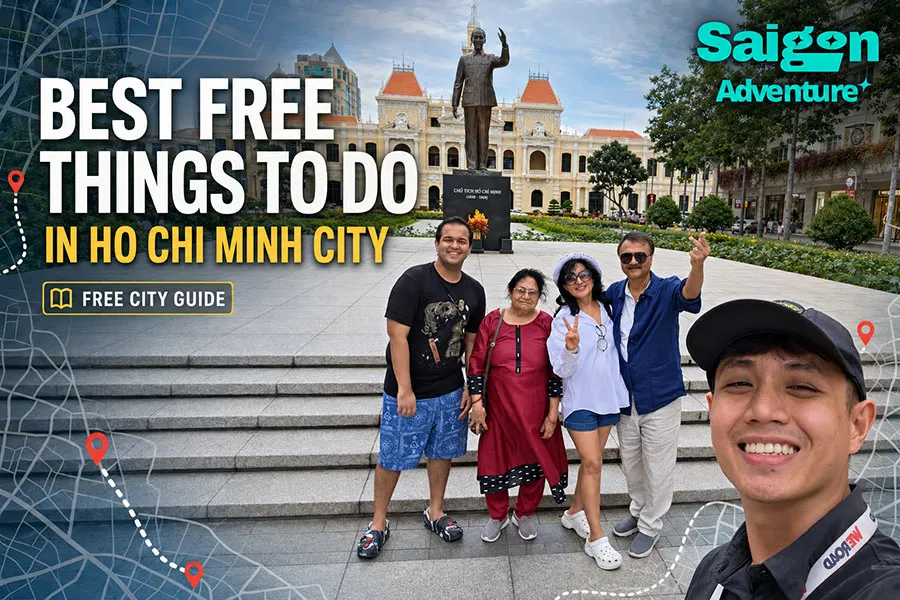
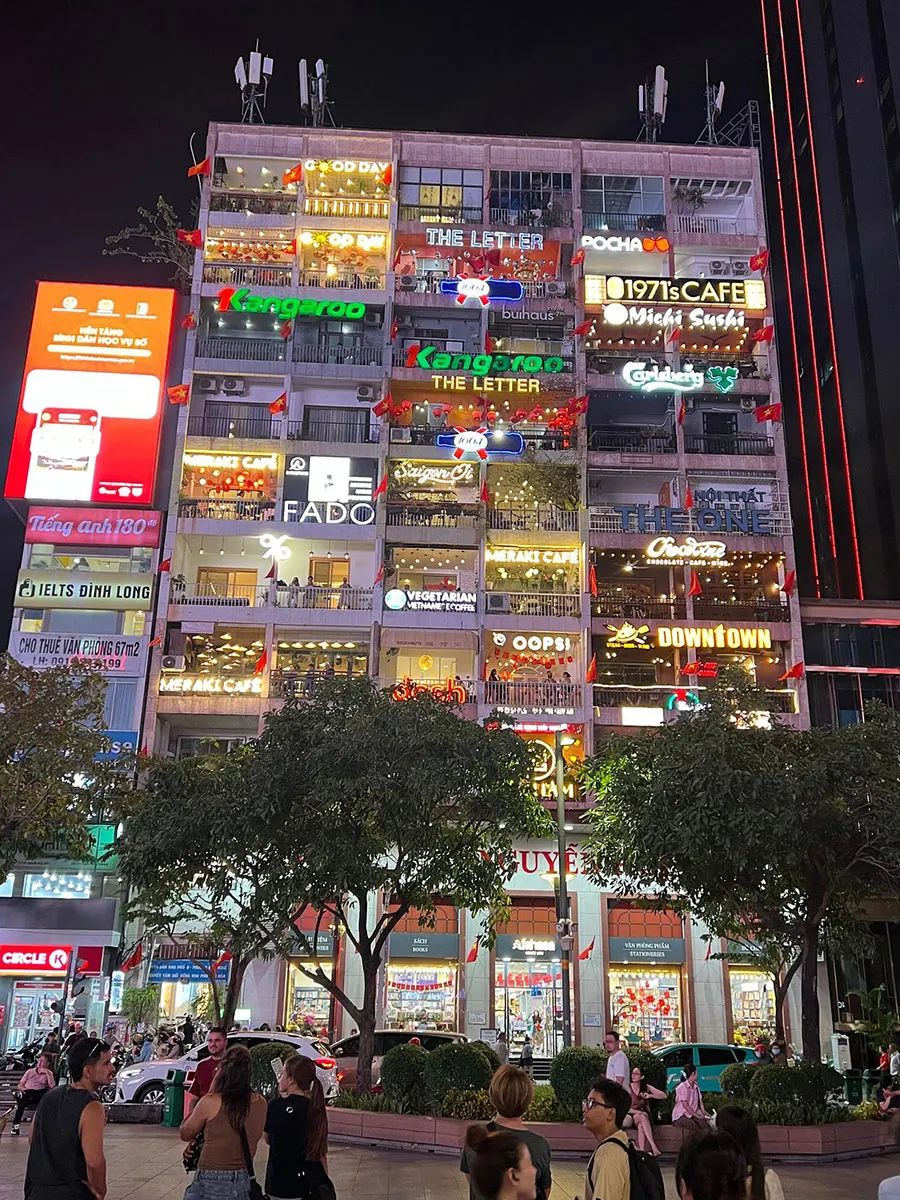
Nguyen Hue Walking Street is the natural starting point for a free day in central Saigon. The pedestrian boulevard runs from the Ho Chi Minh City People’s Committee Building toward the river, passing cafés, historic buildings and the famous apartment block at 42 Nguyen Hue.
Come before 8:00 a.m. for open space and softer photography light. Return after sunset if you want to see the street at its liveliest, when families, teenagers and street performers gather around the fountains.
The People’s Committee Building is not open for casual visits, but its French-inspired exterior is especially attractive when illuminated at night. Nguyen Hue also regularly hosts public exhibitions, celebrations and cultural events.
2. Visit Saigon Central Post Office
Saigon Central Post Office is more than a photo stop. It is still a functioning post office where residents send parcels and travelers write postcards beneath a high vaulted ceiling.
Entry to the public hall is normally free. Inside, look for the historic maps painted on the walls, old telephone booths and patterned floor tiles. The central aisle can become crowded after 9:00 a.m., so arrive early if you want time to appreciate the details.
Postal services and souvenirs are optional. Be considerate around the working counters and avoid standing in front of customers simply to take photographs.

3. Browse Nguyen Van Binh Book Street
A few steps from the post office, Nguyen Van Binh Book Street offers shade and a welcome break from District 1 traffic. The pedestrian lane is lined with bookshops, small exhibitions, reading spaces and cafés.
Many titles are in Vietnamese, but browsing the covers still provides a glimpse into local publishing and popular culture. English-language books and translated Vietnamese literature can also be found in selected stores.
You can combine Book Street with the Central Post Office, Notre-Dame Cathedral and Dong Khoi Street in one compact walking route. Travelers who want more historical context can explore the area through our Ho Chi Minh City walking tours.

4. See Notre-Dame Cathedral From the Square
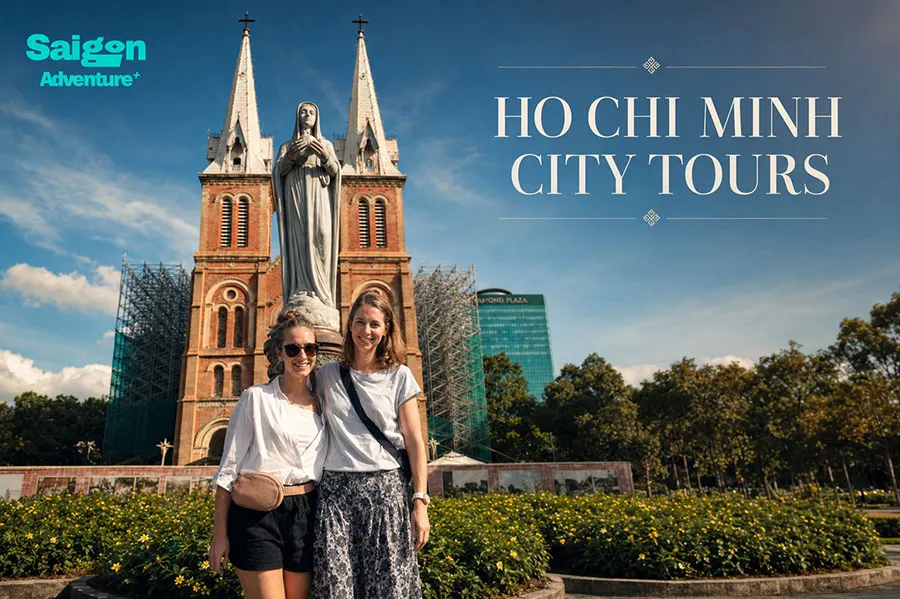
The Notre-Dame Cathedral Basilica of Saigon is one of the city’s best-known landmarks. Built with red bricks imported from France, it has watched over the center of Saigon since the late nineteenth century.
Restoration work and religious services may limit interior access, but viewing the exterior from the surrounding public square remains free. The cathedral and Central Post Office stand beside each other, so no separate journey is necessary.
Morning is the best time to visit. The light is gentler, the sidewalks are cooler and traffic around Paris Commune Square is less intense.
5. Watch Sunset at Bach Dang Wharf Park
From Nguyen Hue, continue toward the river until you reach Bach Dang Wharf Park. The renovated waterfront has open lawns, walking paths and uninterrupted views of boats moving along the Saigon River.
Arrive around 30 minutes before sunset. You will see office workers finishing their day, couples meeting beside the water and local families finding a place to enjoy the evening breeze.
After dark, the skyline across the river and nearby towers begin to glow. Sitting in the park is free; cafés, river buses and sightseeing boats charge separately. If free isn’t quite the goal, the affordable Saigon Waterbus is one of the cheapest ways to see the skyline from the water.
6. Watch the Free Sunday Concert at Saigon Opera House
Every Sunday morning from around 8:00 a.m., local musicians and performing groups play free concerts on the plaza in front of the Saigon Opera House (Nhà hát Thành phố) on Lam Son Square. You don’t need a ticket to watch — just find a spot along the square.
Arrive a little before 8:00 a.m. if you want a clear view near the front steps. The crowd is a mix of retirees, families and photographers, and the performances usually run for about an hour.
The Opera House itself is only a short walk from Nguyen Hue Walking Street, so it fits naturally into a morning route through District 1.
7. Join a Free Local Walking Tour
Several hostels and volunteer groups in Ho Chi Minh City run free walking tours, usually on weekend mornings, led by local students or guides practicing their English. Typical routes cover the Central Post Office, Notre-Dame Cathedral, Dong Khoi Street, the Opera House and Ben Thanh Market.
These tours are free to join, though a tip or a drink for your guide afterward is a nice gesture. Ask at your hostel’s front desk or check community boards, as schedules change.
Beyond the free walking tours, if you want a guide who can go deeper into the city’s food and back-alley culture, our own Ho Chi Minh City walking tours cover routes that free tours don’t reach.
8. Explore Ben Thanh Market Without Buying Anything
Ben Thanh Market is often described as a shopping destination, but you can experience its atmosphere without purchasing souvenirs. Walk through the produce, dried-food, fabric and handicraft sections to see how much variety fits beneath one roof.
The market is busiest during the middle of the day. Visit earlier if you want to observe vendors arranging their stalls and receiving deliveries.
Do not feel pressured to buy, but avoid asking for long price negotiations unless you are genuinely interested. Keep your phone and wallet secure, particularly near crowded entrances.
9. See Morning Life in Tao Dan Park
Tao Dan Park feels calmest before the heat and traffic take over. Beneath its tall trees, local residents walk, stretch, exercise and meet friends over morning coffee.
There is no attraction to queue for and no prescribed route. That is precisely why the park is worth visiting. It provides a quiet look at how people actually use the city, rather than an experience designed exclusively for tourists.
Tao Dan is within walking distance of Ben Thanh Market and the Reunification Palace. Visit around 6:30–7:30 a.m., then continue sightseeing before temperatures rise.
10. Enter the Jade Emperor Pagoda
Behind its modest entrance, the Jade Emperor Pagoda contains dark chambers filled with incense, carved wooden figures and detailed Taoist and Buddhist imagery. It is one of the city’s most atmospheric religious sites.
There is usually no compulsory entrance ticket, although visitors may leave a donation. Wear clothing that covers your shoulders and knees, lower your voice and give worshippers space at the altars.
Rather than rushing from room to room, pause and let your eyes adjust to the low light. Vietnam’s official tourism website also highlights the pagoda’s carvings, hidden chambers and religious artwork in its Ho Chi Minh City travel itinerary.
11. Photograph Tan Dinh Church
Known for its striking pink façade, Tan Dinh Church has become one of the city’s most recognizable photography locations. White decorative details, arched windows and tall towers make it particularly distinctive against the dense streets of District 3.
You can photograph the church exterior for free from the public area. Interior access depends on Mass schedules and other church activities, so respect closed gates.
Traffic on Hai Ba Trung Street moves quickly. Use the sidewalk and nearby corners for photographs rather than stepping into the road.
12. Explore Ho Thi Ky Flower Market
Ho Thi Ky Flower Market is hidden inside a web of narrow lanes in District 10. Flowers arrive from Da Lat and other growing regions before being sorted into bouquets for shops, weddings and street vendors across the city.
The market is most active in the early morning, but it remains colorful throughout the day. Walk slowly, as delivery motorbikes regularly pass through spaces that may look pedestrian-only.
Photography is generally possible, but ask before taking close portraits. The nearby Cambodian Market is known for food, although eating there is naturally not part of the free experience.

13. Walk Through Cholon, Saigon’s Chinatown
Cholon is not a single attraction. It is a large historic district shaped by generations of Chinese-Vietnamese families, traders and religious communities.
Begin near Binh Tay Market, then explore the surrounding streets to find herbal medicine shops, old shophouses and traditional signs. The market and neighborhood are most active in the morning.
Do not try to cover all of Cholon on foot in one visit. A practical route is Binh Tay Market, Hai Thuong Lan Ong Street and Ba Thien Hau Temple. This keeps the walk manageable while still showing the district’s commercial and spiritual character.
14. Visit Ba Thien Hau Temple
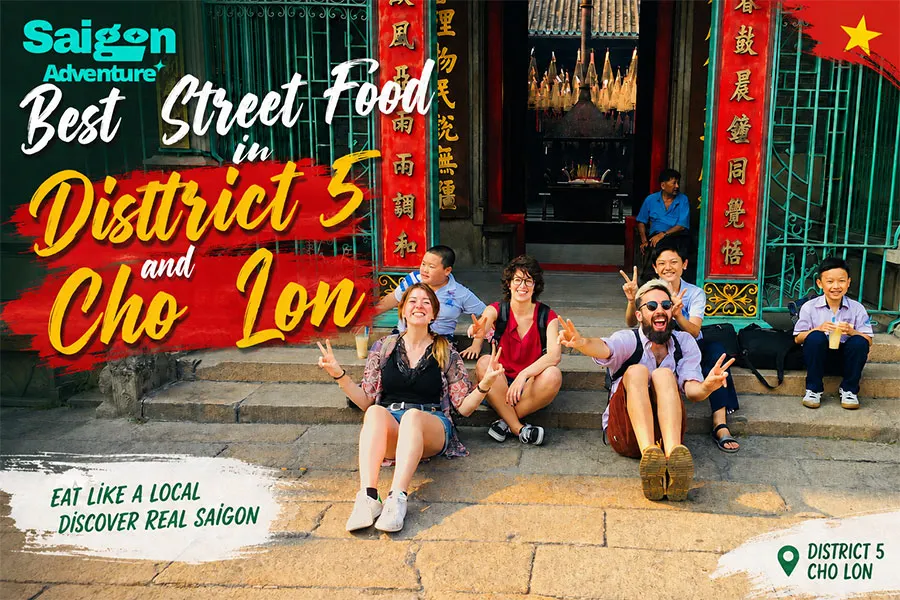
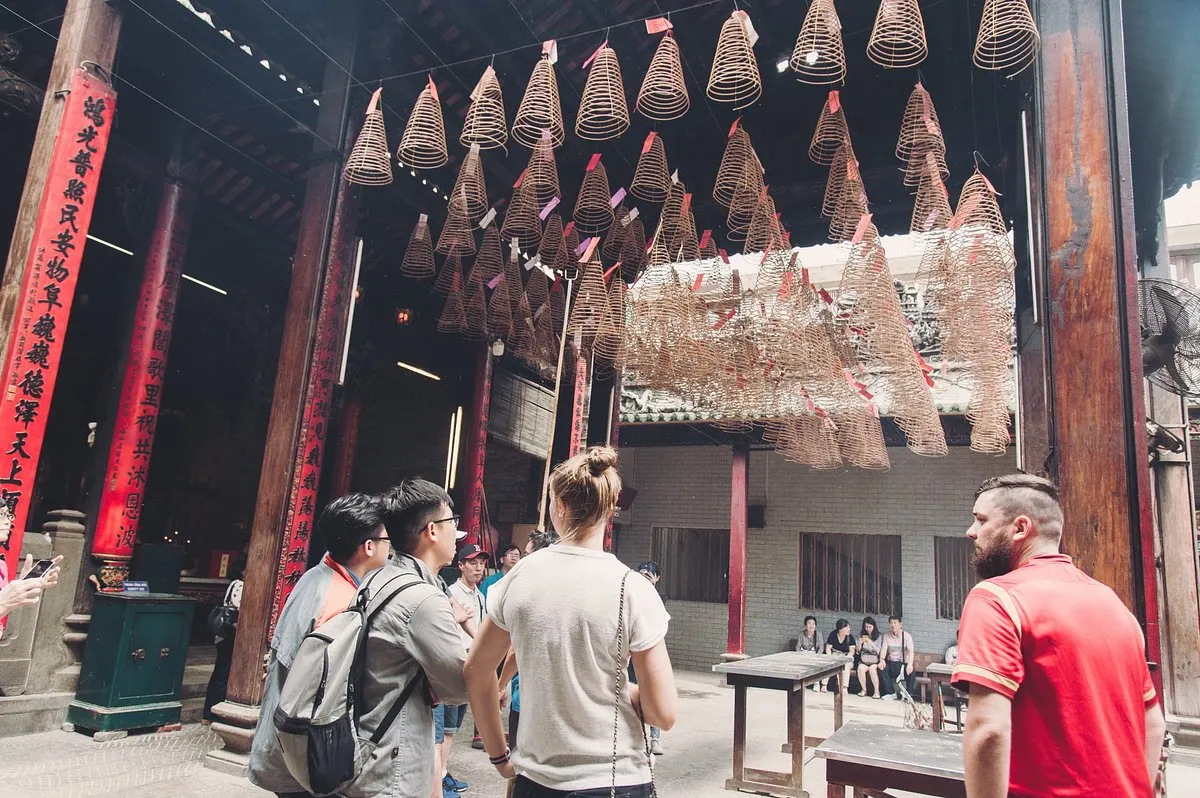
Ba Thien Hau Temple is one of Cholon’s most rewarding stops. Dedicated to Mazu, a deity associated with the protection of seafarers, the temple has elaborate roof decorations, incense coils and quiet interior courtyards.
Admission is generally free, with donations left to individual visitors. Look above the main entrance and along the roofline, where small ceramic figures illustrate scenes from traditional stories.
The temple becomes busy during festivals and important lunar-calendar dates. On an ordinary weekday morning, the atmosphere is calmer and easier to appreciate.
15. Step Inside the Southern Women’s Museum
The Southern Women’s Museum (Bảo Tàng Phụ Nữ Nam Bộ), on Vo Thi Sau Street in District 3, is free to enter and tells the story of Vietnamese women through war, trade and daily life across the south of the country.
The museum is air-conditioned, quiet and rarely crowded, making it a good midday stop when the heat outside is at its worst. Exhibits include traditional clothing, photographs and personal artifacts.
Combine it with a walk through nearby District 3, where several of Saigon’s quieter residential alleys are easy to reach on foot.
16. Relax at Turtle Lake (Ho Con Rua)
Turtle Lake, known locally as Ho Con Rua, is a round plaza and fountain at the intersection of several streets in District 3. It has no formal entrance and no admission fee — locals simply gather here to sit, chat and eat street snacks, especially in the evening.
There isn’t a specific attraction to see; the appeal is watching how the area comes alive after sunset, when nearby food stalls and drink vendors set up around the plaza.
It sits roughly between Notre-Dame Cathedral and War Remnants Museum, so it works well as a short rest stop between two other free or low-cost stops.
17. Browse Tan Dinh Market
Tan Dinh Market, near Tan Dinh Church in District 1, is smaller and more local than Ben Thanh Market, with a strong focus on fabric, ready-made clothing and household goods. Walking through costs nothing, and it gives a more everyday picture of how Saigon residents shop.
The market is busiest in the morning. Food stalls around its edges sell breakfast dishes if you want to combine sightseeing with a cheap meal.
It’s a short walk from Tan Dinh Church, so the two make an easy pair on a District 3 morning.
18. Visit Mariamman Hindu Temple
Mariamman Hindu Temple, on Truong Dinh Street in District 1, is one of the few Hindu temples in the city and remains active for both the Vietnamese-Indian and wider local community. Entry is free, though visitors are expected to remove their shoes before entering.
The temple’s colorful gopuram (entrance tower), covered in carved deities, stands out sharply against the surrounding streets. Interior photography is sometimes restricted, so check before taking pictures near the altars.
It’s close to Ben Thanh Market, making it easy to combine with a visit to the market and central District 1 landmarks.
19. Wander Through a Local Saigon Alley
Saigon’s alleys, known locally as hẻm, are where much of the city’s everyday life unfolds. Behind major roads, you may find family-run cafés, tiny shrines, food stalls, old apartment entrances and homes decorated with plants.
District 3 is a good area for this kind of walk because its residential alleys sit close to central landmarks. Enter wider lanes with visible businesses and regular foot traffic rather than isolated passages.
Remember that these are real neighborhoods. Keep voices low, avoid photographing inside homes and never block a doorway while composing a picture.
20. Enjoy the Skyline From Thu Thiem
For one of the best free skyline views in Ho Chi Minh City, cross the Saigon River to Thu Thiem. Public riverside areas look back toward District 1, including Bitexco Financial Tower and the hotels along Ton Duc Thang Street.
Late afternoon is ideal. Bring water, find a safe place beside the river and watch the city change from daylight to neon.
Parts of Thu Thiem continue to develop, so stay within clearly accessible public areas and avoid fenced construction sites. After rain, riverside paths can be muddy or slippery.
A Practical Free One-Day Route
Start at Tao Dan Park around 7:00 a.m., then walk toward Ben Thanh Market. From there, continue past the Ho Chi Minh City Museum exterior to Nguyen Hue Walking Street.
Next, visit the Central Post Office, Notre-Dame Cathedral and Book Street. This central section is compact, but allow time for shade and water breaks. In the late afternoon, return toward Nguyen Hue and finish at Bach Dang Wharf Park for sunset.
This route keeps transport costs low and avoids crossing the city repeatedly. However, Ho Chi Minh City is hot and humid for much of the year. Wear breathable clothing, carry water and use sunscreen even on cloudy days.
Save Cholon, Ho Thi Ky Market and Thu Thiem for another day, as they lie in different directions. Trying to combine every free attraction into one itinerary usually means spending more time in traffic than enjoying the places themselves.
Common Mistakes When Exploring Saigon for Free
“Free entry” does not always mean every part of a building is open to visitors. Churches and temples may restrict access during services, while public streets can close temporarily for festivals or official events.
Another common mistake is visiting outdoor locations at midday. Saigon’s heat can make even a short walk exhausting. Early morning and late afternoon provide better light, cooler temperatures and more local activity.
Finally, do not plan your day around photographs alone. Markets, parks and alleys are interesting because people use them every day. Observe first, ask before taking close portraits and leave private spaces undisturbed.
Go Beyond the Free Attractions With a Local
Exploring independently is a wonderful introduction to Saigon, especially when you have time to walk slowly and follow your curiosity. However, many stories behind the temples, markets and hidden alleys are easy to miss without local knowledge.
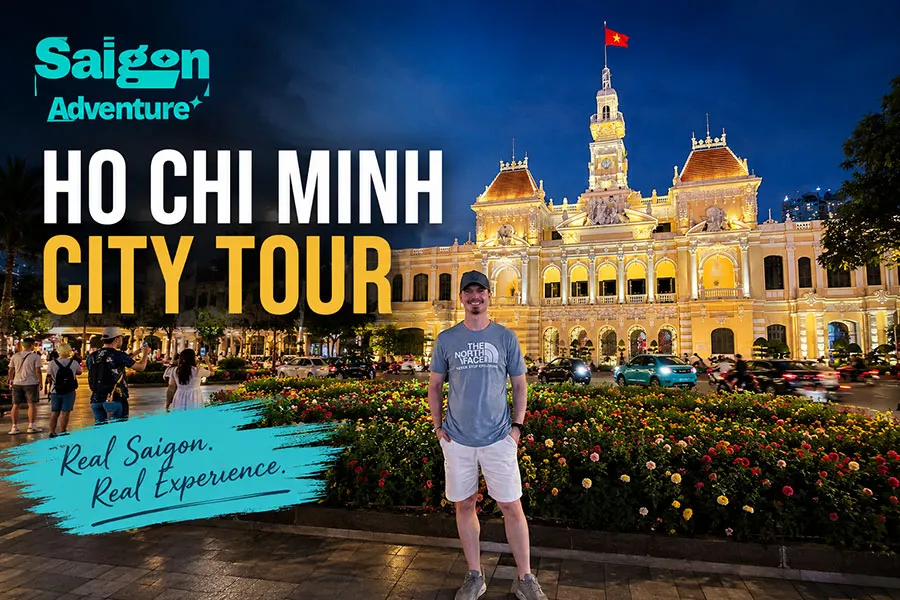
After completing your free sightseeing route, discover a deeper side of the city with Saigon Adventure’s local experiences. You can continue exploring on foot, join a Ho Chi Minh City motorbike tour or experience the neighborhoods through a food tour in Ho Chi Minh City.
Frequently Asked Questions
What are the best free things to do in Ho Chi Minh City?
Popular free experiences include Nguyen Hue Walking Street, Saigon Central Post Office, Book Street, Bach Dang Wharf Park, Tao Dan Park, Cholon and several temples.
Is Nguyen Hue Walking Street free?
Yes. Nguyen Hue is a public pedestrian boulevard and normally has no entrance fee. Access to certain areas may change during major events.
Is Saigon Central Post Office free to enter?
The main public hall is normally free to enter. Postal services, souvenirs and postcards are optional purchases.
Are temples in Ho Chi Minh City free?
Many temples do not charge a fixed admission fee. Donations may be welcomed but are generally voluntary. Visitors should dress modestly and respect worship activities.
Can you explore Ho Chi Minh City on foot?
Central District 1 and parts of District 3 are suitable for walking. Cholon, Thu Thiem and Ho Thi Ky Market are farther apart and may require public transport or a taxi.
Where can I watch the sunset for free in Saigon?
Bach Dang Wharf Park is the most convenient central choice. Public riverside areas in Thu Thiem offer a wider view of the District 1 skyline.
What is the best time for free sightseeing in Ho Chi Minh City?
Visit outdoor attractions before 9:00 a.m. or after 4:00 p.m. These periods are usually cooler and better for photography.