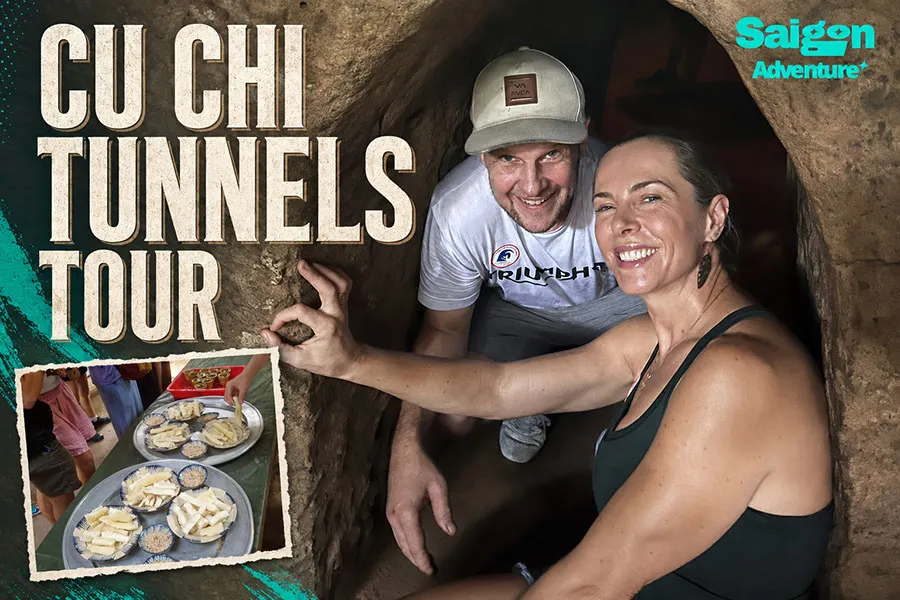
After crawling through a narrow underground passage at the Cu Chi Tunnels, visitors usually emerge hot, dusty, and relieved to be back in the open air. Near the end of the experience, they are invited to sit beneath a simple thatched shelter and try warm pieces of boiled cassava with crushed peanuts, sugar, and salt.
At first, it may look like an ordinary complimentary snack. In reality, tasting tapioca at Cu Chi Tunnels tells one of the most human stories of survival.
Cassava provided energy when rice and other supplies were difficult to obtain. It was inexpensive, filling, relatively easy to grow, and could be prepared using basic underground kitchens. By tasting it today, visitors gain a small but meaningful insight into how Vietnamese soldiers and local communities survived in and around the tunnels during wartime.

Why Do Tourists Eat Tapioca at Cu Chi Tunnels?
Although many guides and travel websites call it “tapioca,” the food served at the Cu Chi Tunnels is more accurately described as boiled cassava.
Cassava is the whole root of the plant, known locally as khoai mì in southern Vietnam. Tapioca is the starch extracted from cassava and commonly used to make pearls, puddings, noodles, and chewy Asian desserts.
The two terms are often used interchangeably in tourism because “tapioca” is more familiar to some international visitors. However, you will not be served tapioca pearls at the tunnels. Instead, you will receive chunks of peeled cassava root that have been boiled or steamed until soft.
This distinction is helpful, but it does not change the historical meaning of the tasting. Whether a tour guide calls it tapioca or cassava, the food represents one of the basic wartime staples associated with life in Cu Chi.
Why Was Cassava Eaten During the War?
Life around the Cu Chi Tunnels involved severe shortages, disrupted agriculture, dangerous transportation routes, and the constant threat of military operations. Getting enough rice, meat, vegetables, and cooking supplies was not always possible.
Cassava became valuable because it could grow in relatively poor soil and tolerate periods of dry weather. Unlike rice, which requires more visible fields and a dependable water supply, cassava grows as a root beneath the ground. This made it a practical crop for communities living in a heavily contested area.
Once harvested, the root could be peeled, washed, and boiled. It provided carbohydrates and helped people feel full during periods when other foods were limited.
Vietnamese soldiers, guerrilla fighters, and local residents did not eat cassava because it was considered a special delicacy. They ate it because it was available and helped them survive. At times, rice was combined with cassava to stretch limited supplies. During more difficult periods, cassava could become the main part of a meal.
It was not a perfectly balanced diet, but it provided much-needed energy for digging tunnels, moving supplies, farming, carrying equipment, and traveling through the underground network.
Why Was Cassava Suitable for Life at Cu Chi?
Cassava had several practical advantages in wartime Cu Chi.
First, the plant was relatively resilient. Even when farming conditions were difficult, it could often survive where more demanding crops struggled.
Second, the edible part developed underground. The crop was not invisible, but its roots were less exposed than food growing entirely above the surface. Families could leave some roots in the soil and harvest them when needed.
Third, cassava was filling. A small serving provided carbohydrates that helped sustain people performing physically exhausting work.
Finally, preparation did not require a complicated recipe. Once properly processed, the root could be boiled with water and eaten plain or with whatever seasoning was available.
These qualities made cassava a practical survival food. Its value came not from luxury or variety, but from reliability during a time when food security could never be taken for granted.
How Was Cassava Cooked Without Revealing the Tunnels?
Cooking near the tunnels created a serious problem: smoke could reveal the location of a hidden kitchen.
To reduce that danger, tunnel residents used a smoke-dispersal system commonly known as the Hoang Cam kitchen. Instead of allowing smoke to rise directly above the stove, underground channels carried it away from the cooking area.
The smoke traveled through these covered passages before escaping gradually through several small openings. By the time it reached the surface, it was cooler, thinner, and more difficult to spot from a distance.
Cooking was often done before sunrise, when mist could help conceal any remaining smoke. Food might then be prepared in advance rather than cooking several times throughout the day.
Visitors can see reconstructed Hoang Cam kitchens during many Cu Chi tours. The display helps explain that preparing even a simple meal required planning and ingenuity.
The cassava tasting is therefore connected to more than the crop itself. It also introduces visitors to the techniques people developed to cook while reducing the risk of detection.
Why Is Cassava Served With Peanut Salt?
The cassava offered today is normally served with a mixture of crushed peanuts, sugar, and salt. Some versions may also contain sesame seeds.
Plain cassava has a mild, earthy taste and a dense, slightly fibrous texture. Salt brings out its natural flavor, sugar adds sweetness, and crushed peanuts provide richness and a gentle crunch.
Peanuts also contribute fat and some protein, which cassava contains only in small amounts. Together, the ingredients create a more satisfying combination than eating the root on its own.
However, the current tasting should not be interpreted as an exact recreation of every wartime meal. The ingredients available to tunnel residents would have changed from one period to another. Some meals may have included peanut salt, while others would have been much simpler.
The version served to visitors is a respectful and accessible interpretation. It keeps the food modest while making it enjoyable enough for travelers unfamiliar with boiled cassava.
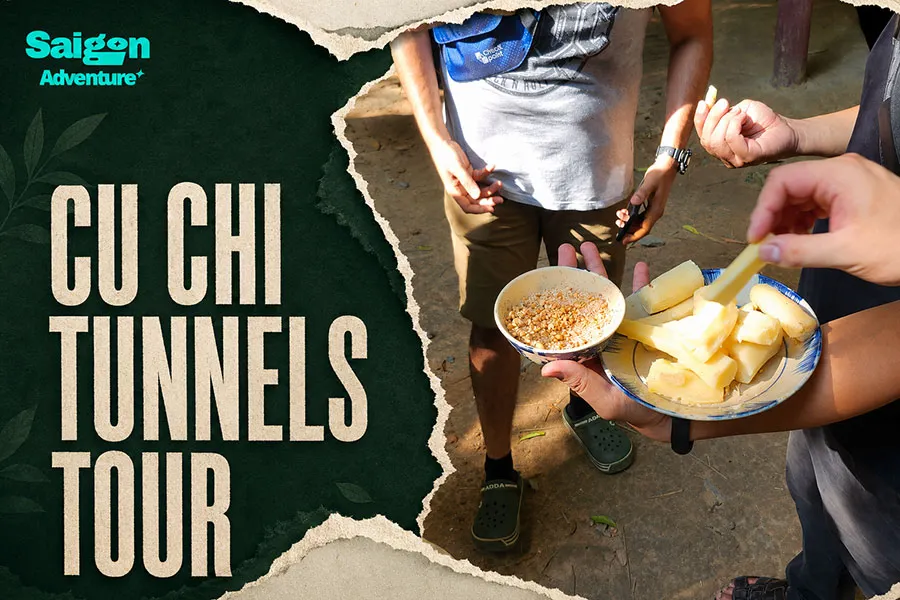
What Does Cu Chi Cassava Taste Like?
Boiled cassava tastes somewhere between a potato, sweet potato, and chestnut, although its texture is slightly chewier and more fibrous. It has a gentle sweetness rather than the sugary taste of a dessert.
When properly cooked, the cassava should be soft enough to break apart easily. Some pieces may feel dry and crumbly, while others are more moist and sticky.
Dipping a warm piece into the peanut mixture changes the flavor considerably. The combination becomes salty, sweet, nutty, and more aromatic.
Travelers who already enjoy root vegetables such as taro, yam, or sweet potato will probably find it familiar. Those expecting tapioca pearls or a sweet pudding may be surprised by how plain and natural it tastes.
The simplicity is part of the experience. This is not presented as fine dining. It is a historical food intended to help visitors understand how people sustained themselves under extremely difficult conditions.
Why Is the Tasting an Important Part of the Cu Chi Experience?
Most travelers remember the tunnels for their narrow passages, hidden entrances, underground bunkers, ventilation holes, and military traps. These features reveal the engineering and defensive importance of the network.
Cassava introduces a different perspective: everyday survival.
It encourages visitors to consider what people ate, where they found water, how they cooked, and how food was stored. These ordinary questions make the history more personal.
Tasting a few pieces of cassava cannot recreate wartime hunger or the fear experienced by people living underground. Modern visitors know they can return to Ho Chi Minh City and enjoy a full meal afterward. The people who depended on cassava did not have that certainty.
The tasting is therefore symbolic rather than immersive in a literal sense. It provides a sensory connection to history without pretending that a short visit can reproduce the realities of war.
Trying tapioca at Cu Chi Tunnels is not just about tasting a local root vegetable—it is an unforgettable way to connect with wartime history.
For many travelers, this quiet moment becomes surprisingly memorable. After seeing military exhibits and crawling through enclosed tunnels, sitting down with a basic wartime food shifts attention from weapons and strategies to the people who had to continue eating, working, and living amid the conflict.
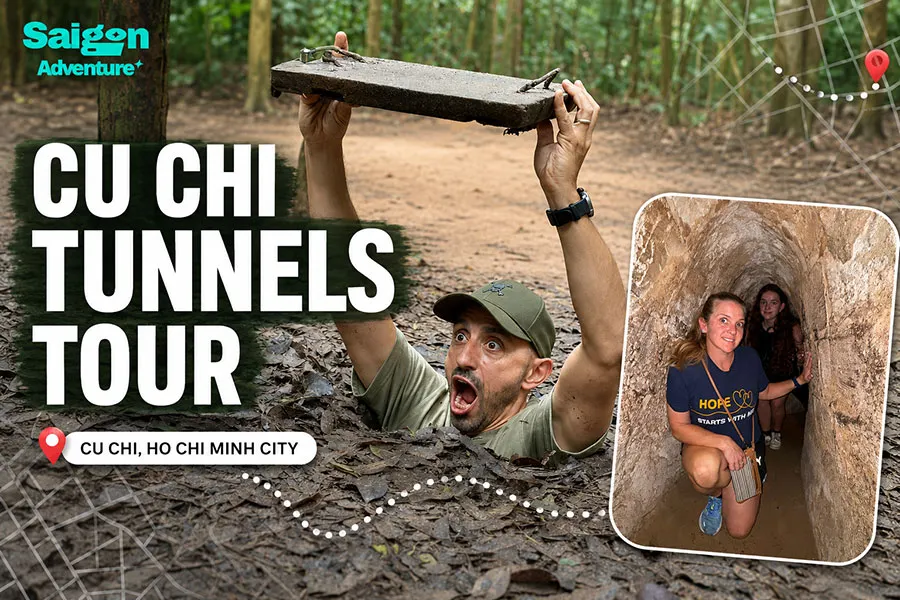
Do Both Ben Dinh and Ben Duoc Serve Cassava?
Cassava tasting is commonly included in visits to both Ben Dinh and Ben Duoc, although the exact arrangement can vary depending on the site, itinerary, and tour operator.
Ben Dinh is closer to central Ho Chi Minh City and is often selected for half-day group tours. Its visitor route is compact, accessible, and designed to introduce the main features of the tunnel system within a limited amount of time.
Ben Duoc is farther from the city and generally offers a more spacious, historical atmosphere. The visit may take longer, but travelers often find it less hurried.
At either location, cassava is usually offered toward the end of the main historical experience. By this point, visitors have seen the underground kitchens and gained enough context to understand why the food mattered.
The taste itself will not necessarily determine which site you should choose. Your decision should be based on travel time, group size, preferred atmosphere, and how deeply you want to explore Cu Chi’s history.
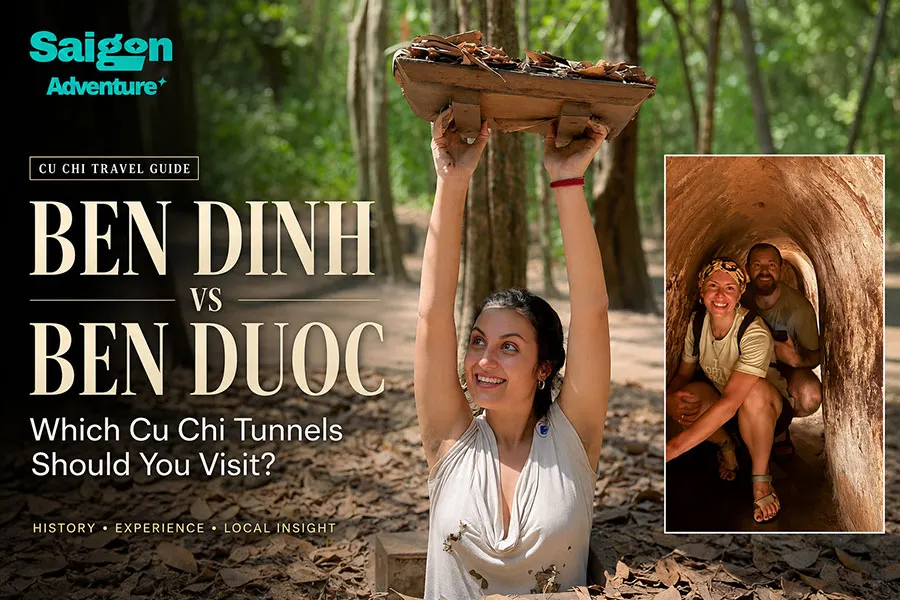
Is Cassava Still Eaten in Vietnam Today?
Cassava remains part of Vietnamese cuisine, particularly in rural areas and southern Vietnam. Today, however, it is not eaten only as a survival food.
Vietnamese cooks steam cassava with coconut milk, use it in cakes, prepare it as a sweet snack, or process it into starch. Tapioca starch is also widely used to create the soft, sticky, or chewy texture found in many Vietnamese desserts.
For some older Vietnamese people, boiled cassava may bring back memories of difficult periods when rice was scarce. For younger generations, it may be associated with childhood, countryside cooking, or comforting street food.
This contrast gives cassava several layers of meaning. It can represent hardship and resilience, but it can also be an enjoyable ingredient in everyday cooking.
At the Cu Chi Tunnels, the presentation remains intentionally simple. Serving plain boiled cassava with peanut salt keeps the focus on its historical role rather than transforming it into a modern dessert.
What Should Visitors Know Before Trying It?
The tasting portion is normally small and should not be considered a complete meal. Tea is often served alongside the cassava.
Visitors should only eat cassava that has been correctly peeled, processed, and cooked. Raw cassava contains naturally occurring compounds that can be harmful, but the food offered at an established historical site is prepared before serving.
Travelers with peanut or sesame allergies should speak to their guide before trying the dipping mixture. Even if the cassava is served separately, cross-contact may be possible.
If you do not want to eat it, you can simply decline. However, trying one piece is worthwhile if your dietary requirements allow it. Listen to the guide’s explanation and taste it slowly rather than treating it as a quick snack before leaving.
A knowledgeable local guide can also explain how cassava was grown, when meals were cooked, and how food supplies moved through the area. These details make the tasting much more meaningful.
Frequently Asked Questions About Cassava at Cu Chi
Is cassava included in the Cu Chi Tunnels entrance ticket?
A small cassava tasting is commonly part of the visitor experience, but inclusions can vary between Ben Dinh, Ben Duoc, and individual tour itineraries. Confirm with your tour operator if this activity is important to you.
Is the Cu Chi cassava tasting free?
Visitors are generally not charged separately for the standard tasting offered during the historical-site visit. Additional food and drinks purchased from nearby vendors or restaurants are not included.
Is the cassava suitable for vegetarians or vegans?
Plain boiled cassava is plant-based. The traditional dipping mixture normally contains peanuts, sugar, salt, and sometimes sesame. Ask your guide to confirm the ingredients if you follow a strict diet.
Can visitors with peanut allergies try the cassava?
The cassava itself does not contain peanuts, but it is commonly served beside a peanut mixture. Because cross-contact is possible, visitors with a serious allergy should avoid it unless the site can confirm safe handling.
Is cassava the same as tapioca?
They come from the same plant but are not technically identical. Cassava is the whole root, while tapioca is the starch extracted from it. The food served at Cu Chi is boiled cassava root.
Taste the History on a Cu Chi Tunnels Tour
Eating cassava at the Cu Chi Tunnels is not about discovering Vietnam’s most elaborate dish. It is about understanding how a humble crop helped people endure when food was scarce and everyday cooking could expose a hidden position.
The warm root, simple peanut salt, and reconstructed underground kitchen reveal a side of Cu Chi that military displays alone cannot communicate. They show how survival depended not only on tunnels and battlefield strategies, but also on farming knowledge, careful preparation, and the ability to make use of limited resources.
A well-guided Cu Chi Tunnels tour connects these details into a larger story. Instead of simply crawling through a tunnel and taking photographs, visitors learn how people moved, cooked, communicated, rested, and survived underground.
When you reach the tasting area, take your time. One piece of cassava may be small, but the history behind it is one of the most meaningful parts of the Cu Chi experience.