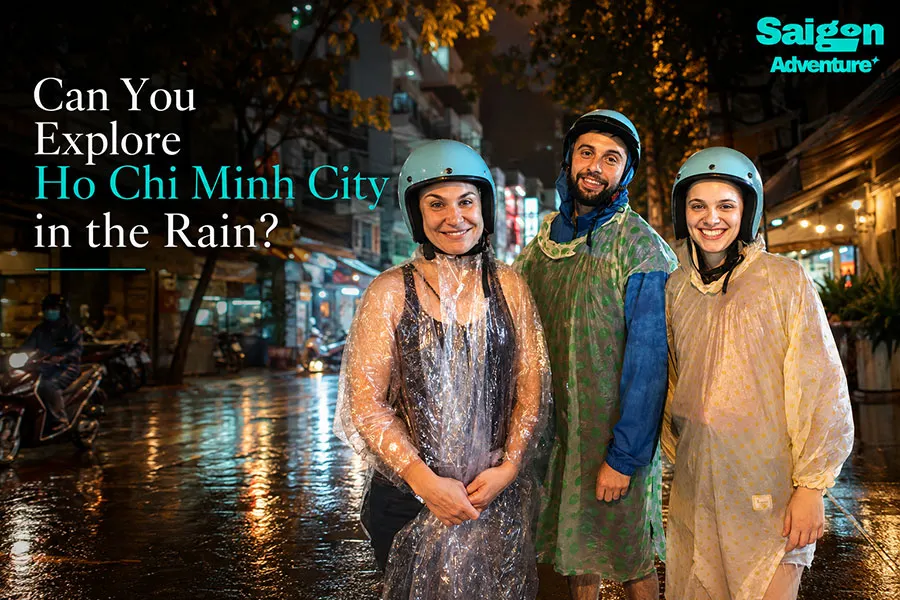
A sudden tropical shower can transform Ho Chi Minh City within minutes. Motorbike riders slip into colorful ponchos, vendors pull covers over their stalls, and the warm scent of noodle soup drifts from small restaurants as travelers hurry beneath café awnings.
But does rain mean your sightseeing plans are over? Not at all. Exploring Ho Chi Minh City in the rain can still be safe, enjoyable and surprisingly atmospheric when you know how to adapt your itinerary.
Most rainy-season days do not bring nonstop downpours. There are often long dry periods between showers, giving you time to visit markets, museums, historic neighborhoods and local eateries. The secret is to plan flexibly rather than expect perfect weather from morning to evening.
When is the rainy season in Ho Chi Minh City?
The Ho Chi Minh City rainy season generally runs from May to November. The dry season usually lasts from December through April, although tropical weather does not always follow a precise calendar.
Rain during the wetter months often arrives as an intense afternoon or evening shower. Some storms pass quickly, while others bring prolonged rain, thunder, strong winds or temporary flooding in low-lying streets.
September and October are often among the wettest months. However, travelers visiting during this period can still experience bright mornings and several hours of comfortable sightseeing.
Weather can differ across the city. District 1 may receive light rain while darker clouds gather over District 5, Thu Duc or the neighborhoods farther south. Checking a live weather map before crossing the city is more useful than relying only on a daily rain symbol.
Is Ho Chi Minh City worth visiting during the rainy season?
Yes. Saigon remains energetic during its rainy season, and most attractions, cafés, restaurants, markets and guided tours continue operating.
The wetter months can even offer a few advantages. Temperatures may feel more comfortable after a shower, popular attractions can occasionally be less crowded, and the rain creates beautiful reflections across the city’s streets after dark.
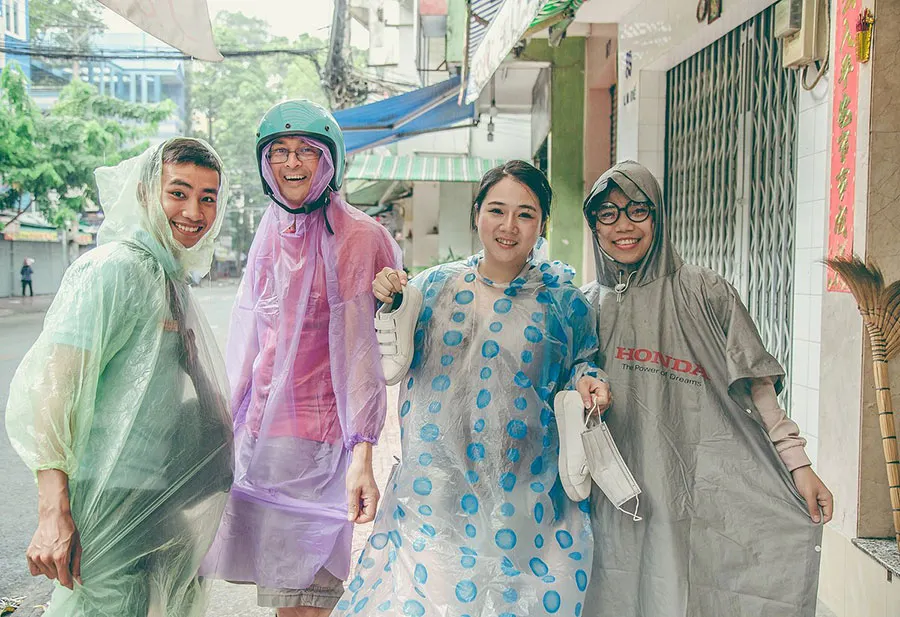
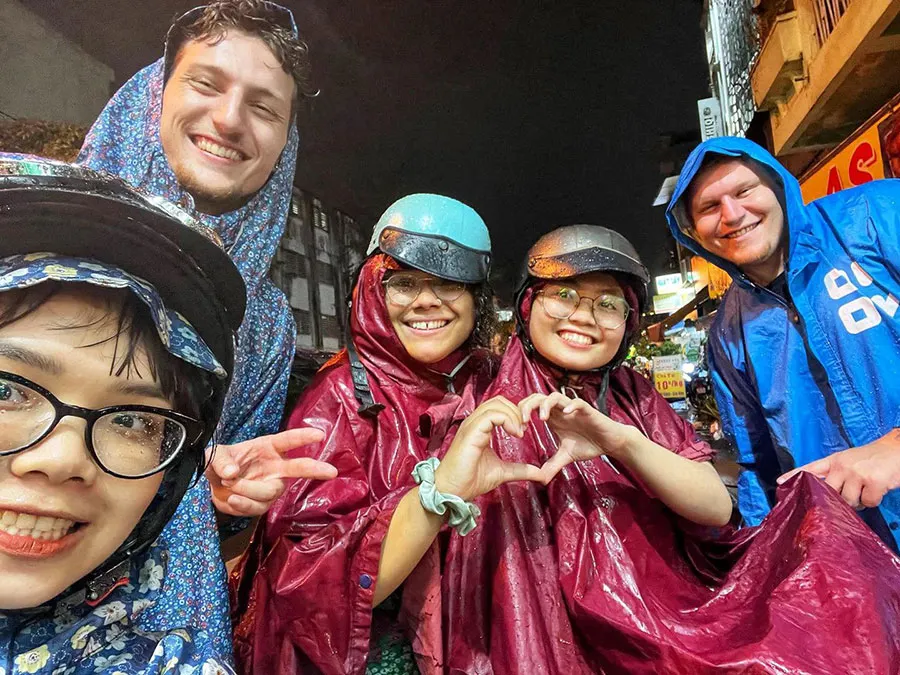
You also see how local life adjusts to the tropical climate. Within moments, plastic covers appear over food stalls, commuters change into ponchos and cafés fill with people waiting for the heaviest rain to pass.
A rainy trip only becomes frustrating when every activity depends on clear weather. Combine indoor and outdoor experiences, leave space between stops and remain willing to change the order of your day.
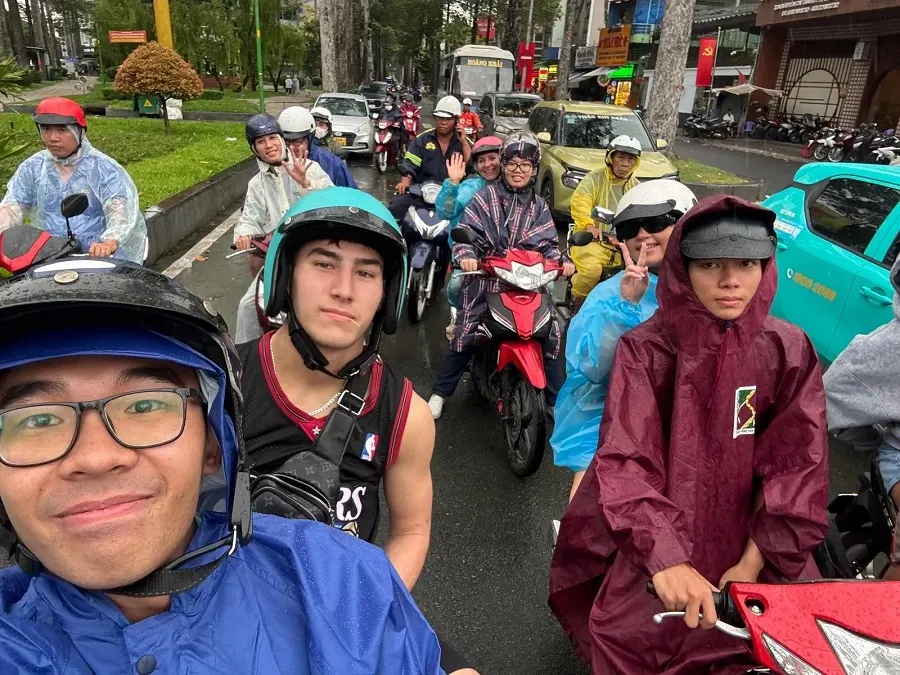
What is rain in Saigon really like?
Tropical rain can be much heavier than the showers many international visitors experience at home. Water may fall so quickly that nearby buildings become difficult to see, even when the storm lasts for a relatively short period.
The sound can also be dramatic. Rain hitting metal roofs, umbrellas and shop awnings may make the conditions seem worse than they are.
Locals often continue traveling in light or moderate rain, but visitors should not feel pressured to copy every rider they see. Wet roads reduce traction and visibility, while unfamiliar traffic becomes harder to interpret.
If thunder, strong winds or deep water appear, move indoors and wait. Missing one attraction is better than taking an unnecessary risk to keep an ambitious schedule.
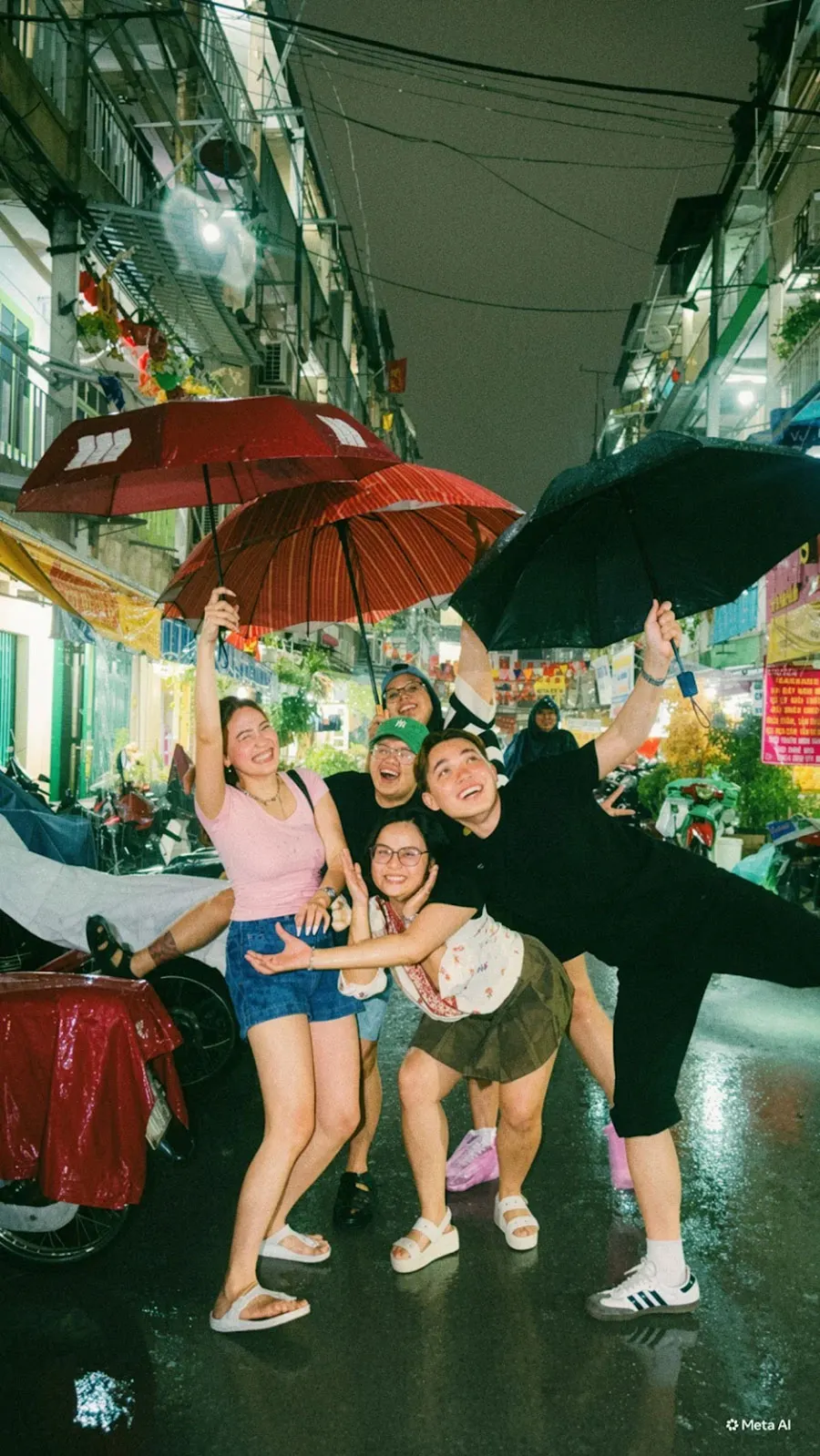
Best things to do in Ho Chi Minh City when it rains
Saigon offers plenty of rainy-day activities beyond shopping centers and hotel rooms. A well-planned wet-weather itinerary can still include culture, history, food and authentic neighborhood life.
Explore museums and historic buildings
The War Remnants Museum is one of the city’s most visited cultural attractions, although its exhibitions can be emotionally confronting. The Ho Chi Minh City Museum of Fine Arts is a quieter option, combining Vietnamese artworks with distinctive colonial-era architecture.
The Independence Palace also provides substantial indoor sightseeing. Parts of the grounds remain exposed, but visitors can spend much of their time exploring reception rooms, underground spaces and preserved interiors.
Check official opening and last-admission times before leaving your hotel. Individual galleries or sections may occasionally be unavailable even when the main attraction remains open.
Discover Cholon and District 5
Rain gives Cholon a different atmosphere. Herbal medicine shops, old shophouses and narrow streets appear especially vivid beneath umbrellas and reflective shop lights.
Binh Tay Market has covered areas where visitors can observe the rhythm of local commerce. Floors may become slippery, so wear shoes with good traction and keep clear of vendors moving goods through busy aisles.
Thien Hau Temple is another meaningful stop in District 5. Dress respectfully, avoid blocking worshippers and remember that the courtyard and entrance may still be exposed to rain.
If you want to understand the area rather than simply photograph it, explore with someone familiar with its history and customs. The neighborhood rewards travelers who slow down and notice the details.
Experience Saigon’s café culture
A rainy afternoon is an excellent time to discover why coffee is such an important part of everyday life in Ho Chi Minh City. Traditional cafés, modern specialty shops and converted apartment spaces can be found throughout the central districts.
Order a cà phê sữa đá, coconut coffee or hot Vietnamese filter coffee and watch the streets change outside. A café stop gives you time to dry off, check the weather and reorganize the rest of your route.
Choose an indoor seat when lightning is nearby. Standing beneath a tree, temporary umbrella or exposed street awning is not a safe way to wait through a thunderstorm.
Eat something warm at a local restaurant
Rainy weather makes a steaming bowl of phở, bún bò Huế, hủ tiếu or bò kho especially satisfying. Many neighborhood restaurants have permanent roofs or covered seating, allowing guests to experience Saigon’s atmosphere without being exposed to the downpour.
Smaller street stalls may temporarily close during severe weather, but established local eateries usually continue serving. Keep wet ponchos and umbrellas away from walkways, and place them wherever the staff suggests.
Travelers unsure where to eat can join a Food tour in Ho Chi Minh City. Local guides can select suitable venues and adjust the order of stops when weather conditions change.
Visit a traditional covered market
Ben Thanh Market is convenient for travelers staying in District 1 and provides shelter during a passing shower. It is tourist-oriented, but visitors can still browse dried foods, coffee, textiles, souvenirs and local snacks.
Neighborhood markets offer a more everyday view of the city. They are working environments, so avoid obstructing narrow passages and ask before taking close-up photographs of vendors.
Traditional markets can have wet, uneven floors even on a dry day. Closed-toe footwear with reliable grip is more practical than smooth sandals or flip-flops.
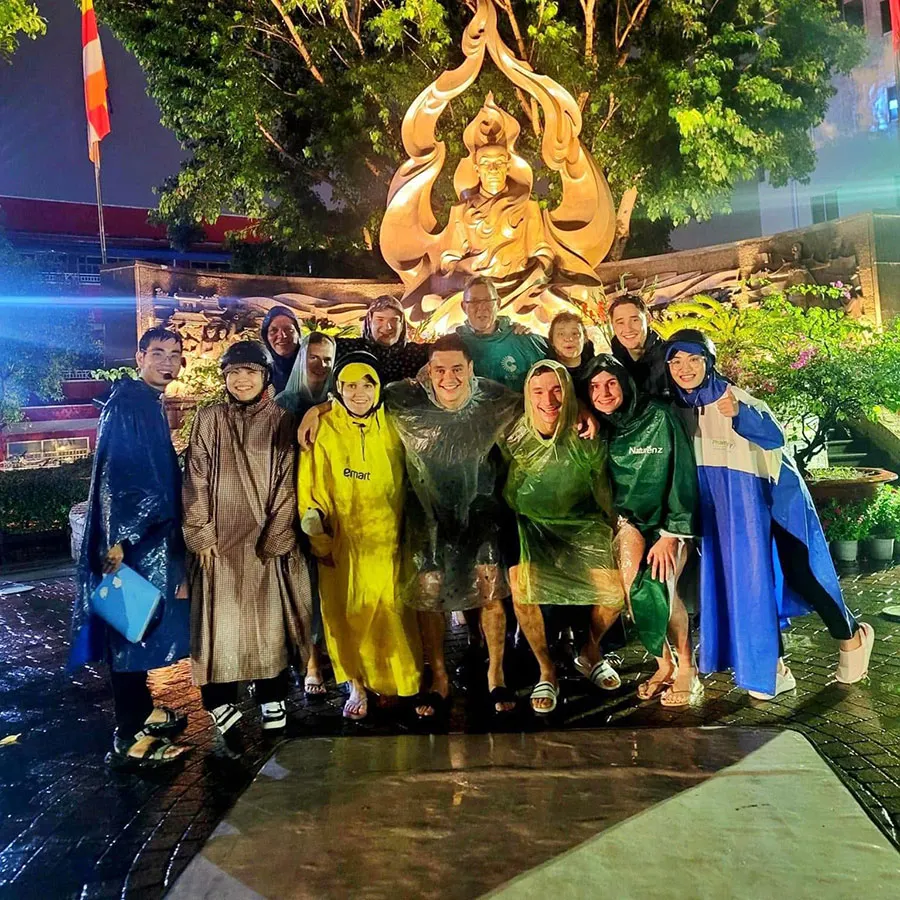
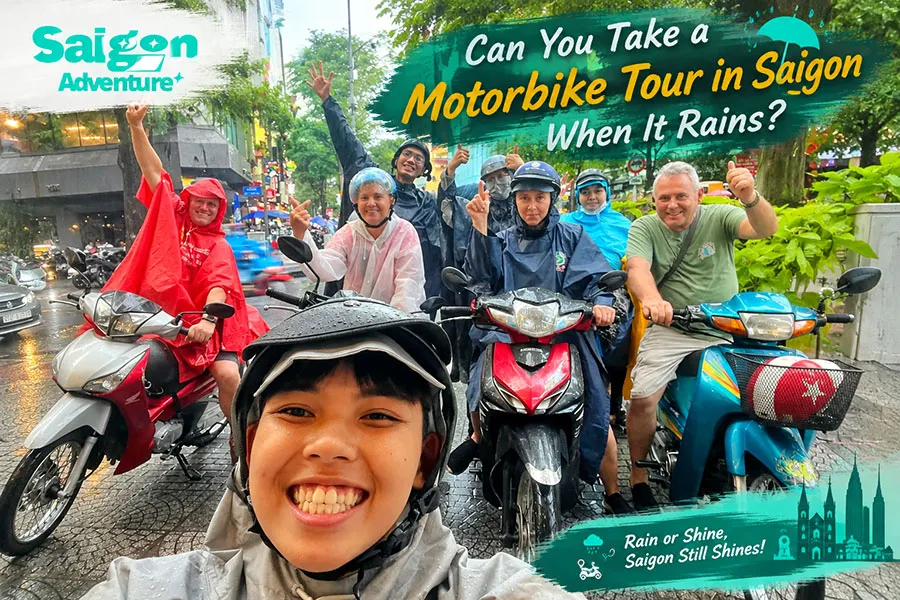
Can you take a motorbike tour when it rains?
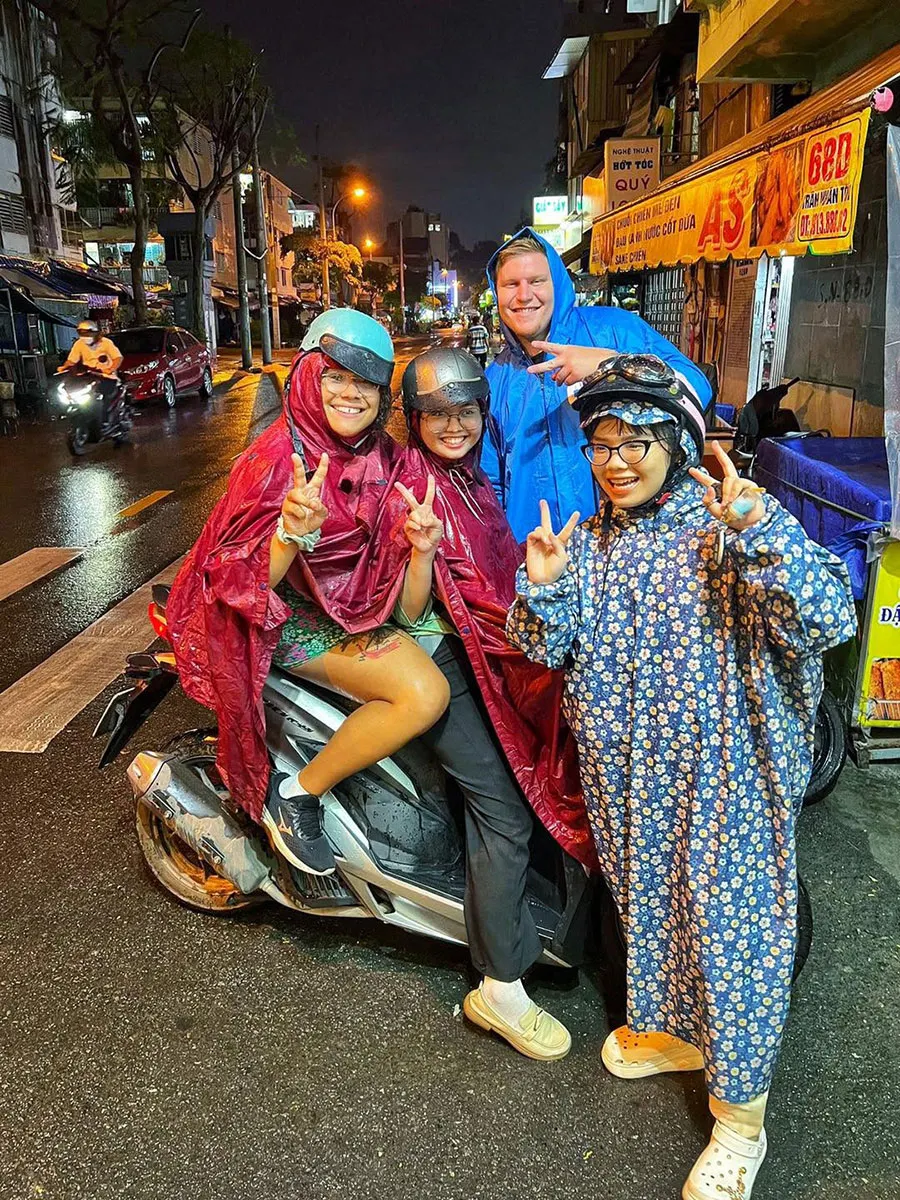
Light rain does not automatically stop a professionally operated motorbike tour. Experienced local drivers understand how quickly conditions can change and may provide ponchos, modify the route or wait for the heaviest shower to pass.
However, no responsible operator should continue regardless of the weather. Poor visibility, lightning, strong winds and serious flooding may require a delay, an alternative route or cancellation.
Ask about the weather policy before booking. You should know what happens if conditions become unsafe and whether the experience can be rescheduled.
During a guided Ho Chi Minh City motorbike tour, guests ride as passengers with local drivers rather than controlling the scooters themselves. First-time visitors should not rent a motorbike and attempt to learn Saigon traffic on wet roads.
Is walking around Saigon safe in the rain?
A light shower can make a walking tour in Ho Chi Minh City cooler and more atmospheric. However, pavements may become slippery, and loose tiles can shift or release trapped water when stepped on.
Watch for motorbikes entering pavements, uncovered edges and puddles hiding uneven surfaces. Slow down when crossing roads because drivers have reduced visibility and may need more distance to stop.
Never walk through floodwater when you cannot see the ground. It may conceal potholes, raised curbs, sharp objects or open drains, and the water itself may be contaminated.
If water begins rising quickly, return to higher ground or enter a safe permanent building. Do not shelter beside electrical equipment, beneath unstable signs or close to large roadside trees during strong winds.

How should you get around during heavy rain?
A car booked through a reputable taxi company or ride-hailing application is usually the most comfortable choice during a major downpour. Confirm the vehicle registration before entering and follow the journey through the application when available.
Demand often rises as soon as heavy rain begins. Waiting times may become longer, fares can increase and traffic may slow considerably during peak hours.
Sometimes the simplest decision is to stay in a café or museum for another 20 to 30 minutes. Immediately requesting a car during the storm’s most intense phase can leave you waiting outside while traffic barely moves.
Allow extra time when traveling to the airport, a tour meeting point or a booked restaurant. A journey that appears short on the map can take much longer when rain, congestion and water accumulation affect the route.

What should you wear and pack?
Choose lightweight, breathable clothing that dries quickly. Heavy denim can remain uncomfortable for hours after getting wet, while expensive leather shoes are poorly suited to puddles and sudden storms.
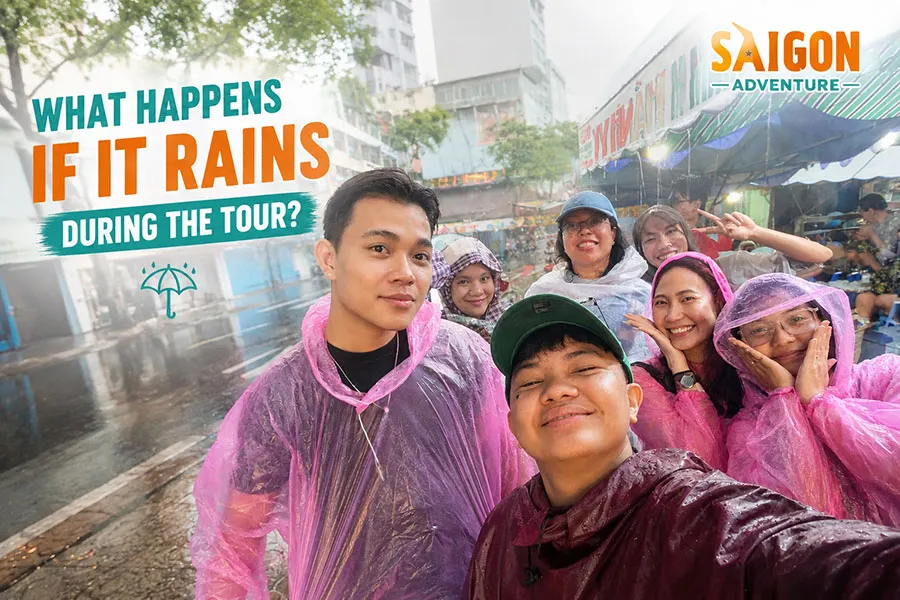
A compact umbrella works well for walking in light rain. A thin poncho gives better coverage on a scooter and protects more of your clothing when rain becomes heavier.
Carry a waterproof pouch or resealable bag for your phone, passport, money and travel documents. Even if your backpack is described as water-resistant, important belongings should have a second layer of protection.
Shoes should have dependable grip. Flip-flops may appear convenient, but they slide easily on wet tiles and provide little protection on crowded streets.
A small towel, tissues and spare socks take up little space and can make the rest of your day far more comfortable. A light extra layer is also useful because air-conditioned vehicles and restaurants can feel cold when your clothing is damp.
How to plan a flexible rainy-day itinerary
Use clear mornings for open-air landmarks, photography, neighborhood walks and outdoor markets. Save museums, cafés, covered markets and longer meals as alternatives for the afternoon.
Group activities within the same area instead of crossing the city repeatedly. In District 1, for example, you can combine historic architecture, Independence Palace, a museum, lunch and a café without spending most of the day in traffic.
Leave at least 30 to 60 minutes of flexibility between important reservations. This buffer helps prevent a temporary shower from affecting every later activity.
For excursions outside central Saigon, contact your operator before changing plans. Conditions at the Cu Chi Tunnels, Mekong Delta or Can Gio may differ from the weather outside your hotel. Travelers considering these destinations can browse things to do beyond Ho Chi Minh City and confirm what remains suitable for the day.
Local tip
Ask your hotel reception team or local guide which nearby streets commonly collect water after a heavy storm. Navigation applications may suggest the fastest route without showing current street-level flooding.
Rain does not have to spoil your Saigon adventure
Ho Chi Minh City does not disappear when the clouds open. It simply changes pace. Street vendors protect their cooking stations, cafés become temporary shelters and rain-slicked roads reflect the city’s lights.
Exploring Saigon during the rainy season requires flexibility rather than complicated preparation. Protect your valuables, wear suitable shoes, avoid floodwater and prioritize indoor activities when storms become severe.
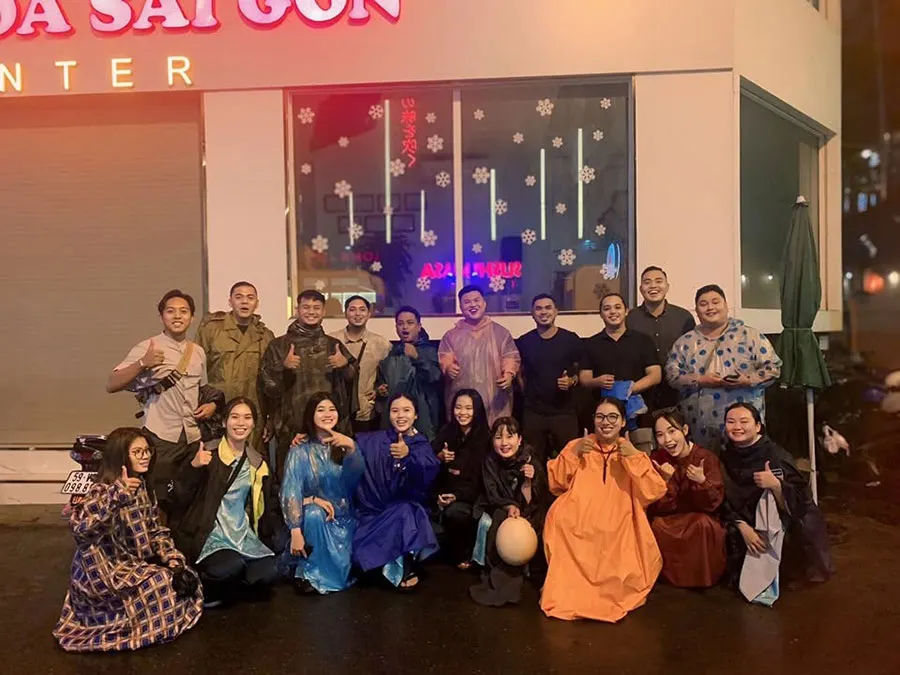
For travelers who want local support, Saigon Adventure offers food and sightseeing experiences led by guides who understand the city’s streets and changing weather. Choose a motorbike city tour or Ho Chi Minh City food tour and discover how memorable Saigon can be—even when it rains.
Frequently asked questions
Does it rain all day in Ho Chi Minh City?
Usually not. Many rainy-season days include several dry hours followed by an intense shower, although prolonged rain is possible. Keep your schedule flexible instead of assuming every storm will end quickly.
What are the wettest months in Ho Chi Minh City?
September and October are often among the wettest months. Conditions vary from year to year, so check the forecast close to your visit.
Are tours cancelled when it rains in Saigon?
Tours may continue during light rain, but lightning, strong winds, poor visibility or flooding can require changes. Ask the operator about its weather and rescheduling policy before booking.
What are the best rainy-day activities in Saigon?
Museums, historic buildings, covered markets, local restaurants and Vietnamese cafés are excellent choices. Select several options within one neighborhood to reduce travel time.
Is street food available during the rainy season?
Yes. Permanent restaurants and many covered vendors continue serving, although small outdoor stalls may close temporarily during heavy storms.
Should tourists rent a scooter during the rainy season?
Inexperienced riders should not learn to navigate Ho Chi Minh City traffic on wet roads. Traveling by car or riding as a passenger with an experienced local driver is more practical.
What should I do if a street is flooded?
Do not enter water when you cannot see the road surface. Turn back, choose another route or wait in a safe building until conditions improve.