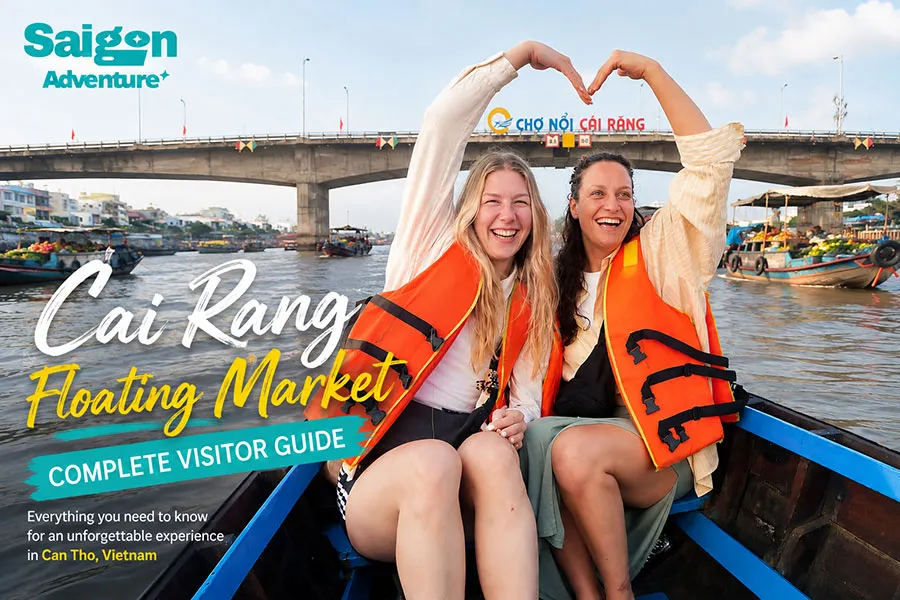
Cai Rang Floating Market is one of the most distinctive places to experience life on the Mekong River in southern Vietnam. Located in Can Tho, the market comes alive before sunrise, when trading boats, fruit sellers, breakfast vendors and local families begin moving across the water.
For most travelers, the best time to visit Cai Rang Floating Market is around 5:30–7:00 AM. Arriving early gives you a better chance to see active trading while still having enough morning light for photographs.
This complete visitor guide covers Cai Rang Floating Market opening hours, the best time to go, how to get there from Can Tho and Ho Chi Minh City, what to eat, how to avoid the busiest tourist period and whether you should visit independently or with a guide.
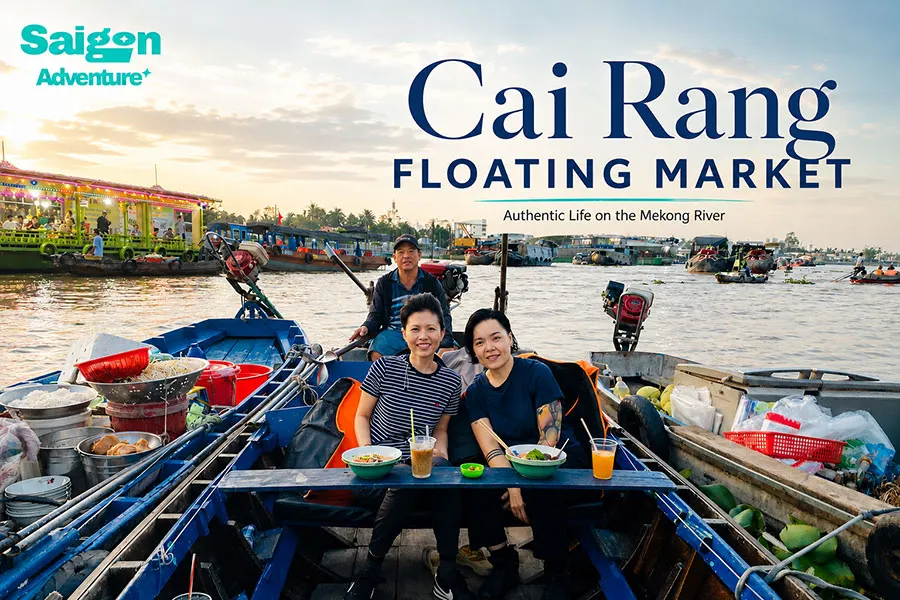
Cai Rang Floating Market at a Glance
| Visitor information | What to know |
|---|---|
| Location | Can Tho, Mekong Delta, Vietnam |
| Market activity | Starts very early, from around 4:00 AM |
| Best time to visit | Around 5:30–7:00 AM |
| Popular departure point | Ninh Kieu Wharf |
| Boat journey | Roughly 30 minutes from central Can Tho |
| Ideal trip length | Allow 2–3 hours for the boat journey, market and breakfast |
| Best experience | Stay overnight in Can Tho and visit early the next morning |
| Known for | Wholesale boats, tropical fruit, floating breakfast and Mekong river life |
The most important tip is simple: do not arrive too late. Cai Rang follows the working schedule of local traders rather than conventional tourist-attraction hours.
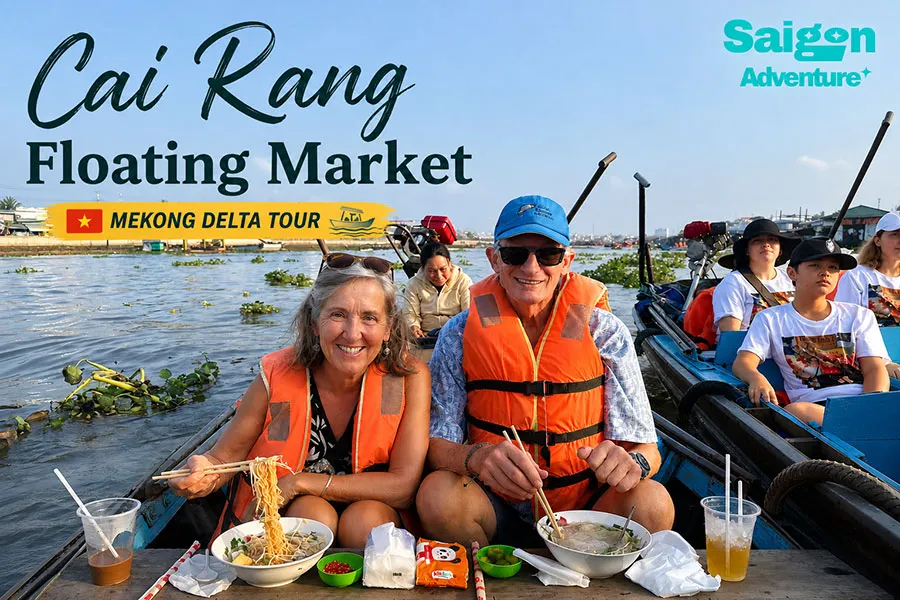
What Is Cai Rang Floating Market?
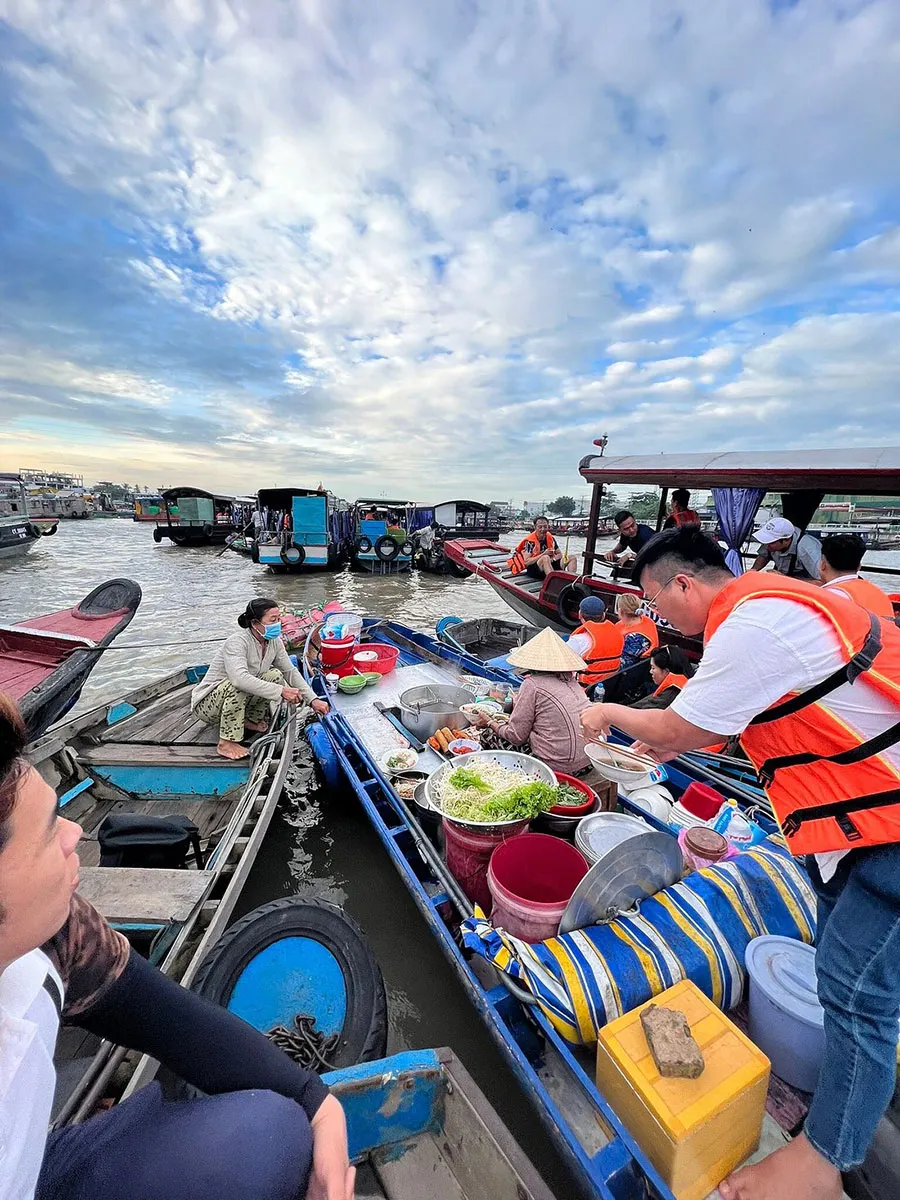
Cai Rang is a traditional floating market where much of the buying and selling happens directly between boats.
The market developed in the Mekong Delta, a region shaped by rivers and canals. Before modern roads became widespread, waterways were essential routes for moving agricultural products between farms, villages and towns.
Large boats traditionally carry produce such as pineapples, coconuts, watermelons and other fruits and vegetables. Smaller vessels move around them selling breakfast, coffee, drinks and everyday supplies.
One of the market’s most recognizable traditions is the cây bẹo, a long pole used to display examples of the products available on a boat. Buyers can see what is being sold before approaching.
Although transportation and wholesale distribution across the Delta have changed significantly, Cai Rang remains an important symbol of southern Vietnam’s river culture.
If you are planning a broader journey through the region, our Mekong Delta tours from Ho Chi Minh City introduce several different sides of life along the Mekong.
Where Is Cai Rang Floating Market?
Cai Rang Floating Market is located on the river in Can Tho, one of the largest and most important cities in the Mekong Delta.
Can Tho lies roughly 165 kilometers southwest of Ho Chi Minh City. Travelers staying in the city center commonly begin their floating-market trip around Ninh Kieu Wharf, one of Can Tho’s best-known riverside areas.
From central Can Tho, the boat journey commonly takes around 30 minutes, although this varies with your departure point, vessel and river conditions.
Do not think of this journey as wasted transportation time.
Leaving Can Tho before sunrise and watching the river gradually wake up is part of the experience. Lights from riverside homes disappear as daylight arrives, while cargo boats, ferries and smaller local vessels begin moving along the waterways.
Cai Rang Floating Market Opening Hours
Cai Rang is an early-morning market.
Trading activity can begin from around 4:00 AM and continue into the morning. However, the experience changes considerably depending on when you arrive.
For most visitors, approximately 5:30–7:00 AM provides the best balance.
You are early enough to see more market activity, but there is also sufficient daylight to observe the boats and take photographs.
Arriving around 8:00 AM or later does not necessarily mean you will find an empty river. Some vendors and boats may still be present. However, you risk missing the livelier trading atmosphere that makes an early visit worthwhile.
Local Tip: Do Not Treat 9:00 AM as an Arrival Time
A market may technically continue operating into the morning, but that does not mean every hour offers the same experience.
If Cai Rang is one of the main reasons you are visiting Can Tho, prioritize it over sleeping late. The experience is usually worth the early alarm.
Best Time to Visit Cai Rang Floating Market
Aim to reach the market at approximately 5:30–6:30 AM.
This period often gives travelers the best combination of early trading, cooler temperatures and soft morning light.
A comfortable schedule might look like this:
- 4:45–5:00 AM: Wake up and prepare.
- 5:00–5:30 AM: Leave your accommodation or Ninh Kieu area.
- 5:30–6:00 AM: Reach the market.
- 6:00–7:00 AM: Explore, photograph the river and have breakfast.
- After 7:00 AM: Continue into nearby waterways or visit local attractions.
You do not necessarily need to arrive at 4:00 AM. It may still be very dark, particularly for travelers interested in photography.
Arriving around sunrise tends to provide a more comfortable balance between seeing the working market and actually being able to observe what is happening around you.
When Is the Best Season to Visit Cai Rang Floating Market?
Can Tho can be visited throughout the year, but conditions vary between the drier and wetter months.
The generally drier period often makes early-morning boat trips more comfortable. During wetter months, the landscape can be especially lush, although rain showers are more likely.
Rather than planning your entire Vietnam itinerary around a supposedly perfect month, focus on something more important: the time you arrive at the market.
A well-timed early visit usually matters more than the difference between individual months.
If rain is possible, carry a lightweight poncho and protect your phone or camera with a waterproof pouch.

How to Get to Cai Rang Floating Market From Can Tho
The most memorable way to reach Cai Rang is by boat.
Boat From Ninh Kieu Wharf
Ninh Kieu is a convenient departure area for travelers staying in central Can Tho.
Boats travel from the city along the river toward Cai Rang. Depending on your arrangement, you may use a private vessel or join a shared trip.
A private boat generally provides greater flexibility. You can spend more time observing particular areas, stop for food and potentially combine the floating market with additional waterways or local attractions.
Smaller boats can also make the experience feel more personal than simply passing through the market on a large sightseeing vessel.
Visit With a Local Guide
You can certainly see Cai Rang without a guide, but seeing the market and understanding the market are different experiences.
A knowledgeable local guide can explain the products being traded, the cây bẹo poles, the role of wholesalers and how improvements in road transportation have changed commerce across the Mekong Delta.
That context can transform what initially looks like a collection of boats into a much clearer picture of local economic and cultural life.
How Much Does It Cost to Visit Cai Rang Floating Market?
There is generally no separate entrance ticket required simply to see Cai Rang Floating Market. Your main expense is the boat journey from Can Tho, together with any breakfast, coffee, fruit or additional stops you choose along the river.
Boat prices can vary depending on whether you choose a private or shared boat, the departure point, trip duration and whether the itinerary includes smaller canals or other attractions around Can Tho.
A private boat is usually the better option for couples, families and photographers who want more control over the pace. Shared boats can be more economical for solo travelers or visitors who simply want a straightforward trip to the market.
Before boarding, confirm exactly what is included in the quoted price and how long the trip will last. If you arrange a boat independently around Ninh Kieu Wharf, agree on the total price before departure rather than assuming every stop is automatically included.
Local Tip: Do not choose the cheapest boat only by price. A slightly longer trip that allows time for breakfast, photography and nearby waterways can provide much better value than a rushed pass through the main trading area.
How to Visit Cai Rang Floating Market From Ho Chi Minh City
Can Tho is approximately 165 kilometers from Ho Chi Minh City, so timing is important.
Trying to wake up in Ho Chi Minh City, travel to Can Tho and then see Cai Rang at its best is not a practical plan for most travelers. By the time you reach the market, much of the early trading activity may already have finished.
A better itinerary is:
Day 1: Travel from Ho Chi Minh City to Can Tho and stay overnight.
Day 2: Visit Cai Rang around sunrise and continue exploring Can Tho or the surrounding Mekong Delta afterward.
This approach is far more relaxed and lets you experience the market according to its natural schedule rather than forcing it into a rushed day trip.
Travelers wanting more time in the region can consider a multi-day Mekong Delta tour that combines Can Tho and Cai Rang with other communities and landscapes across southern Vietnam.
What Will You See at Cai Rang Floating Market?
This is where managing expectations becomes important.
Do not expect hundreds of colorful boats arranged perfectly for travel photographs. Cai Rang is a working river environment, not a movie set.
You may see larger vessels loaded with tropical fruit and vegetables, smaller boats moving between traders, floating breakfast vendors and local people transporting goods along the river.
Engines run constantly. Boats change position. Vendors communicate across the water. Some parts may feel busy and slightly chaotic.
That is exactly what makes the experience interesting.
Rather than trying to photograph only the most picturesque boat, watch how the market functions. Notice how goods are displayed, how vendors approach customers and how easily people navigate an environment that can initially seem confusing to outsiders.
What Should You Eat at Cai Rang Floating Market?
Come hungry.
Having breakfast on the river is one of the simplest but most memorable parts of a Cai Rang Floating Market visit.
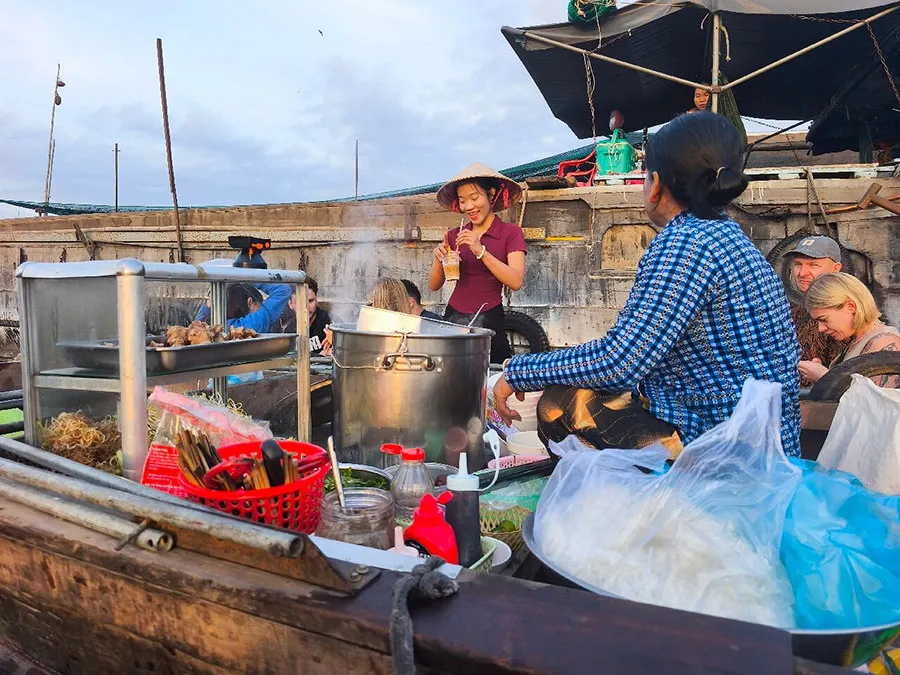
Small food boats may serve Vietnamese breakfast dishes such as hu tieu and noodle soup, while other vendors offer coffee, drinks and fresh fruit.
There is something particularly enjoyable about eating a hot breakfast while your boat gently moves on the river.
Around you, traders continue working, engines start and stop, and other boats pass only a short distance away.
Fresh pineapple is another favorite when available. Fruit is deeply connected to the agricultural identity of the Mekong Delta, so trying it directly on the river feels more appropriate than arriving with breakfast already eaten at your hotel.
Local Tip: Save Breakfast for the River
Unless you need something immediately after waking up, consider having only a small snack before departure.
Breakfast becomes part of the Cai Rang experience rather than simply another meal during the day.
How Long Do You Need at Cai Rang Floating Market?
Allow approximately two to three hours for the overall morning experience, including the journey from central Can Tho, time around the market and breakfast.
You do not need to spend the entire morning circling the same trading boats.
After exploring the main market area, consider continuing into smaller waterways or combining the trip with another local experience.
This creates a much more complete picture of Can Tho than simply photographing the floating market and immediately returning to your hotel.
How to Avoid the Crowds at Cai Rang Floating Market
Trying to avoid tourists by arriving very late can backfire because you may also miss the market.
A better strategy is to travel differently.
Stay Overnight in Can Tho
This is probably the single most useful decision you can make.
You can depart before many larger sightseeing groups arrive without having to travel overnight from Ho Chi Minh City.
Choose a Smaller Boat
A small boat often feels more intimate and gives you a lower perspective closer to the water.
It may also make it easier to observe everyday interactions around the market.
Do Not Stop at the Main Trading Area
Continue into the surrounding waterways if your itinerary allows.
The further you move from the most photographed section, the more you begin noticing riverside homes, smaller boats and everyday life beyond the attraction itself.
Respect the People Working Here
A vendor carrying fruit is not automatically posing for a photograph.
Ask before taking close portraits when possible, avoid blocking working boats and remember that local people are conducting business while you are sightseeing.
For travelers who prefer quieter villages and countryside rather than famous attractions, our authentic Mekong Delta experience explores a less-touristy side of the region.
Can You Visit Cai Rang Floating Market Without a Tour?
Yes. Cai Rang Floating Market can be visited independently.
Travelers can stay in Can Tho and arrange a local boat without joining a complete organized tour.
This works particularly well if you enjoy independent travel and mainly want to observe the market, eat breakfast and take photographs.
However, a guided visit provides something transportation alone cannot: context.
You may see a boat displaying pineapples from a tall pole, for example, but without an explanation you might not understand why the fruit is hanging there.
Neither approach is automatically better.
Choose an independent trip for flexibility and simplicity. Choose a knowledgeable guide if learning about the market’s history, commerce and river culture is an important part of your visit.
Is Cai Rang Floating Market Touristy?
Yes, Cai Rang is famous and attracts tourists. Pretending otherwise would create the wrong expectation.
But touristy does not necessarily mean inauthentic.
The market is connected to a real tradition of river commerce, even though the scale and nature of trading have changed as roads, bridges and modern distribution systems have developed across the Delta.
The best approach is not to search for an imaginary version of Cai Rang untouched by tourism.
Instead, observe how traditional river commerce and modern tourism now exist in the same place. That change is itself part of contemporary Mekong Delta life.
Is Cai Rang Floating Market Worth Visiting?
Yes, especially if you stay overnight in Can Tho and visit early.
Cai Rang is worthwhile for travelers interested in local food, river culture, photography and understanding how communities developed around the Mekong’s waterways.
It may be less impressive for someone expecting an enormous floating spectacle created specifically for tourists.
The attraction is in the details: breakfast passing between boats, fruit stacked above the waterline, traders navigating the river and Can Tho slowly becoming brighter as the sun rises.
Approach it as a living cultural experience rather than a checklist attraction and the morning becomes much more rewarding.
Cai Rang Floating Market vs Cai Be Floating Market
Cai Rang and Cai Be are often mentioned together, but travelers should understand that they offer different experiences today.
Cai Rang Floating Market is in Can Tho and remains the stronger choice if seeing an active early-morning floating-market environment is your main priority.
Cai Be, located closer to Ho Chi Minh City in Tien Giang Province, was historically famous for floating trade, but traditional market activity has declined considerably.
The surrounding Cai Be region is still worth exploring for its waterways, orchards, villages and slower countryside atmosphere.
So the decision is straightforward:
Choose Cai Rang if the floating market itself is the priority.
Choose Cai Be and nearby areas if you want countryside, canals and village life within an itinerary that is easier to combine with Ho Chi Minh City.
For a wider comparison, read our guide to the best floating markets in the Mekong Delta.
What Else Should You Do in Can Tho?
Do not travel all the way to Can Tho, spend 60 minutes at Cai Rang and immediately leave.
The city deserves more time.
After your floating-market trip, explore Ninh Kieu Wharf, sample local Mekong cuisine or continue through smaller waterways and fruit-growing areas around Can Tho.
Binh Thuy Ancient House is another well-known cultural attraction for travelers interested in the city’s architecture and history.
Even spending the previous evening in Can Tho makes the trip feel different. Walk along the riverfront, have dinner locally and then wake early for Cai Rang rather than treating the city as nothing more than a departure point.
Practical Tips Before Visiting Cai Rang Floating Market
Wear lightweight, comfortable clothing. Temperatures can rise quickly once the sun appears.
Bring sunscreen, a hat and some Vietnamese cash in smaller denominations for breakfast, coffee, fruit or other purchases.
Keep your phone and camera secure. A waterproof pouch is particularly useful during wetter months or when traveling on a smaller open boat.
Wear the provided life jacket while your boat is moving and follow instructions from your boat operator.
Avoid bringing unnecessary luggage. Space can be limited on smaller boats, and a large backpack makes getting on and off more awkward.
Finally, bring curiosity rather than a checklist.
Some of the best moments may have nothing to do with a famous photo location. They may come from watching breakfast being prepared on a tiny boat or seeing how naturally local residents move through an environment that feels completely unfamiliar to you.
Should You Stay Overnight in Can Tho?
If Cai Rang is a priority, staying overnight in Can Tho is highly recommended.
It removes the pressure of traveling from Ho Chi Minh City before dawn and allows you to reach the river when the market is most active.
More importantly, it lets you slow down.
You can explore Can Tho the previous evening, sleep nearby, visit Cai Rang around sunrise and then continue into the countryside rather than immediately beginning another long road journey.
Travelers with two or three days available can go even deeper into the region, experiencing how landscapes and local lifestyles change between Can Tho, Ben Tre and other parts of the Delta.
Explore the Mekong Delta Beyond Cai Rang
Cai Rang represents only one part of the Mekong Delta.
Travel farther and wide rivers become narrow coconut-lined canals. Busy urban waterways give way to orchards, farming communities, family workshops and small villages where agriculture continues to shape everyday routines.
If you have limited time from Ho Chi Minh City, a Mekong Delta day tour can provide an introduction to My Tho, Ben Tre and the region’s smaller waterways.
If Cai Rang itself is your priority, however, do not force it into the wrong itinerary.
Spend the night in Can Tho. Wake up before sunrise. Have breakfast on the river. Then give yourself enough time to discover what exists beyond the market.
That slower approach is often what makes the Mekong Delta memorable.
Is Cai Rang Floating Market Still Worth Visiting in 2026?
Yes. Cai Rang Floating Market is still worth visiting in 2026, especially for first-time visitors to Can Tho.
The market has changed over time, but travelers can still see trading boats, breakfast vendors, coffee sellers and daily river activity. For the best experience, arrive around 5:30–7:00 AM, when the market is most active.
Cai Rang is especially worthwhile for travelers interested in local culture, photography and Mekong Delta river life. Just do not expect a huge floating market designed only for tourists.
If you only have one morning in Can Tho, Cai Rang is the better choice than Phong Dien, where floating-market activity is now much more limited.
Frequently Asked Questions About Cai Rang Floating Market
What time does Cai Rang Floating Market open?
Activity begins very early, from around 4:00 AM, although visitors do not necessarily need to arrive that early. Approximately 5:30–7:00 AM is a more practical window for most travelers.
What is the best time to visit Cai Rang Floating Market?
Aim to arrive around 5:30–6:30 AM. This gives you a good chance of seeing active trading while enjoying enough daylight for sightseeing and photography.
How do I get to Cai Rang Floating Market?
Travelers staying in Can Tho commonly reach the market by boat, with the Ninh Kieu area serving as a convenient departure point. The journey commonly takes around 30 minutes depending on your boat and starting location.
Can I visit Cai Rang Floating Market without a tour?
Yes. You can stay in Can Tho and arrange a local boat independently. A guided experience is more suitable if you want detailed explanations about the market and Mekong river culture.
How long should I spend at Cai Rang Floating Market?
Plan roughly two to three hours for the entire experience, including transportation from central Can Tho, time at the market and breakfast.
Is Cai Rang Floating Market worth visiting in 2026?
Yes. It remains one of Can Tho’s most recognizable cultural experiences, particularly for travelers interested in river life, local commerce, food and photography.
Should I stay in Can Tho before visiting Cai Rang?
Yes, if your itinerary allows. Staying overnight makes it much easier to reach Cai Rang around sunrise without making an exhausting overnight journey from Ho Chi Minh City.
Discover the Mekong Delta With Saigon Adventure
Cai Rang Floating Market is most memorable when you stop treating it as a single attraction and start seeing it as part of a much larger river culture.
Watch how vendors work. Try breakfast from a small boat. Notice the produce arriving from surrounding agricultural areas and the constant movement that connects communities along the river.
Then keep exploring.
From the early-morning waterways of Can Tho to coconut-lined canals and farming villages farther across southern Vietnam, every part of the Delta reveals a slightly different side of life along the Mekong.
Explore our Mekong Delta tours and find the experience that best fits your Vietnam itinerary.
Explore our best-selling tours
 Bestseller
Cu Chi Tunnels & Mekong Delta 1-Day Tour from Ho Chi Minh City
EXCURSION HIGHLIGHTS: AT CU CHI TUNNELS Watch Documentary Video (Only Showed In This Place) Experience The Thrill Of Crawling Into...
 Bestseller
Mekong Delta Tour
The Mekong Delta is celebrated as one of the world's most vital biological wonders and a premier cultural destination in...
 Bestseller
A Less-Touristy Mekong Delta Day Trip to Ben Tre
Delta Tour 1 Day from Ho Chi Minh City, exploring the peaceful waterways and coconut villages of Ben Tre. This...
 Bestseller
Mekong Delta Tour by Luxury Speed Boat
OVERVIEW Hotel pickup: From 8:00 AM in District 1 Tour duration: Approximately 8 hours Group size: Maximum 12 guests Price:...
 Bestseller
Mekong Delta 2 Days Tour – Floating Market Group Tour
Cai Rang floating market – one of the largest floating market in the Mekong Delta is a rare sight in...
 Bestseller
3-Day Mekong Delta Private Tour – 3 Days 2 Nights
Tourists often choose to explore and experience this unique floating market by boat when participating in tours exploring the Mekong...
 Bestseller
Mekong Delta One Day Group Tour
ABOUT THIS MEKONG DELTA TOUR Departure: 8:00 AM Drop off time: 5:30 PM to 6:30 PM Small group travel experience...
 Bestseller
12-Hour Cai Rang Floating Market & My Tho Tour From Saigon
ABOUT THIS TOUR Discover the Cai Rang floating market, a colorful, buzzing market with hundreds of boat vendors selling fruits,...
 Bestseller
Can Tho: Floating Market & Garden Life in the Delta
FLOARING MARKET TOUR Note: This tour pick up and drop off in Can Tho only The Ultimate Can Tho Floating...

Private Car Rental Services
Why you should choose car rental with Saigon Adventure ? We understand that make plan your trip, you wish your...

2 DAYS MEKONG DELTA FLOATING MARKET – CAN THO – RACH GIA
Join Saigon Adventure for our exclusive 2-Day tour, highly recommended among the best Mekong Delta tours for travelers who want...

2 Days Mekong Delta Homestay
Looking for an authentic Mekong Delta Homestay experience? Keep your travel plan flexible - book your spot now and pay...