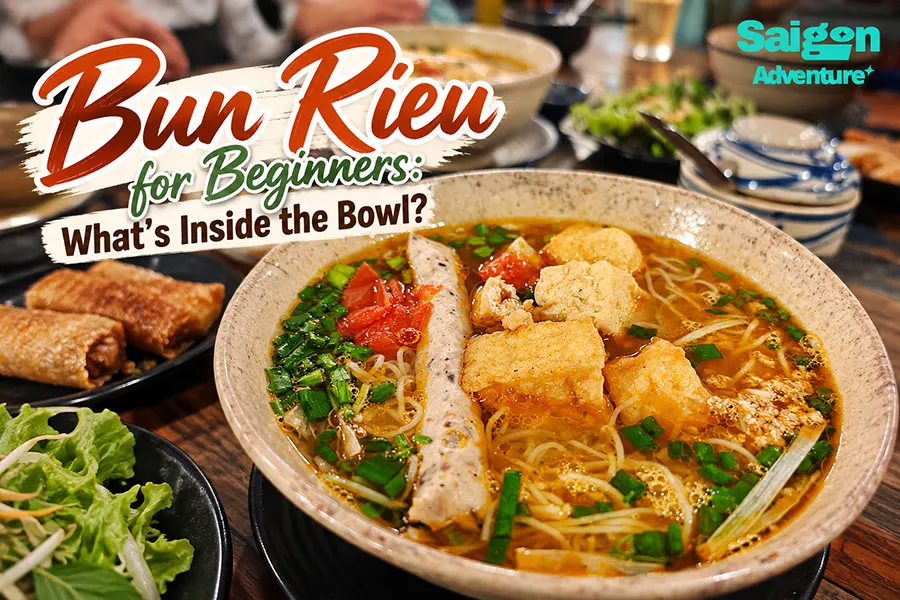
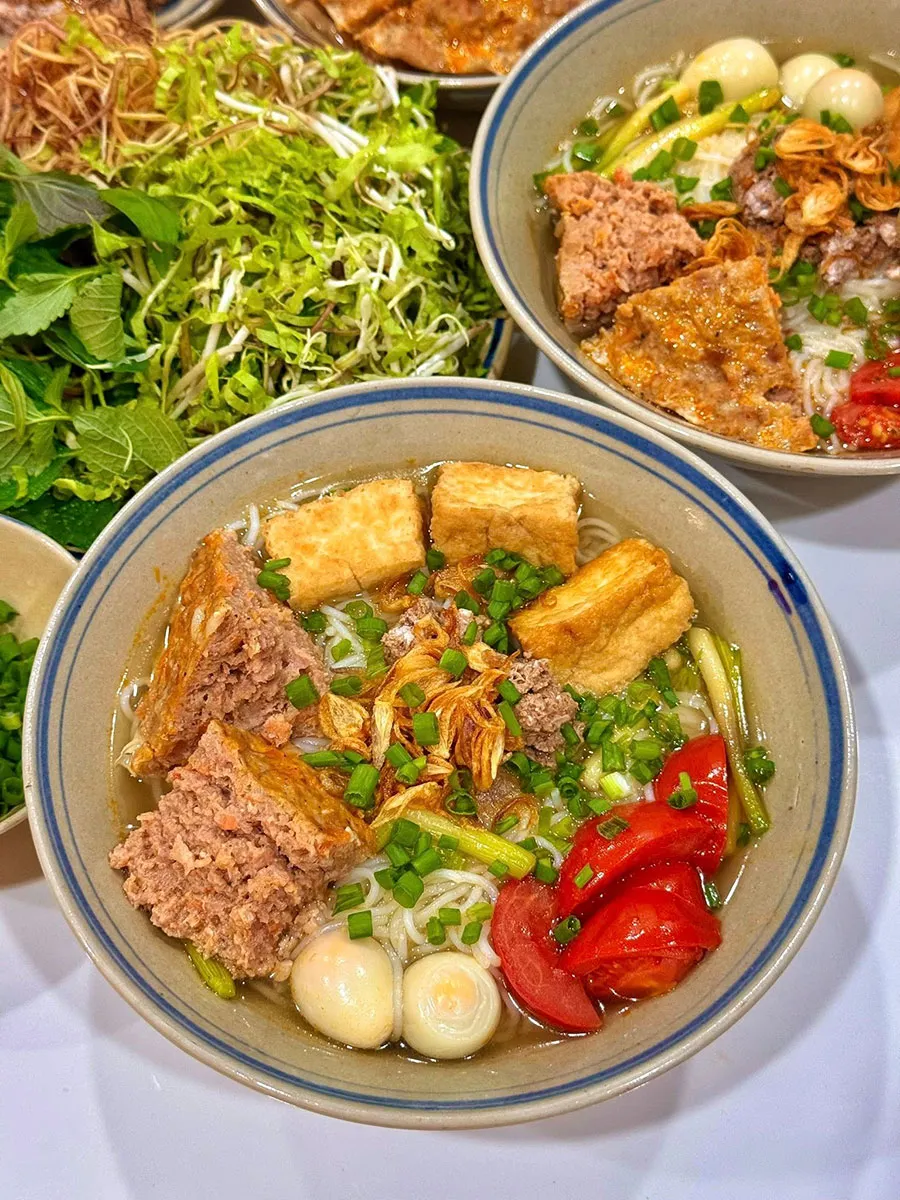
At first glance, a bowl of bún riêu can look confusing. There are noodles, tomatoes, herbs, tofu, pieces of crab mixture and sometimes several toppings that first-time visitors may not immediately recognize.
This Bun Rieu for Beginners guide makes the dish much easier to understand. Bún riêu is a Vietnamese rice-vermicelli noodle soup best known for its tangy tomato broth and savory crab-based riêu, with ingredients and toppings varying from one cook and region to another.
If you enjoy discovering Vietnamese food beyond phở and bánh mì, this is one bowl worth learning about before you order.
What Is Bun Rieu? A Quick Answer for First-Time Travelers
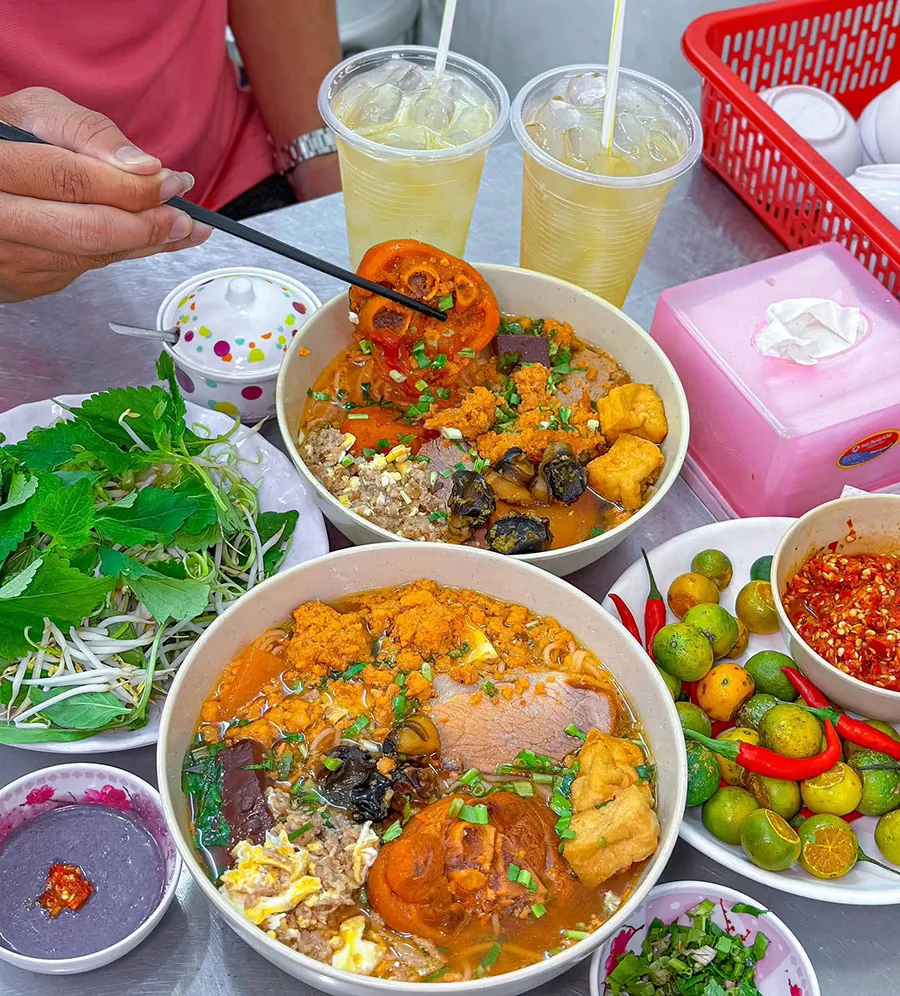
Bún riêu is a Vietnamese noodle soup made with rice vermicelli, a tomato-forward broth and savory clusters traditionally associated with freshwater crab. Depending on the restaurant, the bowl may also contain fried tofu, pork, Vietnamese sausage, congealed pork blood, snails or other toppings.
The flavor is usually savory, slightly tangy and full of umami rather than intensely spicy. Fresh herbs and vegetables served alongside the soup add freshness and texture.
The dish has roots in northern Vietnamese cooking, but today you will encounter many regional and individual variations throughout Vietnam.
For travelers exploring the wider Ho Chi Minh City street food scene, bún riêu is particularly interesting because it feels familiar enough to approach while offering flavors very different from the Vietnamese noodle soups most visitors already know.
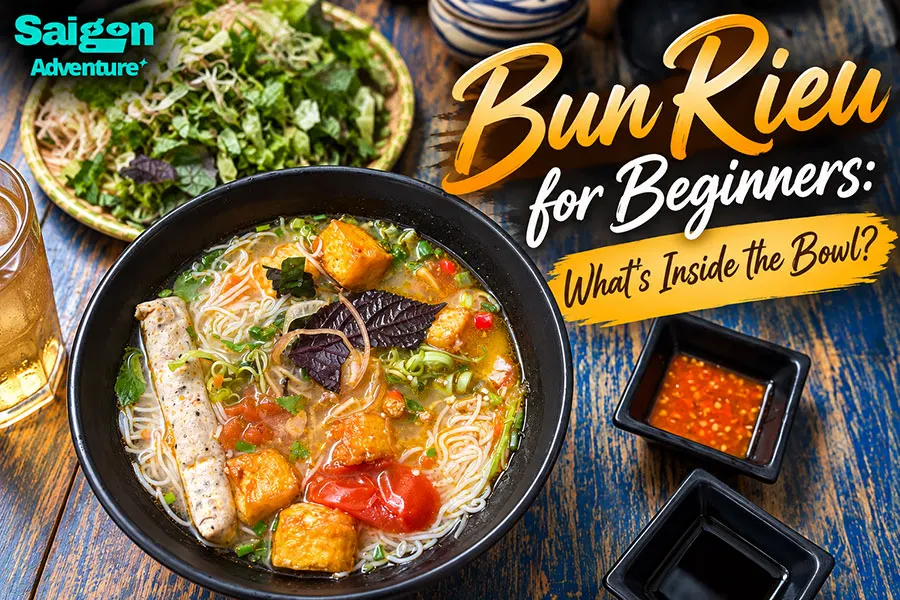
What Is Inside a Bowl of Bun Rieu?
No two bowls are exactly alike, but understanding a few core components makes ordering much easier.
| Component | What to expect |
|---|---|
| Bún | Soft rice vermicelli noodles |
| Broth | Savory broth with tomatoes and seasonings |
| Riêu | Soft crab-based savory clusters |
| Tomatoes | Adds acidity, sweetness and color |
| Fried tofu | Spongy pieces that absorb the broth |
| Herbs and vegetables | Fresh greens served in or beside the bowl |
| Optional toppings | Pork, sausage, snails, blood cubes or other regional additions |
Think of these as the building blocks rather than a fixed recipe. Family kitchens, street vendors and restaurants often have their own version.
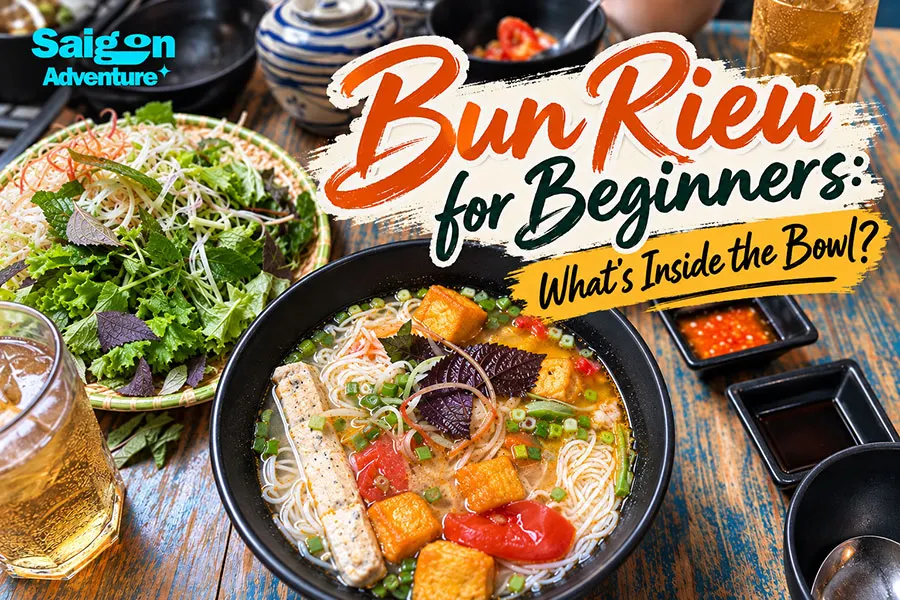
What Exactly Is the “Rieu” in Bun Rieu?
The riêu is the part that often attracts the most questions.
Traditional preparations can use freshwater crab that is processed so its flavorful solids form delicate clusters as the soup cooks. Modern restaurant versions may combine crab or crab paste with ingredients such as egg, minced pork or other seasonings, so texture and composition vary considerably.
Rather than expecting a firm crab cake, imagine something softer and more delicate.
If you have an allergy or dietary restriction, do not assume every restaurant makes its riêu the same way. Ask what it contains before ordering.
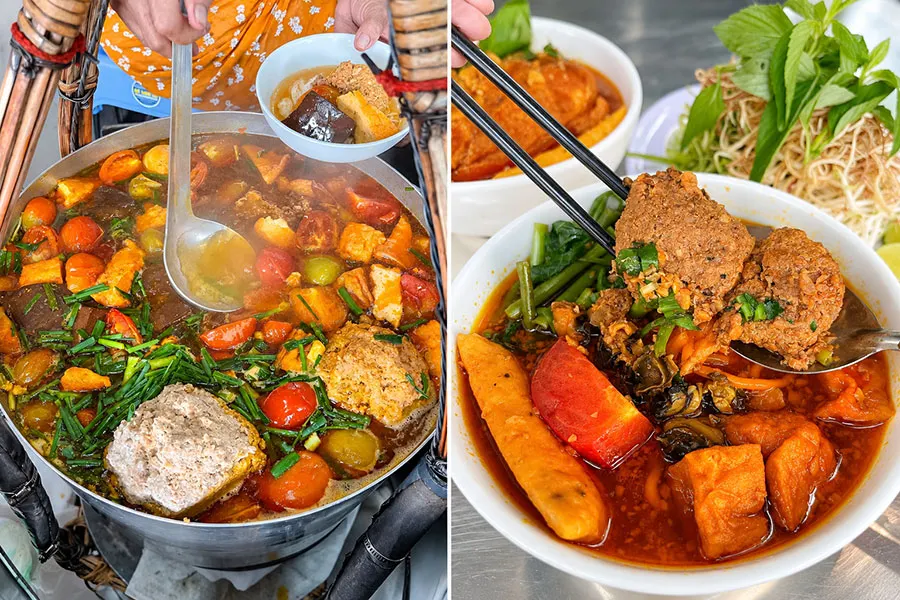
Why Are There Tomatoes in Bun Rieu?
Tomatoes are one of the easiest visual clues that distinguish bún riêu from many other Vietnamese noodle soups.
They contribute gentle acidity, sweetness and color to the broth. Depending on the recipe, annatto-colored oil or other ingredients may also deepen the characteristic orange-red appearance.
The result is not meant to taste like tomato soup. The tomatoes work together with seafood, fermented seasonings and the broth to create a more layered flavor.
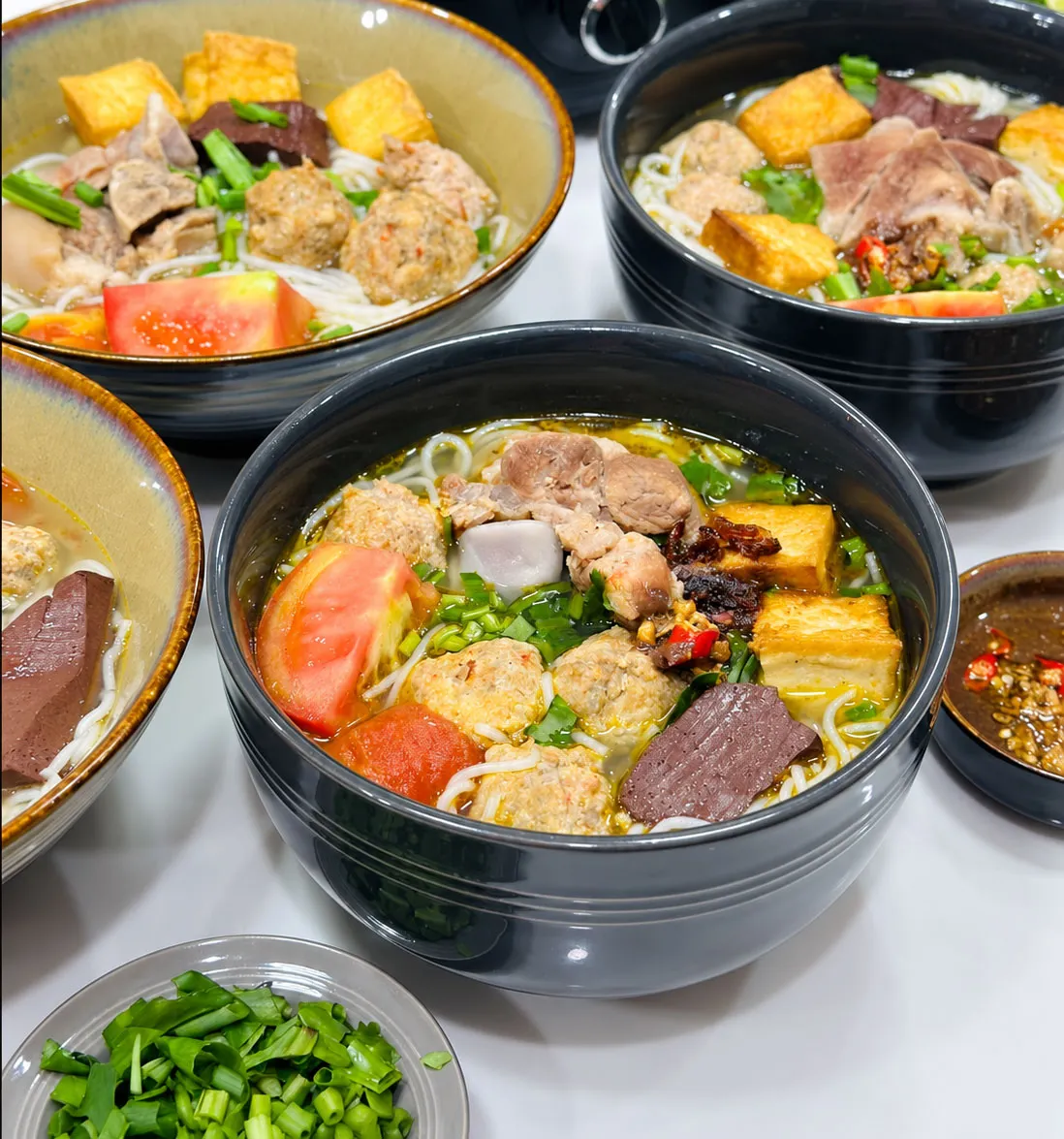
Why Is Fried Tofu So Good in Bun Rieu?
Fried tofu may seem like a small addition, but it works especially well in soup.
Its slightly porous surface absorbs the broth while the center stays soft. After sitting in the bowl for a few minutes, each piece carries much more flavor than it appears to at first.
Southern Vietnamese versions commonly include tofu and a wider selection of toppings, although what you receive still depends on the vendor.
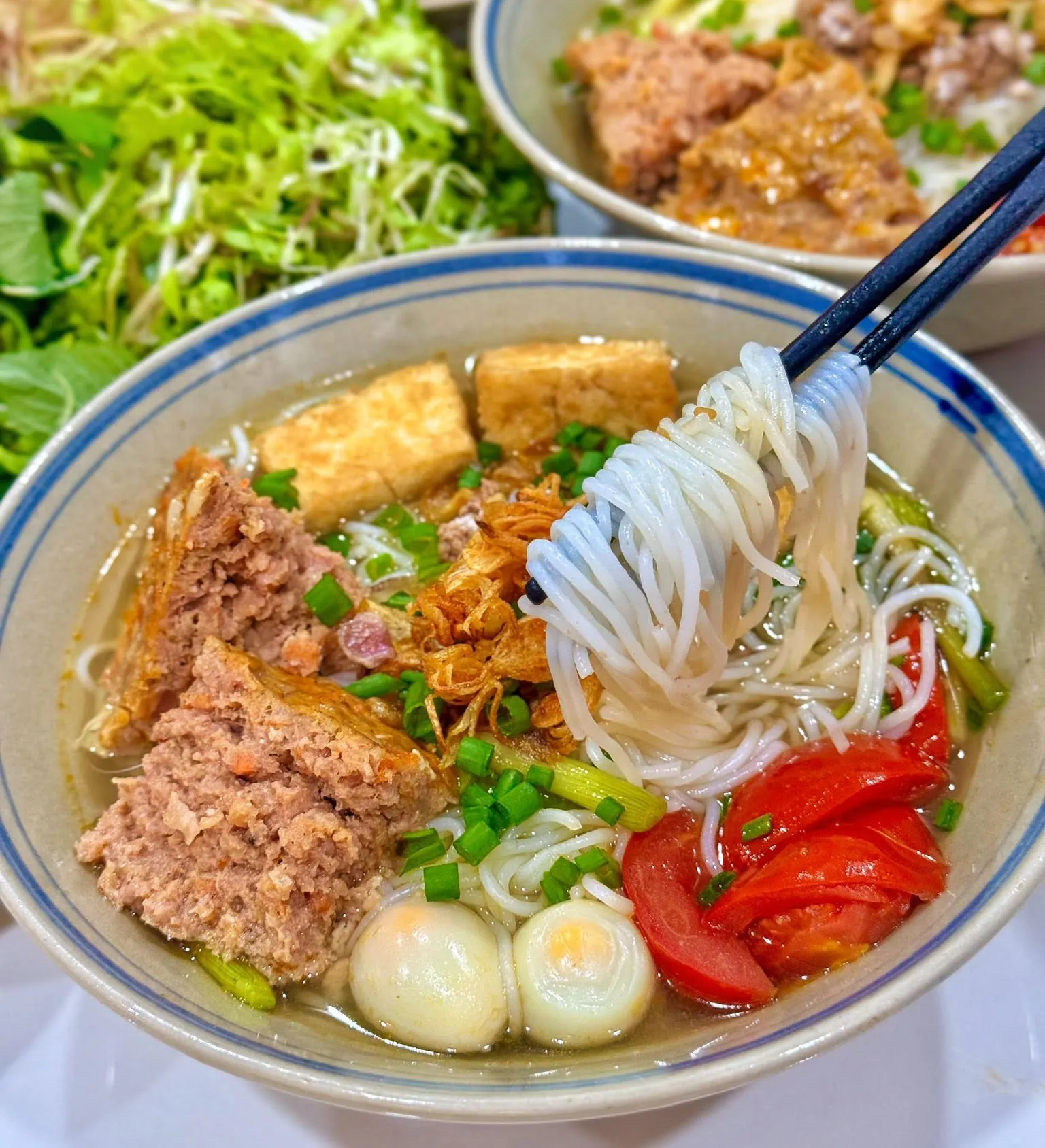
What Does Bun Rieu Taste Like?
For a first-time visitor, the easiest description is savory, tangy, slightly sweet and deeply umami.
Tomatoes provide brightness, crab brings seafood character, and fermented seasonings can add another layer of depth. Fresh herbs keep the soup from feeling too heavy.
Bún riêu is usually not automatically very spicy. Chili can often be added according to your preference, making the dish fairly approachable for travelers who do not enjoy strong heat.
Local Tip: Taste the broth before adding chili, lime or extra condiments. The first few spoonfuls help you understand the cook’s original balance.
Bun Rieu vs Pho: What Is the Difference?
Although both are Vietnamese noodle soups, the experience is quite different.
| Bun Rieu | Pho |
|---|---|
| Uses rice vermicelli | Uses flat rice noodles |
| Tomato-forward, tangy broth | Aromatic clear broth |
| Crab-style riêu is distinctive | Usually centered on beef or chicken |
| Often served with tofu and mixed toppings | Usually more focused on sliced meat |
| Bright, savory and slightly acidic | Fragrant, warming and aromatic |
If phở feels smooth and aromatic, bún riêu often feels brighter and more textured.
Travelers trying to move beyond Vietnam’s most famous dishes can also explore where locals eat in Ho Chi Minh City rather than limiting themselves to restaurants around major tourist attractions.
Hanoi Bun Rieu vs Saigon Bun Rieu
One reason travelers receive different answers when asking what belongs in bún riêu is regional variation.
Northern versions are often presented more simply, allowing the crab and broth to remain central. Southern bowls can become more elaborate, with tofu, pork products, vegetables and other toppings appearing more frequently.
Neither style should be treated as the only “correct” bún riêu. Vietnamese dishes often change between regions, families and individual vendors.
Which Style Is Better for Beginners?
There is no objective winner.
Travelers who prefer cleaner, simpler bowls may enjoy a less elaborate northern style. Visitors who love trying multiple textures and toppings in one meal may find a Saigon-style bowl more exciting.
Trying the dish in more than one city is the best comparison because the difference becomes much clearer when you actually taste it.
How Do You Eat Bun Rieu Like a Local?
You do not need a complicated technique.
Start by tasting the broth, then mix the noodles and toppings gently with your chopsticks. Use your spoon for broth and smaller ingredients while chopsticks handle noodles, tofu and larger toppings.
Fresh greens may arrive separately. Add a little at a time rather than putting everything into the bowl immediately.
Should You Add Mam Tom to Bun Rieu?
Mắm tôm, fermented shrimp paste, has a strong aroma and concentrated salty-savory flavor.
Some bún riêu preparations use it during cooking, while additional shrimp paste may be available at the table depending on the restaurant.
For beginners, try the broth first. If you decide to add extra mắm tôm, start with a very small amount because it can quickly dominate the bowl.
What Should Travelers Ask Before Ordering Bun Rieu?
Bún riêu is not a dish where you should identify dietary suitability simply by looking at the visible toppings.
The broth and riêu mixture may contain seafood, fish sauce, fermented shrimp paste, pork or other ingredients even when they are not obvious.
If you have allergies or strict dietary restrictions, ask specifically about:
- Crab and shellfish
- Shrimp or fermented shrimp paste
- Pork
- Fish sauce
- Blood cubes
- Meat-based broth
- Other ingredients mixed into the riêu
Vegetarian versions called bún riêu chay do exist, but ingredients still vary between restaurants.
For visitors who want help understanding unfamiliar foods instead of guessing at a menu, a guided Saigon street food tour can make local dining much easier.
How Much Does Bun Rieu Cost in Vietnam?
Bún riêu is generally an affordable everyday meal, particularly at street stalls and small local eateries.
Prices vary according to city, neighborhood, restaurant style, bowl size and additional toppings. A 2026 Vietnam Tourism guide cites roughly 30,000–60,000 VND for a street-stall bowl, although travelers should treat this as a general reference rather than a fixed national price.
A bowl with extra crab, snails or premium toppings can cost more.
Local Tip: Check whether the displayed price refers to a standard bowl or a special version with additional toppings before ordering.
When Is the Best Time to Eat Bun Rieu?
There is no single required time.
In some parts of Vietnam, noodle soups are popular breakfast or morning meals. In large cities such as Ho Chi Minh City, you can also find vendors operating around lunch or later in the day.
If you are visiting a small family-run stall, do not assume it stays open all day. Popular vendors sometimes specialize in only one meal period.
For travelers planning an evening around several dishes instead of one full bowl, a walking street food tour in Ho Chi Minh City is another way to experience local neighborhoods without spending the entire night searching for individual food stops.
Where Should First-Time Visitors Try Bun Rieu?
A busy local noodle shop is often a better starting point than choosing a stall purely because it looks adventurous.
Look for steady customer turnover, ingredients handled carefully, hot broth and a clean preparation area. These practical signs matter more than whether a restaurant appears “authentic” in photographs.
Local markets and residential food neighborhoods can also be worthwhile places to explore. If you are staying centrally, this guide to street food in District 1 can help you begin with easily accessible areas before exploring farther into the city.
Is Bun Rieu Worth Trying in Vietnam?
Yes. Bún riêu is especially worth trying if you want to understand Vietnamese noodle culture beyond phở.
Its combination of crab, tomato, rice noodles, herbs and optional toppings creates a flavor profile that is distinctive without being difficult for most adventurous eaters.
It is particularly suited to travelers who enjoy seafood, tangy soups and discovering dishes commonly eaten as part of everyday local life.
You may enjoy it less if you strongly dislike seafood aromas or fermented flavors. In that case, ask about ingredients first and avoid adding extra mắm tôm until you have tasted the broth.
Bun Rieu for Beginners: Your First Bowl Made Simple
Your first bowl of bún riêu does not require knowing every ingredient before sitting down.
Remember the essentials: rice vermicelli, tomato-rich broth, savory riêu, fresh herbs and a collection of toppings that can change dramatically from one cook to another. Taste the broth before adjusting it, ask about unfamiliar ingredients and approach regional differences as part of the experience.
Vietnamese food becomes far more interesting once you move beyond the dishes everyone already knows. When you are ready to explore further, use a local food guide or join a neighborhood food experience and let your next bowl introduce you to another side of Vietnam.
Frequently Asked Questions About Bun Rieu
1. What is bun rieu made of?
Bún riêu typically combines rice vermicelli noodles, a savory tomato-based broth and crab-style riêu. Depending on the region and vendor, it may also include fried tofu, pork, Vietnamese sausage, blood cubes, snails and fresh herbs.
2. Does bun rieu contain crab?
Traditional bún riêu is strongly associated with freshwater crab, but recipes vary. Some restaurants use crab paste or mixtures containing crab, egg, pork or other ingredients, so travelers with shellfish allergies should always ask before ordering.
3. Is bun rieu spicy?
Bún riêu is generally not intensely spicy by default. Its main flavors are savory, tangy and umami-rich. Chili, chili oil or fresh chilies may be added separately, allowing you to control the heat.
4. What is the difference between bun rieu and pho?
Bún riêu uses round rice vermicelli and a tomato-and-crab flavor profile, while phở normally uses flat rice noodles in a fragrant beef- or chicken-based broth. Bún riêu is tangier and often includes more varied toppings.
5. Does bun rieu contain shrimp paste?
Many recipes use fermented shrimp paste for additional depth, but preparation varies between vendors. If you dislike shrimp paste or have a seafood allergy, ask whether mắm tôm is used in the broth or served separately.
6. Can vegetarians eat bun rieu?
Traditional bún riêu is not vegetarian because it can contain crab, shrimp paste, fish sauce, pork or meat broth. However, bún riêu chay is a vegetarian version available at some vegetarian and vegan restaurants.
7. Is bun rieu worth trying for first-time visitors to Vietnam?
Yes. It is an excellent choice for travelers who want to explore Vietnamese noodle soups beyond phở. The tomato-forward broth, soft riêu, tofu, herbs and customizable toppings make it distinctive while still approachable for first-time visitors.