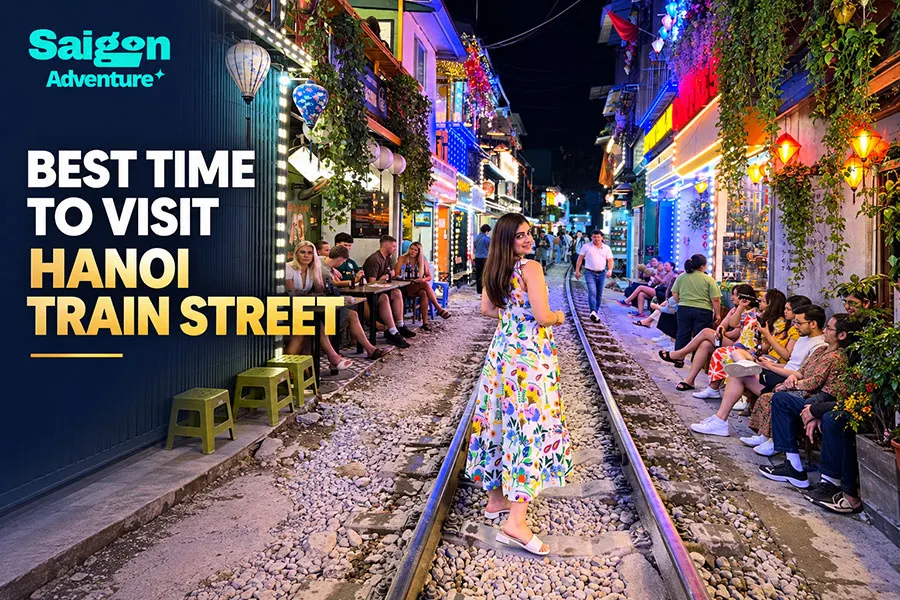
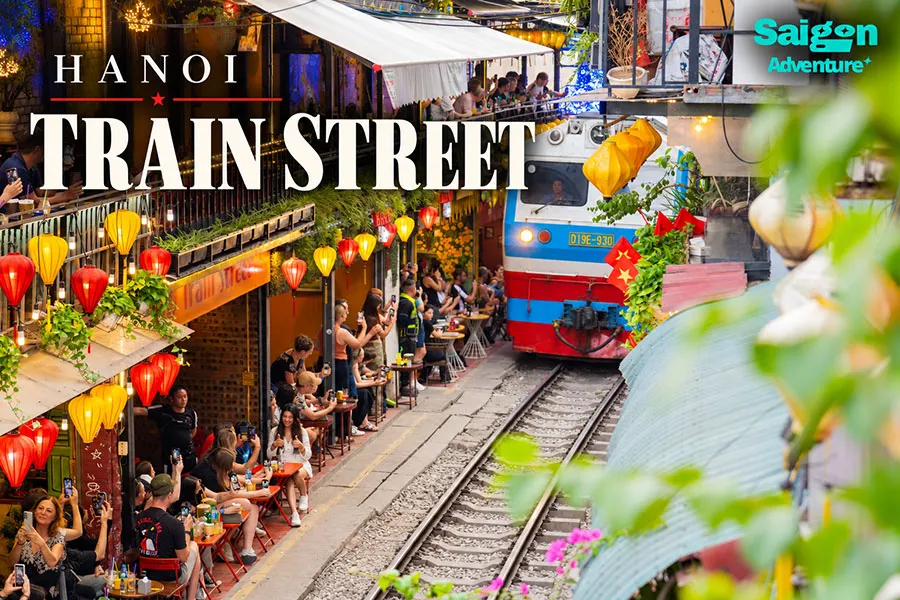
A low horn sounds beyond the houses. Café owners collect stools, visitors press against the walls, and seconds later, a full-size train rolls through a corridor barely wider than its carriages.
The best time to visit Hanoi Train Street is usually on a weekday morning for softer light and fewer people, or in the late afternoon for a livelier atmos
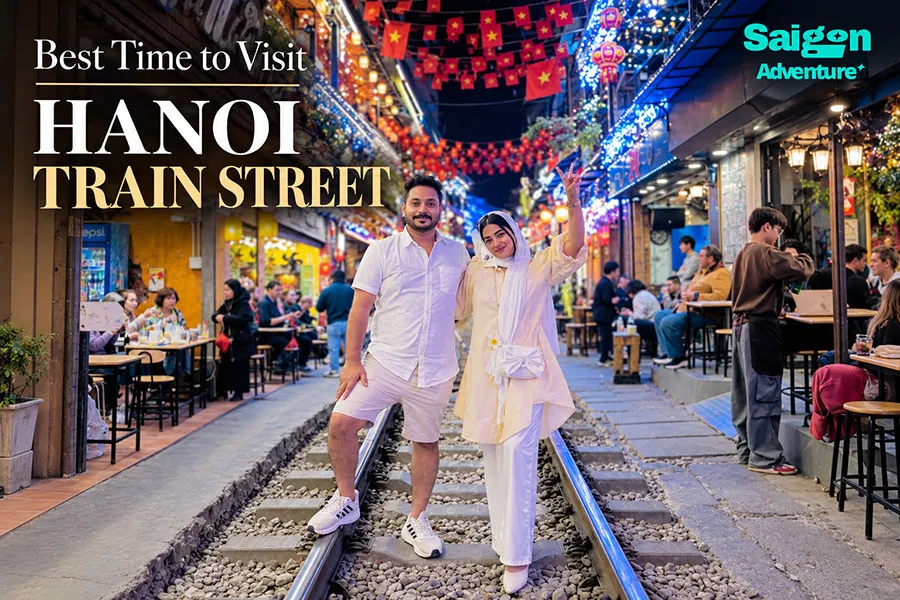
phere. Train times and access conditions change, however, so confirm the schedule locally on the day of your visit rather than planning around an old timetable found online.
Quick Answer: When Should You Visit Hanoi Train Street?
For smaller crowds and comfortable photography, arrive on a weekday between approximately 8:00 a.m. and 10:00 a.m. If seeing a train is your priority, ask your hotel or a café near the railway to confirm that day’s expected passing times, then arrive at least 30–45 minutes early.
Late afternoon offers warmer light and more energy, while evening creates an atmospheric scene of café lights and passing carriages. Weekends are generally busier, particularly around anticipated train arrivals.
| Time | Crowd level | Photography conditions | Best for |
|---|---|---|---|
| Early morning | Low to moderate | Soft light, quieter background | Portraits and relaxed visits |
| Late morning | Moderate | Brighter, harsher light | Flexible sightseeing |
| Late afternoon | High | Warm light and stronger colors | Travel photography |
| Evening | High | Café lights, motion and atmosphere | Night scenes and social visits |
What Is Hanoi Train Street?
Hanoi Train Street is an active railway corridor where the tracks pass within a remarkably narrow space between homes and small businesses. The best-known sections are near Trần Phú and Phùng Hưng streets north of Hanoi Railway Station and around Lê Duẩn to the south.
The railway is part of Hanoi’s living transport infrastructure, not a purpose-built tourist attraction. That distinction matters: residents use the surrounding spaces daily, railway operations take priority, and access can be restricted without advance notice.
The dramatic proximity of the train has made the street famous through travel photography and social media. Yet the experience is not only about capturing a passing locomotive—it also reveals an unusual layer of urban life in central Hanoi.
Visitors planning a wider stay can combine the railway with a Hanoi Old Quarter walking guide rather than treating it as an isolated photo stop.
Is Hanoi Train Street Worth Visiting?
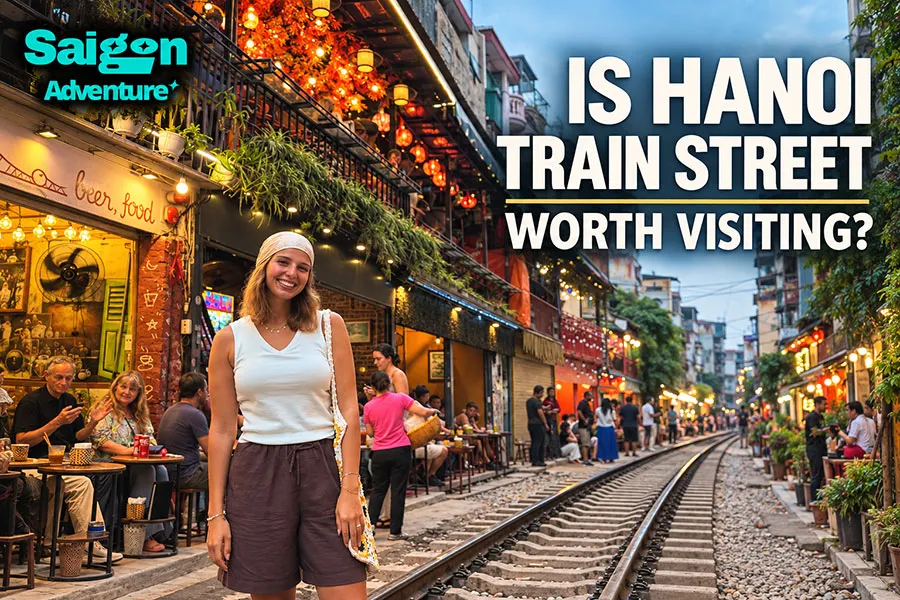
Hanoi Train Street can be worth visiting if you understand what the experience involves. The narrow railway, weathered buildings, daily household life and sudden arrival of a train create a scene unlike most conventional attractions.
It is especially rewarding for first-time visitors, urban photographers and travelers interested in how historic infrastructure exists alongside modern city life. The experience may disappoint anyone expecting unrestricted access, an exact performance time or an empty track for posed photographs.
Reasons to visit
- The setting is visually distinctive and easy to combine with central Hanoi sightseeing.
- A passing train creates a memorable sense of movement, sound and scale.
- The surrounding neighborhood provides context beyond the familiar monuments of Hanoi.
- The experience can fit into a morning or afternoon itinerary without requiring a full day.
Possible drawbacks
- Access restrictions are unpredictable.
- Published train schedules may be outdated.
- Popular viewing areas become crowded.
- Rain, haze or harsh midday sun can affect photography.
- Unsafe behavior by other visitors may make the atmosphere uncomfortable.
For a more detailed assessment before going, read is Hanoi Train Street worth visiting?
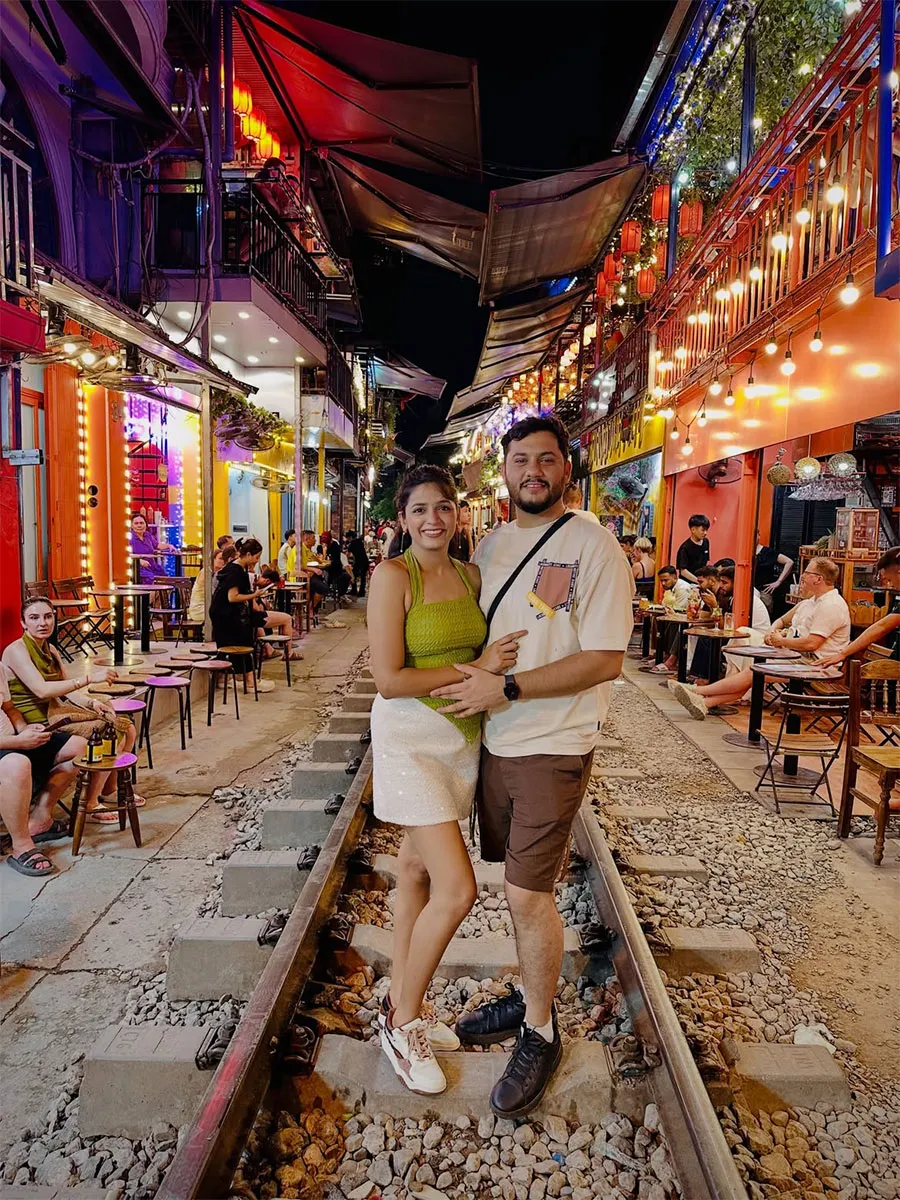
Hanoi Train Street Train Times: What Visitors Need to Know
There is no single permanent tourist timetable for Hanoi Train Street. Passenger and operational schedules may change because of railway adjustments, delays, maintenance or future infrastructure decisions.
Vietnam Airlines notes that trains typically pass several times per day and identifies mid-afternoon and evening as popular viewing periods. These should be treated as general guidance rather than a guarantee. Hanoi has also proposed rerouting services from the central railway corridor, making same-day verification increasingly important.
How to check the train schedule
Use at least two sources before arranging your visit:
- Ask your hotel reception on the morning of your visit.
- Confirm with a responsible café or resident near the railway.
- Check current services at Hanoi Railway Station.
- Look for recent local notices at access points.
- Allow for delays rather than arriving only minutes before the expected train.
If two sources provide different times, assume the schedule is uncertain. Build Train Street into a flexible Old Quarter walk so the trip remains worthwhile even if no train appears.
Local Tip: Arrive 30–45 minutes before the locally confirmed time. This gives you time to understand the viewing area, choose a safe position and prepare your camera without rushing.
Morning or Evening: Which Is Better?
Visit in the morning for fewer crowds
Morning is the strongest option for visitors who value space, cooler temperatures and natural portraits. The street generally feels calmer before tour groups and day-trippers concentrate around popular viewing periods.
Soft morning light can reveal textures in painted walls, balconies, rails and café fronts. It is also more forgiving for photographing people because facial shadows are usually gentler than around midday.
The disadvantage is that there may be fewer convenient train movements, depending on the day’s operations. Never assume that an online morning time remains valid.
Visit in the late afternoon for golden light
Late afternoon often provides the best balance between atmosphere and photography. Lower sunlight can add warmth to the rails and buildings while allowing faster shutter speeds than after dark.
This is also one of the busiest periods. Arrive early, avoid blocking entrances and accept that other travelers will probably appear in wide compositions.
Visit after dark for atmosphere
At night, café lamps, signs and interior lights turn the railway into a more cinematic setting. A moving train can produce striking light trails when photographed with a slow shutter speed.
However, evening photography requires steadier technique and greater awareness. Tripods may obstruct narrow spaces, while phone cameras can struggle with blur, strong headlights and deep shadows.
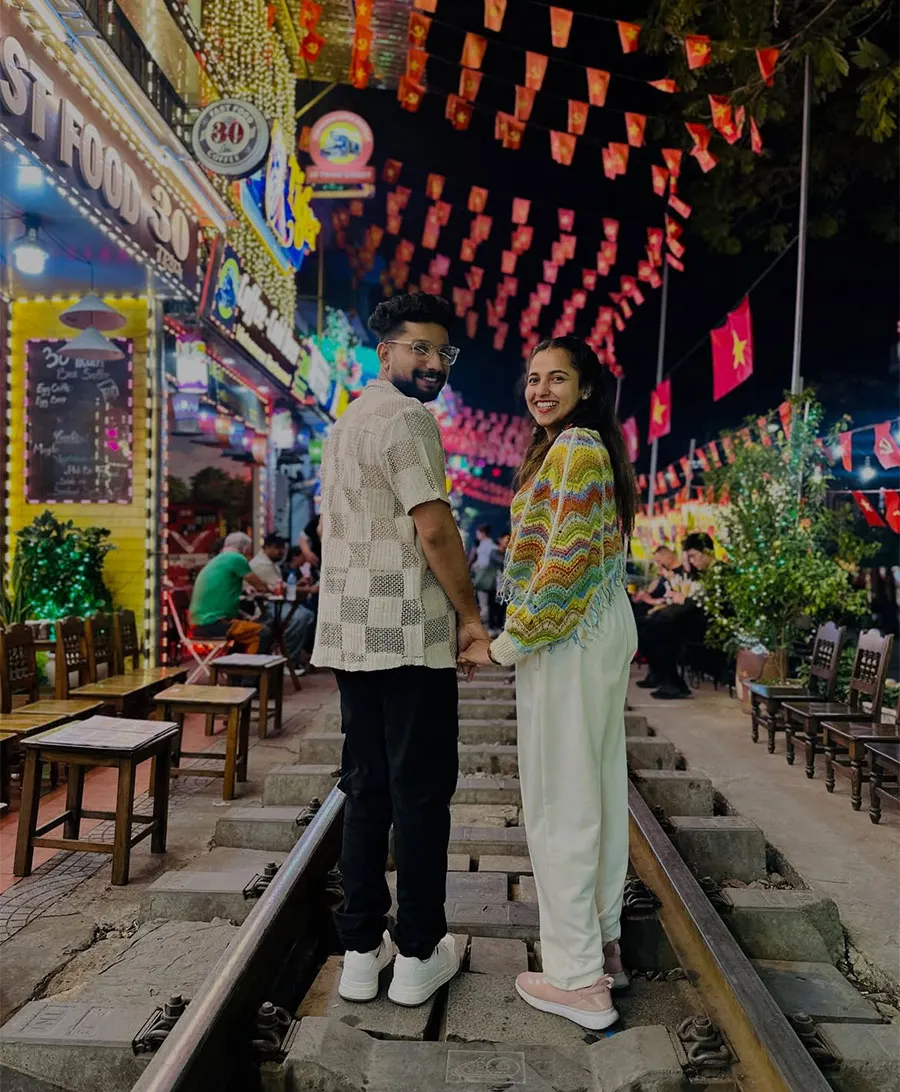
Best Days and Seasons to Visit Hanoi Train Street
Weekdays are usually better than Saturdays and Sundays for avoiding large crowds. Tuesday through Thursday often provide the easiest balance, although holidays and tour-group schedules can change the pattern.
October through April generally brings more comfortable walking conditions than Hanoi’s hot, humid summer. October and November are particularly attractive for outdoor exploration, with milder temperatures and a lower likelihood of intense summer rain.
December through February can be cool, grey or misty. The softer light suits moody street photography, but travelers should bring a light jacket and protect cameras from moisture.
From May through September, expect heat, humidity and sudden rain. Clouds can soften harsh light beautifully, but wet rails, slippery surfaces and thunderstorms make safety more important.
Local Tip: Check the hourly weather forecast, not just the daily icon. A dry 60-minute window may be enough to visit, but never shelter on or beside the tracks during a storm.

Where Should You Go?
Visitors commonly associate Hanoi Train Street with two general areas: the northern section near Trần Phú and Phùng Hưng, and the southern section near Lê Duẩn. Conditions, access control and crowd levels can differ between them.
The northern area is convenient when exploring the Old Quarter and often has a dense café atmosphere. The southern section can offer a different perspective near Hanoi Railway Station, although it is not automatically quieter or more accessible.
Do not climb around a barrier, follow strangers through private property or assume a social-media entry route remains permitted. If officials restrict an entrance, choose another activity and return only when lawful access is available.
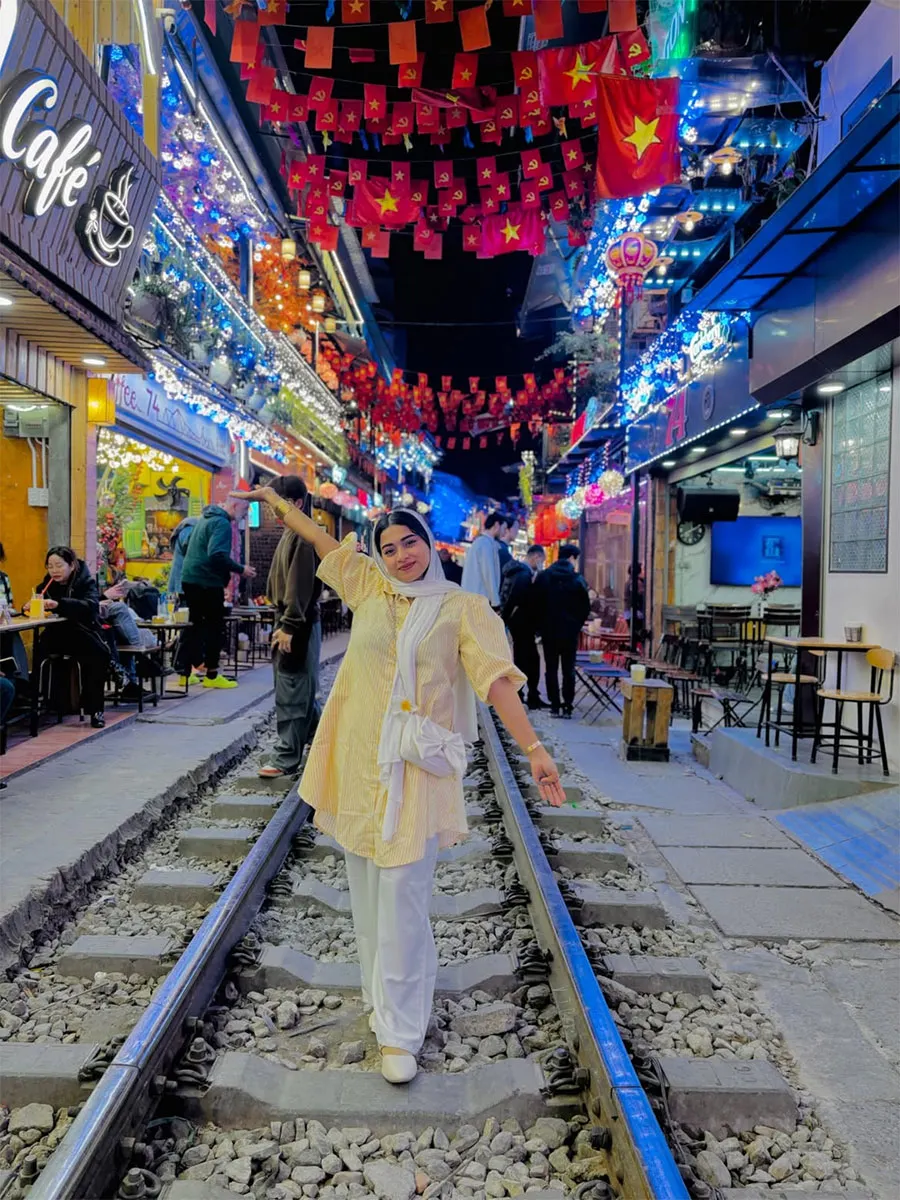
How Much Does Hanoi Train Street Cost?
There is generally no standard public admission ticket specifically for viewing the street. If you sit in a café, you should purchase a drink or food item; prices depend on the establishment, location and order.
A simple drink may commonly cost around VND 30,000–80,000, but this is only a practical budget estimate, not a fixed official price. Check the menu before ordering and carry small Vietnamese đồng notes.
Travelers interested in the neighborhood’s refreshments can continue with this Hanoi Train Street food guide, which should focus on what to eat and drink rather than train schedules.
Photography Tips for Hanoi Train Street
Choose your composition before the train arrives
Study the lines of the rails, balconies and buildings while the track is clear. Decide whether the image should emphasize the train, the narrow architecture or the people watching from a safe position.
A vertical frame works well for portraits and tall façades. A horizontal frame better captures the track’s depth and the relationship between the train and surrounding homes.
Use practical camera settings
For a sharp moving train, begin with a fast shutter speed such as 1/500 second or faster, then adjust ISO and aperture for available light. For controlled motion blur, use a slower speed only from a secure, stationary position.
Phone photographers should activate burst mode before the train arrives. Tap to expose for the train or brightest part of the scene, as headlights and pale skies can easily produce blown highlights.
Photograph more than the train
Some of the best images appear before and after the locomotive passes: stools being moved, shutters opening, light falling across the rails or residents returning to everyday routines.
Always request permission before taking close portraits of residents, café workers or children. Hanoi Train Street is someone’s neighborhood, not an open-air photography set.
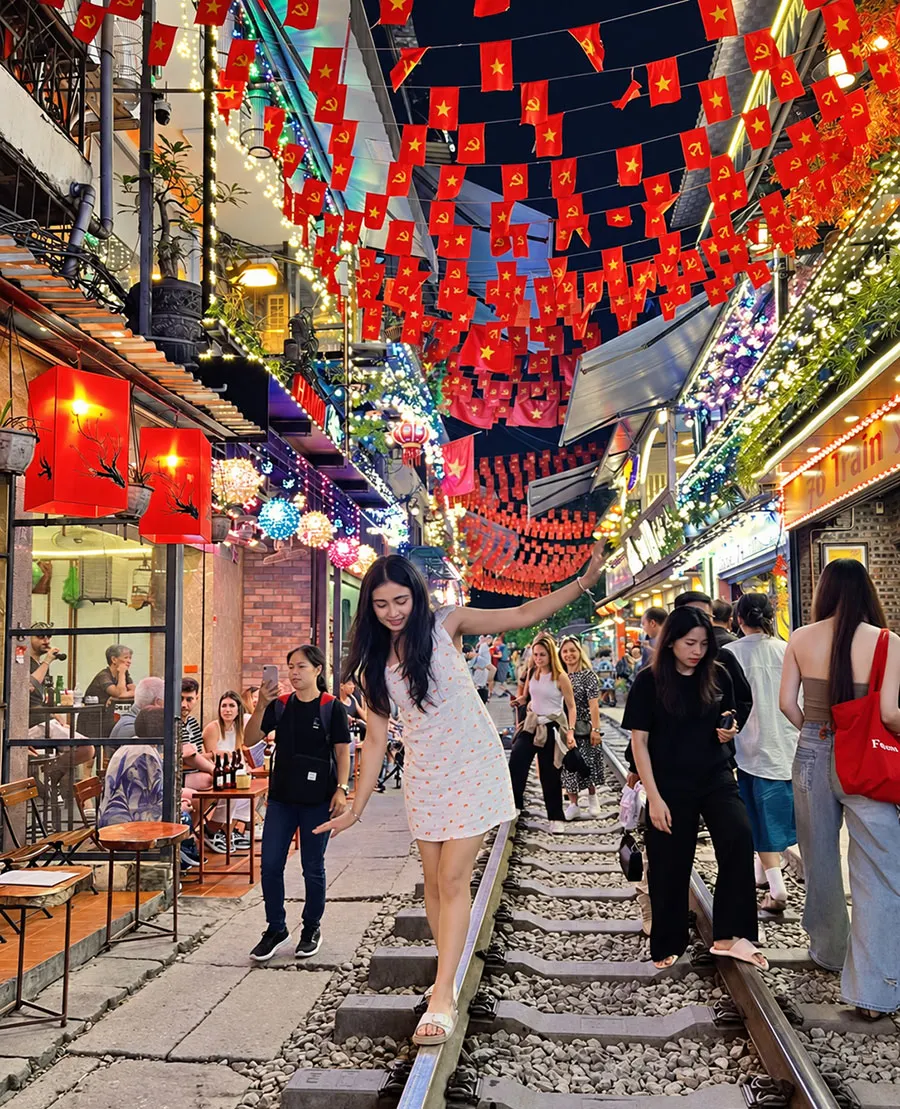
Safety Rules Every Visitor Should Follow
The safest photograph is one taken from the position directed by railway staff, local authorities or responsible café operators. Remain fully clear of the train, keep bags and clothing close to your body, and never reach toward a moving carriage.
Avoid these dangerous behaviors:
- Sitting or lying on the tracks for photographs
- Standing in the railway clearance zone
- Using headphones while waiting
- Leaving a tripod, bag or phone near the rails
- Leaning from balconies or doorways
- Ignoring whistles, barriers or instructions
- Assuming the train will move slowly enough to avoid you
Hold children beside you and keep them away from the track even when no train is expected. The railway remains active between advertised passing times, and unscheduled operational movements may occur.
Who Will Enjoy This Experience Most?
Hanoi Train Street is best suited to curious first-time visitors, responsible photographers, couples, solo travelers and adults comfortable in confined, crowded spaces. It can also suit families if children remain closely supervised.
Travelers with reduced mobility should consider the uneven surfaces, narrow passageways and limited room to move quickly. Anyone sensitive to loud noise may prefer visiting when no train is expected or observing from a greater distance where permitted.
If crowds, unpredictable access or close proximity to heavy machinery cause anxiety, skip the train arrival. A quiet walk around the surrounding streets may provide a more enjoyable experience.
A Simple, Well-Paced Visit Plan
Allow approximately 60–90 minutes if you hope to see a train, including waiting time. Confirm the schedule that morning, arrive early, follow the current access instructions and choose a legitimate viewing position.
Afterward, continue toward the Old Quarter for local food, cafés or historic streets. A guided Hanoi street food experience can add cultural context without making your day depend entirely on an uncertain railway timetable.
Hanoi Train Street is most memorable when approached with patience rather than urgency. Verify the latest conditions, respect the people who live beside the railway and let the photograph come second to a safe, thoughtful experience.
Frequently Asked Questions
What is the best time to visit Hanoi Train Street?
A weekday morning is generally best for smaller crowds and soft natural light. Late afternoon is better for warm colors and a livelier atmosphere. If seeing a train matters most, verify the expected passing time locally that day and arrive 30–45 minutes early.
What time does the train pass Hanoi Train Street?
Passing times vary by weekday, route and railway operations, and online timetables can become outdated. Ask your hotel, check at Hanoi Railway Station and confirm again near the street on the day you visit. Do not treat café boards or travel blogs as guaranteed schedules.
Is Hanoi Train Street open to tourists?
Access can vary between entrances and may be temporarily restricted by authorities for safety reasons. Follow barriers and official instructions rather than attempting to enter through a closed section. A café invitation does not override a police restriction.
Is Hanoi Train Street free to visit?
There is usually no standardized attraction ticket, but cafés expect customers to order something when using their seating areas. Check prices before ordering. Access policies may change independently of café purchases.
Is morning or evening better for photography?
Morning is better for calm scenes, softer portraits and fewer visitors. Late afternoon creates warmer light, while evening provides illuminated cafés and dramatic motion but requires stronger low-light technique.
Can children visit Hanoi Train Street?
Children can visit only with close adult supervision and where access is permitted. Keep them beside you, away from the rails and clear of the train’s path at all times. Families uncomfortable with narrow, crowded spaces should choose another viewpoint or visit without waiting for a train.
How long should I spend at Hanoi Train Street?
Plan for 60–90 minutes if you are waiting for a confirmed train. A shorter 20–30-minute visit is enough to photograph the neighborhood when no train is expected. Keep the rest of your itinerary flexible in case access or railway operations change.