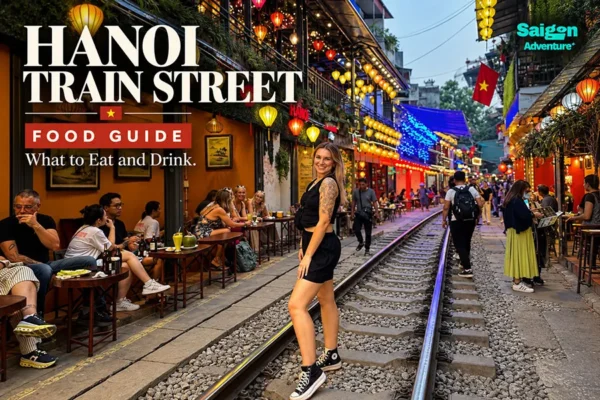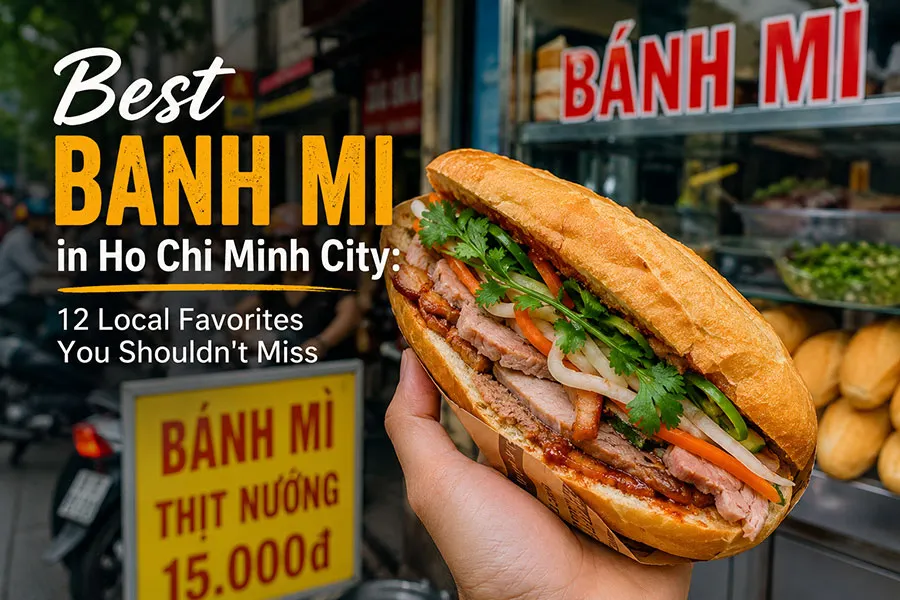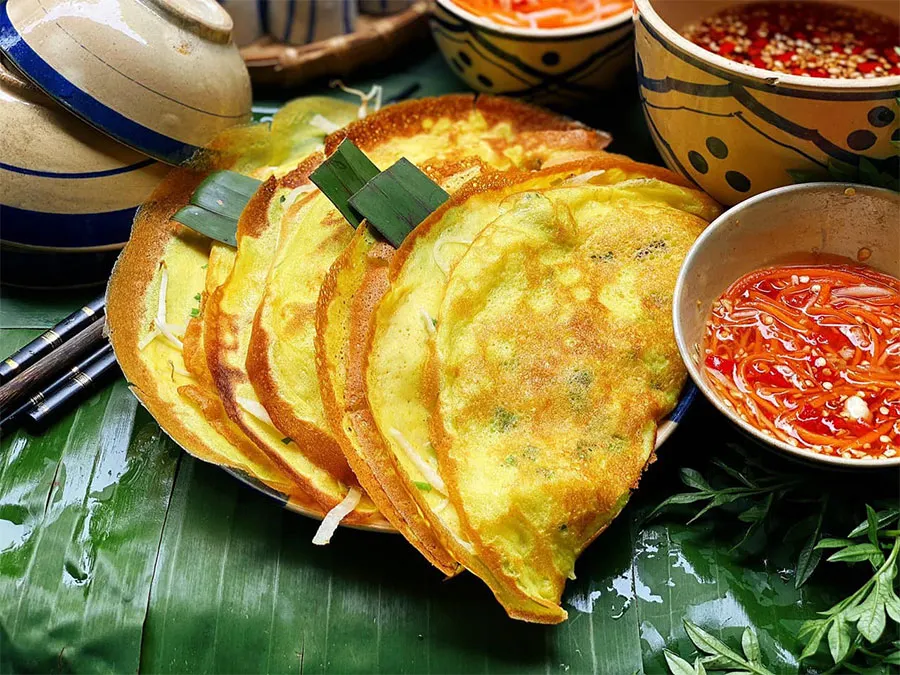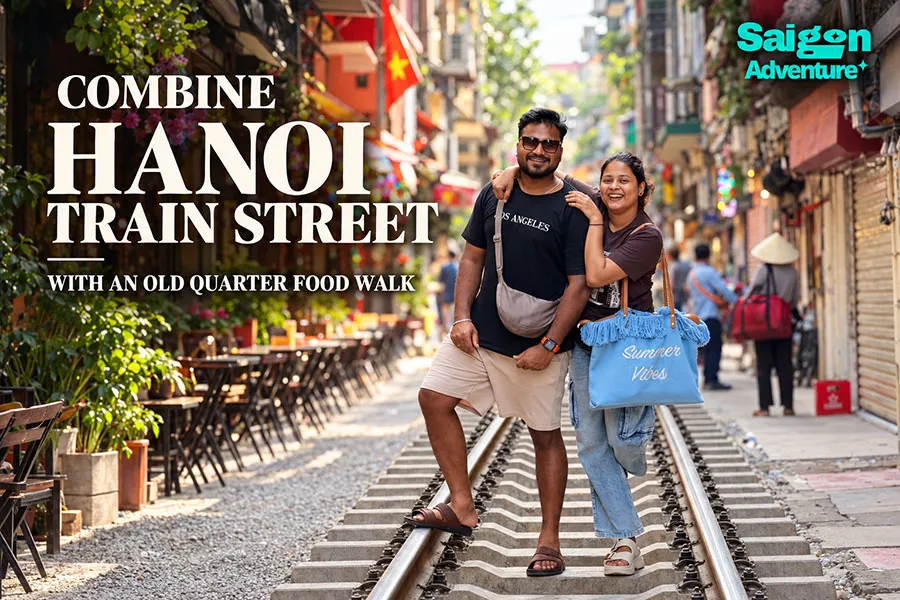
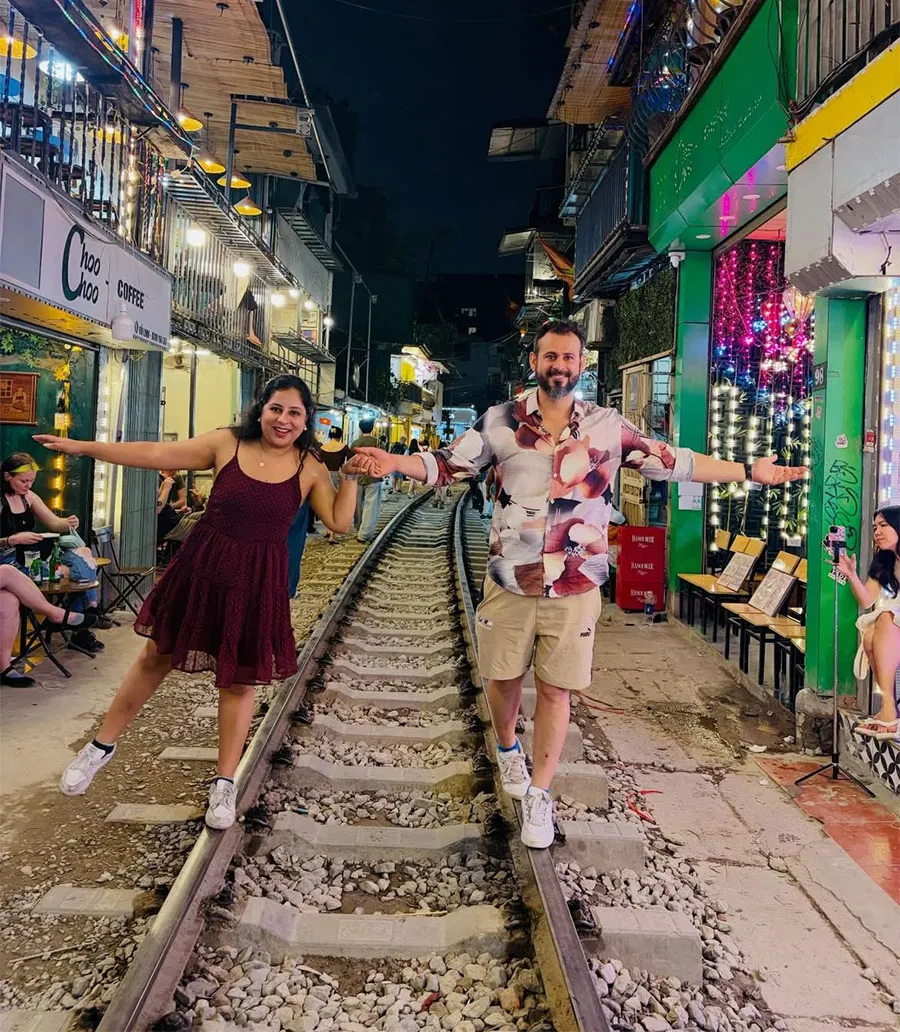
A train rolls between tightly packed houses, café stools disappear from the rails, and minutes later the neighborhood returns to normal. Less than half an hour away, bowls of noodles, smoky grilled pork and tiny coffee shops reveal another side of the capital.
The best way to combine Hanoi Train Street with an Old Quarter food walk is to allow three to four hours, visit the railway first, and continue into the Old Quarter for several small tastings. The experience is worth doing if you enjoy photography, local food and exploring on foot—but access rules and train schedules can change, so flexibility matters.
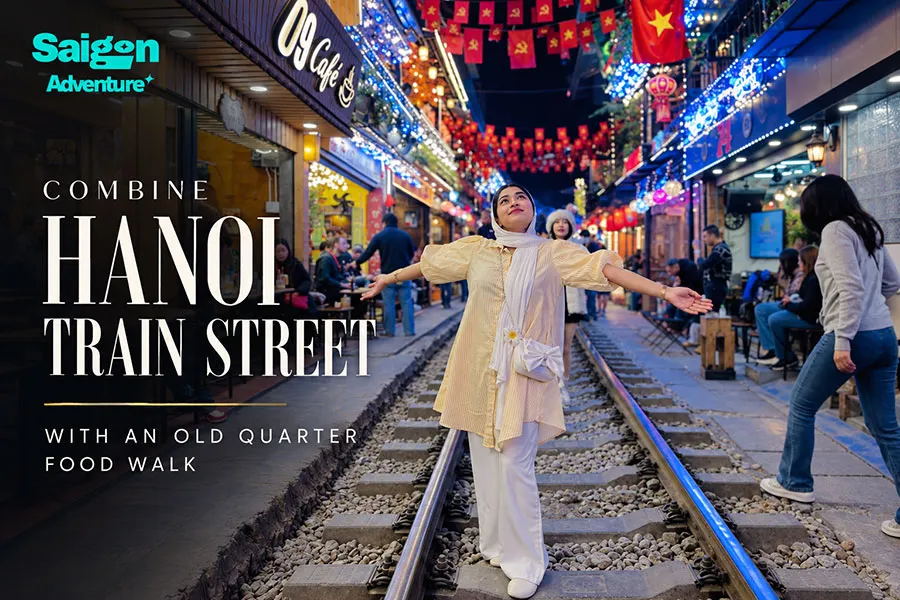
Can You Visit Hanoi Train Street and the Old Quarter Together?
Yes. Hanoi Train Street and the Old Quarter are close enough to combine comfortably in one afternoon or evening without turning the experience into a race.
The popular railway section near Trần Phú and Phùng Hưng is roughly 15–25 minutes on foot from the western side of the Old Quarter, depending on your starting point. A short taxi or Grab ride is useful in rain, intense heat or heavy traffic, but walking lets you notice local shops and everyday street life between the two areas.
A well-paced combination usually includes:
- 45–60 minutes around Train Street
- 20–30 minutes for the transition into the Old Quarter
- Two to three hours for four or five small food stops
- Extra time in case a train is delayed or access is restricted
For a wider introduction to the city’s flavors, read this Hanoi street food guide before deciding which dishes to prioritize.
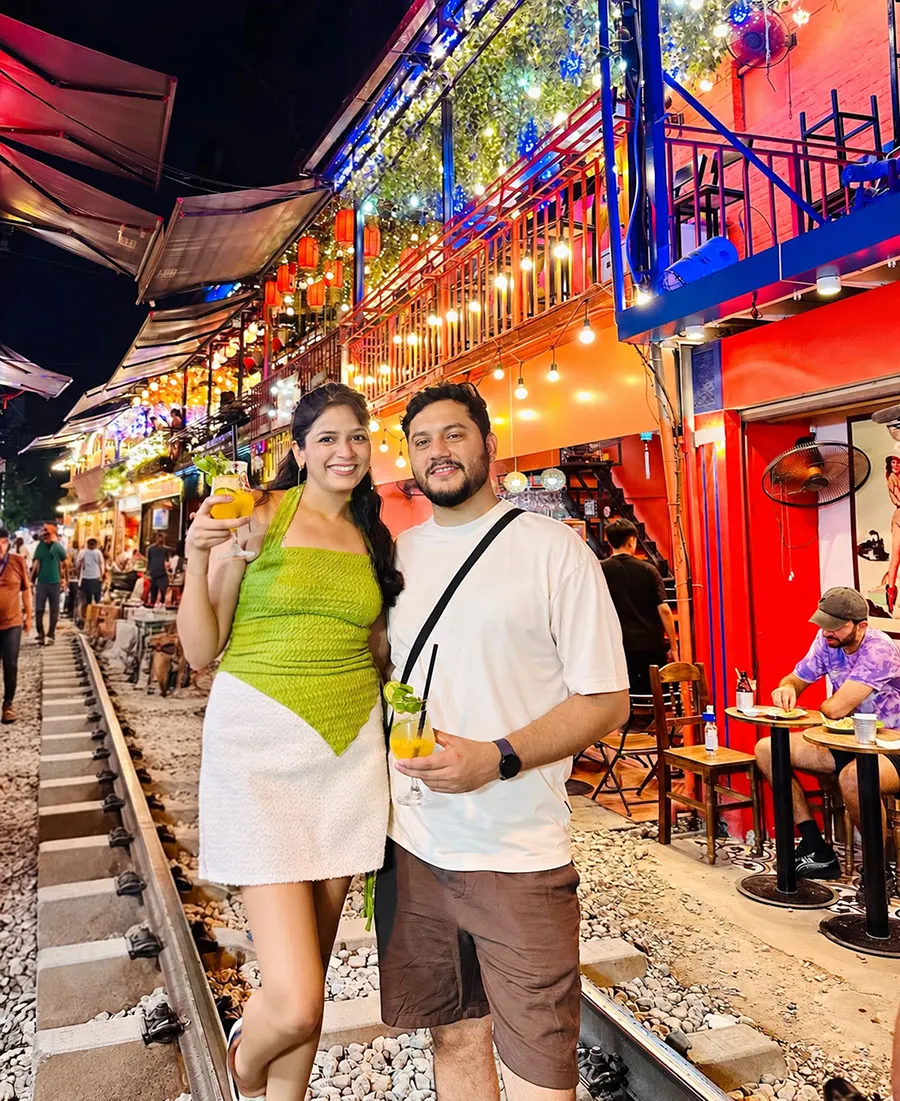
Should You Visit Train Street Before or After the Food Walk?
For most travelers, visiting Train Street first is the better choice. It gives you time to adapt if the expected train does not arrive, the entrance is temporarily controlled or the area is too crowded.
Afterward, the Old Quarter provides a relaxed finish because its food scene does not depend on a single schedule. You can slow down, change restaurants or continue for coffee without worrying about missing a train.
Best afternoon-to-evening schedule
A practical itinerary begins around 3:30 or 4:00 p.m. Visit the railway area first, then walk toward the Old Quarter as kitchens begin preparing for the evening.
This timing usually offers softer photography light and a livelier dinner atmosphere. It also avoids filling up too early, especially if you intend to sample several dishes.
When an evening-first plan makes sense
Starting with food can work if a verified train is expected later in the evening. Have two or three small dishes first, travel to an approved viewing point, and return to the Old Quarter for dessert or coffee.
The disadvantage is that delays may interrupt the natural rhythm of dinner. Evening railway sections can also feel busier, making this route less suitable for families with young children or travelers who dislike crowds.
A 3–4 Hour Hanoi Train Street and Food Walk Itinerary
This route is designed for first-time visitors who want variety without overeating. Exact food stops can change, but the sequence balances savory dishes, walking and drinks.
Stop 1: Experience Hanoi Train Street responsibly
Allow 45–60 minutes for the railway area. Arrive early enough to understand where visitors may stand, choose a legal and safe viewing position, and avoid rushing when the train approaches.
Train Street remains part of an active railway corridor rather than a purpose-built attraction. Barriers, local instructions and café access can change with little notice, so never climb over a barrier, enter a closed section or follow anyone onto the tracks against official directions.
If access is permitted, order a drink only from a café operating in an authorized area and follow staff instructions immediately. The experience is dramatic because the space is narrow, but that same narrowness demands caution.
Local Tip: Never plan your entire afternoon around a timetable copied from an old blog or social-media post. Check current departures with Vietnam Railways and confirm locally on the day, because operational schedules and access conditions may change.
For more preparation advice, see this practical guide to the best time to visit Hanoi Train Street.
Stop 2: Walk toward the Old Quarter
From the railway area near Trần Phú, continue toward the Old Quarter rather than immediately booking a vehicle. The transition from quieter residential lanes to the busier historic streets is part of the experience.
Use pedestrian routes where possible and cross roads steadily rather than making sudden movements. Hanoi traffic can look chaotic, but drivers generally respond better when pedestrians move predictably.
If it is raining, you are traveling with older visitors, or pavements are difficult to navigate, take a short Grab ride to the edge of the Old Quarter. Choose a clear landmark as your drop-off point instead of asking the driver to stop inside a congested food street.
Stop 3: Begin with bánh cuốn or phở cuốn
Start with something light. Bánh cuốn consists of delicate steamed rice sheets commonly served with herbs, fried shallots, dipping sauce and a savory filling, while phở cuốn wraps beef and greens inside soft rice sheets.
Order one portion to share if you are walking as a couple. The purpose of a food walk is to taste across several stops, not finish a full meal at the first restaurant.
Stop 4: Make bún chả the main savory dish
Bún chả is one of Hanoi’s defining meals: charcoal-grilled pork served with rice noodles, fresh herbs and a sweet-savory dipping broth. The aroma from the grill often makes it the most memorable stop of the evening.
Look for a busy establishment where food is cooked continuously and tables turn over steadily. These signals do not guarantee perfection, but they are more useful than choosing a restaurant solely because its menu has the largest photographs.
Travelers who want to understand the dish before ordering can use this beginner’s guide to eating bún chả in Hanoi.
Stop 5: Add one snack or seasonal specialty
Choose one smaller item according to appetite and availability. Good possibilities include bánh gối, a crisp fried pastry with a savory filling; nộm, a refreshing salad; or a modest bowl of noodle soup shared between two people.
Do not force a fixed checklist onto the evening. Some vendors close early, sell out or operate irregularly, and discovering a busy local stall can be more rewarding than crossing the neighborhood for a famous address.
Stop 6: Finish with egg coffee or a light dessert
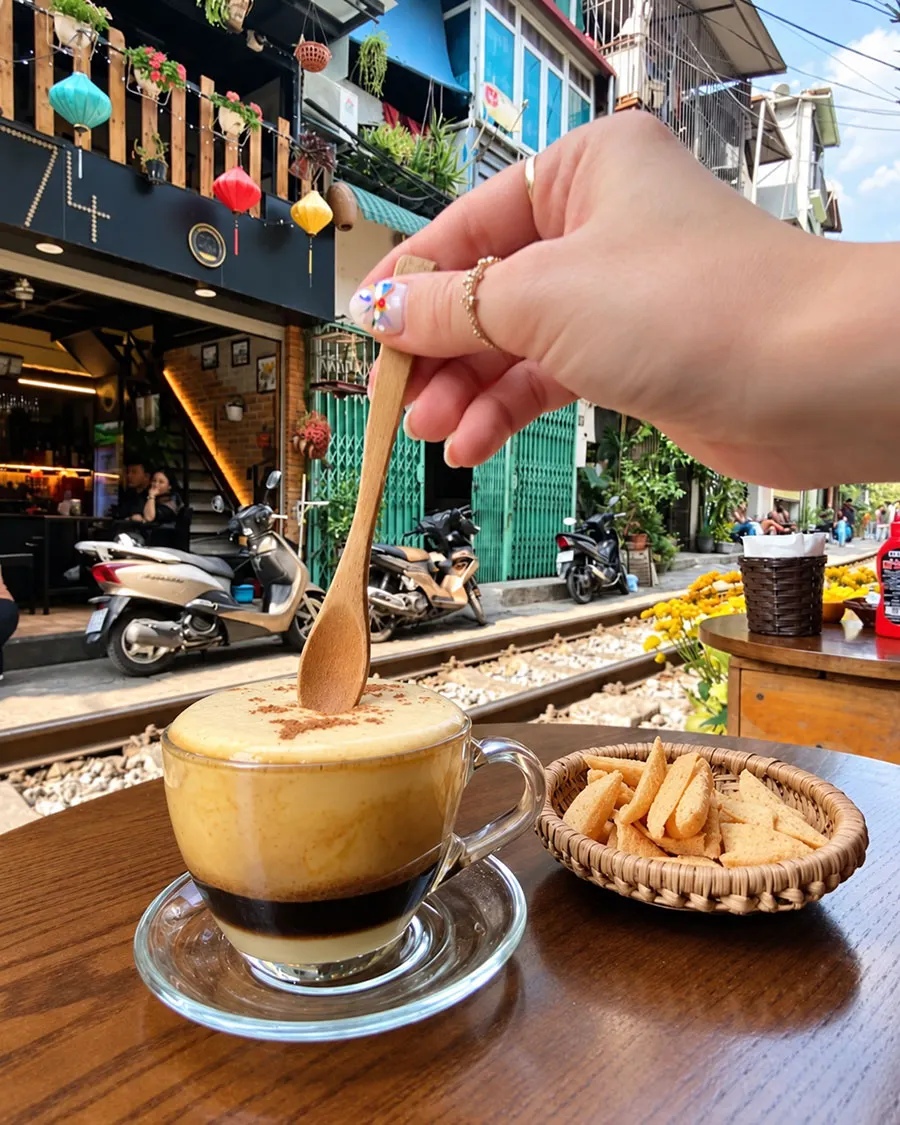
End with cà phê trứng, Hanoi’s rich egg coffee, or a simple local dessert. Egg coffee can feel closer to a custard than a conventional drink, so one cup may be enough after several tastings.
A hidden upstairs café can provide welcome relief from the street below. Check the entrance carefully—many excellent cafés are reached through narrow passages that are easy to miss.
Explore more options in this guide to Hanoi coffee culture and local cafés.
How Much Does the Combined Experience Cost?
A self-guided Train Street and Old Quarter food walk can remain relatively affordable, but prices vary by venue, portion size and location. Carry Vietnamese đồng because small vendors may not accept cards, and electronic payments may require a local banking app.
A realistic per-person budget is:
| Expense | Estimated cost |
|---|---|
| Train Street drink | VND 30,000–80,000 |
| Four or five food tastings | VND 180,000–400,000 |
| Coffee or dessert | VND 30,000–80,000 |
| Short Grab ride if needed | VND 30,000–80,000 |
| Estimated self-guided total | VND 270,000–640,000 |
These figures are planning estimates, not fixed prices. Premium cafés, alcoholic drinks and full portions at every stop will increase the total.
A guided walk costs more but can reduce uncertainty around ordering, dietary communication and locating small eateries. Compare the advantages in this guide to choosing a self-guided or guided Hanoi food tour.
Self-Guided Versus Guided: Which Is Better?
A self-guided walk suits independent travelers who enjoy researching dishes, reading maps and changing plans spontaneously. It offers greater freedom and usually costs less, although language barriers and irregular opening hours may limit what you find.
A guided food walk is better for first-time visitors, solo travelers and anyone with dietary restrictions. A knowledgeable local guide can explain ingredients, eating customs and neighborhood history while helping the group order sensible tasting portions.
Travelers who prefer a guided route with carefully selected food stops can also join a Hanoi Michelin Street Food Walking Tour to explore Michelin-recognized flavors around the Old Quarter.
However, no responsible guide should promise unrestricted entry to an active railway corridor. Be cautious of any tour or individual suggesting that safety barriers, police instructions or railway rules can simply be ignored.
Who Will Enjoy This Hanoi Experience?
This combination is especially rewarding for food lovers, street photographers, couples and first-time visitors with limited time. It brings together a famous visual landmark and the deeper pleasure of eating through Hanoi’s historic center.
It may be less comfortable for travelers with significant mobility limitations because pavements can be uneven, seating is often low and traffic crossings require attention. Families can still enjoy the route, but children must remain beside an adult near the railway and roads.
Vegetarians can participate with advance planning, although fish sauce, meat broth and hidden animal ingredients are common. Travelers with serious allergies should use translated allergy cards and consider booking a reputable guide rather than relying on visual identification.
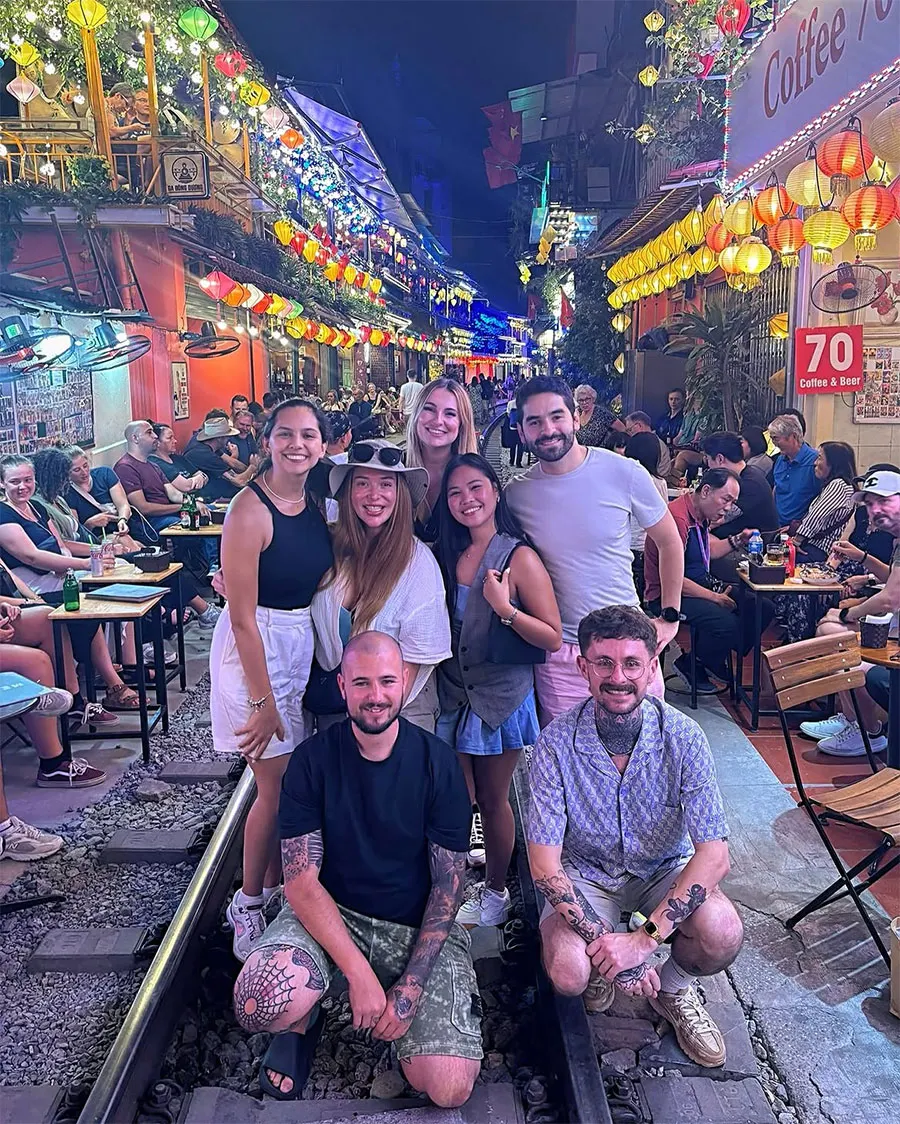
Practical Tips for a Better Food Walk
Wear supportive shoes and lightweight clothing, and carry a compact rain layer during unsettled weather. The route is not long, but standing, street crossings and repeated stops can make it more tiring than the map suggests.
Bring tissues, hand sanitizer and small-denomination cash. Eat at places where ingredients look fresh, cooked food is served hot and there is steady local turnover.
Start hungry, not starving. If you arrive extremely hungry, you are likely to order too much at the first stop and lose the variety that makes the walk enjoyable.
Local Tip: Share portions whenever possible and alternate richer foods with lighter dishes. Four thoughtfully chosen tastings usually create a better experience than rushing through eight stops for the sake of a number.
Mistakes to Avoid Near Train Street and the Old Quarter
Do not stand, pose or place equipment on the railway when a train may approach. Never assume that other visitors behaving recklessly means an action is permitted or safe.
Avoid relying on an exact train time without same-day confirmation. Train operations, delays and local access controls can change, and a flexible plan prevents disappointment.
During the food walk, do not judge every vendor by décor or English signage. A simple dining room may serve excellent food, while a photogenic venue is not automatically more authentic.
Finally, avoid ordering one full-sized specialty at every stop. Hanoi food is best explored gradually, with enough space to notice differences in herbs, broths, textures and cooking styles.
Is Combining Hanoi Train Street With a Food Walk Worth It?
Yes—provided Train Street is treated as a brief, safety-conscious stop rather than the only reason for the outing. The railway delivers the visual drama, while the Old Quarter food walk provides the flavors, conversations and street-level details that give the evening depth.
Set aside three to four hours, verify current railway information and keep the food route flexible. If you would rather focus on eating than maps and logistics, join a carefully paced Hanoi Old Quarter food experience with a local guide who can introduce each dish in context.
For more inspiration beyond Hanoi, explore practical Vietnam travel guides and thoughtfully designed local experiences with Saigon Adventure.

Frequently Asked Questions
How far is Hanoi Train Street from the Old Quarter?
The commonly visited railway area near Trần Phú and Phùng Hưng is within walking distance of the western Old Quarter. Depending on your exact starting point, the journey generally takes about 15–25 minutes on foot.
How long should I allow for Train Street and a food walk?
Allow at least three hours, although four hours feels more comfortable. This provides approximately one hour near the railway and two to three hours for walking, eating and coffee.
Is Hanoi Train Street open to tourists?
Access conditions can change because the tracks form an active railway safety corridor. Some entrances may be controlled or closed, so obey barriers and local authorities, use only permitted viewing areas and check the situation on the day you visit.
What time is best for the combined itinerary?
Late afternoon into evening is generally the most convenient period. It offers pleasant photography light, active dinner service in the Old Quarter and enough flexibility to adjust the order around a verified train movement.
What foods should first-time visitors try in Hanoi’s Old Quarter?
A balanced first food walk might include bánh cuốn, bún chả, one fried or fresh snack, and egg coffee. Choose smaller portions so you can experience different flavors without becoming full too early.
Can vegetarians do an Old Quarter food walk?
Yes, but careful communication is essential because apparently meat-free dishes may contain fish sauce, meat broth or animal-based seasoning. A translated dietary card or experienced local guide can make ordering safer and easier.
Is the route suitable for children or older travelers?
It can be, but the route involves traffic, uneven pavements, low seating and time spent standing. Keep children close, avoid crowded railway periods and use a short taxi ride when walking conditions become uncomfortable.