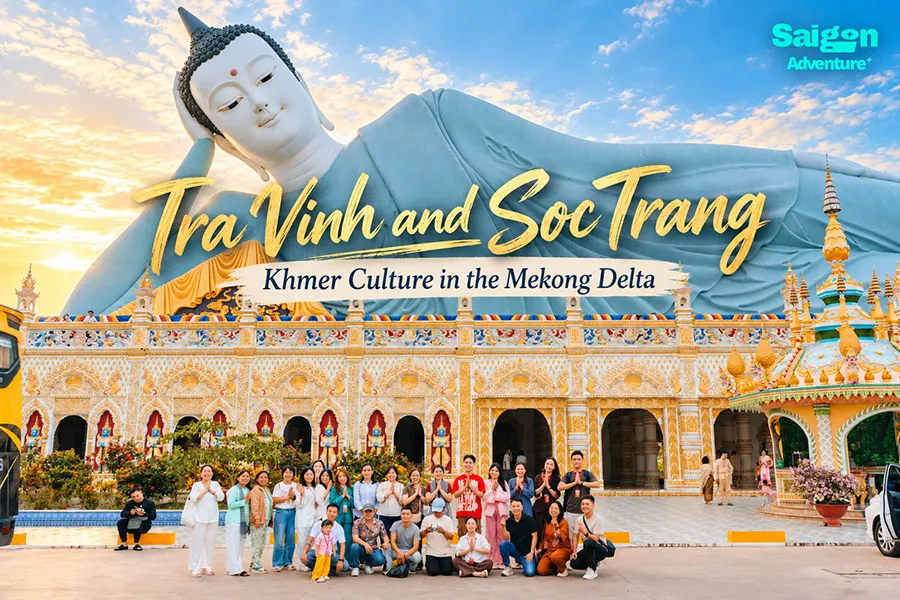
Beyond the Mekong Delta’s floating markets and coconut-lined canals lies a fascinating cultural landscape shaped by centuries of Khmer traditions. In Tra Vinh and Soc Trang, colorful Buddhist temples, distinctive local dishes, and lively festivals reveal a side of southern Vietnam that many international travelers overlook.
Exploring Khmer culture in the Mekong Delta offers more than beautiful architecture. It is an opportunity to understand living traditions, discover regional food, and experience communities where cultural heritage remains part of everyday life.
Whether you enjoy photography, history, spiritual landmarks, or authentic local experiences, this guide explains what to see, when to visit, and how to plan a meaningful cultural journey.
What Makes Khmer Culture in the Mekong Delta Unique?
The Khmer are one of Vietnam’s officially recognized ethnic communities, with a significant presence in the southern Mekong region. Their heritage is closely connected to Theravada Buddhism, traditional arts, community celebrations, and distinctive culinary practices.
Khmer temples, commonly called wat, serve purposes beyond religious worship. They are important gathering places where cultural knowledge, festivals, and community traditions are maintained across generations.
Travelers can recognize Khmer architectural influences through ornate roofs, decorative sculptures, golden details, and imagery inspired by Buddhist traditions.
Unlike conventional sightseeing, exploring these places offers insight into how religion, art, and community life remain interconnected.
For a broader introduction to the region, explore our guide to the best places to visit in the Mekong Delta.
Best Khmer Temples to Visit in Tra Vinh
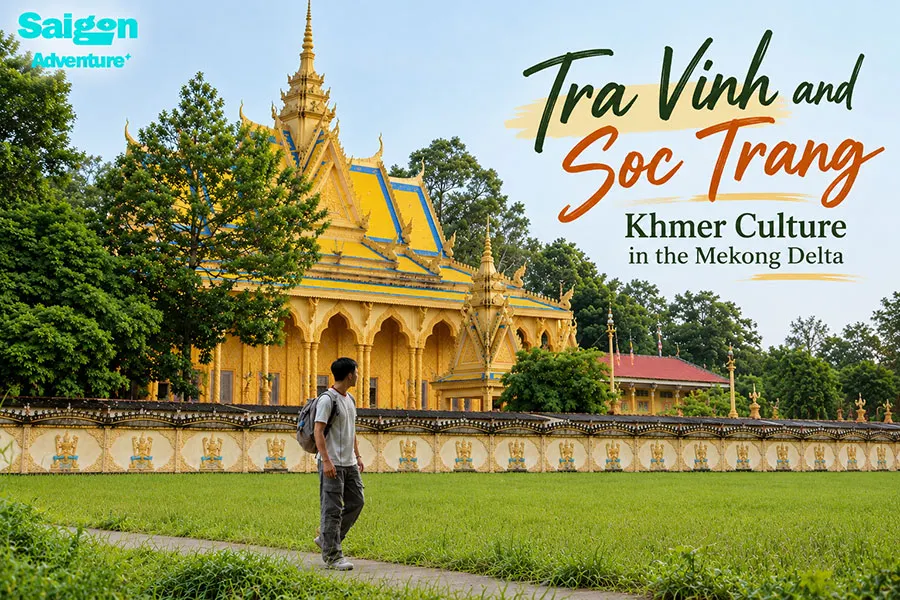
Tra Vinh is especially appealing to travelers interested in peaceful temple grounds, traditional architecture, and quieter cultural sightseeing.
Ang Pagoda and Ba Om Pond
Ang Pagoda, also known as Chùa Âng, is one of the area’s notable Khmer Buddhist temples. Its decorative architecture, shaded surroundings, and religious significance make it a rewarding stop for culturally curious visitors.
Nearby Ba Om Pond (Ao Bà Om) adds a different atmosphere, with mature trees surrounding a scenic body of water. The combination makes this area particularly suitable for a relaxed cultural excursion.
Take time to appreciate the temple’s architectural details rather than treating it as a quick photography stop.
Hang Pagoda and Khmer craftsmanship
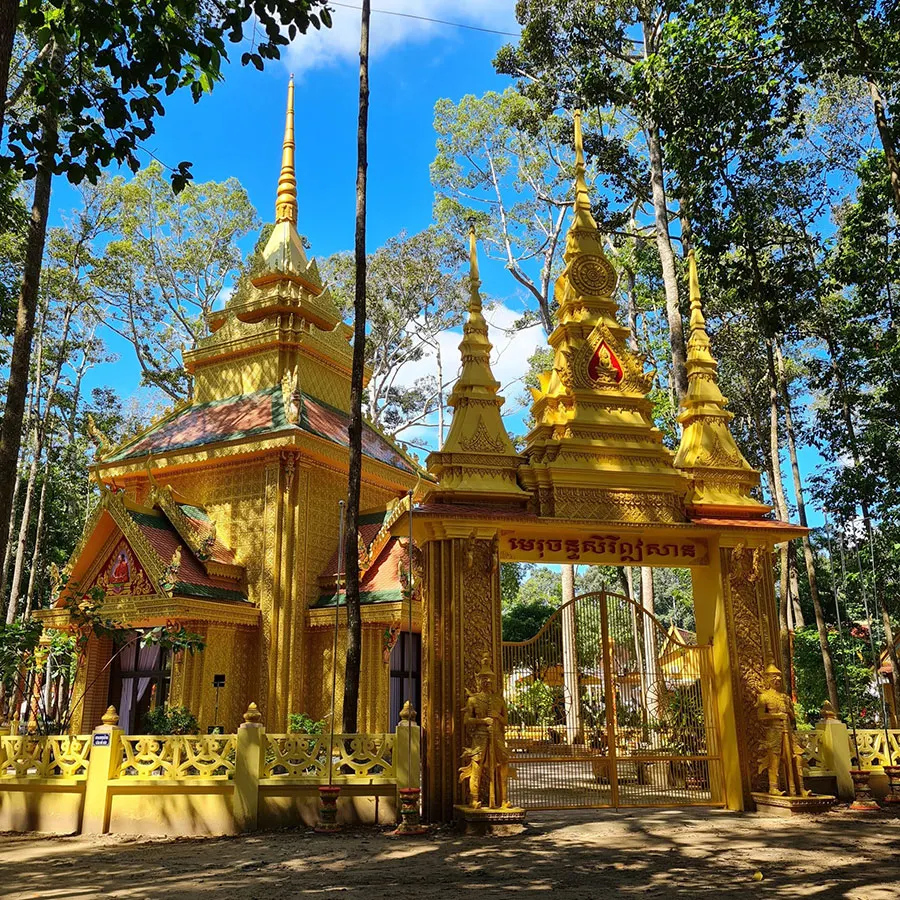
Hang Pagoda, or Chùa Hang, is another recognizable Khmer religious landmark in the Tra Vinh area.
Its entrance and traditional architecture attract visitors, while the temple is also associated with artistic and woodcarving traditions.
If craftspeople are working during your visit, observe respectfully and ask permission before photographing them.
Local tip: Visit temples at a relaxed pace and avoid interrupting ceremonies or religious activities.
Famous Khmer Pagodas in Soc Trang
Soc Trang offers several visually distinctive temples, making it particularly interesting for travelers who enjoy architecture and cultural photography.
Bat Pagoda (Chua Doi)
Bat Pagoda, also known as Chùa Dơi or Mahatup Pagoda, is among the area’s best-known Khmer religious landmarks.
The temple is associated with fruit bats that have historically roosted in its grounds. However, wildlife sightings are never guaranteed.
Visitors can admire the temple’s Khmer architectural features while appreciating the relationship between its religious setting and surrounding natural environment.
Avoid loud noises, flash photography near wildlife, or attempts to disturb roosting bats.
Kh’leang Pagoda
Kh’leang Pagoda is an important Khmer Buddhist landmark associated with the region’s long-standing religious traditions.
Its decorative details and traditional structures offer an excellent introduction to Khmer temple architecture.
Look closely at the rooflines, carved ornamentation, and symbolic artwork, which distinguish Khmer religious buildings from many other Vietnamese pagodas.
Chen Kieu Pagoda
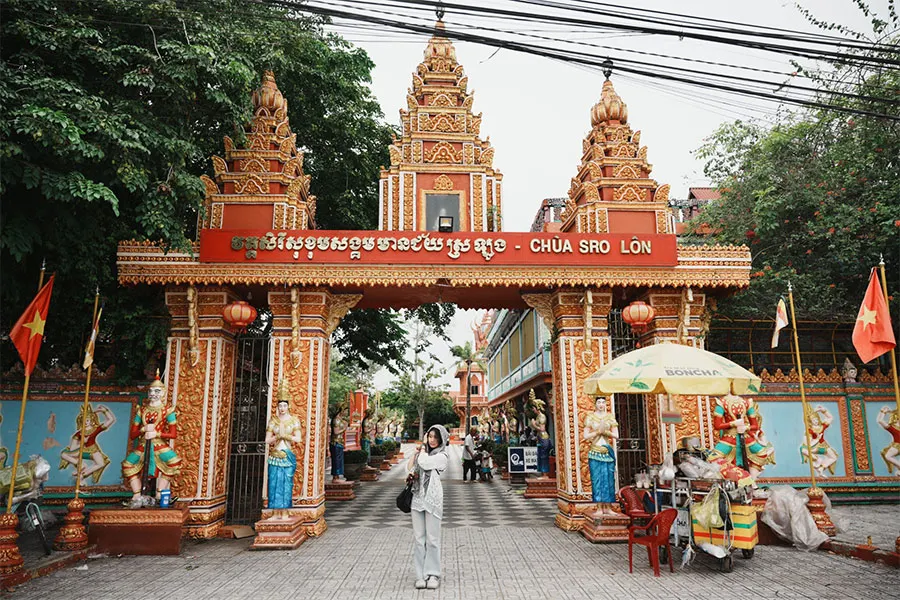
Chen Kieu Pagoda, also known as Chùa Chén Kiểu or Sà Lôn Pagoda, is particularly recognizable for its decorative use of ceramic fragments.
The colorful surfaces create intricate patterns that make the temple visually different from other religious sites in the region.
For photography enthusiasts, its textures and architectural details provide interesting subjects without needing elaborate equipment.
Khmer Festivals and Cultural Traditions
Festivals offer another way to understand Khmer heritage, although travelers should plan carefully because celebration dates can vary.
Chol Chnam Thmay – Khmer New Year
Chol Chnam Thmay is the traditional Khmer New Year, generally celebrated in April.
Families visit temples, participate in religious activities, and gather for community celebrations.
It is an important cultural occasion rather than simply a tourist attraction. Visitors should respect worshippers and avoid entering private activities without an invitation.
Ok Om Bok and Ngo boat racing
Ok Om Bok is a traditional Khmer festival associated with giving thanks to the Moon, typically celebrated around the tenth lunar month.
In Soc Trang, the festival is strongly associated with Ngo boat racing, featuring long boats powered by teams of paddlers.
The races can create an energetic atmosphere, attracting spectators and participating communities.
Local tip: Check officially announced festival dates and race locations before arranging transportation or accommodation.
Traditional Khmer Food to Try
Exploring Khmer culture is also a chance to discover flavors shaped by southern Vietnam’s multicultural food traditions.
Three regional specialties deserve particular attention:
-
Bun nuoc leo: A fragrant noodle soup associated with Soc Trang and Khmer culinary influences, often prepared with fish-based broth and aromatic ingredients.
-
Banh cong: A crispy fried savory cake popular in Soc Trang, commonly served with fresh vegetables and dipping sauce.
-
Com dep: Flattened young rice traditionally associated with Khmer celebrations, particularly Ok Om Bok.
These dishes reflect regional culinary exchange, so not every specialty is exclusive to Khmer communities.
For a more memorable meal, choose a busy local eatery and ask about its signature dishes.
Travelers interested in food, crafts, and community encounters can also explore authentic Mekong Delta experiences beyond floating markets.
Tra Vinh vs Soc Trang: Which Should You Visit?
Both destinations offer meaningful cultural experiences, but their sightseeing highlights differ.
| Travel preference | Tra Vinh | Soc Trang |
|---|---|---|
| Main attraction | Peaceful Khmer temples | Distinctive Khmer pagodas |
| Cultural highlights | Ang Pagoda, Hang Pagoda | Bat, Kh’leang, Chen Kieu Pagodas |
| Photography | Shaded grounds and traditional architecture | Colorful architectural details |
| Food experiences | Local Khmer-influenced specialties | Bun nuoc leo and banh cong |
| Best suited for | Relaxed cultural exploration | Temple enthusiasts and food lovers |
| Suggested time | 1 day | 1 day |
Which is better? Choose Tra Vinh for a quieter cultural experience or Soc Trang for a greater variety of visually distinctive temples. Travelers with additional time can combine both destinations into a longer Mekong Delta itinerary.
How to Get to Tra Vinh and Soc Trang
Both destinations can be reached by road from Ho Chi Minh City, with bus services and private transportation available.
Tra Vinh is approximately 130–150 kilometers from central Ho Chi Minh City, depending on the route. Soc Trang is farther away, at roughly 200–230 kilometers.
Allow approximately three to four hours for Tra Vinh and four to five hours for Soc Trang, although traffic and departure points can affect travel times.
A private vehicle offers flexibility when visiting multiple temples, while buses can be more economical for independent travelers.
How many days do you need?
One full day can cover several highlights in either destination, provided you start locally or arrive early.
For travelers wanting to explore both areas without rushing, two days is a more comfortable minimum. Three days allows additional time for local meals, village scenery, and spontaneous stops.
These destinations also work well as part of a longer southern Vietnam journey rather than a hurried round trip from Ho Chi Minh City.
Best Time to Visit Khmer Temples in the Mekong Delta
The Mekong Delta has a tropical climate, with a generally drier period from approximately December to April and a wetter period from May to November.
The drier months often make road travel and outdoor sightseeing more convenient. However, temples remain culturally interesting throughout the year.
Morning visits can be more comfortable because temperatures are generally lower than in the afternoon.
If your priority is a specific Khmer festival, organize your itinerary around confirmed event dates rather than the weather alone.
Temple Etiquette and Practical Travel Tips
Khmer pagodas are active religious spaces, so respectful behavior matters more than capturing the perfect photograph.
Before visiting, keep these simple guidelines in mind:
-
Wear clothing covering your shoulders and knees.
-
Remove shoes before entering areas where required.
-
Speak quietly and avoid interrupting prayers.
-
Ask permission before photographing monks or worshippers.
-
Follow local signs regarding restricted spaces.
-
Avoid touching religious statues and ceremonial objects.
For clothing suggestions suited to the region’s climate, read our guide on what to wear on a Mekong Delta tour.
Travel costs: Temple admission arrangements vary, and some places may accept donations rather than charge standard entrance fees. Budget separately for transportation, meals, accommodation, and any guided activities.
Who Should Explore Khmer Culture in Tra Vinh and Soc Trang?
These destinations are especially rewarding for cultural travelers, photographers, architecture enthusiasts, and visitors interested in southern Vietnam’s ethnic diversity.
Families with older children may also appreciate the educational value of exploring temples and traditional festivals.
However, travelers seeking nightlife, luxury entertainment, or fast-paced attractions may find the experience relatively quiet.
The greatest rewards come from slowing down, appreciating cultural differences, and treating local communities with genuine curiosity.
Frequently Asked Questions About Khmer Culture in the Mekong Delta
1. Where can you experience Khmer culture in the Mekong Delta?
Tra Vinh and Soc Trang are two well-known areas for exploring Khmer Buddhist temples, traditional food, festivals, and community heritage in southern Vietnam.
2. Is Tra Vinh worth visiting?
Yes, particularly for travelers interested in peaceful temples, Khmer architecture, Ba Om Pond, and cultural experiences away from busier tourist destinations.
3. What are the most famous Khmer pagodas in Soc Trang?
Bat Pagoda, Kh’leang Pagoda, and Chen Kieu Pagoda are among the area’s recognizable Khmer religious landmarks.
4. When is the Khmer New Year celebrated?
Chol Chnam Thmay generally takes place in April. Exact celebrations and local schedules should be checked before traveling.
5. Can tourists enter Khmer temples in Vietnam?
Many Khmer temples welcome respectful visitors, although access to particular buildings or religious activities may be restricted.
6. How long should you spend in Tra Vinh and Soc Trang?
Allow approximately two days for the main cultural highlights of both destinations. Three days provides a more relaxed experience with additional food and village stops.
Discover a Different Side of the Mekong Delta
Tra Vinh and Soc Trang reveal a cultural landscape that goes far beyond the Mekong Delta’s familiar waterways.
From beautifully decorated temples to traditional festivals and regional food, Khmer heritage adds remarkable depth to a southern Vietnam journey.
If you’re planning a longer journey through southern Vietnam, consider combining these cultural destinations with the region’s peaceful waterways and traditional villages. Explore our Mekong Delta tours to find experiences that suit your travel style, and allow extra time to discover the Khmer heritage of Tra Vinh and Soc Trang.