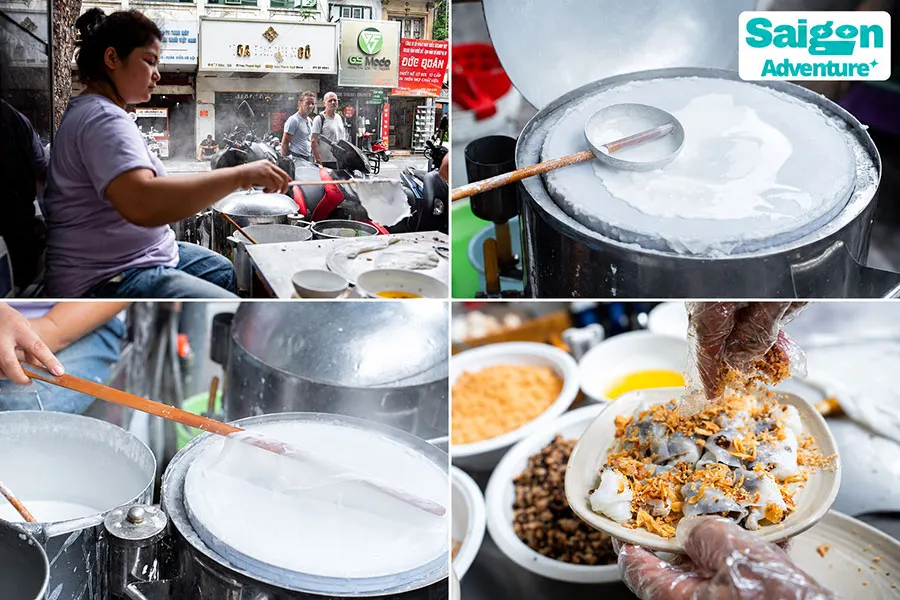
The first pleasure of bánh cuốn is watching it take shape: a ladle of white batter, a brief cloud of steam, then a delicate sheet lifted and folded around its filling. If you are trying banh cuon in Ho Chi Minh City for the first time, start with pork-and-mushroom rolls, order the dipping sauce separately, and taste before adding chili.
Soft, savory and easy to share, this is a rewarding introduction to Vietnamese food beyond noodle soups and baguettes. You do not need to know special dining rules, but understanding the toppings and sauce makes that first plate considerably more enjoyable.

What is banh cuon?
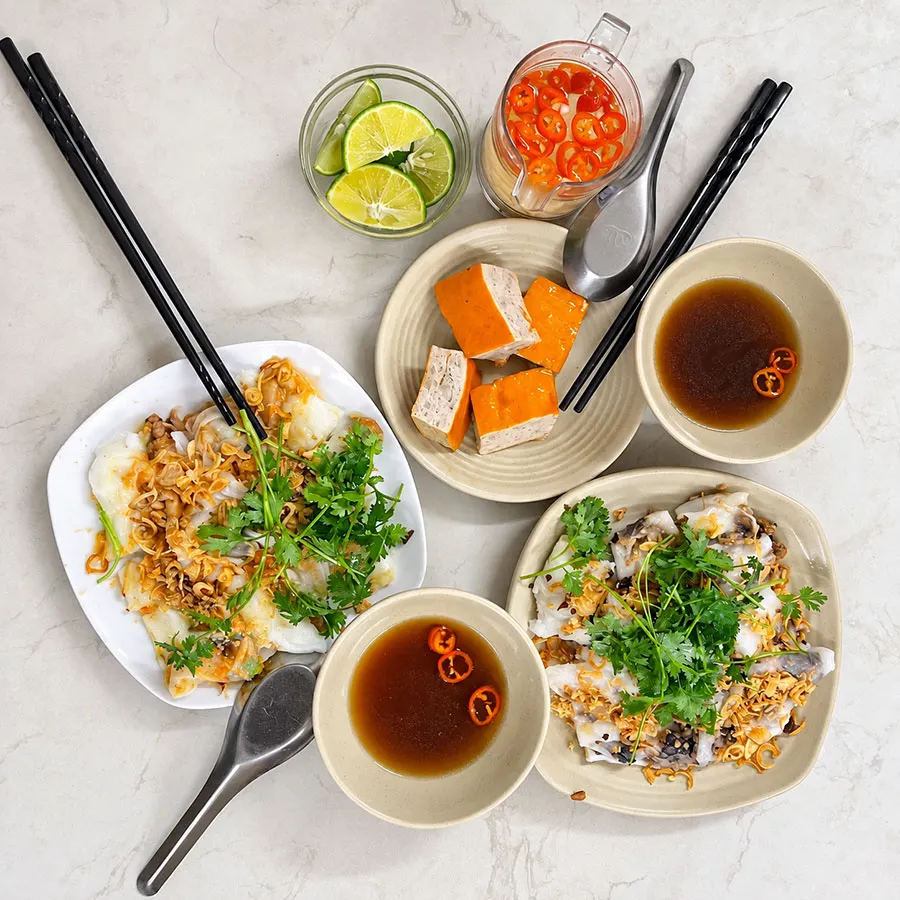
Bánh cuốn consists of thin steamed rice-flour sheets, commonly wrapped around minced pork and wood ear mushrooms. Fried shallots, Vietnamese pork sausage and a seasoned fish-sauce dressing often complete the plate; Vietnam Tourism identifies it as a northern staple enjoyed for breakfast or lunch across the country.
The appeal is largely about texture: slippery rice sheets, a lightly chewy filling and crisp shallots. The wrappers themselves taste gentle, leaving the filling and dipping sauce to provide most of the seasoning.
Although associated with northern Vietnam, bánh cuốn belongs comfortably on a Saigon eating itinerary. For other dishes to build around it, explore our guide to what to eat in Ho Chi Minh City besides pho and banh mi.
Is banh cuon worth trying for first-time visitors?
Yes, particularly if you enjoy dumplings, soft noodles or savory pancakes. It offers an approachable combination of familiar ingredients with a preparation method that is fascinating to watch.
The main consideration is texture: these rolls are tender rather than crisp. If you dislike soft, slightly slippery foods, share a plate before ordering a full meal.
What to order at a banh cuon restaurant
For your first visit, keep the order simple: one standard portion, sauce on the side and whichever accompaniments you actually want. Ask what is included before requesting extra sausage or another topping.
| Menu term | What to expect | Best reason to choose it |
|---|---|---|
| Bánh cuốn nhân thịt | Rice rolls with a meat filling, commonly pork and mushrooms | A straightforward first order |
| Bánh cuốn trứng | An egg variation; preparation differs between shops | Trying another texture where available |
| Bánh ướt | Unfilled steamed rice sheets, usually served with accompaniments | Comparing the rice sheets without a filling |
| Chả lụa | Vietnamese pork sausage | Adding a firmer, savory accompaniment |
| Bánh cuốn chay | A vegetarian version where offered | A meat-free option after checking ingredients |
Banh cuon or banh uot: which should you choose?
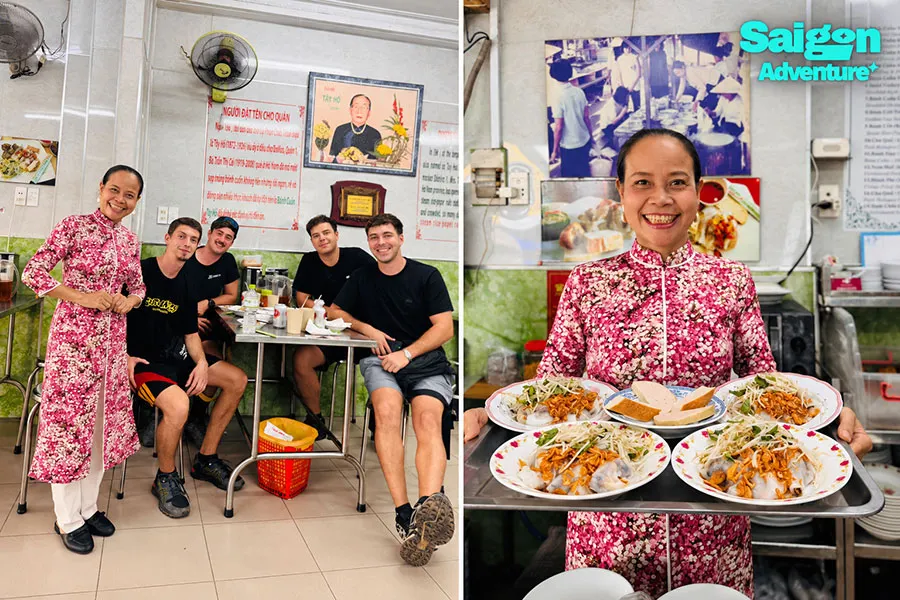
Choose bánh cuốn if you want filling inside the rice sheets. Bánh ướt generally leaves the sheets unfilled, with flavor coming from the sauce and accompaniments.
Neither name tells you everything on the plate. An unfilled serving can still arrive with pork sausage or fish sauce, so confirm the complete order if you avoid animal products.
For a wider comparison of steamed, fried and wrapped rice dishes, see our guide to traditional Vietnamese rice cakes.
Should you order extra toppings?
Try the standard plate first, especially if another food stop follows. Extra sausage makes the meal more substantial, while additional fried shallots emphasize crunch and richness.
Ask about unfamiliar fillings rather than assuming every restaurant uses the same recipe. Some variations include shrimp, making ingredient checks particularly useful for travelers avoiding shellfish.
How to eat banh cuon
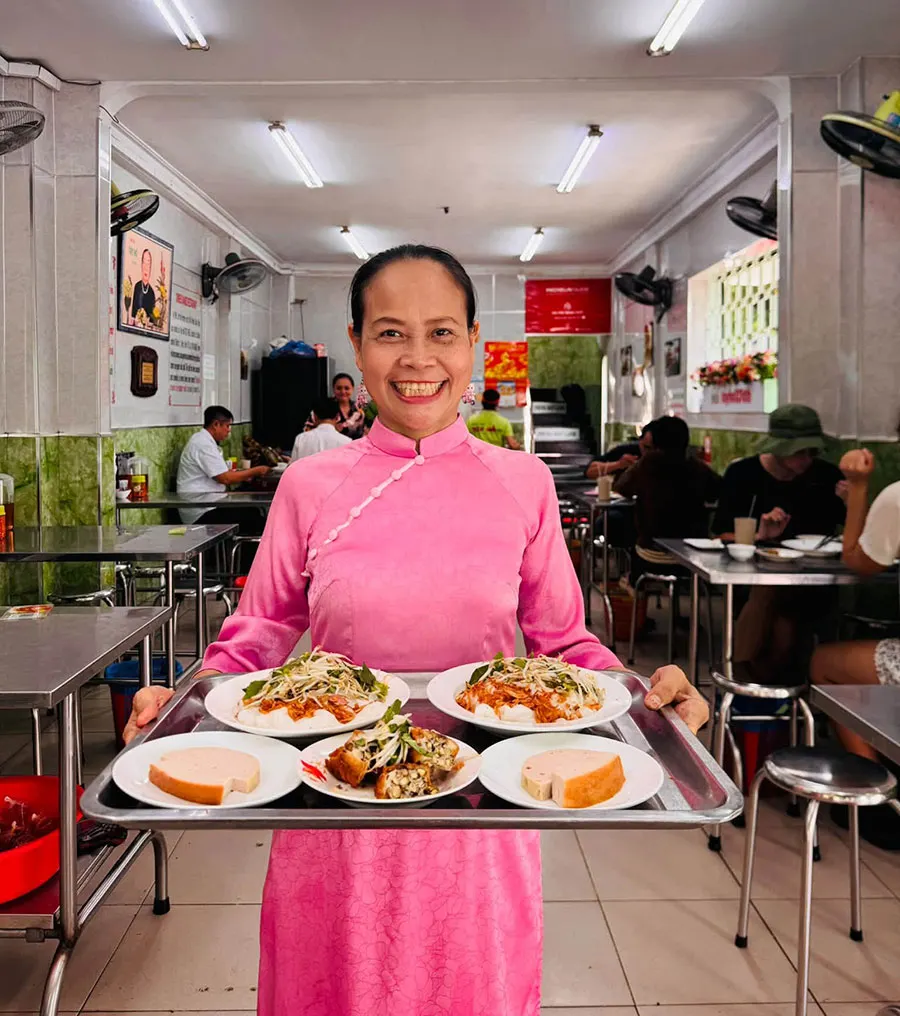
Eat bánh cuốn with chopsticks or a fork, taking manageable pieces rather than lifting an entire roll. Dip each bite into the accompanying sauce, or spoon a little sauce over your portion. Add herbs, vegetables and sausage as you go, adjusting chili only after tasting.
Should you dip it or pour sauce over it?
Both approaches can work, depending on the serving style. Dipping gives you more control, while a small drizzle helps season rice sheets and vegetables together.
Begin with less sauce than you think you need. Too much can overwhelm the mild rice flavor and soften the shallots before you finish.
If sharing, move food to your own bowl or plate before seasoning it. This also lets everyone choose their own balance of sweetness, saltiness and heat.
What do you do with the vegetables and sausage?
Alternate bites of rice rolls with the accompaniments rather than trying to build one enormous mouthful. If herbs or bean sprouts are served, add a little at a time according to your preference.
The rolls arrive ready to eat; you do not need to wrap them again in rice paper. A fork is perfectly practical if slippery sheets make chopsticks frustrating.
Local tip: Taste one bite with only a little sauce before adding condiments. It makes the difference between the rice sheet, filling and toppings much easier to notice.
How to order banh cuon in Vietnamese
You can manage a simple order by pointing at the menu, indicating the number of portions and showing a short Vietnamese phrase. Confirm any changes before the kitchen starts preparing your plate.
| What you need | Vietnamese phrase |
|---|---|
| One portion of bánh cuốn, please | Cho tôi một phần bánh cuốn. |
| Please serve the fish sauce separately | Cho nước mắm riêng. |
| No chili, please | Không cho ớt. |
| No pork sausage, please | Không lấy chả. |
| Does this contain shrimp? | Món này có tôm không? |
| How much is one portion? | Một phần bao nhiêu tiền? |
“No chili” addresses heat, not other ingredients. For an allergy or strict dietary requirement, use a clear translated explanation and ask whether the kitchen can accommodate it.
Keep small Vietnamese đồng notes handy for an easier payment. Before ordering, check whether drinks, extra toppings or other items are charged separately.
Where to try banh cuon in Ho Chi Minh City
A useful starting point is Bánh Cuốn Hải Nam at 11A Cao Thắng, an address listed by both Foody and Tripadvisor. Check its current opening status and menu before traveling, particularly if you want a specific filling.
You can also search near your accommodation using “bánh cuốn nóng,” meaning hot steamed rice rolls. Recent photographs of the cooking station and menu are more useful than a listing that shows only an old address.
How can you choose a shop without following a “best” list?
Look for a place where you can see batches being prepared and understand what you are ordering. An active steamer is useful for identifying freshly made rolls, although visible cooking alone does not establish overall hygiene.
Consider comfort as well as food: seating, shelter from rain and a clearly displayed menu can improve the experience. For broader precautions, read our guide to eating street food safely in Ho Chi Minh City.
When to go and how much to budget
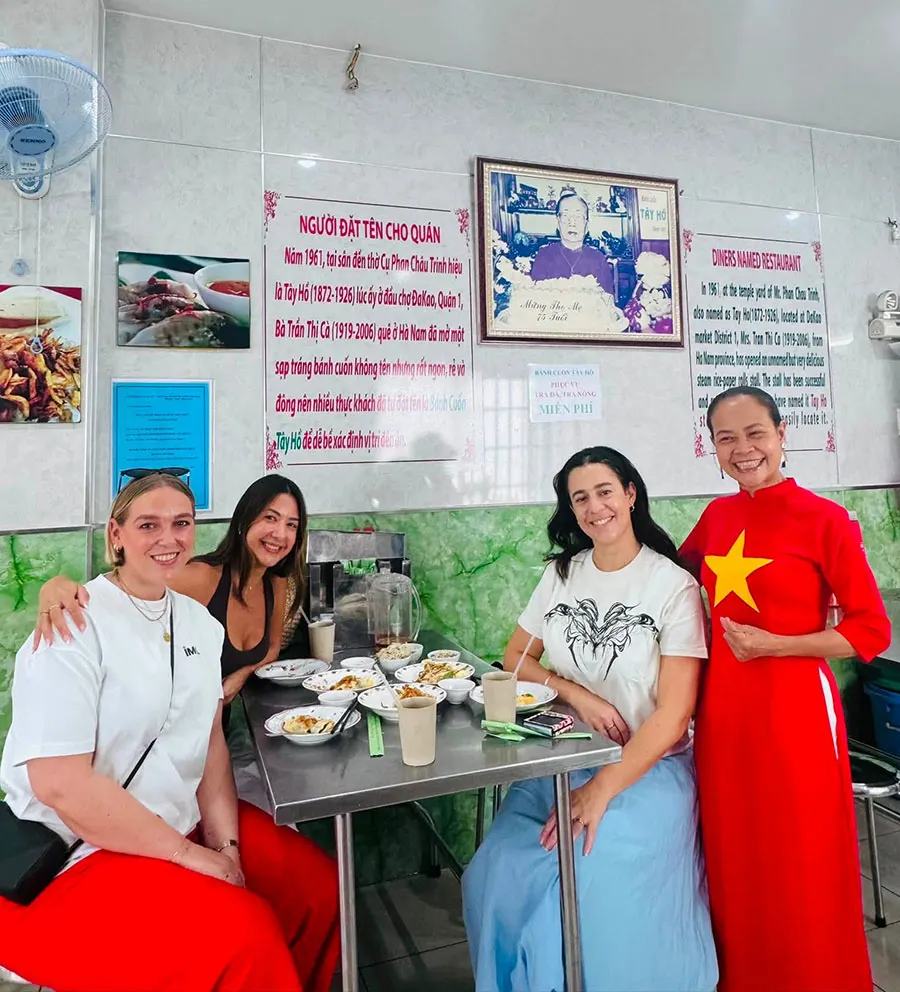
Breakfast is a natural choice, especially if you want a savory meal before sightseeing. However, selling hours vary: some businesses focus on mornings, while others serve later meals.
For planning, set aside around VND 40,000–80,000 per person for a simple order, allowing extra for drinks and toppings. Treat this as a flexible spending allowance, not a confirmed menu price; check the displayed price before ordering.
A nearby shop usually makes more sense than a long journey for a small saving. Allow roughly half an hour for ordering and eating, with more time if the restaurant is busy.
Local tip: If you want to photograph the steaming process, ask first and stay clear of the preparation area. Eat your plate promptly rather than letting the rolls cool while arranging pictures.
Vegetarian options and ingredient checks
Standard bánh cuốn is usually unsuitable for vegetarians because the filling commonly contains pork. Removing visible sausage does not remove meat already inside the rolls or fish sauce in the dressing.
Look specifically for bánh cuốn chay and confirm the filling, sauce and toppings. For allergies, ask about ingredients in every component, including accompaniments; rice-based wrappers alone do not establish that the complete meal meets your needs.
If explaining preferences independently feels difficult, compare Saigon food tours and discuss requirements before booking. Confirm whether bánh cuốn can be included rather than assuming every itinerary serves it.
Frequently asked questions about banh cuon
Is banh cuon the same as fresh spring rolls?
No. Bánh cuốn uses freshly steamed rice-batter sheets, while fresh spring rolls, or gỏi cuốn, use rice-paper wrappers around ingredients such as herbs, noodles, pork or shrimp.
Is banh cuon spicy?
The rice sheets and typical pork filling are generally mild. Chili may be added to the sauce or served separately, so request no chili before the plate is prepared.
Can you eat banh cuon without fish sauce?
Yes, although the dish will taste milder. Ask for the sauce separately and check whether another suitable condiment is available rather than assuming the kitchen has a replacement.
Is banh cuon a full meal or a snack?
A standard portion can work as a modest breakfast or light lunch. Appetite and portion sizes vary, so order one plate first and add more if needed.
Can children try banh cuon?
Children who enjoy soft noodles or dumplings may appreciate it. Check ingredients, let hot food cool appropriately and cut slippery rolls into manageable pieces.
Can you try banh cuon on a Saigon Adventure tour?
Saigon Adventure’s published Food Safari menu includes bánh cuốn nóng among its tastings. Confirm the current menu, availability and dietary arrangements before booking.
Make room for one freshly steamed plate
Bánh cuốn rewards a little attention: watch the sheets being lifted, taste the filling before adding chili, and find your own balance of sauce and toppings. One unhurried breakfast is enough to turn an unfamiliar menu item into something you can confidently order again.
If you would like to explore more dishes with someone explaining the ingredients along the way, consider Saigon Adventure’s Food Safari. Mention your interest in bánh cuốn when enquiring, and build the experience around the food you most want to understand.